Eavesdropping on Connecticut's Bats | |
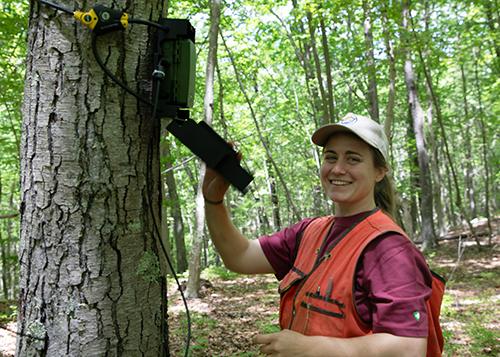
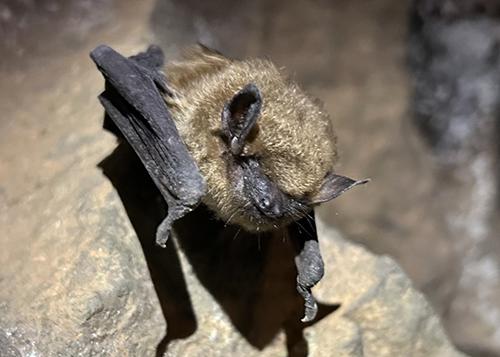
DEEP staff from the Wildlife and Forestry Divisions recently partnered with Aquarion Water Company to install bat detection equipment in Centennial Watershed State Forest.
These monitoring stations include a specialized microphone that only picks up the high-frequency echolocation calls bats emit to navigate and find food. The equipment is programmed to turn on a half an hour before sunset and turn off a half an hour after sunrise to collect data when bats are most active.
The data recorded help DEEP Wildlife Division biologists identify what species of bats are using the area while enabling the Forestry Division to assess which parts of the land are best to create early successional habitat.
Early successional habitat is a temporary habitat type that is made up of fast-growing grasses, forbs, shrubs, and saplings. It provides food and cover for pollinators, bats, wild turkeys, cottontail rabbits, a variety of uncommon grassland birds, and other wildlife.
More on monitoring bats . . .
| Huge Native Plant Sowing Effort at Suffield WMA | |
|
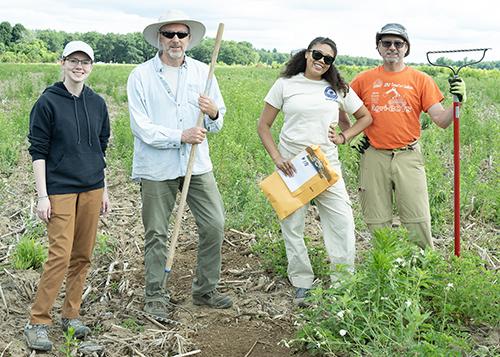
Last month, DEEP Wildlife Division Habitat Biologist Peter Picone kicked off a huge effort to expand critical grassland habitat through the sowing of native wildflowers and grasses at Suffield Wildlife Management Area in Suffield.
Over 1 MILLION native plant seeds were added to the existing 15-acre field that was previously used to grow corn. Eventually, it will be filled with important native plants, including little blue stem, Indiangrass, deertongue grass, wild bergamont, New England aster, mountain mint, common milkweed, and yarrow.
The newly-planted area will increase biological diversity by providing habitat for grassland specialists, including grasshopper sparrows, dickcissels, and American kestrels. A diversity of insect life will also find more blossoms to pollinate. Increased numbers of larval host plants will be present for butterflies, especially the monarch butterfly.
This effort would not have been accomplished so easily without the hard work of roughly 50 volunteers representing local land trusts, pollinator pathway groups, scientists, and nature enthusiasts who want to make a difference for wildlife. Thanks to everyone involved!
Want to add native plants to your landscape? Refer to the Connecticut Native Tree, Shrub, and Perennial Availability List.
| |
Black Bears Are on the Move During Breeding Season | |
|
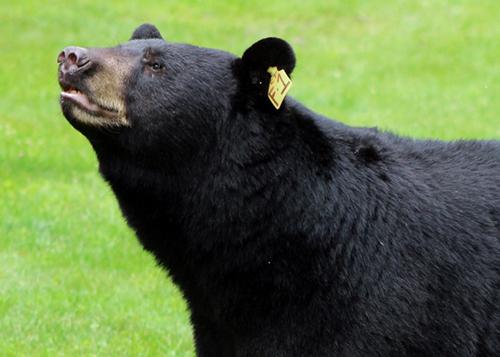
Black bear activity is often high during July, with the breeding season underway. By now, female bears have sent their yearlings off on their own, and young male bears especially will travel great distances to establish their own home range and/or find a mate.
This time of year, it is not uncommon to see multiple bears passing through suburban neighborhoods, especially since most folks are spending more time outside during summer.
During the peak of outdoor grilling season, be sure to clean up greasy grills, secure your garbage, clean up food scraps, and make sure birdfeeders have been removed from yards. These same tips will help reduce conflicts with other wildlife, including raccoons and skunks.
It is also a good idea to close doors and ground floor windows when you are not home, even if you have screens in place. Screens are not a barrier to a curious bear that catches the scent of your kitchen waste bin. Incidents involving bears pushing through screens have been increasing over the last several years. In some instances, once a bear learns it can easily enter a home through a screen door, the behavior is repeated at other nearby homes, creating a clear public safety risk.
BearWise at Home Checklist . . .
| |
Biologists and Volunteers Band Over 1,000 Canada Geese | |
|
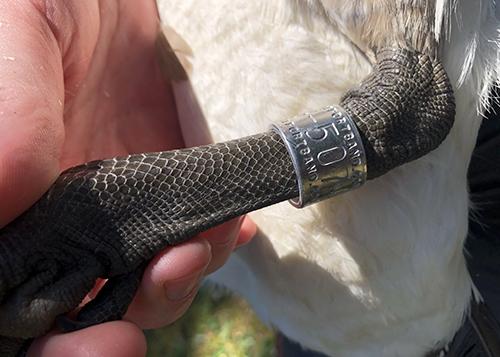
Each year, DEEP Wildlife Division waterfowl biologists, with the help of many dedicated volunteers, visit select locations across Connecticut to band Canada geese.
Banding wrapped up the last week of June, and biologists captured 1,155 geese, including 916 new and 239 recaptured birds.
Why band waterfowl? Affixing a uniquely numbered small metal band to each bird helps biologists learn about breeding and wintering distribution, behavior, migratory routes, survival, and reproduction.
Banded birds may be recaptured in the future by biologists, found dead by the general public, or, in the case of waterfowl or other game birds, are harvested by hunters who then report these bands to the U.S. Geological Survey Bird Banding Laboratory. Reporting banded birds provides information about where the bird was banded, what habitats it relies on, where it was recovered, and how long it lived.
USGS Bird Banding Laboratory . . .
| |
Habitat Management Creates Biological Diversity | |
|
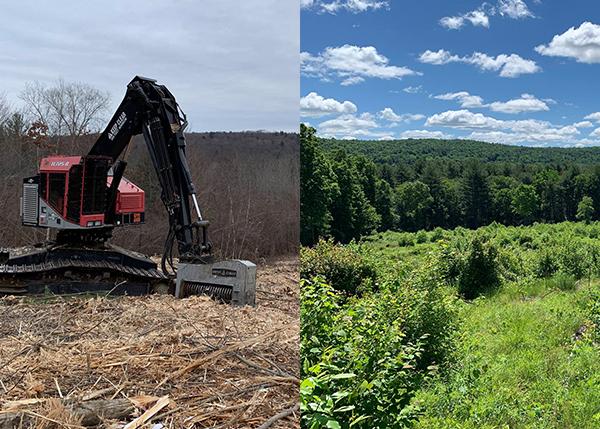
Recently, DEEP Wildlife Division biologists paid a visit to Kollar Wildlife Management Area (941 acres) in Tolland to see how a forested site responded to a mowing operation conducted in November 2021. Just entering its third growing season, this 7-acre patch of forest has bounced back with amazing tree and shrub regeneration!
White oak, red oak, birch, and aspen, along with highbush blueberry and raspberry, have all grown in to create a dense patch of young forest habitat. During the short visit, staff heard prairie warbler, blue-winged warbler, and black-and-white warbler, and watched monarch butterflies and ruby-throated hummingbirds moving through the air.
This forest stand was previously composed of pole-sized birch and aspen that presented an opportunity to create young forest habitat through active management to support a greater array of wildlife and species of greatest conservation need.
This work was funded by the Federal Aid in Wildlife Restoration Program! This important program was initiated by hunters and conservationists to provide states with funding for wildlife management and research, habitat acquisition, and hunter education programs.
Though the appearance of this site would likely seem messy to some at first, the temporary disturbance quickly fills in and creates critical wildlife habitat that is missing from most of Connecticut’s landscape.
More on the importance of young forest . . .
| |
Keep Track of Wild Turkey Sightings | |
|
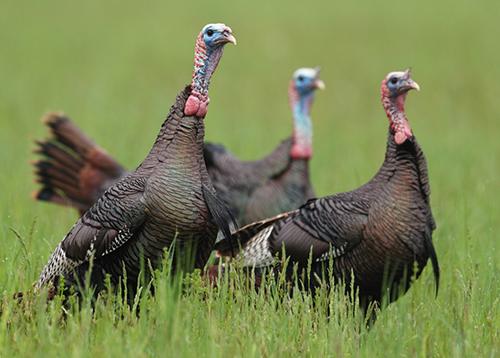
Have you seen any wild turkeys lately? A reminder for Connecticut residents to record their wild turkey sightings from now until August 31, 2024, as part of the DEEP Wildlife Division's annual Wild Turkey Brood Survey.
This survey allows biologists to estimate the average number of turkey poults per hen statewide, assess annual fluctuations in the turkey population, and calculate male-to-female ratios.
Details on how to participate . . .
| |
Join White Memorial's 14th Annual Celebration for the Bats | |
|
From bat-themed cupcakes to counting live big brown bats as they emerge from their roost, you won't want to miss White Memorial Conservation Center's annual Celebration for the Bats on Saturday, July 20, starting at 7:00 PM.
Participants will also see the "Bats Count" livestream cameras in action, a collaborative project between the DEEP Wildlife Division and White Memorial. Registration is free but required for this event.
Details on how to register . . .
| |
Join Steep Rock Association's Dragonfly and Damselfly Survey Blitz! | |
|
Steep Rock Association is holding an all-out survey blitz on Saturday, July 13, from 9:00 AM-5:00 PM. The blitz will begin at the Macricostas Preserve parking lot located at 124 Christian Street, in Washington.
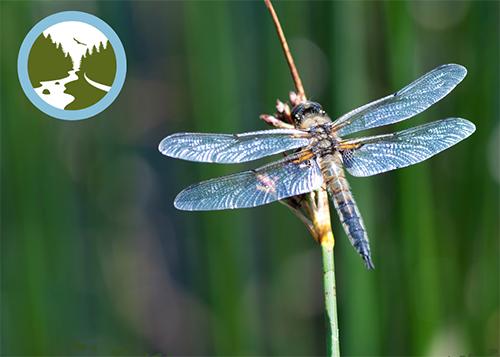
Participants will receive an overview of dragonfly ecology and training on capture technique by Connecticut’s leading Odonata professional before the search for different species begins. Information obtained from the blitz will aid both local and regional dragonfly conservation, and all involved will surely leave with a greater knowledge and appreciation for these amazing invertebrates.
More information on how to participate . . .
| |
Apply to the Great Mountain Forest Woodland Academy | |
|
The Great Mountain Forest Woodland Academy provides education for landowners interested in managing their land.
Based out of the Yale Forestry Camp in Falls Village, Connecticut, this program is ideal for woodland owners, land trust stewards, educators, and engaged citizens.
Over the course of 3 in-person classes, participants will learn about the woody plants that make up Connecticut forests, how forests grow, and the management principles behind obtaining the goals set for your land.
Details on how to apply . . .
| |
|
Stay Connected!
Follow us on Social Media
| |
|
-- Quick Links --
Your Feedback Is Important to Us!
Send your comments or suggestions to deep.ctwildlife@ct.gov
|  | |
The Connecticut Department of Energy and Environmental Protection is an Affirmative Action/Equal Opportunity Employer that is committed to complying with the requirements of the Americans with Disabilities Act. If you are seeking a communication aid or service, have limited proficiency in English, wish to file an ADA or Title VI discrimination complaint, or require some other accommodation, including equipment to facilitate virtual participation, please contact the DEEP Office of Diversity and Equity at 860-418-5910 or by email at deep.accommodations@ct.gov. Any person needing an accommodation for hearing impairment may call the State of Connecticut relay number - 711. In order to facilitate efforts to provide an accommodation, please request all accommodations as soon as possible following notice of any agency hearing, meeting, program or event.
This program receives Federal financial assistance from the U.S. Fish and Wildlife Service.
Under Title VI of the 1964 Civil Rights Act, Section 504 of the Rehabilitation Act of 1973, Title II of the Americans with Disabilities Act of 1990, the Age Discrimination Act of 1975, and Title IX of the Education Amendments of 1972, the U.S. Department of the Interior prohibits discrimination on the basis of race, color, national origin, age, sex, or disability. If you believe that you have been discriminated against in any program, activity, or facility, or if you need more information, please write to:
Office of Diversity, Inclusion and Civil Rights
U.S. Department of the Interior 1849 C Street, NW
Washington, D.C. 20240
| | | | |