Faulkner County Agriculture Update
May 8, 2026
| | |
Weather
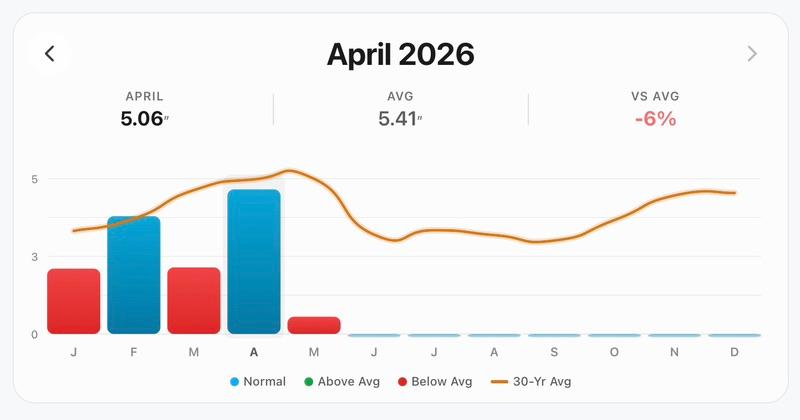
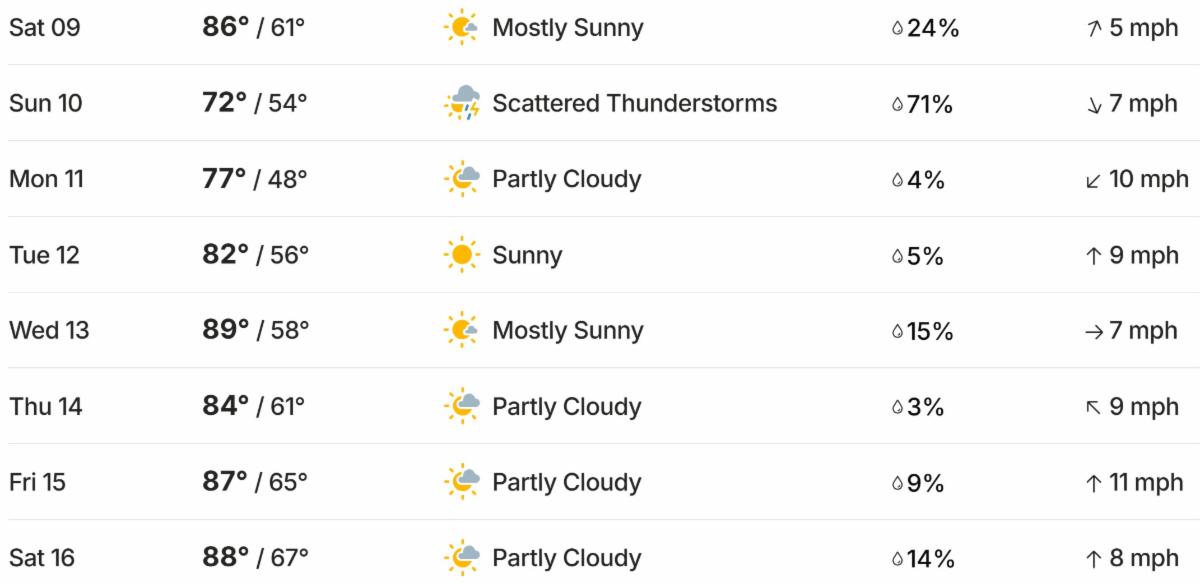
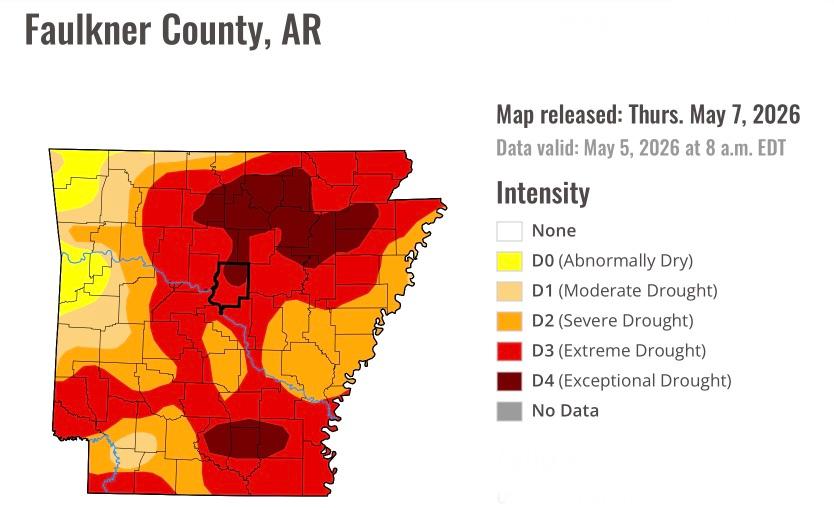
Rain amounts ranged from 0.50 inches to 1.4 inches across Faulkner County on Tuesday and Wednesday. As we close out April, we didn't quite reach the "normal" average, but it was close enough to call it a normal month on rainfall. Even with February and April being normal, January and March were so below normal that we are still short for the year. There are good chances Sunday then I think we will dry up for a little bit.
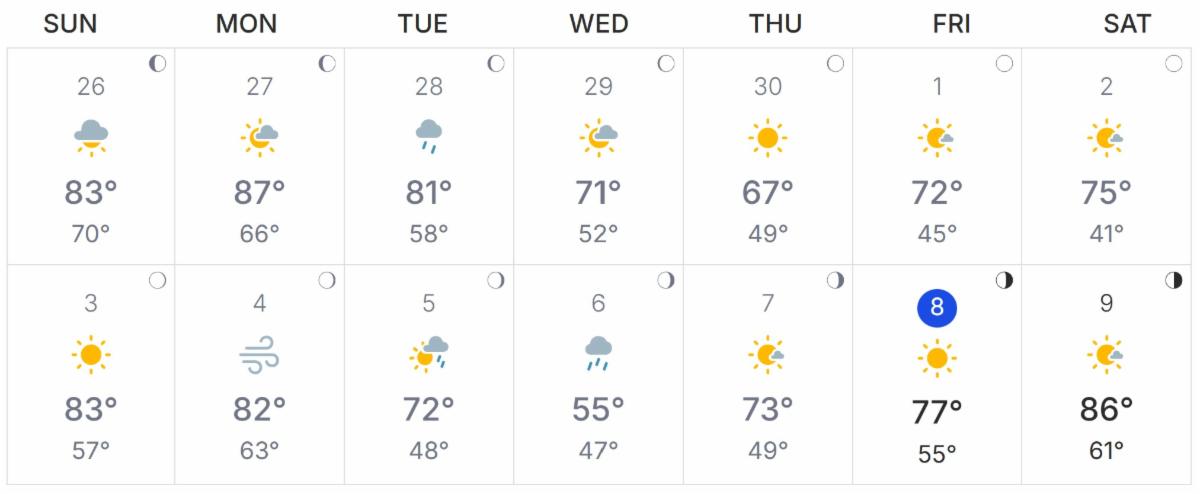
The other issue we are having with the weather right now are these cool temperatures. Wednesday was right down cold! We are seeing those effects on all the grass crops like corn, rice, and forages. Next week's temperatures look more normal.
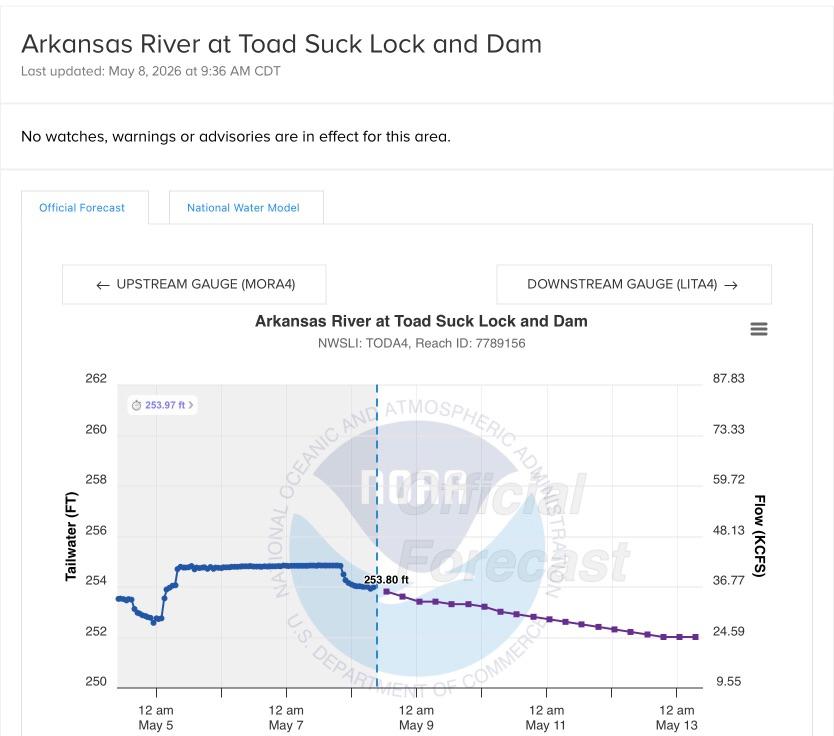
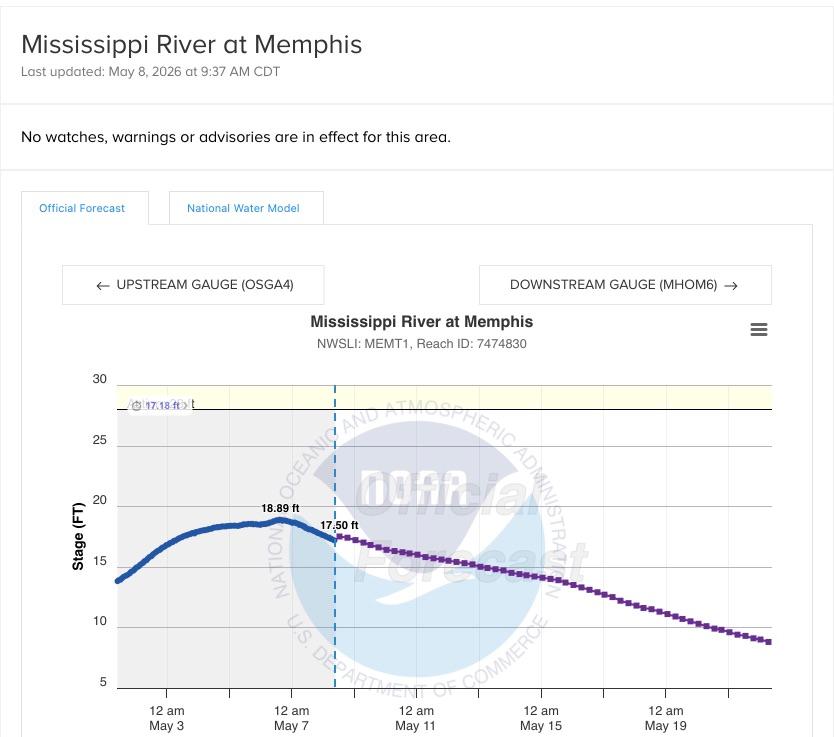
| | Arkansas and Mississippi River | |
Corn
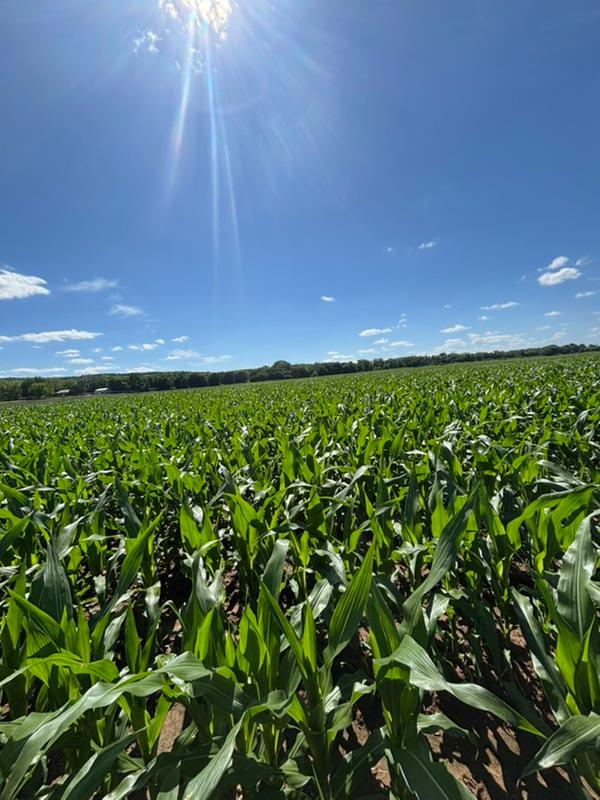
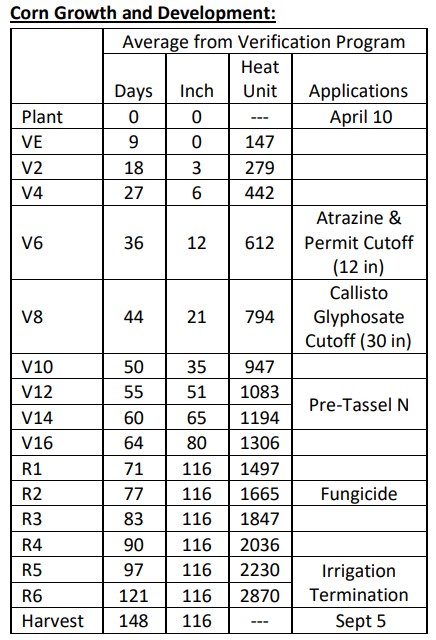
Well I started off last week talking about how much better corn was looking. Now this week I am going to just say some corn looks great and some looks blah again. Everything planted early went through the cool midweek without any issues. Those fields are taking in fertilizer and growing great. The later planted fields that are around V4-V5 are the ones that don't look so great. Those fields are yellow from the cool and need warm weather, sunshine, and nitrogen.
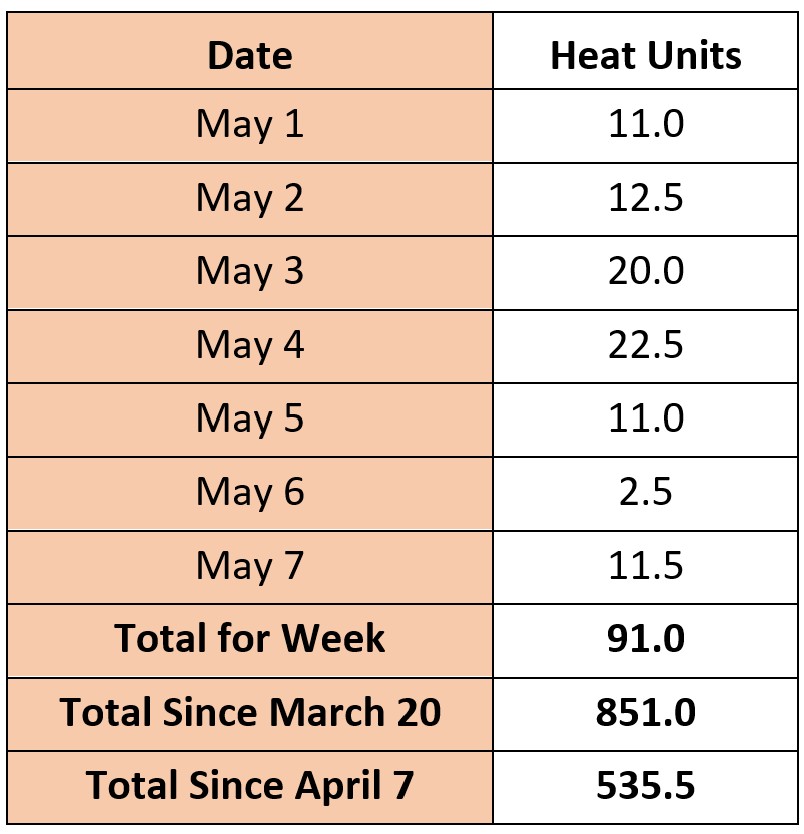
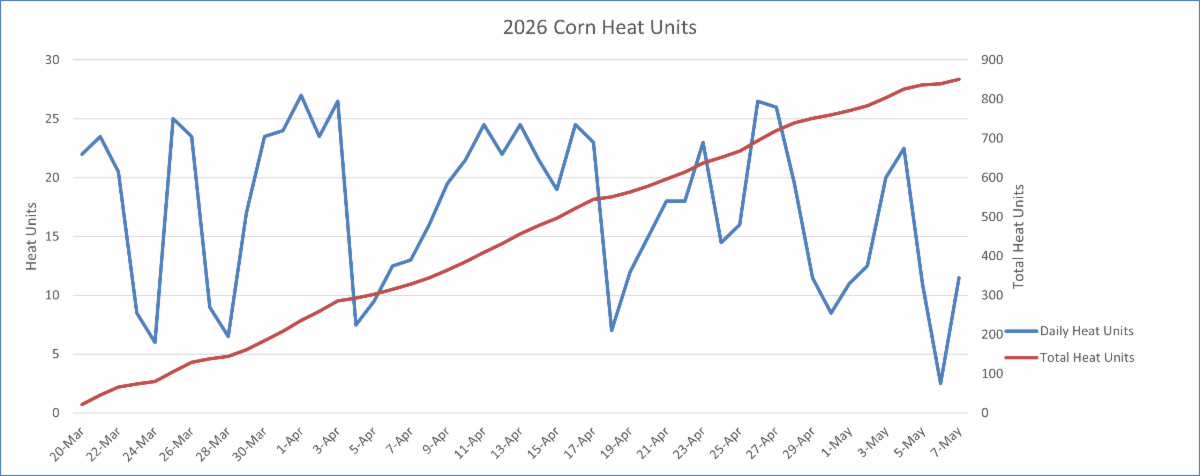
This was the lowest week for heat units all year. We only accumulated 91 heat units for the week. Wednesday we only saw 2.5 heat units! That is crazy for this time of year, and if you look at the chart that was the lowest number for a day all year long. Heat units for corn planted on March 20 is at 851 and for fields planted on April 7 there is 535.5 heat units. Early planted fields are at V8-V9 while late planted fields are around V5.
| | |
Rice
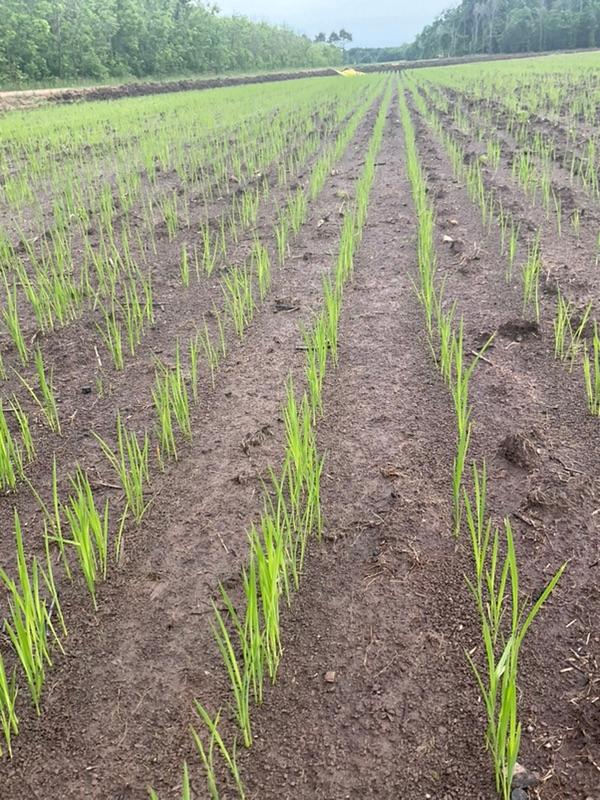
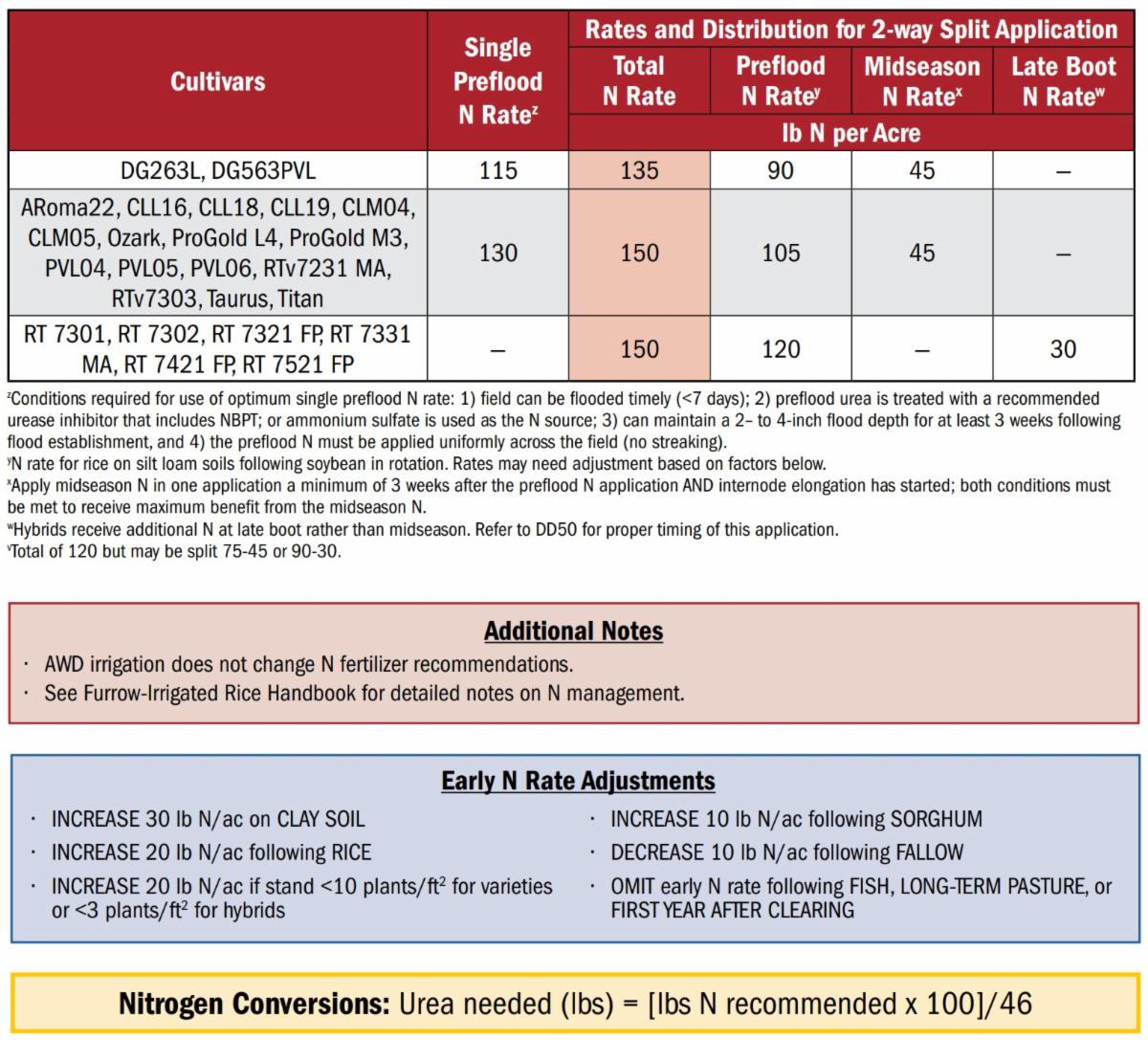
Windy conditions and rain delayed getting rice sprayed last week. Hopefully those acres will be getting sprayed soon as we are preparing to fertilize and flood. Looking at DD50's, most of the early preflood nitrogen can start going on around May 10 through May 20. That would be perfect world, with rice sprayed with a residual herbicide, the ground is dry with no water standing, and the pumps are ready to start to flood as the plane leaves the field. But that would be too easy, so be prepared to take action where needed. The last date for nitrogen on most fields to get good yield if that early nitrogen is delayed is early June. After that we start losing yield. I have included a chart below for nitrogen rates.
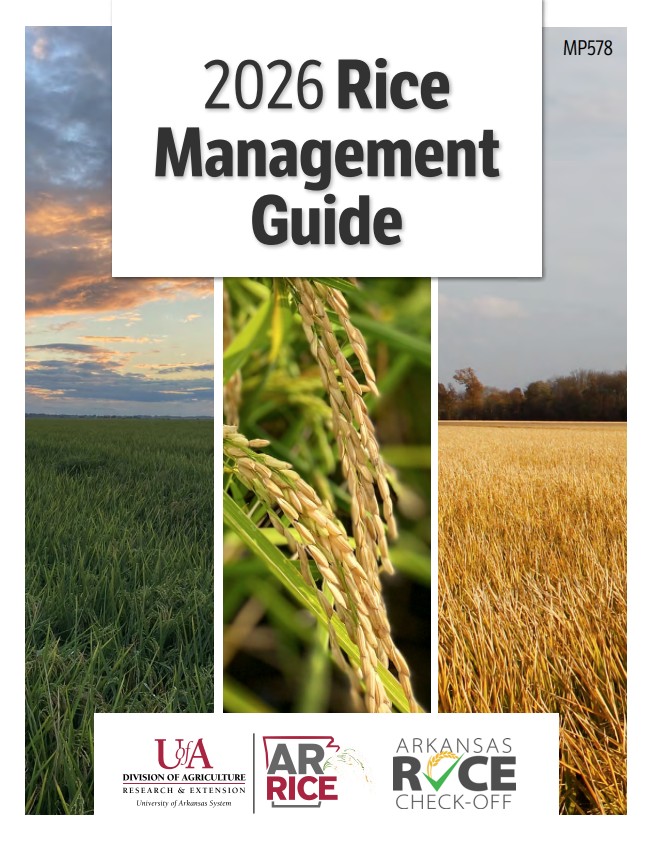
| | Latest rice update from Dr. Jarrod Hardke and our 2026 Rice Management Guide. | | |
Soybeans
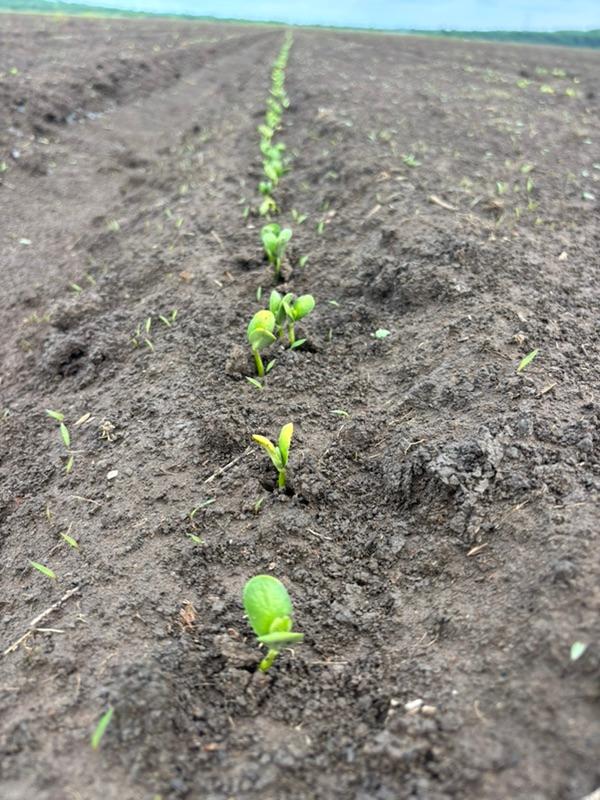
A few more acres of soybeans went in the ground early this week before the rain. It looks like several acres that were planted two weeks ago before the big rain just aren't going to make it. I held out hope as long as I could, and I have thrown in the towel and started thinking about replanting. There are also some ends of fields that water stood on that didn't come up so some of those ends will have to be dressed up some. Early planted soybeans look like they aren't enjoying the cool weather either. They seem to be just sitting there waiting for the temps to get better. Hopefully they come out of this soon and get to growing.
| | |
Worms in the Road
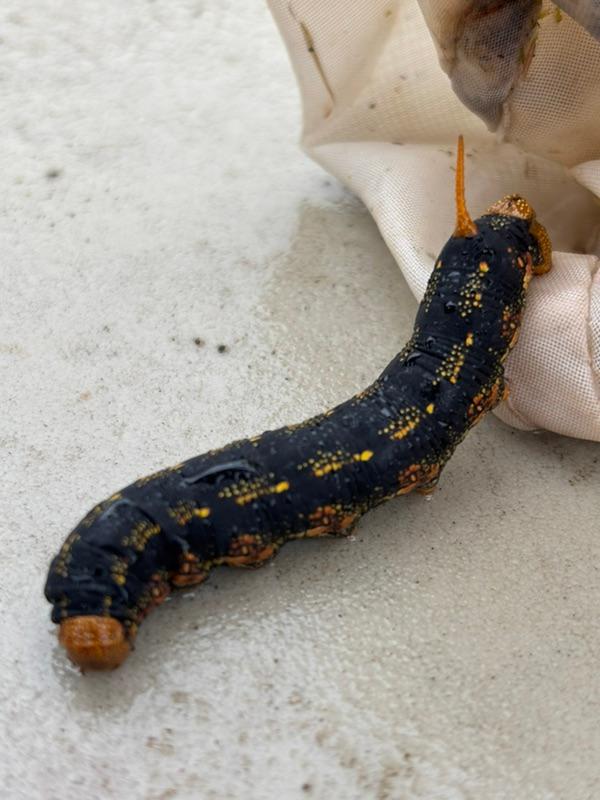
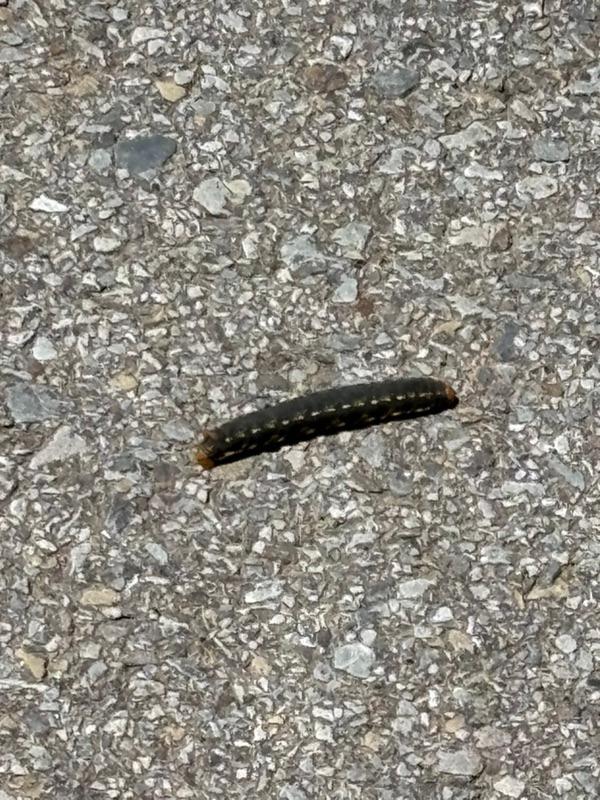
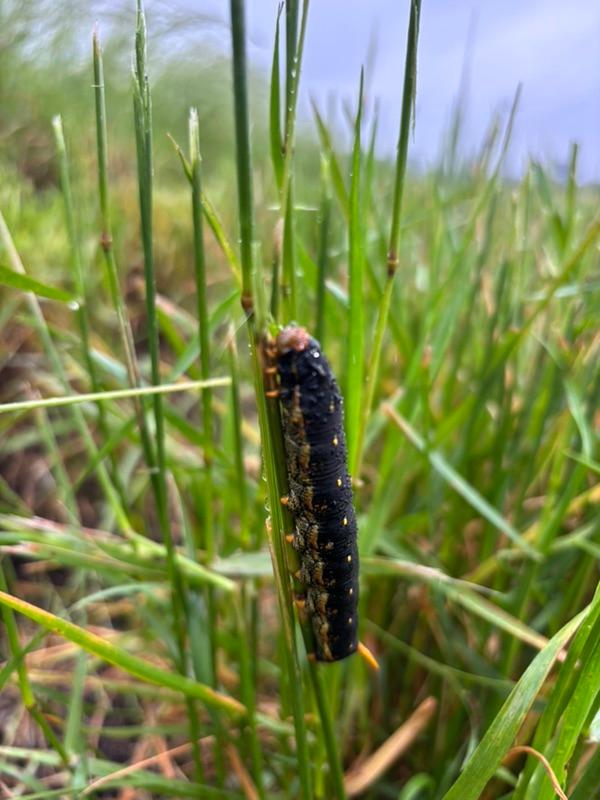
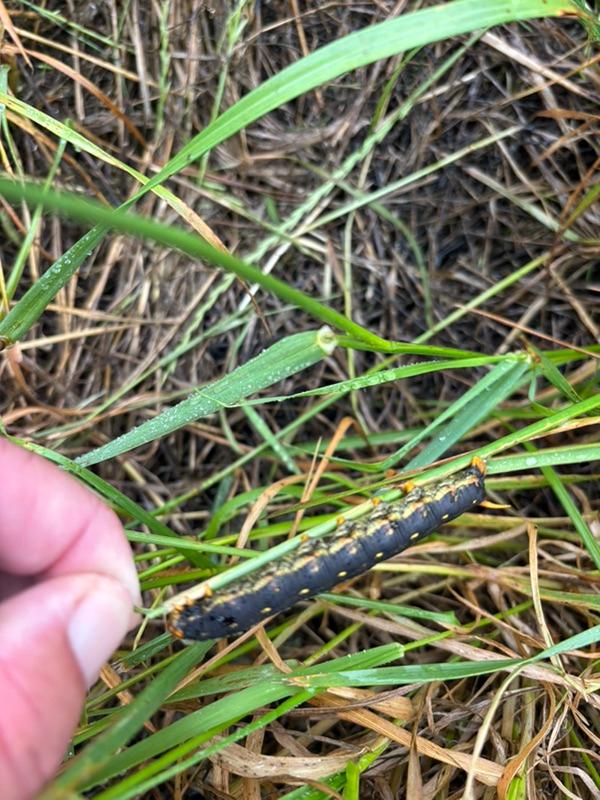
I have gotten a few calls about worms crossing the road down in Lollie. After going to investigate I found several crossing the road and in the ryegrass that was on the side of the road. These are white sphinx moth caterpillars. More than likely they were munching on cutleaf evening primrose out in some fields, but when those fields got disked and the sides of the roads got bushhogged, they headed across the road looking for other things to eat on. They don't harm any of our crops and they will be gone soon.
| | |
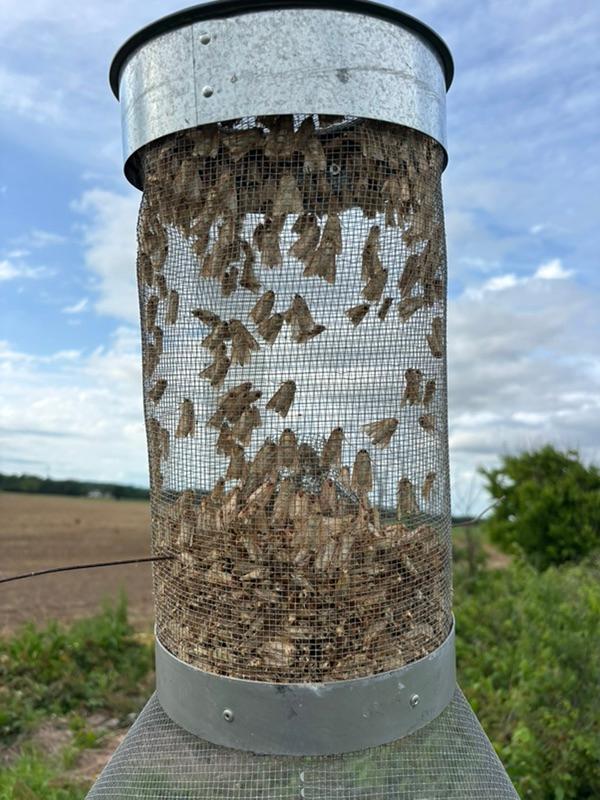
Corn Earworm Moth Traps
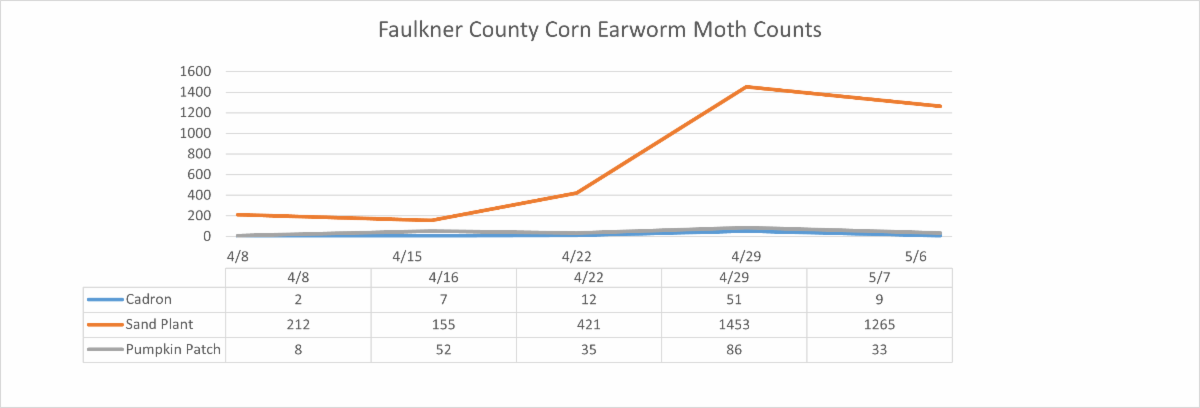
Corn Earworm Moth Counts for May 7, 2026
Cadron - 9
Sand Plant - 1265
Pumpkin Patch - 33
| | |
Arkansas net farm income remains steady in 2026 driven by government assistance
Dr. Hunter D. Biram, Assistant Professor and Extension Agricultural Economist, University of Arkansas,
Dr. Ryan Loy, Assistant Professor and Extension Agricultural Economist, University of Arkansas
Dr. James L. Mitchell, Assistant Professor and Extension Agricultural Economist, University of Arkansas
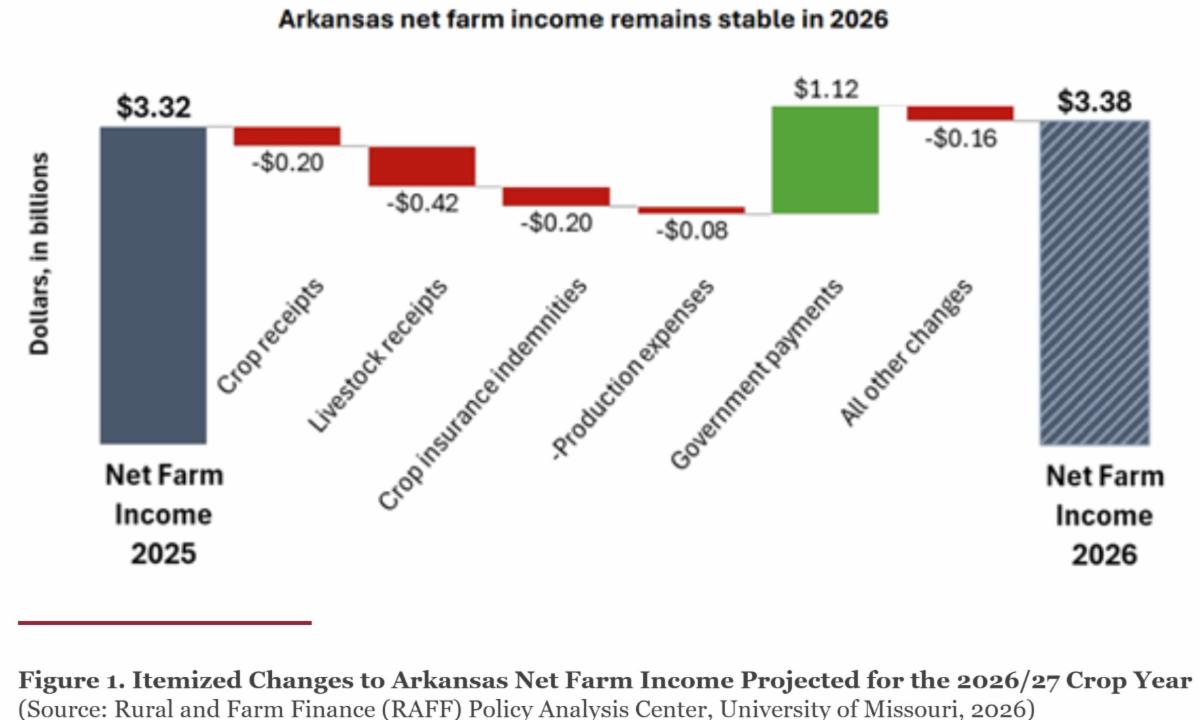
The Rural and Farm Finance (RAFF) Policy Analysis Center’s Spring 2025 projections show a $60 million (1.8%) increase in Arkansas’s net farm income compared to the previous year (see Figure 1). This improvement comes despite a $200 million reduction in crop receipts and an $80 million increase in production expenses. A key factor behind the rise in income is a $1.12 billion increase in government payments, which include both supplemental and ad hoc disaster assistance—most notably, from the Farmer Bridge Assistance (FBA) program, a 35% “top up” to the Supplemental Disaster Relief Program (SDRP), and the Price Loss Coverage (PLC) program. In addition to the increases from FBA, PLC, and a “top up” to SDRP, RAFF also includes a 13% increase in national ad hoc disaster assistance projected by the Food and Agricultural Policy Research Institute.
| | |
Arkansas crop receipts are projected to fall for the fourth consecutive year to $11.8 billion, down $626 million (5%) from 2025 and $2.2 billion (16%) from 2022. Corn receipts are projected to fall to $51 million in 2026, down 7% year-over-year. Cotton receipts are projected to drop 21% year-over-year to $511 million. Rice receipts will decline by 27% to $920 million, the lowest in 20 years and is the largest projected decline of any major row crop in the state. Soybean receipts will partially make up for the decline in rice receipts with a projected increase of $332 million to $1.77 billion. The projected declines in corn, and rice receipts are largely attributed to acreage reductions, with acreage projected to decline by nearly 100,000 (12%). Rice is projected to decline by 359,000 acres (28%), the largest decline in planted acreage in over 10 years. Rice planted acreage is projected to be at 925,000 acres which is the lowest acreage since 1983. The decline in cotton receipts is largely driven by low beginning inventories spurred by depressed prices, as well as a slight reduction in yield per acre.
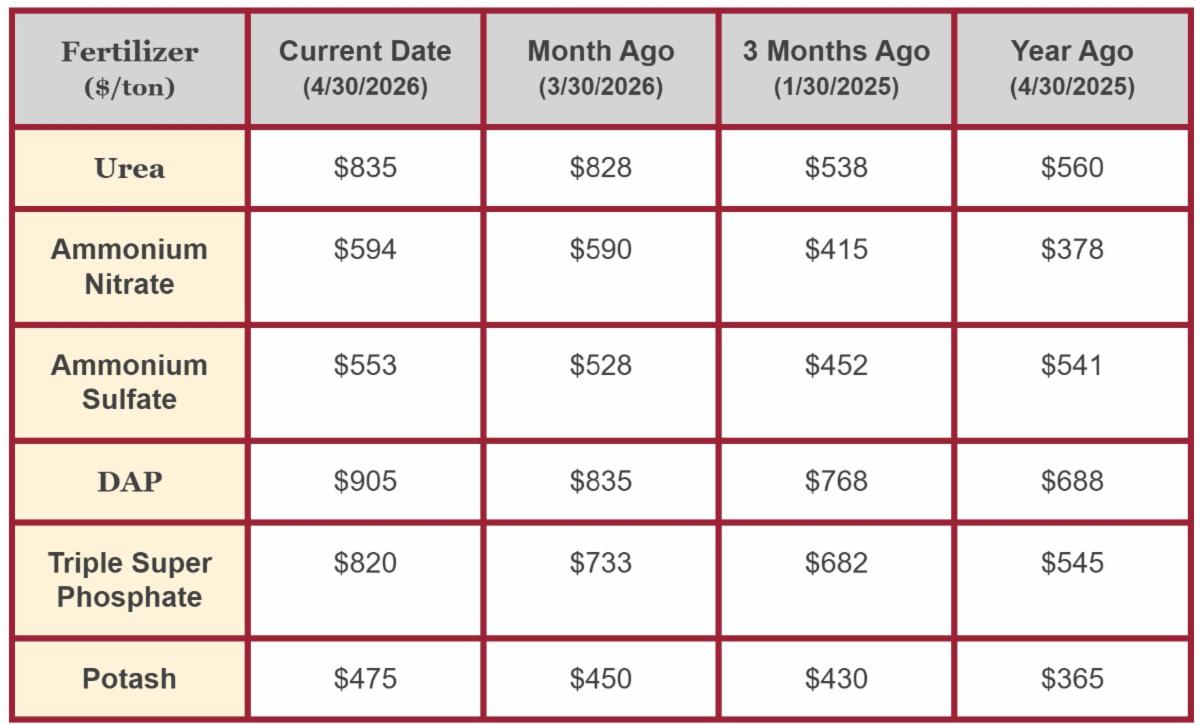
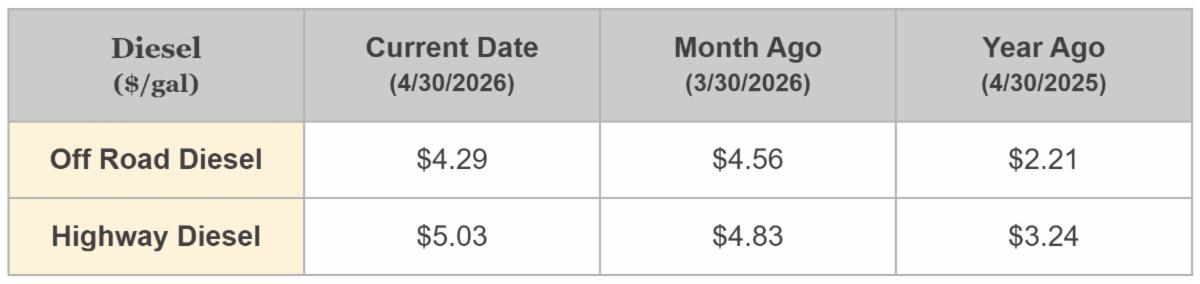
Total production expenses are projected to increase by $80 million which is driven mostly by a $212 million increase in expenses for fertilizer and fuel driven by the conflict in the Middle East. Arkansas crop margins are, at-best, tight with most farmers facing negative margins. Many farmers are once again in a year where choosing a crop that has the greatest likelihood of lowest lost is the best case scenario. Total acreage across principal crops is projected to remain essentially unchanged with a slight increase of around 100,000 acres largely driven by the shift to soybean production. In most instances, farmers will likely shift rice and corn acreage to soybeans. Not only do soybeans face the lowest potential loss, but soybeans are also the lowest cost crop to produce at nearly half of the cost to produce corn, cotton, or rice which reduces the amount of loan value at risk on the part of the lender.
On the livestock side, receipts are projected to decline 5% in 2026, with notable changes being a nearly half billion dollar decline in egg receipts driven by low egg prices. Egg prices are projected to decline 50% from $3.03/dozen to $1.51/dozen due to easing of Highly Pathogenic Avian Influenza (HPAI). Broiler chicken receipts are projected to rise slightly by $38 million (1%) to $5.51 billion driven by stable prices and increased production. Cattle and calves receipts are projected to increase by $18 million (2%) to nearly one billion dollars with higher prices offsetting lower marketings.
A link to the full report from RAFF may be found here: Spring 2026 Arkansas Farm Income Outlook.
| | Beef, Small Ruminants, & Forages | | |
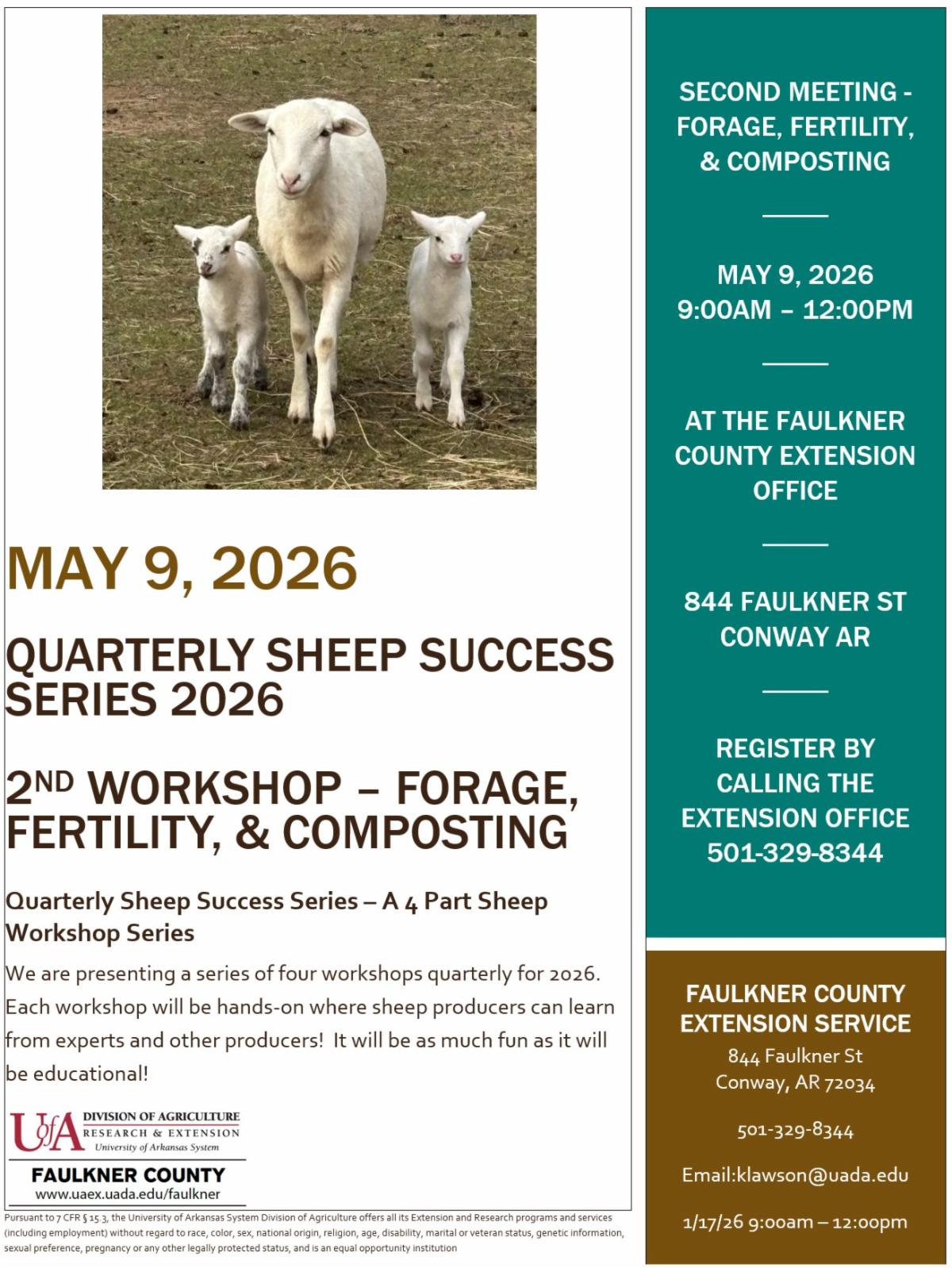
Quarterly Sheep Success Series 2026 Second Workshop
Our 2nd Quarter Sheep Success Series meeting will be tomorrow starting at 9:00. If you have attended before remember to bring your binder!
Speakers include:
Dr. Matt Bertucci - "How to compost at home and on-farm"
Dr. Dan Quadros - "Animal waste management: making the most of manure"
Dr. Bronc Finch - "Soil Fertility and Soil Tests"
Kevin Lawson - "How to do a hay sample and how to read the report"
| | |
Forages
Forages in Faulkner County as still trying to turn around. The cool weather has really slowed down growth even with the rains. We need warm weather and fertilization to kick off these forages. I want these nighttime temperatures to straighten out before we fertilize, but we are already almost 10 days into May. I think after this round of rain on Sunday we need to be ready to fertilize before the next round of rain comes through.
| | |
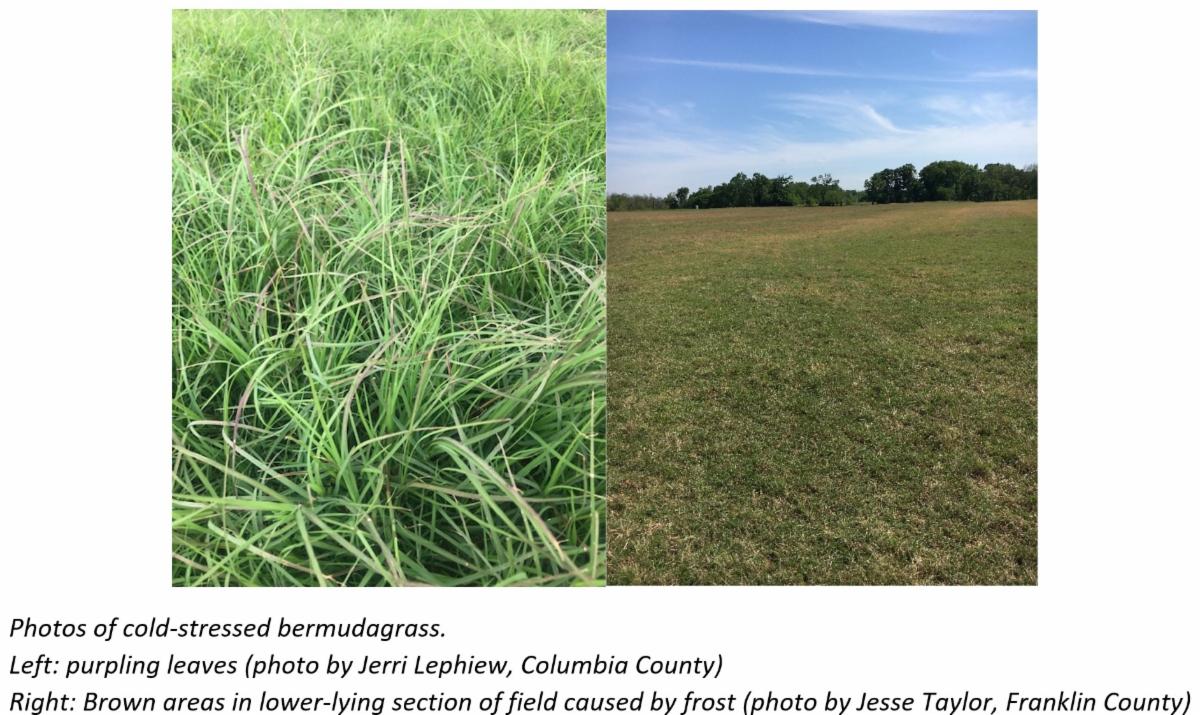
Investigating purple Bermudagrass – it’s a cold case
Dr. Jonathan O.C. Kubesch - Extension Forage Specialist
Producers have recently noticed bermudagrass turning purple and are trying to root out the cause. The evidence indicates that many cases involve well-managed hay fields. Many of these fields were treated for winter weeds and fertilized to support early bermudagrass growth. No obvious insect problems have been reported, soil fertility is variable among cases, so from there the evidence goes cold.
| | |
Let’s examine the physiology of the victim – the bermudagrass itself. This is a warm-season grass. It grows best at temperatures above 85 degrees. Green leaf tips always show up in March especially when there is no overburden of winter weeds to block sunlight. But it takes a series of consecutive warm nights above 60 degrees to get the internal machinery of the grass working efficiently. Early on, the bermudagrass will start to grow on warm days, then gets shut down when temperatures drop back. Night temps in the 40’s shut down growth for several days. It’s a bit like trying to start a cold engine - it hits, sputters, hits, then finally starts sluggishly.
Now think back to a few weeks ago in late March and into early April. Temperatures hit 80+ degrees in late March. The warmup prompted a lot of producers to fertilize fields to push the bermudagrass out of dormancy for early growth. Then temperatures took a dive for several days and warmed back up just before Easter. It was as if Spring had finally sprung, then Blackberry Winter hit right about Easter. Temperatures dropped and frost even occurred in northern areas. Blackberry winter is an old-timer saying referring to the often-annual event when spring temperatures suddenly drop just about the time the blackberry briers start blooming. The tender growth of the bermudagrass, fueled by sunlight and fertilizer suddenly sputtered and stalled. Purpling is often due to accumulation of anthocyanin pigments due to stress. It is frequently associated with cold-weather induced phosphorus deficiency. Plants normally grow out of it when warmer weathers arrives.
Some key points here:
1. Controlling winter weeds is a good practice to allow more sunlight to reach the grass and to warm the soil;
2. Temperatures frequently turn cold sometime during late March and early April which can stress the plants being pushed out of dormancy early;
3. Don’t apply N fertilizer too early in spring to warm-season grasses – wait for a week of night temperatures of 60 degrees.
| | |
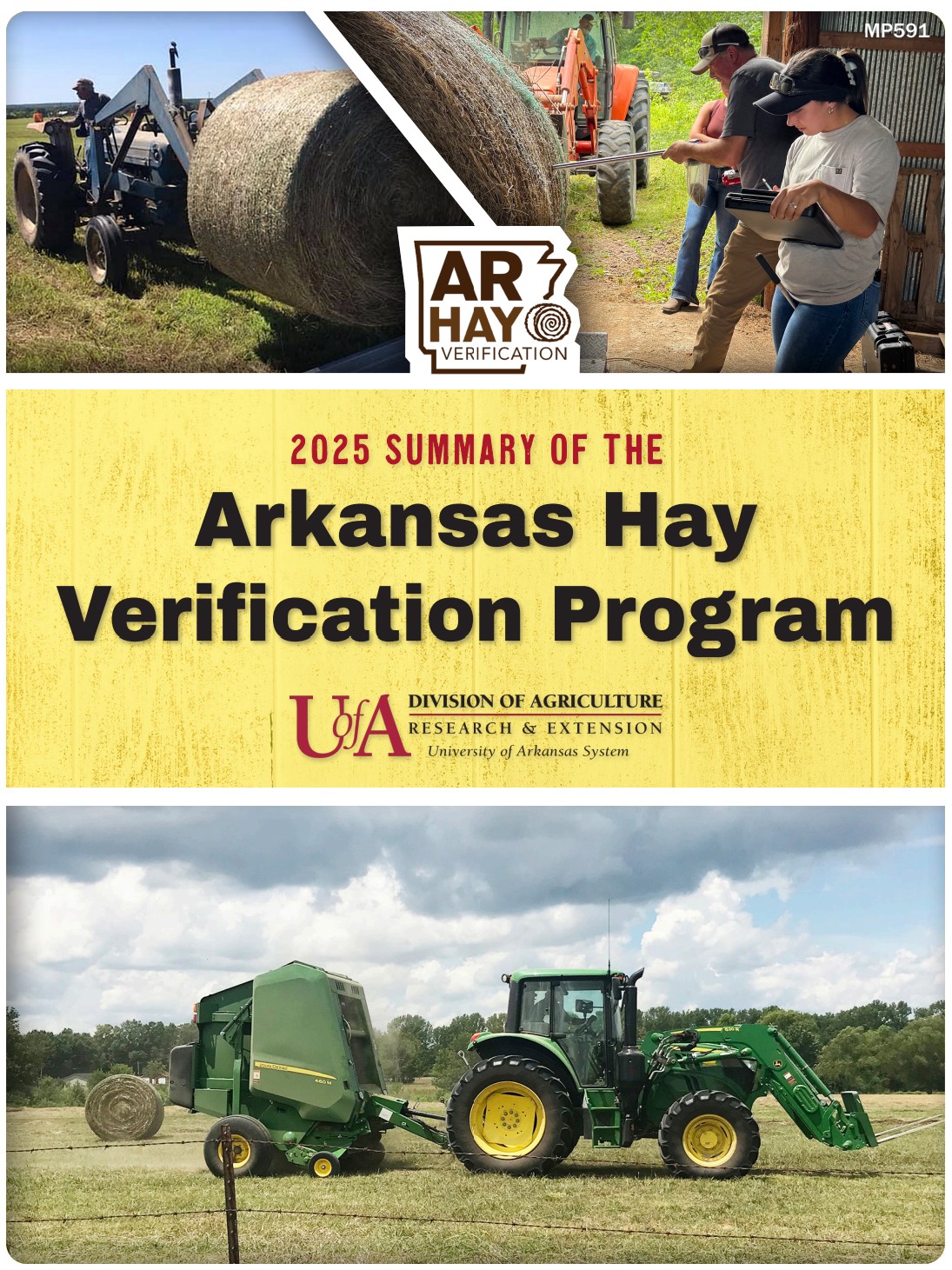
Arkansas Hay Verification Program Summary
This report summarizes results from the 2025 Arkansas Hay Verification Program (AHVP). The AHVP is a collaborative effort among Arkansas forage producers, county Extension agents, and state Extension specialists. The program’s purpose is to verify the effectiveness of Extension recommendations for economically producing high-yielding, high-quality hay through collaboration aligned with producer goals and management practices.
The AHVP provides management recommendations on an as-needed basis and collects information on inputs and management decisions throughout the production season. Economic analyses are conducted for each operation to provide insight into operating costs, breakeven thresholds, and overall profitability, thereby strengthening on-farm decision-making.
Fields across Arkansas that are primarily used for hay production may enroll in the AHVP for two years. In 2025, seven fields located in Cleveland, Drew, Faulkner, Grant, Marion, Pulaski, and Stone counties participated in the program. Fields are required to be managed for hay production throughout the growing seasons in which they are enrolled. The 2025 fields represented a variety of predominantly warm-season forage grasses.
Total acreage enrolled in the 2025 AHVP was 287.5 acres, with an average field size of 41.07 acres. Total production reached 677 tons, averaging 3.24 tons per acre. Based on the national average hay price of $138 per ton received by farmers in August 2025, the estimated average value of production was $447.12 per acre. (USDA-NASS, 2025).
| | |
Faulkner County Cattlemen's Meeting
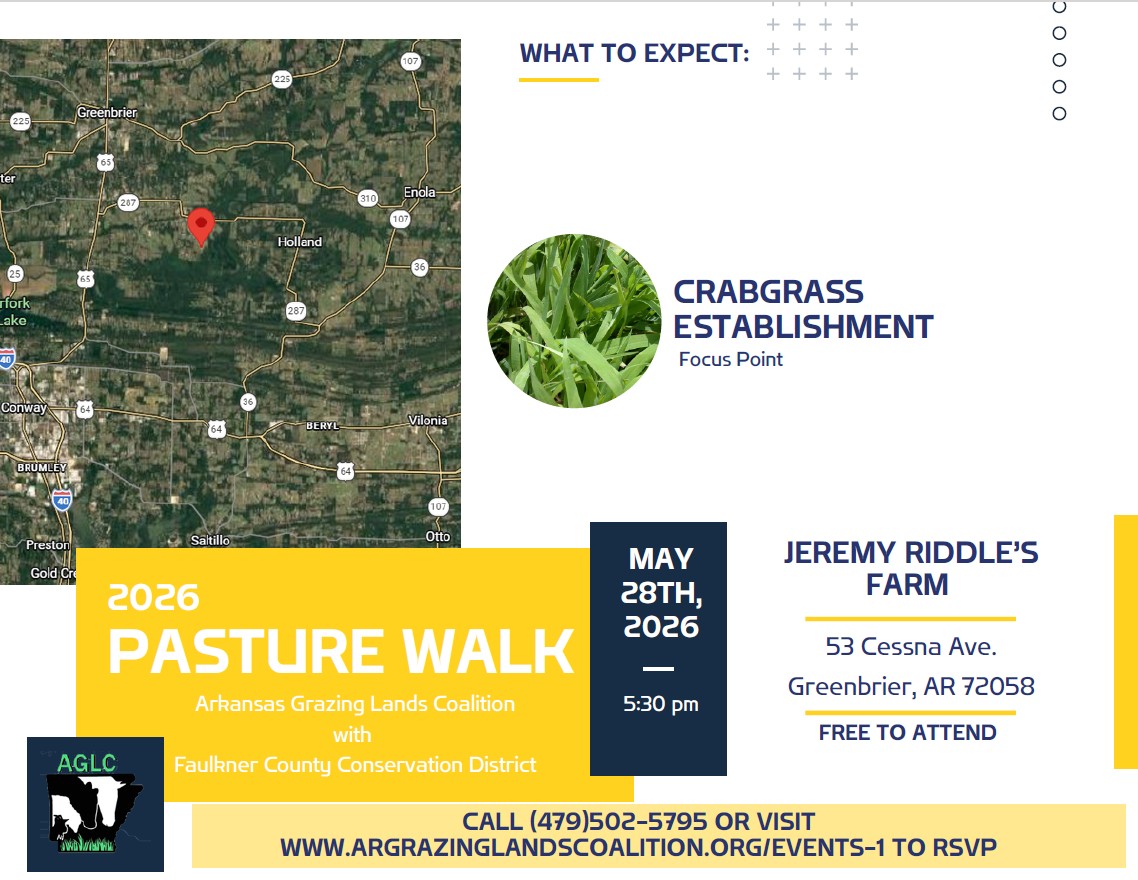
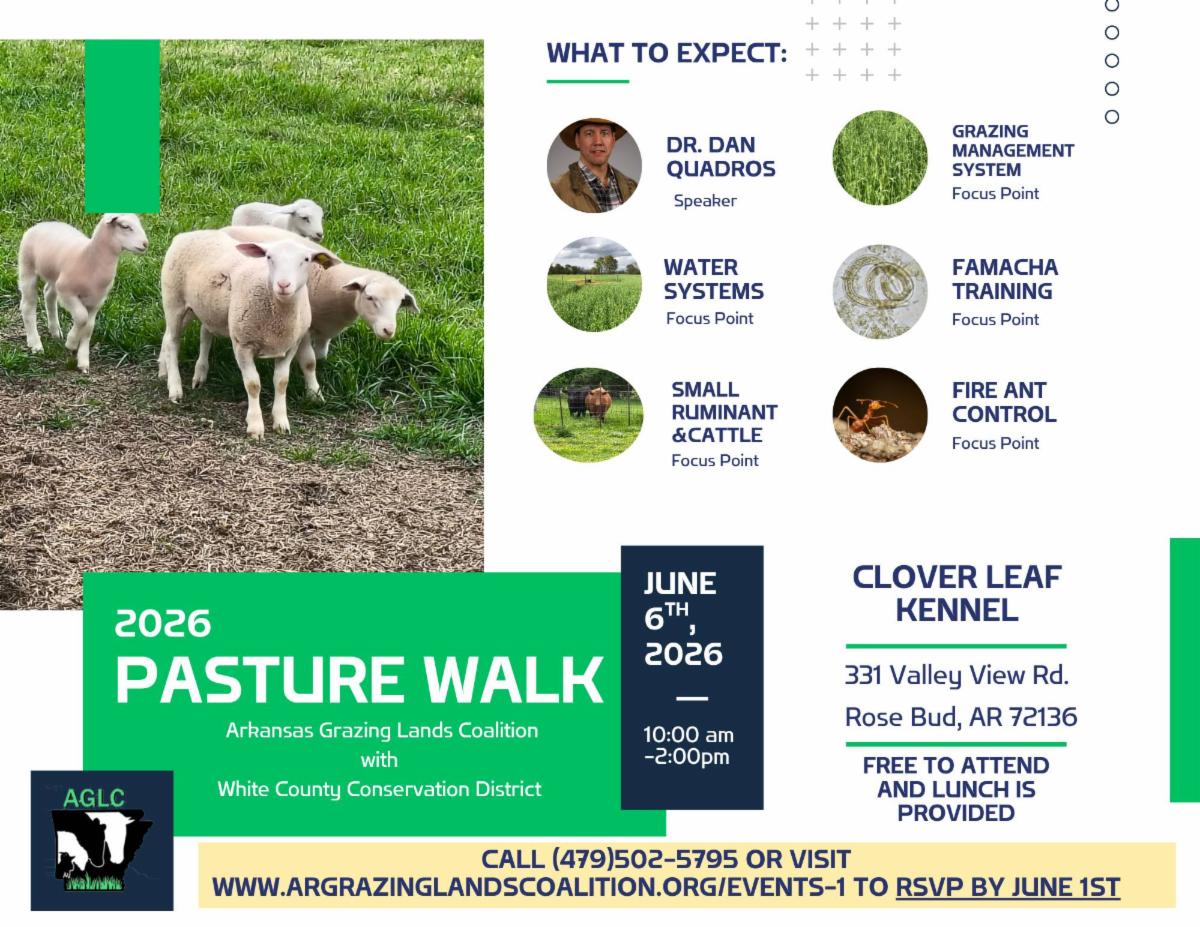
The next Faulkner County Cattlemen's meeting will be on May 28 at the Jeremy Riddle Farm in Greenbrier. The actual Cattlemen's Meeting will start at 6:30, but for anyone that wants to come early we will have a pasture walk looking at establishing crabgrass sponsored by the Arkansas Grazing Lands Coalition and the Faulkner County Conservation District.
| | |
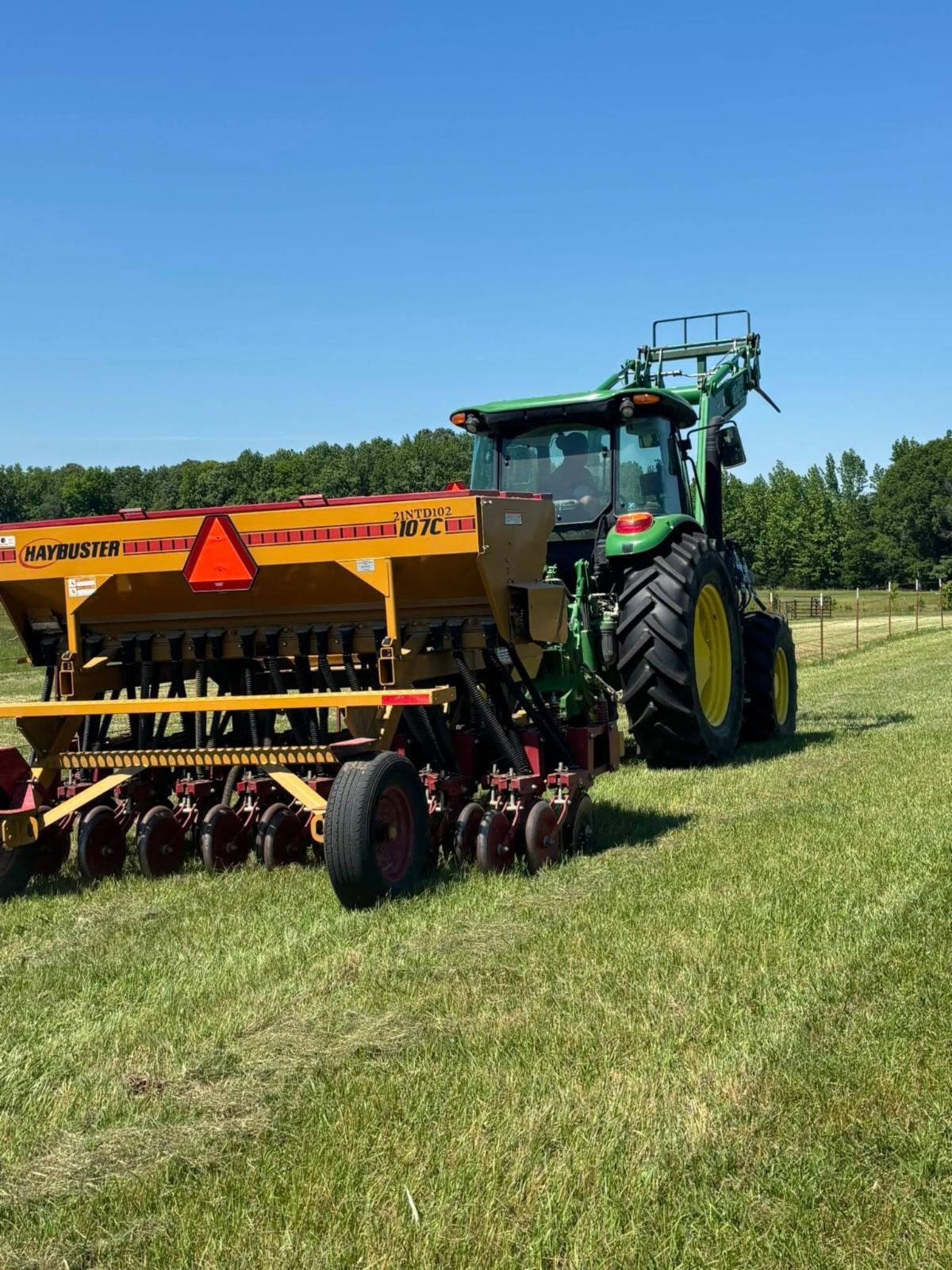
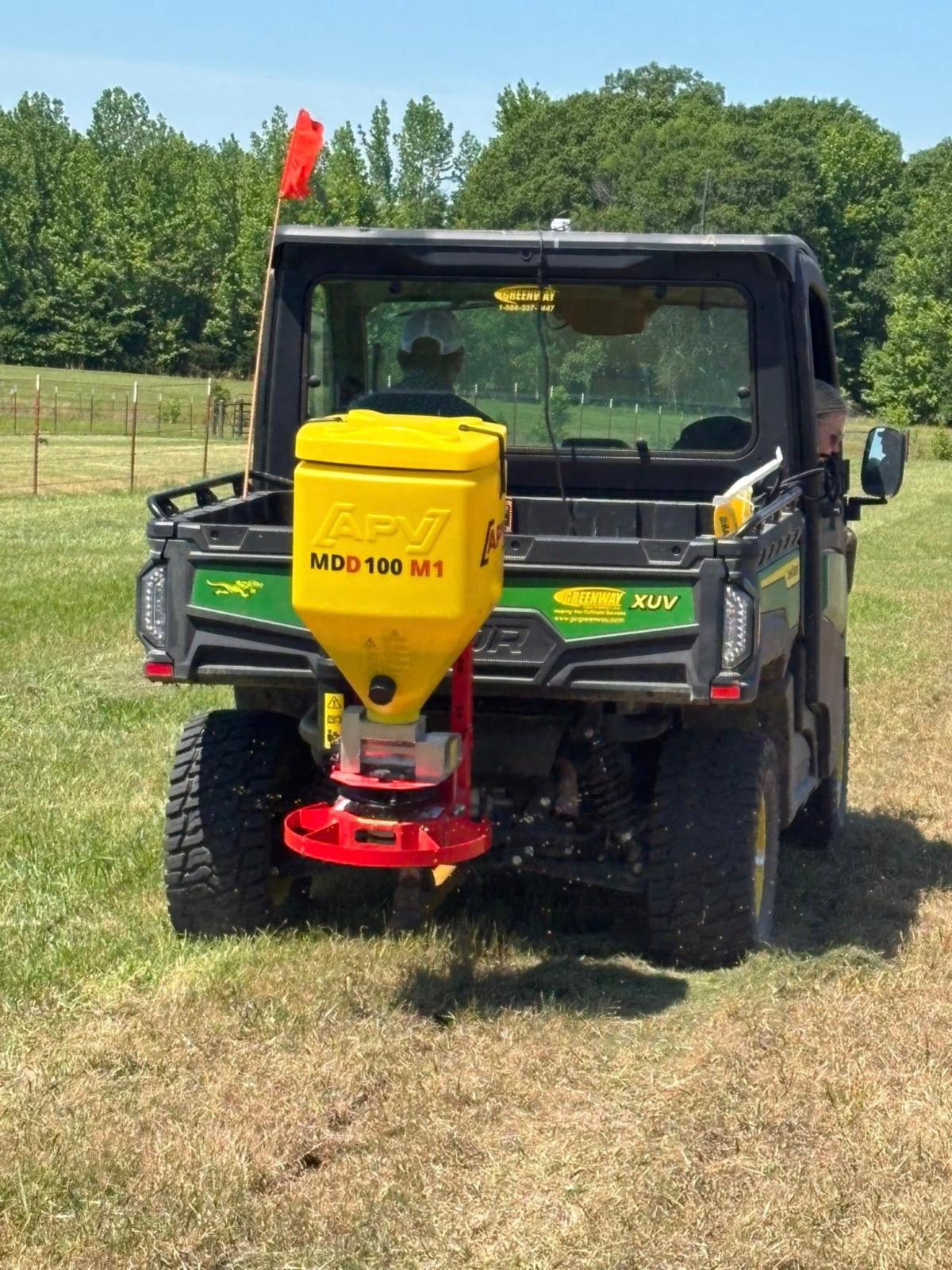
Crabgrass Establishment Demonstration
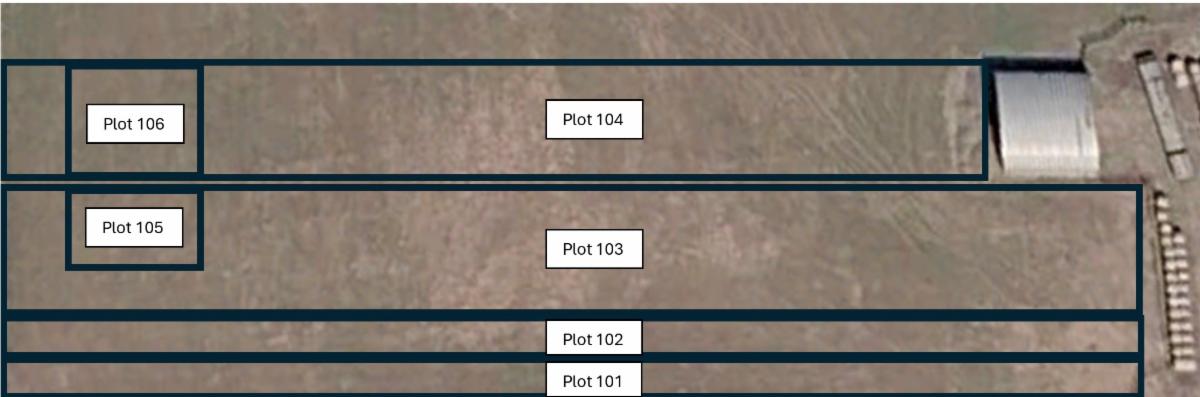
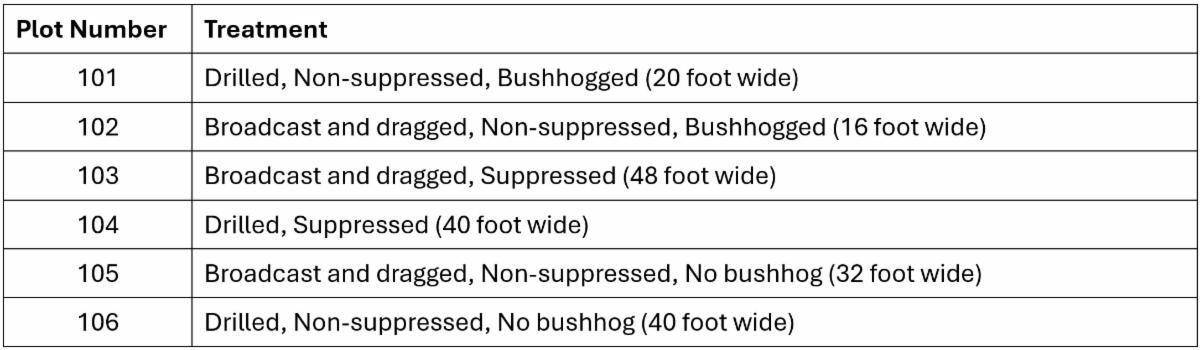
We planted the crabgrass demonstration on May 4th. This is the demonstration we will be doing the pasture walk on. We have six different plots. We have drilled on suppressed sod, non suppressed but bushhogged sod, and no suppression or bushhogging and then we have broadcast on the same sod treatments. This will count towards continuing education for anyone with an EQIP contract.
| | |
Timing Bermudagrass Turnout for Maximum Summer Production
Mason B. Henson, Oklahoma State University Sustainable Livestock Production Specialist
Mark Z. Johnson, Oklahoma State University Extension Beef Cattle Breeding Specialist and
Much of Oklahoma’s bermudagrass finished the summer and fall of 2025 with some degree of drought stress. Input costs, especially fertilizer have spiked in price over the past several weeks. Now, in the season when soil temperature and photoperiod are priming warm season grasses to grow, it is important to assess pastures and manage for long-term health and productivity. Over the next three weeks, we will address bermudagrass pasture management, the use of warm season annuals and legumes as a means to improve range health, beef production and profit potential.
Spring rainfall and increasing temperatures results in rapid green-up of bermudagrass, creating the appearance of readiness for grazing. However, initiating grazing too early in the growth cycle can have negative consequences for pasture productivity throughout the remainder of the season. Proper timing of initial grazing is critical to ensure plant health and maximize forage yield.
During early spring growth, bermudagrass relies heavily on energy reserves stored in roots and rhizomes. The initial development of leaf tissue is supported by these reserves rather than current photosynthetic activity. Before the plant can sustain active growth, it must rebuild root reserves and establish a functional photosynthetic system. This process requires adequate leaf area and time. Grazing during this early stage removes leaf tissue that is essential for energy production, limiting the plant’s ability to replenish reserves. As a result, root development may be restricted, and overall plant vigor can be reduced. Although the pasture may continue to appear green, the long-term effects often include decreased forage production, slower recovery following grazing, and reduced tolerance to environmental stress, particularly drought.
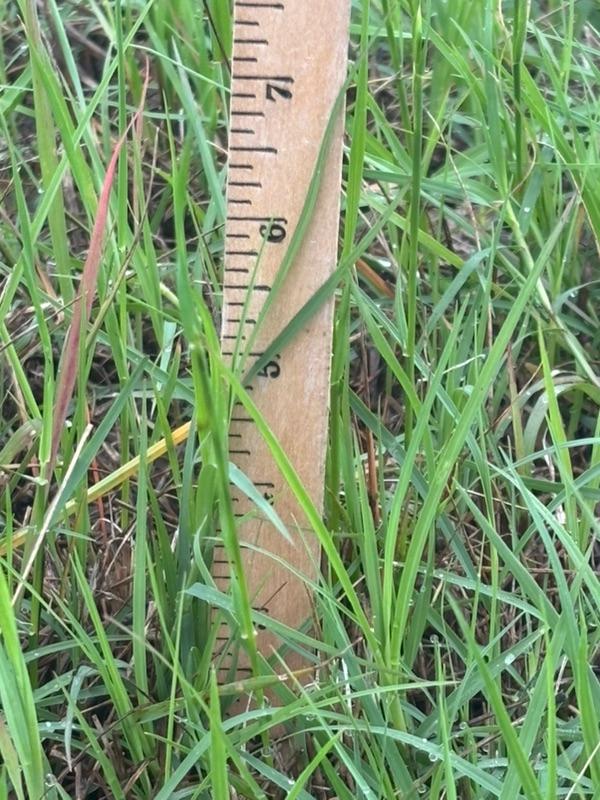
To minimize these risks, grazing should be delayed until bermudagrass has reached an appropriate height, generally between 6 and 8 inches, and exhibits consistent, active growth. This indicates that the plant has transitioned from reliance on stored reserves to sustained growth supported by photosynthesis. Monitoring growth patterns rather than relying solely on visual greenness can improve grazing decisions.
Delaying turnout may require temporary adjustments in management, including continued use of stored forages or alternative grazing areas. Protecting bermudagrass during this early stage helps ensure stronger growth, better yields, and improved resilience if conditions become dry later in the summer. With favorable moisture conditions, bermudagrass has the potential to produce substantial forage yields. Ensuring that grazing is initiated at the appropriate time is a key factor in realizing that potential and maintaining pasture productivity throughout the summer.
| |
FDA Approves First Generic Moxidectin Oral Drench for Treatment of Internal Parasites in Sheep
The U.S. Food and Drug Administration has approved Moxidectin Oral Drench for Sheep (moxidectin) for the treatment and control of internal parasites in sheep, a minor species. Moxidectin paralyzes the muscles and nervous systems of internal parasites, preventing the parasites from feeding, moving, or reproducing. Eventually, the parasites die and are eliminated from the animal’s body.
Moxidectin Oral Drench for Sheep contains the same active ingredient (moxidectin) as the approved brand-name drug product, Cydectin Oral Drench for Sheep, which was approved in 2005. The FDA determined that Moxidectin Oral Drench for Sheep is bioequivalent to the brand-name product.
Moxidectin Oral Drench for Sheep is available over the counter in one-liter and four-liter bottles. The recommended rate of administration into a sheep’s mouth is 1 mL per 11 lbs. (1 mL per 5 kg) of body weight, which provides a dose level of 0.2 mg moxidectin per 2.2 lbs. (0.2 mg/kg) body weight.
Sheep must not be slaughtered for human consumption within 7 days of treatment. Because a withholding time in milk has not been established for this product, do not use in female sheep providing milk for human consumption.
Moxidectin Oral Drench for Sheep is sponsored by First Priority, Inc. of Elgin, Illinois.
Comment from Dr. Dan Quadros - "It is not a new drug. It is a generic. Generics are normally a cost-effective alternative to brand-name drugs. However, from a parasite management perspective and the problematic drug resistance, it does not change anything."
| |
Arkansas Shepherds Association
The Arkansas Shepherds Association is an organization for sheep owners or businesses that want to support the Arkansas sheep industry. They will have lots of information for sheep owners and an annual educational workshop.
| | |
Pesticide Applicator Trainings
There will be no more in person Pesticide Applicator Trainings until this winter. If you need a license you can still do the training online. There is a link below for the online training and a link to check your license status.
| | |
Livestock Market Report
The following links are for the weekly livestock market report from the Arkansas Department of Agriculture website and the Livestock Auction Dashboard from USDA. Both sites have marketing data for all livestock sold at Arkansas Sale Barns.
| | |
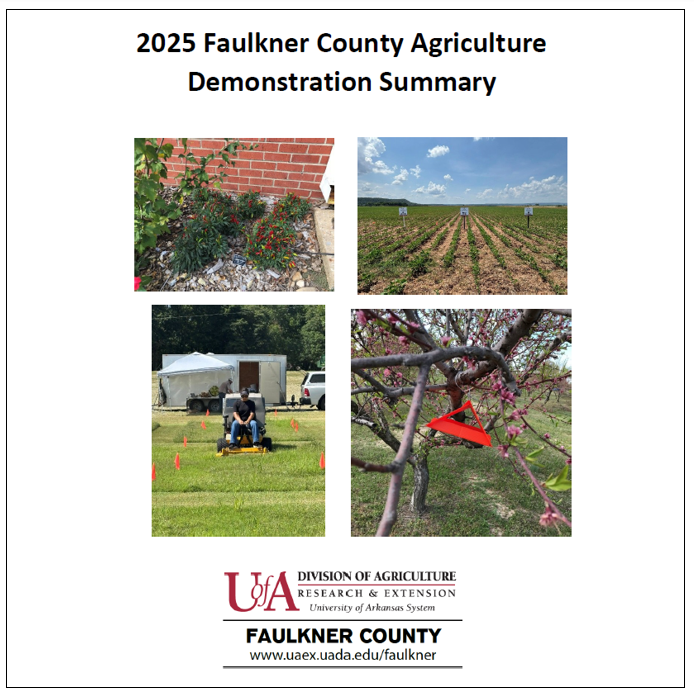
2025 Faulkner County Agriculture Demonstration Summary
The 2025 Faulkner County Agriculture Demonstration Summary is now available at the link below.
The 2025 Faulkner County Demonstration Summary is a collection of on-site demonstration results conducted in Faulkner County by local County Agents. Demonstrations are the cornerstone of the University of Arkansas System Division of Agriculture Cooperative Extension Service’s mission which is:
“We strengthen agriculture, communities, and families by connecting trusted research to the adoption of best practices.”
On-site demonstrations allow producers and homeowners to see firsthand how Extension recommended varieties and best management practices work in their counties and surrounding area.
| | |
Sign up for Text Alerts
You can now sign up for text alerts from me throughout the year. I have two areas you can sign up for which includes Faulkner Livestock or Faulkner Ag (Row Crop Updates). To sign up you can follow one of these links or use the QR Codes below.
| | Pursuant to 7 CFR § 15.3, the University of Arkansas System Division of Agriculture offers all its Extension and Research programs and services (including employment) without regard to race, color, sex, national origin, religion, age, disability, marital or veteran status, genetic information, sexual preference, pregnancy or any other legally protected status, and is an equal opportunity institution. | | | | |