e-Newsletter | August 19, 2022
|
|
Just Announced - Tuesday, August 30, 7pm - 8pm.
Bartlet Mall: "The Beautiful and Healthful Resort"
The Bartlet Mall was built on, and pays homage to, an ancient town common. The park, with its broad paths, shade trees, and fountain, was designed by noted landscape architect Charles Eliot to improve the lives and health of the citizens of Newburyport and has done so for over a century.
In Newburyport, a city full of parks, what is so special about this one? For the answer to this question, join architect Charles Griffin, who lives in the Old Gaol compound adjacent to the Mall, for an illustrated historical exploration of this National Register treasure. Learn how the upcoming restoration of the Bartlet Mall will fulfill Eliot’s vision that it serves as “the beautiful and healthful resort” for the community, and how failure to act will doom this resource.
|
|
And don't forget - This Sunday, August 21, 10am - 11:30 a.m.
Prior to 1842, Oak Hill Cemetery was known as Old Maid’s Hall and consisted of about fifty burial sites in a small area. In January of 1842, leading Newburyporters formed a board of trustees to oversee the design and management of a rural garden cemetery, which was to be one of the first in the United States. The new cemetery was consecrated in July 1842. Join Ghlee Woodworth for a stroll through Oak Hill, final resting place of shipwrecked sailors, sea captains, and merchants, architects and photographers, writers and poets, silversmiths and newspaper editors, and adventurers who travelled to the Klondike gold rush. $15 adults, $10 Museum of Old Newbury members.
|
|
Constructing the Newburyport Turnpike, 1803-1805 |
|
by Charlie Gaillard
In the fall of 2021, as a candidate in the Master in Design Studies program at Harvard’s Graduate School of Design, I had the opportunity to pursue a research project on the history of the Newburyport Turnpike. The turnpike, constructed from 1803–1805, was an ambitious speculative venture pursued by a group of Boston and Newburyport investors. One of the most expensive projects of its kind, it failed to recoup its expenses and the Newburyport Turnpike Corporation dissolved in 1852. Many thanks to the Museum of Old Newbury for allowing me to access their archives and to Sharon Spieldenner for facilitating my research on this fascinating enterprise. The following excerpt details the construction of the original turnpike.
Massachusetts dominated turnpike construction in the first decade of the nineteenth century. During this period, straightness in road planning became an idée fixe among road planners. Straightness was, historian Philip E. Taylor writes, the feature “for which nearly every other consideration was sacrificed.” Almost all of the Massachusetts turnpikes followed this maxim, and the Newburyport Turnpike was no exception.
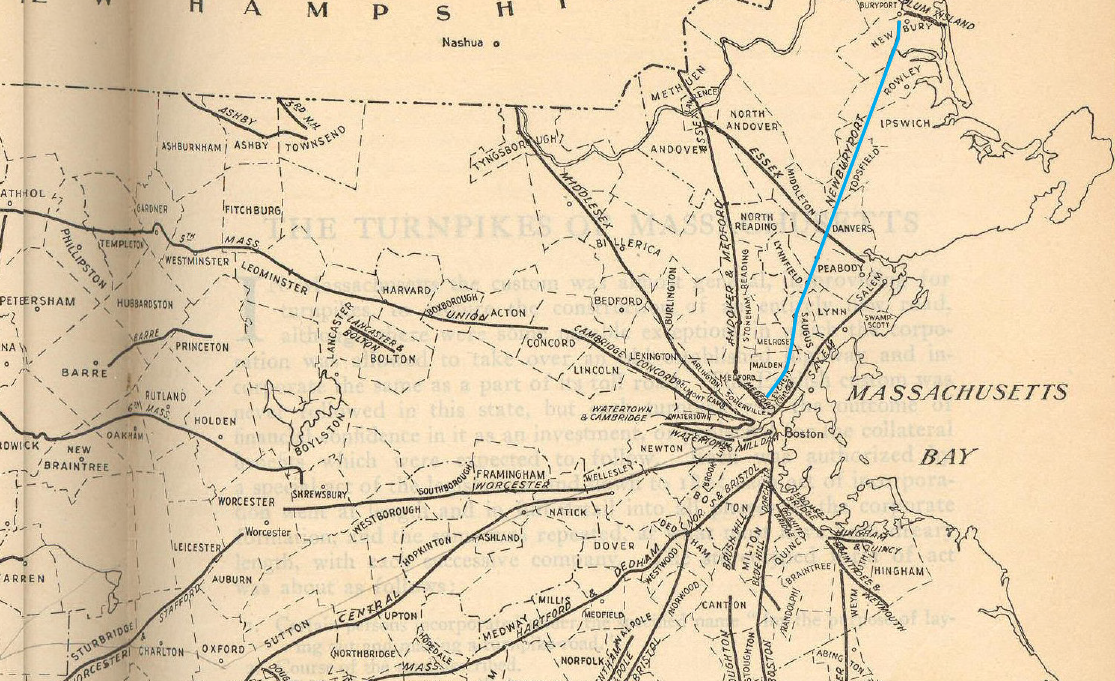
The Newburyport Turnpike received its charter in 1803, which proved to be the high-water mark of turnpike incorporation in New England. These roads tended to be much more expensive to construct than earlier inland turnpikes. There were several reasons for this change. First, this phase centered around the relatively dense Greater Boston area, and as a consequence the land damages paid out were much more expensive. Second, planners’ increasing adherence to straightness made construction more demanding and labor-intensive. The mean cost per mile for Massachusetts turnpikes was $1,940; in comparison, each of the Newburyport Turnpike’s thirty-two miles cost, on average, a staggering $11,730 to build.
|
|
Fig. 1. Map of New England turnpikes (with the Newburyport Turnpike highlighted in blue). Image courtesy of Wood, The Turnpikes of New England (Boston, MA: Marshall Jones Company, 1919).
Construction began on August 23, 1803, proceeding southward from State Street in Newburyport. The roadbed was laid out in several stages. For each section, the directors paid individuals to oversee the work and contract labor from locals, who received a day rate. In many cases, workers provided their own tools (wheelbarrows, carts, picks, and shovels), although the Turnpike provided several ox and horse carts as the work progressed. James Prince and fellow merchant captain Israel Young oversaw construction of the first eleven miles from Newburyport to Topsfield. The crew completed four miles by November of 1803, at which point they adjourned until the next spring. A smaller section followed. Peleg Slocum, from Lynn, MA, coordinated the construction of another three-and-a-half miles to Rowley, MA and received in payment “eight thousand dollars and a hogshead of rum.” Captain Jonathan Ingersoll, of Newburyport, completed another nine miles, bringing the route near its terminus in Malden. Ebenezer and Richard Kimball, a father and son from Lebanon, NH, helped to complete the turnpike in early 1805, by which time it had opened for use.
The road crews immediately encountered water-related difficulties. In order to maintain the course, Prince and Young were forced to build sixty-two bridges in the first eleven miles. Water remained a persistent problem throughout construction: the Turnpike route eventually required one hundred and thirty-one bridges in total. Most of these were small wooden constructions, but at times larger bridges were necessary. A bridge over the Ipswich River, for example, spanned seventy feet and required three hundred feet of abutments due to a marsh on its north side. Waterlogged soil conditions often required raising the roadbed. Topsfield historian H. Follansbee Long writes that, at one point near Newburyport, workers built a twenty-foot high embankment above a swamp only to find it collapsed the following day into “an enormous hole thirty-six feet deep.”
|
|
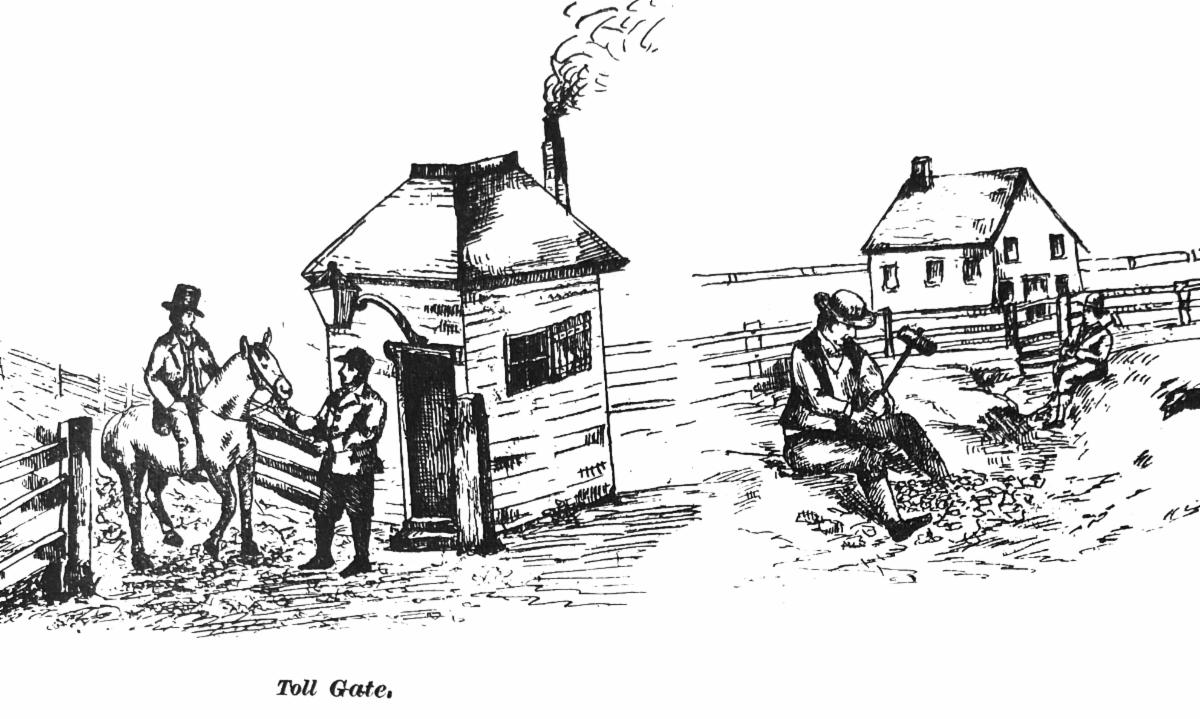
Fig. 2. An illustration of a typical toll-gate. Image courtesy of Ringwalt, Development of Transportation Systems in the United States (Philadelphia, PA: J. L. Ringwalt, 1888), pl. 8.
For all its setbacks, the construction of the first half of the Turnpike (from Newburyport to Topsfield) proceeded with relative efficiency. This began to change, however, as it drew near Boston. To water was added an additional obstacle: hills. Because of the limitations of horse-drawn vehicles, turnpikes needed to avoid steep inclines and declines. In order to accomplish this while maintaining the road’s course, Ingersoll’s men had to cut down nine large hills and many more small hills. The largest hills were reduced by up to twenty-five feet, and smaller ones by six to twelve feet. In other areas, the crew faced the opposite problem: steep declines had to be built up or bridged. For this, workers employed hundreds of pounds of gunpowder to break up rocks and ledges that were used to fill holes or build culverts or embankments. Ingersoll’s section required “three hundred men, eighty yoke of oxen, and twenty horses” over the course of seven months, from summer to fall of 1804. It was hard, dangerous work. In August of 1804, the Salem Gazette reported that one Jonathan Hoyt, “an active and industrious young man from Concord [N.H.],” had been killed “by the falling in of earth [while] at work on the Turnpike” in Topsfield. The following year, a fifty-year-old road worker named Francis Skerry died in a similar manner. Other accounts indicate many more non-fatal accidents occurred during construction, including one that required a worker’s leg to be amputated. Owing to the difficulty of the terrain, the Turnpike deviated perceptibly from its heading as it passed through this area (present-day Saugus).
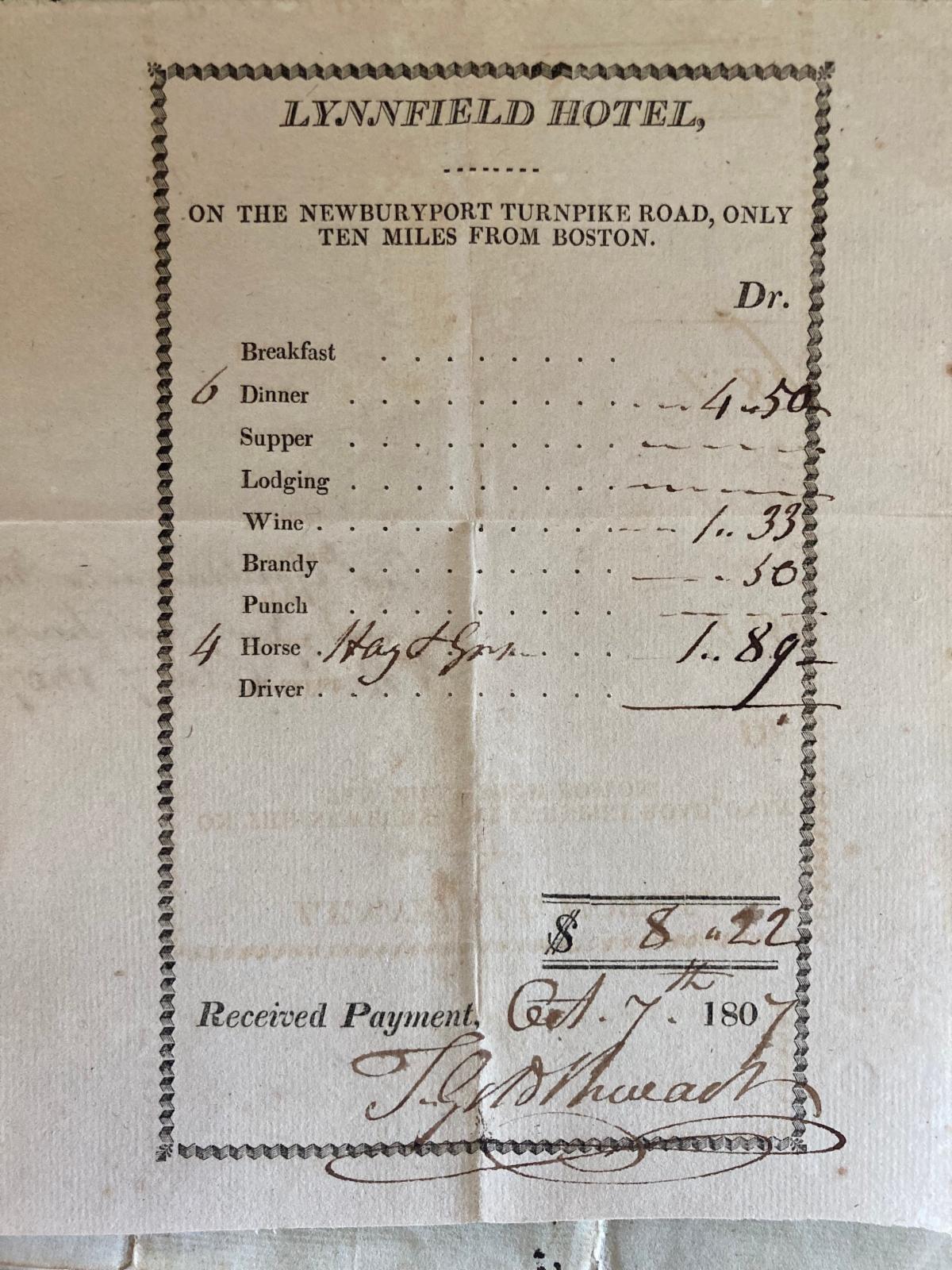
The Newburyport Turnpike’s most visible expense was the construction of two lavish inns along the route, one in Lynnfield and another in Topsfield. For the Lynnfield inn (twelve miles outside of Boston), the corporation purchased fifty-three acres of land and built ice-houses, stables, and a blacksmith’s shop in addition to the main edifice. The Topsfield location included similar amenities on a smaller, four-and-a-half-acre lot. The inns aimed to provide lodging and entertainment for long-distance travelers on the Turnpike. At the Lynnfield inn, according to Wood, the builders made the road twice as wide in order to accommodate horse racing. The Lynnfield attractions even included sailing facilities at nearby Suntaug Lake.
|
|
Fig. 3. Hotel receipt, Lynnfield hotel, 1807. Photograph by the author. Image courtesy of the Museum of Old Newburyport.
More than anything else, this attempt at horizontal integration reveals the extent of the project’s ambition. The Turnpike’s builders seem to have conceived it not simply in terms of time or mileage saved but as an experience to be had (and even enjoyed). The Newburyport Turnpike’s arrow-straight route, artificial surfacing, lodging, dining, entertainment: all these added up to nothing less than a major innovation in travel — or so its projectors hoped.
|
|
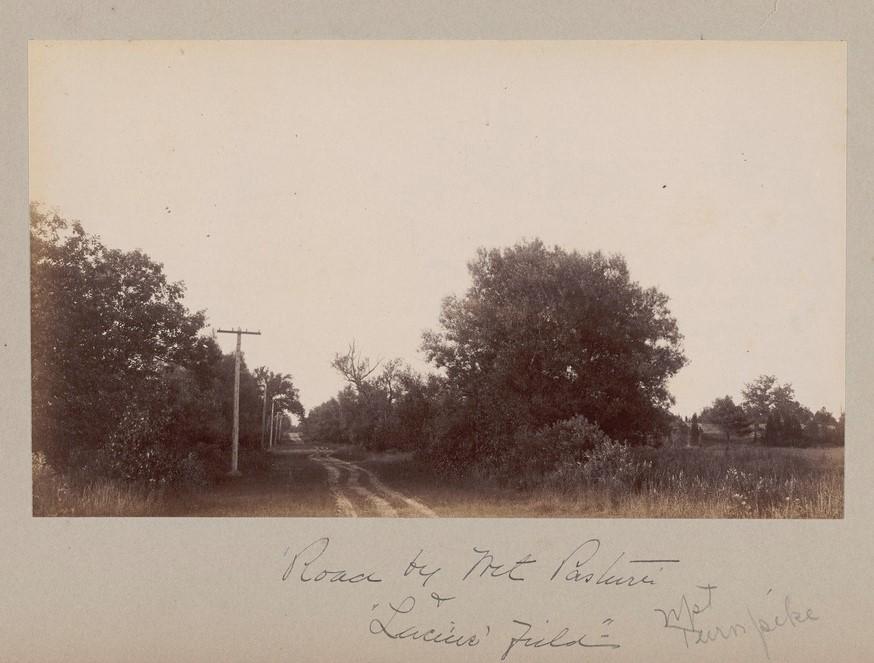
Newburyport Turnpike by "Lucius's Field." Snow Photo Collection, Museum of Old Newbury.
Further reading
Currier, John J. History of Newburyport, Mass., 1764–1905, Vol. I. Newburyport, MA: John J. Currier, 1906.
Kyle, George. The Straight Road: A Short Account of the Newburyport Turnpike and Early Days in Everett, Massachusetts. Everett, MA: Everett National Bank, 1927.
Long, H. Follansbee. “The Newburyport and Boston Turnpike.” In Historical Collections of the Topsfield Historical Society, Vol. XI. Topsfield, MA: Topsfield Historical Society, 1906.
Taylor, P. E. 1934. The Turnpike Era In New England. Yale Ph.D. dissertation (Order No. 6703737), 1934. Available from ProQuest Dissertations & Theses Global (301791361).
Tracy, Cyrus M., and Henry Wheatland. “Lynnfield.” In Standard History of Essex County, Massachusetts, Embracing a History of the County from Its First Settlement to the Present Time, with a History and Description of Its Towns and Cities. The Most Historic County of America. Boston, MA: C. F. Jewett & Co., 1878.
Wood, Frederic James. The Turnpikes of New England and Evolution of the Same Through England, Virginia, and Maryland. Marshall Jones Company, 1919.
|
|
Guest Blog - Newbury Newbie |
|
Newburyport in Europe
By Kristen Fehlhaber, Assistant Director
Bethany, who usually writes this blog, always claims that if you look hard enough, you can find a connection to Newburyport almost anywhere. She also claims that Newburyport is the "Center of the Universe!" I might not agree with that statement, but I'm just back from a wonderful trip to Europe and here to report that though I set out to research only one Newburyport connection (in Amsterdam), two other connections to the Clipper City (in Valencia, Spain and in Lorraine, France) popped up along the way.
This trip was planned for Summer, 2020 and scrapped due to Covid. It was only possible because of HomeExchange.com, a service that connects people who want to exchange houses. It's a great community of people and so far, we've had great luck. We've hosted people from Montreal, Israel, and the Netherlands. People can do a simultaneous exchange (swap houses) or build up points for a later exchange somewhere else. HomeExchange hosts are always eager to make sure you have a good stay and know all the insider secrets of their town. If anyone wants to hear more about this, just reach out to me.
For this trip, we had three HomeExchanges lined up - Amsterdam, Valencia, and Grossbliederstroff , a small town on the German border in the French Moselle district. Sometimes with HomeExchange, you need to be flexible and open to what's available; this funny little town ended up being one of my favorite parts of the trip.
|
|
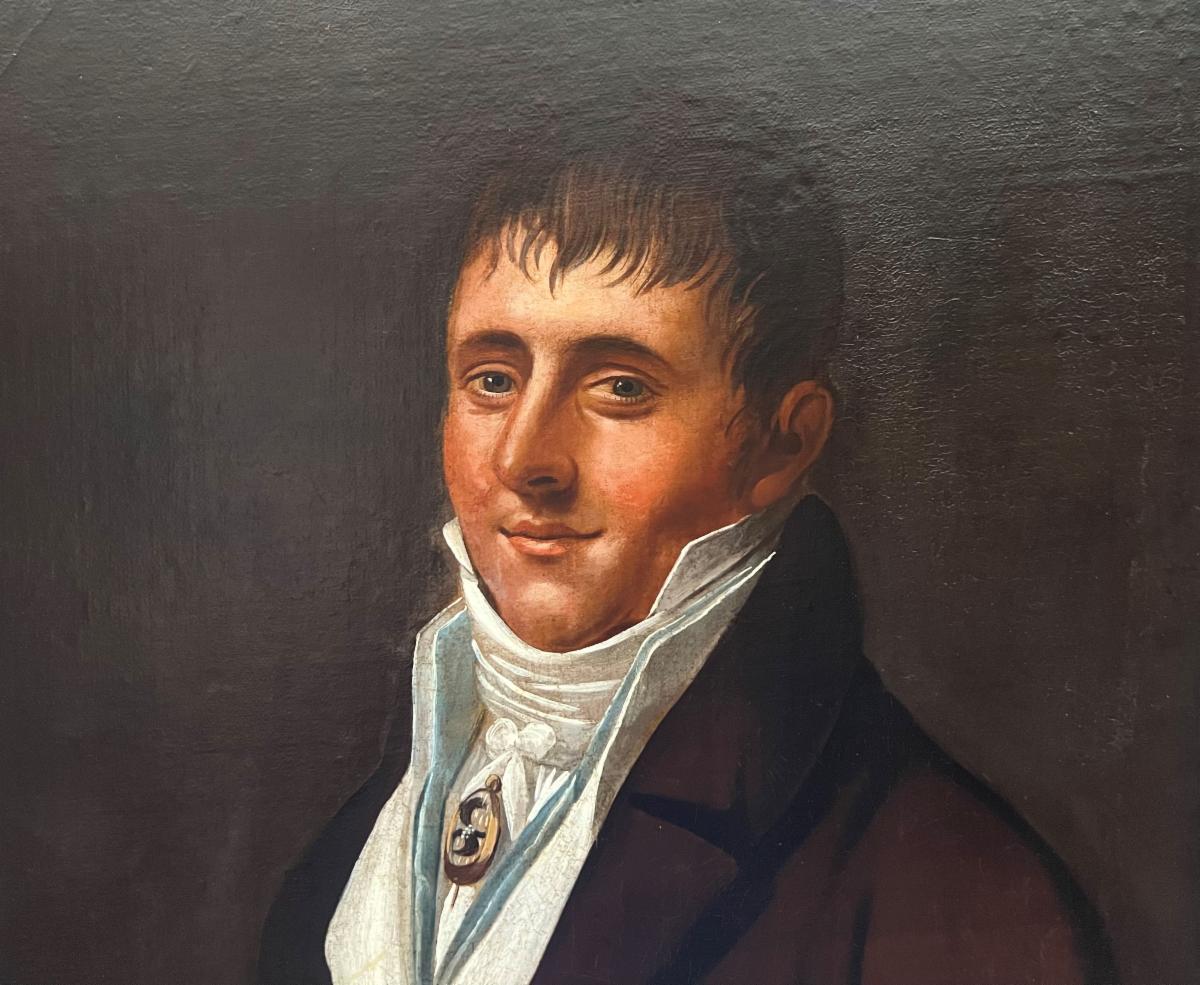
Portrait of Peter Le Breton Jr., attributed to Charles Delin. Delin portraits are known for their sly smiles, sparkling eyes, and Brutus-style hair. Museum of Old Newbury collection.
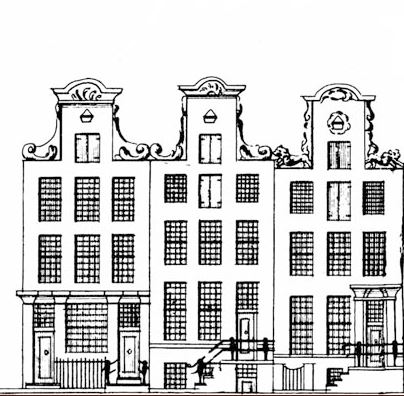
In Amsterdam, I went in search of a Newburyport connection that I’d been thinking about for almost a year. I wanted to visit where the port painter Charles Delin had his studio. The Museum of Old Newbury has over a dozen paintings by Delin. Newburyport ship masters went to him for their portraits and many can be seen during a museum tour. Delin worked in a building that held a coffeehouse, 307 Keizersgracht, on one of the oldest canals in Amsterdam. Though the building has been replaced, we know what it looked like.
|
|
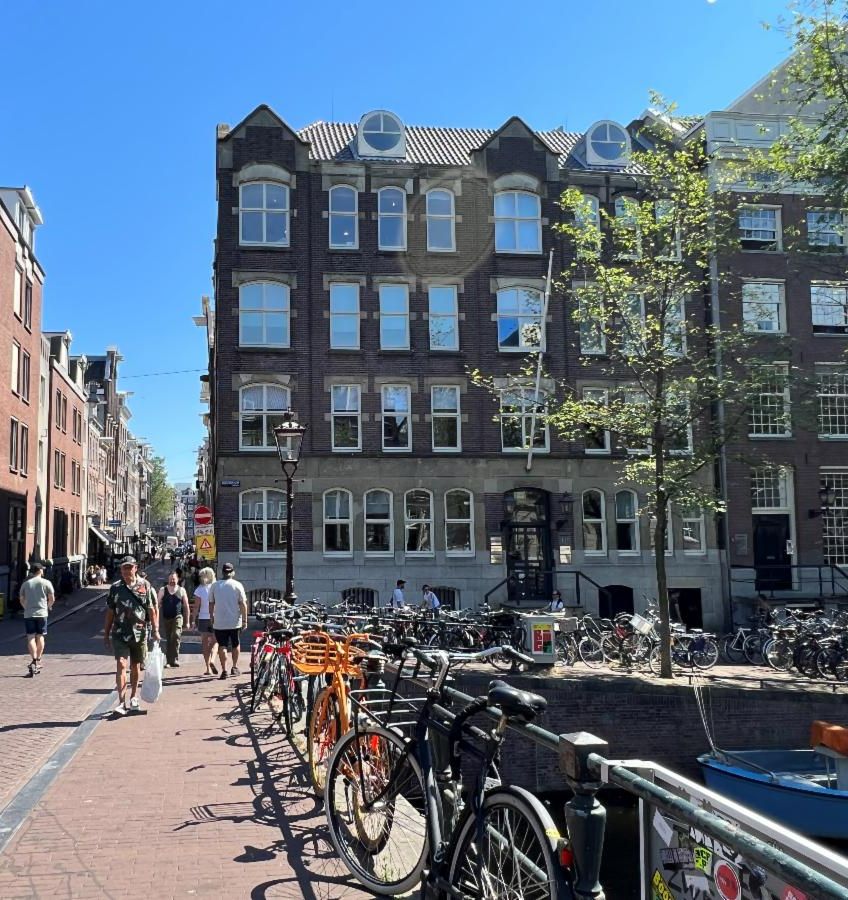
Left - 305, 307, 309 Keizersgracht from yesteryear and today; the buildings were replaced in 1912 with the structure that can be seen today. Line drawing from https://www.amsterdam-monumentenstad.nl/database/database.php
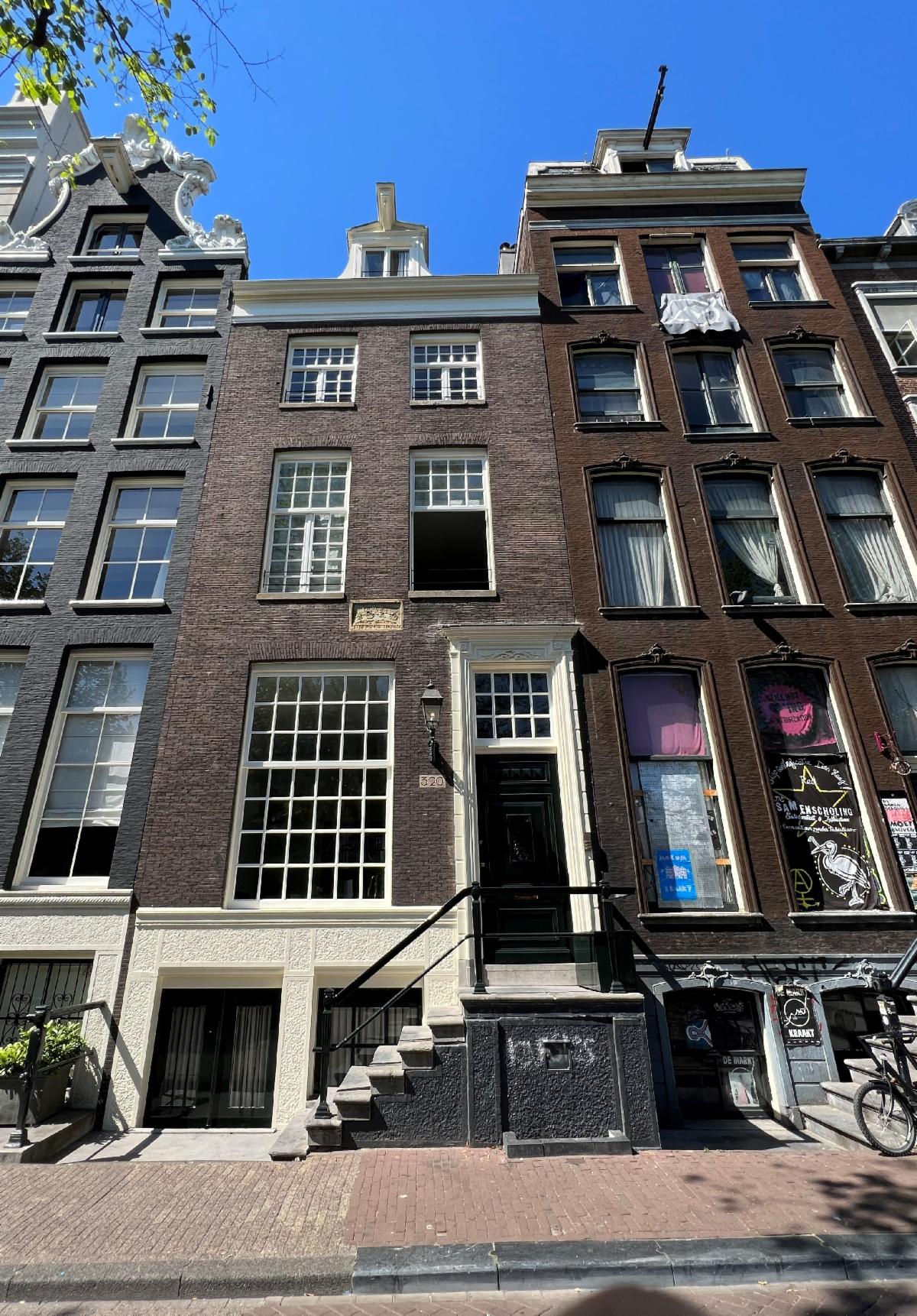
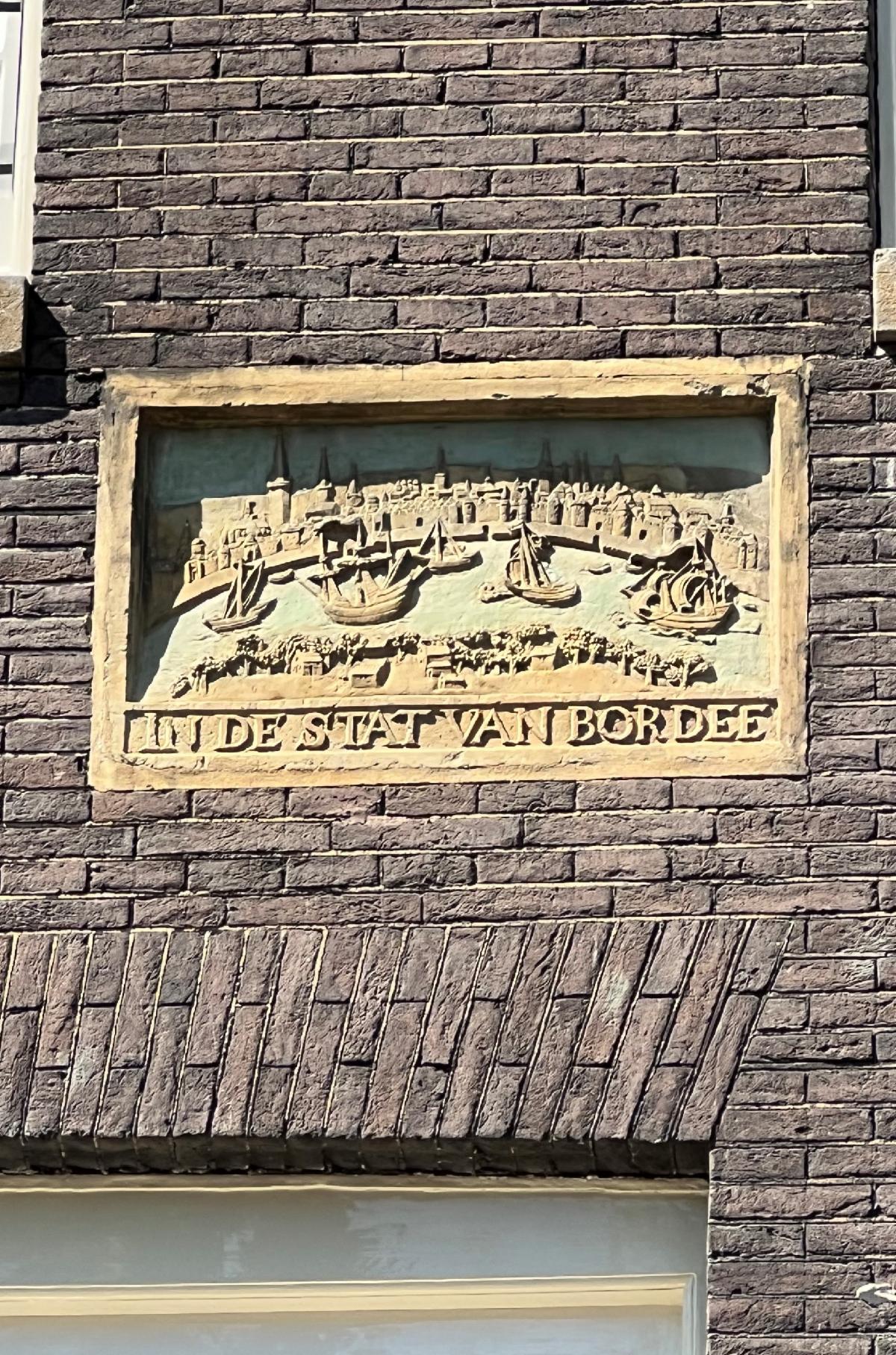
In 1800, when Delin was working here, the city was under French rule. That might explain why there's a gavelsteen (gable stone) directly across from Delin's studio with a scene depicting the city of Bordeaux and the Gavonne river. There were no house numbers at this time - houses were identified by their gavelsteens. Perhaps a Bordeaux wine dealer worked out of this building. Perhaps some of that wine came back to Newburyport. Regardless, Delin and the captains certainly walked past these houses that remain little changed on the outside.
|
|
The houses directly across from where Delin painted; detail of the gavelsteen / gable stone. On the stone is written "IN DE STAT VAN BORDEE."
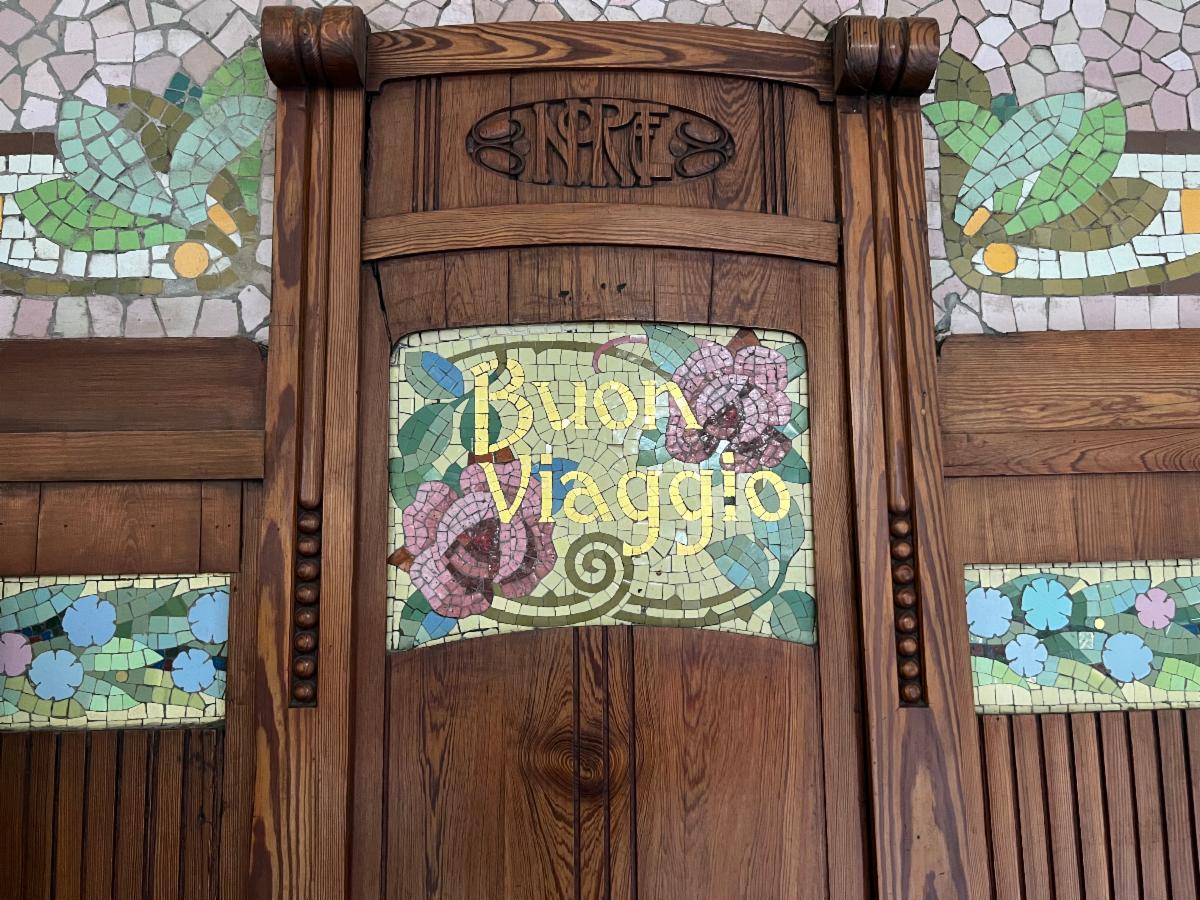
The next stop on our vacation was Spain. This was our son's pick - after four years of high school Spanish, he really wanted the chance to speak it. Little did we know that Catalan is a second official language there, but that hardly stopped him. It wasn't a language barrier but Google Maps that put us on the wrong bus and took us out of town. We took the train back to Valencia to resume our day and I'm happy for this detour - otherwise, we might have overlooked the spectacular Estacio del Nord train station. The art nouveau tilework inside the station is breathtaking. I was especially taken by the signs wishing people a pleasant journey in ten languages.
|
|
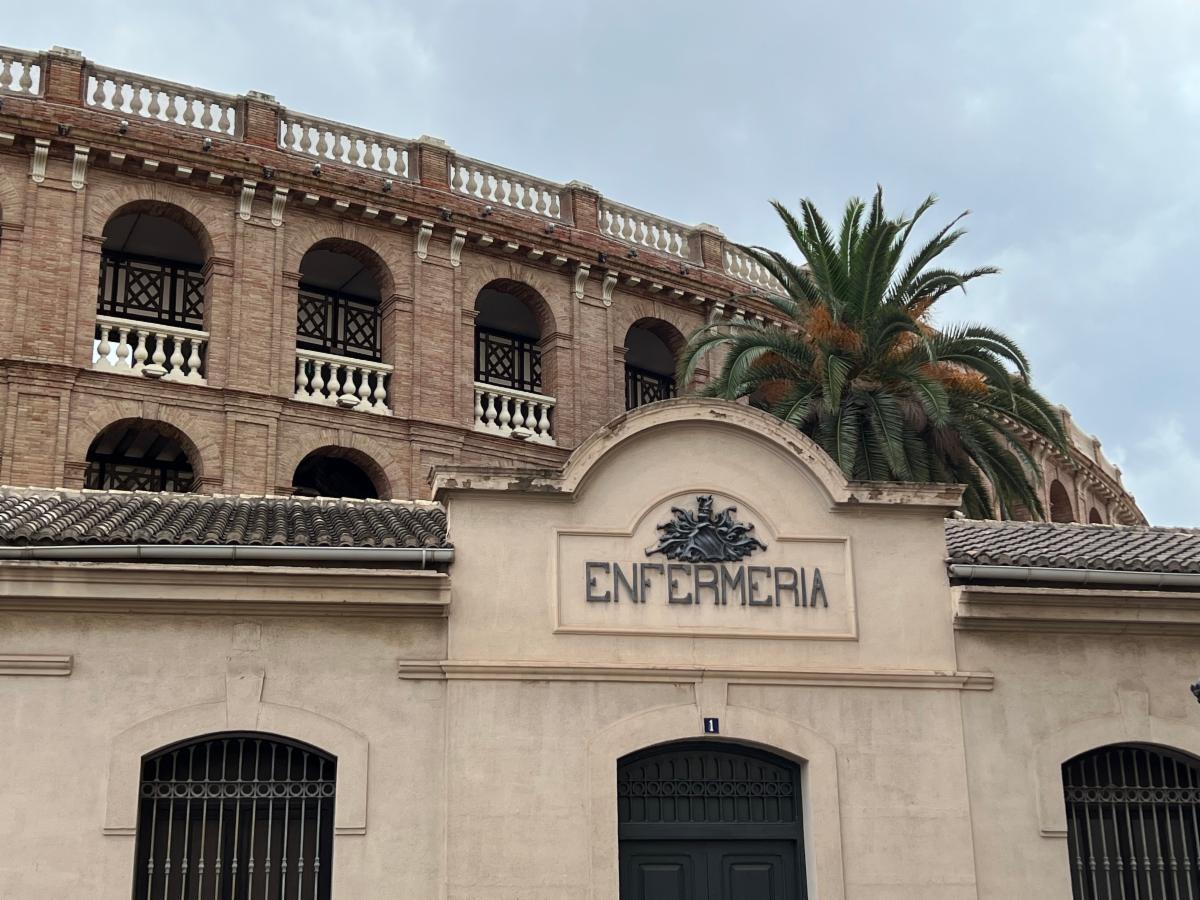
Left: Detail from the train station; Right: Bull ring and its well-located infirmary.
Immediately next to the train station is the city's bullring, a neoclassical contruction modeled after the Roman Colosseum. Something in my brain made me check and of course, Ernest Hemingway spent a lot of time in this city. From the local post office, he wrote to his father to announce that he'd written 60,000 words – what became "The Sun Also Rises." And who else did he write to, besides his father? There are many letters to his friend Waldo Pierce, whose time in Newburyport was recently profiled in this newsletter. The letters to Waldo contain language that is both over-the-top and typical of Hemingway- "In Valencia it's damned stupendous at the beach or in the city to eat a melon washed down with a real cold jug of beer" and “I sweat all over the first sheet and had to start over…Mediteranean feels like a pee-ed in bath tub…Let’s hear from you. This is a shitty letter but its so damned hot.”
In truth, it was very hot.
The final stop on our trip was Grossblierderstroff, a small town in the French Moselle district on the river Saar. What attracted us to this spot? A ten minute walk puts you on a footbridge across to Germany. I had French and German bakeries within walking distance - heaven!
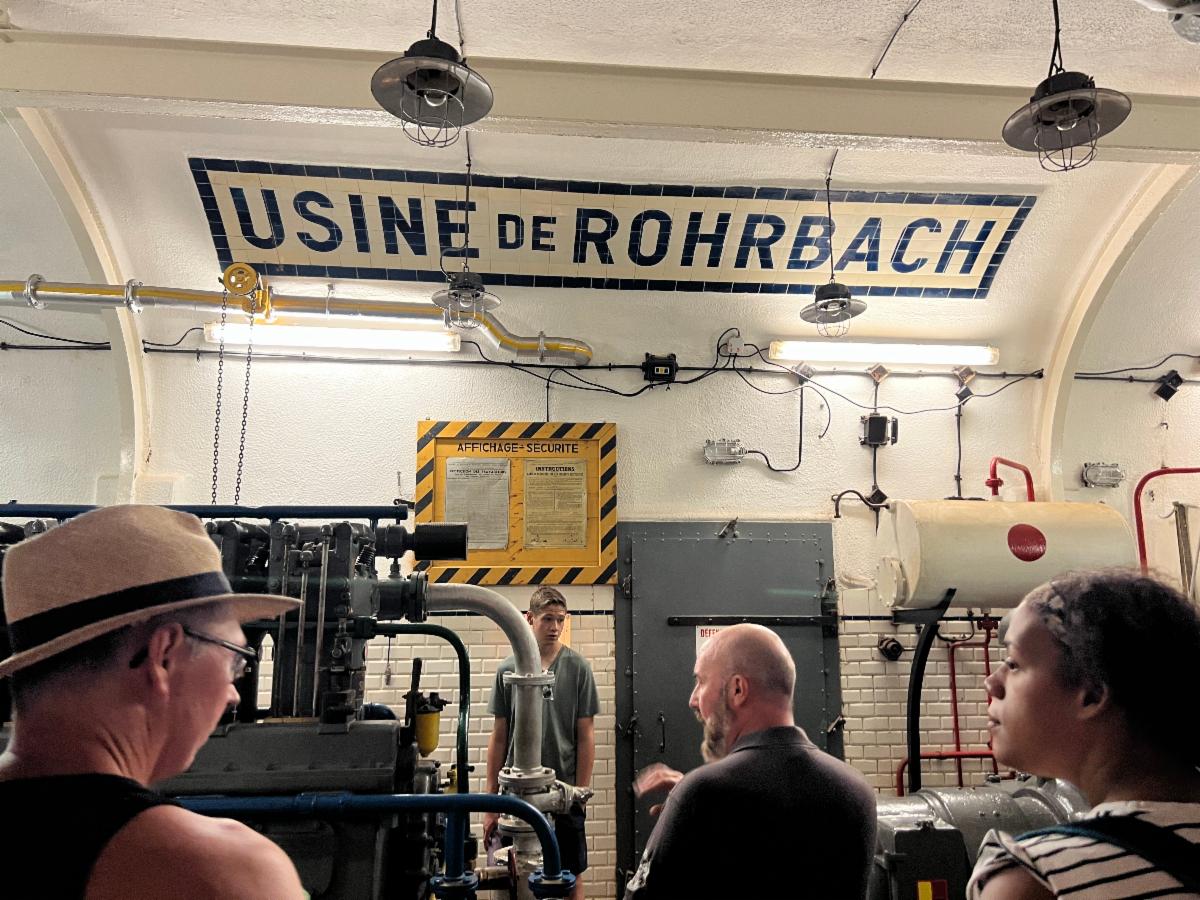
Something planned for the 2020 trip that finally got to happen was a visit to the Maginot Line - a short drive away in Rohrbach. The 2.5 hour tour of the tunnels & turrets was fascinating and gave us insight to the lives of the soldiers who manned this defensive outpost. The Maginot Line was meant to stop Germany from being able to cross into this part of France after World War I and we learned about the many reasons for its failure.
|
|
The power plant in the Rohrbach fort on the Maginot Line. The wall tiles are the same as those used in the Paris Metro and were chosen for their reflective properties in the dimly lit tunnels. |
|
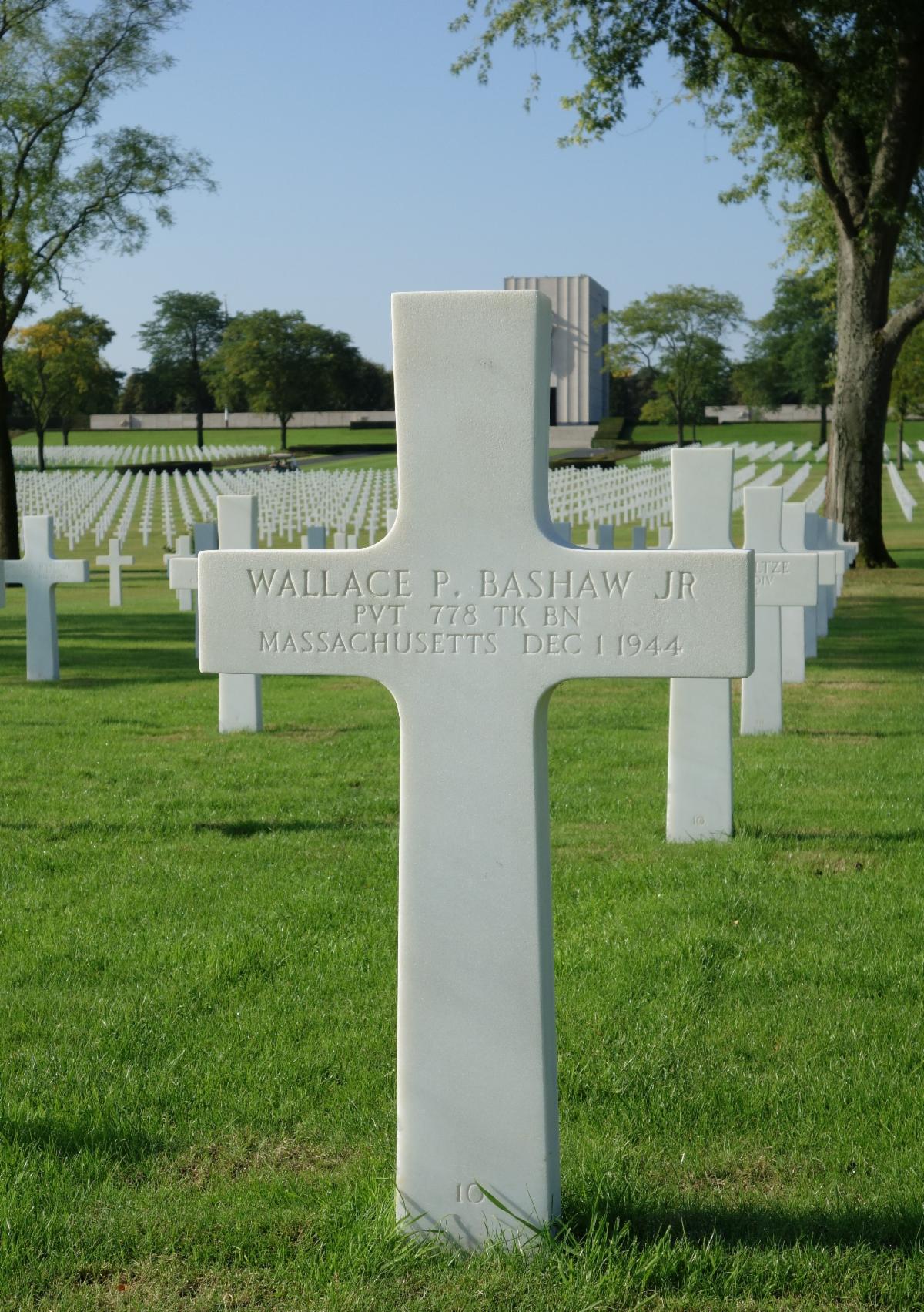
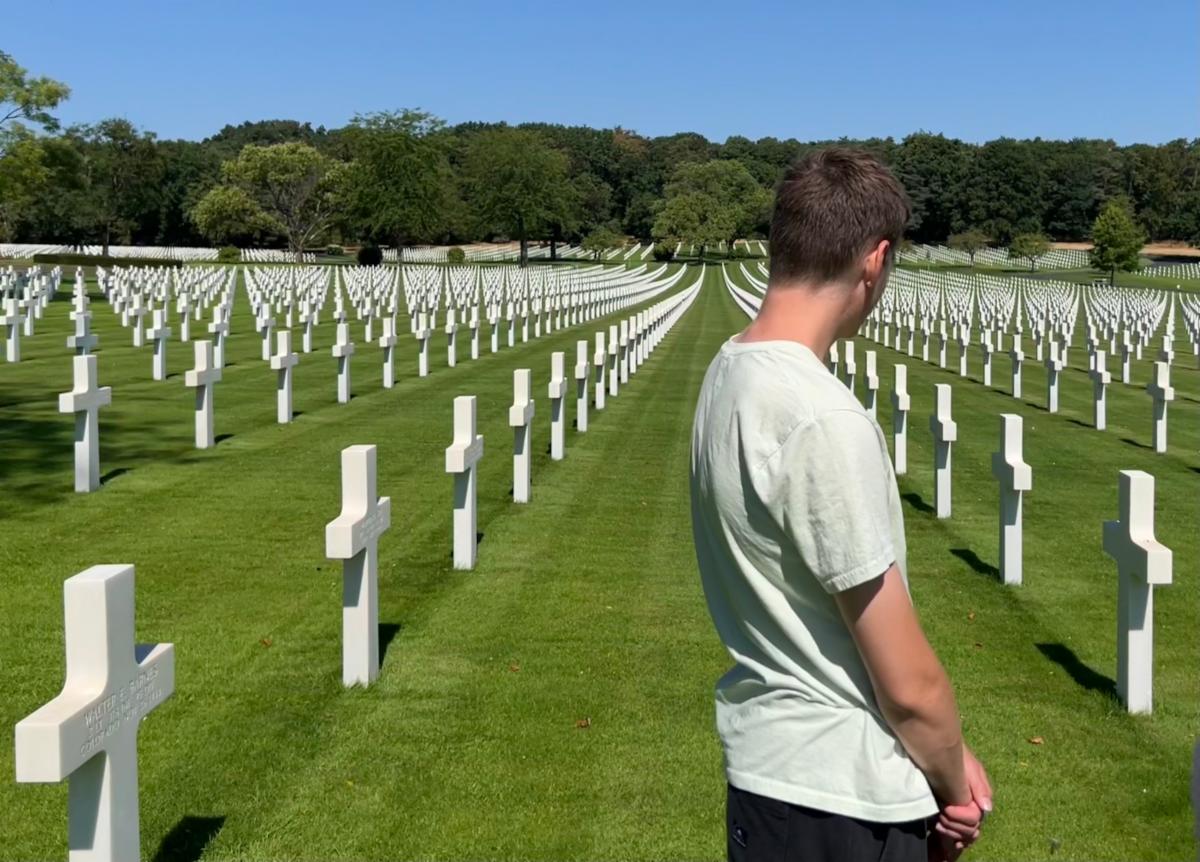
After seeing the sights in this area, it was finally time to head home. A last stop was the Lorraine American Military Cemetery in St. Avold, France. This is the largest American WW2 cemetery with over 10,000 buried here. We put brought some flowers and paid our respects. The chapel has tile maps of the Allied campaign - beautiful and horrible at the same time.
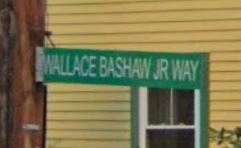
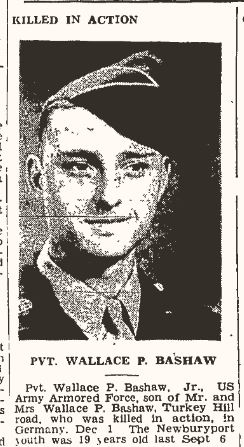
If you’ve driven up to Anna Jacques Hospital from Low Street, you’ve driven on Wallace Bashaw Jr. Way. Wallace is buried at St. Avold - he was 19 years old when he died . He went to the IC and attended Newburyport High for two years. The day after his 18th birthday, he registered for service.
|
|
Left: Daily News announcement of Bashaw's death. Right: gravestone - photo courtesy of Findagrave.com. Bottom: contemplating the fallen. |
|
I'm looking forward to finding more connections to Newburyport the next time we travel. And if you come across a historic Newburyporter during your travels, please let us know! |
|
Something is Always Cooking at the Museum |
|
Chocolate Lava Cake // Couers Coulants |
|
This recipe came from the back of a Cailler chocolate bar my grandmother gave to me after a recent trip to Switzerland. These mini lava cakes or “Couers Coulants” are quick and easy to make, and they taste delicious! You can cook them in ramekins, but a cupcake or muffin tin works just as well. This recipe makes 6 cakes. - Annabelle Svahn
1 Chocolate Bar (Preferably dark chocolate) / (160g)
3 Eggs
1/3 Cup Sugar / (70g)
3 ½ tablespoons butter (50g)
1 Tablespoon Flour
1. Preheat oven to 465°F.
2. Melt half of the chocolate bar (100g) with the butter.
3. In a bowl, mix together the eggs and the sugar. Add the flour.
4. Incorporate the melted chocolate and butter. Mix well.
5. Butter and flour the pan.
6. Pour a third of the batter in to the bottom of the molds. Place about 2 squares of chocolate per mold and cover with the rest of the batter.
7. Place pan in oven for 8 minutes.
8. If using a cupcake or muffin tin, use a spoon to scoop the cakes out. Serve warm.
|
|
Click on image above to play the puzzle |
|
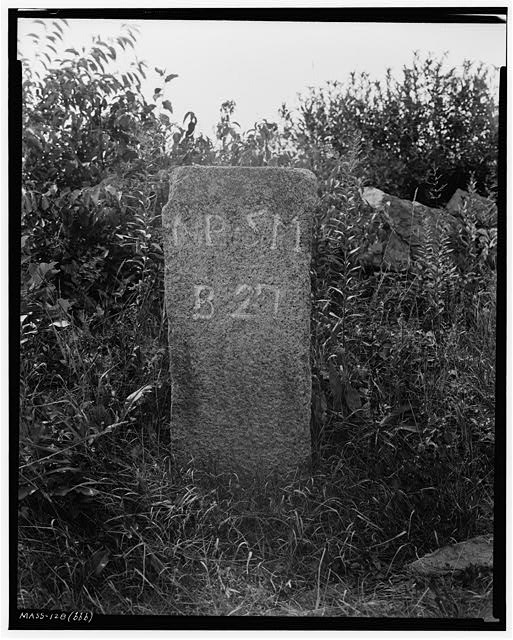
27 Mile Stone, Newburyport Turnpike, Rowley. Historic American Buildings Survey Frank O. Branzetti, Photographer Aug. 14, 1940. |
|
Museum e-Newsletter made possible through the
generosity of our sponsors:
|
|
|
Museum of Old Newbury
98 High Street
Newburyport, MA 01950
978-462-2681
|
|
|
|
|
|
|
|