ISKP VBIED Attack on Pakistani Army Convoy in Bajaur
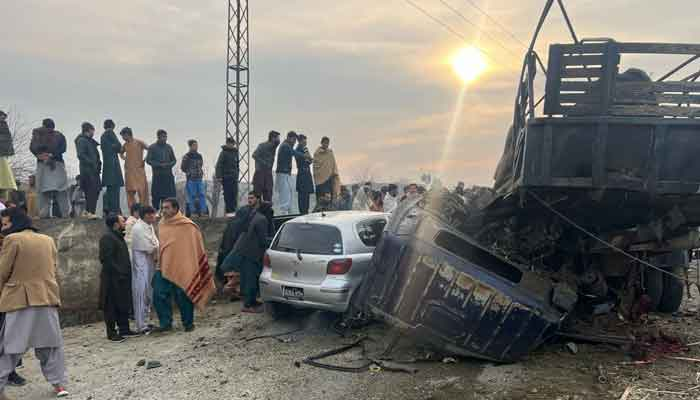
On 20 August 2025, Islamic State Khurasan (ISKP) militants carried out a major bombing against a Pakistani army convoy in Inayat Killi, Bajaur district, Khyber Pakhtunkhwa, Pakistan. The attackers parked an explosive-laden tricycle along the convoy’s route and detonated it as the vehicles passed. ISKP quickly claimed responsibility, stating that the blast killed and injured ten soldiers while also damaging two military trucks. However, reports from local sources painted a far deadlier picture, with some suggesting that more than thirty-five soldiers had been killed and over fifty wounded.
Strategic Importance of Bajaur
The attack occurred in Bajaur, a district that has long held strategic significance in Pakistan’s tribal frontier. The region lies along the border with Afghanistan’s Kunar and Nangarhar provinces, both areas historically known as militant strongholds. Bajaur’s rugged terrain, combined with its porous borders, has made it an important transit corridor for insurgents, providing safe havens and facilitating cross-border movement. Over the past two decades, the Pakistani military has launched repeated counterterrorism operations in Bajaur, attempting to dismantle entrenched networks. Yet, despite these campaigns, militant activity has proven resilient, and Bajaur continues to serve as a staging ground for insurgent groups. For militants such as ISKP, control over Bajaur offers both cross-border mobility and a base from which to target Pakistani security forces.
ISKP’s Re-Emergence After a Period of Lull
For much of 2024 and early 2025, ISKP’s activities in both Afghanistan and Pakistan appeared to have diminished. The group carried out only sporadic attacks, most of them small-scale, suggesting that ISKP was significantly weakened by sustained Taliban (IEA) crackdowns and Pakistani operations in Khyber Pakhtunkhwa. Still, TRAC has long suspected that ISKP had focused its attention on the far enemy, meaning that the external operations branch was being controlled from the Af/Pak area. However, recent months have demonstrated a marked shift. In Afghanistan, ISKP has escalated its activities with a string of bombings and assassinations, openly challenging Taliban authority. Across the border in Pakistan, the Bajaur VBIED represents one of the group’s most significant strikes in months, signalling its ability and intent to mount once again high-profile, mass-casualty operations rather than relying solely on low-level ambushes and targeted killings.
Parallels With Previous Attacks
The Bajaur bombing also draws comparisons with ISKP’s July 2025 VBIED attack in the same region, when militants detonated an explosives-laden motorcycle against a Pakistani army vehicle on Nawagai road. Both incidents demonstrate the group’s enduring capacity to conduct complex and coordinated bombings, despite facing operational setbacks in the past. The timing of the Bajaur attack is also significant. It came just two days after suspected ISKP gunmen assassinated a local JUI-F leader in Taftan, suggesting that the group is pursuing a multi-pronged approach. By combining political assassinations with large-scale military strikes, ISKP appears to be diversifying its tactics while simultaneously broadening its geographic footprint across Pakistan.
Implications for Security and Counterterrorism
Although ISKP’s overall attack frequency remains lower than during its peak years, the Bajaur convoy bombing underscores that the group’s core capabilities remain intact. ISKP has repeatedly demonstrated that it retains the technical knowledge, logistical infrastructure, and networks required to deploy suicide bombers and VBIEDs; tactics that have long defined its reputation for high-casualty violence.
By striking directly at a Pakistani army convoy, ISKP has sent a symbolic message that it can still inflict severe damage on state forces. This not only risks undermining local confidence in state protection but also forces Islamabad to reconsider its counterterrorism posture. While the group may not currently match the intensity of its earlier campaigns, ISKP and its Afghan counterpart remain among the deadliest affiliates of the Islamic State.
| | | TRAC Incident Report: Police Black Hawk Helicopter Brought Down by a Weaponised Drone Loaded with Improvised Explosive Devices (IEDs), Leaves 19 Officers Killed and Injured Between Amalfi and Anorí, Antioquia, Colombia | | |
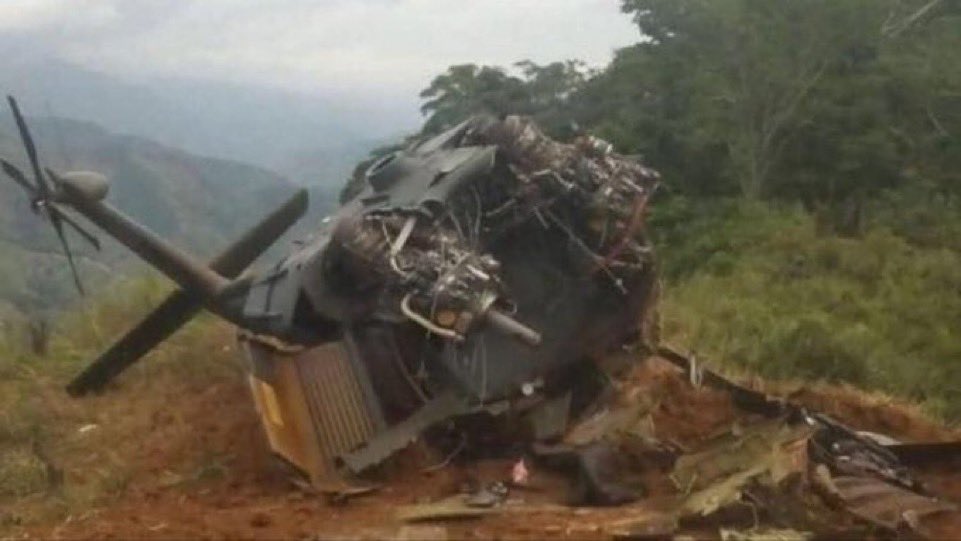
On the morning of 21 August 2025, a Black Hawk UH-60 helicopter belonging to the anti-narcotics directorate of the Colombian National Police was brought down in Los Toros, between Amalfi and Anorí in Antioquia, during a coca eradication mission. The aircraft was reportedly struck by a drone carrying improvised explosive devices (IEDs) after ground units had already come under attack from mortars and small-arms fire. The crash killed twelve police officers and left seven others injured, making it one of the deadliest single incidents in Colombia’s anti-narcotics campaign in recent years.
Intelligence reports attributed the attack to the 36th Front of FARC dissidents, aligned with alias Calarcá’s Central General Staff (EMC) and operating under the local command of alias “Manuelito” and alias “Guaracho.” Soon after the incident, a video circulated on social media showing the aftermath, accompanied by an audio recording of the alleged perpetrators celebrating the success with the words “Coronamos” (“We triumphed”), clearly intended as propaganda to showcase their ability to challenge state forces.
The downing of the helicopter marks the first confirmed use of an armed drone against police aircraft in Antioquia. However, similar attacks have been recorded in Cauca and Norte de Santander. This demonstrates a tactical evolution, as drones equipped with explosives give insurgents the ability to threaten helicopters, which have long been central to coca eradication missions. The incident highlights the growing sophistication of asymmetric warfare in Colombia, significantly raising risks for future operations.
Northeastern Antioquia remains a contested zone where multiple groups, including the Clan del Golfo, the ELN, and various FARC dissident factions, compete for influence. The EMC forces loyal to Alexander Díaz, alias “Calarcá”, had formally agreed to a six-month ceasefire with the government as part of ongoing peace talks. However, coca eradication efforts in their strongholds appear to have triggered the 21 August retaliation. By striking at a Black Hawk, the dissidents not only dealt a symbolic blow to state forces but also sent a clear message that they are willing to escalate despite being nominally engaged in dialogue.
| | (Video) Authorities Arrest National Socialist Network (NSN) Leader Thomas Sewell at his Residence in Australia | | |
On 22 August 2025, Australian authorities arrested Thomas Sewell, the leader of the National Socialist Network (NSN), during a raid at his residence. While the police have not formally disclosed the charges, early assessments suggest that the detention is likely linked to an incident at the NSN’s most recent march on 8 August 2025. During that event, a homeless man unaffiliated with the protest reportedly confronted Sewell and spat on him, provoking a physical altercation. Sewell’s long history of violent confrontations, including clashes with counter-protesters and previous run-ins with law enforcement, makes it plausible that authorities have seized on this episode as a legal basis for action against him.
Sewell’s arrest is a significant development for the NSN. As the movement’s figurehead, his detention risks intensifying resentment among members and sympathisers, who are likely to frame the arrest as evidence of political persecution. Narratives portraying Sewell as a victim of state repression are expected to circulate widely across the group’s online propaganda networks, where grievances are often amplified to radicalise supporters and justify confrontational tactics.
The timing of the arrest is especially sensitive. A large-scale anti-immigration rally is scheduled for 31 August 2025, and NSN supporters may use Sewell’s detention as a rallying cry to galvanise attendance and escalate rhetoric. This dynamic raises the potential for the rally to become a flashpoint for disorder, particularly if counter-demonstrators are present or if police enforcement is seen as heavy-handed. In such a charged environment, the arrest could serve as a unifying grievance, transforming the protest into a broader confrontation between far-right activists, opponents, and state authorities.
From a security standpoint, the arrest may create a short-term opportunity to disrupt NSN’s leadership and organisational capacity. However, there is also a longer-term risk that Sewell’s detention could elevate his status as a martyr figure, energising recruitment and reinforcing extremist identity narratives within the group.
| | (Photos) March 23 Movement (M23) Militants Are Using Fiber Optic Drones in Kivu Region, Congo (DR) | | |
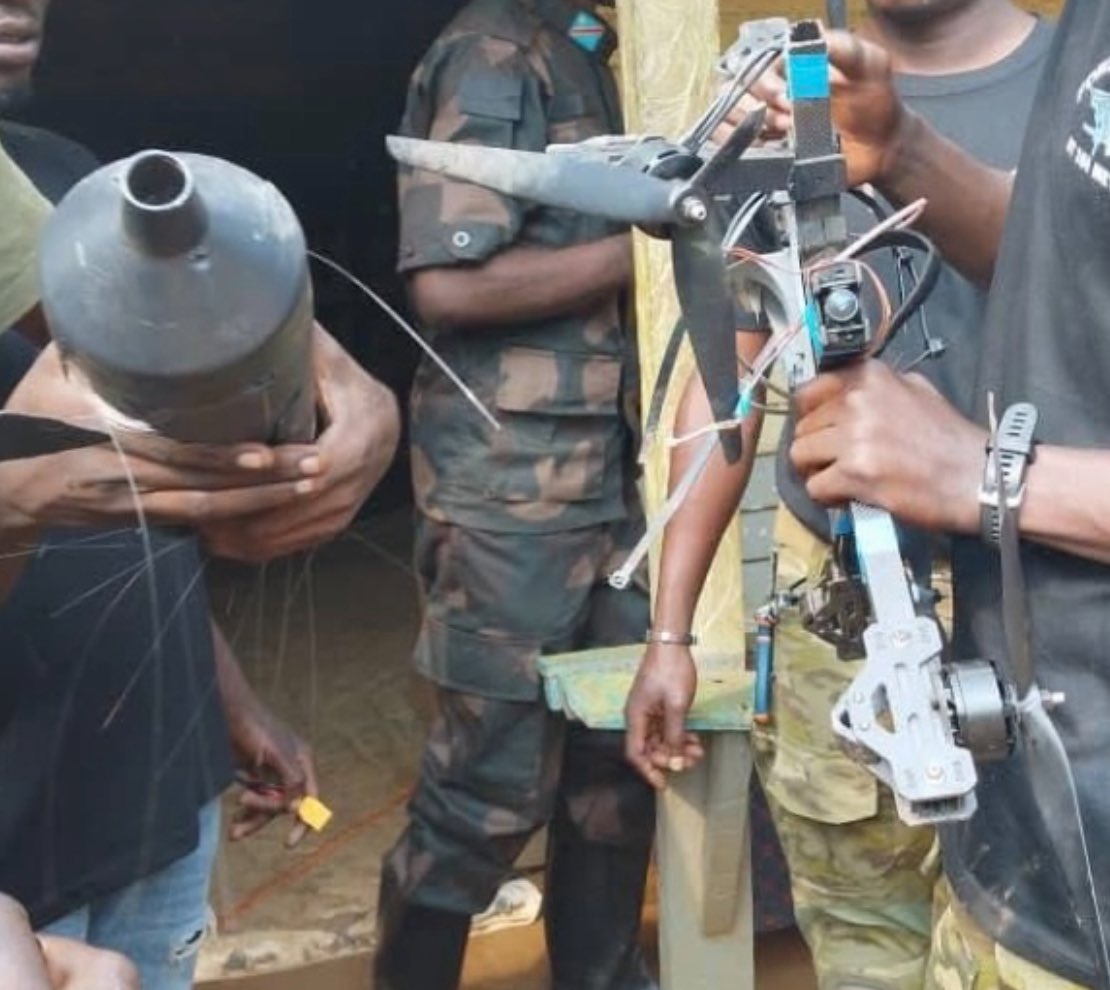
March 23 Movement (M23) militants have begun deploying first-person view (FPV) drones equipped with fiber optic connections in the Kivu region of the Democratic Republic of Congo (DRC), marking a significant escalation in the group’s technological capabilities. The adoption of such systems reflects a broader global trend: FPV drones, once a niche tool, have become increasingly prominent in modern conflict due to their low cost, adaptability, and effectiveness for both precision strikes and intelligence gathering. Their widespread use was accelerated by the Ukrainian war, where tactics for integrating drones into conventional and hybrid warfare have been extensively refined.
FPV drones can be configured in multiple ways, but the key distinction lies in how they establish communication with the operator. Traditional drones rely on wireless signals, which are susceptible to jamming by electronic countermeasures. However, the emerging use of fiber optic–guided drones circumvents this weakness. Connected by a long cable reel that trails behind the drone in flight, these systems maintain an uninterrupted signal unless the cable itself is severed, making them far more resilient against electronic warfare. This reliability is particularly valuable in contested environments, such as eastern Congo, where interference and battlefield disruption are constant.
For M23, the shift to fiber optic drones represents an aggressive technological leap. The drones themselves remain relatively inexpensive and easy to assemble, especially compared to conventional military-grade UAVs. While such platforms are often out of reach for remote insurgent groups lacking external backers, M23 benefits from consistent logistical and financial support from Rwanda, according to regional and UN reports. This state-level patronage has likely facilitated access to advanced drone components and the technical expertise needed to modify and field fiber optic FPV systems.
The implications of this development are significant. Fiber optic drones provide M23 with more reliable reconnaissance and targeting capabilities, enhancing their ability to strike Congolese military positions, supply convoys, or fortified outposts. Their durability against jamming also complicates the DRC government’s and MONUSCO’s (UN mission) ability to neutralise the threat with existing counter-drone measures.
| | (Photos) Nordic Resistance Movement (NRM) Members Stage Protest Displaying Banners Reading “Swedes First – Jews Last”, in Växjö, Sweden | | TRAC Incident Report: Israeli Settler ‘Bashan Pioneers’ Group Breaches Israeli Border Fence to Briefly Enter Syrian Territory Past Disengagement Zone, Quneitra Governorate, Syria | |
TRAC Incident Report: Clashes Between Police and Anarchists at ‘Street Theater Festival’ Leave City Center Damaged in Aurillac, France
| | | | |