|
View as Webpage
The 2023 Season of
The Luncheon Society.
18 Wonderful Gatherings.
A Review.
| |
|
The Nineteenth Amendment was an incomplete victory. Black and white women fought hard for voting rights and doubled the number of eligible voters, but the amendment did not enfranchise all women, or even protect the rights of those women who could vote.
In this riveting narrative, Dr. Elisabeth Griffith integrates the fight by white and Black women to achieve equality in her great book "Formidable--American Women and the fight for Equality 1920-2020." Previously their parallel struggles for social justice have been presented separately—as White or Black topics—or covered narrowly, through only certain individuals, decades, or incidents.
A century later, women are still grappling with how to use the vote and their political power to expand civil rights, confront racial violence, improve maternal health, advance educational and employment opportunities, and secure reproductive rights.
Formidable chronicles the efforts of white and Black women to advance sometimes competing causes. Black women wanted the rights enjoyed by whites. They wanted to protect their communities from racial violence and discrimination. Theirs was not only a women’s movement. White women wanted to be equal to white men. They sought equal legal rights, political power, safeguards for working women and immigrants, and an end to confining social structures. There were also many white women who opposed any advance for any women.
| |
|
The dramatic rise—and unimaginable fall of General Electric—one of America’s most iconic corporations by New York Times bestselling author and preeminent financial journalist William D. Cohan.
His book “Power Failure: The Rise and Fall of an American Icon” speak for themselves. The book has been chosen as: The New Yorker Best Books of 2022, Financial Times Best Books of 2022, and The Economist Best Books of 2022.
No company embodied American ingenuity, innovation, and industrial power more spectacularly and more consistently than the General Electric Company. GE once developed and manufactured many of the inventions we take for granted today, nearly everything from the lightbulb to the jet engine. GE also built a cult of financial and leadership success envied across the globe and became the world’s most valuable and most admired company. But even at the height of its prestige and influence, cracks were forming in its formidable foundation.
In a masterful re-appraisal of a company that once claimed to “bring good things to life,” pre-eminent financial journalist William D. Cohan argues that the incredible story of GE’s rise and fall is not only a paragon, but also a prism through which we can better understand American capitalism. Beginning with its founding, innovations, and exponential growth through acquisitions and mergers, Cohan plumbs the depths of GE’s storied management culture, its pioneering doctrine of shareholder value, and its seemingly hidden blind spots, to reveal that GE wasn’t immune from the hubris and avoidable mistakes suffered by many other corporations.
| |
|
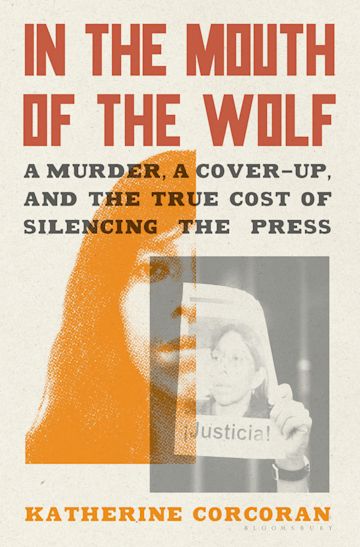
Who killed Regina Martinez?
Former AP Mexico bureau chief Katherine Corcoran’s pulsating investigation into the murder of a legendary woman journalist on the verge of exposing government corruption in Mexico, "In The Mouth of the Wolf."
Investigative reporter Regina Martínez was no stranger to retaliation. A journalist out of Mexico’s Gulf Coast state of Veracruz, Regina's stories for the magazine Proceso laid out the corruption and abuse underlying Mexican politics. She was barred from press conferences, and copies of Proceso often disappeared before they made the newsstands. In 2012, shortly after Proceso published an article on corruption and two Veracruz politicians, and the magazine went missing once again, she was bludgeoned to death in her bathroom. The message was clear: No journalist in Mexico was safe.
Katherine Corcoran, then leading the Associated Press coverage of Mexico, admired Regina Martínez’s work. Troubled by the news of her death, Corcoran journeyed to Veracruz to find out what had happened. Regina hadn’t even written the controversial article. But did she have something else that someone didn’t want published? Once there, Katherine bonded with four of Regina’s grief-stricken mentees, each desperate to prove who was to blame for the death of their friend. Together they battled cover-ups, narco-officials, red tape, and threats to sift through the mess of lies―and discover what got Regina killed.
| |
|
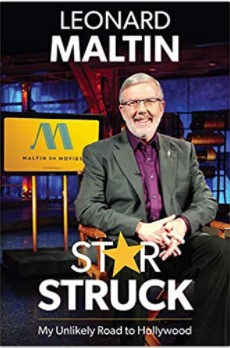
This year, we had our annual Luncheon Society Pre- Academy Award gathering with Film critic Leonard Maltin, and we also talked about his memoir Starstruck.
While we worked our way through his personal Oscar choices, he took along the film journey of his life.
Hollywood historian and film reviewer Leonard Maltin invites readers to pull up a chair and listen as he tells stories, many of them hilarious, of 50+ years interacting with legendary movie stars, writers, directors, producers, and cartoonists. Maltin grew up in the first decade of television, immersing himself in TV programs and accessing 1930s and '40s movies hitting the small screen.
His fan letters to admired performers led to unexpected correspondences, then to interviews and publication of his own fan magazine. Maltin's career as a free-lance writer and New York Times-bestselling author as well as his 30-year run on Entertainment Tonight, gave him access to Katharine Hepburn, Elizabeth Taylor, Sean Connery, Shirley Temple, and Jimmy Stewart among hundreds of other Golden Age stars, his interviews cutting through the Hollywood veneer and revealing the human behind each legend.
Starstruck also offers a fascinating glimpse inside the Disney empire, and Maltin's tenure teaching USC's popular film course reveals insights into moviemaking along with access to past, current, and future stars of film, such as George Lucas, Kevin Feige, Quentin Tarantino, and Guillermo del Toro.
| |
|
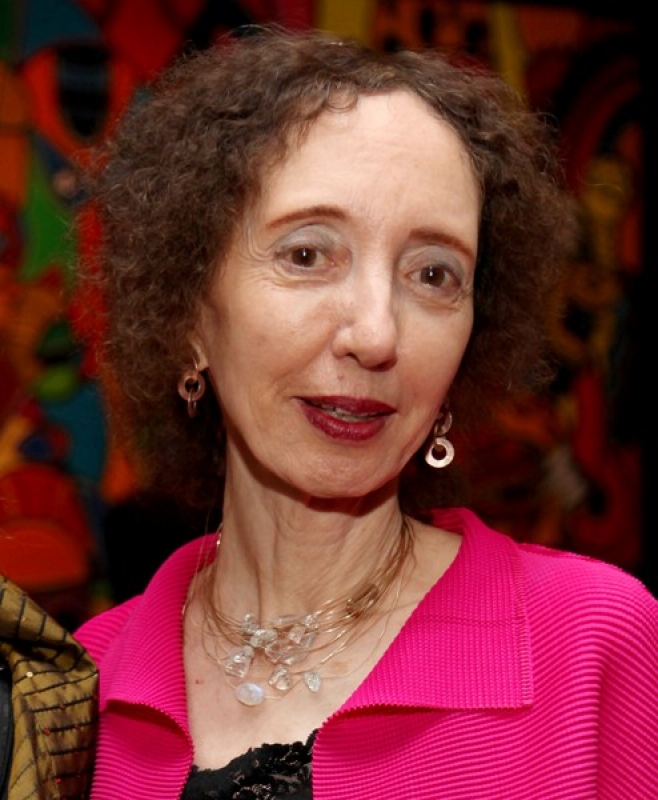
In the newest literary thriller from celebrated author Joyce Carol Oates, in her new thriller, “48 Clues into the Disappearance of my Sister,” a woman mysteriously vanishes, leaving her sister behind to tally up the clues and discover her fate.
What has become of Marguerite Fulmer? On an otherwise average day in Upstate New York, the young woman left her family home, never to return. No note was left, no explanation; just a messy bedroom and her sister Gigi, driven to dig through the meager clues and discover the truth behind her disappearance.
As the investigation unfolds, every subtle bit of evidence becomes a potential clue. The silk Dior slip dress, left in a heap on the floor; the impression of Ferragamo boots outside in the dirt, a trail of footsteps that abruptly ends before it leaves the yard. And as Gigi trails the detectives, she finds previously unknown troubles in the life of her perfect, gorgeous, much-loved sister―troubles that at times seem to reflect her own.
Bit by bit, like ripping the petals off a flower blossom, a dark truth is revealed. And subtly, but with the unbearable suspense at which Joyce Carol Oates excels, clues mount and bring to light the fate of the missing beauty.
| |
|
“There’s no senator I can think of who’s done more sleuthing to figure out the money trail in American politics, particularly as it affects the courts.”
—Jane Mayer, author of the national bestseller
"Dark Money."
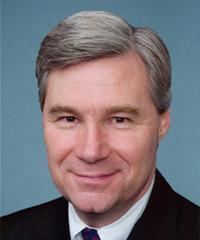
US Senator Sheldon Whitehouse rejoins The Luncheon Society in many years. As the story breaks of a secretive cabal of extreme religious zealots who waged a stealth campaign to ingratiate themselves with “amenable” Supreme Court Justices—who in turn leaked draft decisions to them—the paperback version of The Scheme comes at a time of crisis for the American judiciary.
Following his book Captured on corporate capture of regulatory and government agencies, and his years of experience as a prosecutor, Senator Sheldon Whitehouse, called “a powerful voice in defending our American democracy against the relentless, pervasive—and often hidden—power of corporate special interests” by Senator Elizabeth Warren, here turns his attention to the right-wing scheme to capture the United States Supreme Court.
Whitehouse chronicles a hidden-money campaign using an armada of front groups, helped by the infamous Citizens United Supreme Court decision, using the Federalist Society as an appointments turnstile, and with the same small handful of right-wing billionaires and corporations enticing the Senate to break rules, norms, and precedents to confirm wildly inappropriate nominees who would advance the anti-government agenda of a small number of corporate oligarchs.
| |
|
Former CIA Global Counterintelligence leader Jack Devine rejoins the Luncheon Society for his update on the world scene. Russia might be inching forward on the battlefield, but it’s a painstaking process met with heavy headwinds on multiple fronts.
The battle for the Ukrainian city of Bakhmut may be nearing a close as the Wagner Group alleges that it has gained control in the east of the city. Still, if we’ve learned anything in the past 13 months, it’s to never underestimate the Ukrainians! This high cost “victory” in Russia’s eyes would prompt Moscow to try and lay claim to the whole of the Donesk region, a pyrrhic victory when looked at in light of many public intelligence assessments stating that Russia is currently ill-equipped in strategy, men, arms and ammunition to take much more territory this year. And this bleak assessment factors in the extra civil mobilization, disappointing springtime surge, and drone procurements from Iran.
The intractability of the diminishing prospects of the situation seems to be tacitly acknowledged by Putin’s arrest of the WSJ journalist who reported on the growing effects of sanctions on the Russian economy. In addition, Putin’s agreement with OPEC to decrease oil production to keep prices higher, his recent announcement of an additional surge, and his nuclear sabre rattling announcing nuclear storage facility construction in Belarus also indicate that his situation is increasingly untenable.
Indeed, the long term economic and political effects of the invasion are also coming home to roost with a remarkable diminishment of Russian intelligence capability on Western soil. Over the past year, there have been several reported occasions where Russian intelligence efforts have been notably disrupted by US and European security services, and this week the director of the Finnish Security and Intelligence Service remarked that the Russian intelligence station in Finland is now half of its former size. Like many European nations, ever since Putin invaded Ukraine, Finland has been expelling suspected spies and refusing visas to any potential agents.
| |
|
Before Kevin Smith maxed out his credit cards, before there was an Independent Film Channel or a Sundance festival, and long before independent film became a "marketing niche" there was John Sayles, making it happen with a combination of talent, shrewdness, and determination.
And he's kept on making it happen for over two decades, coming to personify the movement that he jump-started in 1979 with his $40,000 feature The Return of the Secaucus 7. He has become the definitive independent, the Godfather of Bootstrap Cinema.
John Sayles was the original do-it-yourselfer. Even though his budgets have increased over the years — from $40,000 for Secaucus 7 to $4.5 million for Limbo (1999) — his basic MO hasn't really changed. His methodical, buccaneering approach to film has become something of a legend in the Hollywood system. From the beginning he has made his living and partly financed his own productions by working as a screenwriter for hire on commercial projects.
Sayles first three homemade movies — Secaucus 7(1982), Lianna (1982), and The Brother From Another Planet (1985) — were recently restored by the UCLA Film and Television Archive and were reissued together by IFC Films in 2002.
Thanks to this state-of-the-art UCLA restoration, fans who have followed Sayles' work from the beginning can rediscover these landmark movies with the glow of their youthful idealism fresher than ever. Moviegoers who know Sayles only from his acclaimed recent releases — complex multi-character dramas like City of Hope (1991), the Oscar-nominated Lone Star (1996), and the Oscar nominated Passion Fish (1992) — may be startled and impressed by the intimate physical scale and the shoestring grit of his first three productions.
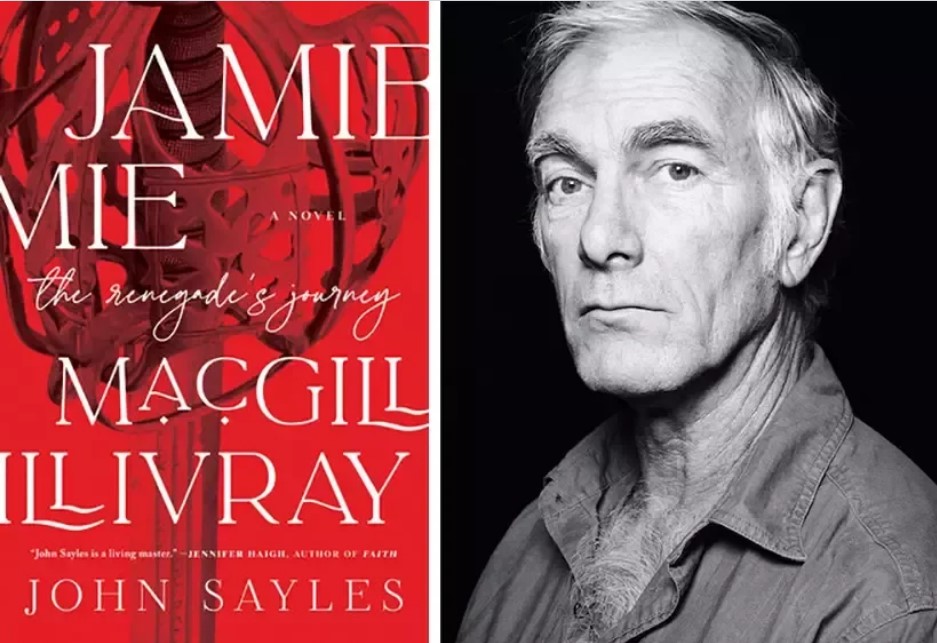
John’s new novel Jamie MacGillivray: The Renegade's Journey (which started out as a screenplay). Spanning 13 years, two continents, several wars, and many smoke-filled and bloody battlefields, John Sayles’s thrilling historical and cinematic epic invites comparison with Diana Gabaldon, George R. R. Martin, Phillippa Gregory, and Charles Dickens.
| |
|
The definitive account of the 1995 Oklahoma City bombing and the enduring legacy of Timothy McVeigh, and how it leads to the January 6 insurrection—from acclaimed journalist Jeffrey Toobin in his new book Homegrown: Timothy McVeigh and the Rise of Right-Wing Extremism
Timothy McVeigh wanted to start a movement. Violent Right-Wing Extremism was not born at the Capital on January 6, 2021. New York Times Best-Selling Author Jeff Toobin traces a direct line from the 1995 Oklahoma City Bombing carried out Timothy McVeigh to the January 6th insurrection, providing not only a powerful retelling of one of the greatest outrages of our time, but also a warning for the future.
Speaking to his lawyers days after the Oklahoma City bombing, the Gulf War veteran expressed no regrets: killing 168 people was his patriotic duty. He cited the Declaration of Independence from memory: “Whenever any Form of Government becomes destructive of these ends, it is the Right of the People to alter or to abolish it.” He had obsessively followed the siege of Waco and seethed at the imposition of President Bill Clinton’s assault weapons ban. A self-proclaimed white separatist, he abhorred immigration and wanted women to return to traditional roles. As he watched the industrial decline of his native Buffalo, McVeigh longed for when America was great.
New York Times bestselling author Jeffrey Toobin traces the dramatic history and profound legacy of Timothy McVeigh, who once declared, “I believe there is an army out there, ready to rise up, even though I never found it.” But that doesn’t mean his army wasn’t there. With news-breaking reportage, Toobin details how McVeigh’s principles and tactics have flourished in the decades since his death in 2001, reaching an apotheosis on January 6 when hundreds of rioters stormed the Capitol
| |
|
Marvin Kalb, the award-winning journalist who has written extensively about the world he reported on during his long career, now turns his eye to a great danger to democracy in his book "Enemy of the People."
Shortly after assuming office in January 2017, President Donald Trump accused the press of being an “Enemy of the American people.” Attacks on the media had been a hallmark of Trump's presidential campaign, but this charge marked a dramatic turning point: language like this ventured into dangerous territory. Twentieth-century dictators—notably, Stalin, Hitler, and Mao—had all denounced their critics, especially the press, as “enemies of the people.” Their goal was to delegitimize the work of the press as “fake news” and create confusion in the public mind about what's real and what isn't; what can be trusted and what can't be.
That, it seems, is also Trump's goal. In Enemy of the People, Marvin Kalb, an award-winning American journalist with more than six decades of experience both as a journalist and media observer, writes with passion about why we should fear for the future of American democracy because of the unrelenting attacks by the Trump administration on the press.
As his new book shows, the press has been a bulwark in the defense of democracy. Kalb writes about Edward R. Murrow's courageous reporting on Senator Joseph McCarthy's “red scare” theatrics in the early 1950s, which led to McCarthy's demise. He reminds us of Bob Woodward and Carl Bernstein's reporting in the early 1970s that led to President Richard Nixon's resignation.
Today, because of revolutionary changes in journalism, no Murrow is ready at the battlements. Journalism has been severely weakened. Yet, without a virile, strong press, democracy is in peril.
| |
|
“Rose Styron has lived a life in interesting times, among legendary characters, a life well worth telling—and reading about.”
—The Washington Post
Her new memoir, "Beyond This Harbor: Adventurous Tales of the Heart" is an intimate portrait of a celebrated magic life and the famous and infamous who dropped in, summered, traveled with, played with, and the decades of friendship with everyone from Truman Capote and Robert Penn Warren to the Kennedys, the Bernsteins, Alexander Calder, John Hersey, and Lillian Hellman.
Here as well are the years of dedication and risk, traveling the world, from Pinochet’s Chile to El Salvador, Belfast, and Sarajevo, as Rose Styron, in search of those hiding from dictators and autocrats, bore witness to atrocities and human rights violations . . .
Styron writes of her childhood, born into a German Jewish, assimilated Baltimore family; a rebel from the start, studying poetry at Wellesley, Harvard, Johns Hopkins; traveling to Rome and her (second) meeting with Bill (the first time, “I can’t remember even shaking hands. I wasn’t thinking about him at all.”); their eventual marriage, and their more than fifty years together—in bucolic Roxbury, Connecticut, and on Martha's Vineyard.
She writes of Bill's writing and of retyping his manuscripts, discussing his writing progress, having babies, with visits from neighbors Arthur Miller; Mike Nichols and various wives; Dustin Hoffman buying the house over the hill; James Baldwin moving in to Styron’s writing studio and writing The Fire Next Time, with Baldwin encouraging Styron to write Nat Turner in first person; Frank Sinatra, sailing into Vineyard Haven Harbor and soon dropping by for dinners chez Styrons; the Kennedys having rowdy sleepovers . . .
And she writes in detail about Bill Styron's full-on breakdowns, his recovery from the first depression; writing Darkness Visible. And fifteen years later, the second much worse crash; Bill Styron’s death; her year of grief, teaching at Harvard; living full time on the Vineyard and making a new full life there .
| |
|
"You might love Biden or you might hate Biden, but either way, if you want to understand him, you will want to buy this book." —Politico
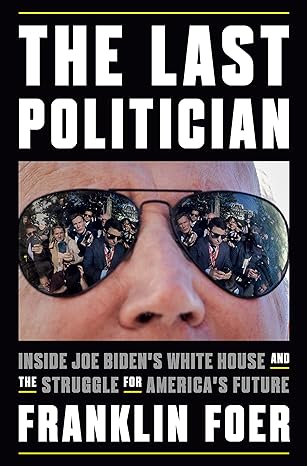
The Atlantic's Franklin Foer looks at the first two years of the Biden Presidency with his new book, "The Last Politician." On January 20, 2021, standing where only two weeks earlier police officers had battled with right-wing paramilitaries, Joe Biden took his oath of office. The American people were still sick with COVID-19, his economists were already warning him of an imminent financial crisis, and his party, the Democrats, had the barest of majorities in the Senate. Yet, faced with an unprecedented set of crises, Joe Biden decided he would not play defense. Instead, he set out to transform the nation. He proposed the most ambitious domestic spending bills since the 1960s and vowed to withdraw American forces from Afghanistan, ending the nation’s longest war and reorienting it toward a looming competition with China.
With unparalleled access to the tight inner circle of advisers who have surrounded Biden for decades, Franklin Foer dramatizes in forensic detail the first two years of the Biden presidency, concluding with the historic midterm elections. The result is a gripping and high-definition portrait of a major president at a time when democracy itself seems imperiled. With his back to the wall, Biden resorted to old-fashioned politics: deal-making and compromise. It was a gamble that seemed at first disastrously anachronistic, as he struggled to rally even the support of his own party. Yet, as the midterms drew near, via a series of bills with banal names, Biden somehow found a way to invest trillions of dollars in clean energy, the domestic semiconductor industry, and new infrastructure. Had he done the impossible―breaking decisively with the old Washington consensus to achieve progressive goals?
The Last Politician is a landmark work of political reporting—which includes thrilling, blow-by-blow insider reports of the botched withdrawal from Afghanistan and the White House’s swift response to the Russian invasion of Ukraine—that is destined to shape history’s view of a president in the eye of the storm.
| |
|
An Unconventional Memoir of Cancer
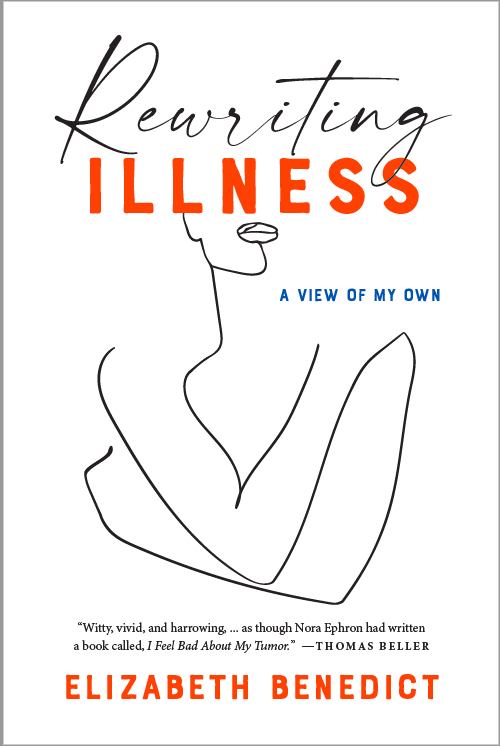
By turns somber and funny but above all provocative, Elizabeth Benedict’s "Rewriting Illness: A View of My Own" is a most unconventional memoir. With wisdom, self-effacing wit, and the story-telling skills of a seasoned novelist, she brings to life her cancer diagnosis and committed hypochondria.
As she discovers multiplying lumps in her armpit, she describes her initial terror, interspersed with moments of self-mocking levity as she indulges in “natural remedies,” among them chanting Tibetan mantras, drinking shots of wheat grass, and finding medicinal properties in chocolate babka. She tracks the progression of her illness from muddled diagnosis to debilitating treatment as she gathers sustenance from her family and an assortment of urbane, ironic friends, including her fearless “cancer guru.”
In brief, explosive chapters with startling titles – “Was it the Krazy Glue?” and “Not Everything Scares the Shit out of Me” – Benedict investigates existential questions: Is there a cancer personality? Can trauma be passed on generationally? Can cancer be stripped of its warlike metaphors? How do doctors’ own fears influence their comments to patients? Is there a gendered response to illness? Why isn’t illness one of literature’s great subjects? And delving into her own history, she wonders if having had children would have changed her life as a writer and hypochondriac. Post diagnosis, Benedict asks, “Which fear is worse: the fear of knowing or the reality of knowing?"
Throughout, Benedict’s humor, wisdom, and warmth jacket her fears, which are personal, political, and ultimately global, when the world is pitched into a pandemic. Amid weighty concerns and her all-consuming obsession with illness, her story is filled with suspense, secrets, and even the unexpected solace of silence.
| |
|
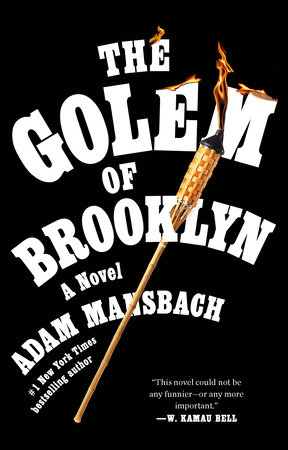
More Genius from Adam Mansbach, with his new book, "The Golem of Brooklyn."
In Ashkenazi Jewish folklore, a golem is a humanoid being created out of mud or clay and animated through secret prayers. Its sole purpose is to defend the Jewish people against the immediate threat of violence. It is always a rabbi who makes a golem, and always in a time of crisis.
But Len Bronstein is no rabbi—he’s a Brooklyn art teacher who steals a large quantity of clay from his school, gets extremely stoned, and manages to bring his creation to life despite knowing little about Judaism and even less about golems. Unable to communicate with his nine-foot-six, four hundred-pound, Yiddish-speaking guest, Len enlists a bodega clerk and ex-Hasid named Miri Apfelbaum to translate.
Eventually, The Golem learns English by binge-watching Curb Your Enthusiasm after ingesting a massive amount of LSD and reveals that he is a creature with an ancestral memory; he recalls every previous iteration of himself, making The Golem a repository of Jewish history and trauma. He demands to know what crisis has prompted his re-creation and whom must he destroy. When Miri shows him a video of white nationalists marching and chanting “Jews will not replace us,” the answer becomes clear.
The Golem of Brooklyn is an epic romp through Jewish history and the American present that wrestles with the deepest questions of our humanity—the conflicts between faith and skepticism, tribalism and interdependence, and vengeance and healing.
| |
|
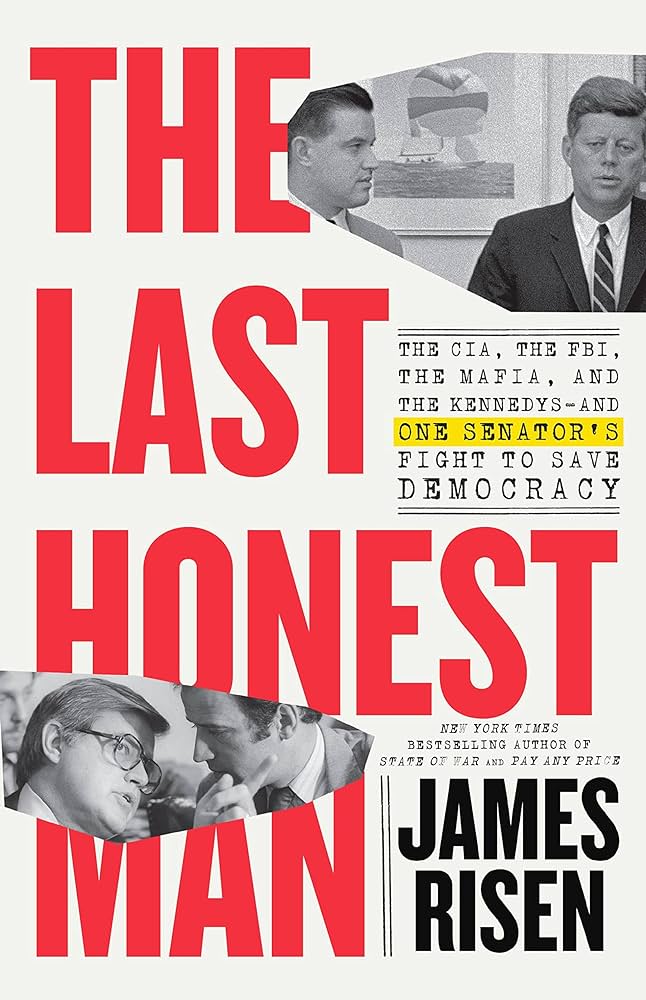
In this “gripping . . . spectacular piece of reporting” (Ken Burns), a Pulitzer Prize-winning journalist James Risen examines Senator Frank Church, the man at the center of numerous investigations into the abuses of power within the American government in "The Last Honest Man."
For decades now, America’s national security state has grown ever bigger, ever more secretive and powerful, and ever more abusive. Only once did someone manage to put a stop to any of it.
Senator Frank Church of Idaho was an unlikely hero. He led congressional opposition to the Vietnam War and had become a scathing, radical critic of what he saw as American imperialism around the world. But he was still politically ambitious, privately yearning for acceptance from the foreign policy establishment that he hated and eager to run for president. Despite his flaws, Church would show historic strength in his greatest moment, when in the wake of Watergate he was suddenly tasked with investigating abuses of power in the intelligence community. The dark truths that Church exposed—from assassination plots by the CIA, to links between the Kennedy dynasty and the mafia, to the surveillance of civil rights activists by the NSA and FBI—would shake the nation to its core, and forever change the way that Americans thought about not only their government but also their ability to hold it accountable.
Drawing upon hundreds of interviews, thousands of pages of recently declassified documents, and reams of unpublished letters, notes, and memoirs, some of which remain sensitive today, Pulitzer Prize–winning reporter James Risen tells the gripping, untold story of truth and integrity standing against unchecked power—and winning—in The Last Honest Man.
| |
|
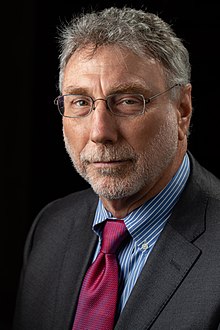
Former newspaper executive Martin Baron has overseen some of the biggest stories in American journalism.
In Collision of Power, Baron recounts this with the tenacity of a reporter and the sure hand of an experienced editor. The result is elegant and revelatory―an urgent exploration of the nature of power in the 21st century.
In 2000, he served as an editor at the Miami Herald during the presidential election recount, which hinged on results from Florida. Later, he presided over The Boston Globe during the Catholic Church sexual abuse scandal, which was dramatized in the Academy Award-winning movie Spotlight. His new book, “Collision of Power,” focuses on his time as the Executive Editor of The Washington Post, dealing with the Trump White House and their backlash against the basic idea of a free press.
Martin Baron took charge of The Washington Post newsroom in 2013, after nearly a dozen years leading The Boston Globe. Just seven months into his new job, Baron received explosive news: Jeff Bezos, the founder of Amazon, would buy the Post, marking a sudden end to control by the venerated family that had presided over the paper for 80 years. Just over two years later, Donald Trump won the presidency.
Now, the capital’s newspaper, owned by one of the world’s richest men, was tasked with reporting on a president who had campaigned against the press as the “lowest form of humanity.” Pressures on Baron and his colleagues were immense and unrelenting, having to meet the demands of their new owner while contending with a president who waged a war of unprecedented vitriol and vengeance against the media.
In the face of Trump’s unceasing attacks, Baron steadfastly managed the Post’s newsroom. Their groundbreaking and award-winning coverage included stories about Trump’s purported charitable giving, misconduct by the Secret Service, and Roy Moore’s troubling sexual history. At the same time, Baron managed a restive staff during a period of rapidly changing societal dynamics around gender and race.
| |
|
James Brosnahan is one of the most important trial lawyers in the United States. He is the lawyer who often took the most controversial and complex cases, the ones that few dared to accept. He earned a conviction of Casper Weinberger as a Special Prosecutor during Iran-Contra. He represented Patricia Dunn in the astonishing HP Spying Scandal, which led to all of the charges being dropped against his client. He fought political corruption in Northern Ireland, where lawyers were brutally murdered. He received daily death threats while he represented "The American Taliban" during an emotionally charged time in American history.
After 150 trials over the past 60 years, Jim has been a lion of the courtroom. He has one hell of a story to tell and doe sit in his new memoir "Justice at Trial," which should be read by every law student. Follow a trial lawyer’s career through the demanding, often controversial, and suspenseful world of jury trials, tension-filled appeals and the different worlds of courtrooms, jail cells, corporate boardrooms, and law firms.
Each of the cases in the nineteen chapters were selected from a total of his 150 jury trials to reflect issues of current importance, including refugees on the Mexican border, gargantuan gender battles inside one of the largest corporations in the world, sexual taboos on national television, accusations of terrorism, government agents who cheat, innocent prisoners in our jails, the constitutional right to speak and print the truth, bringing law to a war zone, poverty and murder on Native American Reservations, current problems of hunger in America, and more.
| |
|
Since we end the 3023 season during the holidays , perhaps it’s time to take a look at the spiritual side of things. This year will end things with a conversation with Rabbi Michael Zedek, who outlines his reasoning for embracing the here and now and valuing the gift of life in his new book, "Taking Miracles Seriously: A Journey to Everyday Spirituality."
An accomplished storyteller with a refreshing, humorous voice, Rabbi Zedek draws on a range of materials including biblical tales, Indian and Japanese folklore, the works of St. Augustine, Einstein, Isaac Bashevis Singer, and Groucho Marx to take readers on a truly original search for spiritual sustenance in everyday life.
Readers will learn how to identify and appreciate the miraculous in an often-mundane world; how to take God seriously when much of the intellectual world doesn’t; and how to make the most out of underutilized spiritual resources such as poetry and prayer. Heartfelt and amusing, Taking Miracles Seriously is a master course on how to craft an enriched and enriching spiritual life.
| |
|
The Luncheon Society™
began as a series of private luncheons and dinners that take place in San Francisco, Los Angeles, Manhattan, and Boston. Since the Pandemic, we are on Zoom. Discussions center on politics, art, science, film, culture, and whatever else is on our mind. Think of us as "Adult Drop in Daycare." We've been around since 1996 and we're purposely understated. These gatherings takes place around a large table, where you interact with the main guest and conversation becomes end result. There are no rules, very little structure, and the gatherings happen when they happen. Join us when you can.
Our 29th season begins in January 2024 with Joyce Carol Oates on January 4th.
Hope you can join us.
Bob McBarton
bob.mcbarton@comcast.net
The Luncheon Society
cell 925.216.9578
Twitter: @LuncheonSociety
| | | | |