January 17, 2023

We’re thrilled to return The Latest to your inboxes after its winter hiatus! You can count on today’s top journalism headlines, best practices, and timely resources to be delivered Monday through Thursday afternoons, with occasional special features throughout the week. We’re excited to be back — thank you for reading!


— Beth Francesco, NPCJI interim executive director

Top stories

■ Dozens of media companies set 2023 content deals with Twitter (Axios) / What the Jan. 6 probe found out about social media, but didn’t report (Washington Post) 


■ Why whistleblowers’ trust in journalism is fading (Nieman Journalism Lab)


■ ‘No matter what the years ahead may hold, we will continue to investigate stories in the public interest and bring you journalism that is worthy of your trust’: A reflection on 40 years of FRONTLINE, from our editor-in-chief and executive producer (FRONTLINE) / Watch: FRONTLINE accepts 2022 NPC investigative journalism award (NPCJI)


■ CNN is serious about getting into comedy (Semafor) / ‘CNN’s Chris Licht is considering blowing up CNN’s primetime format and bringing in an entertainment personality. He’s discussed names like Trevor Noah, Bill Maher, Jon Stewart, and even Arsenio Hall’ (Max Tani) / CNN announces revamped daytime lineup with new show format (CNN) 


■ NBC News correspondent Kerry Sanders retires after 32 years – with 4 million frequent-flier miles in hand (The Wrap) / ABC News announces Rachel Scott promoted to senior congressional correspondent (ABC News Public Relations) / New Vice editor Zing Tsjeng on reaching Gen Z and weathering downturn (Press Gazette)


■ Blake Hounshell, ‘On Politics’ editor at The Times, dies at 44 (The New York Times) / In remembrance of a beloved and very online journalist (POLITICO) 


■ Getty Images is suing the creators of AI art tool Stable Diffusion for scraping its content (The Verge) 


■ Newspaper pulls obituary praising man who killed his wife and 5 kids in murder-suicide after backlash (Gizmodo via Yahoo! News)


■ Kansas City police dismissed a Black news site's reports of missing women. Then one showed up. (Capital B) 


■ Kanye West’s ex-lawyers want to print newspaper ads announcing they’ve dropped him (Daily Mail)


■ When a journalist’s actions become the focus of a murder trial (Poynter)


■ The Minneapolis Star Tribune found that allowing online cancellation actually helps keep subscribers (Nieman Journalism Lab) 


■ Proof: It's time for everyone to take Fridays off (Insider) 


■ ICYMI: A young journalist's first big interview was with Kate Winslet. The ‘Avatar’ star used the moment to coach her through: ‘You got this’ (CBS News) 


Press Freedom 


■ Killings of journalists and media workers surged 50% in 2022, U.N. says (CBS News) 


■ Russia’s local journalists struggle to keep news flowing – from home and abroad (The Moscow Times) 


■ ‘Nobel Peace Prize laureate Maria Ressa faces judgment in the Philippines in a few hours on a tax charge that could see her imprisoned for up to 34 years. 11 fellow laureates have penned an open letter to President Marcos to resolve the "unjust charges" ’ (Julie Posetti) / Nobel Peace Prize Laureates to President Marcos: Ensure justice for Maria Ressa (The Democracy Report)

3 tips to land ambitious journalism projects with new editors

So you have a big idea for a journalism project that you want to publish in the new year. How do you get an editor to catch your pitch? 


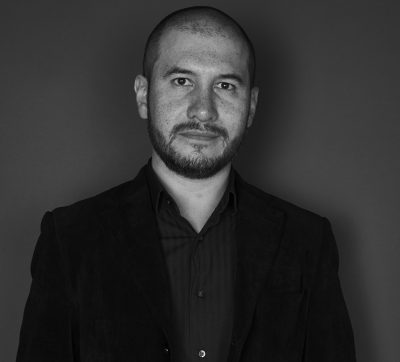
We asked Wilson Liévano, managing editor at The GroundTruth Project and director of training at Report for the World, to share tips for reporters pitching an ambitious project to editors they have not worked with before. Liévano has worked with reporters for more than 10 years. As a John S. Knight fellow, he developed Animated Press to provide context to complex stories.


1. Aim for the stars, but be prepared to come back to Earth


When pitching the project, be bold and don't limit yourself. If you have an idea for the presentation, scope of reporting, or format of the project, share it with the editor, but make clear that you are willing to work together to shape those ideas to the budget and needs of the organization. Even the wildest, most ambitious ideas can be adapted into practical and realistic plans. What might seem overly ambitious to you might be reasonable for your editor. You'll never know unless you try.


2. Don't lose sight of the point of your story


Sometimes, reporters fall in the same trap as entrepreneurs when they're trying to pitch a product: They get so tangled in the features, the impact, and everything that's around it that they forget to communicate clearly what their story is about. You should be able to explain the point of your story to an editor in a couple of sentences, regardless of its complexity. Once you do that, you can build upon it and introduce the rest of the elements — but remember to limit your pitch to a page or less. If the editor is interested, you'll have time to expand on your idea.  


3. Anticipate the tough questions and prepare for them


Ask yourself: What are the biggest obstacles to produce your story? Is it the time it will take? How many people will you interview? The risks involved? The resources needed? An editor unfamiliar with your work will ask those and other questions to gauge if they have the capability to take on the project. Having answers on hand can make a difference between an editor dismissing your idea or opening a dialogue to see if your solution is viable. You don't need to address every obstacle in your pitch, only the most crucial ones, but have all your answers ready in case you move to the next stage. Your editor will appreciate it.

Share your work (and your tips!)


Great journalism happens every day in communities across the U.S. Readers, we want to celebrate and amplify your great work in this newsletter. If you’d like to share a journalistic piece you’re proud of — and tips for how you did it — let us know! We could feature you and your work in this space.


Please complete this brief form to be considered for our subscriber spotlight.

Students: Applications open for 2023 NPC Scholarships


The National Press Club’s 2023 scholarship applications are open. They include:


  • The Scholarship for Journalism Diversity Honoring Julie Schoo is a $5,000 scholarship awarded to a high school senior. The purpose of the scholarship is to recruit promising future journalists who will bring diversity to American journalism. The award can be renewed for up to three years at $5,000 per year.
  • The Richard G. Zimmerman Scholarship is a one-time scholarship of $5,000 to support a high school senior who wishes to pursue a career in journalism. 
  • The Wes Vernon Broadcast Scholarship, established in 2021, supports diversity within the field of broadcast journalism. The scholarship is $5,000 per year awarded to a student who demonstrates a commitment to a career in broadcast journalism. The award can be renewed up to three years. The award is open to any student at any stage in their career pursuing an education in broadcast journalism, with a preference for community college students.
  • The Dennis and Shirley Feldman Fellowship recognizes a student pursuing graduate studies in journalism with a one-time stipend of $5,000 to help defray tuition costs. The deadline for this fellowship is April 15, 2023.
  • The Lewis Scholarship, established in 2022, supports a student journalist of color interning in Washington, D.C., by providing free housing and a monthly stipend for the duration of their journalism internship. The scholarship is valued at $10,000 per semester, and it is offered three times a year to support spring, summer, and fall internships. Applications for summer 2023 are due March 31, 2023.


The deadline for students to apply, unless otherwise stated, is Feb. 15, 2023.

Applications are open

We're hiring! Apply now for Director of Training position


The National Press Club Journalism Institute is hiring a Director of Training to create and manage its professional development portfolio. The training director reports to and works closely with the executive director to create an engaging, meaningful slate of programs and published resources that supports journalists throughout the United States and across the globe.


​​The successful candidate will have:


  • Newsroom experience within the last five years. Leadership or management experience is a plus.
  • Demonstrated experience editing, teaching, or coaching journalists. Experience developing journalism curriculum or training resources is a plus.
  • The ability to network and work with diverse stakeholders, including other senior-level journalists and editors, policymakers, subject-matter experts, and students.
  • An entrepreneurial spirit and eye for the future of journalism, and the ability to assess programmatic needs. 
  • A demonstrated commitment to diversity, equity, and inclusion.
  • Strong analytical and communication skills in writing and in person.
  • Solid knowledge and regular use of digital learning tools, publishing platforms, and hybrid work environments. 
  • Excellent organization and time management skills.
Apply now

The National Press Club Journalism Institute is housed within the National Press Club in Washington, D.C. The Institute team is transitioning to a hybrid work schedule in 2023 with a few in-office work days per week. Fully remote work is not available for this position.


Please contact interim executive director Beth Francesco for details.

Resources

This newsletter is written & edited by the National Press Club Journalism Institute staff: Beth Francesco and Holly Butcher Grant. Send us your questions and suggestions for topics to cover.


Get this from a friend? Subscribe, and view the archives.


If you value this newsletter, consider supporting The Latest with a tax-deductible, recurring gift to the Institute: Even $5 a month will help fund the technology and time it takes to provide this important service.  

Facebook  Twitter  Linkedin  Youtube  

The National Press Club Journalism Institute promotes an engaged global citizenry through an independent and free press, and equips journalists with skills and standards to inform the public in ways that inspire a more representative democracy. As the non-profit affiliate of the National Press Club, the Institute powers journalism in the public interest.