|
|
 |
10-Year Revision of Bay Management Plan Completed
Updated Blueprint Will Guide Research, Restoration Through 2027
The once-a-decade revision of
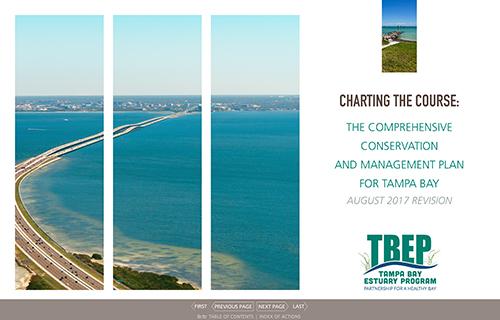
Charting The Course: The Comprehensive Conservation and Management Plan (CCMP) for Tampa Bay, is complete and available to view, download or share
here.
The CCMP presents 39 actions to sustain bay improvement through the year 2027. It also sets research and monitoring priorities, and describes a financial strategy to support Plan implementation.
The 2017 Update is the second major revision since adoption of the original Plan in 1996. Since that time, the Tampa Bay Estuary Program's goal of reaching 38,000 acres of seagrass has been achieved, and surpassed. An estimated 41,655 acres of seagrass were reported baywide this year.
Restoration targets also have been established for freshwater wetlands and emergent tidal wetlands. During the next decade, targets will be set for hard bottom habitats, coastal uplands, and tidal tributaries. Planning for and adapting to climate change and its many potential impacts will be a key challenge for the bay management community in the next 10 years and beyond.
New actions in this CCMP Update address microplastics and other emerging contaminants; sewer overflows; harmful algal blooms; public access; and ocean acidification. The Plan also includes an important action to incorporate CCMP goals in local government comprehensive land use plans, guidance documents and ordinances.
A condensed Public Summary of the Plan will be completed in October.
|
TBEP, USF To Study Impacts of Ship Wakes on Shorelines
TBEP has received a $24,000 grant from the U.S. Fish and Wildlife Service to study the ecological impacts of wakes from large ships on the bay's shoreline. We will partner with USF's Center for Maritime and Port Studies on the project, which is a new area of research for the bay management community.
 |
|
|
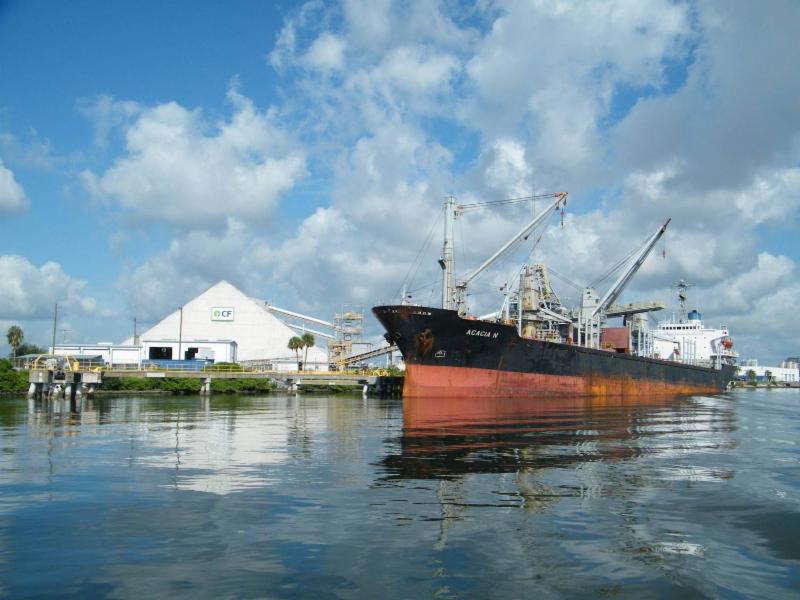
Photo courtesy Port Tampa Bay
|
Deepwater ports in Tampa, Manatee and St. Petersburg handle fully one-third of cargo shipped into and out of Florida.
Port Tampa Bay also has become a major player in the cruise industry, hosting ships that served almost 1 million passengers last year. This busy maritime commerce provides an enormous economic boost, but the frequency and size of ships traversing the bay may be contributing to erosion on some bay shorelines.
Wakes generated by large ships may travel a mile or more. Their passage actually produces wakes from both the bow and the stern. Therefore, shorelines may be affected by a series of waves from a single ship.
The TBEP study will analyze the frequency and magnitude of vessel-generated wakes on shorelines adjacent to major shipping channels, and overlay those on critical habitats such as bird rookeries, foraging areas and seagrass beds. A map will show vulnerable shorelines, and resource managers and scientists will assist in ranking priority areas for
future mitigation/restoration activities.
Interest in examining the ecological effects of ship wakes came from preliminary discussions with the maritime community, said TBEP Ecologist Gary Raulerson. Industry representatives are seeking scientific data to support participation in mitigation activities to reduce or prevent wake-related erosion.
"This project will identify restoration and management opportunities that will hopefully lead to new partnerships with the maritime industry in and around Tampa Bay, " Raulerson said.
The study will begin this fall, and is scheduled for completion late next summer.
|
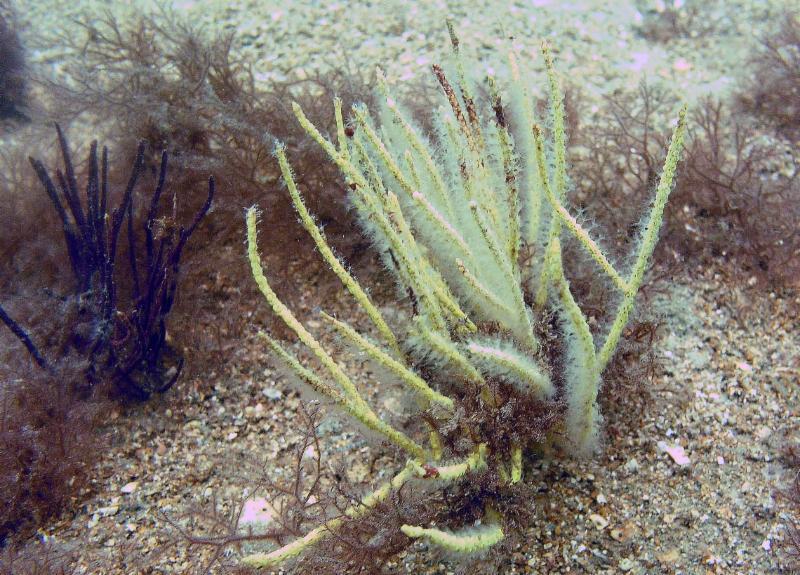
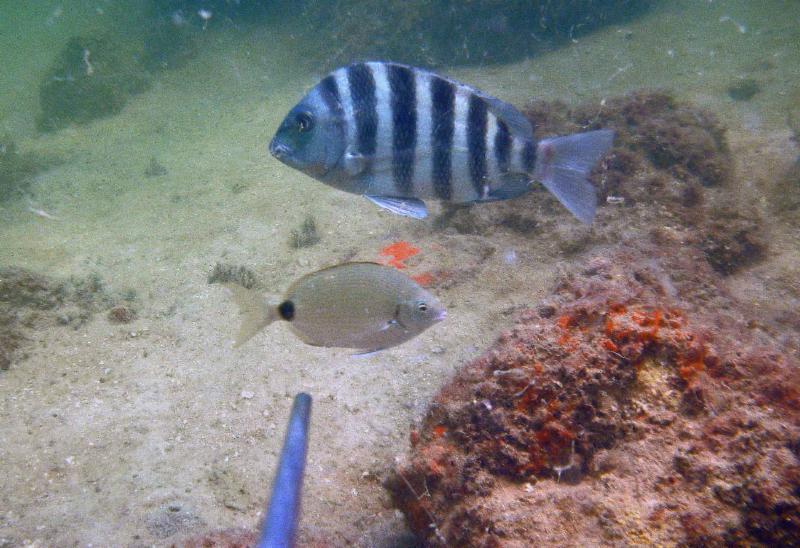
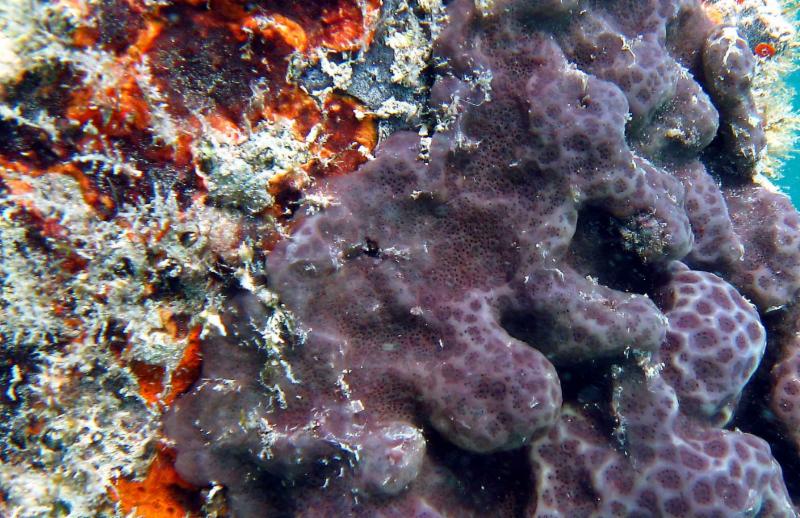
Left to right, sea whips; a sheepshead and spottail pinfish; and fossilized coral on the bay bottom. Photos by Walt Jaap.
Mapping of Rare Hard-Bottom Habitats is Expanding
|
|
|
Source: TBEP
|
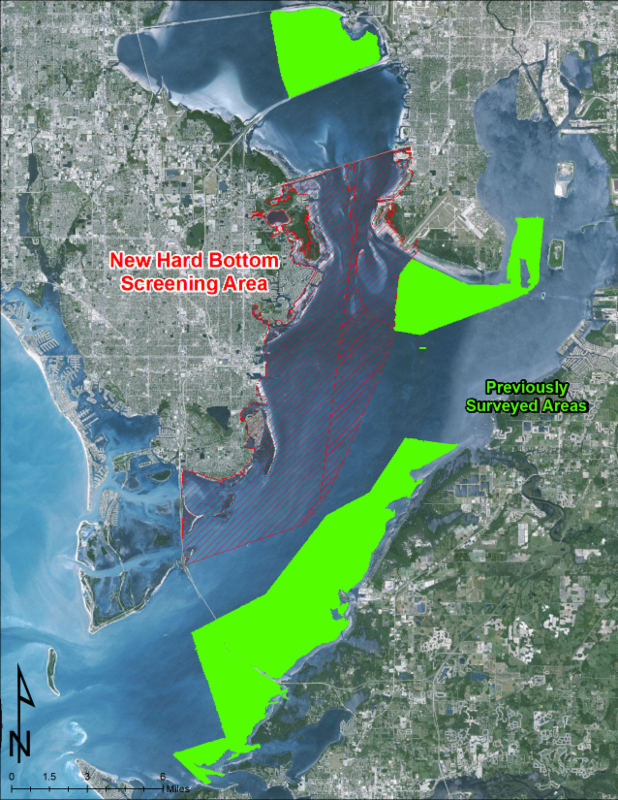
Research to explore and map rare rubble, coral and limestone "hard bottom" habitats on the bay bottom will expand in 2018 into Pinellas County waters.
TBEP will coordinate the $223,000 project, with contributions of $100,000 from Pinellas County (from settlement funds from the Deepwater Horizon oil spill) and $23,000 from the Environmental Protection Commission of Hillsborough County. CSA Ocean Services was selected to conduct the surveys, using side scan sonar and underwater video, and produce maps and analysis of the hard bottom habitats within Tampa Bay. The project is set to begin in October.
Mapping will occur in Pinellas water between the Gandy and Skyway Bridges, building upon previous surveys by the Southwest Florida Water Management District in lower Hillsborough and Manatee counties. Areas surveyed included MacDill Air Force Base and Terra Ceia Bay, and the Little Manatee and Manatee river mouths. Those projects mapped the spatial extent and bathymetric relief of hard-bottom and live bottom areas. Read the project report.
Hard bottom habitats in Tampa Bay include fossilized corals, rubble, limestone, other natural "reef-like" material and artificial reefs. They provide important substrate for the attachment of benthic species, including sponges, corals and oysters, and attract and support a diversity of marine invertebrates and fish.
Recent research by the Florida Fish and Wildlife Conservation Commission has documented fisheries use of these habitats, including commercially and recreationally important species such as groupers, sheepshead, stone crabs and tarpon.
Increasing our knowledge about the location, makeup and extent of hard-bottom communities will help bay managers establish protection and restoration targets for these unusual and fragile habitats -- a task on TBEP's to-do list in the next few years.
|
Executive Director Search Underway
TBEP is seeking qualified applicants to succeed longtime Executive Director Holly Greening, who is retiring in February 2018. The successful applicant will have demonstrated experience in effectively managing multi-entity environmental, scientific and/or engineering programs; fostering and maintaining collaborative approaches to complex environmental issues; the ability to facilitate consensus among diverse and sometimes conflicting stakeholders; success in raising funds from public and private sectors, including federal, state and local grants; and the ability to manage an effective and talented staff
.
The complete job listing is posted
here.
Deadline to apply is 2 p.m. Friday, October 6.
|
Video Demonstrates Coastal Assessment Techniques
|
|
|
Coastal Habitat Assessment: Tools and Techniques
This video demonstrates methods for selecting and monitoring coastal habitats to detect and track changes in coastal vegetation associated with climate change and sea level rise. The video was produced by the Florida Fish and Wildlife Research Institute and the Tampa Bay Estuary Program. A companion technical manual is available
here.
|
|
|
|
|
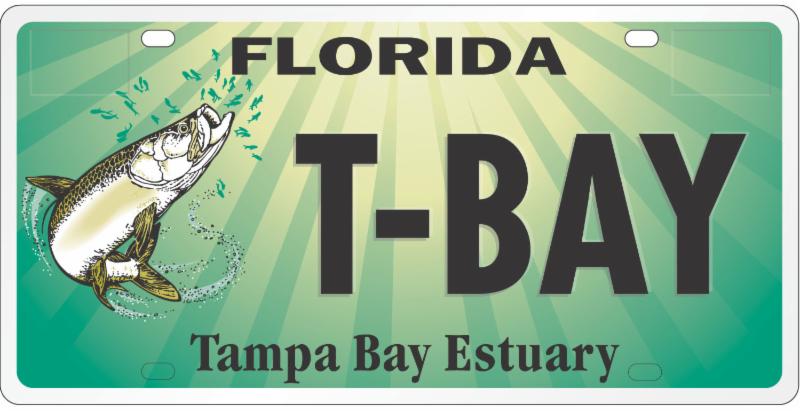
The Bay Mini-Grants are funded by sales of the
Tampa Bay Estuary license plate |
Bay Mini-Grants Due Sept. 15
TBEP is again offering grants of up to $5,000 for community-based restoration and education projects in the Tampa Bay watershed. Clubs,
neighborhood associations, business and trade organizations, community and environmental groups, and schools are eligible to apply. Recipients will be selected in November for 2018 projects.
|
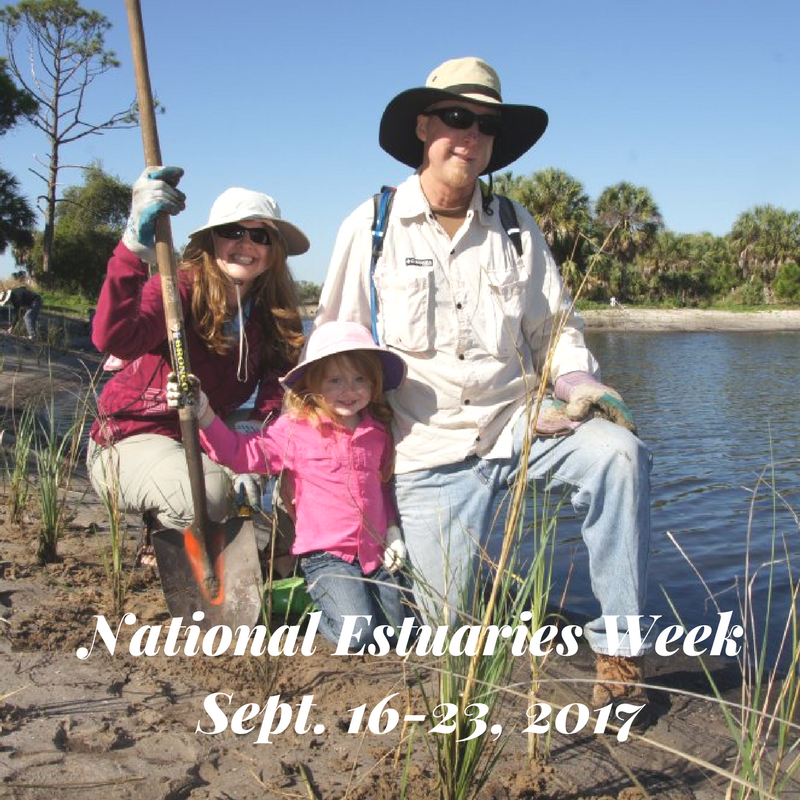
TBEP Celebrates National Estuaries Week with Three Events
TBEP will join a weeklong celebration of our nation's estuaries with three special events:
- Two volunteer workdays will be held in Manatee County in partnership with Manatee County Parks and Natural Resources and the Sarasota Bay Estuary Program. On Friday, Sept. 22, volunteers are needed to harvest marsh grass at Perico Preserve. On Saturday, Sept. 23, volunteers will plant the harvested grasses at a new restoration area in Robinson Preserve. Both workdays run from 8:30-11:30 a.m. Contact misty@tbep.org to sign up.
- The public is invited to attend a free presentation called "Tampa Bay: Paradise Lost (and Found Again)" at Brooker Creek Preserve in Pinellas County at 10:30 a.m. Register here.
National Estuaries Week is a celebration of the vibrant coastal areas where salt and fresh waters meet. A variety of events are planned across the nation to raise awareness of why we need to protect these special places. Tampa Bay was designated an "estuary of national significance" by Congress in 1990.
|
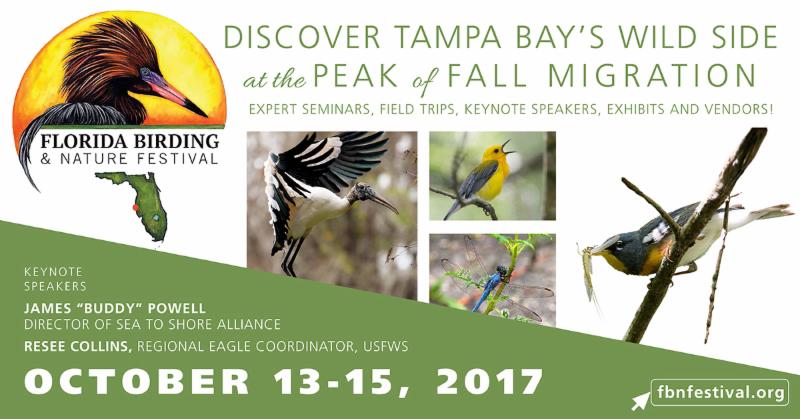
One Month Away!
Register Now for Florida Birding and Nature Festival
Hillsborough Community College SouthShore Campus
551 24th Street N.E.
Ruskin, FL
TBEP is proud to once again be a sponsor of this 3-day festival jam-packed with workshops, presentations and small-group field trips to some of the best wildlife-viewing sites in West Central Florida!
The Festival coincides
with peak migration in Central Florida, when 180 bird species can be found in our region.
There is no general registration fee. Instead, pay for a field trip and get all seminars on that day free. Field trips
range from $30-$65 and are guided by expert birders and naturalists. Special trips for photographers are offered.
Fees for keynote programs are additional.
Among the activities:
- Engaging presentations on nature photography, landscaping for wildlife, reptiles, butterflies, and conservation initiatives. TBEP Outreach Coordinator Nanette O'Hara is among the workshop speakers -- she'll give a virtual underwater tour of Tampa Bay during the Friday seminars.
- Field trips by land and water to prime birding, wildflower and wildlife viewing locations throughout West Central Florida.
- A nature expo with artwork and unique gifts for wildlife lovers.
Two special evening events, plus a Sunday afternoon panel discussion, are planned. The $25 cost includes a buffet meal.
- Friday, October 13 - Dr. James "Buddy" Powell, Co-Founder of Sea to Shore Alliance, will talk about research and conservation of manatees in Florida.
- Saturday, October 14 - Resee Collins, Regional Eagle Coordinator for the U.S. Fish and Wildlife Service, will talk about the successful recovery of the Bald Eagle that led to its downlisting from endangered to threatened.
- Sunday, October 15 - A panel of experts will report on the economic and social benefits derived from land conservation.
|
|
|
|
| |
| |
|
Quick Links
More about Us
|
| 
About the Tampa Bay
Estuary Program
The Tampa Bay Estuary Program is an intergovernmental partnership dedicated to restoring and protecting Tampa Bay, Florida's largest open-water estuary. TBEP is one of 28 "Estuaries of National Significance" designated by Congress. Our Policy Board is comprised of representatives from Hillsborough, Manatee, Pasco and Pinellas counties; the cities of Tampa, St. Petersburg and Clearwater; the Southwest Florida Water Management District; the Florida Department of Environmental Protection; and the U.S. Environmental Protection Agency. |
|
|
|
| |
|