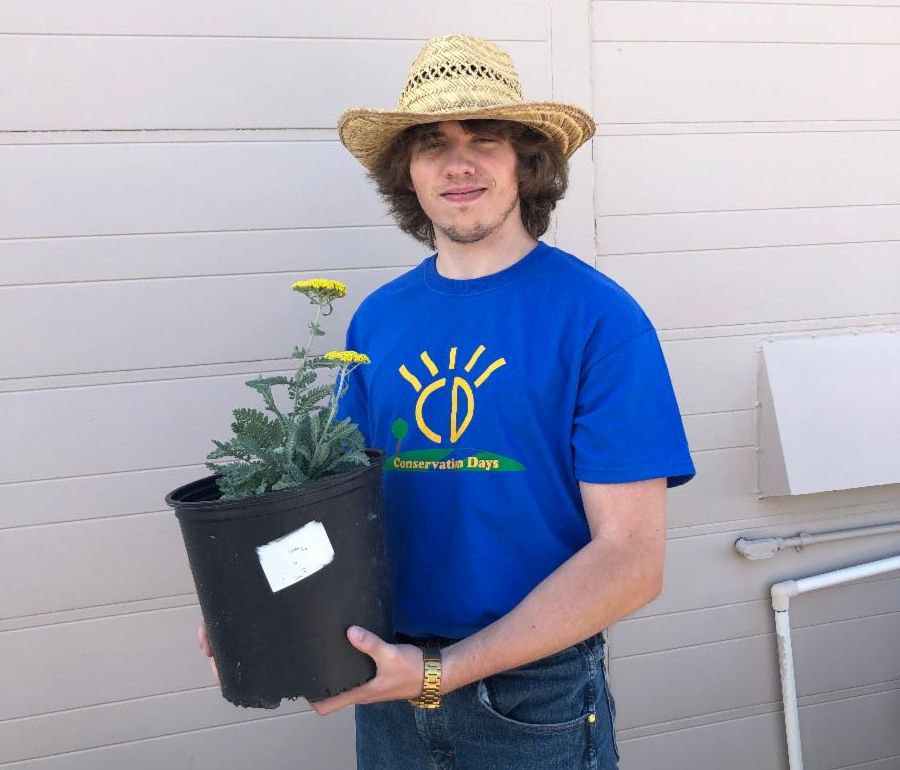
Now in its second round of funding, the Friends of NACD District Grants program is an initiative of the NACD District Operations and Member Services Committee that enables funds raised through individual donations in support of locally-led conservation to be awarded to four conservation district projects of up to $2,500 each.
In February, NACD Second Vice President Kim LaFleur announced recipients of the inaugural program at NACD’s Annual Meeting in Las Vegas, Nev. Awardees have implemented a recycling service for agrochemical containers (Butte Soil and Water Conservation District (SWCD), Idaho), provided distance learning opportunities for local youth (Sierra SWCD, N.M.), started a seed sanctuary (Richland SWCD, S.C.), and planned a seedling sale (Eastern Rhode Island CD, R.I.).
“The district grants program enables us to bring about change in local communities and enhance the work of conservation districts by providing direct financial support to creative projects and ideas,” said LaFleur.
The Friends of NACD program was established in 2009 to support the nation’s nearly 3,000 conservation districts through cash donations to NACD.
“It’s a privilege to be able to announce these funding opportunities for conservation districts in the wake of the ongoing COVID-19 (coronavirus) pandemic,” LaFleur said. “These projects help fund new initiatives that will help local conservation districts further their mission by supporting their customers and delivering locally-led conservation practices."
Read more about the projects, donate to the program, and see the full Request for Proposals (RFP) online here. Applications are due Nov. 30. If you have any questions, please contact NACD Director of Membership Kimberly Uldricks or NACD Pacific Region Representative Ariel Rivers.
|
NCF #FUTUREFOCUSED Q&A WITH NGLI'S
SAM STEINER
|
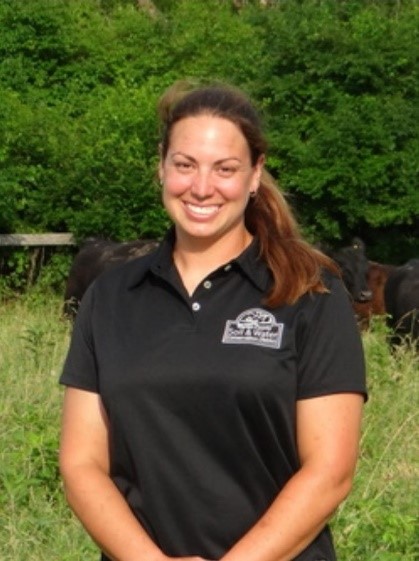
Steiner grew up in Lebanon, Ohio, on a dairy and crop farm until 1998, when her family sold their dairy cattle. She got back into farming in 2010, when she begun working full-time on her operation.
Steiner is extremely active within her local school district, assisting with the Latchkey Program, a before- and after-school program for first through sixth graders. She is also a club advisor for the Warren County 4-H Program.
Steiner recently spoke with NACD about NCF and NACD, their goals and their legacy. Below are some of her answers.
How did you hear about the National Association of Conservation Districts?
My father was on the Warren County Soil and Water Conservation District (SWCD) board. He always attended the annual meeting. My senior year, I was able to accompany my dad on the NACD trip to Reno. That was my first full introduction, and it was just amazing. It was something I knew that, when Dad retired, I wanted to become part of.
What resources are most valuable?
Networking with individuals across the country, seeing what the issues are outside of our region, and finding a better solution to a problem that we might be facing over here. NACD is our voice at the federal level and helps to create the policies that work for the everyday farmer.
How did you hear about the National Conservation Foundation (NCF)?
I first learned about NCF through the Envirothon when I became a board member. Now, I am more familiar through NGLI.
What is the purpose/impact of the Next Generation Leadership Institute?
To equip future leaders with the skillsets they need to promote conservation at all levels; starting within their own district, then state, and hopefully on to the national level. That’s what I hope for!
Why is supporting NCF important to you?
Because it allows these amazing programs, like Envirothon and NGLI, to continue. The Envirothon program supports our youth and gets them involved in the conservation movement. NGLI supports those who have taken it a step further to get involved at the local, state and federal level.
“By donating, it allows NCF to continue its mission of providing districts and other organizations funding for research, education programs and public outreach. NCF needs our support in order to continue.”
Why should emerging leaders choose to be involved in conservation?
Without conservation, I don’t believe there is any future. If we don’t protect the environment around us, then our leadership journey will be short. Agriculture needs to be able to support our population in a way that is sustainable for many generations. By being involved in conservation, it allows us to be on the front lines with the most recent research and technology available. Even outside of agriculture, leaders in other groups need to be aware of what is going on with the environment around them, because what they do has an impact on conservation.
|
SWCD HELPS SUPPORT TREE PLANTING EFFORTS IN WEST VIRGINIA |
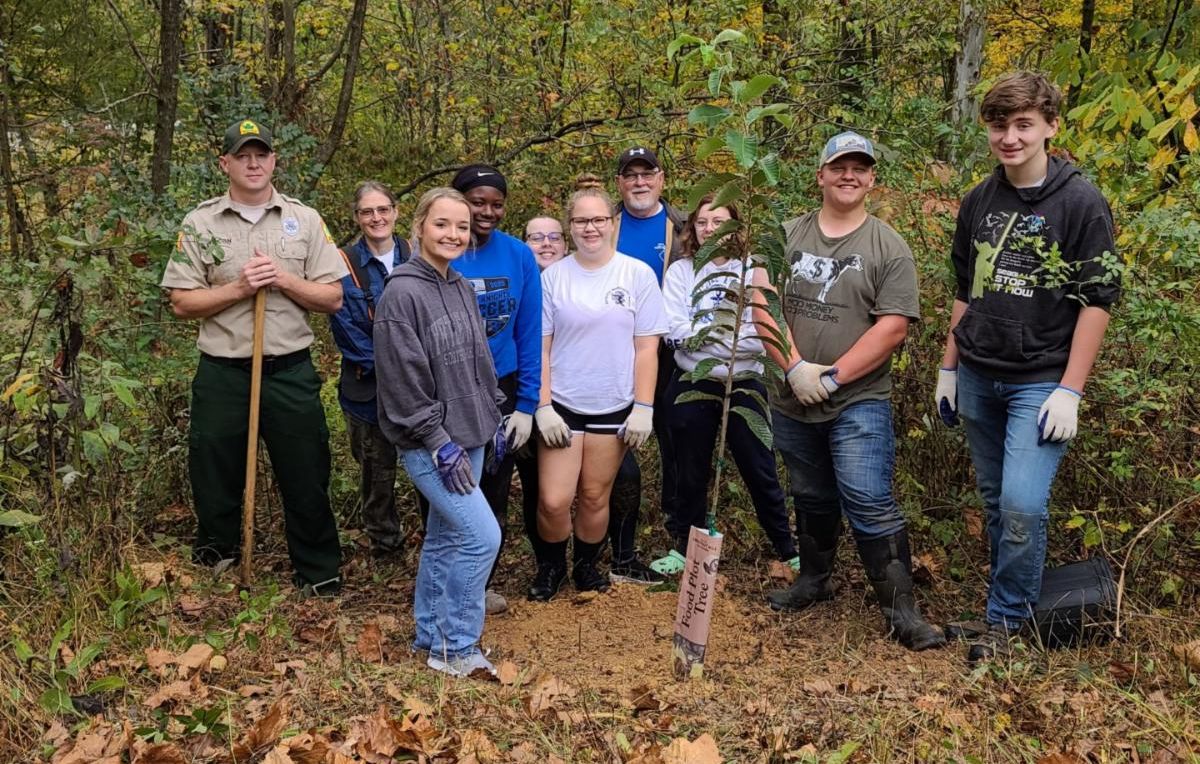
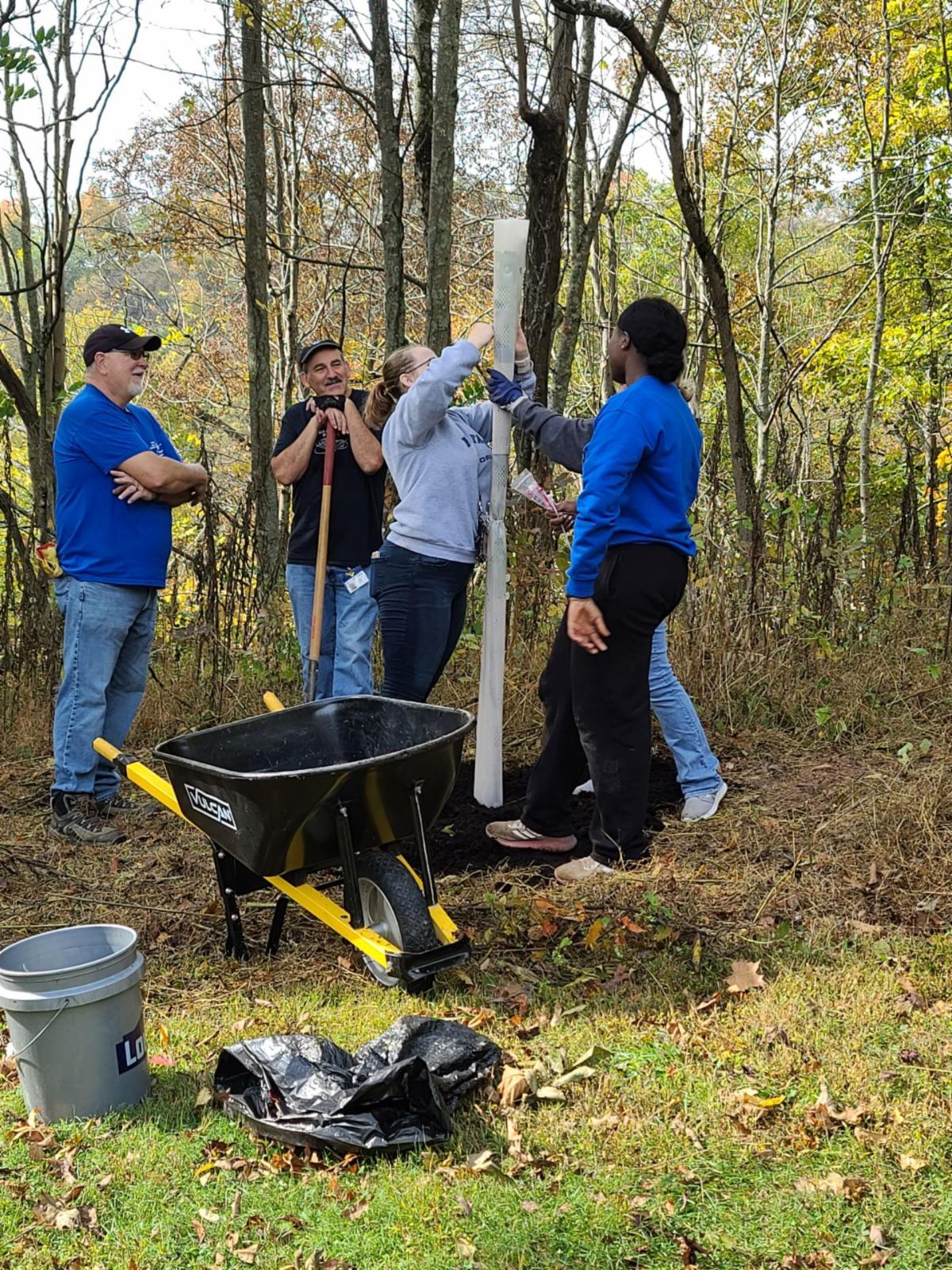
The Upper Ohio Conservation District (UOCD) in West Virginia recently donated nine Dunstan American Chestnut trees to the Tyler Consolidated High School (TCHS) to be planted on school property. The purchase of the trees was made possible by a $1,000 grant from the Little Kanawha Resource Conservation and Development (RC&D).
The tree planting took place on Saturday, Oct. 10. UOCD Supervisors Patricia Thomas and Wayne McKeever (who is also president of the West Virginia Association of Conservation Districts) were on hand to coordinate the tree planting, along with John Wilson from the West Virginia Division of Forestry.
For centuries, chestnuts were a primary food source for North American wildlife. In the 19th century, a foreign blight killed 30 million acres of chestnut forest.
|
“The Dunstan chestnut trees are blight resistant, and by planting these trees, we are hoping to help in the re-establishment of chestnut trees to the area,” McKeever said.
Assisting with the tree plantings were TCHS teachers Lori Franks and Joe Griffith, along with Charles Franks, Tammy McKeever and students Avery Kemp, Aleeah Fletcher, Romana Rice, Garrett Ammons, Madeline Cecil, Dakota Jones, Kellen Franks and Aislinn Franks.
Later this fall, UOCD will also be planting trees within the other two counties in their district —Wetzel and Pleasants. Learn more by visiting UOCD's website. |
|
Last Call:
Take NACD's DEI Survey
|
During NACD’s 2020 Summer Board Meeting, the NACD Board of Directors took up, voted on and approved a formal statement on diversity, equity and inclusion (DEI). The statement included creation of a task force to provide recommendations back to the board on DEI issues for NACD and our 3,000 conservation districts.
NACD’s DEI Task Force began work earlier this fall and needs feedback from conservation districts. The following survey will take approximately five minutes to complete. This survey will remain open until this Friday, Oct. 23.
|
Check Out Exclusive Membership Offers at NACD's Marketplace |
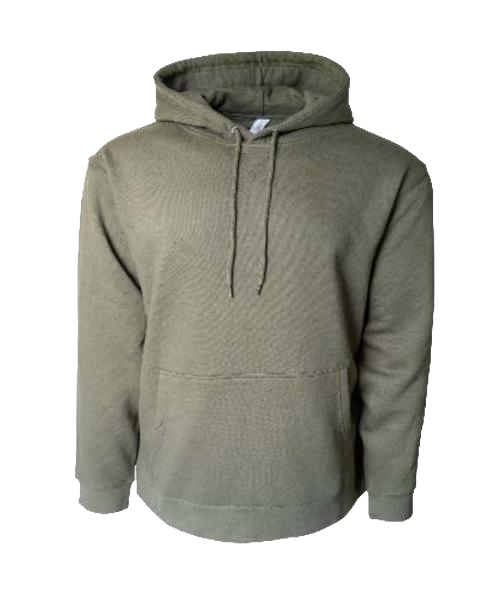
There's so much to fall for this season on NACD's Marketplace. Keep warm and stylish in our customizable brand name jackets, sweatshirts, shirts and accessories. Our wearables will surround you in total comfort, ensuring they will become one of your cold-weather favorites.
Platinum, diamond and gold level NACD members making a single purchase of $100 or more from the Marketplace can benefit from 20 percent, 15 percent and 10 percent discounts, respectively. To learn more about NACD's membership incentives and levels of discounts, please visit NACD's Membership webpage or email us at stewardship@nacdnet.org.
|
Submit Your Entry for NACD's Photo and Poster Contest |
Have you submitted your state winning posters and photos yet? You still have time before the Dec. 1, 2020 deadline to give your students the chance to compete in NACD's National Photo and Poster Contest and have their art recognized and displayed at NACD's Annual Meeting.
The annual poster contest is open to students K-12 and celebrates the 2020 Stewardship theme “Where Would We BEE Without Pollinators?”
The national photo contest is open to all amateur photographers who reside in the U.S. or its territories. Submissions for both contests are due Tuesday, Dec. 1, 2020. To learn more and submit your entry, visit NACD's website. |
New Habitat Video Showcases Pollinator Habitat and Agriculture |
Conservation Blueprint–an organization that offers a wide range of mixes and services to those wanting to plan, create and maintain helpful wildlife and pollinator habitats–recently released a video that explains how agricultural land and pollinator habitats impact each other and can work together.
This habitat tip takes a closer look at the topic of pollinator habitat located next to agriculture and how these two topics can collaborate with each other.
|
Elkhart County SWCD Receives Award for
Environmental Work
|
On Sept. 22, the Elkhart County Soil and Water Conservation District (SWCD) was one of six organizations in Indiana that received the Governor's Award for Environmental Excellence.
The SWCD was recognized for their Stormwater Alliance Program (SWAMP), which is a cost-share program that covers six best management practices (BMPs) that benefit not only the land users but Elkhart County as well through increased water quality.
Since the program's inception in 2017, SWAMP has prevented a total of 20,373 tons of soil from entering local waterways, saved $42,783 in total on-farm nutrient benefit, and saved a total of $100,438 in total off-farm water quality benefit.
Congratulations Elkhart SWCD! To learn more, click here.
|
Last Call:
Share How Your District Supports Forest Health
|
There's only one week left to submit stories on social media highlighting how your conservation district helps support forest health, using #DistrictsSupport
ForestHealth! In honor of NACD's 2021 Stewardship and Education (S&E) theme "Healthy Forests, Healthy Communities," we want to know how you're teaching students and community members how to prevent wildfires and protect your forests.
Each conservation district that shares their story before Oct. 27, will be automatically granted one entry into a raffle drawing to win two multitools and a pack of NACD face masks for their office from NACD's Marketplace. The winning district will be announced on social media and in next week's eResource. To learn more, visit NACD's 2021 S&E webpage.
|
SHI Releases Virtual Field Day Videos |
Today, the Soil Health Institute (SHI) released a series of virtual field day videos as a part of their Healthy Soils for Sustainable Cotton project, which aims to increase the adoption of soil health management systems among cotton producers while documenting environmental and economic benefits.
In these videos, cotton farmers and soil health experts in Arkansas and South Carolina talk about their unique soil health practices. You can watch the videos here. |
Promote your conservation district or state association's tree sale, annual meeting, webinar, field day or more on NACD's Calendar of Events!
|
|