|
October offers us the opportunity to share powerful strategies to support attendance, classroom management, and family empowerment, and to introduce our new company logo. The new CLS logo features an abstract tree with human figures, symbolizing growth, leadership, and a human-centered approach. Its colors were thoughtfully chosen to convey professionalism, creativity, and warmth, reflecting our modern, forward-thinking vision.
As we embrace fall and the first quarter comes to an end, take time to acknowledge the growth you’ve achieved so far and envision the possibilities ahead. This season is the perfect moment to refocus your leadership efforts and build momentum for even greater impact in the months to come.
| | |
Rethinking Attendance: From Compliance to Connection
It is tempting to think of attendance as a simple numbers game. Track the absences, send the letters, file the paperwork. But in reality, improving attendance is not about counting who is missing. It is about understanding why they are gone.
Across the country, chronic absenteeism is rising. Students who are chronically absent in kindergarten are 61% more likely to struggle with reading by third grade.
| | | |
By sixth grade, attendance becomes a leading indicator of high school dropout risk. By ninth grade, it predicts graduation more reliably than test scores. The long-term consequences are real, but so is the opportunity to reframe our response.
Too often, schools rely on compliance-driven strategies: form letters, court referrals, or automated calls. These punitive approaches rarely uncover the root cause of the issue. In fact, they can deepen disconnection for students already struggling with school avoidance, family hardship, or mental health challenges.
Instead, we must begin with a more fundamental question: Why are students not showing up? Attendance is a behavior, and like any behavior, it serves a function. A student may be avoiding school because of anxiety, family responsibilities, fear of bullying, or a lack of connection. When we uncover the "why," we gain the clarity needed to intervene with compassion and effectiveness.
Consider this: we would never send a letter home to an underperforming reader and expect a child to suddenly start reading. We would assess to determine the challenge, understand the barrier, and respond with targeted support. Attendance must be approached the same way. Just as we differentiate academic instruction, we must also differentiate our approach to attendance.
Take Marcus, for example. He is an eighth grader with 20 absences. What his teachers do not know is that his mother works nights, and he is responsible for getting his siblings ready for school. On tough mornings, when things fall apart, Marcus stays home. A warning letter will not change his circumstances. But a warm call from a trusted adult could. That conversation might lead to morning check-ins, access to a bus pass, or help connecting the family to transportation or childcare support.
This is the heart of relational attendance work: knowing the student and family story, identifying the barrier, and matching the intervention to the function of the behavior. When schools use this lens, they can shift from reactive systems to proactive ones that build trust and solve real problems.
A Multi-Tiered System of Support (MTSS) for attendance makes this work actionable. Tier 1 strategies build a welcoming, engaging school culture and promote classroom connection. Tier 2 provides early interventions for students who show signs of disengagement. Tier 3 delivers intensive, individualized support for students facing chronic absenteeism.
Attendance teams are essential in leading this work. These cross-functional teams use real-time data, discuss individual student needs, and coordinate supports that make a difference. The strongest teams center their work on relationships and barrier identification, not blame or compliance.
If you are ready to improve attendance in your school, consider these guiding shifts:
- Ask, “What is getting in the way?” instead of “What is wrong with this student or family?”
- Recognize attendance as a behavior with a purpose, not simply a rule to be followed.
- Replace generic letters with personalized outreach that opens doors for conversation.
- Know the student and family story before deciding on an intervention.
- Match the support to the barrier, just as you would with any other learning challenge.
Attendance is not just about being present. It is about being connected, engaged, and seen. Imagine a school where every student is greeted by name, every barrier is met with a solution, and every absence is seen as an opportunity to reconnect. That is the kind of culture where attendance thrives.
Written by Kate Barker
Associate at Creative Leadership Solutions
| | CLASSROOM MANAGEMENT IN ACTION | | |
From Glue Sticks to Growth: Lessons in Classroom Management
I’ll never forget the day I had to teach my high school students how to properly use glue for their interactive journals. The explosion of glue all over their desks was lesson enough for me: Take time to teach and practice routines up front or else you'll spend even more time fixing chaos later. After that, I made a conscious effort to make every direction so clear my toddler could follow it (as ridiculous as that sounds, it works for ANY age group).
Humor aside, I did learn over time that classroom management doesn’t start with glue sticks or routines – it starts with relationships. I want my students to know I see them as individuals, and I want them to see me as a person – not just the one holding the gradebook. At the beginning of the year, teachers do many “get-to-know-you" activities, but it’s equally as important for students to get to know the teacher. Every assignment I gave, I did right alongside them. When they write about their weekend, I share mine. When they reflect, I show my reflection too.
One of my favorite traditions is the “About Me” card. On the first day, students fill out index cards with fun facts and goals. I then used them for cold calls, but more importantly, I used them to start conversations. Remembering that someone loves Hot Cheetos or plays guitar might seem small, but to students, it’s the world that you remember.
And then there are the daily routines. How we enter and exit the room, how we start class, how we work with partners, how we take assessments – teach it ALL. It might feel silly to spend time on this, but kids thrive when they know what to expect (just like adults). Predictability creates space for real leaning (and saves you from glue disasters).
Quick tips:
- Build relationships first.
- Share about yourself and do the work you ask students to do.
- Use “About Me” cards to connect.
- Teach routines for everyday tasks.
- Keep directions clear, simple, and specific (Can my toddler get it?!).
When students feel seen and known and the routines hold everything together, the classroom doesn't just run, it thrives.
Written by Michelle Ahn
Associate at Creative Leadership Solutions
| | IN THE FAMILY EMPOWERMENT SPOTLIGHT | | |
Empowering Families, Transforming Schools
“When schools shift from seeing families as participants to empowering them as partners, we unlock a new dimension of student success. This is more than engagement—it is equity in action. Families bring wisdom, culture, and resilience that, when honored, transform not only schools but entire communities.”
| | | |
Over the course of my career in education, I’ve learned that when families are empowered, students excel. My journey as Superintendent of Denver Public Schools and as co-author of Empowered Families, Thriving Students: Unlocking the Potential of Family-School Partnerships (Corwin, 2025) has affirmed this truth again and again.
Our work centers on shifting the mindset from family involvement to family empowerment.This transformation is about creating authentic, two-way partnerships where families are not just invited to the table but are active architects of their child’s educational journey.
Key Strategies for Building Empowered Partnerships:
- Listen Deeply: Families bring expertise about their children; our role is to honor and amplify that voice.
- Create Shared Ownership: Student success is a collective responsibility, not the sole burden of schools or parents.
- Build Culturally Responsive Spaces: Recognize and celebrate the diverse identities, languages, and experiences families bring.
- Sustain Trust Through Action: Families trust when schools follow through—not just when we make promises.
Expert Advice:
- Start small: pilot one initiative that authentically centers family voice.
- Measure what matters: track not just attendance at events, but levels of influence families have in decision-making.
- Model humility: remember that leadership is about partnership, not control.
My book, written alongside Dr. Belinda Reyes and Dr. Washington “Nino” Collado, offers frameworks, stories, and tools to make these shifts possible. It is both a call to action and a roadmap for creating conditions where every learner thrives through the power of family-school partnerships.
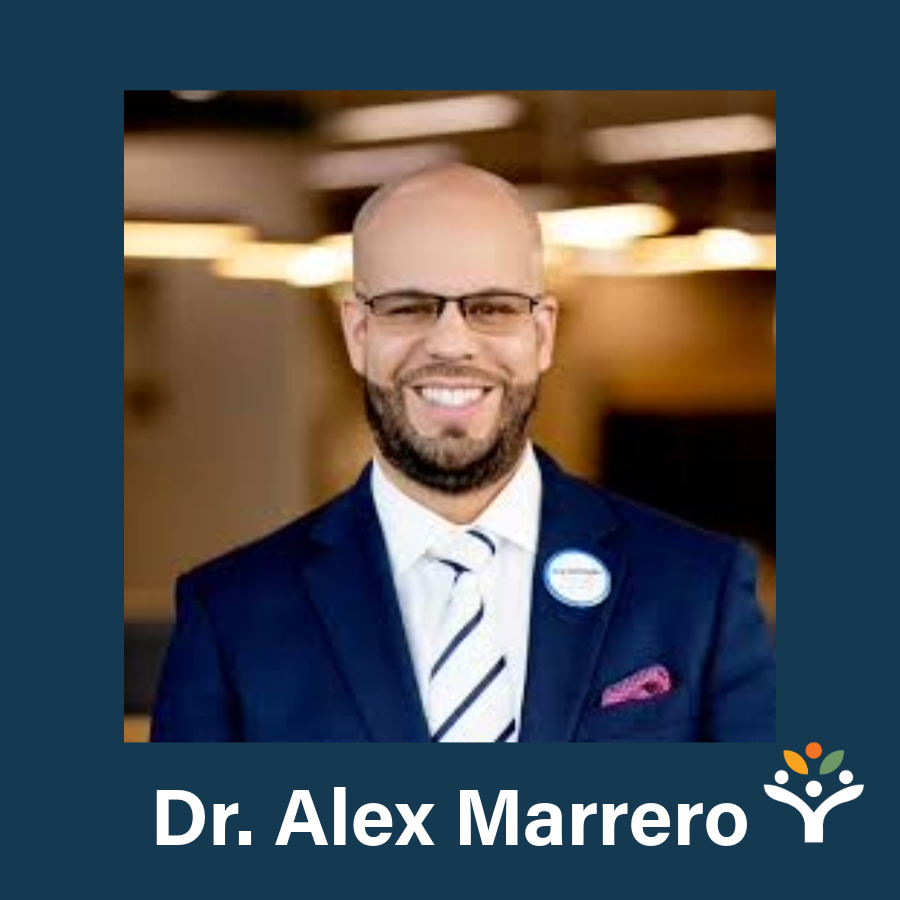
Written by Dr. Alex Marrero
Superintendent, Denver Public Schools
Associate at Creative Leadership Solutions
| | | | | |
Dr. Alex Marrero is the Superintendent of Denver Public Schools, Colorado’s largest school district. He has led the district to historic achievements, including record-high graduation rates, significant academic growth for historically underserved students, and a districtwide return to the state’s Accredited Green rating for the second time in the district’s history.
A proud Afro-Latino leader raised in the Bronx, Dr. Marrero brings a deep commitment to equity, family-school partnerships, and student success. He currently serves as the President of the Association of Latino Administrators and Superintendents (ALAS), as an Executive Board Member of the Council of the Great City Schools, and a participant in the Global Cities Education Network. He has been Superintendent of the Year by the District Administration Leadership Institute and finalist for the prestigious Green-Garner Award.
Dr. Marrero is also a published author, with works ranging from children’s literature to scholarly contributions on leadership, equity, and family engagement. At his core, he is a champion for students, families, and educators—committed to creating school systems where every learner thrives.
| | The Fearless Schools Podcast | At The Fearless Schools Podcast, we believe that building bold, thriving schools starts with courageous conversations. Each episode brings you real stories, actionable insights, and strategies to help educators and leaders like you create stronger, more resilient learning communities. | | Creative Leadership Solutions is a leading provider of research and evidence-based professional development and coaching that helps districts and schools attain their goals, impact student learning, and improve performance. Our team of experts is dedicated to delivering personalized and differentiated learning opportunities. Let’s start a conversation - contact us at service@creativeleadership.net. | | | | |