|
For the past three years, the League of Women Voters of Arkansas has been waiting on a judge to decide whether it was legal for state legislators to bump up the number of counties where they had to collect voter signatures on citizen-initiated petitions.
An election cycle and entirely new judge later, a February 2026 ruling upheld their argument that Act 236 of 2023 unconstitutionally increased the minimum number of counties from 15 to 50.
"While the enactments of the Arkansas General Assembly—a body of distinguished public servants charged with setting the policy of the State of Arkansas—are presumed constitutional, we cannot under any set of facts find Act 236 of 2023 to survive constitutional scrutiny. In faithful adherence to the precedents of our appellate courts, this measure impermissibly restricts the right of the people to petition for initiated acts—a reserved power expressly guaranteed by the Arkansas Constitution," Pulaski County Circuit Court Judge Shawn Johnson wrote in his opinion released Feb. 12.
Johnson inherited the lawsuit after the original judge changed elected office and held a new hearing of his own. The Arkansas Constitution says citizen initiative groups must collect voter signatures from "at least" 15 counties of the state.
"The phrase “at least” is defined by the Cambridge Dictionary to mean “as much as, or more than, a number or amount.” Other sources have defined the term as “the number or amount [that] is the smallest that is possible or likely and that the actual number or amount may be greater," or “at the minimum," the judge's opinion states. Act 236 differs from the state constitution, he concluded.
Despite what they consider good news from the Circuit Court, the League of Women Voters of Arkansas expects to try for as many signatures from as many counties as possible for their proposed 2026 constitutional amendment, said David Couch, the attorney who filed the lawsuit and who is now a board director for the League.
The League of Women Voters of Arkansas is sponsoring one of two circulating proposals for the November 2026 ballot to change the Arkansas Constitution so that voters must approve any changes to the ballot issue process. The Arkansas Ballot Measure Rights Amendment also specifies the role of the Attorney General, Supreme Court and Secretary of State in certifying, reviewing and publishing citizen initiated ballot measures.
"Depending on how fast it gets appealed, I don’t know if the Supreme Court would decide it by July 3. On July 3 you have to turn in signatures from either 15 or 50 counties of course were going to go ahead and still try to collect from 50 counties because the Supreme Court has not decided the case," Couch said.
A spokesperson for the Attorney General's office told news media after the ruling the state would appeal the circuit court decision. Court records as of Feb. 24 do not show an appeal filed.
Last month we shared that signatures would be due July 6 because all state offices are closed Friday, July 3 in celebration of July 4. However, Couch said he was told that the Secretary of State's Office would be open July 3 to receive the signatures instead of the deadline falling to the next business day, Monday, July 6. An email and phone call to the election director at the Secretary of State's Office seeking clarification were not returned. The Secretary of State's Office Initiative and Referenda Handbook lists July 3 as the signature deadline.
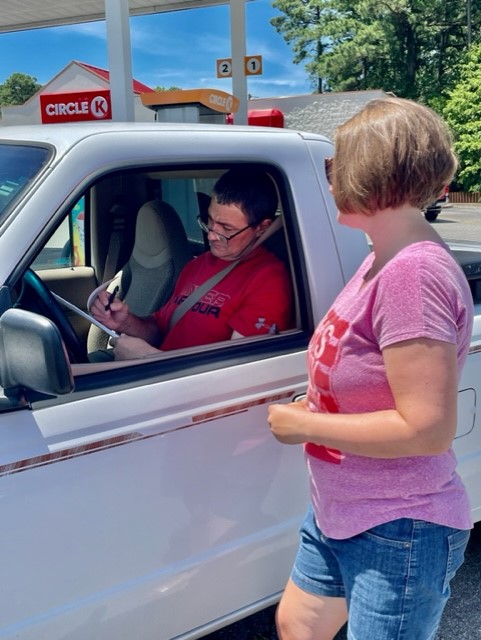
Canvassers for two other potential citizen initiatives will also continue to collect signatures in as many counties as possible because of the plans for an appeal.
"We do understand that this is a circuit court decision that has the potential of being appealed so right now we are going to stick with the 50 county until an appellate court and possibly the Supreme Court weighs in. We just want to be safe and [are] not having to go back and forth and back and forth," said Kwami Abdul-Bey, campaign manager for the Arkansas Educational Rights Amendment of 2026 and The Arkansas Ballot Measure Rights Amendment
Abdul-Bey said they are also waiting to hear from the state whether their proposed amendments would carry with them fiscal impact statements if they made the ballot. Act 457 of 2025 requires fiscal impact statements for legislatively-referred or citizen-initiated proposals that would increase the cost of state government.
The group is also waiting to hear back from the Secretary of State's Office about a new petition fraud investigator who approached canvassers in Little Rock earlier this month. The investigator asked the canvassers for their identification and took a photo of the IDs, according to media reports. Abdul-Bey said he sent an email to Secretary of State election officials asking for more information but never received a reply. He's since filed a Freedom of Information Act request seeking information about the position and the investigator's statutory authority.
|