hdr_top.jpg

Hormone Balance Hotline - October 2025

Dear Friends,


Welcome to a new issue of the Hormone Balance Hotline! October is Breast Cancer Awareness Month, and we’re excited to share a fascinating conversation between Dr. John Lee, M.D. and Dr. David Zava about breast cancer and hormones. If you want to know what saliva hormone tests can tell you about your risk of getting breast cancer, read our first article below! Then, learn about the hormone tests and other resources we offer on JohnLeeMD.com that can help you and your loved ones reduce your cancer risks. Finally, we offer a brilliant piece by Dr. Lee about the big differences between progesterone and progestins, the synthetic hormones that mimic some of the effects of progesterone. You don’t want to miss what Dr. Lee said, so keep reading!


As you read this issue, remember that when you visit our website to place an order, you help us to keep JohnLeeMD.com on the Internet. Thank you for your orders, and thank you for your support!


Yours for good health,

The Official Website of John R. Lee, M.D., JohnLeeMD.com


P.S. There's one other way you can support us that we deeply appreciate! Share this email with your friends on your social media accounts! Just click the buttons below and feel free to add good words about us to your post. Thank you for your support!

X Share This Email
LinkedIn Share This Email
Pinterest Share This Email
Four diverse women are smiling and showing their support for a friend battling breast cancer standing isolated on beige background. Support_ health care concept

Hormone Imbalance and Breast Cancer – A Conversation Between John Lee M.D. and Dr. David Zava


Did you know there is a specific set of hormonal imbalances that may indicate you have breast cancer, or are at imminent risk of having it? This is one of the amazing discoveries made by Dr. David Zava as he worked with John Lee, M.D. on the book they wrote together: What Your Doctor May Not Tell You About Breast Cancer. We recommend that you buy this book, and that you also read the conversation that Dr. Lee and Dr. Zava had about the specific set of hormonal imbalances found in women who have breast cancer. Dr. Zava called this set of imbalances the breast cancer profile.


If you have any concerns for yourself or a loved one about breast cancer, we urge you to read this conversation and share it with your loved ones. We also encourage you to read the next article to learn about the saliva hormone tests we offer that can determine if your hormone imbalances fit the breast cancer profile. You will also learn more about other resources we offer to help you and your loved ones reduce your cancer risk.

Read the Full Conversation Between Dr. Zava and Dr. Lee!


What You Can Do About Breast Cancer…and How We Can Help


If you or a loved one has breast cancer, or are at high risk for it, you are not alone. Sadly, the number of cases of breast cancer, and many other forms of cancer, are still rising around the world, and especially among adults under the age of 50.[1]


Fortunately, there are things you can do to reduce your risk. Here’s what we encourage you to do, and how we can help you!

  • First, read What Your Doctor May Not Tell You About Breast Cancer, the bestselling book written by John Lee, M.D. and Dr. David Zava. This book reveals the connections between your hormones and breast cancer, explains what you can do to balance your hormones and reduce your cancer risks, and examines breast cancer treatment options at length. This is information that every woman needs, so buy a copy for yourself and others for your loved ones!
    
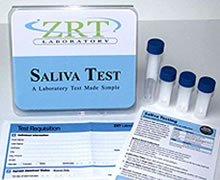
  • Next, get yourself tested to determine if you have the set of hormone imbalances that are in the breast cancer profile described in the article above. To determine this, you will need to order one of the following saliva hormone tests that we offer on JohnLeeMD.com: either the Saliva Profile II - female/male or the Saliva Profile III - female/male. These two test kits measure all the hormones that are in the breast cancer profile.
    
  • In addition, read all of the articles in our Articles Library that are listed under the subject of Breast Cancer and Breast Disorders. There’s a wealth of useful information in these articles that you can put to immediate use.
    
  • Finally, work with a doctor who understands and works with bioidentical hormones. If you do not know such a doctor, we offer a page on our website that can help you find one. Our Find a Doctor page contains links to directories of doctors and other healthcare providers that work with natural and alternative medicines. Not all of these doctors work with bioidentical hormones. However, you will find that many of them do.


If you take these steps, you will have the knowledge and resources you need to make informed decisions with your doctor about breast cancer. And remember…you are not alone. We, along with Dr. Lee, are here for you. We wish you the best of health!


[1] Jianhui Zhao et. al. - Global trends in incidence, death, burden and risk factors of early-onset cancer from 1990 to 2019: BMJ Oncology 2023;2:e000049.

The Truth About Progesterone and Progestins


For decades, big pharmaceutical companies and the medical establishment have been claiming that progestins – the synthetic, laboratory-created chemicals that mimic some of the effects of real progesterone – are the same as progesterone. That’s dead wrong, and Dr. John Lee debunked this claim many times in debates and in print. Here’s his response to a reader’s question about progestins and progesterone that everyone should read…especially your doctor!


That’s a Good Question

From the June 2000 Issue of the John R. Lee M.D. Medical Letter


"Q: My doctor insists that anything that occupies a progesterone receptor will act the same way as progesterone, and he insists that, therefore, the synthetic progestins are the same as real progesterone. He’s the head of the OB/GYN department at my local hospital so I’m feeling very confused."


"A: Your doctor is the one who is confused, and unfortunately being head of a hospital department does not seem to confer greater intelligence. As Drs. Martin and Freeman stated in their editorial in the New England Journal of Medicine, April 15, 1993 (vol. 328, No. 15, page 1116), “By altering the structure of a hormone, one may change its spectrum of actions, affecting receptor binding, metabolism, or excretion (or perhaps all three).” They go on to point out that “Many if not most progestins bind to androgen receptors, which has important implications for their biologic activity.” Further, “Certain progestins derived from testosterone (such as levonorgestrel) have adverse effects on serum lipid (cholesterol) profiles.”


"Also, it is clear from the work of Kent Hermsmeyer and colleagues at the Oregon Regional Primate Research Center at the Oregon Health Sciences University that the synthetic progestin medroxyprogesterone acetate (Provera) increases the risk of coronary artery vasospasm, while natural progesterone prevents it. (ref: Miyagawa K, Rosch J, Stanczyk F, Hermsmeyer K., Medroxyprogesterone interferes with ovarian steroid protection against coronary vasospasm. Nature Medicine 1997; 3: 324-327)


"As I have written in my books, a hormone’s function is determined by its precise molecular configuration. Any alteration of the structure of a hormone will alter its action. Progesterone is a specific molecule. Any different molecule, whether called a progestin or not, will convey different messages to the cell. It is time that doctors understood this."


Thank you for reading our newsletter! And again, please share this email with your friends on your social media accounts! Just click on the buttons below and feel free to add good words about us to your post. Thank you for your support!

X Share This Email
LinkedIn Share This Email
Pinterest Share This Email

The products on JohnLeeMD.com are not offered for the diagnosis, cure, mitigation, treatment, or prevention

of any disease or disorder nor have any statements herein been evaluated by the Food and Drug Administration (FDA).

We strongly encourage our customers to discuss topics of concern with their health care professionals.