|
Amboseli Trust for Elephants
July - September 2026
| |
30th September 2026 | Newsletter | |
Note from our Director
Sir/ Madam
I know many of you have been concerned about the unusual deaths of elephants in the Amboseli ecosystem. We have been working closely with the KWS vet department and with the scientists at the Wildlife Research and Training Institute. Our local KWS vet, Dr. Edward Kariuki, who is supported by the Sheldrick Wildlife Trust and ATE, has been on top of the situation from the beginning. He has carried out post mortem examinations on all the fresh carcasses and he has sent samples to several different labs in the country. All the samples have revealed traces of cyanide. The elephants who were seen before they died showed the same symptoms—paralysis and unable to stand.
All sorts of theories have been proposed:
1) The tomato crops have been sprayed with illegal pesticides;
2) Someone deliberately injected cyanide into tomatoes and left them on an elephant trail;
3) One of the grasses in the Amboseli ecosystem, Cynodon plectostachyus, can produce cyanide at a certain growth stage.
Most of the deaths occurred in the eastern part of the ecosystem in and around the Kimana Sanctuary. Two deaths occurred in the Park and the most recent death occurred in Tanzania, southwest of the Park. The Pesticide Board of Kenya examined the farms and reported that there was no cyanide in use. Given the distribution of the carcasses we don’t believe it was an individual poisoning the elephants. We have been left with the possibility of the Cynodon grass, but that remains a theory and why has it never occurred before? The whole tragedy remains a mystery.
The last death in Kenya was more than three weeks ago. We are hoping it has ended, but we remain wary. Please be patient while the investigation continues.
Cynthia Moss
Director
| | | | |
Our philosophy from the very beginning, 54 years ago, has been to be as non-invasive in our elephant research as possible. We have a hands-off policy with the goal of watching the natural behavior of elephants. We have deviated from this policy from time to time in only two ways - 1) to treat injured elephants; and 2) to place tracking collars on individuals.
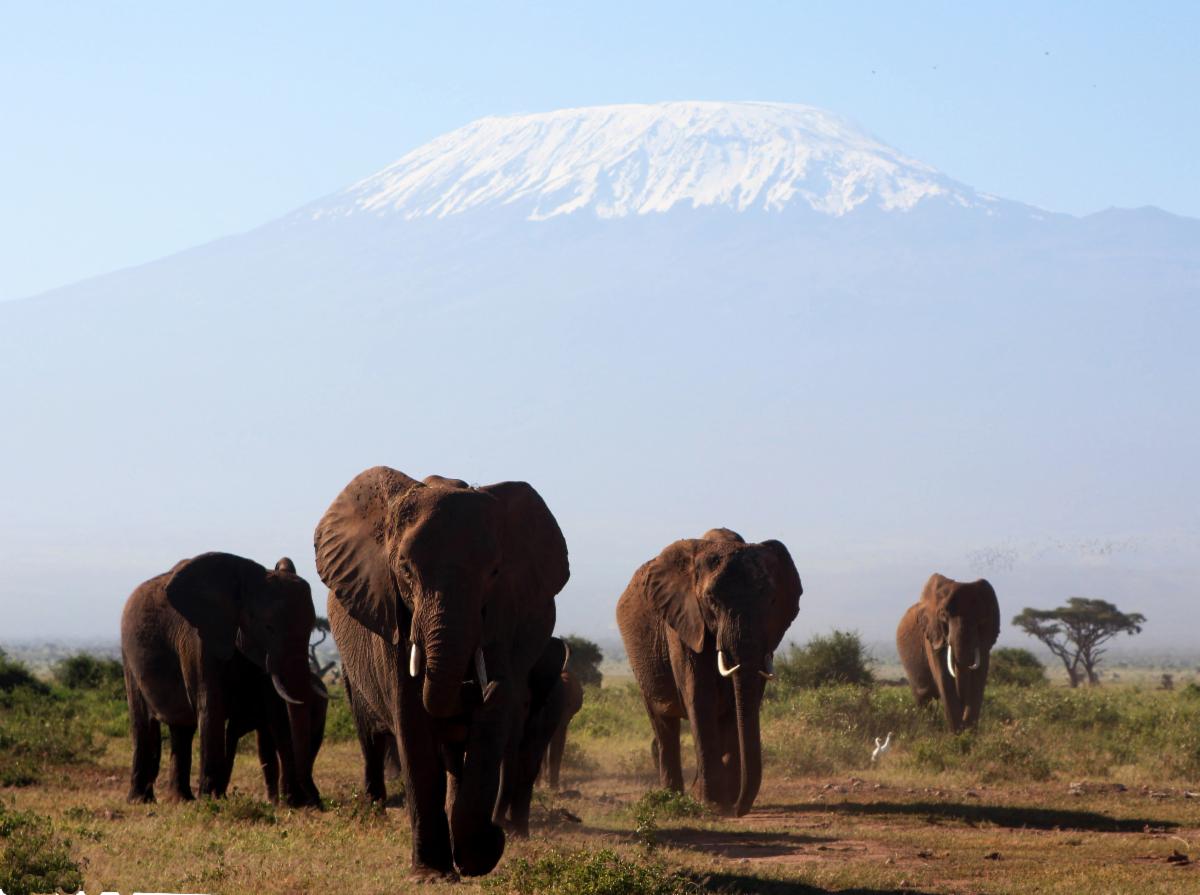
Amboseli is a tiny park, only 392 sq. kilometers (150 sq. miles); the ecosystem over which the elephants and other wildlife roams is 8000 sq. kms and part of it extends into Tanzania. The Park and its extensive system of swamps is mostly utilized by the elephants in the dry season but they spread out over the ecosystem during the rains.
Unfortunately, land use has changed considerably over the last half century and areas that were once open to wildlife are being closed off. One of ATE’s main concerns is securing corridors and dispersal area that are essential to the elephants. In order to map these areas we have to use satellite (in the earlier days, radio) tracking. Then working with the community and our partners we are attempting to secure these areas for conservation.
In mid-September the ATE team along with Save the Elephants, Tsavo Trust, Big Life Foundation, ElephantVoices, Wildlife Research and Training Institute, and, of course, Kenya Wildlife Service with their vet Dr. Mutinda (supported by the Sheldrick Wildlife Trust), darted, immobilized and collared seven female elephants over three days. We chose individuals from families that move out of the Park in different directions.
We are very excited to see where these seven elephants will go. We will keep you posted about their movements.
| | Talia from the TC family feeling her collar after waking up. The good thing about the drugs used for immobilising elephants is that there is a very quick-acting antidote and best of all, from our point of view, the elephant doesn't remember anything. Her family does remember and might take a day or two to relax around us again, but there wariness is never long-lasting. | | |
Elephant Tusks in Amboseli
by Prof. Phyllis Lee
| | Elephant tusks are evolutionarily modified incisor (front) teeth, made of dentine and enamel with a core of blood and nerves to enable their constant growth. The softer dentine and cementum lie beneath the hard enamel. | | Qaramel in 2020 and six years later in 2026 | | |
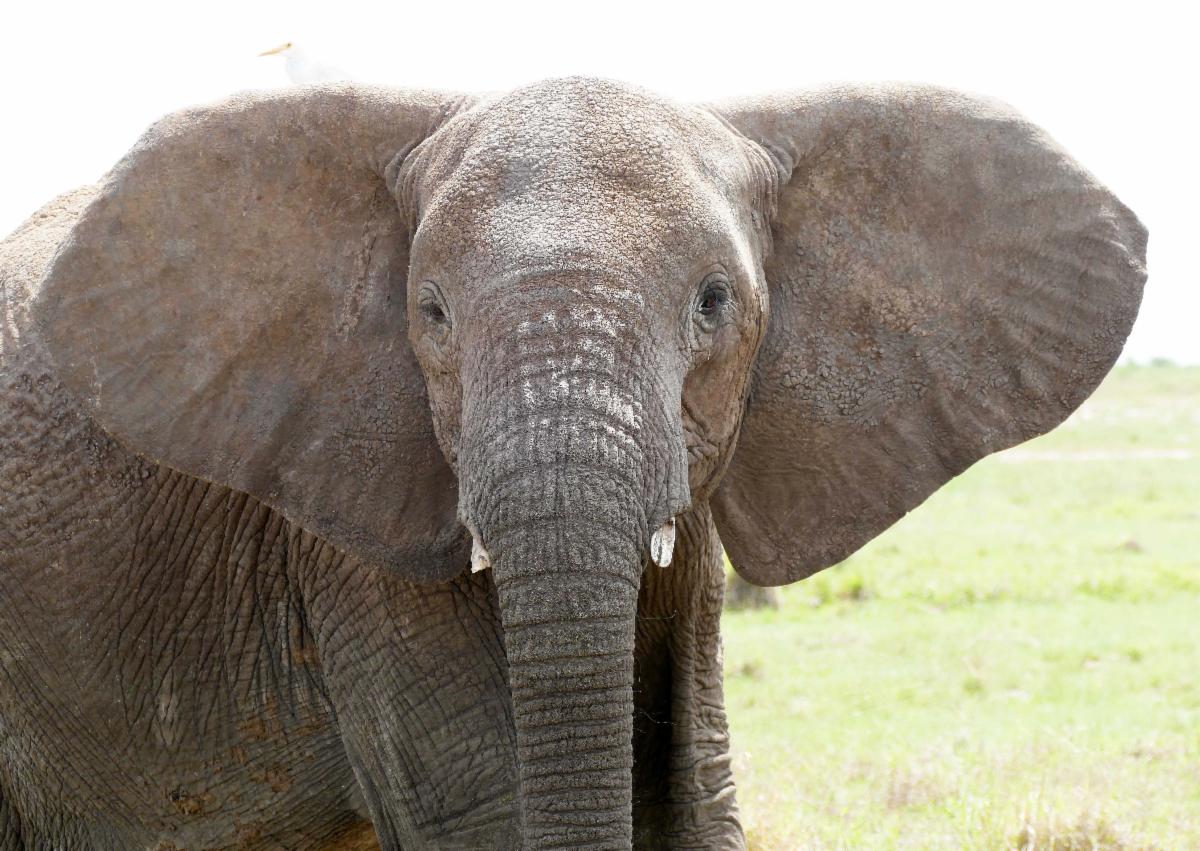
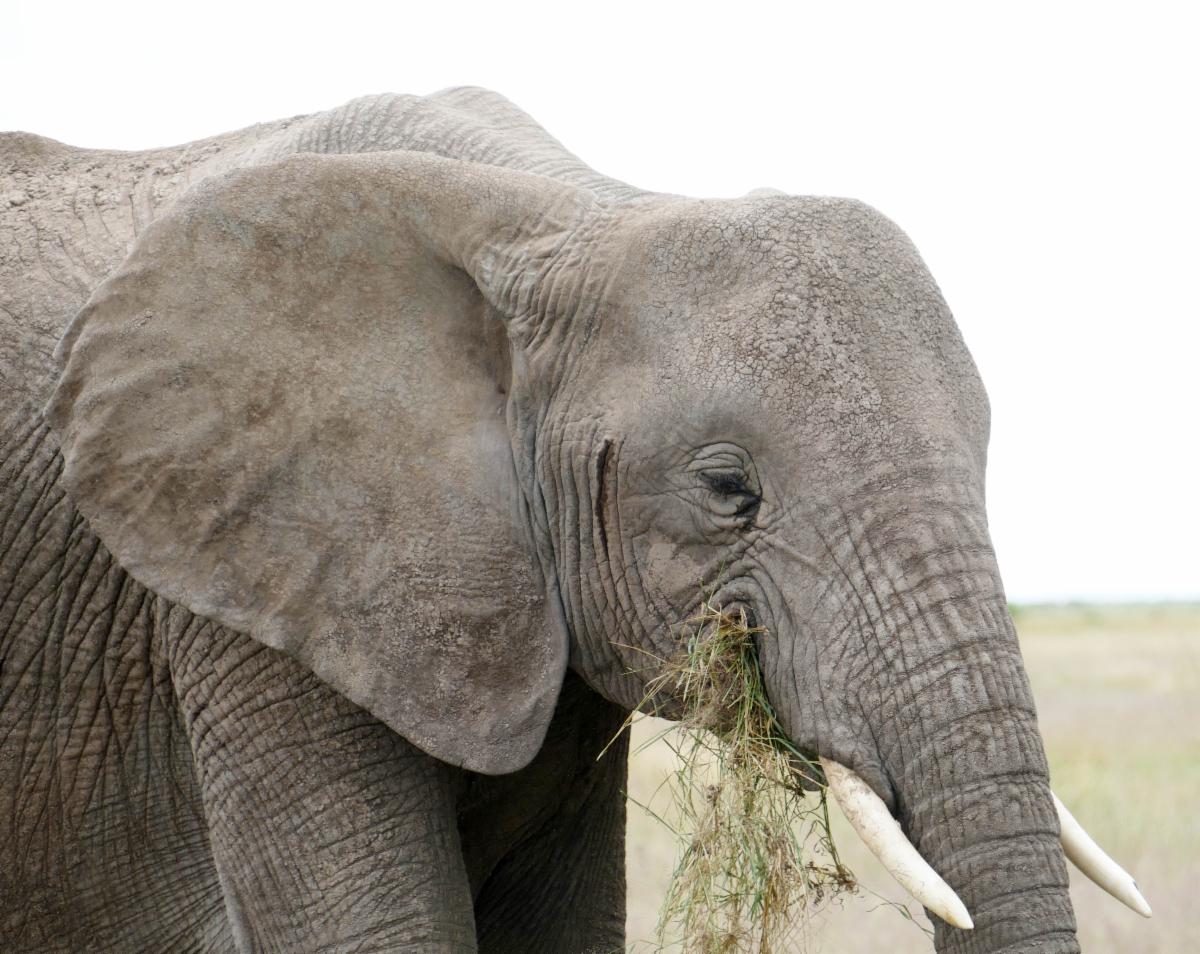
Can you age elephants by their tusks? Yes, if you measure the circumference at the tusk base, but length alone is a poor indicator of age because elephants often break and then regrow their tusks. It is hard to precisely measure the rate of growth in length in wild elephants, but occasionally we have clear pictures of tusk growth. Take Qaramel, a female born into the QB family in 2008 (her mother was Quassia, her grandmother was Qualida). By 2019 she had broken her left tusk close to her lip. In 2020, she broke her right tusk to the lip as well. Now, six years later, both tusks have regrown and are thicker, but still relatively short for an 18-year-old female.
Some members of the QB family had long tusks (Qumquat) but others like Quassia and Qualida had short tusks, suggesting underlying genetic influences on tusk size and shape. Ian Parker has shown strong familial tusk shapes in Uganda elephants.
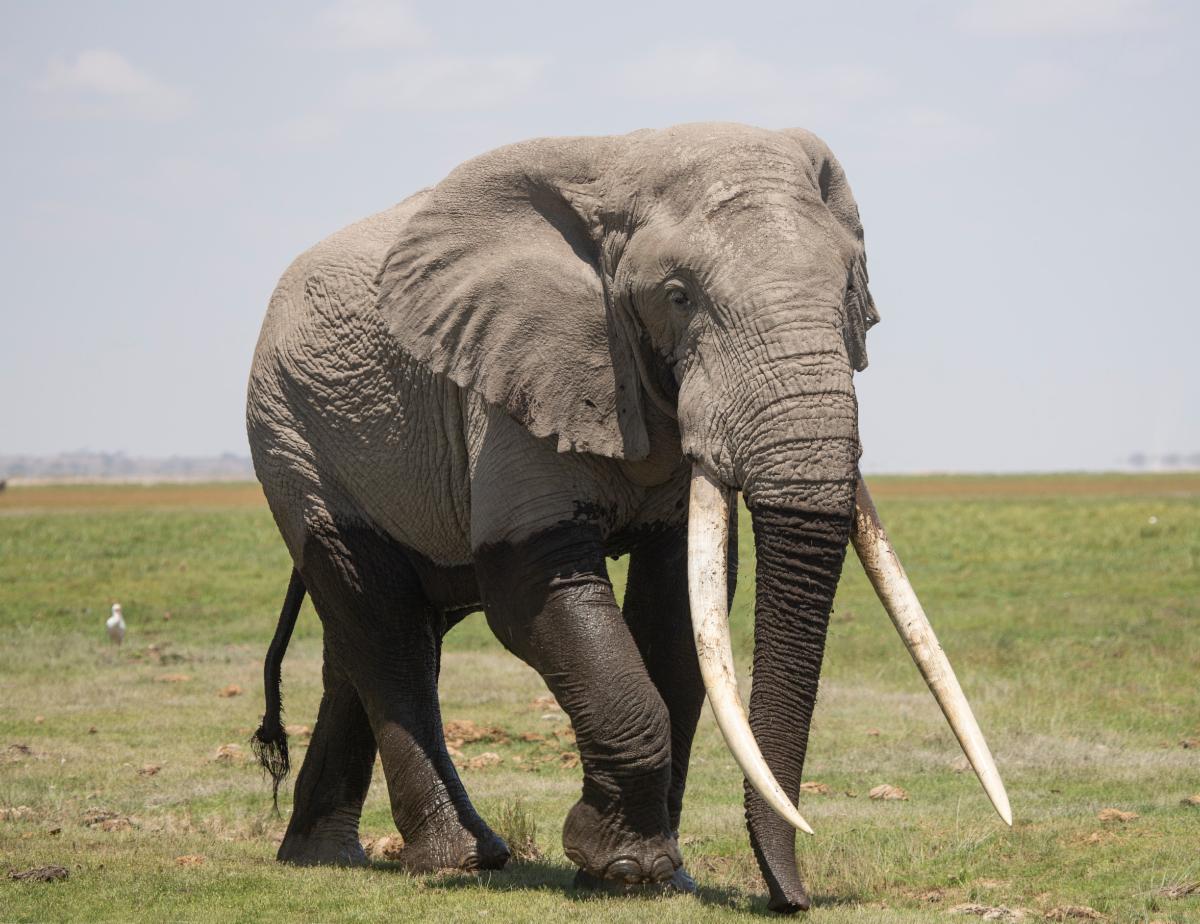
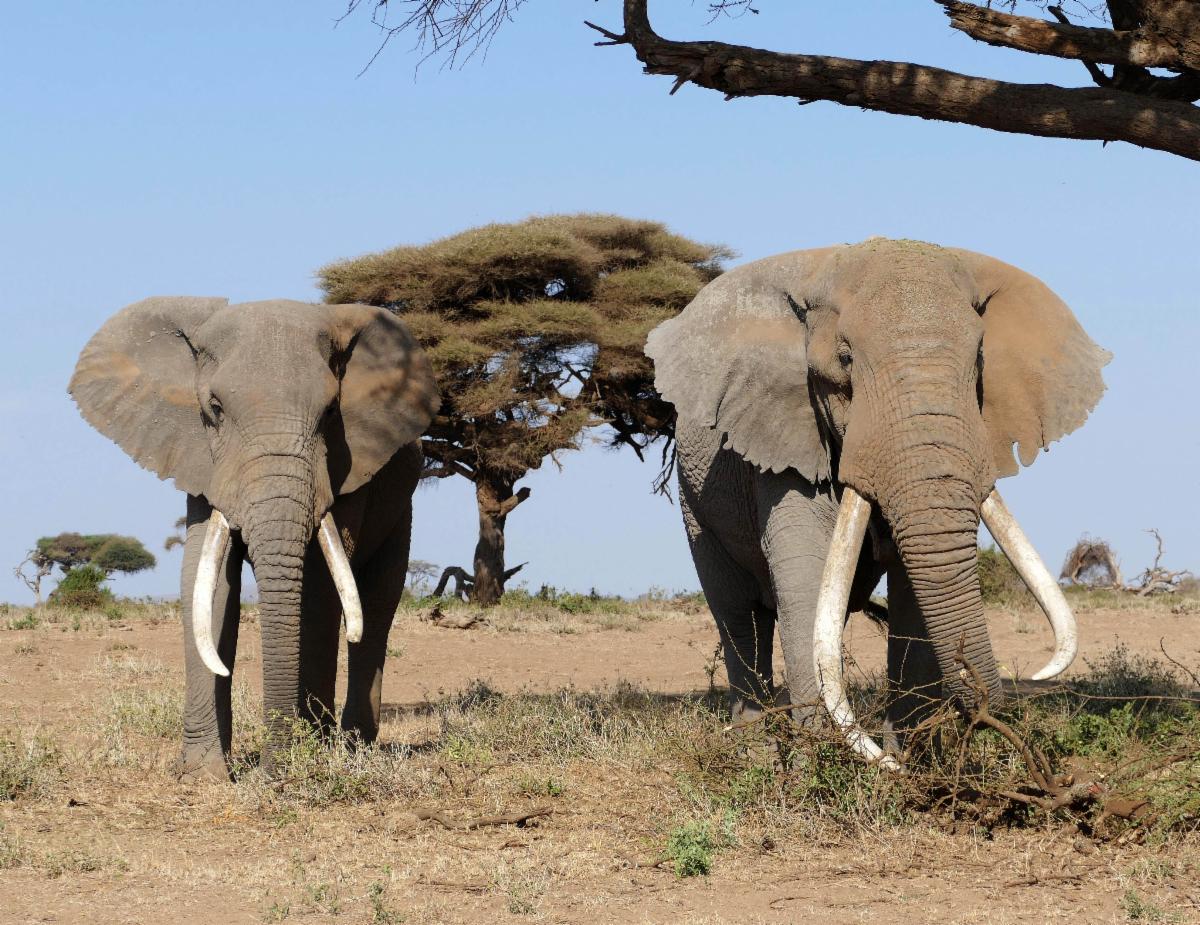
We think that genes and diet, especially diet stresses during droughts, affect how tusks grow and how vulnerable tusks are to breakage. So seeing a male like Tim or Craig suggests that they were able to successfully avoid these challenges, as well as living into their 50s. Tusks are simply teeth: they are used by musth males for fighting (and are broken in fights), and by both males and females for feeding. Tusks are valuable to elephants for these reasons, but their size is less important to elephants than it is to people. So-called “super tuskers” are just elephants who inherited tusk genes and aged well. We work to ensure that all Amboseli elephants survive and thrive, for those without tusks as well as so-called super tuskers like Michael.
| | Michael was born in 1991; he and his tusks will continue to grow throughout his lifetime | | The History of the JA family - Updated | |
The JA family is one of the best known of the 67 elephant families in Amboseli. It is a favorite of many of the researchers who have worked on the Amboseli Elephant Research Project. I think we all like the family so much because it was, for 19 years of the study, led by the magnificent matriarch Jezebel. She died in her late 50s in 1993 and at the time was one of the oldest elephants in the population. She had beautiful, long, elegantly‑curved tusks, which were exceptional for a female. In fact, Jezebel's tusks caused confusion at the very beginning of the study.
My colleague Harvey Croze and I first met Jezebel and her family on February 24, 1974. We photographed the adult females and some of the juveniles and when we developed and printed the pictures we gave the adult females names: Jezebel, Jessica and Juliet.
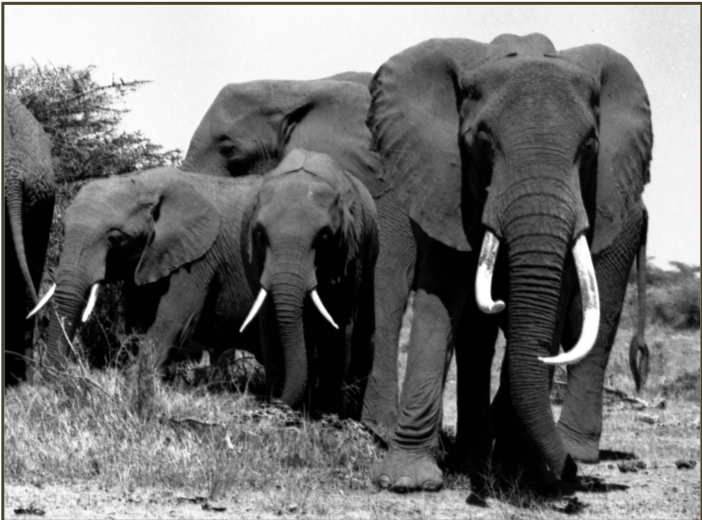
Some months before this we had found a large aggregation of elephants and had photographed as many individuals as we could, including adult males. One handsome male was given the number M5. We pasted his picture in the male recognition file. It wasn't until sometime in 1975 that I noticed that this "male" was Jezebel. The photograph just showed the head, ears and tusks from head on; with her large tusks Jezebel looked like a malel!
| | Jezebel in 1975; she was originally mistaken for a male | | |
Science Meets Storytelling
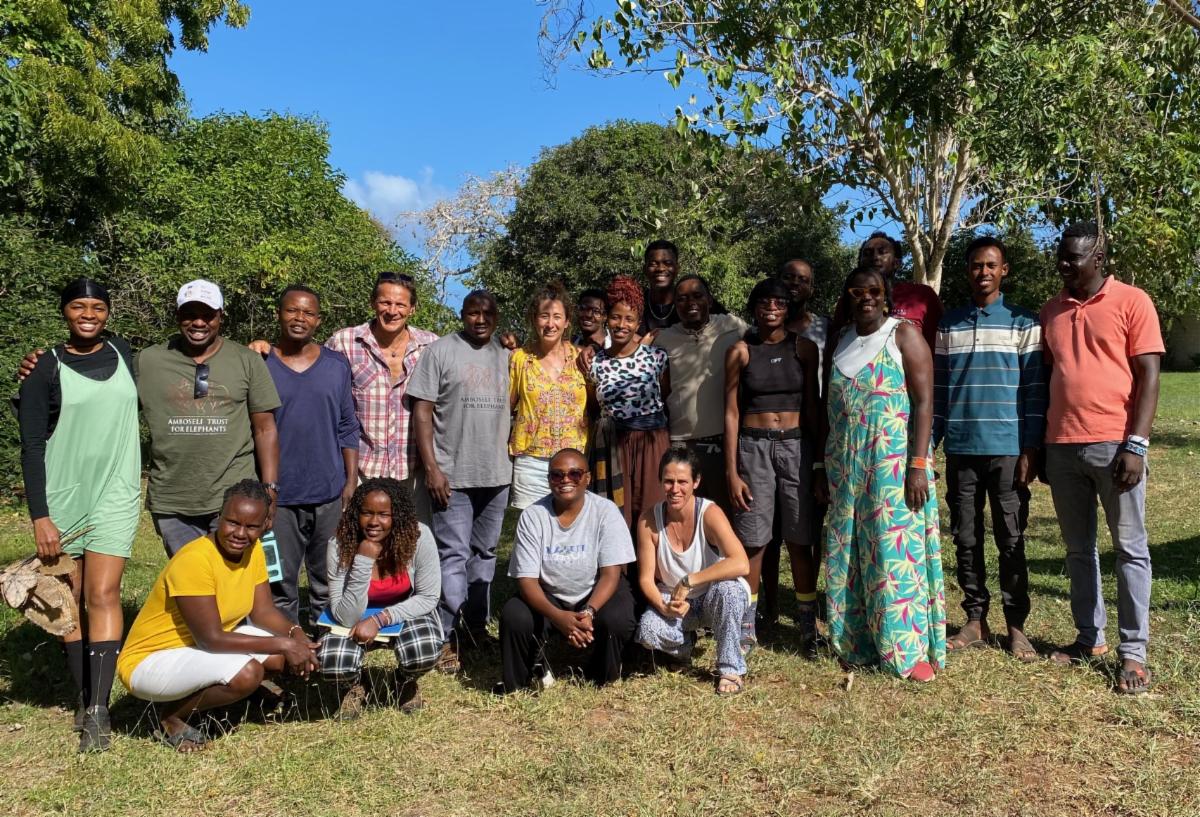
In early September, our four new educators from the Amboseli region and ATE's Human-Elephant Coexistence team took part in a joint training workshop with The Elephant Queen (TEQ) Outreach team.
TEQ's Kenyan actors, musicians and conservationists use film, theatre and storytelling to engage communities across Kenya that live alongside wildlife.
With our educators preparing to launch the Be Elephant Aware campaign in Amboseli, the workshop was a valuable two-way exchange. We trained the TEQ team in elephant safety: how to read elephant behaviour, recognise warning signs, and stay safe around elephants. We also ran through all of the Be Elephant Aware content we have developed, including our lessons, films and posters. In return, TEQ shared practical techniques for making our sessions more interactive and creative.
We are very grateful to the TEQ team and wish them every success as they continue touring Kenya, now able to share key elephant safety messages with the communities they visit.
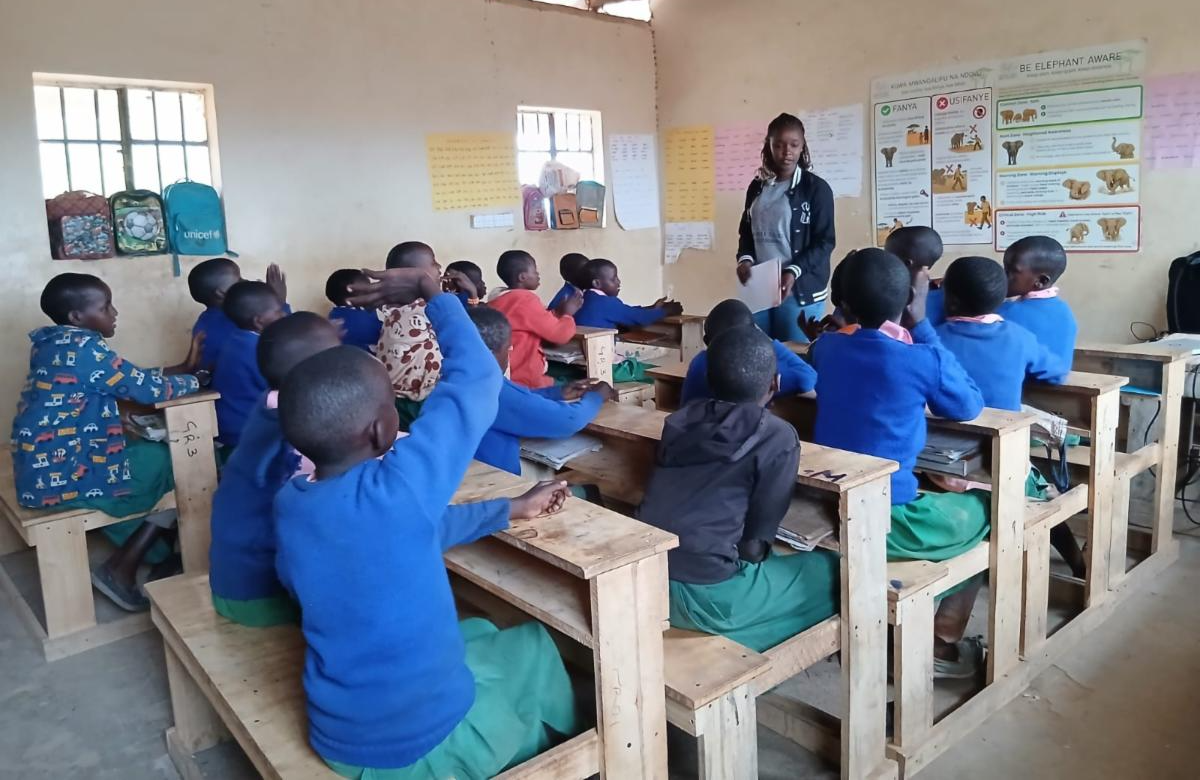
| |  | Children in OOGR in one of our lessons | |
Be Elephant Aware Launches in Amboseli
On 7 September 2026, ATE officially launched the Be Elephant Aware (BEA) campaign in schools across Olgulului-Ololarashi Group Ranch (OOGR) and Nasaru. We are delighted to welcome our four new BEA educators: Sammy and Jackline in Nasaru, and Kantai and Ketito in OOGR.
Be Elephant Aware campaign is all about helping children stay safe around elephants and grow up with respect for them. Many of these students share their daily routes to school, grazing areas and water points with elephants.
The campaign teaches them how to understand elephant behaviour, recognise when an elephant may be stressed or dangerous, and know what to do to keep themselves and others safe.
Just as importantly, it encourages them to see elephants as animals to respect and live alongside, not fear.
| | | Thanking our Loyal Donors who Contributed Generously in Recent Months | | |
Rita Bailey
BAND Foundation
Pradeep Bansal
Jonnalyn Barnes
Jane Beckwith
Linda Benvenuto
Sergei Boissier
Lynn Chase Wildlife Foundation
Joseph & Marie Field Environmental Foundation
Friedman French Foundation
Omoye Charlotte Irabor
Elizabeth Jones
Massachusetts for Elephants (Sally Owen)
Shane McGee (in memory of Anne Collavo)
John Madigan
Maue Kay Foundation
| | | |
Jayesh Mehta
Jeanne Musgrove Fund
Pendleton Family Charitable Trust
Dr. Gordon Ray
T. Gary and Kathleen Rogers Family Foundation
Alice Schaeffer
Anne Smith
Dana Wixted
In Honor of Donna Reynolds
Peggy Akers
Julie Barone
Ellen Collins
Jean Daniels
Judy Desco
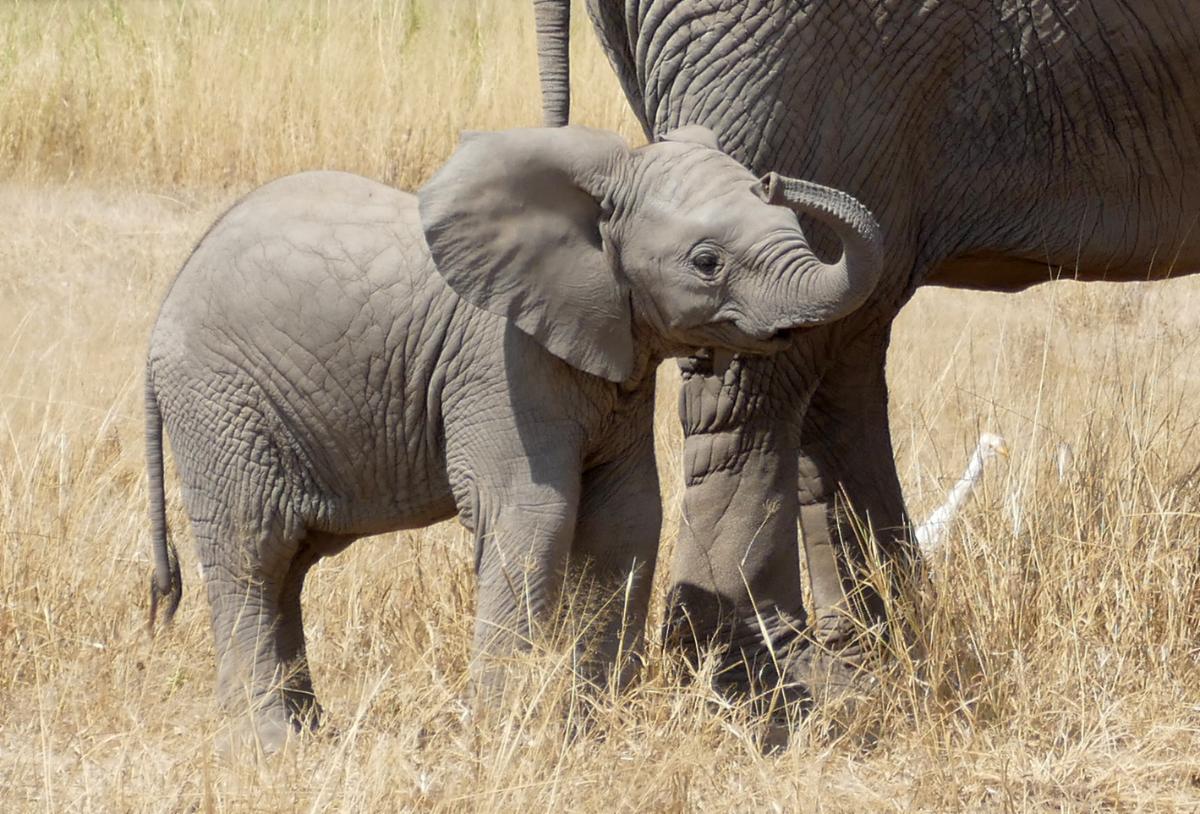
| | The KB family is one of six families in our Elatia program. You can choose one or more of the families to join the program. You will receive regular updates, which include photos and videos and news of what is going on in the family. To learn more about Elatia go to: this link or contact us on: info@elephanttrust.org | | | Sanhaja's female calf has just been named by a donor. You too can name a calf and you will be able to follow the life of this calf. The name you give "your calf" forms a part of the Amboseli dataset for all time. For more information write to us at: info@elephanttrust.org | | | Give a Gift that Lasts Forever | |
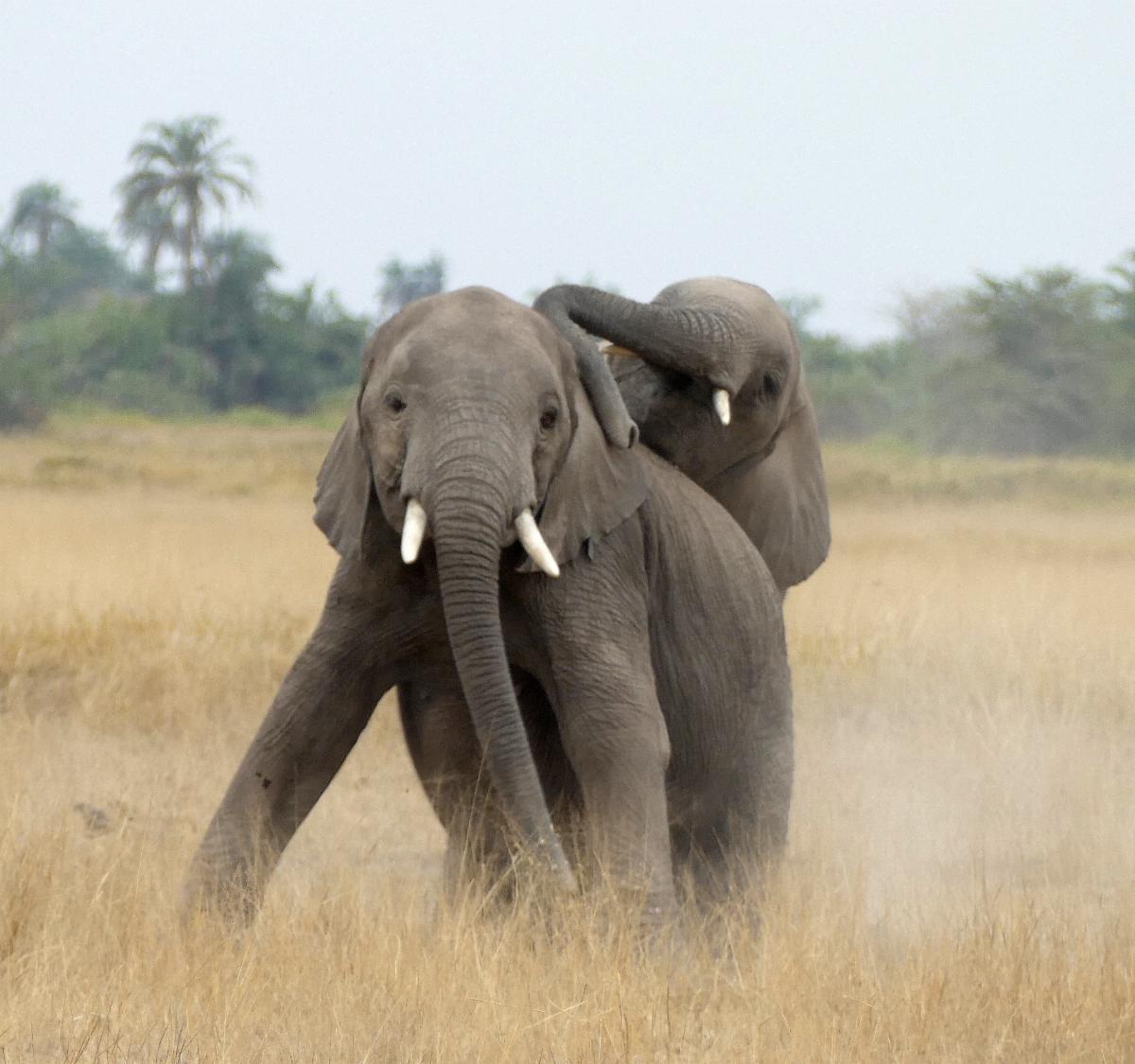
These two adolescent males are still with their families. They found time for a good game, which was also a learning experience. We want to make sure these boys can grow up to live good, successful elephant male lives. To discuss estate planning, major gifts and donations, please contact our US Executive Director, Betsy Swart, email: eswart@elephanttrust.org
Tel: +1-508-783-8308
| | | |
Tee-Jay and his Uncle Tim in 2017. The TD family has produced some of the most spectacular males. Tolstoy was also a member. Tim and Tolstoy have both died and now Tee-Jay is the most sought after male to photograph. Help us keep him safe by making your online purchases through iGive. If you sign up the Amboseli Trust for Elephants as your recipient organization, we will get a small percentage of the sale. www.igive.com
| | |
Make a Donation
We use a secure online system on which you can make your donation with a credit or debit card. All donations exclusively support our not-for-profit organization.
| | | | |