Vol. 47 | June 2025 – 7 minute read | | A Closer Look at Faculty Compensation | | For the last 25 years, a study of UT Southwestern faculty compensation has been conducted annually to determine any notable differences among demographic groups. | |
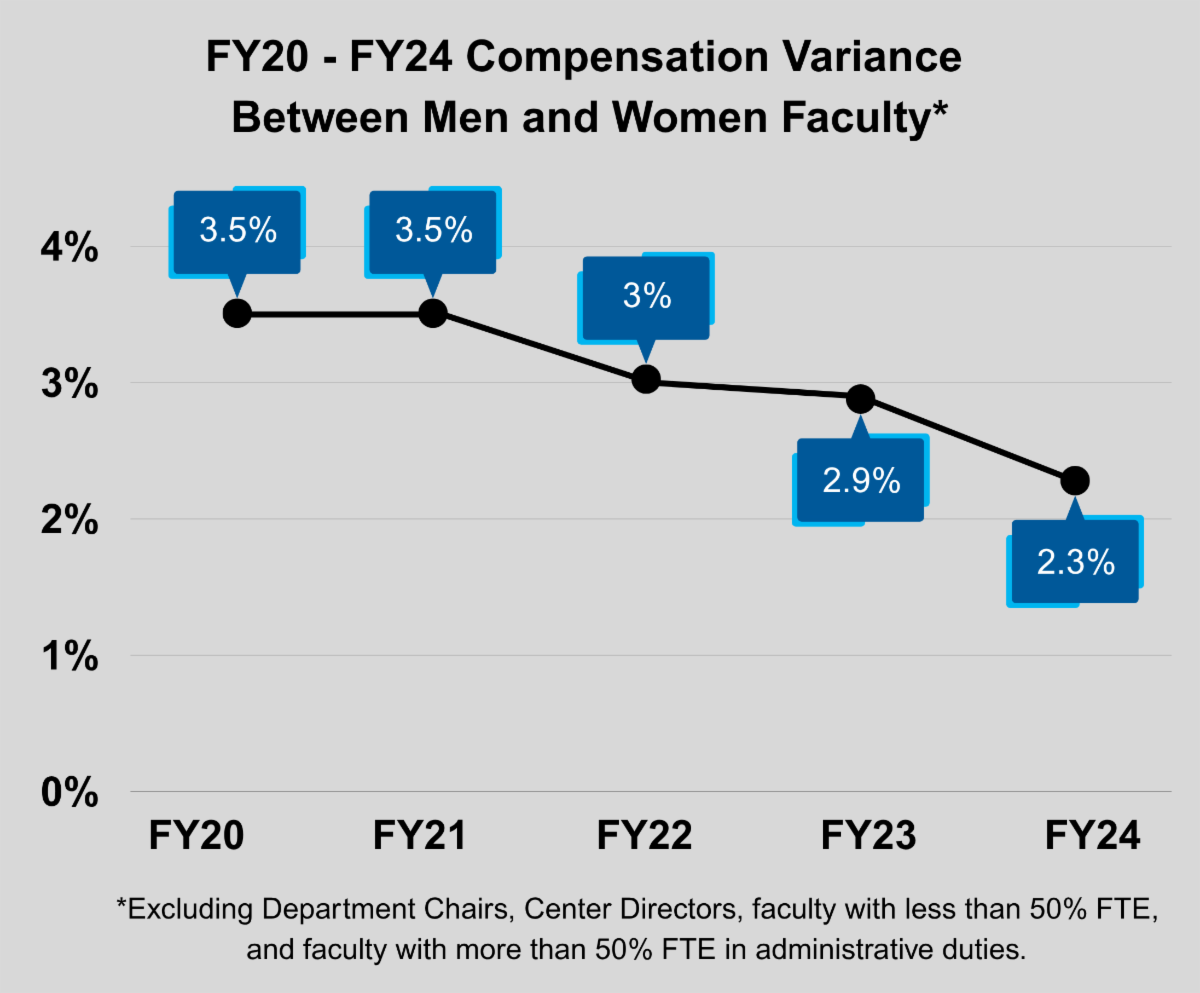
The FY24 Faculty Compensation Analysis showed a consistent reduction in the compensation gap between male and female faculty members in recent years, going from a 3.5% variance in FY20 to a 2.3% variance in FY24. As in the previous analyses, there were not statistically significant differences in compensation between faculty in different racial or ethnic groups.
The Faculty Compensation Committee is chaired by Rinarani Sanghavi, M.D., M.B.A. and the the statistical analysis is led by Joan Reisch, Ph.D.
Multiple regressions are used to predict total compensation for faculty in the Medical School, the School of Health Professions, and the Peter O’Donnell Jr. School of Public Health. That prediction is compared to faculty’s actual salary to determine whether groups are undercompensated or overcompensated.
The analysis, which has a prediction accuracy of 80% or higher, evaluates three distinct faculty roles: practicing physicians, non-physicians in clinical departments, and basic science faculty. Even though the gender compensation gap for practicing physicians has been steadily closing, there are still statistically significant differences driven by specialty. For example, highly compensated surgical specialties have higher percentages of male faculty while medical specialties with lower levels of compensation have higher percentages of female faculty.
Differences were also noted for non-physicians in clinical departments, particularly when looking at MSRDP members. In basic science departments, there are no statistically significant differences in pay between women and men faculty. This is the result of interventions that have been successfully implemented due to the homogeneity of the group.
Learn more about the FY24 findings and ask questions during a webinar on June 5 at noon. Register to attend this faculty-only event using your UT Southwestern email.
| |
Applications Open: Master’s in Business Administration
| | |
In partnership with UT Dallas Jindal School of Management, UT Southwestern sponsors a master’s degree in business administration (M.B.A.) program emphasizing Healthcare Organization Leadership that is designed explicitly for UTSW faculty and staff.
The 18-month program uses a blended learning approach that combines in-class intensives with online learning methods. The curriculum focuses on the core areas of leadership, business management, and organizational behavior. It includes individual coaching, peer practice groups, and a "capstone" project focused on real-time institutional issues and priorities.
Applications for the 2026 cohort are open through July 15. Learn more about this unique opportunity to explore the business of health care with other UTSW leaders and faculty members on the Master’s Leadership Program intranet page (on-campus network or VPN connection required).
| | Dr. Chen Elected to U.K.’s Royal Society | | |
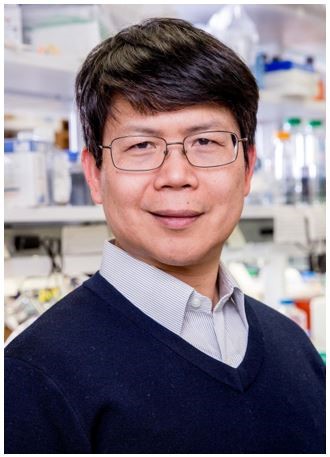
Zhijian “James” Chen, Ph.D., Professor of Molecular Biology and Director of the Center for Inflammation Research, has been elected to the Fellowship of the Royal Society, the United Kingdom’s national academy of sciences and the oldest scientific academy in continuous existence. He is one of nine Americans selected as Foreign Members in this year’s cohort comprised of 95 outstanding researchers from across the world.
One of the world’s leading experts on innate immunity, Dr. Chen has been recognized with numerous honors for his research, including the 2024 Albert Lasker Basic Medical Research Award and the 2019 Breakthrough Prize in Life Sciences. He is also an elected member of the U.S. National Academy of Sciences and U.S. National Academy of Medicine. Read more.
| | Dr. Levi to Serve as Chair of the Plastic Surgery Research Council | | |
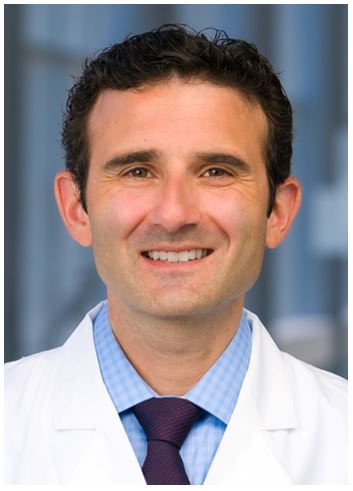
Benjamin Levi, M.D., Professor of Surgery and Division Chief of Burn, Trauma, Acute and Critical Care Surgery, was recently elected Chair of the Plastic Surgery Research Council (PSRC) for 2027-2028.
The PSRC champions fundamental research in plastic surgery, represents plastic surgery research at the highest level, and promotes excellence in clinical innovation and clinical translation. Its members include those working in the fields of basic science, academic plastic surgery, those focusing in clinical and translational research, and those on the forefront of innovation and technology development.
During his term as Chair, Dr. Levi will host the group’s national meeting at UT Southwestern in 2028.
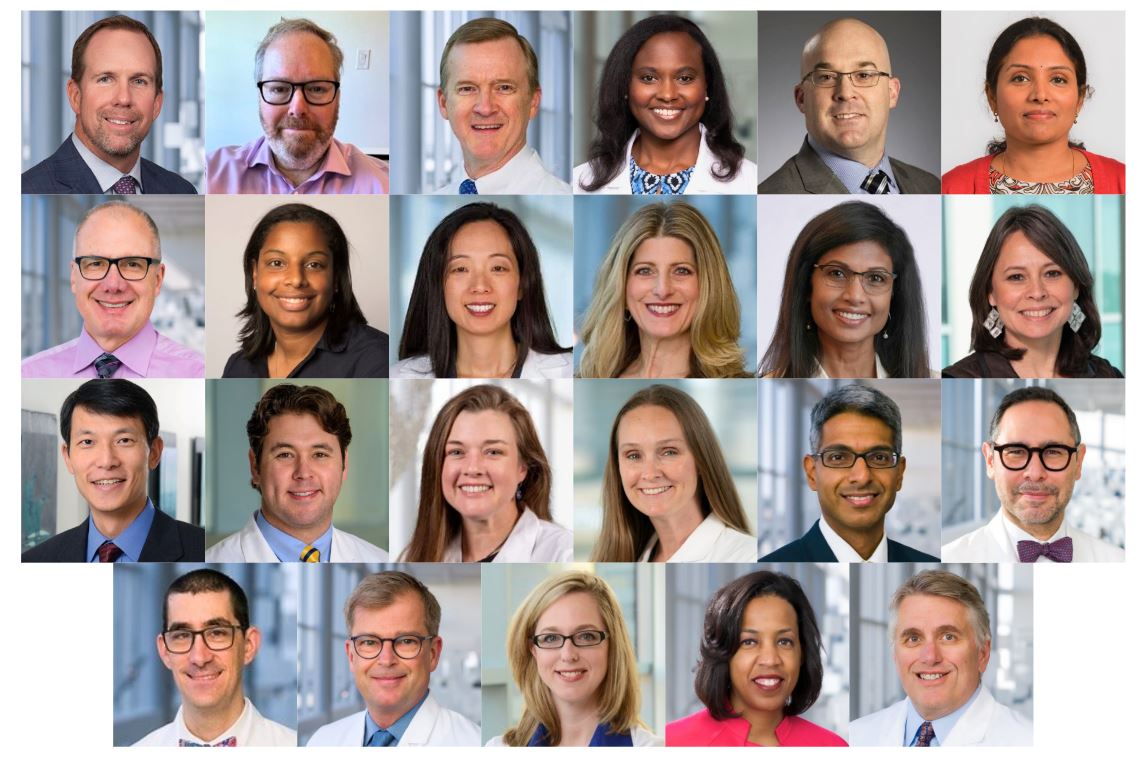
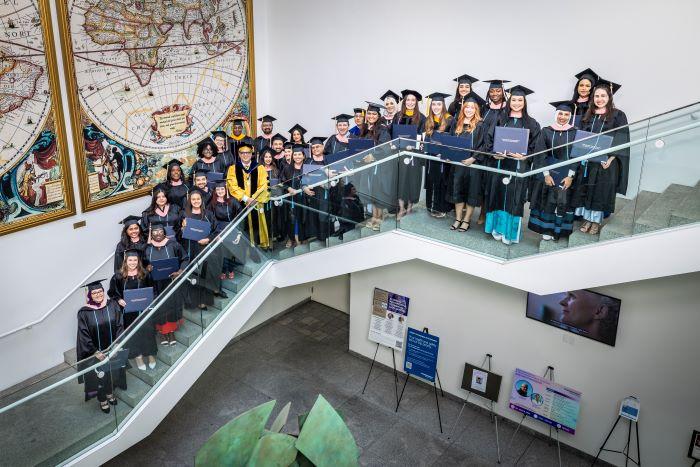
| | Celebrating the Inaugural LEVEL Up Cohort | | From the top, Row 1: David Beckham, M.D., Josh Beckman, M.D., Perry Bickel, M.D., Cindy Bowens, M.D., Ryan Davies, M.D., and Jyothsna Gattineni, M.D. Row 2: William Harbour, M.D., Jodi Jones, M.D., Jeannie Kwon, M.D., Laura Lacritz, Ph.D., Jayanthi Lea, M.D., and Elisabeth Martinez, Ph.D. Row 3: Ted Mau, M.D., Ph.D., David Nelson, M.D., Ellen O’Connell, M.D., Sarah Oltmann, M.D., Samir Parikh, M.D., and Siavosh Saatee, M.D. Row 4: David Sher, M.D., Markus Velten, M.D., Jennifer Walsh, M.D., Tracey Wright, M.D., and Adam Yopp, M.D. | | |
LEVEL Up – a program launched last fall for faculty members seeking to step up to the next level of leadership – has successfully graduated its first class. The 23 participants included many division chiefs and other senior faculty members who received teaching from numerous senior leaders of UTSW.
After another competitive application process, the Office of Faculty Development has accepted 25 faculty members for the 2025-2026 cohort. Sessions will start in October and end in May 2026.
| | In Photos: Spring Commencements | | | | |
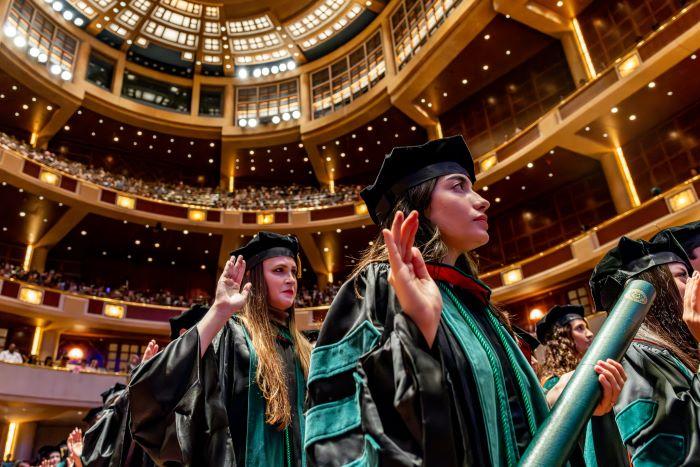
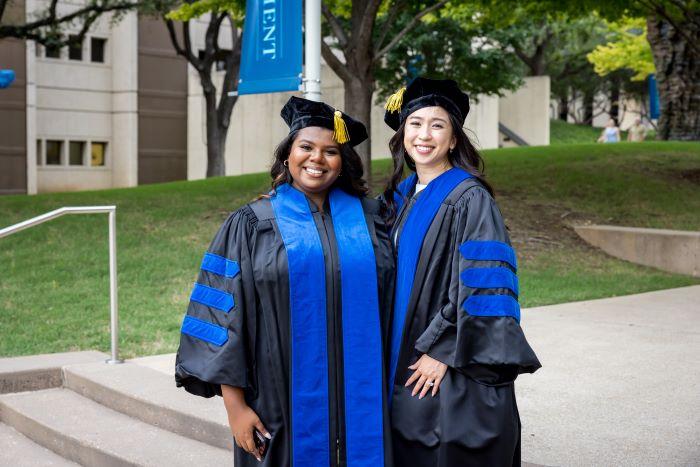
Relive the joy of the O’Donnell School of Public Health's inaugural commencement (top left), the Medical School graduation (bottom left), and the Graduate School of Biomedical Sciences commencement (top right).
All three photo galleries will be published soon on Center Times Plus.
| | Leaders in Clinical Excellence Nomination Period | | |
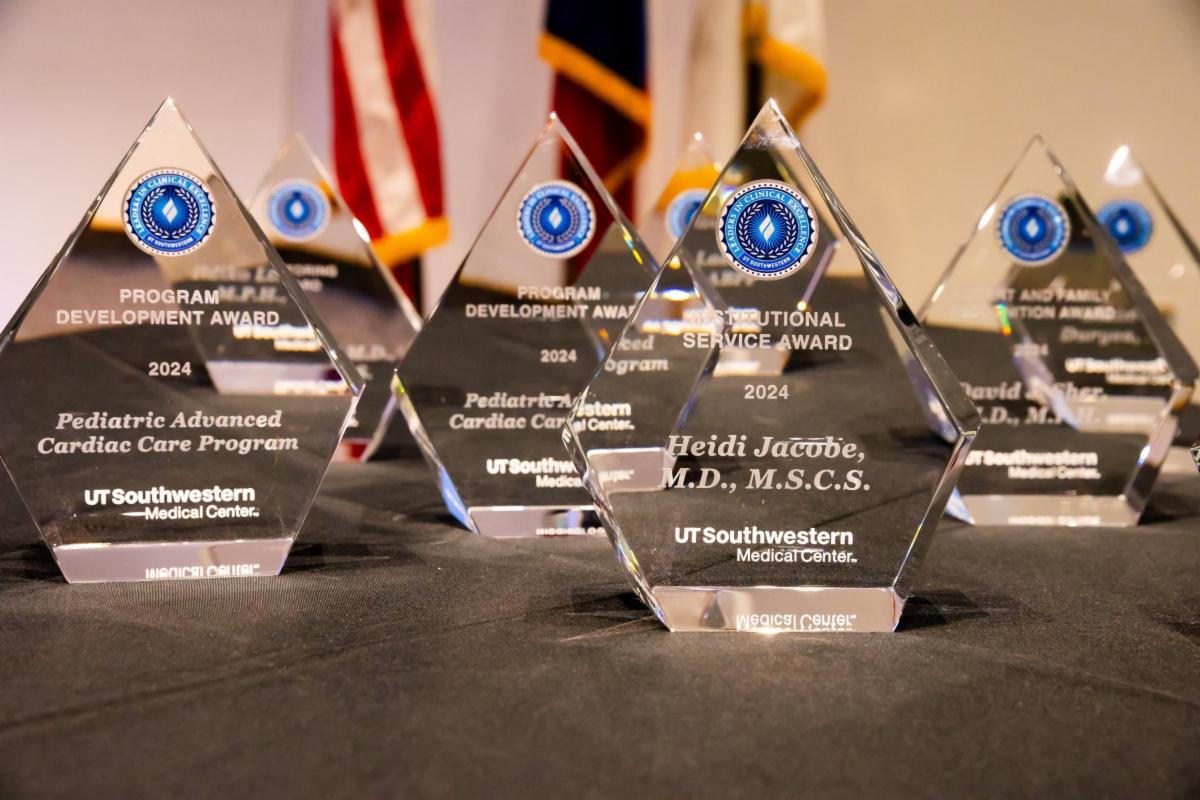
Nominations for the 2025 Leaders in Clinical Excellence Awards are open through July 15.
There are seven award categories designed to honor clinical faculty who embody the very best in patient care and institutional excellence. Anyone can nominate an eligible clinical faculty member for any of the awards, including the Patricia and William L. Watson Jr., M.D. Award for Excellence in Clinical Medicine, our institution’s highest clinical honor.
More information about the awards, eligibility requirements, and the nomination process are available on the Clinical Faculty Awards website.
| | Accessible Learning Environments Training Sessions | | |
This month, Glenn Philp, Information Resources Accessibility Officer, and Yulia Piller, Ph.D., Director of Educational Technology, will offer an overview of key strategies for creating accessible and inclusive learning environments, with a focus on PowerPoint accessibility and the principles of Universal Design for Learning (UDL). These sessions are developed to help faculty build inclusive content from the outset, in line with recent updates to Title II of the Americans with Disabilities Act.
Designing Accessible Courses with UDL: June 4 and June 25
- Explain the core principles of UDL and their relevance to graduate education.
- Identify potential barriers to learning within graduate-level courses.
- Apply UDL strategies to the design or redesign of a graduate-level course or assignment to enhance accessibility.
Designing Accessible PowerPoint Presentations: June 11, June 20, and June 26
- Apply accessible design principles for optimal readability and contrast.
- Structure slide content logically to ensure effective navigation for all users.
- Incorporate images, graphics, and multimedia elements paired with effective alternative text, captions, and transcripts.
- Evaluate and improve presentations for accessibility.
In addition, the UTSW digital accessibility website has templates, guides, and a section on recommendations for academic content creation.
| | Important Dates and Upcoming Events | | |
Researchers Beware! Avoiding Predatory Journals and Conferences Workshop
Explore resources like the Predatory Publishing Guide and Cabell’s Predatory Reports.
Z(ot)ero to Hero: Citation Management Basics Online
Hosted by Library Services, this session will introduce you to Zotero, a free-to-start, open source citation manager.
Faculty Wellness Retreat
A daylong retreat to rejuvenate and reconnect with your passion for academic medicine.
Clinical and Translational Research Scholar Opportunity*
A two-year scholar opportunity for junior faculty, with partial salary support from the CTSA KL2 grant.
Searching PubMed
Discuss the best approaches for searching PubMed, the National Library of Medicine’s biomedical literature database. Library Services will guide you through basic searching, advanced options, MeSH, clinical queries, and filters.
Percipio Leadercamp: Key Skills to Elevate Your Presentations
The focus of this live course is less on tips and tricks and more on learning effective ways of connecting with your audience as you are delivering a presentation.
Successfully Earning a K Award (SEAK) Workshop*
Designed to increase the likelihood of funding as you write or resubmit your K award application, this workshop focuses on each of the steps of the grant process. Early-career faculty working on a K01, K08, or K23 submission are encouraged to apply.
-
Apply by June 13. (Program starts in July)
Didactic Session: Closing the Loop – Disseminating Results to Community Partners*
Learn strategies for disseminating results and sustaining long-term community partnerships.
Evidence Synthesis Essentials
In the first part of this evidence synthesis series, participants will discuss the initial steps in the evidence synthesis process, including the types of evidence synthesis, research question formulation, and background searching.
Call for Research Proposals to Advance Work in Generative AI
NVIDIA is requesting proposals from academic researchers who are working in the following subject areas related to generative AI: training and model development, alignment and inference, and simulation and modeling.
Research Mentor Training Program
Research mentors for graduate students, postdocs, and junior faculty are invited to a series of in-person workshops. Sessions will cover “Aligning Expectations and Maintaining Effective Communications.”
*Sponsored by the UT Southwestern Clinical and Translational Science Award Program
| | | | |