e-Newsletter | September 2, 2022
|
|
Highlights of Margaret Cushing and Cecilia Beaux: A Cape Ann Sojourn |
|
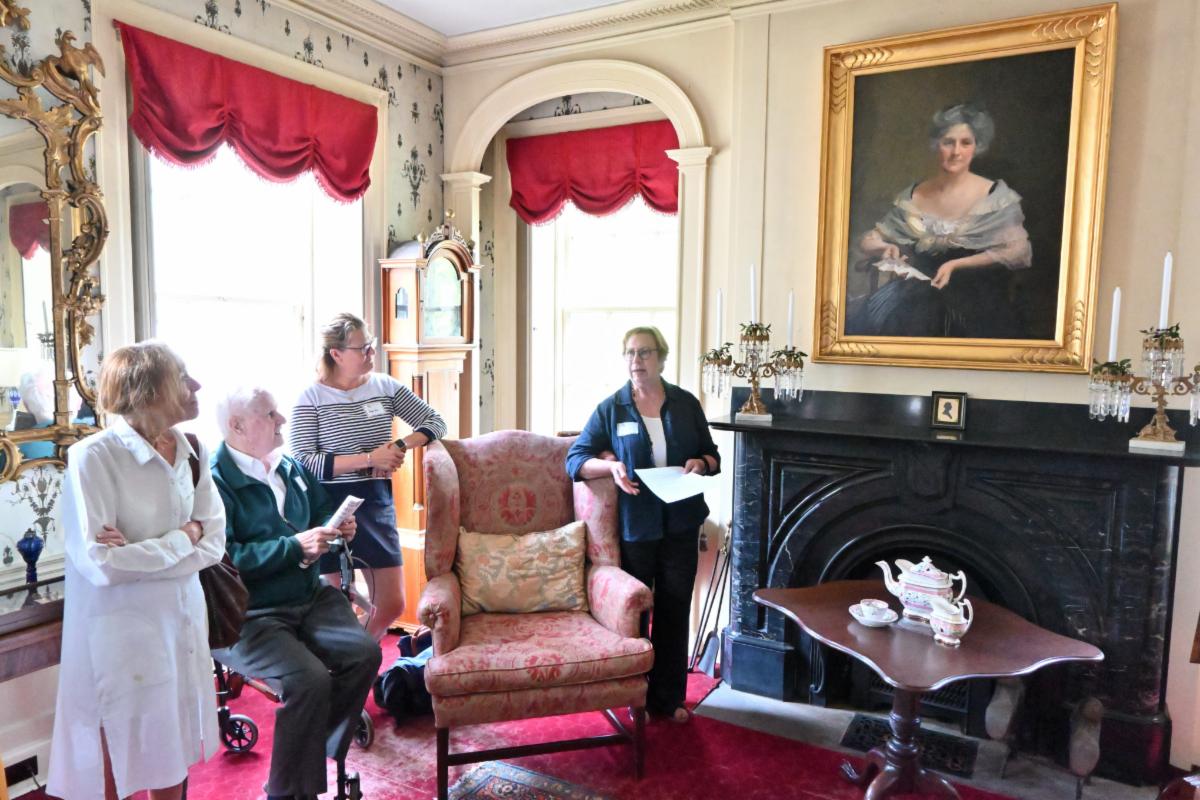
On August 18, an intrepid group of Museum of Old Newbury members and staff followed in Margaret Cushing's footsteps (tire tracks, actually, she hired a car), from her home in Newburyport to Cape Ann, where her portrait was painted by foremost society portraitist Cecilia Beaux. The event sold out quickly and offered an in-depth look at two remarkable women, their homes, their friendships, and their art. Here are some photographic highlights from the day, courtesy of board member Bob Watts. |
|
The day began with an in-depth look at Cecilia Beaux's portrait of Margaret Cushing, painted in 1913. Monica Reuss, an art expert and museum volunteer, shared her research findings on the portrait. Monica discovered that Margaret Cushing went to Gloucester to sit for Beaux a total of 27 times over a 4 month period. She paid $3,000 for the portrait, equivalent to $88,000 today. |
|
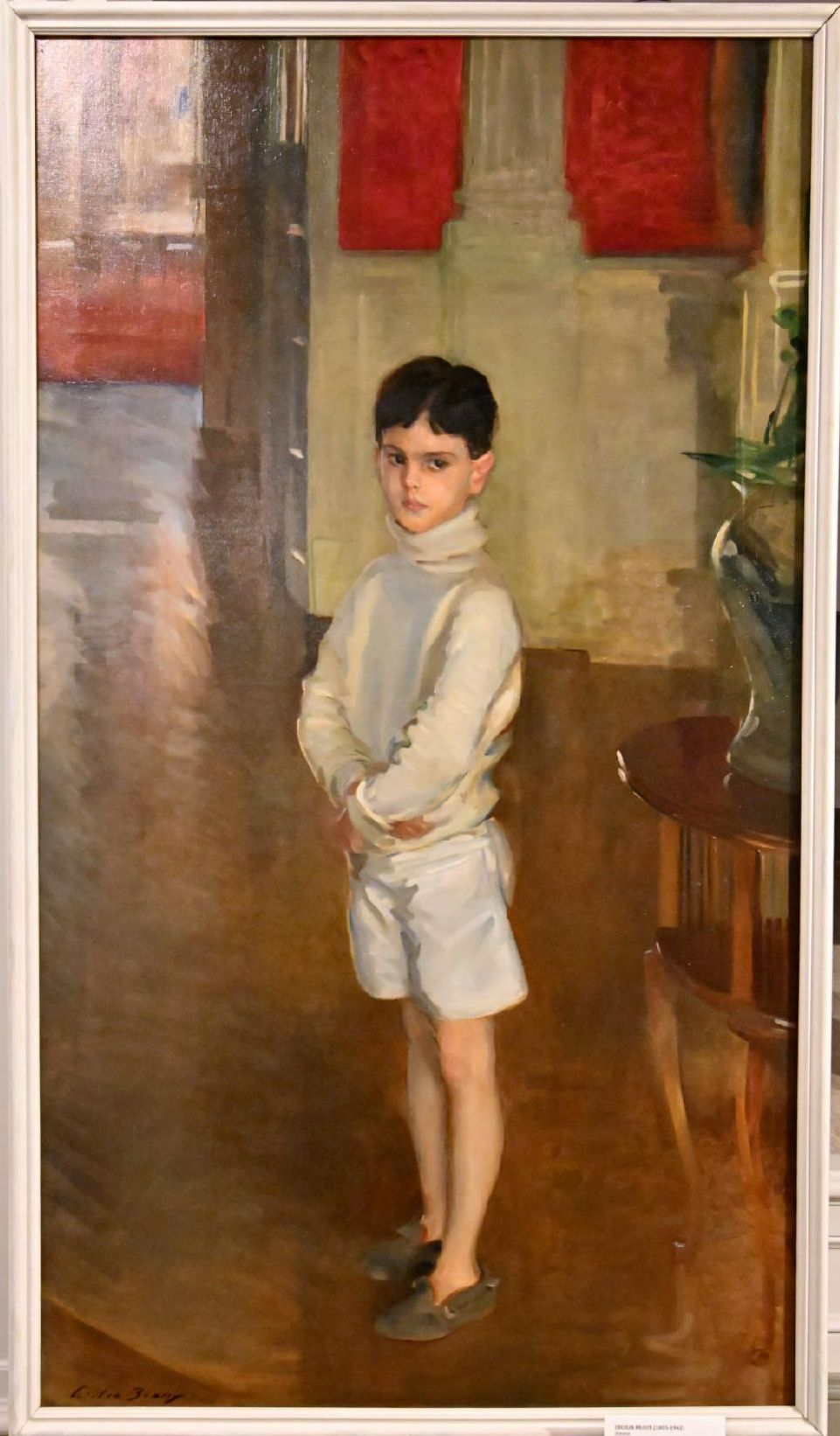
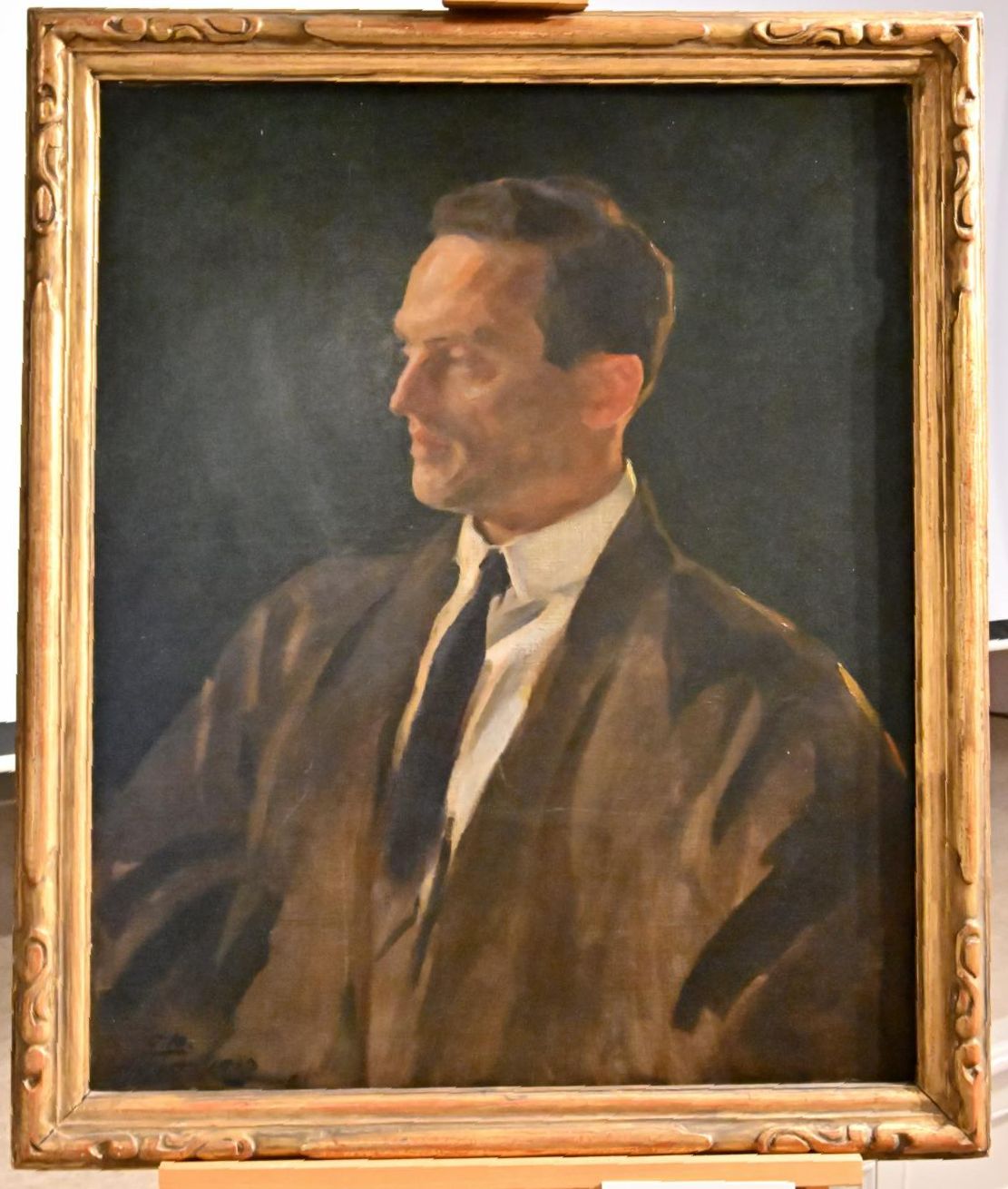
Left: "Jimmie" (Henry Parsons King, Jr.), 1905; Right: A. Piatt Andrew, 1903; both by Cecilia Beaux and part of the collection of the Cape Ann Museum.
Cape Ann Museum Chief Curator Martha Oaks treated the group to a private tour of several Beaux paintings not currently on exhibit, and archival materials from Beaux's life in Gloucester.
|
|
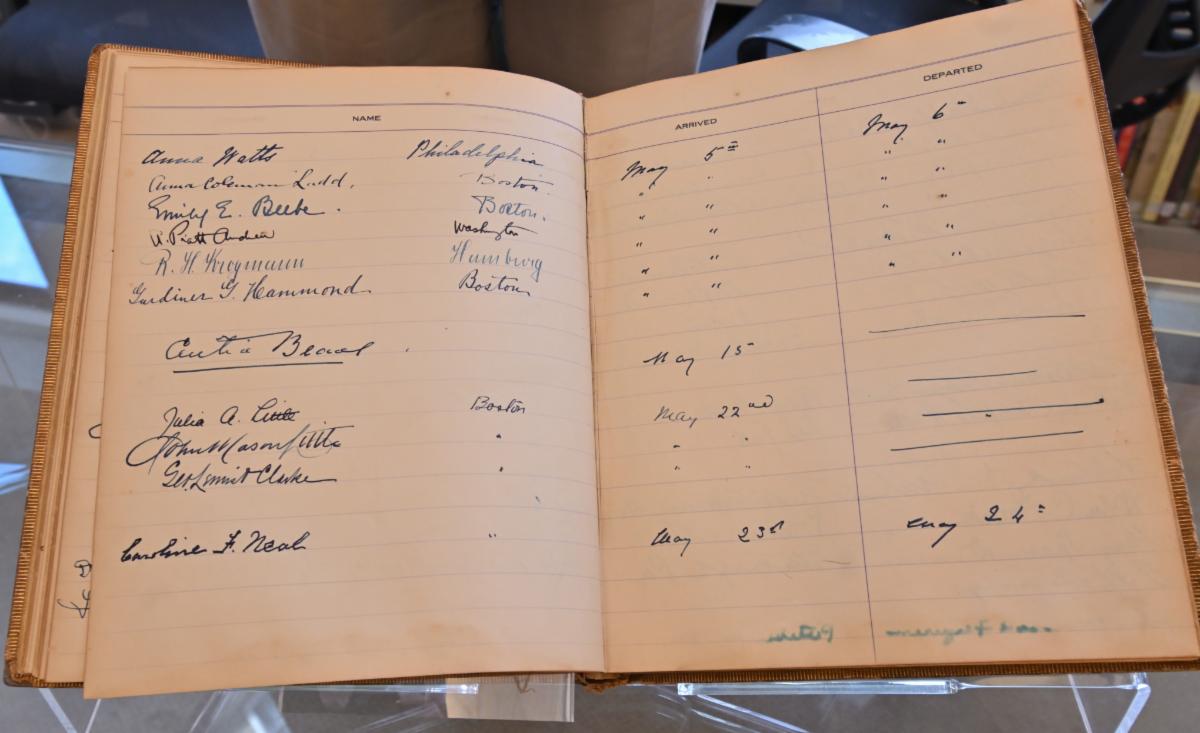
Before building her own house, "Green Alley," on Eastern Point in Gloucester, Beaux stayed at the Fairview Inn. Cape Ann Museum found her name in the inn's guest book (center, dated May 15). |
|
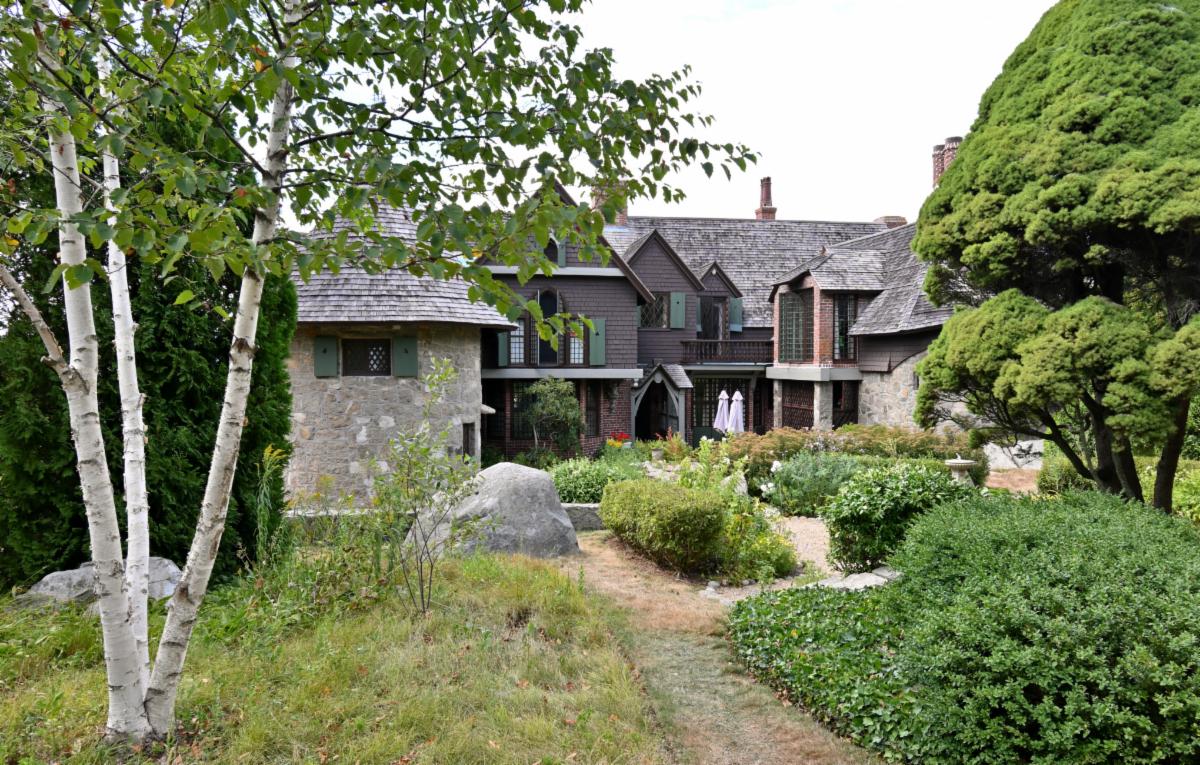
After a lunch break in downtown Gloucester, the group met at Historic New England's Beauport, Sleeper-McCann House on Gloucester's Eastern Point. The designer of this remarkable home, Henry Davis Sleeper, was a neighbor and close friend of Cecilia Beaux. |
|
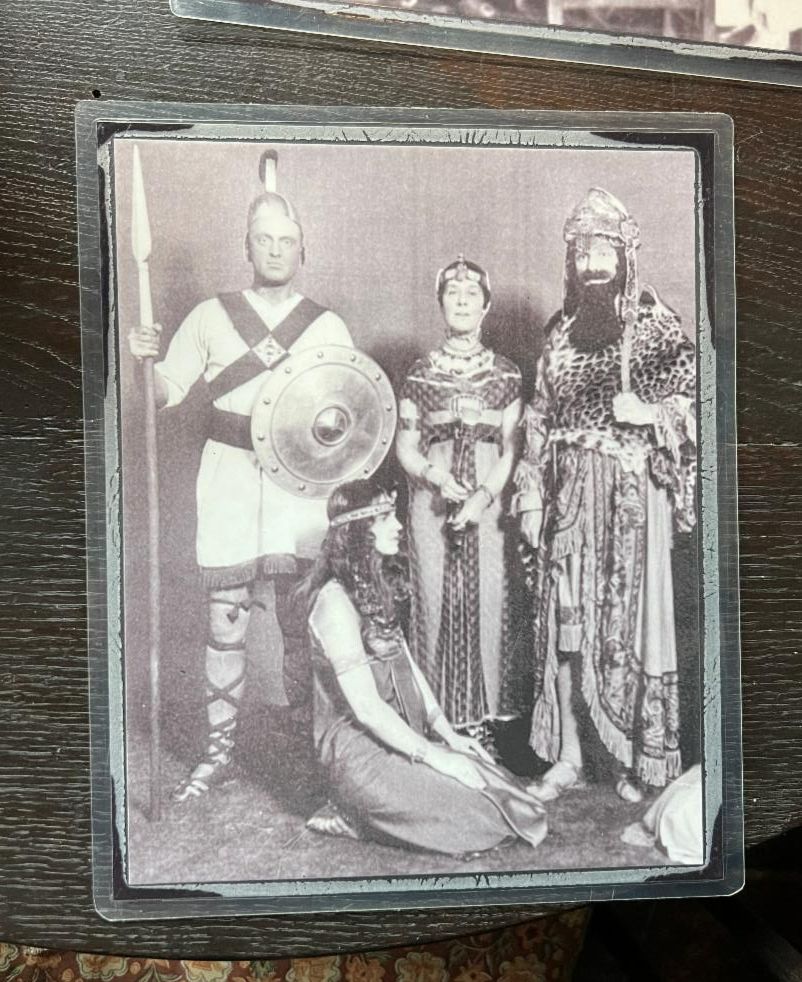
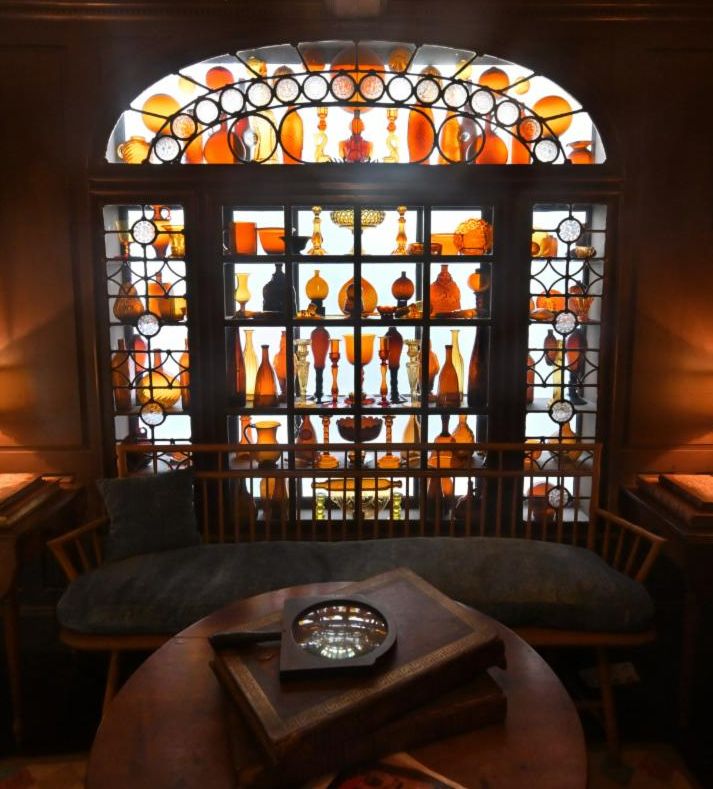
Left: Eastern Point costume party photo of Cecilia Beaux (center) with Henry Davis Sleeper (right); Sleeper's amber glass collection is lit by a skylight and incorporates a variety of objects, old and new. |
|
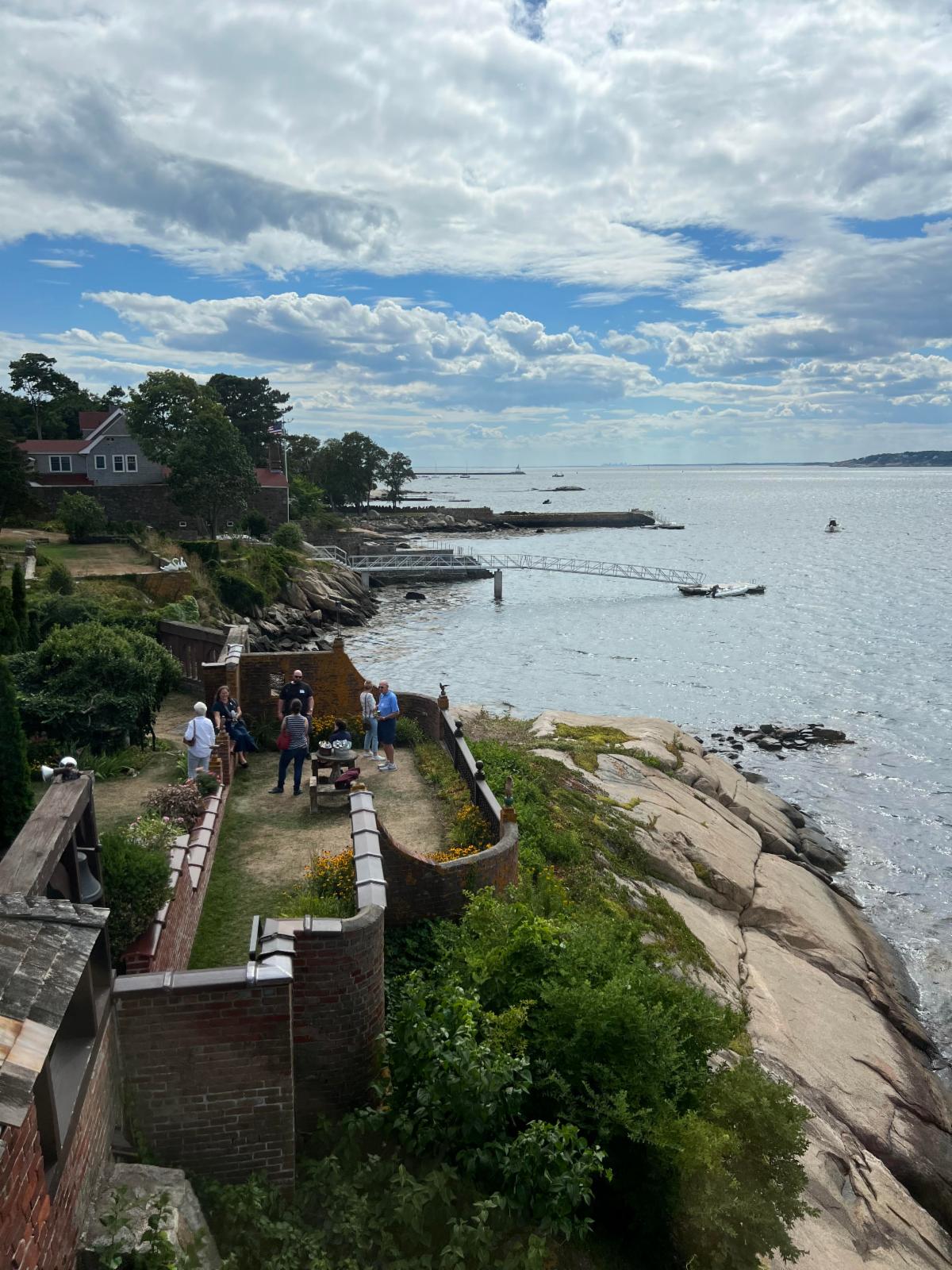
This beautiful day ended with refreshments on the Beauport terrace with views of Gloucester Harbor and Boston in the distance. Stay tuned for future field trips with the Museum of Old Newbury. |
|
New Acquisitions for Old Newbury: Annual Meeting and Reception
Wednesday, September 14, 2022, 6:30 PM 8:00 PM
The Museum of Old Newbury is ever-changing, thanks in part to important art and artifacts that have joined our collection over the past year. Come see an assortment of new acquisitions, including the Newbury Old Town Pasture book, a locally made sampler, Moulton silver, and important 20th century paintings.
Registration is required as space is limited. This is a members-only event. (Not a member? Join here.) The annual business meeting will begin the evening.
|
|
Tiptoe Through the Tombstones: Highland Cemetery
Sunday, September 18, 2022, 10am.
Directions: 21 Hill St, meet at Highland Cemetery sign
Wander through Newburyport’s historic Highland Cemetery with noted author and historian Ghlee Woodworth, a 12th generation Newburyport native. From the long-forgotten graves of Newburyport’s once-thriving Black community leaders to the mausoleums of captains of industry, sea-faring folk, artists, eccentrics, and ordinary Newburyporters, learn about people whose lives were recorded in stone. $15 adults /
$10 Museum of Old Newbury members.
|
|
The Best Ever! Parades in New England, 1788–1940 Thursday, October 13, 7pm.
Noted curator and author Jane Nylander will give a talk on her book, The Best Ever! Parades in New England, 1788-1940. She explores the parade tradition as enacted in the small cities and towns of New England. Meticulously documented and lavishly illustrated with nearly 300 photographs, The Best Ever! offers never-before-seen pictures of actual parades, including floats and banners that have mostly disappeared and ranging from the Federal Ship carried in the 1788 Ratification parade at New Haven, Connecticut, to 1940 when the parade tradition largely halted at the onset of WWII.
Free for all thanks to Mass Humanities
|
|
Woman on the MOON
...a blog by Bethany Groff Dorau
|
|
Bodkins are a Girl’s Best Friend
For who would bear the whips and scorns of time…
When he himself might his quietus make
With a bare bodkin? Who would fardels bear,
To grunt and sweat under a weary life…
-Hamlet, Act 3, Scene 1
Okay, I admit that despite being a rather nerdy linguist and a bit of an Anglophile, I have never borne a “fardel” (burden) or wished for my own “quietus” (death) at the hands of a “bare bodkin”. But soft, here’s where I exclaim loudly that I am quite familiar with bodkins. They are a girl’s best friend, at least in Newbury in the 17th century. And the humble bodkin features prominently in one of my favorite court cases (and there are many) from the Essex County Quarterly Court.
|
|
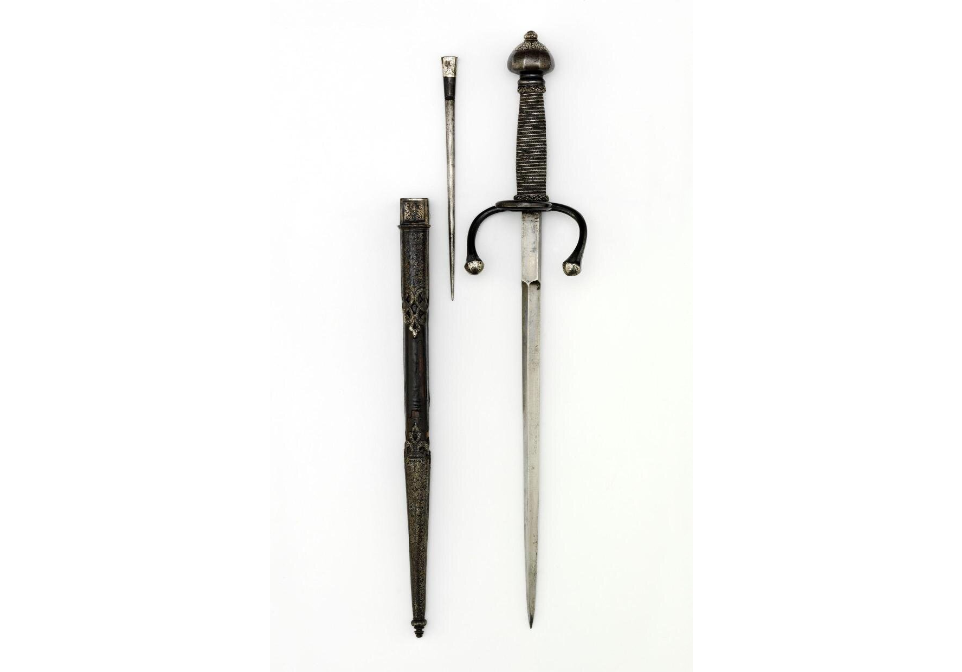
Bodkin/dagger combination, c.1580, courtesy of the Victoria and Albert Museum.
The bodkin of Shakespeare’s time was a murderous weapon, a stiletto dagger, an excellent way to hasten one’s “quietus”, if one were so inclined. But in Newbury in the 17th century, a bodkin was a long, flat needle, often with a small spoon at the end. It was a woman’s Swiss Army knife – used to fasten ribbon, tie up corsets, hold one’s hair in place, and perform certain funky acts of personal hygiene. The spoon? Dig out a good quantity of earwax with which to smooth your thread. No joke. As you will see in a moment, bodkins also doubled as toothpicks.
Bodkins, often silver and engraved, sometimes sporting a jewel, appear as valuable items in property inventories in Newbury and have been found in archeological excavations at the 1690 Spencer-Peirce-Little Farm. And in one notable instance of dubious parenting, all the way over yonder in Ipswich, a bodkin was used to keep a baby occupied during church.
|
|
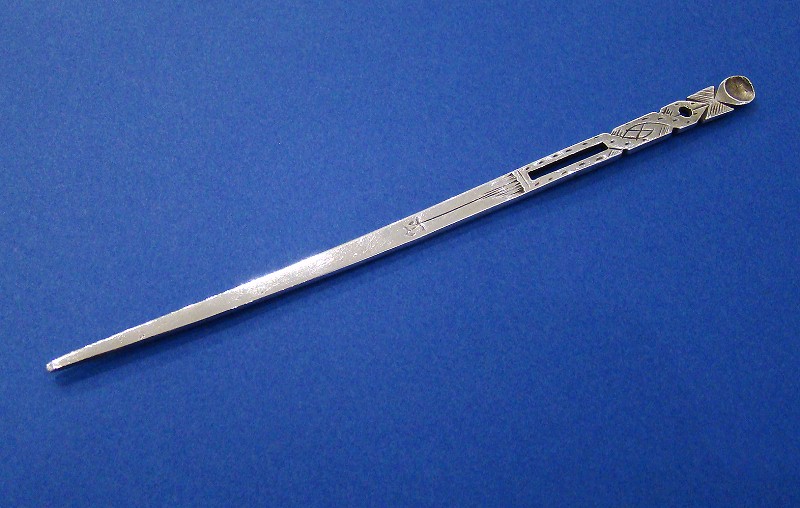
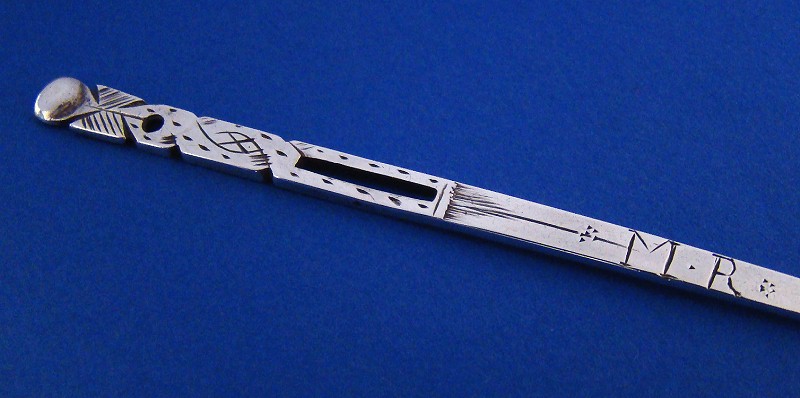
This personalized c.1625 bodkin with ear wax spoon is likely much like Goodwife Hunt’s missing implement.
It was May 2, 1669. Elizabeth Hunt’s baby son Joseph, just beginning to stand, was growing restless in their box pew in the Ipswich meeting house. Elizabeth gave the baby her silver bodkin, engraved with her name, likely the only decorative item she wore. The baby, pulling himself up to giggle at the two young women in the pew behind them, dropped the bodkin on the floor. His mother heard it “glance down the wainscoting and jingle on the floor betwixt Sara(h) Day and Sara(h) Roper.” Elizabeth Hunt saw Sarah Roper reach down to the floor, seemingly to retrieve and return the bodkin, but then she just moved her footstool instead. After waiting impatiently through the sermon, an increasingly agitated Elizabeth Hunt asked Sarah Roper for the bodkin. Sarah pointed to the wood plank floor and shrugged. “T’wer in that crack,” she said, a phrase that has become a standard rejoinder in my household for anything that has gone missing. “Where are my keys?”. “T’wer in that crack.” “What happened to the rest of the cheesecake?” “T’wer in that crack.” The legacy of Sarah Roper lives on in the wilds of West Newbury. Elizabeth Hunt looked in the crack, and all over the meetinghouse floor, in fact, though she did not entirely believe Sarah Roper’s version of events. No bodkin materialized.
Sarah Roper’s testimony when, despite the bodkin’s later return, Elizabeth Hunt decided to take her to court for theft, offers a delightful view of a day in church, complete with fashion information and some keen insight into just how closely everyone in town was up in each other’s business.
First, Sarah loudly protested her innocence. “…you are pleased to charge me with stealing your bodkin, which is altogether false, I stole it not. I do affirm that I took it not up, neither did I see it nor feel it, until I came home, and a little before night, sitting in the house, I was turning up the cuff of my sleeve, and feeling something there, pulled down my cuff, and there I found a bodkin, which I presently showed to the folks in the house, who read the name and said it was Goodwife Hunt’s bodkin. I spoke to my brother to carry it…but he refusing to carry it, the next morning I gave it to my sister, who delivered it to her at the burial of Goodwife Whipple. And as the bodkin was suddenly last, so it was suddenly found, and as speedily returned to the owner.”
Case closed, you might think. You would be wrong. Although the bodkin had been returned to the offended Goodwife Hunt, feelings ran high in the courtroom and “there was such a “clamor and tumultuous noise, and such exclaiming and deriding,” that the judges could not hear the witnesses. They called for better decorum.
A stream of witnesses, 25 in all, provided testimony in this case.
People had heard the bodkin fall. Two teenage girls testified about exactly what Sarah Roper was wearing – “a dark colored waistcoat with a shallow cuff not lined, which was not close to the sleeve but hung down.” They also testified that "the next time Sarah Roper went to meeting, she had the cuff turned up a good deal higher." To add insult to injury, Goodwife Hunt herself testified that she believed she saw Sarah Roper picking her teeth with the missing bodkin. Another witness said, “it was impossible for her to see so far as to see Sarah picking her teeth of the bodkin.” The parade of witnesses, young and old, male and female, who testified in this case was astonishing.
Ultimately, the case was dropped, as the item had been returned, and the good people of Ipswich, like the good people of Newbury, went back to fighting, and building, and farming, and making babies.
|
|
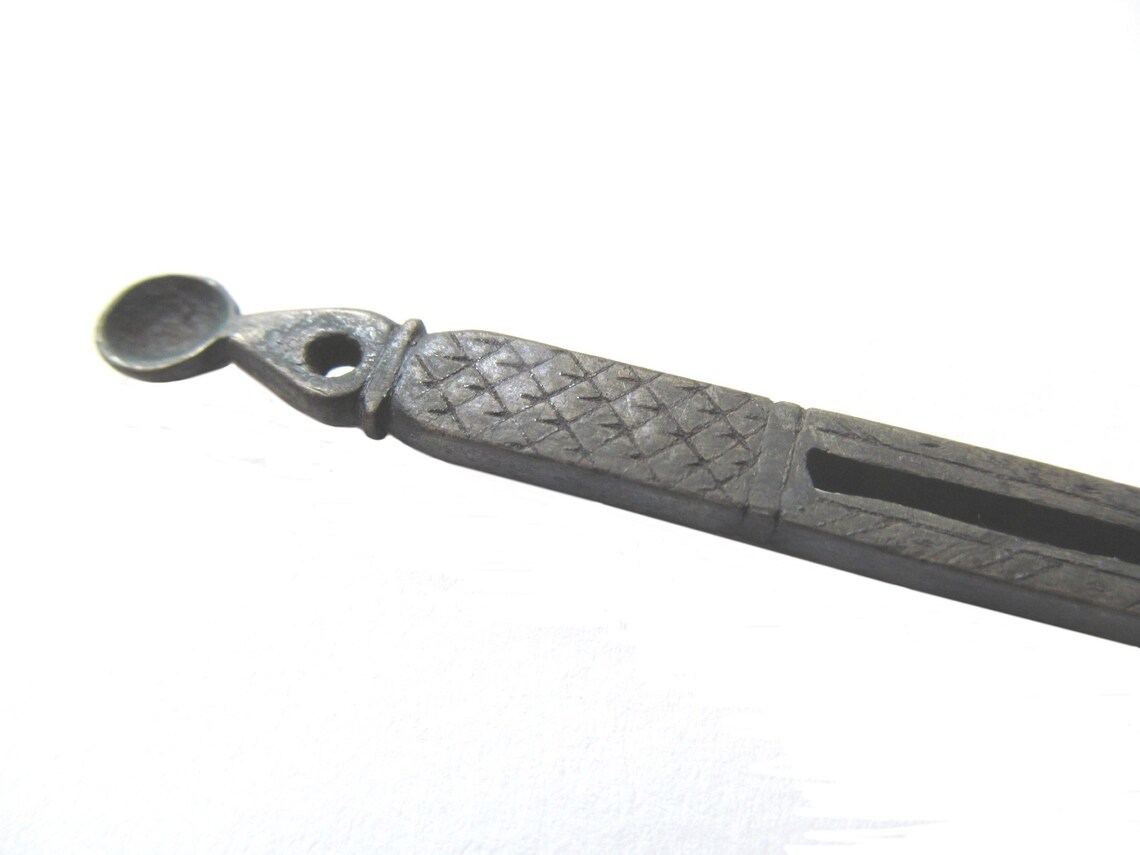
Should you wish to reenact BodkinGate for yourselves, this English iron bodkin with ear wax spoon can be yours today on the website Etsy for only $1,135.00.
In my house this episode is known as BodkinGate, and it began when my husband James had a slow day at work and decided to peruse some Essex County Quarterly Court records. He came home, sat me down, and told me the story, gob-smacked that the entire town of Ipswich seemed to turn out to testify about this item. I have loved this story ever since, this one item revealing so much about how early New England towns behaved (and misbehaved), and how connected they are with each other.
|
|
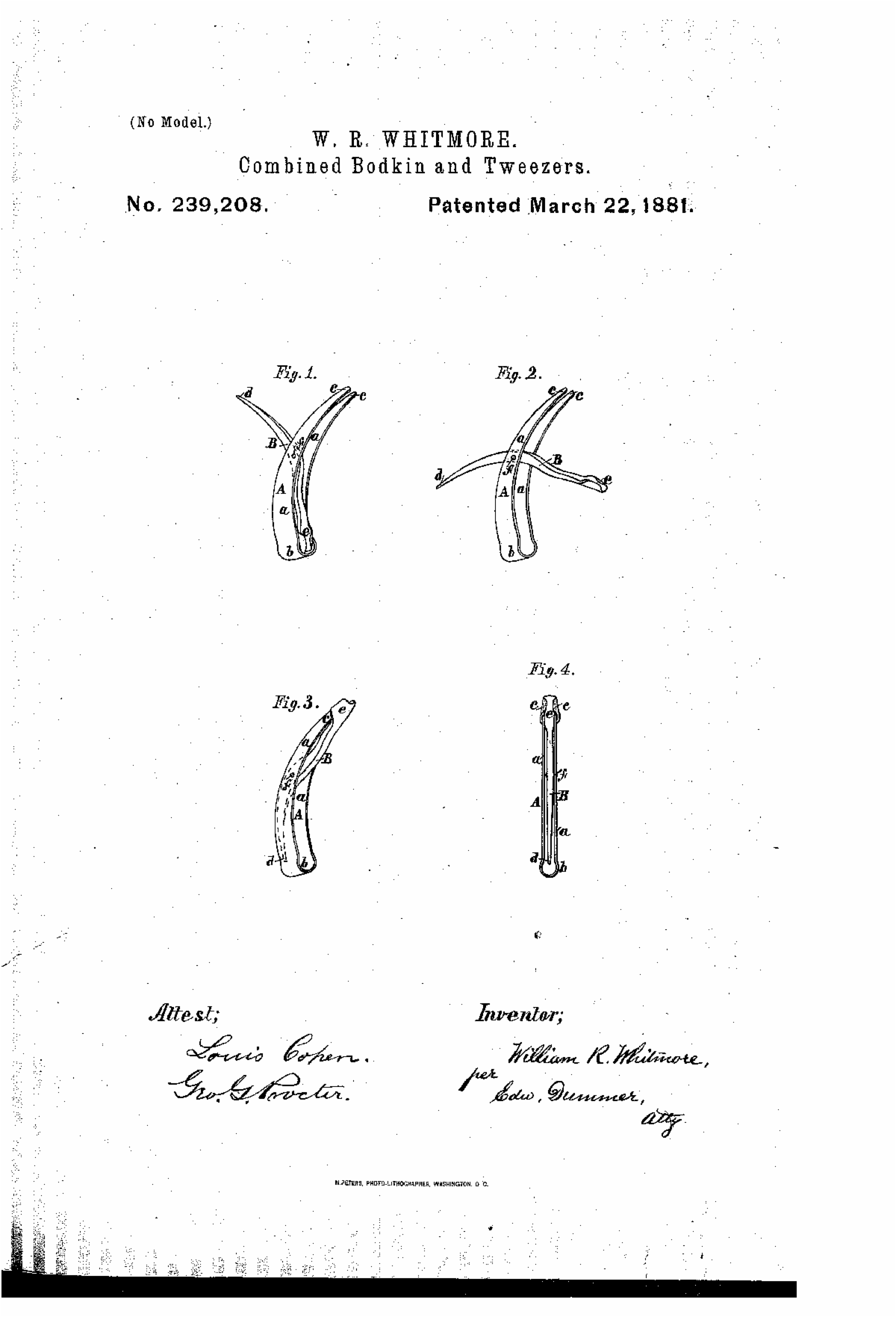
Two centuries later, in 1881, a Newburyport inventor, William R. Whitmore, filed for a patent for a tool that combined tweezers and a bodkin. This was the discovery that spurred this article, but it turns out that this multi-purpose tool was intended “for use by printers in correcting forms of type”.
|
|
Something is Always Cooking at the Museum |
|
This recipe comes from "Cushing House Cooks." A cool meal for a hot day!
9 oz. canned tuna in oil - do not drain
15 oz. can cannellini white beans, rinsed well
1-2 T. olive oil
Zest and juice of 1 lemon
1-2 dashes red wine vinegar
2 ribs celery, chopped
2 small red onion or 3 shallots, minced
2 T. capers
Pinch of crushed red pepper flakes
Pinch of coarse salt to taste
Fresh ground pepper to taste
Combine tuna, beans, celery, onion, capers, oil, lemon juice, lemon zest, vinegar, salt, and pepper in a medium bowl. Stir gently. Refrigerate until ready to serve. Makes four 1-cup servings. Courtesy of Colleen Turner Secino. From Cushing House Cooks. On sale in our online shop.
|
|
Click on image above to play the puzzle |
|
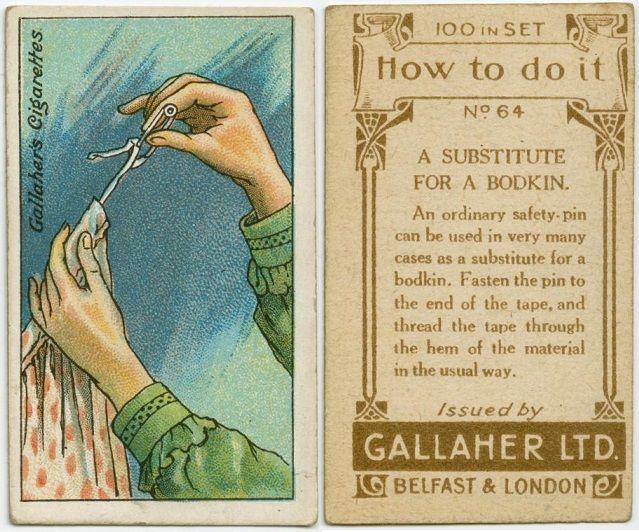
Gallagher Ltd. cigarette card. By 1910, the safety pin was touted as a replacement for the ubiquitous bodkin. More of these trading cards can be seen here. Click the image above to play the puzzle.
|
|
Museum e-Newsletter made possible through the
generosity of our sponsors:
|
|
|
Museum of Old Newbury
98 High Street
Newburyport, MA 01950
978-462-2681
|
|
|
|
|
|
|
|