Elmo Peeler Note-for-Note Piano Transcriptions
|
|
|
Today is the first day of July and time again for my monthly newsletter to keep you informed of recent transcriptions and other news of the last month.
|
|
 |
| Billy Preston & the Rolling Stones |
|
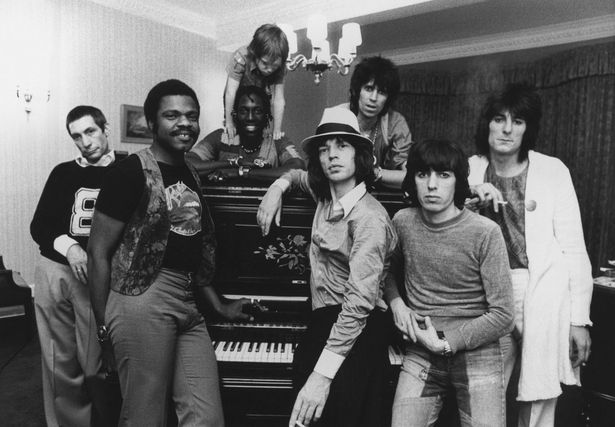
What do you get when you combine the brilliant talents of Billy Preston, Mick Jagger, Mick Taylor and Bill Wyman (& Leon Russell)?
You get one of the Rolling Stones' classics: "Shine a Light".
This month we'll take a close look at Billy Preston's great gospel-infused piano track on "Shine a Light" - R&B/Gospel meets the Rolling Stones.
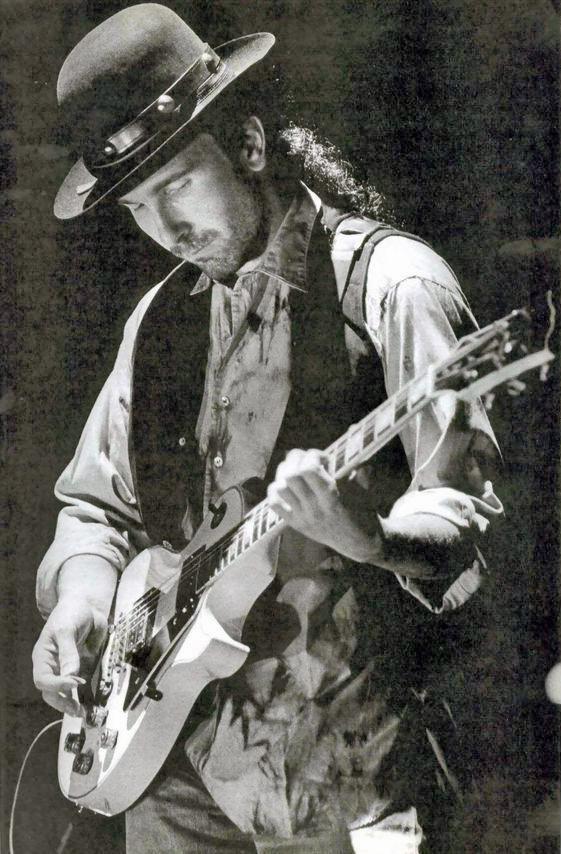
Also new this month is a transcription of the two Infinite Guitar tracks on U2's "With or Without You". You might've mistaken them for synthesizers.
Plus, a new exercise in Contrary Motion - one hand descends while the other ascends, and vice-versa.
BTW, to make sure that my email doesn't end up in your Spam folder, please add me to your Contact list and/or mark my email as "Not Spam".
Note that every Title Heading is clickable.
Elmo Peeler
|
|
|
ALL of the Sheet Music listed on my website has been personally transcribed by me, and guaranteed to be note-for-note perfect.
Whether you:
-
have a cover band and want to get your keyboard parts exactly correct,
-
are a professional who wants to study the styles of rock's greatest keyboard players, or
-
are a hobbyist that wants to learn how to play pop/rock and great piano music,
...these note-for-note transcriptions will prove extremely helpful.
And as always, if you ever need any help, just drop me a note at: elmo@manymidi.com
|
In the News!
- Billy Preston & the Rolling Stones + U2
Billy Preston = Keyboard Genius
|
|
|
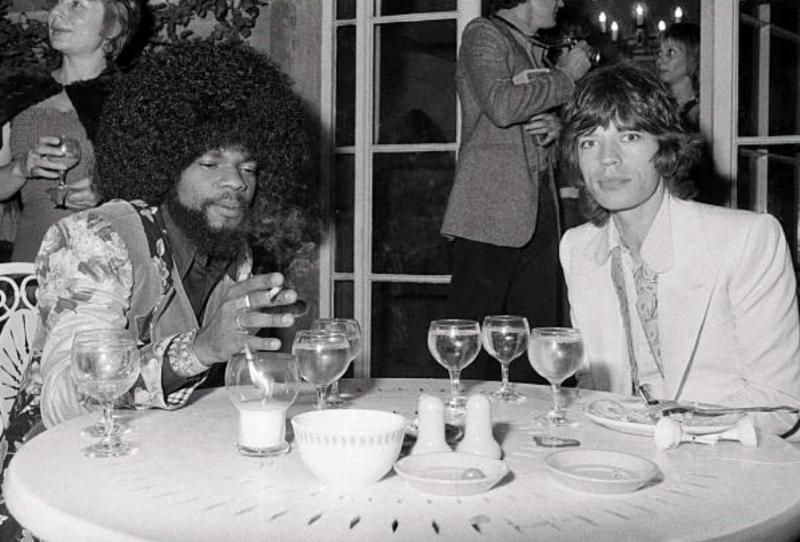
Billy Preston & Mick Jagger
|
|
Born in 1946 in Houston, Texas, Billy Preston moved to Los Angeles as a child with his mother, a stage actress - for whom twenty years later he would write
"You Are So Beautiful". A child prodigy with perfect pitch, Billy started playing piano while sitting on his mother's lap and was entirely self-taught.
Although he'd never had a music lesson, by age ten Billy was playing organ onstage, backing gospel singers such as Mahalia Jackson, James Cleveland and Andrae Crouch.
At 11 Preston appeared on an episode of Nat King Cole's TV show singing the Fats Domino hit "Blueberry Hill" with Cole. He also appeared in
St. Louis Blues, a 1958 movie about W. C. Handy starring Nat 'King' Cole, Eartha Kitt and Cab Calloway; Preston played Handy at a younger age.
In 1962, Preston joined Little Richard's band as an organist, and it was while performing in Hamburg that he met the Beatles. In 1963, he played the organ on Sam Cooke's
Night Beat album and released his own debut album,
16 Yr Old Soul, for Cooke's SAR label. In 1965, he released the album
The Most Exciting Organ Ever and performed on the rock and roll show
Shindig! In 1967, he joined Ray Charles' band.
|
|
|
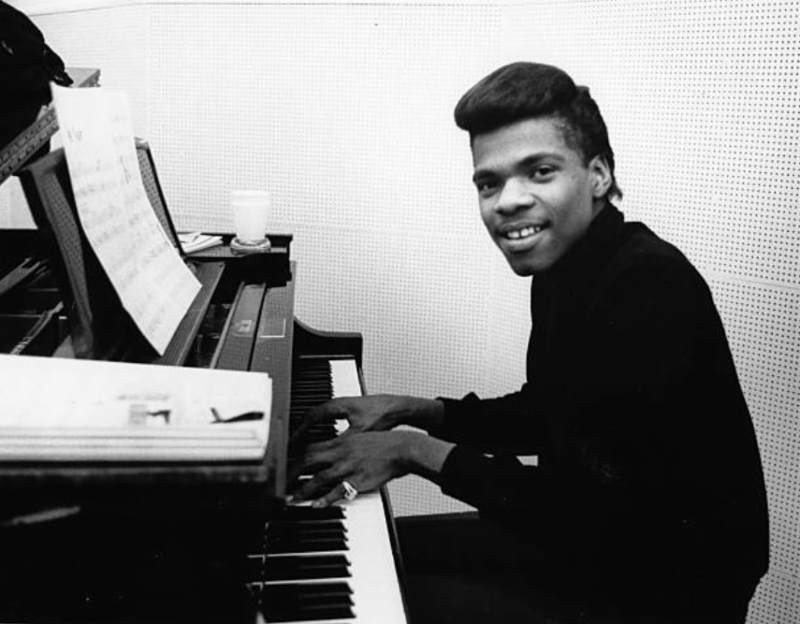
Young Billy Preston Laying Down the Gospel
|
Following this exposure, several musicians began asking Preston to contribute to their sessions, including the Beatles, seven years after meeting him while playing with Little Richard.
He played on several of their songs, including "Get Back",
"Don't Let Me Down", "Something",
"Let It Be" (the organ part), and "I Want You (She's So Heavy)".
During the "Get Back" sessions Lennon suggested that Preston join the Beatles, even using the term "Fifth Beatle", but the idea was dismissed by the others.
Billy Preston was the only artist to receive joint credit on a Beatles single. Preston also accompanied the band on electric piano for its rooftop concert, the group's final public appearance.
From 1970, Preston played keyboards (including piano, organ, clavinet and various synthesizers) for the Rolling Stones, sometimes alongside pianists Nicky Hopkins and Ian Stewart, on their albums
Sticky Fingers,
Exile on Main St. (which includes
"Shine a Light"),
Goats Head Soup,
It's Only Rock 'n Roll and
Black and Blue.
As the band's primary touring keyboardist from 1973 to 1977, he also performed as a support act with his own band (including Mick Taylor on guitar) on their 1973 European tour.
In 1974, along w
|
|
|
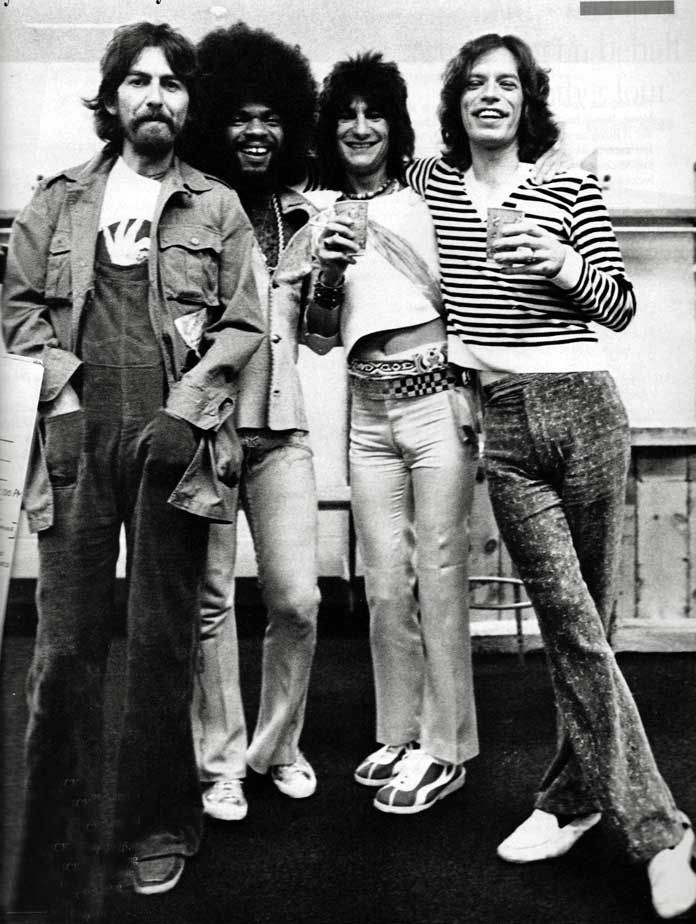
George Harrison, Billy Preston,
Ron Wood, Mick Jagger
|
|
ith Bruce Fisher, one of his regular songwriting collaborators in the 1970s, he composed one of Joe Cocker's biggest hits,
"You Are So Beautiful". On October 11, 1975, he was the first musical guest on Saturday Night Live's premiere episode.
Although the Stones and Preston parted company in 1977, mainly due to a disagreement over money, Billy continued to play on solo records by Stones members like Mick Jagger's
Wandering Spirit, and made appearances on the band's
Tattoo You and
Bridges to Babylon albums.
Although credited to usual Stones writers Mick Jagger and Keith Richards,
"Shine a Light" was largely a Mick Jagger-Leon Russell composition. Mick began writing the song in early 1968 when the Stones still had guitarist Brian Jones as a member. The song was originally titled "Get a Line on You" and dealt with Jones's ever-worsening addiction to drugs and his detachment from the rest of the band.
A version of the song, under the title "(Can't Seem To) Get a Line on You," was made by Leon Russell at Olympic Studios in October 1969 with assistance from Jagger (lead vocals), Charlie Watts (drums), Leon Russell (piano), and probably also Bill Wyman (bass) and Mick Taylor (guitar). The recording was made during the recording sessions for the 1970 album
Leon Russell, where both Watts and Wyman contributed drums and bass to some of the tracks. However, Leon's version of the song was shelved until 1993, when it was finally released as a bonus track on the 24K gold re-release of
Leon Russell by DCC Compact Classics.
After Jones' death in 1969, the song resurfaced. Following revisions by Jagger, it was recorded again in July 1970 as "Shine a Light." A third recording at London's Olympic Sound Studios in December 1971 resulted in the final version of the song released on
Exile on Main St.
Here are my Billy Preston transcriptions:
Here are my other Rolling Stones transcriptions:
|
|
|
U2's the Edge (Dave Evans) |
David Evans, born in 1961, better known by his stage name the Edge (or just Edge) is the lead guitarist, keyboardist and backing vocalist of U2. A member of the group since its inception, he has recorded 14 studio albums with the band as well as one solo record.
On U2's first #1 hit in the U.S.,
"With or Without You", Edge played the Infinite Guitar, a modified Stratocaster that allowed notes to sustain infinitely.
Michael Brook invented the Infinite Guitar by modifying his own Fender Stratocaster. He says he simply "put one pickup on top of another." The bridge pickup amplifies the sound of the strings, the newly added pickup reflects the sound and sends it back to the original pickups, creating a loop that can sustain the note indefinitely.
In 1987 while he was producing U2's
The Joshua Tree album, Daniel Lanois told The Edge about Brook's invention. Intrigued, Edge paid Brook a visit, heard possibilities in the new Infinite Guitar, and asked if Brook could make him one. Brook initially demurred, telling Edge he's not a manufacturer, but eventually offered to modify the Irish guitarist's 1965 Strat. (Daniel Lanois, who employed Brook as an engineer at his Grant Street studio, owns the only other Infinite Guitar ever made.)
Choosing to use a clean Strat sound, the Edge recorded two tracks, both of which were used in the final mix by producer Lanois. Because of their sustain, they sound similar to a synthesizer, but being played on a Strat, the sound can be quite expressive, using harmonics and the guitar's volume knob for crescendos/decrescendos. The Edge uses both techniques in "With or Without You".
My new U2 transcription:
|
July's New Transcriptions
- "Shine a Light" - Rolling Stones + U2's "With or Without You"
When the Rolling Stones were recording Exile on Main St. at Sunset Sound Recorders in Los Angeles in 1972, Billy Preston immersed Mick Jagger into gospel music by taking Jagger to the AME (African Methodist Episcopal) Church in South L.A. and exposing the Englishman to some of Preston's own gospel roots. Then when it came to recording the piano part for "Shine a Light" Billy brought a wonderful R&B/Gospel feel to the track. This month I've transcribed Billy Preston's entire piano part from the Rolling Stones' "Shine a Light".
When Daniel Lanois was producing U2's The Joshua Tree album in 1987 he turned the Edge (Dave Evans) onto a new invention called the Infinite Guitar. Immediately upon receiving and setting it up, the Edge laid down two tracks with it on "With or Without You" and put it down. Lanois used both those tracks in the final mix, where they sound like an eerie blend of synthesizer and guitar. That track went on to become U2's first #1 hit in the USA.
This month I've transcribed both Infinite Guitar tracks from "With or Without You" - perfect for synth players as well as guitarists.
|
July's New Exercise - Contrary Motion
One Hand Goes Down While the Other Goes Up & Vice-versa
|
|
|
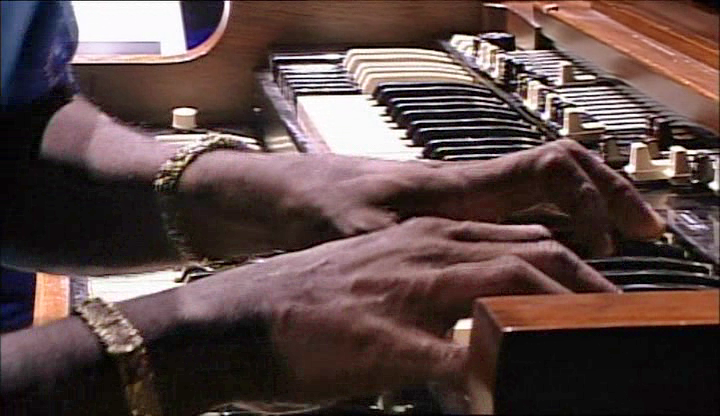
| Billy Preston's hands |
|
Contrary motion - and its harmonization - has intrigued musicians since the time of Bach, whose Soprano and Bass lines often moved in opposite directions.
And 300 years later contrary motion is still alive and well, especially in Blues and C&W turn-arounds, and in Gospel and Rock. The chorus in the Doobie Brothers' "Takin' It to the Streets" is just one example of contrary motion between the melody and the bass guitar - the melody descends while the bass ascends. (BTW, this exercise is not based on "Takin' It to the Streets".)
Sometimes contrary motion can be a little challenging to harmonize, i.e. to find a chord that won't clash with the lines heading in opposite directions.
This exercise gives an example of a melody line that descends an octave while the bass line ascends an octave. Three different ways of playing the same chord progression are included.
There are a lot of different methods to achieve contrary motion, and this is only one chord progression. But if you like the sound of contrary motion and haven't been clear on what chords to use, this should help.
|
'Crowdfund' a Transcription - "Tell Her No"
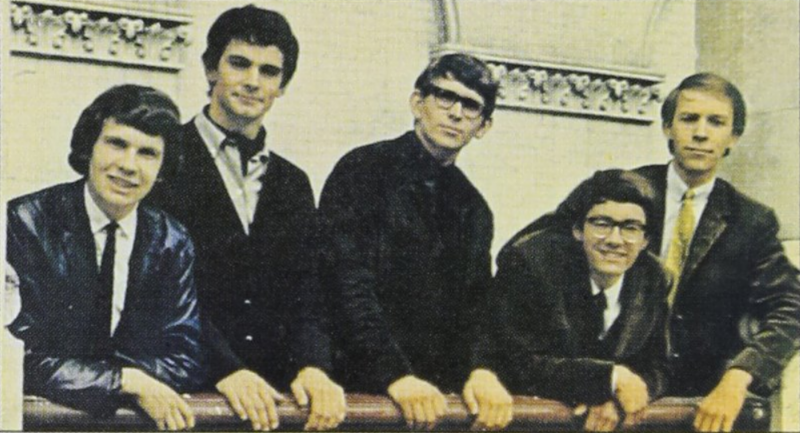
Rod Argent in the Zombies' classic
'Custom' (to-order) transcriptions can be expensive because of the time required. And when a recording is particularly long and/or complex, the expense can be too much for one person.
|
|
|
| The Zombies |
|
Fortunately, "CrowdFunding" (I use the term generically) has now succeeded four times with important transcriptions: first Ethel Caffie-Austin's "Amazing Grace", then Don McLean's "American Pie", then Johnny Rivers' "Rockin' Pneumonia". and most recently, Chuck Berry's "You Never Can Tell". Thanks very much to everyone that contributed.
The way it works is simple: Drop me a note and let me know how much you'd like to contribute.
No contributor will b
e allowed to pay in advance, but only after the transcription is finished and distributed to all the contributors and everyone is happy with it.
An historically important keyboard track that needs to be transcribed note-for-note is Rod Argent's electric piano part on the Zombies' 1965 classic "Tell Her No".
Click here to hear
"Tell Her No", which Argent composed. What a creative keyboardist he was even as a young man, and has always been.
if you'd like to participate in 'crowdfunding' a note-for-note transcription of Rod Argent's classic electric piano part in the Zombies' "Tell Her No".
My 'CrowdFunded' transcriptions to-date:
|
Billy Preston was self-taught. Nicky Hopkins took lessons. Different (key)strokes for different folks... If you should decide to try lessons, I can help you via Skype.
I've
toured the world playing keyboards and arranging/conducting for these Rock and Roll Hall of Fame Artists:
- The Beach Boys
- Ricky Nelson - Stone Canyon Band
- Rod Stewart - All 'Unplugged' concerts
I've also won classical piano competitions performing Beethoven, Rubinstein and Saint-Saens' Piano Concerti. See me playing here. "Josie's Boogie" is quite the virtuoso dramatic minor-key showpiece; check out the ascending double-octave run at the ending... :)
Thanks to the internet, I can help you play piano better - rock or classical, by ear or by note.
Perhaps all you need is just an hour or two on Skype discussing rock keyboards.
If you're serious about wanting to improve, drop me a note at info@manymidi.com. Tell me three things:
1) Your musical background
2) Where you are currently, musically-speaking
3) Your musical goals
My students include members of:
- Weezer (Rivers & Brian)
- Vampire Weekend (Ezra & new addition, Greta)
- Incubus (Mike)
- The Strokes (Nick)
- Rooney (Robert)
- Jason Schwartzman ("Mozart in the Jungle")
- Courteney Cox
- Sasha Spielberg
|
|
|
|
|