Rail & Labor News from RWU
| | Weekly Digest Number 10 - March 10, 2026 | | Welcome to the RWU Rail & Labor News! This news bulletin is produced and emailed out each Tuesday morning. We hope you find each week's news and information useful. If so, please share with co-workers, friends, and colleagues. If you like, you can sign them up to get all the news from RWU HERE. Or forward them the link. Got a hot tip? Please forward the article and a link to raillabornews@gmail.com. Note: If you read over this news bulletin each week, you will be sure to never miss the important news of what is going on in the railroad world from a worker's perspective! | | THIS WEEK'S RAIL AND LABOR NEWS | | Editor's Note: Railroaders have known for generations that safety begins with the people who work the railroad, not just the machines that measure it. Automated inspection technology has its place, but no system can replace the trained eyes and judgment of the workers who understand the track beneath their boots. When defects are caught early, it is almost always because a railroader recognized something the data alone could not. The Secure Tracks Act acknowledges a basic reality of this industry.. technology should support railroad workers, not substitute for them. Rail safety has never been the product of automation alone. It has always been built on the vigilance, experience, and accountability of the men and women who keep the system moving. A safer railroad begins by recognizing that the first line of defense has always been the rail worker. | |
|
Trains Magazine
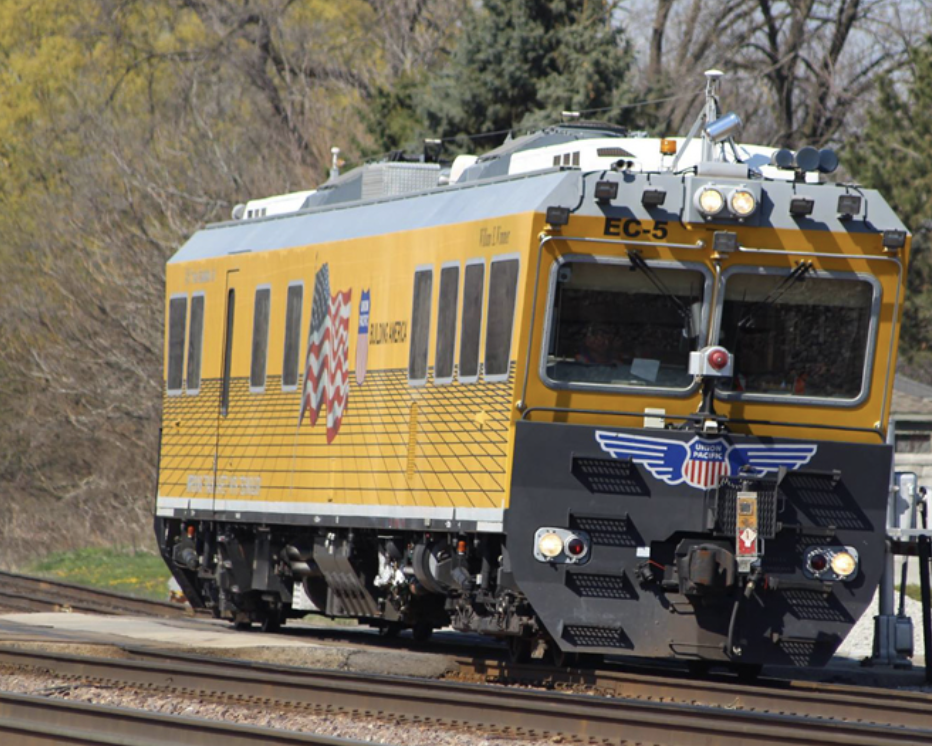
In the latest in a recent series of rail safety bills, U.S. Sens. Tammy Baldwin (D-Wis.) and Josh Hawley (R-Mo.) announced on Wednesday, March 4, that they would introduce legislation requiring railroads to maintain visual track inspections in conjunction with automated track inspection systems.
The Secure Tracks Act will require all track designated as Federal Railroad Administration Class 3 or higher — that is, track with speed limits of 40 mph or more for freight and 60 mph or more for passenger — to receive visual track inspections twice a week. It also requires all track classifications to receive automated inspections at specified frequencies, using the Track Geometry Measurement System.
| |
|
Rank and File
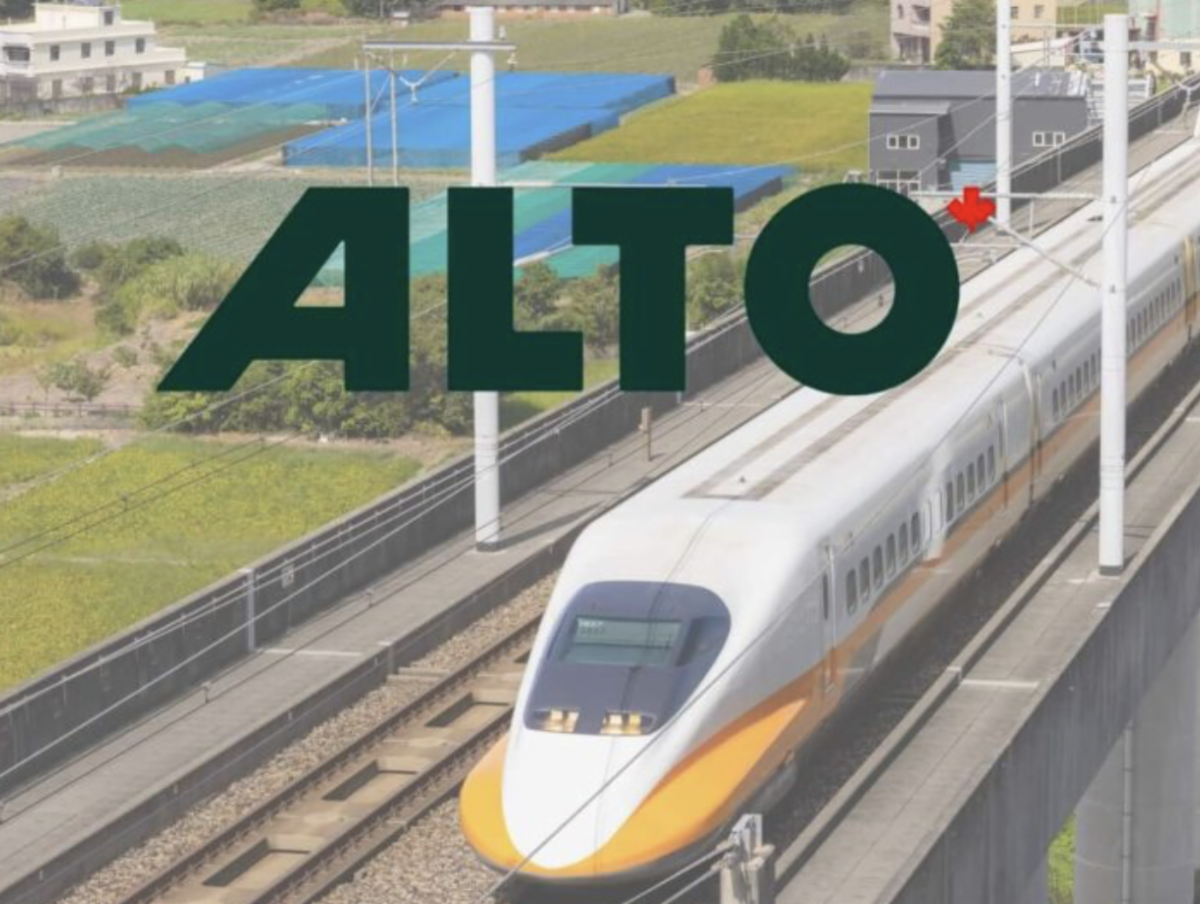
The crown corporation, Alto, is now holding public consultations in the regions where it is proposing to build a high-speed rail between Quebec City and Toronto. The project costs are estimated between $80 billion and $120 billion, and have ignited opposition along the entire corridor.
Numerous townships have voted outright opposition. Local organization and networks have been activated around a series of concerns centred on lowering land values, environmental destruction and the enormous costs. There is also disappointment and resentment along the “401 corridor” because the proposed high-speed rail bypasses numerous cities, big and small, that are served by the 401 and throttled VIA Rail passenger service on CN privatized rails.
| |
| Editor's Note: Editor's Note: Here we go! Just like that, the new CEO at Berkshire-Hathaway - the parent company of BNSF - fires the first shot across the bow. Greg Abel - Warren Buffet's successor - says they need to "close the Operating Ratio gap." And we know what that generally means - cuts to maintenance, inspection, staffing, training, safety, and all the rest. Stating, " ... we will be disappointed if we do not deliver a substantial improvement over the next few years,” Able appears to be headed down the PSR rathole. Every worker and every union at BNSF should prepare themselves to fight back. RWU urges all the crafts to unite and be ready for the onslaught now! | | |
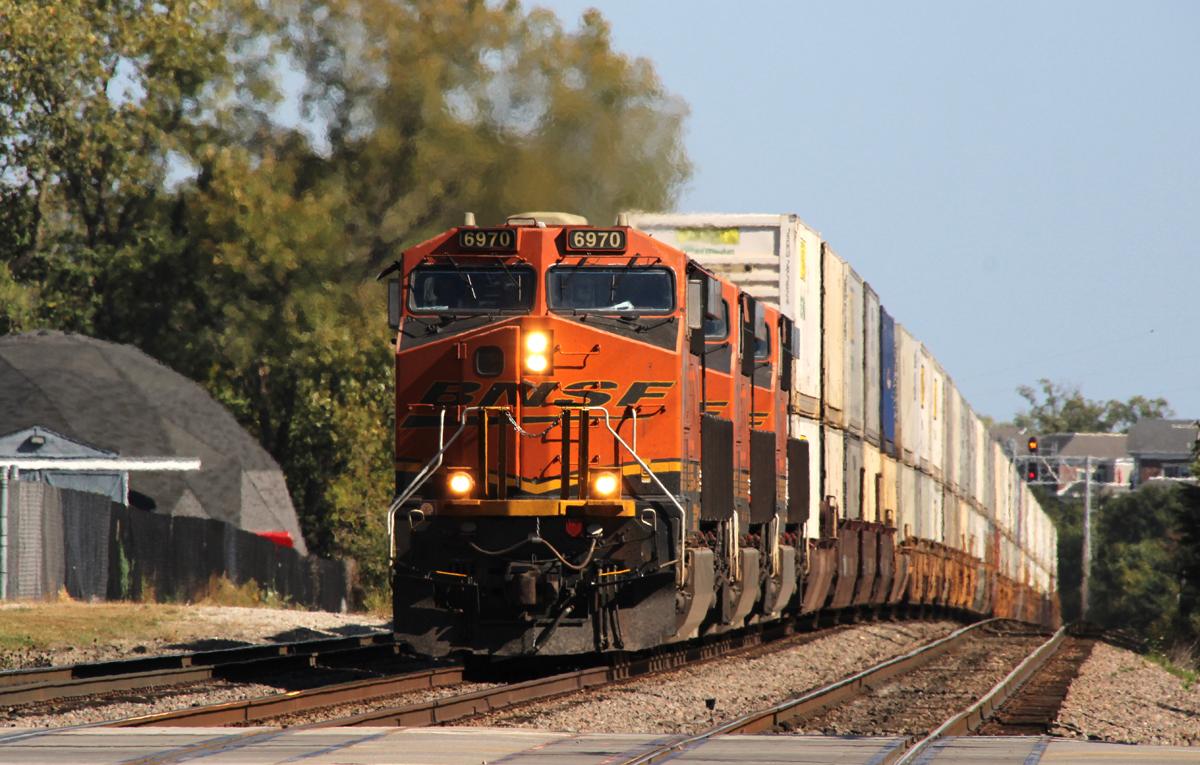
OMAHA, Neb. — BNSF Railway needs to close the operating-ratio gap with the other Class I railroads, new Berkshire Hathaway CEO Greg Abel said on Saturday in his first annual letter to shareholders.
BNSF continues to perform well from a safety standpoint and has improved its efficiency and service, Abel wrote. “In 2025, shipments spent less time idling at terminals and moved through the network faster than in nearly any year in the company’s history,” Abel noted.
“These gains matter, but they are not enough; more progress is needed to translate operational improvements into stronger financial results,” Abel wrote. “We view operating margin (the inverse of the industry’s operating ratio) as the best measure of performance. In 2025, BNSF’s operating margin improved to 34.5% from 32.0% in 2024. It remained only modestly above its five-year average.”
|
| Editor's Note: For more than a century, the Hudson tunnels have carried the economic lifeblood of the Northeast beneath a river that never stops pressing against them. Their survival is a testament to the railroad workers who have inspected, repaired, and kept them operating long past the lifespan anyone originally imagined. The Gateway and Hudson Tunnel projects are not just infrastructure upgrades; they are long overdue investments in the backbone of American passenger rail. Modern tunnels and modern equipment matter, but the reliability riders depend on will still rest on the skilled workers who maintain and operate the system every day. If the country truly wants a 21st-century railroad, it must remember that world-class infrastructure and a respected rail workforce have always gone hand in hand. | |
|
Regional Plan Association
The Hudson Tunnel Project will build a new, 21st-century rail tunnel under the Hudson River and rehabilitate the existing 114-year-old structure, bringing faster, more reliable and more frequent service to trans-Hudson riders. This infrastructure project – the linchpin of the broader Gateway Program – will better connect New York and New Jersey, as well as the entire Northeast Corridor. It is arguably the most important infrastructure project in the country, and it is finally underway.
Following the cancellation of Access to the Region’s Core in 2010, the Hudson Tunnel Project emerged in 2011 as part of the larger Gateway Program – a series of 11 rail projects that will modernize and refurbish the 10-mile stretch of the Northeast Corridor between Newark Penn Station and New York Penn Station. After largely sitting dormant during the Trump administration, the Hudson Tunnel Project has taken flight in the past four years. Following the formation of the Gateway Development Commission (GDC), the bistate project sponsor has secured unprecedented levels of federal investment and brought the project from concept to reality, with shovels now in the ground on both sides of the river and a Full Funding Grant Agreement only weeks away.
| |
| Editor's Note: Caltrain’s electrification is a reminder that the strongest rail systems are often built by improving what already works. Replacing diesel with electric power did more than speed up trains. It delivered cleaner air, better service, and a railroad people actually want to ride. None of that happens by accident. It happens because skilled rail workers build, maintain, and operate the system behind the headlines. When investment meets experience, railroads deliver results. | |
|
VegOut Magazine
Caltrain's $2.4 billion electrification boosted ridership 60 percent, cut travel times by 23 minutes, and slashed carcinogenic black carbon exposure by 89 percent — proving that upgrading existing rail beats building from scratch. Weekend ridership more than doubled. Travel times between San Francisco and San Jose dropped by up to 23 minutes. And the secret wasn't some flashy new high-speed rail project or a Silicon Valley moonshot. It was swapping out diesel trains for electric ones on existing track.
The numbers tell a story that transit advocates have been trying to articulate for decades: you don't always need to build new infrastructure from scratch. Sometimes you just need to make what you already have actually good.
| |
| Editor’s Notes: When rail investment begins to move, communities across the country begin to move with it. Grants that repair track, strengthen short lines, and expand passenger service do more than fund projects; they sustain the rail workers whose labor keeps towns connected and commerce alive. For too long, vital rail improvements have waited in bureaucratic limbo while the need on the ground only grew more urgent. Accelerating these investments is not simply good policy, it is recognition that the nation still depends on the railroads and the workers who run them. When the rails are strengthened, the entire republic moves forward. | |
|
Sean Jeans-Gail, Rail Passenger Association
Media reports indicate that the U.S. Department of Transportation is launching a new initiative to accelerate the delivery of rail grants authorized by the 2021 Infrastructure Investment and Jobs Act (IIJA), delivering funding for projects ahead of November’s midterms.
According to Bloomberg Government, the USDOT initiative centers around a plan to award two years’ worth of Consolidated Rail Infrastructure and Safety Improvements (CRISI) Program projects by September 2026. Fast‑tracking the awards could benefit hundreds of short‑line railroads — and the communities they serve — through upgrades to freight rail infrastructure. Bloomberg Government reports that sources close to the department believe this could lead to a wave of groundbreaking opportunities for GOP incumbents, as the Trump Administration looks for ways to help candidates highlight economic bright spots in a faltering economy.
However, it’s not just short line freight railroads that may stand to benefit. The FRA still has billions in IIJA funds to distribute across several rail programs — including over $4 billion in funds from the Federal-State Partnership (FSP) for Intercity Passenger Rail Program. The Federal Railroad Administration (FRA) solicited applications for the FSP – National Network Program in late 2025; it would be welcome news if these funds were targeted for accelerated development, as well.
| |
| Editor's Note: Every generation rediscovers the same lesson.. when a nation invests in rail and public transportation, it is really investing in its people. The value created is not just measured in dollars, but in the workers employed, the communities connected, and the mobility that binds an economy together. Railroads built the American industrial age, and they remain one of the surest engines of shared prosperity when the country chooses to support them. The returns described in these studies should surprise no one who understands the history of rail in this country. When public investment meets the labor and skill of the transportation workforce, the result is growth that reaches far beyond the rails themselves. | |
|
Trains Magazine
A new independent economic study assessing the American Public Transportation Association’s recommendations for public transportation funding estimates that every $1 billion in such funding generates $5 billion in long-term economic value.
This week’s report, Economic Impact of Public Transportation Investment, also says the funding supports tens of thousands of jobs nationwide.
In February, APTA called for $138 billion for public transit and $130 billion for passenger rail in its recommendations for the new surface transportation authorization due from Congress this year. The new report, prepared for APTA by consulting firm EBP, that funding would lead to an additional $140 billion in annual impacts for the U.S. economic, through job creation, increased tax revenue, improved access to jobs and healthcare, reduced congestion, and lower household transportation costs.
| |
| Editor's Note: Rail investment is never just about steel and concrete. It is about the people who build the track, operate the trains, and protect the communities those trains move through every day. When a state commits resources to grade separations, safer crossings, and stronger freight connections, it is acknowledging a truth railroad workers have long understood.. a strong railroad system strengthens the entire economy. Public investment lays the foundation, but it is the labor of railroad workers that turns those dollars into safety and mobility. The future of rail will always depend on the workers who keep it moving. | |
| |
The New Mexico Department of Transportation (NMDOT) plans to invest $283.1 million in freight- and passenger-rail service over the next four years, according to its recently finalized 2026 State Rail Plan.
The plan outlines the priority rail projects through 2030 that will improve grade crossing safety, reduce motor vehicle congestion and improve freight efficiency, NMDOT officials last week in a press release.
Of the $283.1 million, NMDOT intends to invest $113.9 million in passenger-rail service projects; $165.2 million in safety improvement projects; and $4 million in freight-rail improvement projects. The plan prioritizes grade separations and freight connectivity projects that align with federal grant funding criteria, said NMDOT officials.
| | NEWS FROM AROUND THE LABOR MOVEMENT | | Each week, RWU includes a few articles about advances and developments in the larger labor movement that are of interest to railroad workers. Got an artcile to submit for possible inclusion next week? Email it along to raillabornews@gmail.com. Thank you! | |
Labor Notes
What's the secret to winning a strong contract? Hint: You won't find it at the negotiations table!
Save the date for a two-part workshop from 7.30 p.m. to 9 p.m. Eastern on Tuesdays, April 14 & 21 on how to build a successful contract campaign and harness the power of the rank-and-file membership to win the strongest possible contract. We will cover the basics of building a Contract Action Team (CAT), putting together an escalating campaign (potentially culminating in a strike), and dynamics between the bargaining committee, CAT, and the membership.
| |
Portside
INTERNATIONAL Women’s Day and the TUC Women’s Conference are opportunities for women in the labour movement to come together and discuss the challenges ahead for working-class women.
Women make up the majority of the public service workforce, yet we bear the brunt of unsafe staffing levels, low pay, discrimination and impossible workloads.
The average pay disparity between men and women is a massive 12.8 per cent. In education and for the health and social care sector, where women outnumber men, the gender pay gap is 17 per cent and 12.8 per cent.
| | |
Labor Notes
A corporate artificial intelligence frenzy is sowing fear for workers on a massive scale. Seventy-one percent of people in the U.S., according to a Reuters poll on A.I., are concerned “too many people will lose jobs.”
Wall Street and Big Tech are running a huge hype machine to back up their massive, risky investment in A.I., pledging it will drive a “productivity surge,” meaning fewer workers and more profits.
But workers can take heart that, so far, it’s mostly hot air. To date, A.I. is making few profits. It can be helpful at a few tasks—rough drafts of computer code, summaries of reams of data—but is rarely the equal of human talent otherwise.Report says each $1 billion in public transportation spending returns $5 billion in benefits
Nonetheless, investors are on track to pour more than $5 trillion worldwide into A.I. over the next five years. To make good on that cash outlay, expect CEOs to sell A.I. as the salve for everything from logistics to loneliness.
| | WEEKLY DERAILMENT DEPARTMENT | | Each Tuesday in this news bulletin, RWU does our best to present a picture of what has been happening over the course of the previous week in terms of derailments in North America, and investigation determinations of previous accidents. NOTE: This list is by no means comprehensive. Smaller and less consequential mishaps are generally not reported here. If the wreck results in injury or fatality, or is especially damaging/extreme, a full article will appear as a feature in the dozen or so rail articles above. Know of a train wreck? Please feel free to forward a link to raillabornews@gmail.com for possible inclusion next week. Thanks! |
| | | |