25 Years and Still Standing

As we enter our 25th year, we want to celebrate the exciting collaborations we've had
with amazing artists of the image, word and artisan bindings.
Both literature and photography can be viewed in isolation, but put together, they form a different, unique art form. - Marijana Mavić, ArtDoc Photography Magazine

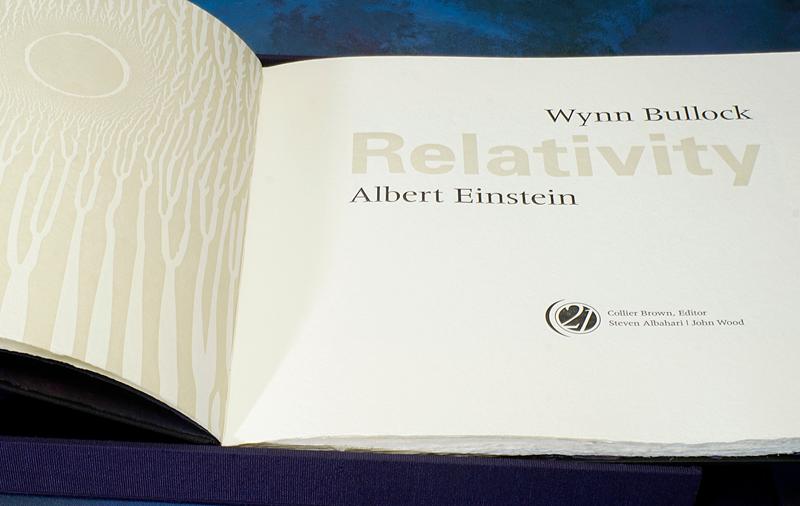
Relativity
(Available only as part of the 21st Collection) 

Photographer - Wynn Bullock

Text - Albert Einstein
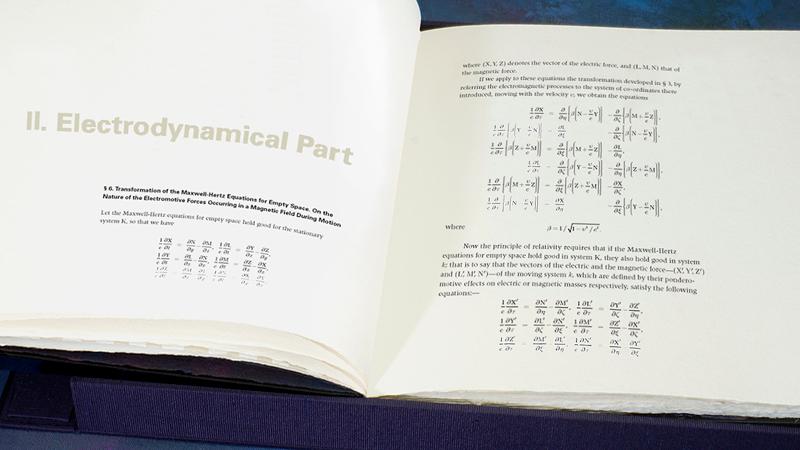
1905 paper On the Electrodynamics of Moving Bodies
(more commonly known as the special theory of relativity.)

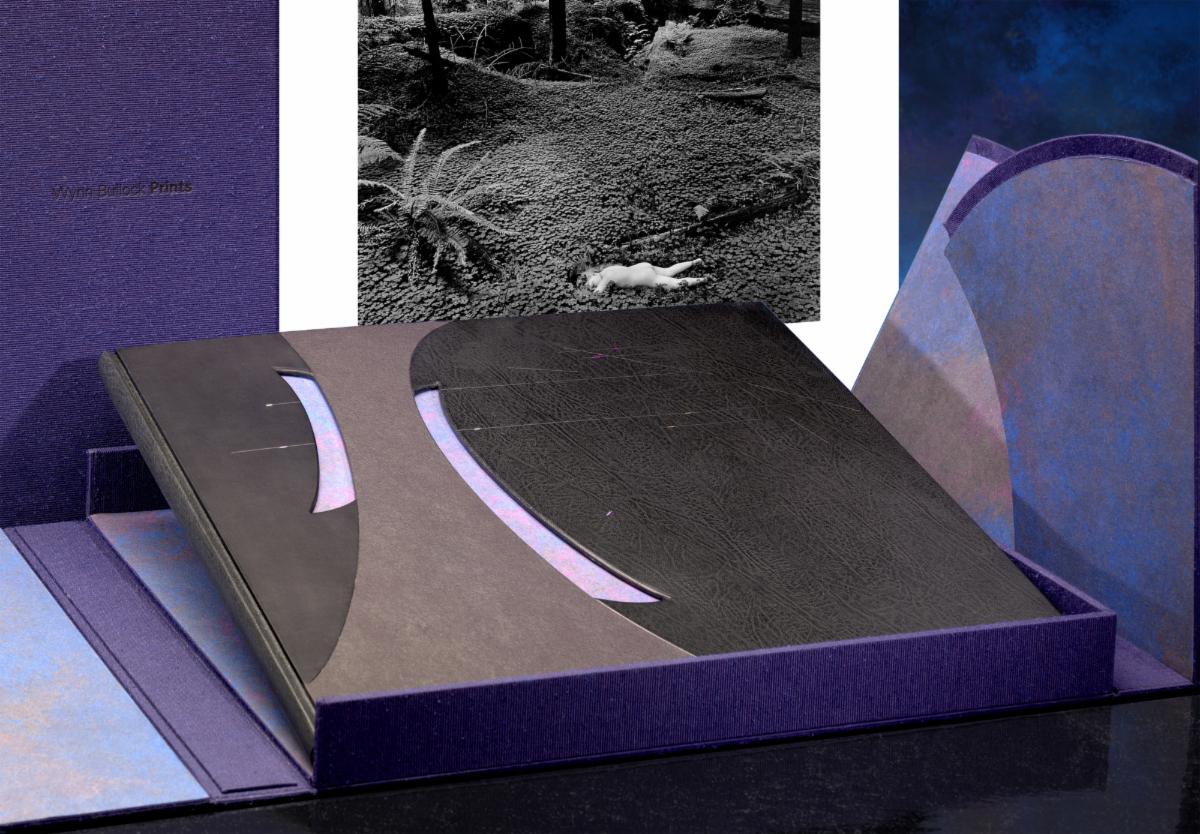
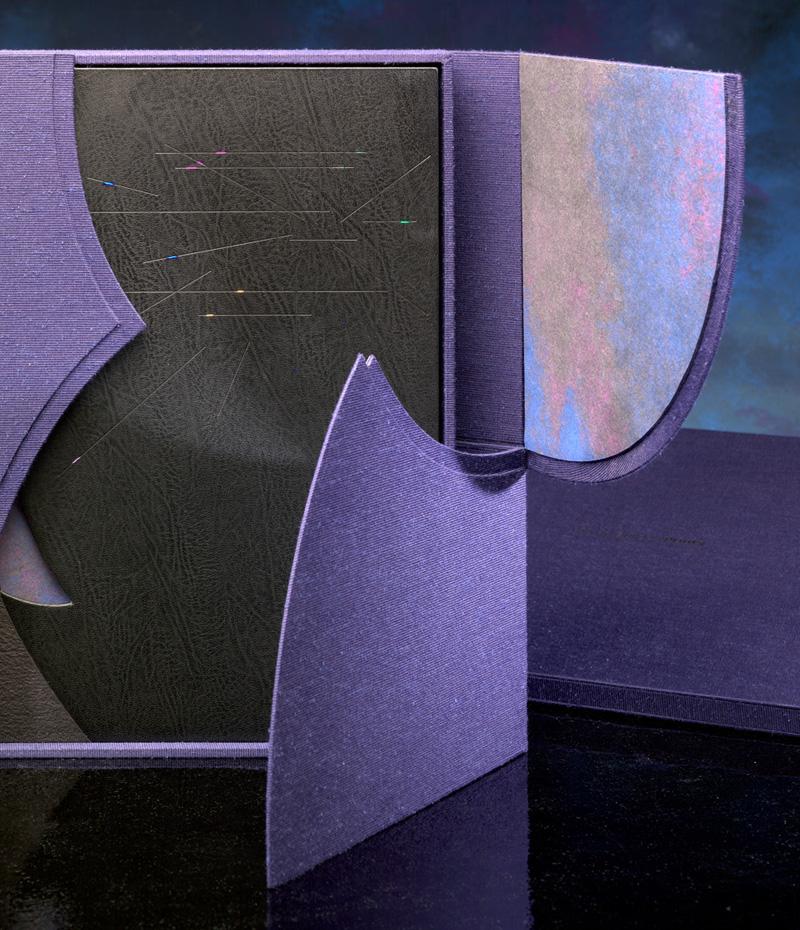
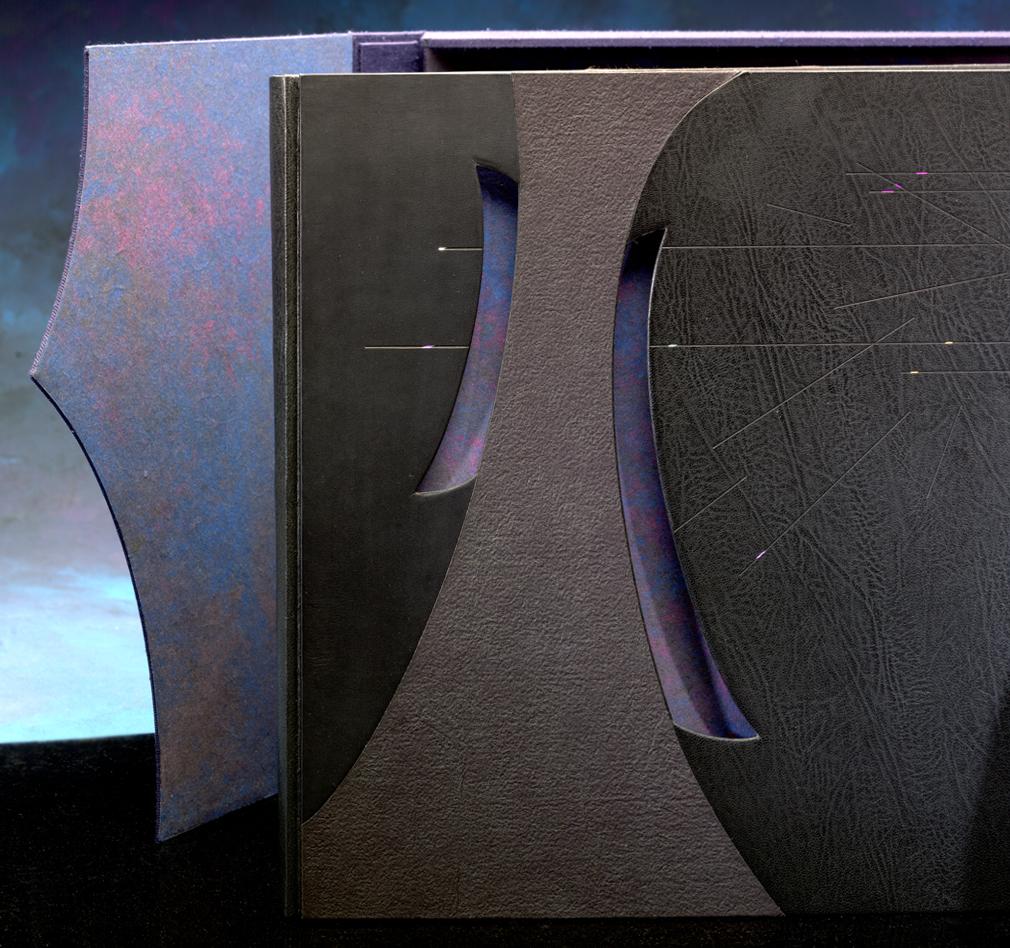
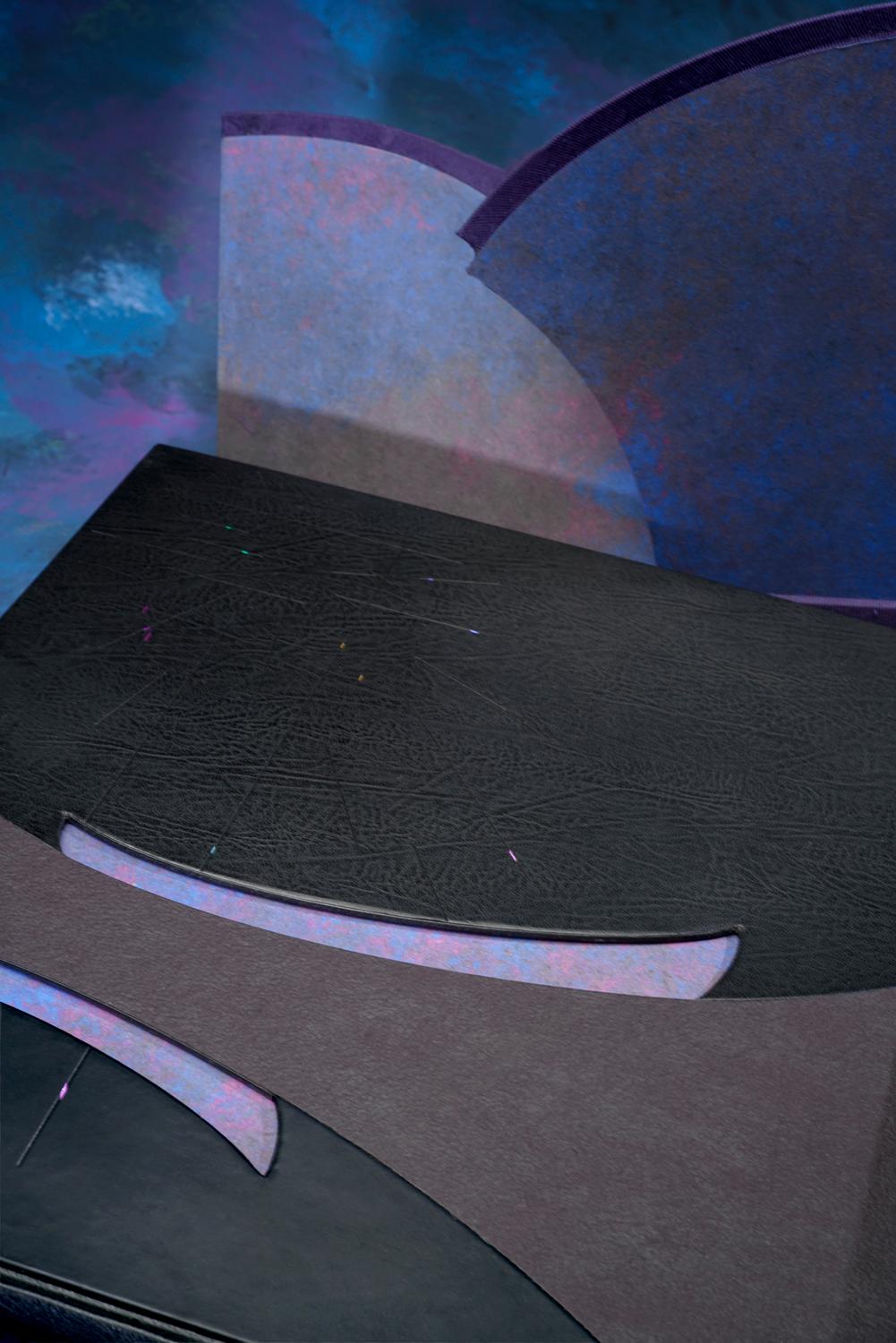
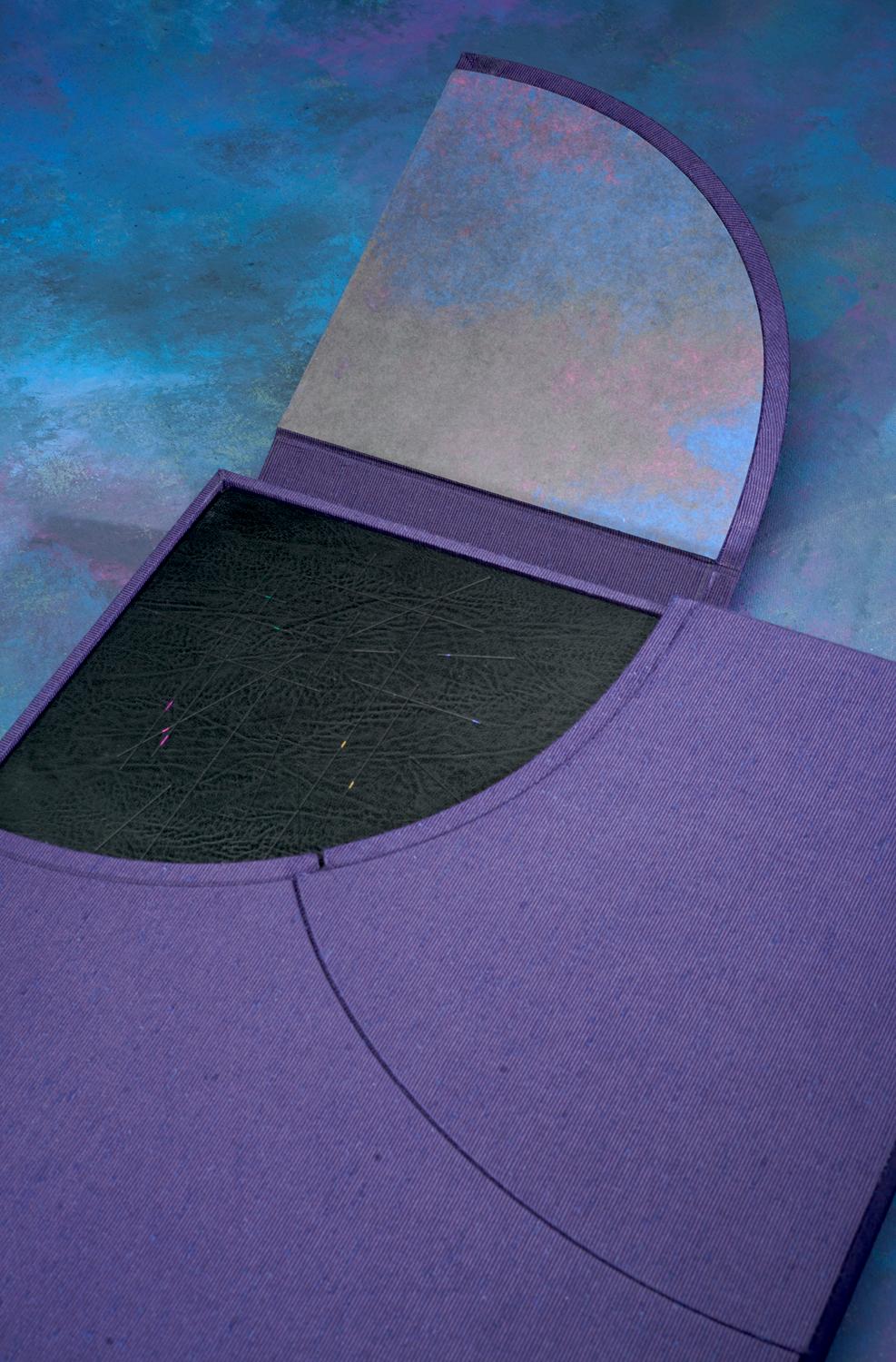
Binding - Peter Geraty

What do artistic and scientific experience have in common? Where the world ceases to be the scene of personal hopes, wishes, wants, where we face it as free creatures, admiring, questioning, beholding, there we enter the realm of art and science. We do science when we reconstruct in the language of logic what we
have seen and experienced; but when we communicate through forms whose connections are not accessible to the conscious mind, yet we intuitively recognize them as something meaningful—then we are doing art. Common to both is the loving devotion, the being above the personal, removed from our will.

Albert Einstein: The Common Element in Artistic and Scientific Experience Document 51, Volume 7 [1921a] First published in: Menschen. Zeitschrift neuer Kunst 4 (1921): 19


In this book, 21ST Editions presents two great twentieth century thinkers, one a scientist, one an artist, but both on the same quest to perceive reality beyond the limitations of the senses. Albert Einstein, who imagined the universe in terms of falling elevators and trains traveling at the speed of light, gave us a picture of the cosmos far stranger than fiction. Wynn Bullock, in turn, adopted Einstein as a personal muse. He made it his mission to expose, as it were, false distinctions between space and time. Behind both men’s work lies a kindred imagination, and as Brett Abbott puts it, a 'revelation' may never fully come to terms with.

-Introduction of Relativity by Collier Brown-
A note on the type: Albert Einstein, whose theories of relativity define and shape modern physics, unquestionably inspired Wynn Bullock. One could argue that Adrian Frutiger helped to define and shape modern type design—a careful balance of negative space, proportion and form—and that he was as influential as Wynn Bullock and Albert Einstein in their respective fields. Adrian Frutiger (1928-2015) designed an extraordinary number of typefaces and considered Méridien, used for the text in this edition, to be his best. Univers, used for the titling, “is one of the greatest typographic achievements of the second half of the 20th century.” Bruno Steinert (former Managing Director at Linotype) describes Frutiger’s complete works and overall effect on the industry as epochal. “Through his typefaces, Adrian Frutiger is omnipresent – even in the farthest reaches of our planet...” (www.linotype.com)
We commissioned Andrea Peterson of Hook Pottery Paper to create custom handmade paper for this project. This paper was used as pastedowns in the unique closing box as well as the flyleaves in the book. Watch a video of her making this paper here.

For more information about the full 63 title 21st Collection, please call Steve at
508-398-3000, or 508-450-2326.

VISIT US ON