December 11, 2020
Top stories
Throughout 2020, journalists across the country have shared their best practices for working through the pandemic. As we approach 2021, we’re asking what they learned this year and what they hope to learn in the year to come. 

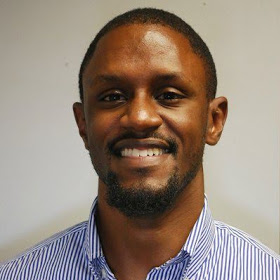
Current job: Freelance reporter and academic adviser at Florida State University

What are the main lessons you learned this year from your reporting that you’ll use next year?

Wright: American individualism is framed as one of the beautiful parts of this country, but it's also an aspect of our culture that impinges upon our progress out of this pandemic. That's a helpful way to frame much of the local, state, and federal issues we see as institutions try to deal with the fallout from rising cases. Ideally, the country would work together, but doing so is almost impossible as decentralized as it is. That bleeds over into everything we report on in ways I would have never considered before. Local control of education is something parents and teachers extol in this country, for example, but the same dynamic of local control means cases are increasing in places that effectively have washed their hands (if you will) of the pandemic. The human cost of that is staggering.

How did your work change during the pandemic?

Wright: I'm not sure the work did, but the methods did. I'm blessed to be able to do the bulk of my work without putting myself in danger, but it requires even more planning than it would in ordinary times. Reporters have to be even more sensitive these days reporting on or around the pandemic, and I try to keep in mind that folks may have already lost family or friends or colleagues to the virus and can't even grieve properly. There are others who are immunocompromised or live with people that are high risk, and they are coming up on a year or so of trying to give themselves and those around them a shot at surviving a confounding pandemic. That helps color their responses, and it requires special care from reporters who have to establish trust.

What do you hope to learn or cover in the coming year?

Wright: College athletics is an interest of mine, and there are a wealth of stories that should come not only from participation in sport during the pandemic, but there are long-term impacts of doing so on physical/mental health. I'm also interested in programs meant to help buoy businesses during this time, and I'd love to look into what businesses are even thriving during this perilous time.

How are you taking care of yourself now that you weren’t at the beginning of the pandemic?

Wright: I am pretty regimented, and the pandemic made me realize I really took resting for granted. With so much closed and so much more unsafe to attend, I have had to fight to keep some sense of normalcy in ways I absolutely did not this time last year since everything was baked into my schedule. The pandemic has magnified exercising, sleeping regular hours, taking time for leisure, and more. I would also suggest decompressing from social media if need be — I have been doing so when the situation warrants. It's difficult trying to be responsible just to see others being reckless, where that be your friends or your local/state government. Please do not wear yourself scrolling social media to where you develop this general malaise.
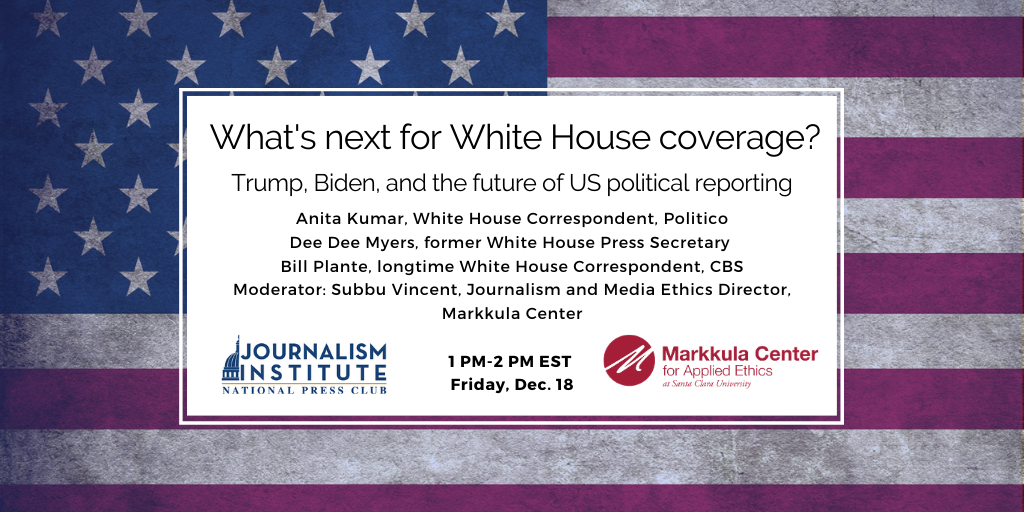
As president-elect Joe Biden prepares to lead a deeply divided country, what’s next for White House coverage? What can past coverage and recent experiences teach us about envisioning a better future for how journalists cover the president, and how Americans understand the United States?

Register now for this program, a partnership between the National Press Club Journalism Institute and the Markkula Center for Applied Ethics at Santa Clara University, which will address these topics.

Date: Friday, December 18, 2020
Time: 1 p.m. – 2 p.m. EST / 1 a.m. – 11 a.m. PST

Joining us with lessons from their firsthand experiences with the White House press corps are current Politico White House Correspondent Anita Kumar, former White House Press Secretary Dee Dee Myers, and longtime CBS White House Correspondent Bill Plante. The program will be moderated by Subbu Vincent, director of Journalism and Media Ethics at the Markkula Center for Applied Ethics.
Advice from Jill Geisler, Bill Plante Chair in Leadership & Media Integrity, Loyola University Chicago, Freedom Forum Fellow in Women’s Leadership

It’s important to acknowledge that 2020 has been a rough year — with so many difficulties and tragedies — because doing so establishes the place from which we look ahead with hope. People appreciate leaders who recognize their stresses and sacrifices, tell them where they stand on a tough journey and then describe the brighter destination.

Now is the time to determine what was gained and what was lost, to help you set goals and strategies for the year ahead. Ask yourself:

  • Are meetings as effective as they should be, or do they need to be reimagined?
  • Are people feeling less connected than in 2019?
  • Do our newest hires feel they’re truly part of the team?
  • How well are we communicating?
  • Should we rethink how work is distributed and where we expect it to be done?
  • Is this a good time to review our lines of report?
  • Are people getting sufficient feedback on a systematic basis, or has that fallen by the wayside?
  • Do we have an effective system for assessing employee engagement and the health of our culture?
  • Are we demonstrating our commitment to diversity by tracking our hiring, promotions and retention?
  • Do our job descriptions need to be updated, especially if we learned to use new tools or technology in 2020 and want new employees to have those skills as well?
  • If we haven’t already, should we change our work-from-home policies?

Chances are you know the answers to some of those questions, but not all. The year 2020 has been one of survival, trial and error, and adaptation. It’s hard to do a self-study in the midst of all that. It can be tempting to remember the mistakes rather than the successes, to focus on anecdotes instead of trends. That’s why it’s so important to step back and assess now.

For tips on setting the stage for progress and turning resolutions into action, read Jill’s whole column, “New Year's resolutions for leaders as they get ready to leave a challenging year behind,” excerpted here with permission from the Healthcare Financial Management Association.
How a veteran political reporter approaches self-care
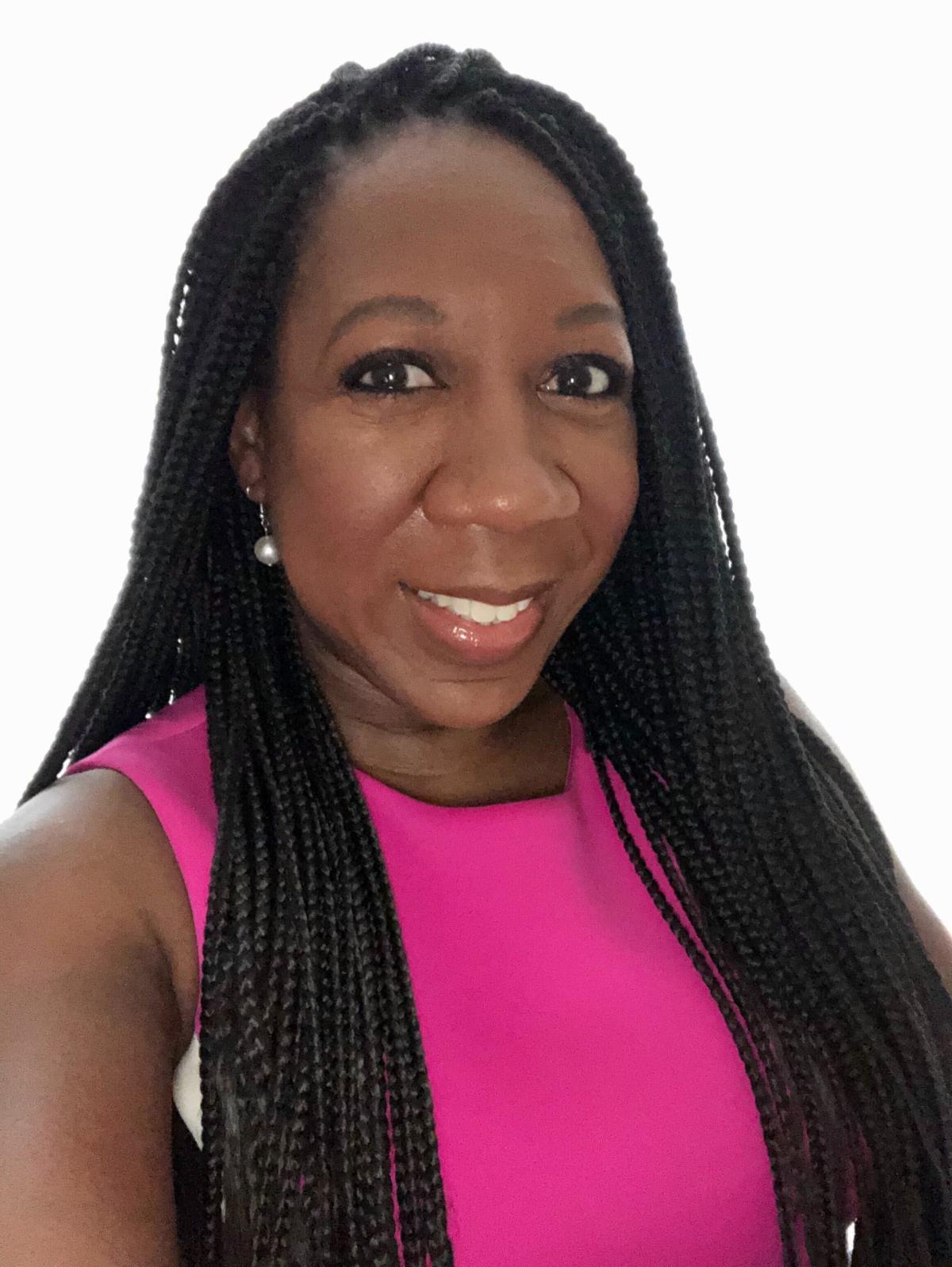
Tia Mitchell, the Atlanta Journal-Constitution’s Washington correspondent, shared how she’s taking care of herself during the pandemic:

“I’m a bit worried about how I will adapt during the colder months. But I have enjoyed long walks along Rock Creek, Sligo Creek, and the Northwest Branch of the Anacostia River. I like discovering which restaurants have the right combination of flavorful food and socially distanced outdoor seating. I have decorated my apartment and explored my new neighborhood. I’m glad that in any season I can indulge in long bubble baths with candles and R&B music.”

Read about how Mitchell is approaching her coverage of the Georgia Senate runoff, and share how you are taking care of yourself - we’d love to publish your responses.  

This newsletter is written & edited by the National Press Club Journalism Institute staff: Beth Francesco, Holly Butcher Grant, and Julie Moos. Send us your questions and suggestions for topics to cover.

Get this from a friend? Subscribe, and view the archives.