|
Reflection from Mary of Magdala
May 19, 2026
Tom Moos, Chair Social Justice Ministry
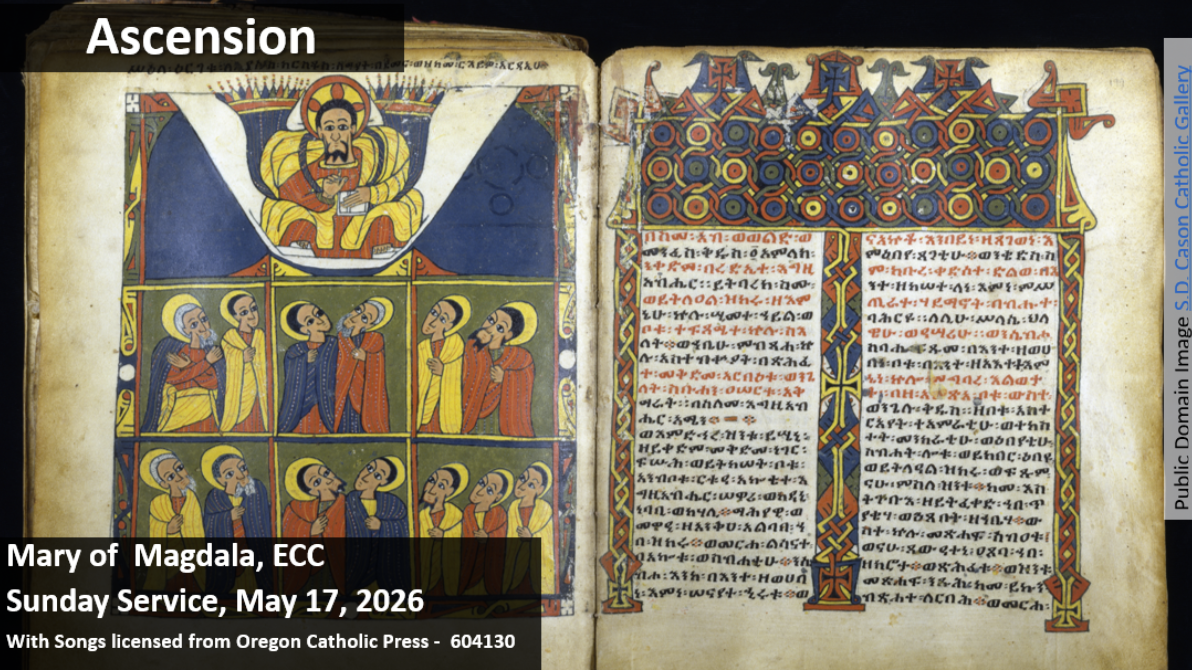
The Ascension: A Call to Action
On Sunday we celebrated the Ascension. For the disciples, the Ascension must have created a profound gap in their experience of God’s direct presence, particularly in Jesus’s physical ministry of healing the sick, feeding the hungry, and standing alongside the marginalized.
Yet this absence was never intended to leave the vulnerable abandoned. Instead, the Ascension becomes the moment when responsibility is transferred to the Church.
Before ascending, Jesus instructed his disciples to be his witnesses “to the ends of the earth”. This calling extends beyond proclaiming his message. The call also mandates action. Jesus consistently demonstrated that the kingdom of God is revealed through justice, compassion, and solidarity with the poor and oppressed. His departure creates a space the Church is called to fill by becoming his eyes, hands and feet in a broken world.
This has deep social justice implications.
The Church cannot focus exclusively on matters of heaven or the Spirit while systems of inequality oppress the vulnerable. The Church must carry out the work of overturning tables of exploitation, defending the excluded, and restoring dignity to the forgotten. The Ascension challenges believers to confront injustice through advocacy, service, and structural change.
Today, some of the poor, marginalized, and oppressed may look different than in the time of Jesus, but their struggles remain strikingly similar. The poor are those who lack access to housing, healthcare, or education as well as those trapped in cycles of poverty and hunger.
The marginalized include members of the LGBTQ+ community, people with disabilities, racial and ethnic minorities as well as immigrants and refugees. The oppressed are those suffering from systemic racism, economic inequality, human trafficking as well as those hurt by discrimination and violence.
While the forms of oppression have evolved, the realities of exclusion and suffering remain. Today, oppression can be hidden within institutions, policies, and systems that deny people the opportunity to thrive.
To reflect on the Ascension is to recognize both Christ’s exaltation and the Church’s obligation. The gap his departure created is intentionally filled by a Spirit-empowered community committed to justice, mercy, and the transformation of society in anticipation of God’s coming reign.
Amen,
Tom
|