| | Over 20 Years of Middle Market Investing | | | | |
IRONWOOD'S TEXTILE RECYCLING PERSPECTIVE:
Fashion’s Dirty Little Secret and How We Can Clean It Up
| | |
In this post, we will discuss Ironwood’s perspective on textile recycling and the strategies implemented to address the escalating problem of textile waste in landfills. The proliferation of fast fashion, compounded by inadequate recycling infrastructure in the U.S. and shifting consumer behaviors, has resulted in an unsustainable volume of textile disposal. However, a coalition of organizations, governments, and private enterprises has been making strides in recent years with solutions to foster a sustainable future for the textile industry.
Ironwood’s portfolio company, Mid-West Textile, is doing its part in positively impacting the textile recycling space. This vertically integrated textile recycling operation reduces post-consumer waste by efficiently collecting, sorting, and grading donated textiles before selling them through its existing U.S. thrift retail network, domestic wholesale division, and numerous international markets.
| |
The Textile Waste Crisis Explained
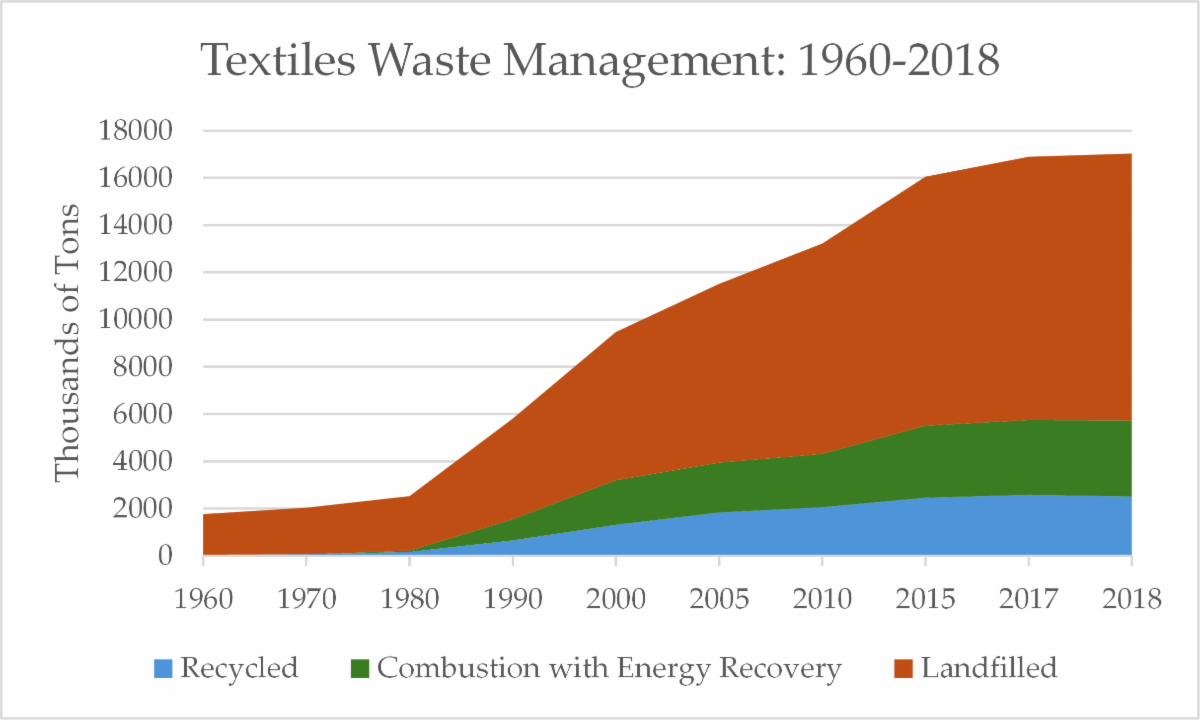
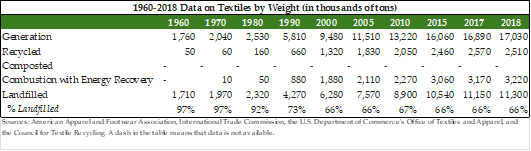
The amount of textile waste generation has grown substantially since the 1960s. While efforts have been made to increase textile recycling capabilities, the amount going to landfills remains a significant concern. In 2018 alone, Americans generated 17 million tons of textile waste, with a mere 15% recycled.1
| | |
As shown below, this contributed to 66% of generated textiles being landfilled in 2018. Additionally, these landfilled textiles constituted 5.8% of total municipal solid waste.
Furthermore, the volume of discarded clothing has more than doubled over the last two decades and is on track to triple without immediate intervention.2 As shown on the right, the amount of textiles produced and the quantity that ends up in landfills has skyrocketed since 1960.
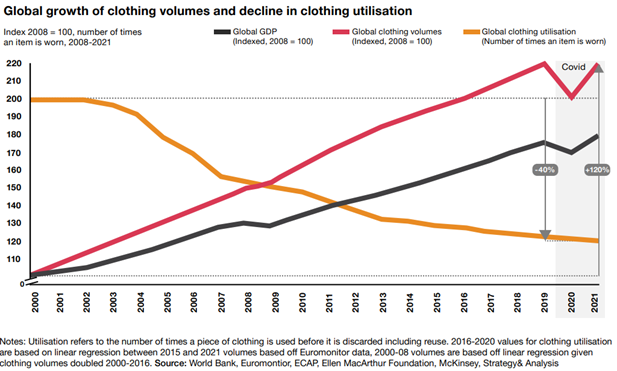
| | | Fast fashion remains a principal driver of the issue, with the relentless demand for inexpensive, trend-driven clothing leading to the production of lower-quality garments with shortened lifespans. Tasha Lewis of Cornell University highlights that many retailers now release 11 to 15 collections annually, a dramatic increase from the traditional four seasonal collections.2 This accelerated cycle has significantly reduced the frequency with which garments are worn—a metric that has decreased by 36% over the past 15 years.3 As seen below, clothing sales outpaced world GDP growth between 2000 and 2021. Concurrently, clothing utilization, measured by the number of times an item is worn, has dropped significantly.4 | The environmental consequences of textile waste extend well beyond landfill overflow. During decomposition, textiles release greenhouse gases such as methane and leach harmful chemicals into surrounding ecosystems. Additionally, textile production is resource-intensive, requiring 2,700 liters of water for a single cotton shirt and contributing to 10% of global emissions and 20% of global water pollution.4,5 | | |
Efforts to Address Textile Waste
Encouragingly, a comprehensive and multi-faceted approach is gaining momentum to combat this crisis. These efforts span government policy, technological innovation, and consumer engagement.
-
Government Policies and Initiatives
California has emerged as a leader in the U.S. with the passage of the Responsible Textile Recovery Act of 2024 (Senate Bill 707).6 This pioneering legislation mandates that textile producers establish reuse, repair, and recycling programs. By 2028, the act requires the implementation of collection stations for post-consumer textiles, potentially diverting millions of tons from landfills.7 At the federal level, near-term intervention seems unlikely, given the ongoing thinning of government programs and pushback on green initiatives.
Los Angeles has also piloted textile recycling programs to upcycle discarded materials into new products. The city's initiative aims to create a centralized sorting hub and foster partnerships with brands committed to sustainable fibers and yarns.8 These efforts represent a broader movement among municipalities to address the growing waste stream through localized action.
-
Corporate and Nonprofit Initiatives
Leading organizations and nonprofits are stepping up to drive change. In collaboration with Reju and Waste Management, Goodwill has launched a multi-year initiative to establish a circular textile ecosystem. This program focuses on collecting, sorting, and grading textiles, with some materials being regenerated into new products using Reju's advanced recycling technology. Reju's demonstration plant in Frankfurt, Germany is set to produce Reju Polyester, boasting a 50% lower carbon footprint than virgin polyester.9
Canadian company Debrand has expanded its operations with a new U.S. textile sorting facility in Ohio, leveraging automated and AI-enabled sorting equipment to sort and grade used textiles. Partnering with major brands such as Abercrombie & Fitch and Lululemon, Debrand's efforts include resale, donation, and recycling solutions that minimize the environmental impact of unsellable goods.10
Thrift stores and online secondhand platforms are also integral to the solution. Goodwill alone diverted 4.3 billion pounds of material in 2023, with its extensive network reaching 82% of the U.S. population (Resource Recycling). Meanwhile, online platforms like ThredUp, which experienced an 18% growth in 2023, are revolutionizing accessibility to secondhand shopping. Additionally, Mid-West Textile diverted over 40 million pounds of material in 2024 and has built out a robust collection operation across multiple different states with a focus on attended donation centers and at-home collections, working closely with the charitable organization Meals on Wheels. The global secondhand market is projected to exceed $350 billion by 2028.10
-
Innovative Recycling Technologies
Recycling textiles composed of complex blends of synthetic and natural fibers can pose significant technical challenges. However, innovative technologies are emerging to enhance the recovery of natural and valuable fibers, reduce waste, and promote a circular economy in the textile waste industry. Listed below are detailed descriptions of recycling methods.
Mechanical Recycling: Produces low-quality byproducts typically used for insulation, padding, or nonwoven products.
Application: Fibers from this process often result in low-quality products, making them unsuitable for high-quality textiles. These distressed fibers are primarily utilized in nonwoven fabrics and insulation.
Solvent Dissolution and Depolymerization: These processes formulate solvents to dissolve polymer fibers from mixed textile waste.
Output: These methods are particularly effective for polyester, poly-cotton, and nylon blends of cloth.
Solvent dissolution yields pure cotton and polyester fibers, which can be reintroduced into the manufacturing cycle. Additionally, depolymerization produces both polyester and nylon.
Pulping: Like paper recycling, pulping breaks cellulose-based textiles into a pulp.
Output: This pulp can be used to produce manmade cellulosic fibers like viscose, which serves as an alternative to synthetic textiles.
Worn Again Technologies, a leader in solvent dissolution, plans to launch its first commercial facility in Europe by 2027.11 These advancements mark a pivotal step toward scalable and economically viable textile recycling.
| |
Consumer Engagement
Consumer behavior is another critical lever for change. The growing popularity of secondhand shopping, supported by platforms like ThredUp and Depop, fosters a sustainable fashion culture. According to ThredUp's 2024 Resale Report, the global secondhand market grew by 18% in 2023 to $197 billion and is anticipated to exceed $350 billion by 2028, mainly driven by Gen Z and Millennials, who prioritize sustainability.13 Mid-West Textile seeing this change in consumer behavior firsthand, as they currently operate five Thrift Town storefronts across Texas and New Mexico.
Brands embracing circularity resonate with environmentally conscious consumers, particularly in the clothing, shoes, and accessories segment, including designer, vintage, and everyday apparel.12 Patagonia's Worn Wear program, for instance, allows customers to trade in and purchase pre-owned Patagonia items. At the same time, Ecoalf produces apparel from recycled materials such as fishing nets and plastic bottles. These initiatives reduce waste and set a precedent for industry-wide adoption of sustainable practices.4 Moreover, secondhand fashion attracts budget-conscious consumers seeking quality apparel at lower prices, reinforcing the adoption of circular fashion.
Social media has amplified these efforts, with influencers popularizing thrift hauls and upcycling projects. The hashtag #thrifted has generated millions of posts, creating a vibrant online community centered on eco-conscious consumption.10
| |
Investment and M&A Activity
Given the trends and industry dynamics discussed above, investments in textile recycling are rising from strategic and private equity (“PE”) investors. On the recycling and grading side, Debrand received a strategic investor from Waste Management in 2022 to support the development of new textile recycling capabilities for its customers and provide circular solutions across North America. Additionally, the firm Greybull Stewardship has been an active investor within the textile recycling space, making investments in the Clothes Bin (textile recycling franchisor) in 2021 and Reclaimed Textiles (textile recycling and repurchasing conglomerate) in 2023, which recently acquired United-Southern Waste Material Company in 2025.
Additionally, private equity firms have begun spending more time looking at opportunities to invest in for-profit thrift store chains, given consumers' growing demand for used clothing. The largest North American for-profit thrift retailer, Savers, has traded hands with multiple private equity firms, most recently with Ares Management, before completing an IPO in 2023. Additionally, both America's Thrift (backed by TZP Group) and Brightmore Brands (backed by Beach Point Capital Management) are PE-backed platforms. The growth of PE-backed platforms within thrift retail could lead to further consolidation within the industry. Most recently, in 2024, Brightmore Brands acquired Texas Thrift (a 17-location thrift chain in Texas), and Savers acquired 2 Peaches Group (a seven-location thrift chain in Georgia) to help grow their overall store footprint.
|
Challenges and the Path Forward
Despite promising developments, considerable challenges persist. Less than 1% of global textiles are recycled into new fibers, highlighting the nascent state of recycling infrastructure.13 Moreover, policy frameworks and financial incentives must be expanded to accelerate the adoption of advanced recycling technologies and encourage broader participation.
As the textile waste issue deepens, a concerted effort by governments, businesses, and consumers is imperative. By integrating circular economy principles, investing in cutting-edge technologies, and cultivating sustainable consumption habits, we can mitigate the environmental impact of textile waste. The path to a circular textile economy is arduous but achievable through innovation, collaboration, and sustained commitment.
Reducing landfill usage is a complex challenge and one that requires a multi-faced approach prioritizing circular textile usage, innovative recycling, and consumer participation. Brands can design for longevity using recycled textile materials and implement programs to encourage consumers to reuse and repurpose clothing. Additionally, advancing textile recycling technologies ensures that discarded fabric is integrated into the supply chain rather than contributing to waste. While we have seen promising progress over recent years, we are still in the early innings of solving this complex problem that will require a coordinated effort among the private and public sectors with consumers making mindful choices that support circular and sustainable systems.
|
Ironwood Environmental Services Investment Experience
Ironwood has been an active investor in environmental services for two decades, completing 18 transactions across three significant verticals: i) Traditional Collection & Disposal, ii) Recycling & Resource Recovery, and iii) Specialty Waste. Additionally, Ironwood has an active investment within the textile recycling space:
| | |
Mid-West Textile (Active): An El Paso, TX-based textile recycler, retailer, and grader that provides an array of clothing and housewares for international export, domestic wholesale, and thrift retail end-markets.
Mid-West reduces post-consumer waste by efficiently collecting, sorting, and grading donated textiles sold across multiple sales channels, including numerous international markets, domestic markets, and thrift retail channels. Leveraging decades of experience in the recycled textile markets, Mid-West's leadership team has developed a raw material supply chain, a proprietary and disciplined grading/sorting production strategy, and an active international export network that relies on Mid-West to provide them with graded and sorted clothing and housewares.
| | | We are excited about the opportunities we see in the environmental services industry and are actively evaluating investments aligned with this thesis. To learn more, please visit our website and reach out to one of our team members. | |
The information contained herein has been obtained from sources believed to be reliable, but the accuracy of such information cannot be guaranteed. Views expressed are as of the date provided. Ironwood is under no obligation to update this information or to advise on further developments relating to the investments discussed herein. References to a particular investment is not a recommendation to buy or sell such investments. The information contained in this document is prepared for general circulation and is circulated for general information only. Past performance is no guarantee of future results. Any investment contains risk including the risk of total loss. There is no assurance that the investment objectives will be achieved or successful. Please refer to the Firm’s Form ADV 2A Brochure for more information about the Firm, services and fees on file with the SEC, www.adviserinfo.sec.gov. Firm CRD #321642. You may also contact us at 860-409-2100 or visit our website for a complete list of investments at www.ironwoodcap.com. | | |
Works Cited
1 - Karidis, Arlene. “Textile Waste Hits Feds’ Radar and a Snapshot of A Gao Report on Textiles Recycling.” Waste360, www.waste360.com/textiles/textile-waste-hits-feds-radar-and-a-snapshot-of-a-gao-report-on-textiles-recycling.
2 - “The Environmental Crisis Caused by Textile Waste.” RoadRunner Modern Waste + Recycling, 8 Jan. 2021, www.roadrunnerwm.com/blog/textile-waste-environmental-crisis.
3 - Igini, Martina. “10 Concerning Fast Fashion Waste Statistics.” Earth.Org, Earth.Org, 30 May 2024, https://earth.org/statistics-about-fast-fashion-waste/.
4 - “The Trends and Trailblazers Creating a Circular Economy for Fashion.” Circular Economy in the Fashion Industry, The Ellen MacArthur Foundation, 22 June 2021, www.ellenmacarthurfoundation.org/articles/the-trends-and-trailblazers-creating-a-circular-economy-for-fashion.
5 - Bovee, Parker. “Textile Recycling: Emerging Ecosystem Pursuing Daunting Waste Challenges.” Cleantech Group, 19 Dec. 2024, www.cleantech.com/textile-recycling-emerging-ecosystem-pursuing-daunting-waste-challenges/.
6 - Hylton, Chelsea, and Danya Bacchus. “What California’s First-in-the-Nation Clothing Recycling Law Means for the State.” CBS News, CBS Interactive, 30 Dec. 2024, www.cbsnews.com/losangeles/news/california-clothing-recycling-law-explained-fashion-industry/.
7 - Garno, Danielle, Yuan, Vicky. “A Closer Look at California's Recently Passed Responsible Textile Recovery Act of 2024 .” Holland & Knight, 17 Oct. 2024, https://www.hklaw.com/en/insights/publications/2024/10/a-closer-look-at-californias-recently-passed-responsible#:~:text=Under the provisions of the,Conclusion
8 - Quinn, Megan. “Textile Recycling Efforts Pick up Steam in LA, New York and Beyond.” Waste Dive, 13 Nov. 2024, www.wastedive.com/news/textile-recycling-roundup-wm-goodwill-epr-california-new-york/732785/.
9 - “Goodwill® and RejuTM Announce Plans to Help Advance Textile Recycling in North America in Collaboration with WM®.” PR Newswire: Press Release Distribution, Targeting, Monitoring and Marketing, Cision PR Newswire, 29 Oct. 2024, www.prnewswire.com/news-releases/goodwill-and-reju-announce-plans-to-help-advance-textile-recycling-in-north-america-in-collaboration-with-wm-302290319.html.
10 - “ThredUp 2024 Resale Report.” ThredUp, https://www.thredup.com/resale/2024?srsltid=AfmBOooZFZrRt1iMKjUZn7s-xWEsjcGjavH9_obhwwSxNy6wHbvy3EQS
11 - Bovee, Parket “Textile Recycling: Emerging Ecosystem Pursuing Daunting Waste Challenges.” Cleantech Group, 19 Dec. 2024, https://www.cleantech.com/textile-recycling-emerging-ecosystem-pursuing-daunting-waste-challenges/
12 - Buchko, Matthew. “Used Goods Stores in the US.” IBISWorld, Dec. 2024.
| | | | |