Rail & Labor News from RWU
| |
Weekly Digest Number 52 - December 24, 2024 | |
Welcome to the RWU Rail & Labor News! This news bulletin is produced and emailed out each Tuesday morning. We hope you find each week's news and information useful. If so, please share with co-workers, friends, and colleagues. If you like, you can sign them up to get all the news from RWU HERE. Or forward them the link. Got a hot tip? Please forward the article and a link to raillabornews@gmail.com. Note: If you read over this news bulletin each week, you will be sure to never miss the important news of what is going on in the railroad world from a worker's perspective! | |
THIS WEEK'S RAIL AND LABOR NEWS | |
|
Editor's Note: The heartbreaking loss of engineer Clay Burt and conductor Phillip Araujo is felt deeply across the railroad community. These were not just workers—they were fathers, husbands, and colleagues whose dedication to their craft kept the wheels of commerce turning every day. Railroad Workers United stands with their families and coworkers, mourning the loss of two veteran rail workers whose lives were cut short in this devastating tragedy.
Their deaths serve as a sobering reminder of the risks rail workers face daily and the ongoing need to ensure the highest standards of safety across the industry. RWU remains committed to honoring their memory by continuing to advocate for a safer, more just workplace for all rail workers. Clay and Phillip’s legacy deserves nothing less.
| |
|
Trains Magazine / December 19th, 2024
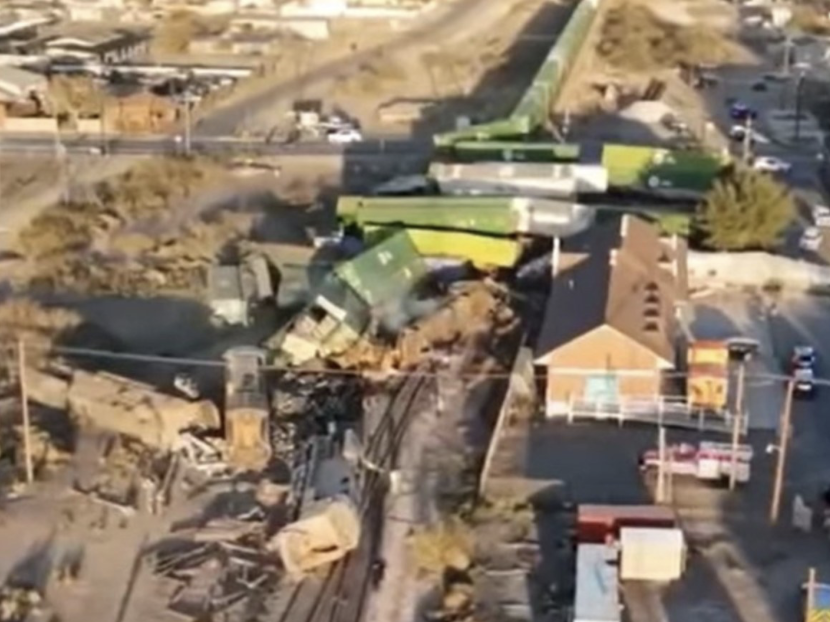
Two crew members have died after a Union Pacific train collided with a tractor-trailer truck on Wednesday, December 18th, 2024, and derailed, sending railcars into a trackside building. Three other people suffered minor injuries.
The second death, of an individual who had been transported to Odessa, Texas, in serious condition, occurred the morning of December 19th. Pecos Police Chief Lisa Tarango said the deceased workers were “veteran employees” of the railroad. Union Pacific has identified them as engineer Clay Burt, 63, an employee since 1998, and conductor Phillip Araujo, 47, who has been with the railroad since 2012.
The incident occurred about 5 p.m. with a collision near Oak and Dot Stafford streets and led to derailed cars hitting the Pecos Chamber of Commerce building, a former Texas & Pacific Railway station. Video circulating widely on social media shows the train hitting a truck carrying an oversized load that was blocking the grade crossing; Pecos city manager Charles Lino said officials would not address the specifics of the incident while investigators continue their work.
| |
|
Editor's Note: The devastating loss of Clay Burt and Phillip Araujo is a reminder of the sacrifices made by rail workers and the families who stand behind them. Brother Burt and Conductor Araujo were more than dedicated rail professionals—they were fathers, husbands, and beloved members of their communities.
As their families prepare to say goodbye, the GoFundMe created in their honor provides a way for all of us to help ease the burden of funeral expenses during this unimaginable time. Let us take a moment to reflect on their lives, their contributions, and the loved ones they leave behind. Clay and Phillip’s legacies are woven into the fabric of this industry, and they will never be forgotten.
| |
|
Brotherhood of Locomotive Engineers and Trainmen / December 22nd, 2024
A joint GoFundMe has been established to help raise money for the families of the two Union Pacific train crew members; any money raised will be split evenly between the families to pay for funeral expenses.
Brother Clay Burt, 63, is survived by his wife, four children, and nine grandchildren. His funeral will be held on December 27. Conductor Araujo, 47, is survived by his wife and three children. His funeral will be held on December 23.
| |
|
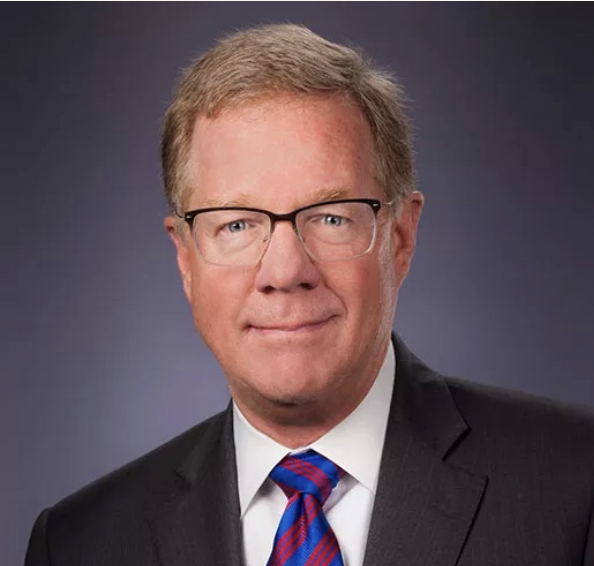
Editor's Note: David Fink’s nomination to lead the Federal Railroad Administration is a glaring reminder of who holds the reins in our industry. A man whose career has been shaped by the consolidation and cost-cutting that has plagued American railroading is now being tasked with safeguarding its future. Workers on the ground know all too well what happens when profit takes precedence over safety and efficiency—corners are cut, lives are endangered, and the people who keep the trains running are left to pick up the pieces.
This appointment is a clarion call for workers to remain vigilant. Leadership steeped in corporate interests rarely brings progress for the people on the rails. The railroads need innovation, yes—but innovation that serves the public and protects those who labor to keep goods moving, not the bottom line of the few. Let Fink’s tenure, if confirmed, be judged by the workers’ yardstick: will he stand for us, or will he follow the familiar path of putting profit above all else?
| |
|
Railfan & Railroad Magazine / December 21st, 2024
President-elect Donald Trump named David Fink, former president of Pan Am Railways, the next administrator of the Federal Railroad Administration on Saturday, pending Senate confirmation.
Fink is the son of the late David A. Fink, who teamed up with Timothy Mellon in the 1980s to acquire the Maine Central, Boston & Maine, and Delaware & Hudson to form the Guilford Rail System (later to become Pan Am Railways after Mellon purchased the failed airline’s name). Mellon was also a major contributor to the Trump campaign.
Trump wrote “David will bring his 45+ years of transportation leadership and success, which will deliver the FRA into a new era of safety and technological innovation. Under David’s guidance, the Federal Railroad Administration will be GREAT again. Congratulations to David!”
|
|
Editor's Note: Slowly, forward-thinking ideas about rail development - both freight and passenger, conventional and higher speed - along with electrification are gaining traction among members of both political parties. However, for many, it is rhetorical and skin deep. Whether real construction takes place towards these goals takes place in the coming years remains to be seen. | |
Solutionary Rail / December 16th, 2024
The Dept of Energy (DOE) released a significant Rail Action Plan. Solutionary Rail was quite involved in its creation, and there's A LOT of our work in this - especially in the full report.
This is a very important accomplishment, a milestone in our and our allies' long work to bring to the public the lessons Solutionary Rail has gathered from so many allies and experts.
| |
|
Editor's Note: The All Aboard Act paints an ambitious picture of what rail could be—a system that serves the people, invests in workers, and lays the groundwork for a sustainable future. A $200 billion commitment to electrification, rail expansion, and training programs could begin to undo decades of neglect and exploitation in our rail network. Particularly heartening is the recognition of labor in this plan, with funding for worker training and protections that honor the people who keep the industry alive.
But ambition without accountability risks falling into the same traps of the past. The absence of mandates raises the question: Will this funding uplift workers and communities, or will it merely pad the profits of corporations that have already taken so much? Rail workers know the answer lies not in empty promises, but in action that prioritizes safety, equity, and dignity over the interests of the few. The All Aboard Act offers hope—but only if we demand it delivers on that hope for the many, not the few.
| |
Progressive Railroading / December 20th, 2024
U.S. Rep. Chris Deluzio (D-Pa.) and Sen. Edward Markey (D-Mass.) this week announced they've introduced a bill titled the All Aboard Act, which calls for a $200 billion, five-year federal investment in the nation's rail network.
The legislation does not include mandates, the lawmakers said in a press release. It calls for federal funding to be invested to build high-speed rail, expand existing passenger rail service, and electrify the most heavily polluting rail yards and corridors. The bill also calls for funding for rail-crossing safety, critical labor protections for rail workers, and a new rail worker training grant program.
| |
Editor's Note: While none of these appointees to the Amtrak Board - save perhaps the Mayor of Normal, Illinois - are particularly inspiring (and one, former CEO and Trump FRA Chief Ron Batory who was explicitly opposed by Railroad Workers United), at least Amtrak can now operate with some semblance of an Executive Board, a necessity for any corporation or entity. | |
|
Trains Magazine / December 21st, 2024
The U.S. Senate confirmed four nominees for the Amtrak board of directors early today, the first time the legislative body has confirmed a majority of the 10-member board in almost a decade.
Senate records indicate David Capozzi, Elaine Clegg, Ronald Batory, and Lanhee Chen were confirmed last Saturday, Dec. 21st.
Batory, a former Federal Railroad Administration administrator, and Clegg, CEO of the Boise, Idaho, area’s Valley Regional Transit, were nominated by President Joe Biden in May. Capozzi, a retired federal executive, was first nominated for the board in 2022, along with four others, and was renominated in January 2023. Two members of the 2022 group — incumbent board chair Anthony Coscia and Normal, Ill., Mayor Christopher Koos — were confirmed earlier this year, along with Joel Szabat, a former Department of Transportation official who had served on the board from 2019 to 2021
| |
|
Editor's Note: The passage of the REEF Act marks a hard-fought and long-overdue victory for railroaders. For over a decade, rail workers have endured cuts to their unemployment benefits—a system they paid into and rightfully earned. This legislation finally ends a punitive tax that siphoned money from workers already facing hardship, restoring a measure of dignity to those who have kept this industry alive despite relentless challenges.
While industry leaders may celebrate alongside labor, let’s not forget that this is a victory borne from persistence and pressure by workers and their allies. True equity in railroading will require more than just patchwork fixes to systemic injustices—it will demand a sustained commitment to putting workers first in policy and practice. The REEF Act is a step in the right direction, but the fight for fairness continues.
| |
Trains Magazine / December 18th, 2024
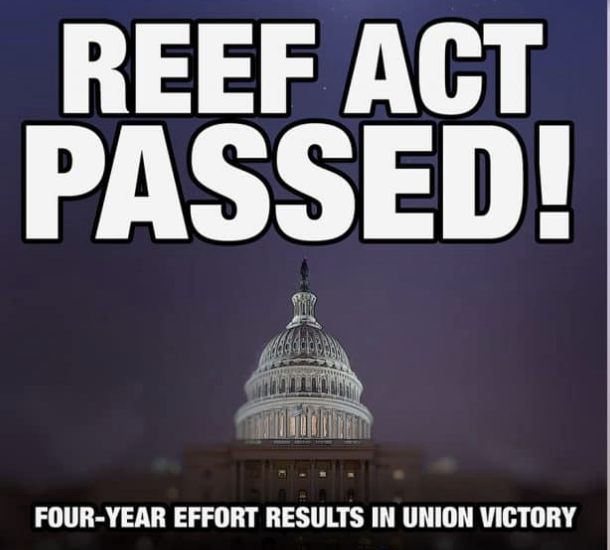
The U.S. Senate has passed a bill eliminating cuts to railroad unemployment benefits, sending the legislation to President Joe Biden for his signature.
S1274, the Railroad Employee Equity and Fairness (REEF) Act, passed the Senate today after earlier passage in the House of Representatives. It ends a tax of $50 every two weeks on rail employees’ benefits and will end government-mandated cuts to those benefits.
| |
Editor's Note: It is great to see such a major initiative take place to help alleviate the chronic rail congestion and inefficiency in Chicago. CREATE has been at this well over 20 years, and despite a decline in freight carloads moved over that time and a number of key projects completed, the city remains a rail bottleneck as it has been for more than a century. The question that looms large, however. Why do the highly profitable Class One railroads not put some of their super profits into the work of decongesting the city? | |
|
Progressive Railroading / December 16th, 2024
Chicago Region Environmental and Transportation Efficiency (CREATE) Program representatives announced on Dec. 13 that more than $290 million has been awarded through the U.S. Department of Transportation to accelerate improvements to the 75th Street Corridor Improvement Project (CIP), the largest rail chokepoint in the Chicago region.
Awarded through USDOT's Multimodal Project Discretionary Grant program, the federal funding will come from the National Infrastructure Project Assistance (Mega) program and the Infrastructure for Rebuilding America (INFRA) grant program. The grants will go toward the next phase of the 75th Street Corridor Improvement Project, specifically Segment A of the CREATE Project EW2, a 3-mile elevated rail corridor on Chicago's South Side.
Launched in 2003, the CREATE program involves 70 projects designed to separate freight and passenger trains at six key junctions. The projects will eliminate about two dozen grade crossings and increase rail capacity, speed, and reliability in the Chicago area.
One of every four freight trains moving in the United States passes through Chicago, and about 500 freight and 800 passenger/commuter trains travel in or throughout the city each day.
| |
|
Editor's Note: BNSF’s announcement of a tentative agreement boasting wage increases and improved benefits is a familiar sleight of hand in railroading—a spoonful of sugar to mask the bitter pill of job cuts. The elimination of yard helpers and brakemen positions, particularly during the holiday season, is a reminder of how corporate railroads continue to undermine the very workers who built and sustain this industry.
While railroads may tout “meaningful” gains in contracts, the cost is all too often borne by the workforce through downsizing and heavier workloads for those who remain. The erosion of critical roles like brakemen is not just a blow to workers, but to safety and operational integrity. Rail labor must remain vigilant, ensuring that NO job—or worker—is sacrificed in the name of corporate efficiency. These cuts are not progress; they are a betrayal of the very people who keep the trains moving.
| |
Cowboy State Daily / December 17th, 2024
BNSF Railway’s public statements about a tentative collective bargaining agreement reached after arbitration with union officials tout a 3.5% wage increase per year for the next five years, as well as additional vacation and “meaningful” enhancements to health care benefits.
What they do not mention is that these gains will come at the expense of yard helpers and brakemen at BNSF, the latter of which appear to be poised to be phased out altogether. Emails obtained by Cowboy State Daily show that BNSF plans to eliminate about 20 brakemen, as well as 60 yard helper positions companywide on Dec. 27, two days after Christmas.
| |
|
Editor's Note: Amtrak’s latest procurement fiasco is a textbook example of what happens when opaque decision-making and managerial hubris collide. The Inspector General’s report lays bare the consequences of a process that prioritized lofty promises over practical execution—alienating manufacturers, delaying progress, and costing the expertise of seasoned rail professionals. The insistence on unattainable design elements, like elevators for bilevel Superliners, reflects an admirable commitment to accessibility but also a lack of realistic planning and foresight.
This is not just a story about failed procurement; it’s emblematic of a larger problem within rail management—a system that seems incapable of balancing vision with practicality. If Amtrak truly hopes to deliver a rail system that serves everyone, it must heed the lessons of this debacle. Clarity, accountability, and honest collaboration with all stakeholders are not optional—they are the bare minimum needed to move forward. For the sake of passengers, workers, and the future of rail, Amtrak must do better.
| |
Trains Magazine / December 18th, 2024
Despite responses from prospective manufacturers indicating already-published concepts for replacing bilevel Superliners would be difficult to execute, Amtrak management moved ahead with requests that carbuilders subsequently rejected. The result has been a seven-month delay in issuing a final Request for Proposals that might be acceptable to remaining bidders. That’s among the conclusions of Amtrak’s independent Inspector General in a report released Dec. 17th.
The report doesn’t specifically acknowledge that Amtrak management had promised representatives from the disabled community that elevators would be part of the design. The feature was included in the initial RFP released last December of 2023. Insistence on maintaining that commitment and the delivery of multiple car types lasted into June 2024, through several rounds of RFP rejections by the manufacturers, and resulted in the resignations of several experienced Amtrak veterans involved with previous procurements. A Federal Railroad Administration risk assessment, conducted in March 2024, deduced that the procurement had an “opaque decision-making process.”
| |
|
Editor's Note: The derailment on CN’s Sussex Subdivision is yet another chapter in the recurring story of preventable rail failures, where the price of neglect is borne by workers, communities, and the environment. A broken rail caused by unchecked defects and an incomplete rail grinding program serves as a stark reminder of the systemic issues that plague railroads. Safety is sacrificed when cost-cutting and operational expediency override basic maintenance and inspection protocols.
Rail workers have long warned of the dangers inherent in deferred maintenance, but their voices are too often drowned out by corporate priorities. This derailment, spilling thousands of liters of methanol, could have had catastrophic consequences. The question is not whether such incidents will occur again but when—unless the industry begins to prioritize safety and invest in the infrastructure it depends on. True accountability demands more than reactive investigations; it requires a commitment to proactive, worker-driven solutions that put safety above profit margins.
| |
Editor's Note: The amended labor agreements between Keolis and nine unions reflect hard-fought gains by workers, including paid sick leave, wage increases, and enhanced benefits. Recognizing Juneteenth as a paid holiday is a meaningful gesture, but these victories are a testament to workers’ collective strength, not employer generosity. With ratification pending, the lesson remains clear: solidarity drives progress. | |
Progressive Railroading / December 19th, 2024
Keolis Commuter Services (Keolis), the Massachusetts Bay Transportation Authority's operating and maintenance partner for commuter-rail service, has reached amended labor agreements with an additional nine of the company’s 14 unions.
The agreements, which still need to be ratified by members of each union, will be retroactive to July 1, 2023, according to a Keolis press release. The five-year agreements include paid sick leave, annual wage increases, unmatched health and welfare benefits, enhancements to the bereavement and vacation policy, and the addition of Juneteenth as a paid holiday.
Earlier this year, Keolis and the Transport Workers Union of America (TWU) reached an agreement that has been ratified by TWU’s membership. As a result, KCS has now settled with of 10 its 14 unions.
| |
Editor's Note: The High Speed Rail Alliance will host Naohisa Kitada, General Manager of Central Japan Railway’s D.C. office, at Maggiano’s in Chicago. The Shinkansen revolutionized transportation in Japan, proving what’s possible when innovation serves the public good. As we envision a high-speed rail future for the Midwest, let’s draw lessons from a system built for people, not profit. Visit HSRail.org/Events for more. | |
|
High Speed Rail Alliance - December 19th, 2024
When: Tuesday, January 7, 2025 @ 12:00 PM
Where: Maggiano's Little Italy, 516 N Clark St, Chicago, IL 60654
Our keynote speaker will be Naohisa Kitada, the General Manager of the Central Japan Railway Company's office in Washington, DC.
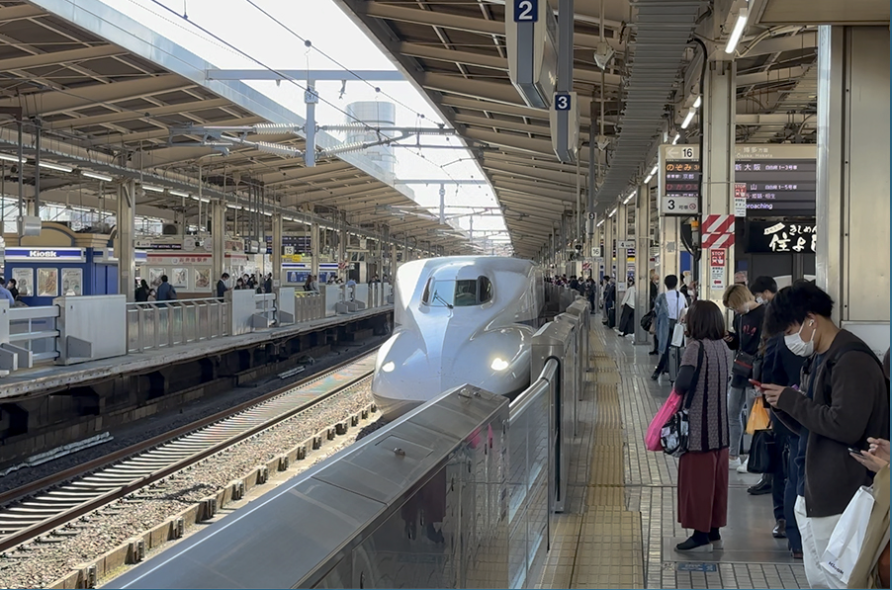
Japan led the world in 1964 by introducing a transformational technology: its Shinkansen bullet trains. In six decades since then, Japan's high-speed rail network has carried more than six billion passengers, with an unparalleled record for safety and efficiency. With technology like the Shinkansen, a high-speed rail hub in Chicago could connect more than 40 million people throughout the Midwest, within hours. Chicago Union Station would also serve as the center of a nationwide network of high-speed trains.
| |
NEWS FROM AROUND THE LABOR MOVEMENT | |
Each week, RWU includes a few articles about advances and developments in the larger labor movement that are of interest to railroad workers. Got an artcile to submit for possible inclusion next week? Email it along to raillabornews@gmail.com. Thank you! | |
Common Dreams / December 19th, 2024
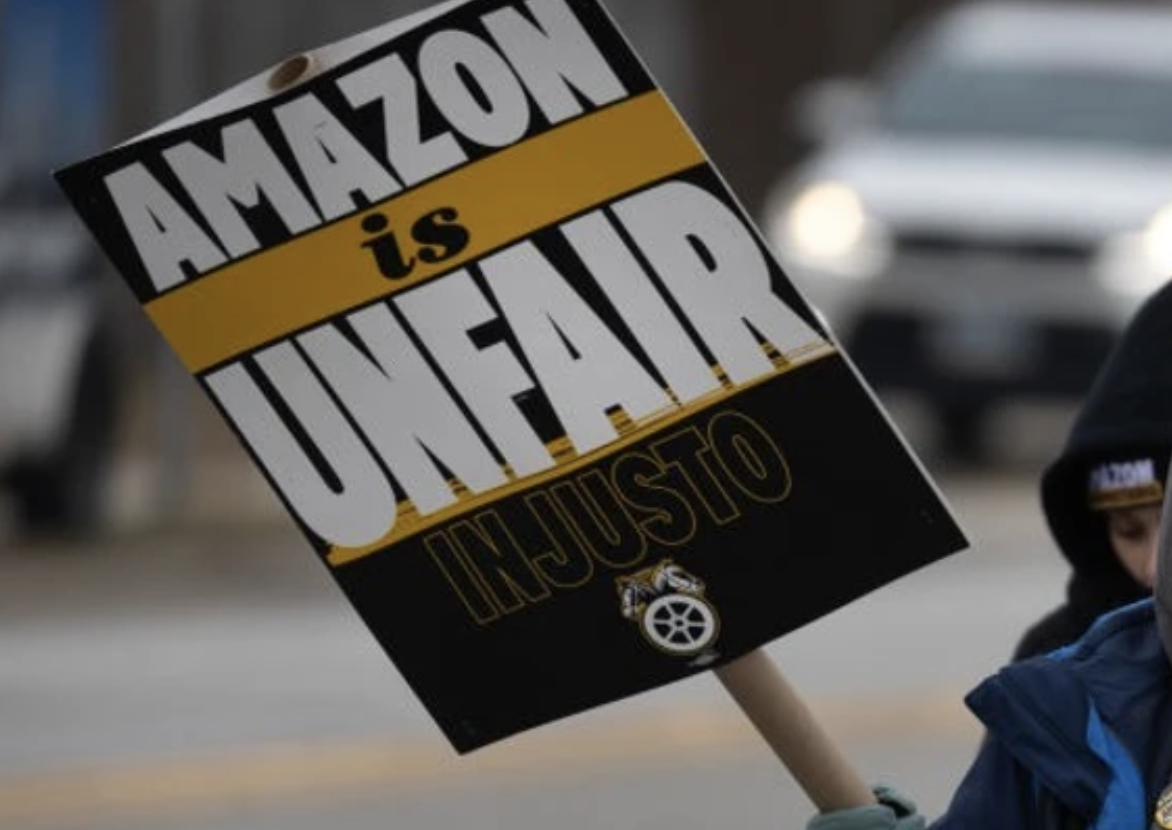
The Teamsters launched what the union described as "the largest strike against Amazon in U.S. history" on Thursday morning to protest the e-commerce behemoth's unlawful refusal to bargain with organized drivers and warehouse workers across the country.
Workers in New York City, Atlanta, San Francisco, and other locations participated in Thursday's strike, with more facilities prepared to join if Amazon's management doesn't agree to negotiate contracts with unionized employees. The union said that Teamsters locals are also "putting up primary picket lines at hundreds of Amazon Fulfillment Centers nationwide."
| |
Editor's Note: Like the railroads and so many other industries, the health insurance industry has been buying back its shares to enrich its stockholders to the detriment of its customers. Stock buybacks were once illegal in the U.S. They were legalized under the Reagan Administration, to the delight of the wealthy and to the detriment of customers, consumers and workers. | |
The Lever / December 11th, 2024
As rising healthcare costs and inadequate insurance coverage leave one in three Americans saddled with medical debt, the nation’s top health insurers have dumped billions into enriching their executives and top shareholders through lucrative stock buybacks.
All in all, the country’s largest health insurers have invested over $120 billion into repurchasing their own shares since the passage of the Affordable Care Act in 2010. These include UnitedHealth Group; Cigna; Elevance Health, the parent company of Anthem Blue Cross Blue Shield; and CVS Health, which acquired Aetna in 2018.
| |
|
Labor Notes / December 12th, 2024
California teachers in dozens of districts covering tens of thousands of educators have lined up their contracts to expire in June. These include unions in Los Angeles (35,000), San Diego (7,000), San Francisco (6,500), and Oakland (3,000). On the East Coast, another major contract, for 14,000 Philadelphia teachers, expires August 31.
Contracts expire September 30 for 57,000 workers at the healthcare giant Kaiser Permanente. Ten unions negotiate together as the Alliance of Health Care Unions—not to be confused with the SEIU-led Coalition of Kaiser Permanente Unions, which settled an agreement last year after the largest-ever strike in health care. The Alliance split from the Coalition in 2018.
Contracts for 16,000 members of the New York State Nurses at 17 hospitals, bargaining at 11 tables, expire on the last day of 2025. Fifteen thousand Minnesota Nurses members at 15 hospitals also have contracts lined up to expire in 2025, after a three-day walkout in 2022; the union has new leaders who argued it should have escalated to an open-ended strike back then.
Workers at 15 nonprofit legal agencies serving low-income clients in New York City have aligned their contracts to expire June 30. The agreements cover 2,500 workers across 15 units, in two United Auto Workers locals and one SEIU local.
Looking ahead, 2025 presents the chance for more unions to line up their contracts to expire next on May 1, 2028—answering the call from the United Auto Workers, whose contracts with Ford, General Motors, and Stellantis will expire then.
National conventions of the Postal Workers (APWU) and Teachers (AFT) passed resolutions in 2024 supporting the call. The APWU contract, covering 225,000 workers, is still in bargaining after expiring September 30.
Meanwhile, the contract for 200,000 Letter Carriers has expired since 2023. A tentative agreement this fall sparked outrage because it would raise wages only 1.3 percent a year and preserve tiers. If workers vote it down (ballots are due back on January 13), their negotiators must return to the table before the matter can move to binding arbitration. Members activists have been organizing grassroots contract rallies.
| |
WEEKLY DERAILMENT DEPARTMENT | |
Each Tuesday in this news bulletin, RWU does our best to present a picture of what has been happening over the course of the previous week in terms of derailments in North America, and investigation determinations of previous accidents. NOTE: This list is by no means comprehensive. Smaller and less consequential mishaps are generally not reported here. If the wreck results in injury or fatality, or is especially damaging/extreme, a full article will appear as a feature in the dozen or so rail articles above. Know of a train wreck? Please feel free to forward a link to raillabornews@gmail.com for possible inclusion next week. Thanks! |
| | | |