|
Shabbat Shalom,
In the past few weeks, a number of studies and reflections on Jewish identity, Israel, and Zionism, including our own Community Pulse Survey, have sparked important conversations throughout the Jewish world. Many of my own conversations included.
These discussions show that while ninety percent of American Jews strongly support Israel’s right to exist as a Jewish and democratic state, far fewer feel comfortable identifying with the word “Zionism,” largely because the term has taken on a wide range of meanings that extend far beyond its core idea of Jewish self‑determination.
Scholars remind us that this complexity is not new. Zionism has always been a diverse set of ideas — political, cultural, religious, socialist, and revisionist — rather than a single fixed definition. Many Jews today hold thoughtful, nuanced, and sometimes conflicted views that cannot be neatly captured by one label.
At the same time, surveys show rising discomfort with labels along with growing criticism of Israeli policies even among those who still affirm Israel’s importance as the Jewish homeland. These trends challenge us to create more inclusive and open spaces for dialogue, listening, and mutual respect.
We are blessed that in Richmond we have the relationships and resources to engage these conversations with care and connection.
Our community shalicha brings an authentic Israeli voice directly into our community — into our classrooms, congregations, programs, and homes. Her presence helps us meet Israelis as people, not abstractions, and invites deeper understanding of the complexity and beauty of Israeli society. As our current Shlicha Tal ends her tenure, we look forward to welcoming a new Shaliach to continue her meaningful work.
Our Partnership2Gether relationships further strengthen these ties. Through shared programs, visits, and person‑to‑person connections, we cultivate real relationships that remind us that Israel is not just an idea or a news story — it’s a network of people who know us, care about us, and whom we care about in return.
We also want to acknowledge the emotional reality so many in our community are carrying right now. Conversations about Israel are touching places of deep love, grief, worry, pride, anger, and hope. These feelings can be complicated and sometimes overwhelming — and that’s okay. Every one of these emotions has a place in our Richmond community. By naming them openly, we create space for gentler conversations, meet one another with compassion, and remind ourselves that no one is navigating this moment alone.
We are especially committed to listening to the voices of our teens, college students, and young adults. They are encountering conversations about Israel and Jewish identity in uniquely intense environments — on campuses, online, and in social spaces where the pressure to “take a side” can feel isolating. Their concerns, their questions, and their hopes matter deeply. Our support of and work with Hillel, Chabad on Campus, BBYO and JSU throughout the Commonwealth help them with openness and respect, we affirm that they are not only part of our community’s future — they are essential voices in its present.
This is a moment to:
- Listen generously
- Ask questions without assumptions
- Hold space for disagreement without dividing our community
- Stay connected even when conversations are challenging
We don’t all have to think the same way — but we do have to keep talking, keep learning, and keep showing up for one another.
As we move forward, let’s choose relationship over rhetoric and dialogue over distance. Together — we can model what a caring, thoughtful, and connected Jewish community looks like.
Thank you for being part of this meaningful work.
Daniel
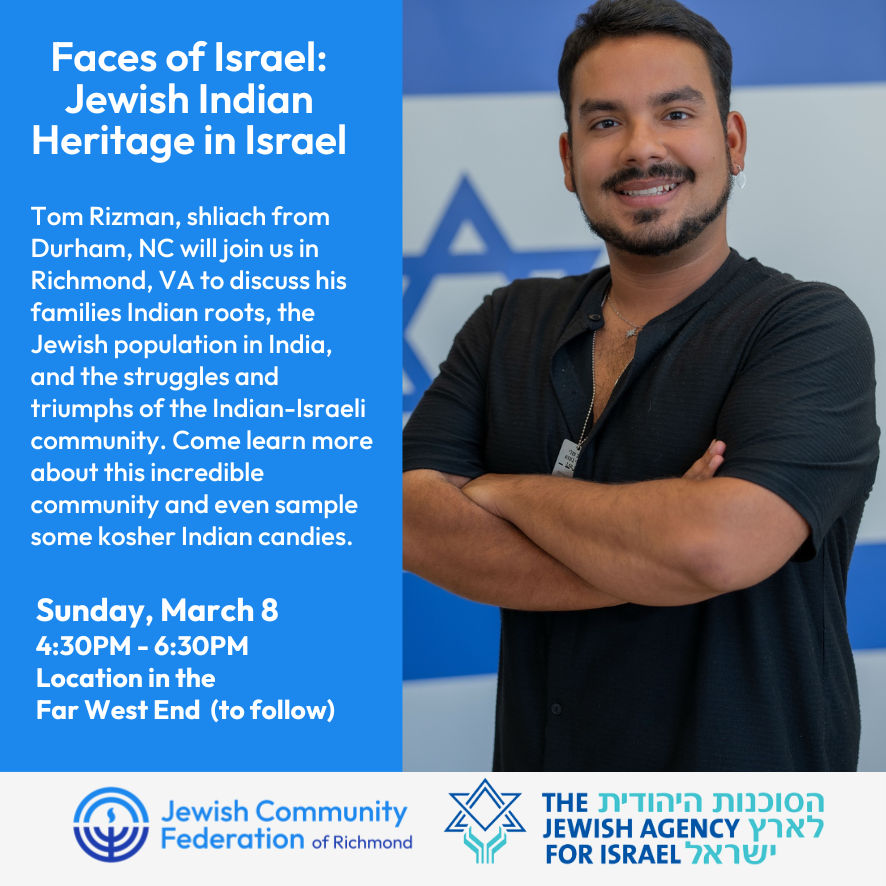
P.S. Please join us for "Faces of Israel" (details below).
|