Libby Penner Unsplash Thanksgiving dinner

photo by Libby Penner for Unsplash

Global Gratitude in the Month of Giving

Remember God's blessing to you.

Quran 35:3

~~~

November, a month of gratitude and giving, a time to honor.


Please keep the work of Global Ministries University in mind and prayer at this time, and consider a gift.


November 2025

Announcements of 2026 events to calendar

President Grudzen on Eco-Spirituality Retreat

Librarians's Corner

Courses and Programs

Partners

GMU Giving


In 2026

Global Ministries University

will Celebrate 25 Years


&

and will host the Silicon Valley Peace and Community Development Conference


There will be participants from around the globe as well as the US. It will be a time to celebrate GMU and our outreach to the world.


We hope to have both in-person and virtual participation in the conference, along with the publication of conference papers.


Stay tuned for updates and mark the days of:


September 17th for the 25 Years Dinner

and September 18-19 for Conference days


Location: St. Mark's Episcopal Church, 600 Colorado Ave, Palo Alto, CA 94306.


Call for submission of abstracts has a deadline of January 31, 2026

and submission of full papers is May 31, 2026


All information to date about the conference is on the site.


President Grudzen on Eco-Spirituality Retreat

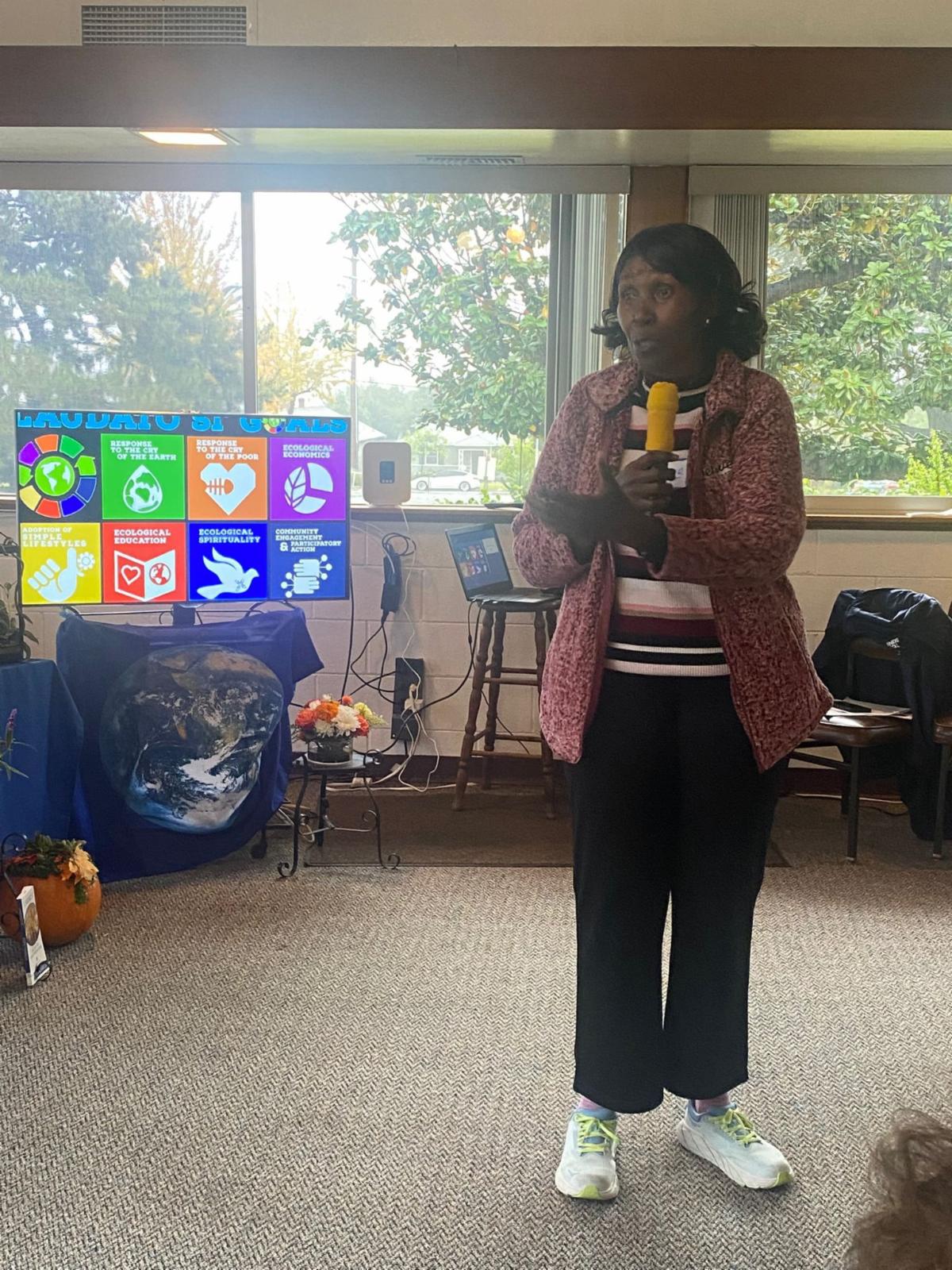
Dr. Esther Nditi  Kaleli at Maryknoll Weekend

photo: GMU graduate, Doctor Esther Nditi Kaleli, co-led an eco-spirituality retreat this past weekend for the Maryknoll Affiliates chapter in Southern California.


The event took place at the Maryknoll Sisters Environmental Center in Monrovia, CA. Marita and I travelled to Monrovia and took part in the retreat.


The theme of the retreat was largely taken from the encyclical of Pope Francis, Laudato Si. We plan to collaborate with the Maryknoll Sisters on other environmentalists' education projects.


Prospective GMU students can earn a certificate in environmental studies, study for green chaplaincy, or earn a degree through a directed study program based on Laudato Si.


Librarian's Corner


As AI, specifically ChatGPT, continues to improve, I’ve been asking myself if it’s possible to conduct scholarly research without searching through the subject-specific databases that librarians for decades have been urging students to use. Can’t we now just ask ChatGPT (or another AI tool) to find us a bunch of articles and trust it to pull up everything? Well, yes and no.


I decided to conduct a semi-scientific experiment. I created four hypothetical research scenarios, then looked them up in Open Theological Library, one of the scholarly article databases available through GMU (on the GMU website, scroll down to GMU Classroom and click on GMU Library.) Then I asked ChatGPT to find articles on the same subjects:


·     The response of the Catholic Church to COVID in Nigeria.

·     Hospice chaplaincy for Muslim patients

·     Hildegard von Bingen and migraine headaches

·     The primary intention of Paul’s Letter to the Ephesians


Surprisingly, ChatGPT did a pretty good job in all these cases. It found nearly all the same articles as those Open Theological Library (OTL) suggested, except in the last example—ChatGPT found far fewer resources--perhaps because it’s not well-trained on exegetical literature?


Here are some major differences:


·     Search strategy—

Finding articles in a database such as OTL requires searching by keywords or subject headings. I did a keyword search for “Catholic Church” AND “COVID” AND “Nigeria.” for the first example. But in ChatGPT I used natural language: “Please find me scholarly journal articles on the response of the Catholic Church in Nigeria to the COVID pandemic.”


·     Results--

ChatGPT seems to look for the most relevant articles, while OTL lists everything it can possibly find; some items it displays are way off-target. Thus, you get a lot more citations with OTL. But that’s OK if you’re doing a serious, thorough literature review; you’ll want to find all available resources.


·     Other options—

For a really thorough literature review, you’d want to utilize one of the subscription databases available through most college, university and seminary libraries—databases such as the Atla Religion Database. These libraries require an in-person visit; online access is only available to the institution’s registered students, faculty and staff. For example, because I’m an emeritus faculty member at California State University East Bay, I’m able to access the nursing database CINAHL, which led me to excellent articles from the medical literature on the hospice chaplaincy for Muslim patients topic, as well as the exploration of Hildegard and migraine headaches.


ChatGPT was unable to access the articles I found in the nursing database because they’re behind a paywall. AI can only harvest information that’s available on the Open Web—that includes the databases we at GMU can offer our students.


Bottom line: explore ChatGPT and follow through with its suggestions, while realizing that you’re not seeing everything published in academic journals on your topic. 


Questions? Comments? Need help with research? Contact me:


Judy Clarence, GMU Librarian: 

librarian@globalministriesuniversity.or

GMU Courses and Programs

unsplash aaron burden coffee Bible

photo by Aaron Burden for Unsplash

January 2026 Lecture Series

In the last week of January, GMU will be hosting a

5-session lecture series on the Beatitudes,

led by Nick de Los Reyes.

Cost will be $25.

Full details in our December newsletter!


Science and Religion

Discover the compatibility of science, spirituality, and faith. GMU partners with the Institute of Science and Religion program in Kerala, India. You can view lectures on their YouTube channel.


When Science Becomes Sacred: Awe, Universal Consciousness, and the Cosmic Revelation of the James Webb Space Telescope


For the 2026 cohort, scholarships have been awarded to a woman in Uganda and a priest and layperson in India.

Celebrant Training


Enrolment for the

January 2026 intake --


Director Michael Conley is returning from his Fall semester sabbatical. 


Partners

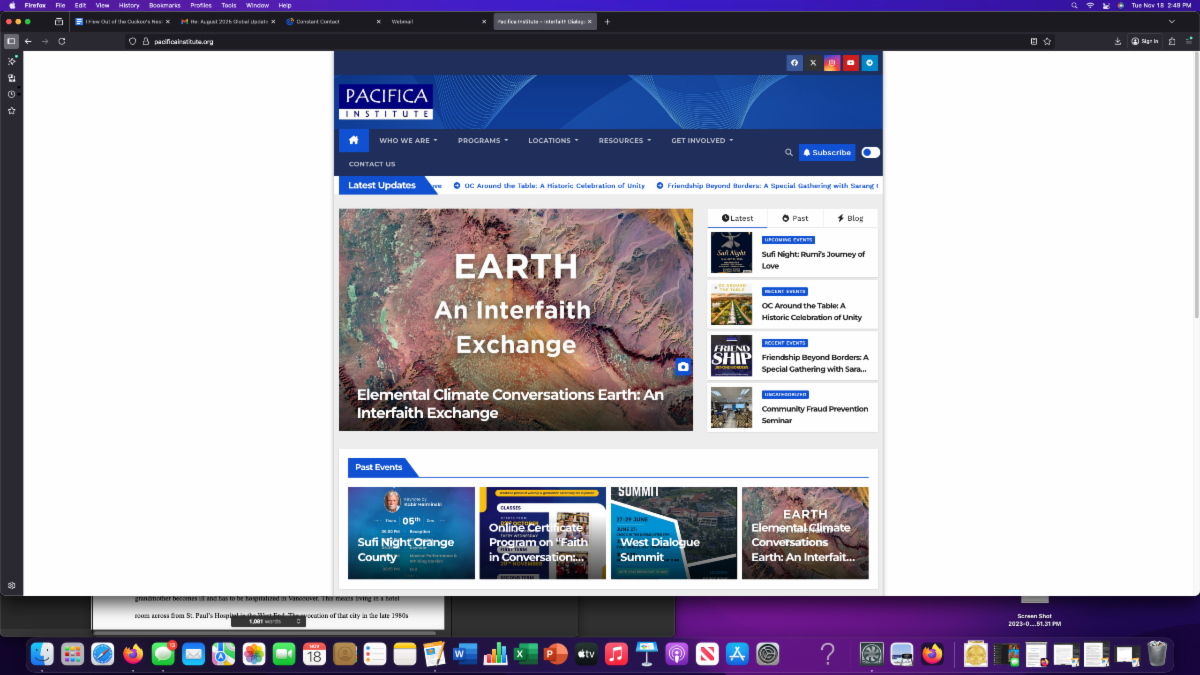
Pacifica Institute is partnering with GMU for the Peace and Community Development Conference in September.


Interfaith Dialogue and Intercultural Understanding is their focus.


We look forward to this continued work together!

Global Generosity

GMU operates under the corporate umbrella of the Federation of Community Ministries of California (FCM of CA), originally formed on October 30, 1997, when the status of a 501c3 nonprofit corporation was obtained. GMU is registered in Santa Clara County, CA, as a DBA enterprise of FCM of CA. The two entities have the same Board of Directors.

Help Our Global Family

https://www.globalministriesuniversity.org/


info@globalministriesuniversity.org

Facebook  Instagram  LinkedIn  YouTube  Web
 
LinkedIn Share This Email