|
President's Message
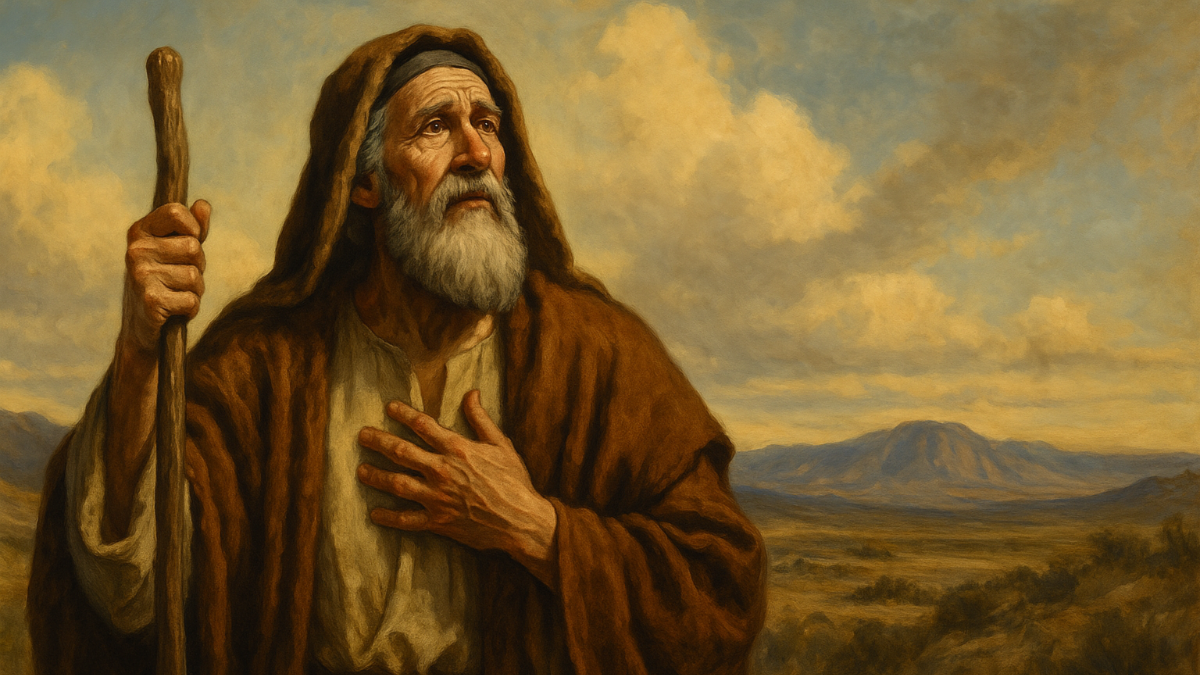
Abraham, the Forefather of Faith (Romans 4:1–25)
"For if Abraham was justified by works, he had something to boast about, but not before God. What does the Scripture say? ‘Abraham believed God, and it was counted to him as righteousness.’" (4:2–3)
Abraham’s pious actions might be commendable before people, but before God, it is Abraham’s faith that is crucial (vv. 2–3). His faith was “credited to him as righteousness,” meaning that, for Paul, what God recognizes is not the tallying of human deeds in a ledger, but a heart that trusts God’s promises. Abraham’s faith was acknowledged by God as a right relationship with Him (vv. 4–5). He did not rely on his own righteousness but placed his trust solely in God, who declares unrighteous people righteous and welcomes them into fellowship with Himself.
Paul emphasizes that faith alone is the foundation of Abraham’s relationship with God in the chronological order of the events. The recognition of Abraham’s faith (Genesis 15:6) occurs before the report about circumcision (Genesis 17:10–27). Thus, circumcision does not serve as the basis of God’s covenant with Abraham, but as its confirmation (vv. 9–11a). When Gentiles believe, they are counted as Abraham’s descendants and as members of God’s covenant family, just like the Jews (vv. 11b–12).
The promise that Abraham and his descendants would possess the whole world as an inheritance (v. 13) relates to the promises in Genesis 22:17–18; 12:2–3; 18:18. Consistent with Jewish interpretation, Paul understands this promise not merely as the possession of the land of Canaan, but as participation in God’s eschatological dominion over the world. This promise is not based on the Law; it rests entirely on the covenantal fellowship established by God with Abraham because of Abraham’s unconditional trust (faith-based righteousness).
If the fulfillment of the Law were a condition for salvation, then faith would lose its decisive value (v. 14), contradicting Genesis 15:6. Moreover, it would conflict with Paul’s conviction that the Law does not lead to salvation but to judgment, revealing human sinfulness. According to Paul, transgression of the Law exposes humanity as sinners. This understanding leads to the fundamental conclusion in v. 16: God’s promise is given entirely by grace, not based on human merit, and therefore it is valid for all. Only faith can lead to the righteousness God bestows.
Implicit in this is that faith itself is not a compensatory record of imperfect works, but an attitude of trust in God’s actions and gifts. Faith is simply receiving and resting in God’s promise, relying on His faithfulness rather than human achievement.
Abraham’s faith is efficacious before God because God’s actions are not bound by any preconditions. The fact that God creates out of nothing and gives life to the dead aligns with the truth that He declares the ungodly righteous (v. 5).
Verses 18–21 illustrate how Abraham’s faith is shaped through the tension between his earthly reality and God’s promises. Despite knowing his hopeless situation (v. 19), Abraham did not waver but entrusted himself fully to God’s promise.
The testimony of Scripture about Abraham is not merely to highlight his personal faith, but to show God’s path of salvation for all believers through him. The God Abraham trusted is the One who gives life to the dead and calls into being what does not exist (v. 17). This same God opened the way of faith for us by raising Jesus Christ from the dead (v. 24).
Jesus died for our trespasses and was raised to justify us (v. 25). In this, the two pillars of salvation—forgiveness of sins and justification—are fully accomplished in the cross and resurrection of Christ. By believing in this gospel, we are counted righteous, standing in the same position of righteousness as Abraham.
Romans 4, therefore, clearly testifies that the gospel of righteousness through faith has been given unchanged from the time of Abraham to us today.
|