Mid-Winter News from Your Local Wildscapers
January 21, 2026
| | |
To plant a garden is to believe in tomorrow. May all your 2026 garden dreams come true. | |
Things to know about Shopping at the Emporium this Season...
As arctic conditions bear down on our region, we thought it might be helpful to do a bit of dreaming about Spring! So here are a few things to know about shopping at your favorite Roadside Emporium this season.
- We will be opening for the season in mid-late April - weather and plant availability dependent - stay tuned for details!
- We have an actual street address that you can use for GPS now! It's 315 Barneyville Road, Swansea, MA - though our Wildscaping home address of 6 Barneyville Road in Barrington will still get you close enough that you'll be able to listen and look for the buzz and find us that way too :-)!
- "Retail" drop in shopping hours this season will be every Friday, Saturday, and Sunday from 11 - 5. We will also be open to the trade and for special order pick-ups Monday - Thursday by appointment.
- We have been doing lots of work to get ready to be able to offer some on-site off-hours programming here this season (that will include pop-up shopping opportunities) - stay tuned for details.
- We are working to vet a couple of new high quality ecological growers in order to offer even more choices to our discerning customers this season!
Our plant offerings this season will include hundreds of varieties of straight species New England Native Plants, some select native cultivars as well as some natives from the broader Northeast region, designer flowering annuals selected with hummingbirds and butterflies in mind, organic herb and veggie plants, and a small assortment of especially long-blooming nonnative perennials to add some additional pesticide-free flower power to your garden spaces. We encourage you to READ MORE ABOUT THE PLANTS WE SELL (AND PLANT) AT THE LINK HERE.
| | | Our 2026 plant list has been posted to the website! | |
To help with your wintertime planning, our plant list is live on our website and includes hyperlinks to plant descriptions for all perennials, shrubs, and trees. A reminder that our plant list is not a live inventory. This list represents the hundreds of varieties of plants we will carry throughout the season - not all will be available all of the time. And some things not on the list will magically appear. As always, we will be receiving plant deliveries each and every week from mid-April through the end of September (or later). That's right, new inventory arrives weekly! You've heard of farm to table? Think of this as grower to garden, helping keep things fresh and fun all the time. The plant lineup is constantly changing and we are always on the lookout for the very best for our customers (and ourselves) - botanical quality with ecological pizazz. Stop by often to explore.
| |
A note about Special Orders: Work in the trade? Helping to coordinate a community or nonprofit planting project? Have big yard plans that will require lots of plants? Looking for varieties you don't see on our plant list linked above? Outreach to discuss your plant needs - we can help!
Contact Ed or Cindy at 401-264-8540 to chat. Or send us a message using the button below.
| |
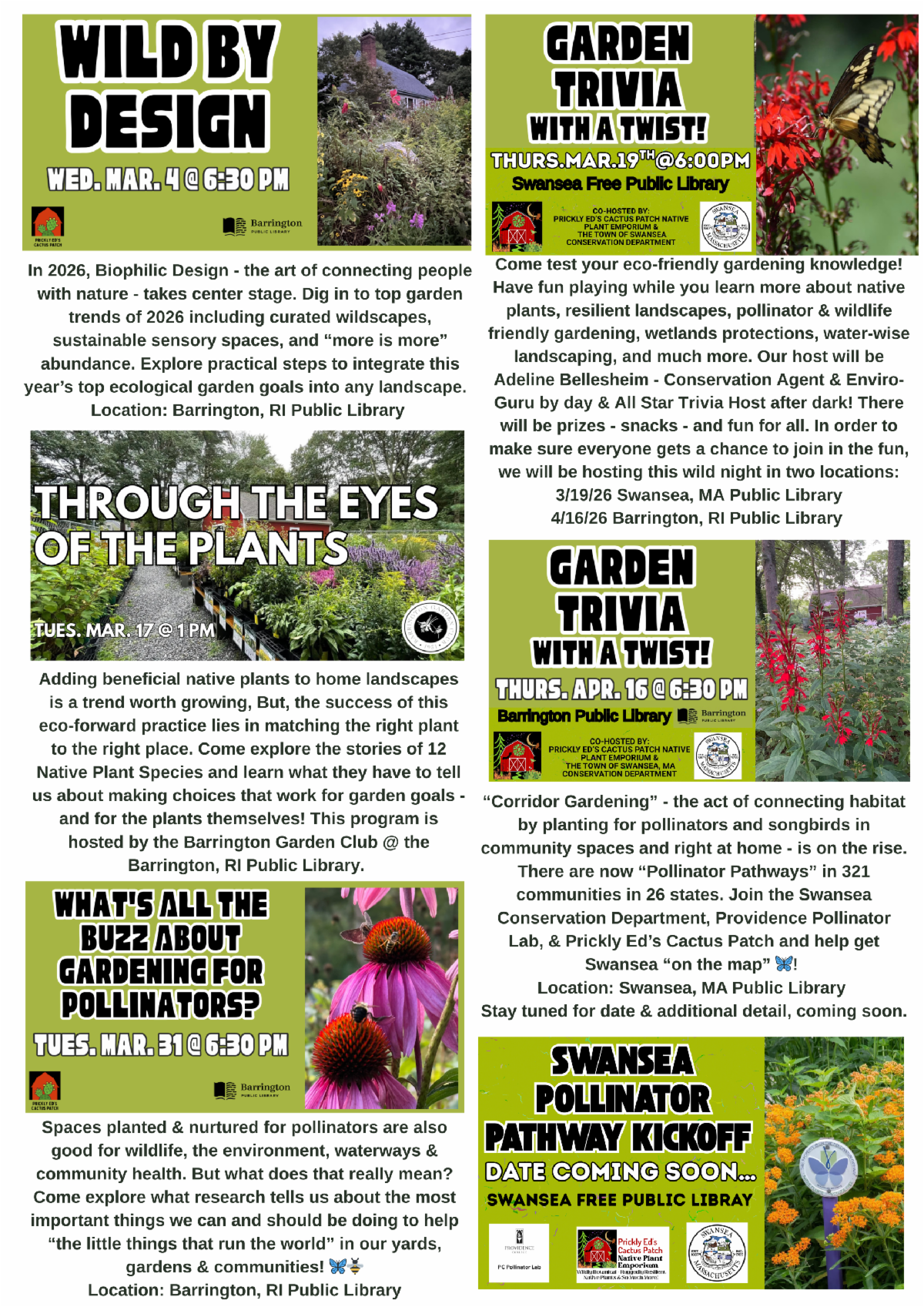
Hope to see you at some of our upcoming events!
Events are free and open to all, but registration is required. To explore all of the details, click on the image below.
| | Speaking of coming events, we have also included information about upcoming webinars being offered by expert individuals and organizations on the events page of our website. That way, you can check in any time to see what's happening in the world of ecological gardening! There are so many wonderful opportunities this winter to learn, engage, and get inspired for a wildly wonderful season ahead. | |
What's Hot for 2026?
Every year, experts reveal gardening trends that shape designs and priorities throughout the industry. We have sifted through numerous reports to uncover insights into the future of outdoor spaces. As we look ahead to the 2026 season, a notable shift is apparent, highlighting lasting transformations rather than temporary trends. The emphasis going forward is on creating healthy, functional, sustainable, and imaginative landscapes that will be more personalized than ever.
!A noticeable shift away from traditional manicured lawns, mulch beds, and lackluster plantings is emerging. Instead, regenerative practices and gardens that reflect individual style, abundant pizazz, and environmental consciousness are stepping into the limelight.
The emphasis will be on native plants, edible varieties, and unique species all centered on the goal of gardening in harmony with nature. In fact, biophilic design - the practice of connecting people and nature - will take center stage with a focus on blurring the lines between indoors and out while creating restorative sensory-rich sanctuaries that enhance well-being for all.
Continue reading at the link below to dig in to five key things that will take center stage in 2026 - learn more about the color of the year, and discover two top plants of the season.
Click here to continue reading
| | | |
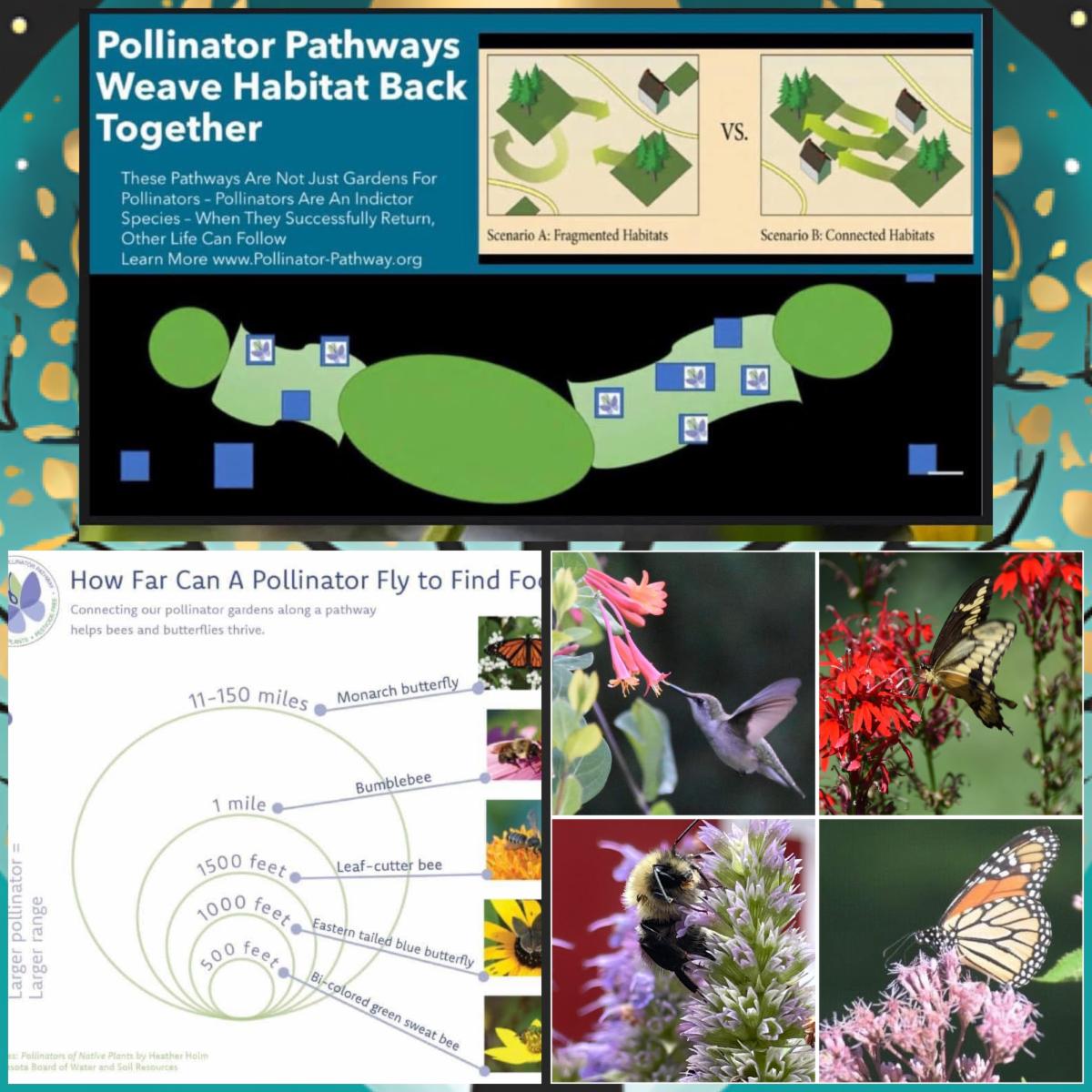
Have you joined the Pollinator Pathway or the RI Audubon Pollinator Alliance? What are you waiting for?
"Corridor gardening" is one of the fastest growing trends in gardening. And, both the Pollinator Pathway and the Pollinator Alliance are built on the concept of corridors and connections. When many people - and many spaces - across communities work together, nature can thrive. Yards and small community gardens create habitat stepping stones between larger conservation areas. In a time of shrinking and fragmented habitats these stepping stones have never been more important. Help build back healthy landscapes and show your commitment to building a more vibrant and resilient community starting right outside your door.
Please consider registering your private or public gardens at the sites below.
Register for free here:
CLICK HERE TO LEARN ABOUT AND JOIN THE POLLINATOR PATHWAY
CLICK HERE TO LEARN ABOUT AND JOIN THE AUDUBON ALLIANCE
Once registered you can also help by putting up a Pollinator Pathway or Audubon Pollinator Alliance yard sign (or better both) to show your support and inspire others to join. Why yard signs matter:
- Make pollinator-friendly gardening visible and spark neighborhood conversations
- Encourage others to register their gardens and plant for pollinators
- Build community pride and momentum for local conservation efforts
If you live in the East Bay, be sure to connect with your community Pathway chapter as well. There is a swell of momentum in the Barrington, Bristol, and Warren communities. Perhaps a little bit of town competition with butterflies and bees as the beneficiaries? Got us thinking now... Don't miss out on the fun!
Barrington residents, click HERE to contact local organizers
Bristol residents, click HERE to connect to local organizers
Warren residents, to connect with others in the community click HERE
There are currently 321 local Pollinator Pathways in 26 different states. You can check to see if your town has started a Pathway project yet HERE. And, if you don't yet have any momentum in your community, consider starting a Pathway! Learn more about that HERE.
And, Swansea, MA residents, be sure to stay tuned for news of the town Pollinator Pathway kickoff event coming your way this spring! Lots of buzz in store...
| | This Month's Stories from Our "Life in the Garden" Blog | | Rudy the Right Way Hummingbird - a Holiday Tale of Adaptation and Hope | |
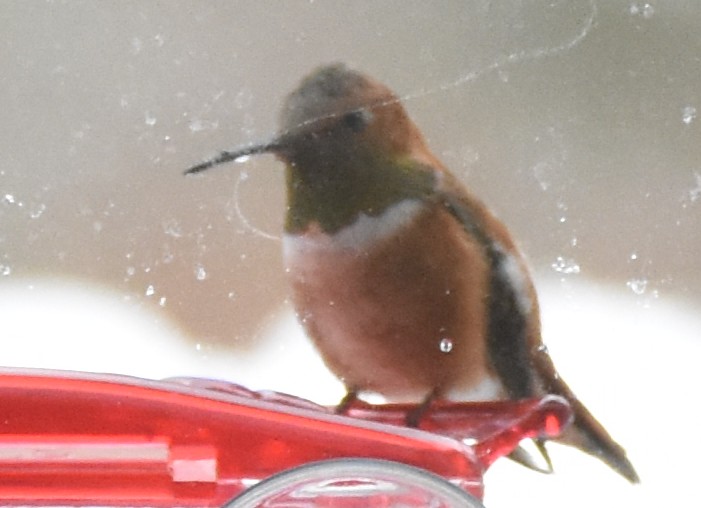
Recently we had an opportunity to write an article about a very special visitor to our home habitat headquarters - Rudy, the Rufous Hummingbird - for the Massachusetts Pollinator Network. Be sure to subscribe to their newsletters for all the latest buzz from Massachusetts! We've linked to the story that we wrote below.
Rufous Hummingbirds, a Northwestern species, are notorious for their "badassery", but they are in trouble. Since 1970, two-thirds of their population has been lost, a decline largely attributed to the loss of habitat, and increased use of pesticides. Without decisive action these remarkable birds could be lost forever. Increasingly this is the story of too many of our birds and pollinators. While large scale actions are essential, each of us has a role to play in our own yards and communities.
Read Rudy's story at the link below - and double down on your commitment to help!
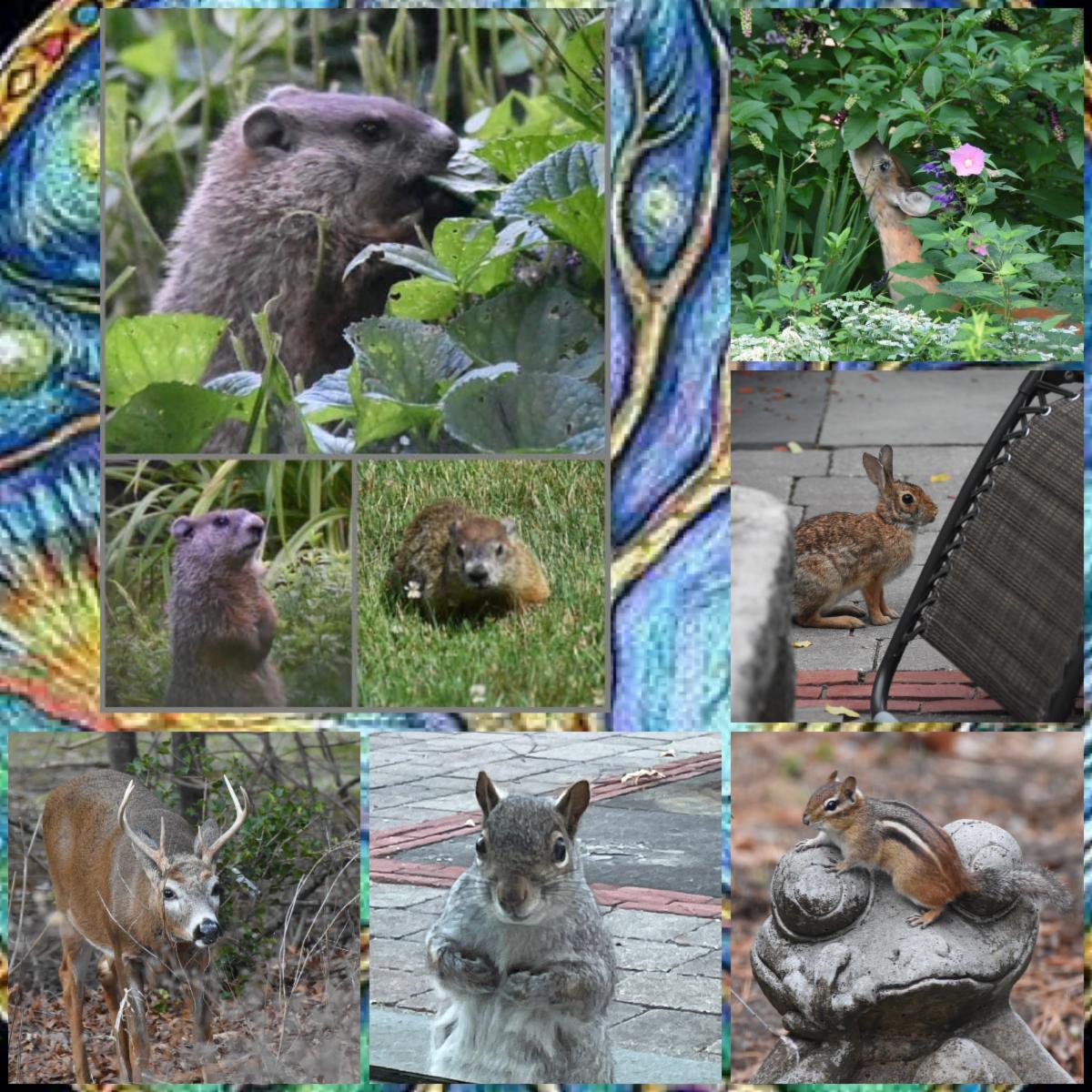
| | Of Groundhogs and Hungry Herbivores in Suburbia - Abundance is the Answer... | Groundhogs and friends eating and playing in your gardens? Congratulations! Your yard is beginning to support the web of life. For tips on how to coexist in ways that work for you - and for wildlife - be sure to read one of our latest articles wishing you an (early) Happy Groundhog Day! The theme of what it will take to happily co-exist is summed up in one word "abundance". An abundance of (smartly chosen and placed) plants, an abundance of creativity, and an abundance of compassion, empathy, and even good humor. Our yards have become the last resort for so many beleaguered creatures who are just trying to survive. | |
| |
Don't forget - our website is there to serve as a resource for you!
Our website is regularly updated and is filled with resources to educate, support, motivate, and connect. Visit often, and share the link with friends!
Visit the website www.PricklyEds.com
| | | |
|
Using Research & Science to Guide Us
In her recent New Year's newsletter edition, our friend Heather Evans over at Design Your Wild featured two recent studies that we ourselves are particularly enamored with and think others should be diving into too! The first one was conducted by Maryland state entomologist Max Ferlauto. He and his colleagues found that almost twice as many butterfly and moth species emerged from test areas where they left leaves in suburban yards compared to where they removed them. And it wasn't just a decline in abundance, it was also a decline in species richness. The second is the biodiversity study from the famed Chanticleer Gardens notorious for their artful blending of native and nonnative (non-invasive) species in ecologically oriented ways. Read Heather's newsletter here to dig in to the details on these studies and more! And if you are not yet a newsletter subscriber, be sure to sign up while there.
| | | |
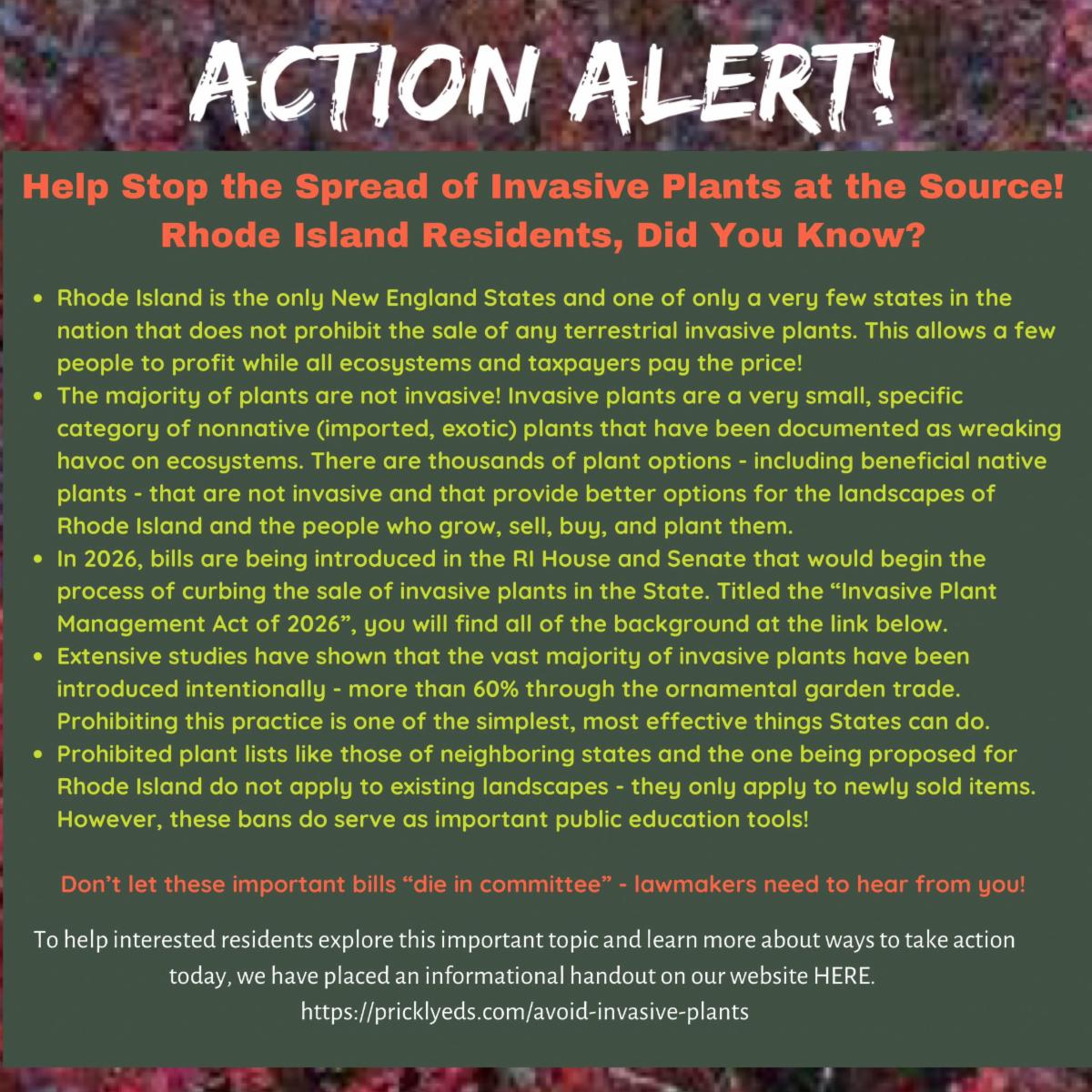
Action Alert for Rhode Island Residents
Please take action today to help curb the introduction of invasive plants to our communities. Click on the graphic below to head on over to our website where you can learn more about the issue and what you can do to help!
| |
Not Just Another Pretty Flower :-)
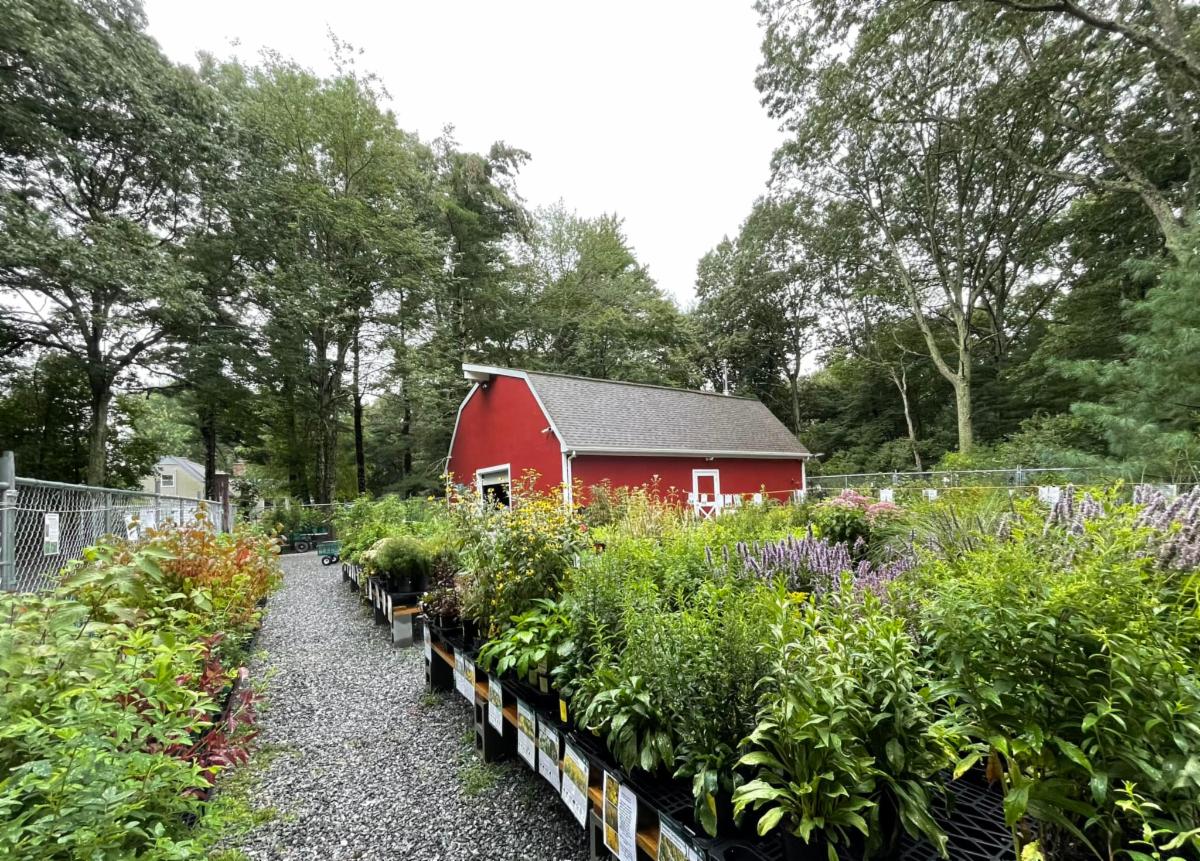
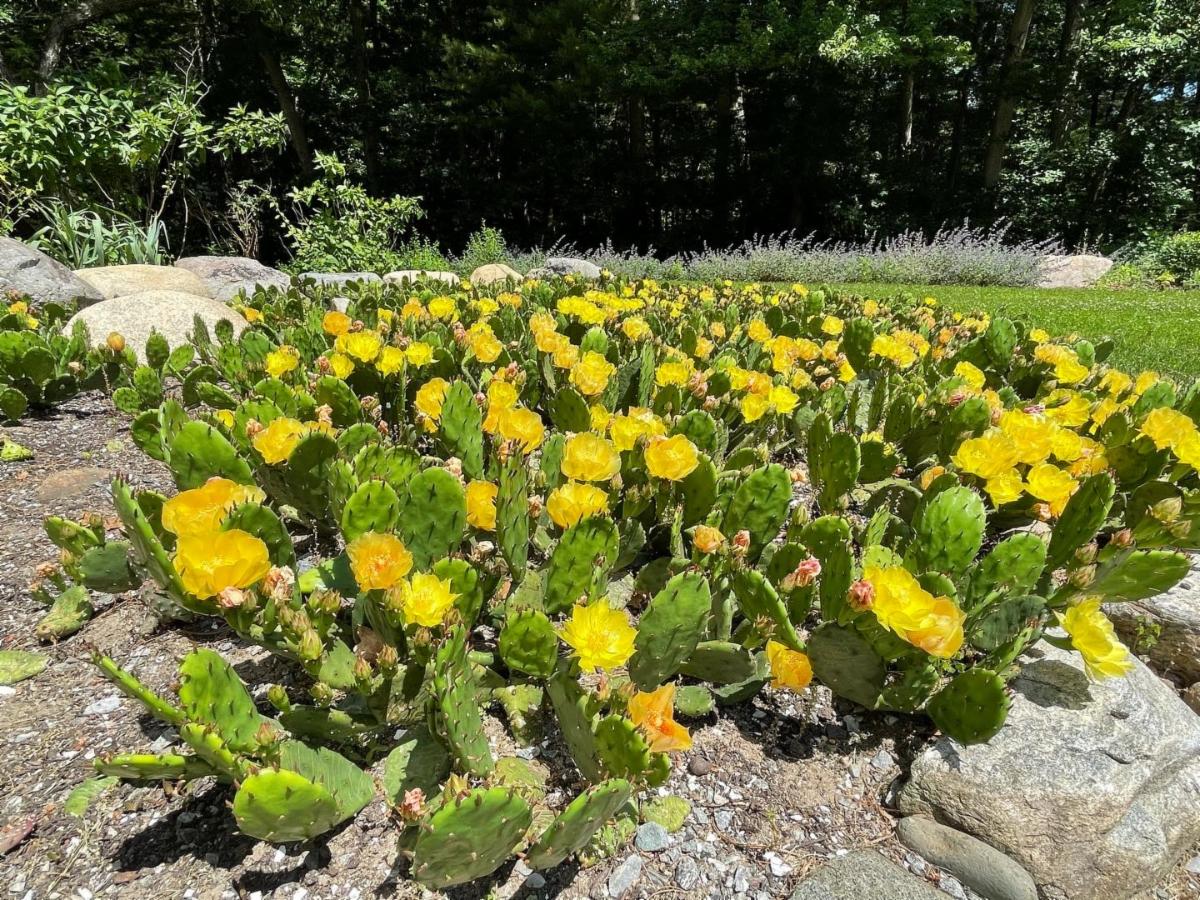
Prickly Ed's Cactus Patch Native Plant Emporium is a hyperlocal roadside attraction located directly on the border of Barrington, RI and Swansea, MA. Locally owned and operated by your neighborhood Wildscapers, we are focused on brining life back to yards and communities one space at a time. We offer an amazing array of native plants, prickly pear cactus, unusual pollinator friendly annuals and perennials, organic herb and veggie plants, magic dirt, lots of solicited and unsolicited advice & random curiosities designed to get your yard really buzzing. You can read all about us on our website, including the story of where the name "Prickly Ed's Cactus Patch" came from.
Learn more About Us Here
| | | | Be sure to follow us on Facebook and Instragram | | Use the buttons below to share this newsletter with others who might enjoy it! | | |
Prickly Ed's Cactus Patch Native Plant Emporium
6 Barneyville Road - Barrington, RI 02806
pricklyedscactuspatch@gmail.com
401-264-8540
|
| | | |