Student Newsletter

Set Youself Up for Success:

Timelines, Adult Support, and more!

Hi Future Innovators!


As you dive into your Science Fair projects, we’re here with key tips to help you succeed. This edition covers three crucial areas: 


  • conducting strong background research that informs your project from beginning to end
  • creating an effective project timeline to stay on track
  • and finding support for your research and writing. 


With these tools, you’ll be ready to take your project to the next level!

Conducting Strong Background Research


A well-researched project is key to building a solid foundation for your Science Fair project. Here’s how to ensure yours is thorough and informative:


Helpful Guides for Research

Need some guidance with your research? Check out Project Component Guide to read more about your Research Plan (Step 1). In this, you'll find a guide for your research plan, templates, and exemplars to get you started on the right foot.


2025 Project Component Guide


Research Plan Guide


Templates


Project Planning Template


Using Research to Guide Your Project Planning


As you work through your Science Fair project, it’s important to use your research to guide each step of the process. The Project Planning Template helps break down your project into manageable stages, ensuring that your research is thoughtful, relevant, and impactful. Here’s how to integrate research at each phase:


Observe:

Start by finding reliable information. Use your research to clearly define your project question and hypothesis. Reflect on how your research inspired your project idea and whether your hypothesis is supported by existing studies.


  • Rationale (Why is your project important?)
  • Hypothesis (What do you expect to happen?)
  • Bibliography (Where did your information come from?)
  • More on primary vs secondary source below


Plan:

Use your background research to inform your experimental design. Does your research suggest the best materials or methods? Consider any safety or ethical concerns that might arise, and make sure your plan aligns with your research-supported hypothesis.


  • Procedure (What will you do step by step?)
  • Materials & Equipment (What do you need?)


Explore:

As you collect data, compare it with what your research predicted. If your experiment changes, or if you discover errors, research can help you adjust your methods or refine your approach. Use your background knowledge to understand and explain unexpected results.


  • Data Analysis (How will you understand your results?)


Explain: 

When you’re ready to present your findings, your background research helps tie everything together. It shows how your project builds on what’s already known and highlights the new insights your project provides. Be sure to use your research to explain why certain results occurred and how they relate to your original hypothesis.


Incorporating research at every stage will ensure your project is based on strong scientific foundations and will make it easier to communicate your findings clearly and effectively!

___________________________________________________________________


Primary vs. Secondary Sources

Understanding the distinction between primary and secondary sources is essential. Primary sources are original materials or data (such as research articles, lab reports, or field studies) that provide direct evidence for your project. Secondary sources, on the other hand, interpret or analyze primary sources (think textbooks, reviews, or summaries). Both are valuable, but it’s important to know when and how to use each in your project.


Writing Support

While your project may focus on STEM topics, don’t overlook the importance of writing skills. Your Science Fair project pulls together multiple disciplines, including effective communication. Consider reaching out to your school or local librarian, an English teacher, or another academic writing resource to help with organizing sources, formatting your paper, and ensuring that your writing is clear and cohesive. Strong writing can elevate your project!

Get Support with Your Project (and more!)


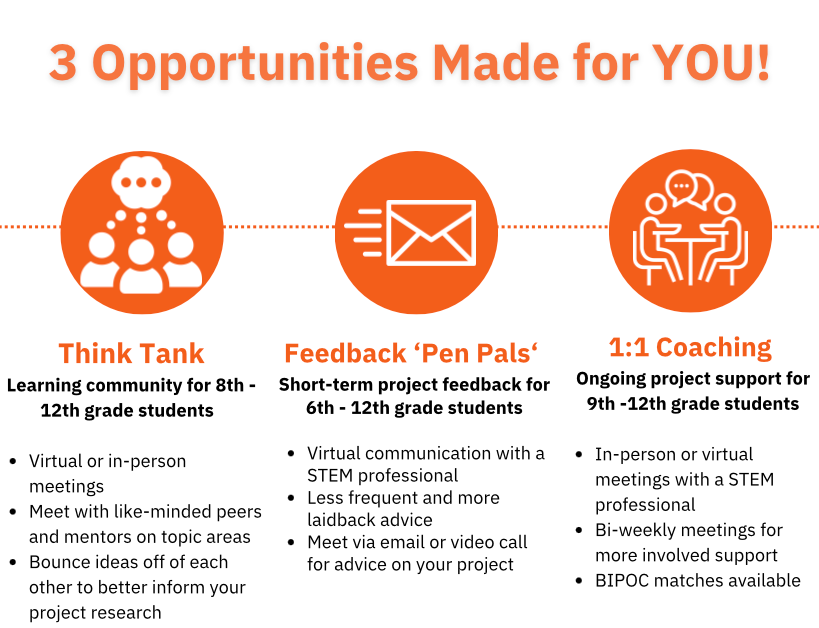
Want support on your project this year? MSEF offers great opportunities for you to work with an expert in your field of interest!


Sign up for our Mentorship Program and get paired with a STEM professional or expert in your field of interest. They’ll provide guidance, support, and valuable insights to help you excel in your project. Enhance your skills and make your ideas come to life with expert help.


Spots are limited and matches are not guaranteed. This does not include lab access.

Sign Up Here for a Mentor

Project Timeline: Your Steps to Success


As you plan your project, it’s important to break it down into manageable steps rather than trying to tackle everything at once. Creating a clear timeline will help you stay organized and on track. To get started, we highly recommend checking out our Think Tank Playbook along with these sample timelines that can guide you through each phase of your project. Remember, if you are doing this as a school project your teacher may be providing timelines or deadlines that you should be using.


Think Tank Playbook


Sample Timelines


MSEF-Highlighted Opportunities

Be sure to check out these events and opportunities coming up. Feel free to reach out to us with any questions!


  • The 2024 MRS Fall Meeting & Exhibit, hosted by the Materials Research Society, will take place from December 1–6 in Boston, MA. It offers a platform for scientists and researchers to present their work on cutting-edge materials research and network with global leaders in the field.​
  • Are you thinking of heading off to college? Check out the The Boston STEM College and Career Fair will take place on November 10, 2024, at Wentworth Institute of Technology. It offers students the opportunity to explore STEM-related education and career paths by connecting with over 300 institutions and industry representatives.​
  • The STEM in Full Color Expo will be held on October 22, 2024, at Southline Boston. This event celebrates diverse talent in STEM, featuring hands-on activities like biotech experiments, lab tours, and networking opportunities to explore STEM education and careers.
  • Bow Seat’s Future Blue Youth Council (FBYC) is accepting applications for 2025! Young people can apply by November 8th for a paid, one-year term to serve as project managers, advisors, and idea generators. Applicants must be either Bow Seat alumni or participate in the Ocean Awareness Contest by November 8th to be eligible
  • It's (almost) STEM Week 2024! Want to see what events are going on in your area? Check out this link to see what's happening near you!


We're looking forward to see you in during the 2025 Science Fair Season!


Follow us on Instagram for content and programming reminders. Want a chance to be featured on our Instagram? Click on this link for your submission!


@MassScienceFair

Martha Johnson

Student Programs Coordinator

mjohnson@scifair.com


Advancing science and engineering literacy since 1949, the Massachusetts Science & Engineering Fair (MSEF) was founded by the American Academy of Arts & Sciences, MIT professors, and a group of pioneering K-12 science educators. 

MSEF is a nonprofit 501(c)(3) organization.

Massachusetts Science + Engineering Fair | scifair.com

LinkedIn  Instagram  Facebook