Advancing the Turfgrass Industry in New Jersey and the World
FUNDING TURF ADVANCEMENTS #10:
Rutgers' Research to Develop
Best Management Practices for Dollar Spot
The New Jersey Turfgrass Association (NJTA) is proud to support the Rutgers Center for Turfgrass Science by providing scholarship money to recognize the accomplishments of undergraduate and graduate students. One NJTA scholarship recipient, James Hempfling, recently defended his doctoral dissertation on evaluating disease forecasting models and determining the influence of cultivar susceptibility on fungicide control of dollar spot. Many industry organizations including the USGA, GCSANJ, GCSAA-EIFG, and the Tri-State Turf Research Foundation supported this research.
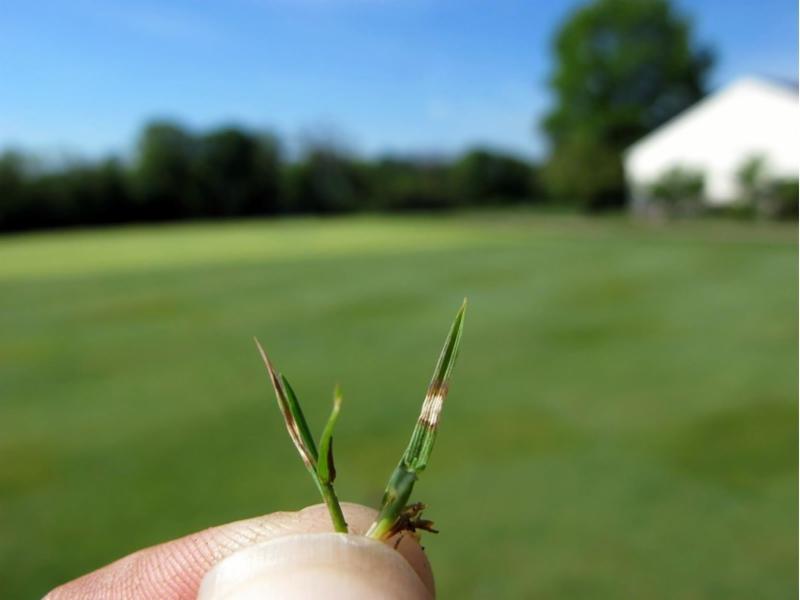
“Dollar spot is one of the most destructive and economically important fungal diseases of amenity turfgrasses,” said Dr. Bruce Clarke, Extension Specialist in Turfgrass Pathology, Rutgers University. Present on golf courses throughout the Garden State and other regions with humid climates, the disease causes unsightly small, round patches of straw-colored turfgrass that can become pitted and negatively affect playability. Because more money is spent controlling dollar spot than any other turfgrass disease, there is an economic incentive to improve the efficiency of control programs.

James Hempfling, who was advised by Dr. James Murphy, Extension Specialist in Turfgrass Management, Rutgers University, and Dr. Bruce Clarke, spent three years intensively collecting and analyzing data from his field study. “I was out there on the Rutgers turf research plots rating dollar spot every other day,” Hempfling explained. 
Accuracy of Models to Forecast Dollar Spot
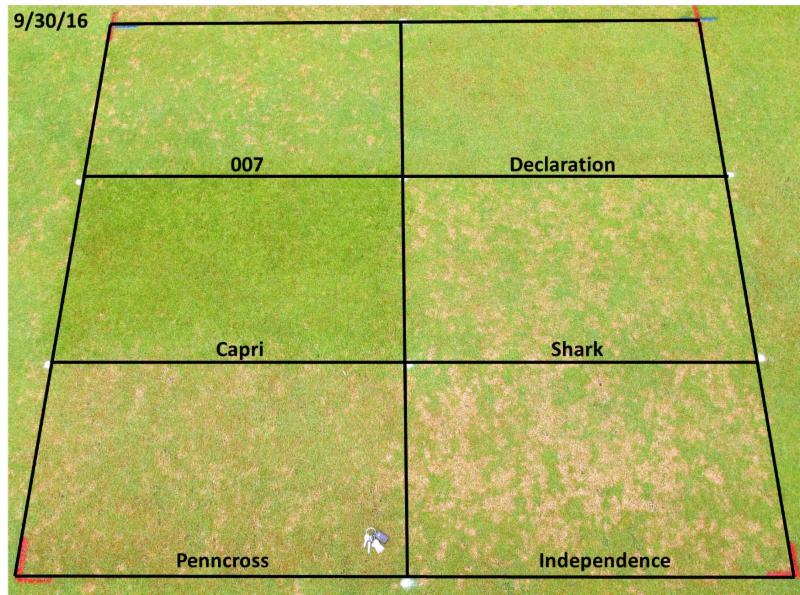
James assessed whether recently developed models could predict dollar spot in New Jersey. Additionally, he examined the reliability of models to predict dollar spot for six cultivars of bentgrass ranging in susceptibility to the disease.

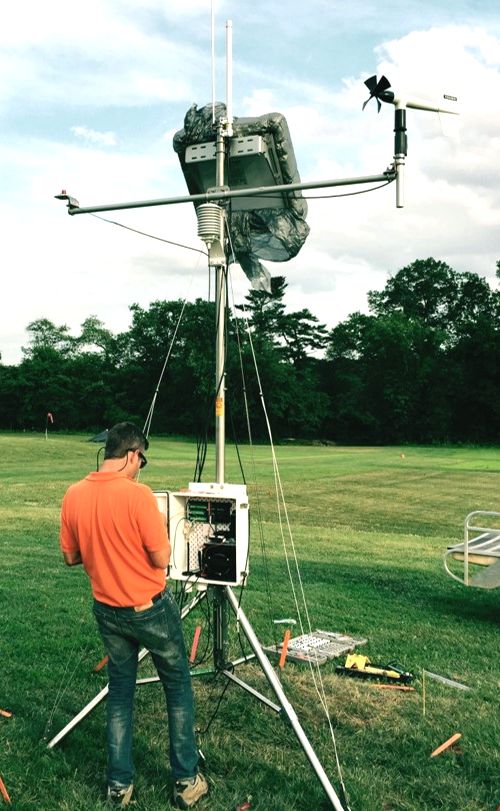
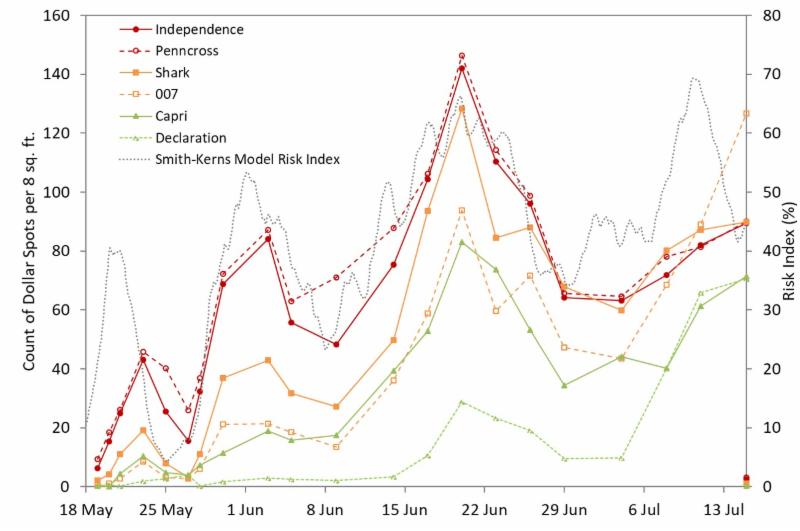
One model evaluated by Hempfling was the Smith-Kerns Model, which was created by Dr. Damon Smith and Dr. Jim Kerns. This model uses air temperature and relative humidity data to generate an output that indicates the level of risk for dollar spot at any given hour. 

“The data shows that this forecasting model does in fact work here in New Jersey,” said Hempfling. “It rarely had an instance where it failed to predict disease, which means that a superintendent won’t be caught off guard,” he explained. “But there were instances where the model over-predicted disease, especially on the cultivars that are bred to be more resistant to dollar spot.”

With those results in mind, the team at the Rutgers Center for Turfgrass Science modified how to interpret the model’s output of risk, which yielded more accurate predictions and fewer over-predictions. Be on the lookout for upcoming publications and conference seminars, which will explain these modifications.

Overall, Rutgers research data suggest that New Jersey turf managers could achieve fungicide savings and acceptable disease control when using the Smith-Kerns model to schedule applications.
Does Cultivar Resistance to Dollar Spot Impact Fungicide Inputs?
Most older golf course turfs can sustain dollar spot damage throughout much of the growing season because the grasses are not very resistant to the disease and weather conditions are frequently conducive for dollar spot activity. As a result, a calendar-based fungicide program is typically the most effective approach to managing the disease.

Another method to schedule fungicide treatments is threshold-based. That is, if you see dollar spot, then you spray. “This curative approach is risky, especially on highly susceptible grasses,” says Hempfling. “You don’t see it one day and the next day it is everywhere!” Although it has potential for reducing fungicide inputs, curative applications also pose the biggest risk for unacceptable disease outbreaks. 

One would assume that you could use less fungicides to control dollar spot disease on the more resistant cultivars, but there was little data to prove this hypothesis.

“Low hanging fruit of my research was to scientifically quantify how much you can reduce fungicide inputs when using a highly resistant cultivar,” said Hempfling. As expected, a cultivar that is resistant to dollar spot required less fungicides - an average of 61% less in 2015 and 2017 when disease pressure was high. “That is a big number, especially when you translate that to fairways, which are the largest treated area on golf courses.”

This research provides initial data on the impact of cultivar selection on fungicide inputs, and the Rutgers team is currently evaluating other bentgrass cultivars to generate additional data. The goal is to provide superintendents with a thorough cost analysis to use when considering re-grassing fairways with dollar spot resistant cultivars.

Thanks to student scholarships from the NJTA and financial backing from many other turfgrass organizations, Rutgers continues to provide science-based solutions to management challenges in the industry. 

FUNDING TURF ADVANCEMENTS is Brought to You By:
YOU & ALL Members of the NJTA

The New Jersey Turfgrass Association (NJTA) exists solely to promote the turfgrass industry in the Garden State through education, professionalism, and leadership. Thanks to the support of members like you, the NJTA is able to subsidize some of the research needs of the Rutgers University Center for Turfgrass Science.

If you would like to support these efforts further, you are welcome to Donate to the NJTA Foundation anytime!
May 6, 2019 at Fiddler's Elbow Country Club Whether you play, attend the grand reception, or sponsor, don't miss out on the event of the year!
Mail/Fax in a print PDF Registration Form .