Find out who you are and do it on purpose. -- Dolly Parton | | |
The Blizzard of 78 was a memorable event. My wife and I lived in downtown Boston, and I could walk to work, so the driving ban didn't impact us very much. But I still remember seeing Army tanks driving down Washington Street, not sure why. Everything was closed because no one could get there.
It was a week off for most people, but I was 'able' to come in every day for a bit and make sure things were ok in the restaurant I managed. Any employee who could walk or get to the store by subway was allowed to get food and bring it home. What really sticks out to me is that I brought some of those famous French fries home, but they didn't taste quite the same since they weren't cooked in special oil.
This has been an 'interesting' year, weather-wise, which prompted this weblog.
| | If You Don't Like the Weather, Wait 5 Minutes | | |
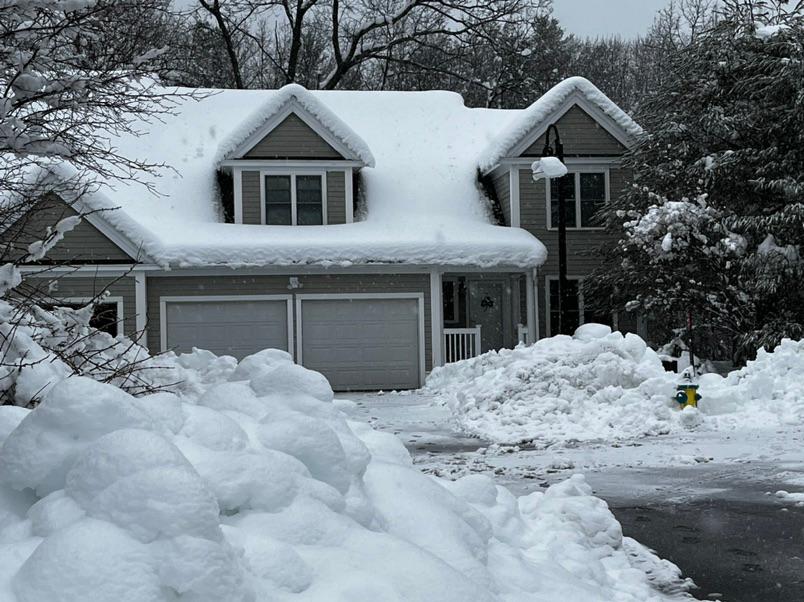
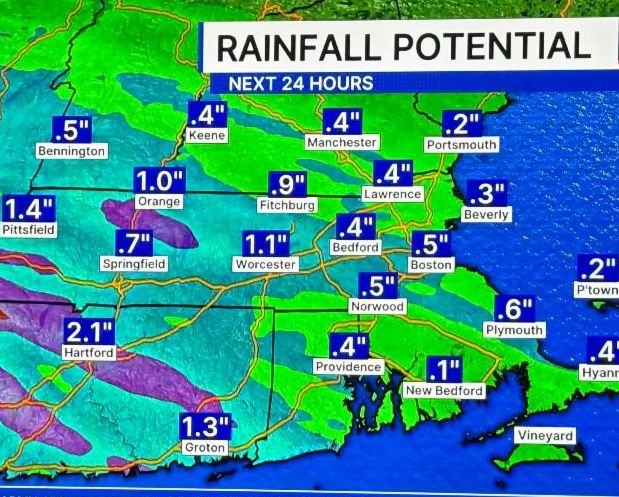
There is a certain kind of morning every New Englander knows. You wake up before sunrise, look out the window and see nothing happening. No snow. No rain. Maybe not even a cloud worth mentioning. But the television meteorologist is standing in front of a giant map covered in alarming colors, schools are already closing, and somewhere nearby a supermarket has been stripped of bread, milk and eggs.
By 8:00 a.m., the forecast says the storm has “slowed down a little.” By noon, a blizzard has “shifted slightly east.” By 3:00 p.m., you are standing in your driveway with a shovel, wondering how you somehow ended up with just four inches of snow.
| |
That is weather in New England.
There is an old saying here: If you don’t like the weather, wait five minutes. It will change. That may not be scientifically precise, but if you have lived around Boston for any length of time, it feels pretty accurate.
We can wake up to sunshine, drive to work in rain, eat lunch during a thunderstorm, shovel snow before dinner and finish the evening watching a meteorologist explain that tomorrow will be “mostly sunny.”
Which reminds me of another favorite New England weather line: “I just shoveled four inches of partly cloudy.” Weather has always been different around here. Maybe it is because New England sits in a place where all kinds of weather systems seem to enjoy running into one another.
Maybe it is because Boston has four very distinct seasons. Or, as another old New England saying goes, we really have only two seasons: winter and road construction. That one may be closer to the truth.
Whatever the reason, Bostonians don’t simply experience weather. We discuss it, analyze it, complain about it and, perhaps most importantly, remember it. Ask someone from Boston about a major snowstorm and there is a good chance they can tell you where they were, how much snow they got, whether they lost power and what happened to their car. Weather becomes part of our personal history.
| |
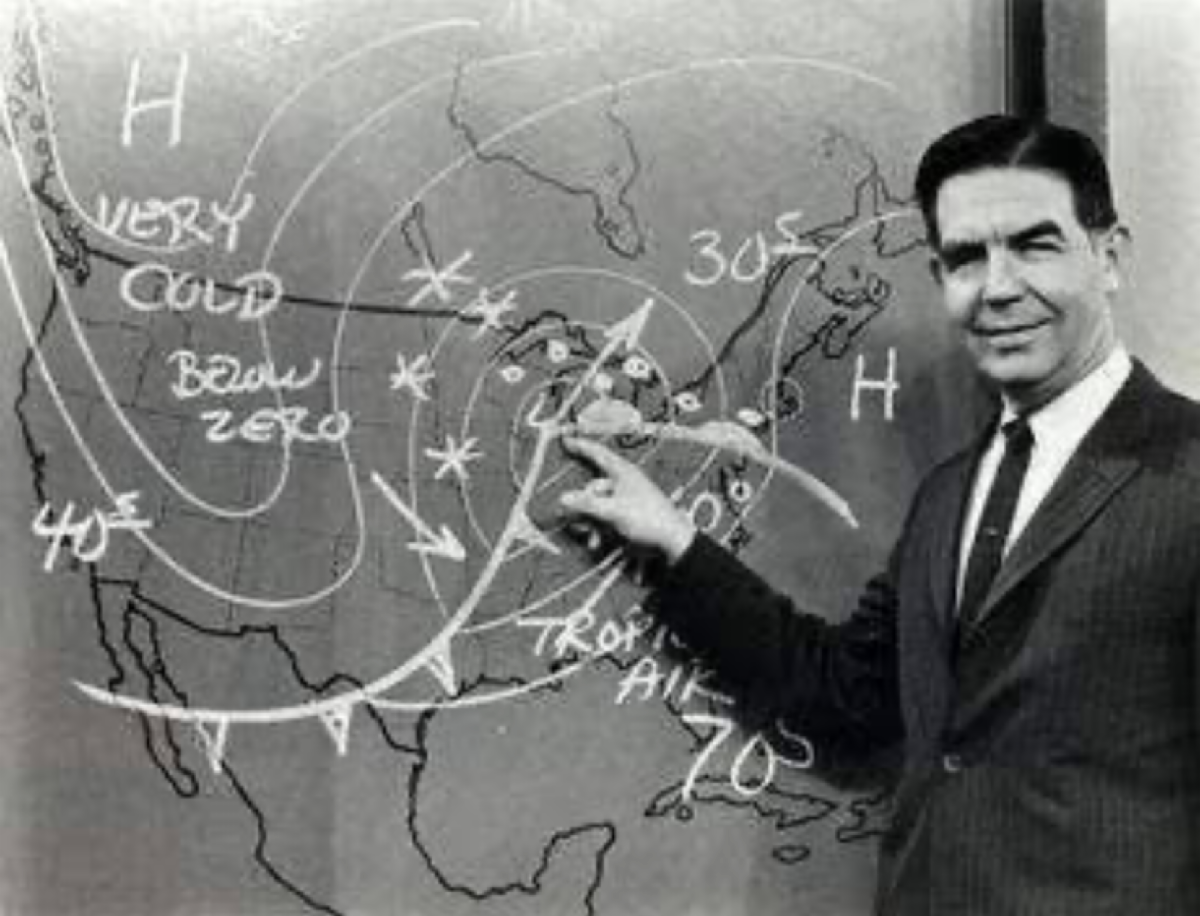
For an earlier generation of New Englanders, weather forecasting was closely associated with legendary Boston television weatherman Don Kent. Long before elaborate computer graphics, weather apps and radar images on our phones, Kent stood in front of maps and explained what he believed was coming. The tools were simpler, but the job was not. Forecasting New England weather has never been for the faint of heart.
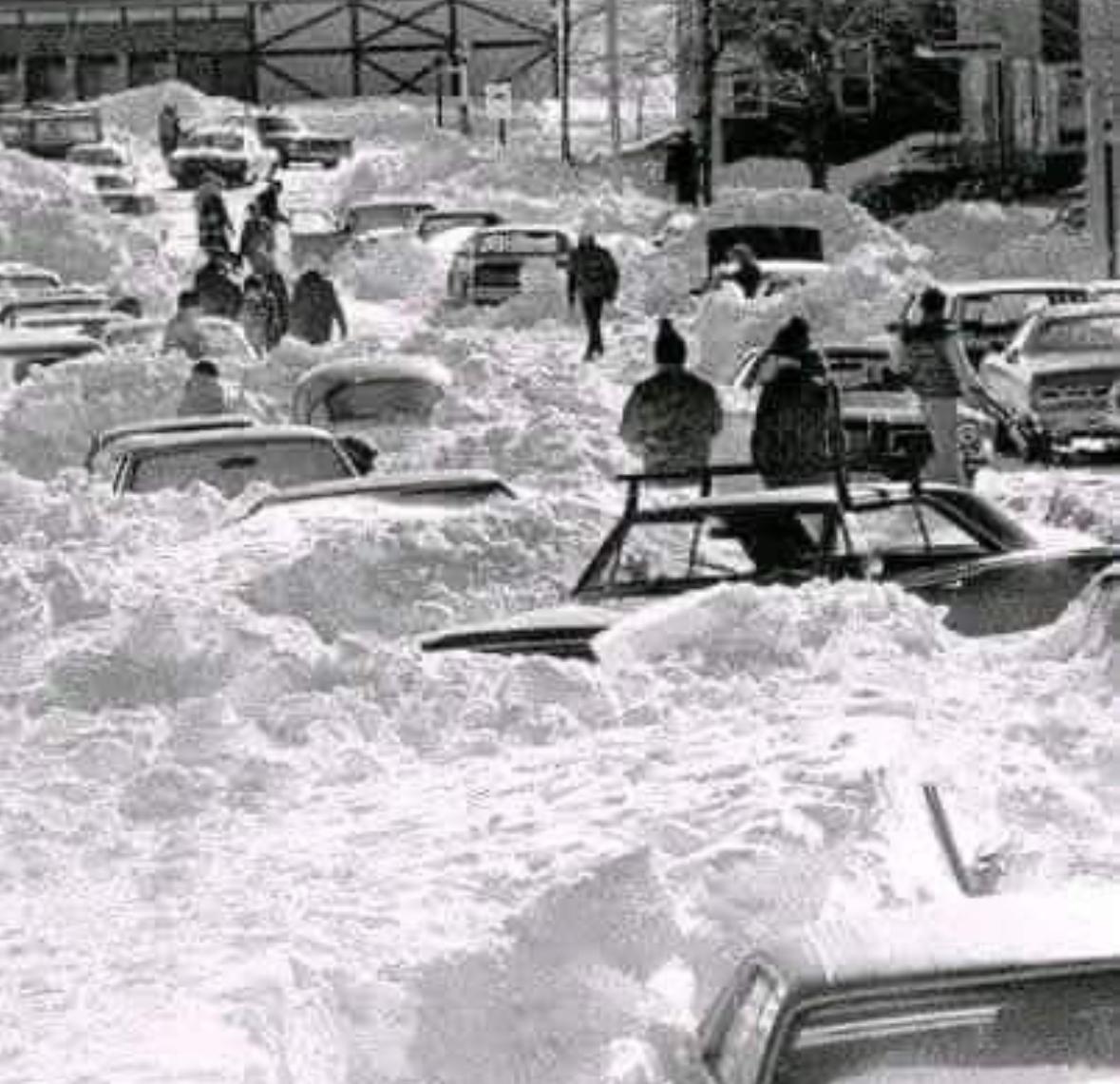
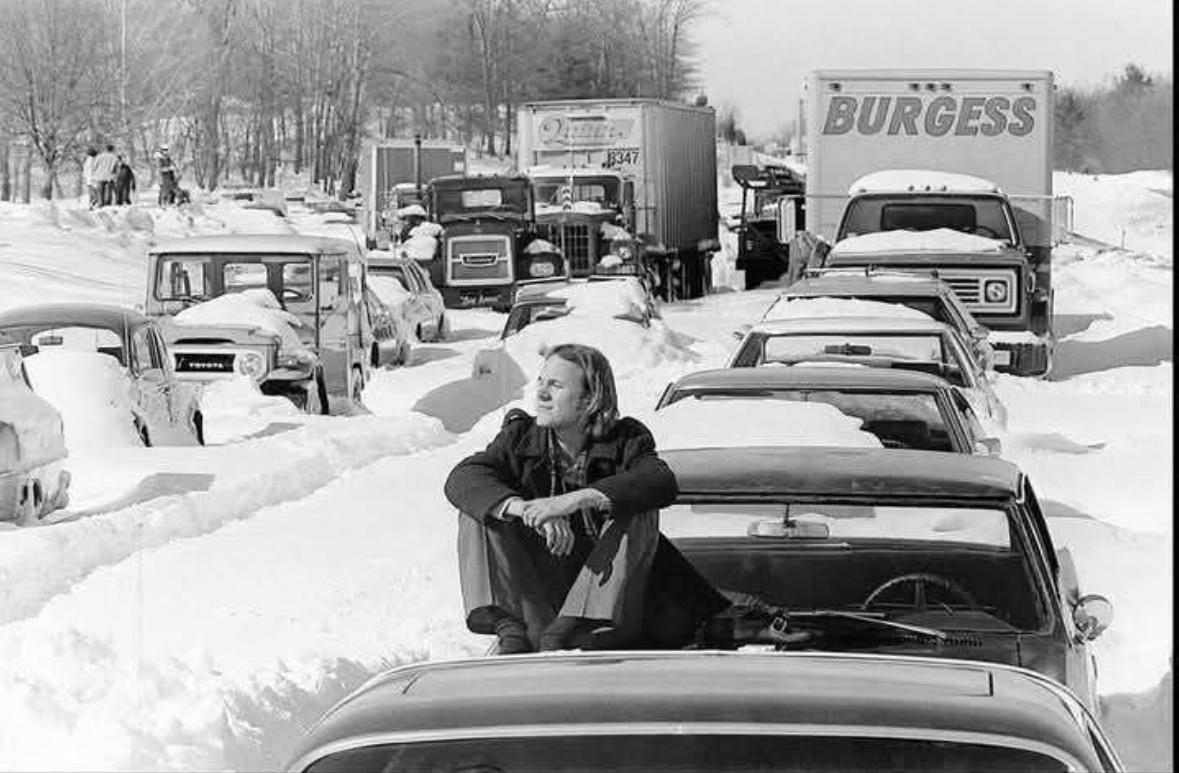
And then there was the Blizzard of 1978. For people who lived through it, you really don’t need to say much more than “the Blizzard of ’78.” Everyone knows what you mean. The storm buried Boston under more than two feet of snow, stranded thousands of motorists, shut down roads and businesses, and brought much of Massachusetts to a standstill.
People abandoned cars on highways, snowdrifts swallowed neighborhoods, and schools and businesses remained closed for days. For years afterward, almost every significant snowstorm was introduced with some variation of, “Could this be another Blizzard of ’78?” Usually it wasn’t, but that never stopped us from asking.
| |
One of the remarkable things about the Blizzard of ’78 is how different weather forecasting was then. Meteorologists certainly had scientific tools, but nothing remotely comparable to what they have today. There were no weather apps providing minute-by-minute updates, no phone alerts telling you that snow would begin in seventeen minutes, and no Doppler radar images available in your pocket.
There was also no endless parade of computer models with names and initials that viewers now discuss as if we are all amateur meteorologists. Today we hear things like, “The European model has it going farther east,” or, “The American model brings it right over Boston.” Thirty or forty years ago, most of us would have had no idea what any of that meant. Now we sit on the couch evaluating computer models like we work for the National Weather Service.
Forecasting has improved enormously because meteorologists have more information, better radar, better satellites, better computer modeling and the ability to constantly update what they know. But there remains one inconvenient fact: they can still be wrong. And somehow they keep their jobs.
| |
Think about that for a moment. A meteorologist can tell several hundred thousand people that six to ten inches of snow are coming. We cancel meetings, schools close, people change travel plans, and New Englanders immediately head to the supermarket. Because everyone knows another reliable weather rule: You can measure the seriousness of a Boston snowstorm by how quickly the bread and milk disappear off the store shelves.
I have never completely understood this. Apparently, when a foot of snow is coming, every family in Massachusetts suddenly develops an urgent need for milk, bread and eggs. Perhaps the real state emergency plan is French toast.
Then we wake up the next morning and there is nothing. Maybe a dusting. That evening the same meteorologist comes back on television and says, “Well, the storm tracked a little farther east than we expected.” And everybody moves on.
There are CEOs who would love that arrangement. Imagine walking into a board meeting and saying, “Revenue tracked a little farther east than we expected.” I’m not sure it would work quite as well.
| |
But meteorologists really do have a difficult job. They are trying to predict something that is constantly changing, and that may also explain why New England weather produces so many wonderful expressions. We have Nor’easters, we have wicked cold, and we have days when it is supposedly “too cold to snow,” although I have never completely understood the science behind that one.
We talk about snow that is “good packing snow.” We distinguish between “a coating,” “a dusting,” “a couple of inches” and “we’re getting hammered.” And every winter someone inevitably asks, “Is it sticking?” "Is it plowable?"
That is one of the great Boston weather questions. Not, “Is it snowing?” We can see that. The real question is whether it is sticking, because sticking changes everything.
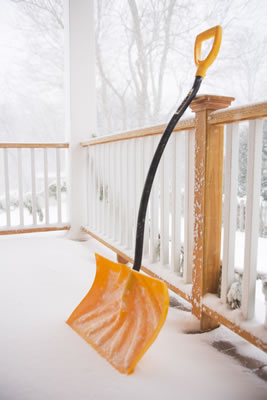
Once the snow begins sticking, we move from watching the weather to doing something about it. We get out the shovels, start the snowblower, move the cars, put down the salt and call the plow guy. And if you have lived here long enough, you know one more important rule: Never put the snow shovel away until May.
There is nothing quite like a beautiful 70-degree April afternoon to convince you winter is finally over. Then three days later you are scraping ice off the windshield. New England spring is less a season than a negotiation.
Snow days have changed too. Years ago, a snow day meant school was cancelled, kids went outside and parents figured out what to do with everyone. Today, technology has complicated things. Children may cheer when school is cancelled, only to discover that their parents are still sitting at the kitchen table answering emails or figuring out their childcare job.
Which leads to another modern New England truth: A snow day for the kids is a workday for the parents. Technology has changed forecasting. Technology has changed work. Technology has changed snow days. But the weather still refuses to cooperate completely.
And perhaps that is what makes weather such a useful reminder about life. We can forecast, plan, analyze and gather enormous amounts of information, but eventually we have to look out the window and see what is actually happening. Sometimes the forecast is right, sometimes it is wrong, sometimes the storm turns, and sometimes conditions change.
The older I get, the more I think there is something comforting about that. We spend a lot of time trying to make life predictable, but some things simply refuse to cooperate. Weather is one of them. Life is another. The best we can do is pay attention, make the best decision we can, adjust when circumstances change, and keep moving.
| |
Maybe that is why New Englanders talk about the weather so much. It gives us a daily reminder that certainty is overrated. Tomorrow’s forecast may change, the snow may miss us entirely, and spring may arrive two weeks late, but we adapt. We always have.
So the next time someone tells you tomorrow will be partly cloudy, believe them if you want to.
Just don’t put the shovel away until May.
| | Surprise Photo at the End: | | If you are reading this on a social media platform, click below and you'll automatically receive a 'different' story every week on Wednesday. | | |
The Roll Call of states and countries where readers reside: Arizona, California, Colorado, Connecticut, Delaware, Florida, Georgia, Hawaii, Illinois, Indiana, Iowa, Kansas, Kentucky, Louisiana, Maine, Massachusetts, Michigan, Mississippi, Missouri, Montana, New Hampshire, New Jersey, New Mexico, New York, North Carolina, North Dakota, Ohio, Pennsylvania, Puerto Rico, Rhode Island, South Carolina, South Dakota, Tennessee, Texas, Vermont, Virginia, Washington and Washington DC, Wisconsin plus Canada, Conch Republic, Australia and the United Kingdom.
| | |
Ed Doherty
774-479-8831
www.ambroselanden.com
ed-doherty@outlook.com
Forgive any typos please.
| | | | | |