|
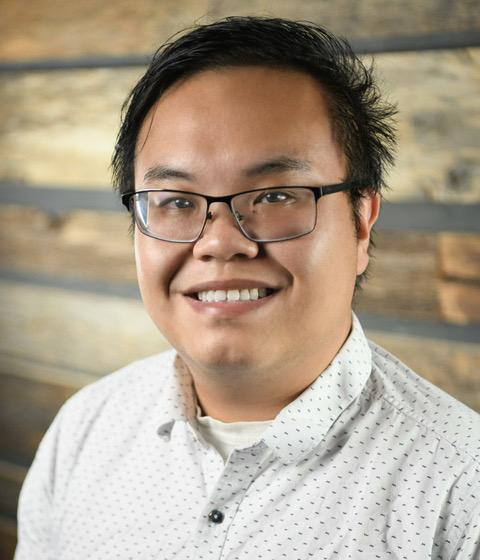
Anhvu N. Tran is the current orchestra director at Jean Childs Young Middle School in Atlanta, Ga. He previously taught in Gwinnett County. A public school educator for ten years, Mr. Tran received his Bachelor of Music Education from Georgia State University in 2015 and Master of education in 2020, where he studied double bass with Emory Clements.
Mr. Tran regularly freelances as a double bassist performing with various groups, including the Gwinnett Symphony, the Northeast Atlanta Ballet Orchestra, Gwinnett Ballet, and Georgia Philharmonic. In addition to performing, he served as a founding member and co-conductor to the Metropolitan Atlanta Philharmonic Orchestra, located in Southwest Atlanta. He also works with the Atlanta Music Project, an El-Sistema based program operating in Southwest Atlanta. Mr. Tran’s personal belief is that music education can exist in many forms to serve all populations of students from all circles of life.
Born in Vietnam to South Vietnamese refugee parents and raised in Georgia, Mr. Tran began studying music in the Metro-Atlanta area. He currently resides in East Point, GA.
What are the challenges of teaching orchestra currently, and what are some solutions you have developed?
It’s hard to believe that it’s been 5 years since the pandemic, but we’re still seeing some challenges all around in education resulting from it. I think many people had the hope that we would just return to business-as-usual coming back from virtual learning or that we would recover back to normal in just a few years following it. However, I think teachers should accept that there are things that will take a lot of time to claw back, and we should meet our students where they are.
One of the things I’ve seen from the kids is more reservedness in joining a music ensemble at our beginning levels—probably due to spending some of their early elementary years hidden behind a laptop screen. I’ve refocused a lot more of my recruiting initiatives to show the kids how welcoming our music classrooms can be and how it can serve as a safe space for them to make friends and learn music.
Another thing I’ve noticed is that in this world of instant gratification through technology, kids seem to get frustrated with practice more easily. Being patient when they feel they’re at their lowest and focusing on empowering students to see their progress at regular intervals throughout the year will help keep them sticking to music and in our programs.
What advice do you have for young orchestra directors?
I would advise young orchestra directors to be patient with themselves and learn how to meet kids where they are. So many of us when we finish our preparation programs come barging out the gates with the attitude of “I am going to make my mark on the profession” or “I’m going to program these bucket list pieces.” I think all the experienced teachers out there can relate to this. You’re young and hungry and this is now your time at the reins. But remember that we are teachers, and we operate within a community of parents, coworkers, colleagues, and students. Rely on those colleagues and lean on those coworkers to help you connect with the students and families first because you’ll have plenty of time to strike your path in this career.
What is your favorite orchestra piece to program and why?
I am a big proponent of programming new pieces of music for school orchestra. I think that we have many great new pieces that are fun and refreshing while still teaching valuable techniques to our kids. Also, many of our own great GMEA members have published great music and we should support that. This being said, I do have a few classic favorites that I think are just great traditions for young string orchestras, so don’t be surprised if you see me sneak in a Canyon Sunset every now and then.
What advice do you have for college students who are in an orchestral music education program?
Learn as much as you can and take care of yourself. There is a lot involved now with music teacher training but remember that these are valuable tools for you to use in the classroom. Tools aside, take some time to experience settings where you can learn about the things we can’t teach you in teacher training: If you can, volunteer at local youth orchestras or string camps so that you can learn how to interact with groups of kids and observe some master teachers. A lot of people bemoan that undergraduate programs may not prepare you enough in the art of classroom management, but that’s because these things are very localized and take experience, so the more you see different techniques and styles, the better prepared you will be to develop your own style.
Do you have any recruiting techniques that have been particularly successful for you?
It’s important to stress and show that your music program is a safe and fun place to be and learn. There’s a lot to be said about ensuring that the program is a space for the students to feel that they belong, which will drive them to stay and bring in friends. Once you’ve been there for a few years, have some alumni or older students speak to potential students. Importantly, you need to also plan on how to maintain this feeling as they go through your program too for retention. If you front load engaging activities and events when they come in, you may end up burning out your older students once the hype goes away. I know it is easy—I’m guilty of this assumption too—to look at that upper-level group as staying in for the sake of performing, but they need reasons for staying as well.
·
What has been your favorite performance thus far as a music educator?
Our school has close ties to former ambassador Andrew Young and his family. One of the proudest moments of my time at this school was performing for him during a visit. As a school, we’re super focused on this idea of legacy—the ones we uphold and the ones we leave—so it was a good feeling when he spoke to our students after the performance because it really was a blending of past, present, and future.
Who influenced you to become a music educator?
I would love to shout out the wonderful work of local music educator Scott Hague and the influence he had on my journey and inspiration in music education. Many of my friends from school still fondly talk about the great times we had in orchestra performing and traveling. All those fond memories are in no doubt because of the amazing space and program he built while we were in school. It’s something that I kept in mind while I was in pre-service and something I strive for in my own program. Even now in my 10th year of teaching, he’s been an inspiring mentor and invaluable friend.
|