Welcome to the University of Oklahoma Carceral Studies Consortium Newsletter. The Carceral Studies Consortium strives to build a community for intellectual exploration that includes faculty, staff, graduate students, community members, practitioners, and organizers.
Carceral Studies is concerned with the independent function and nexus of the political and social systems that organize, shape, sustain, and entrench practices of punishment, surveillance, incarceration, and harm.
|
|
Carceral Studies Conversations Podcast |
|
"The Carceral State and Radical Activism," with Dr. Dan Berger |
|
|
|
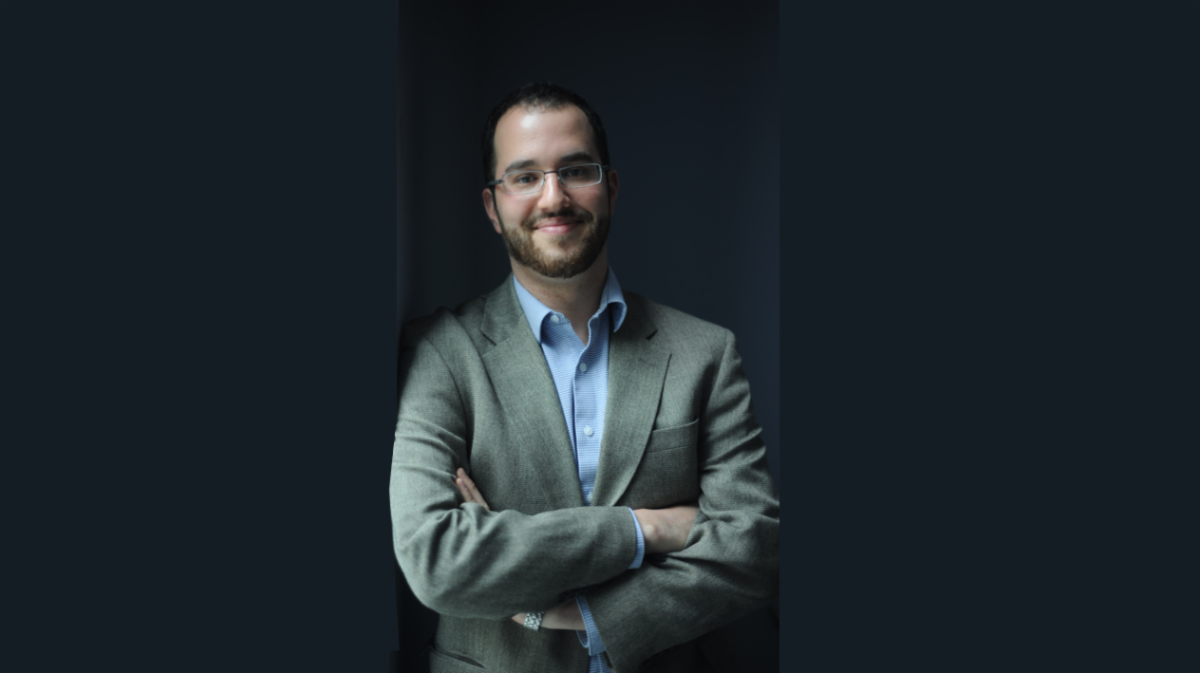
In this episode of the University of Oklahoma Carceral Studies Conversations podcast, Dr. Dan Berger defines the Carceral State by exploring its roots, logic, and features. Berger argues that activism against the Carceral State is a key feature, and he delves into how modern radicals have imagined an alternative future and learned from a usable past. Dr. Berger is an interdisciplinary historian focusing on critical race theory, twentieth century U.S. social movements, and critical prison studies. His research pursues a human accounting of how freedom and violence have shaped the United States in the twentieth century and continue to influence the world.
|
|
|
|
Over one-fifth of the U.S. prison population is fifty or older, and the share of elderly people in prisons will continue to rise, to one-third of the prison population by 2030. Law notes that “incarceration, with years of bad food, little opportunity to exercise, and inadequate medical care, accelerates the physiological aging process and often shortens life expectancy.” Decades of tough-on-crime sentencing has led to increasing geriatric needs of incarcerated people and the corresponding costs of this care. Despite Supreme Court rulings that the Eighth Amendment guarantees medical care, prison health care remains deficient. Although campaigns such as New York’s Release Aging People in Prison continue to push lawmakers and executives to provide pardon reviews and clemency, the graying of prisons continues to worsen, with health effects exacerbated by the COVID-19 pandemic.
|
|
|
|
Algorithms influence important decisions that inform economic well-being and access to basic services. These algorithms have been adopted for access to private goods and services (e.g., cars and homes) as well as for government services (e.g., health care and unemployment). Hao argues that “for low-income individuals, the rapid growth and adoption of automated decision-making systems has created a hidden web of interlocking traps.” Low-income individuals are most vulnerable to the temporary economic hardships created by these algorithms. In response, a group of lawyers is pushing back against these risk-assessment algorithms by educating their colleagues on how to navigate data-driven technologies within the scope of existing laws as well as pushing for new regulatory and oversight mechanisms.
|
|
|
|
As the U.S. has seen rising support for abolitionist demands, these same calls have been echoed across the globe. O’Connor writes, “Even as these abolitionists struggle against the forces of oppression and exploitation in their own countries (and grapple with their particular histories), each understands themselves to be part of an emerging global movement.” Centuries of European colonialism, propelled recently by decades of the U.S. exporting practices of surveillance and incarceration, has introduced a carceral logic to societies around the world. With these diffuse carceral systems, abolitionists are taking an internationalist approach to “link specific, local struggles to the wider global cause.”
|
|
|
|
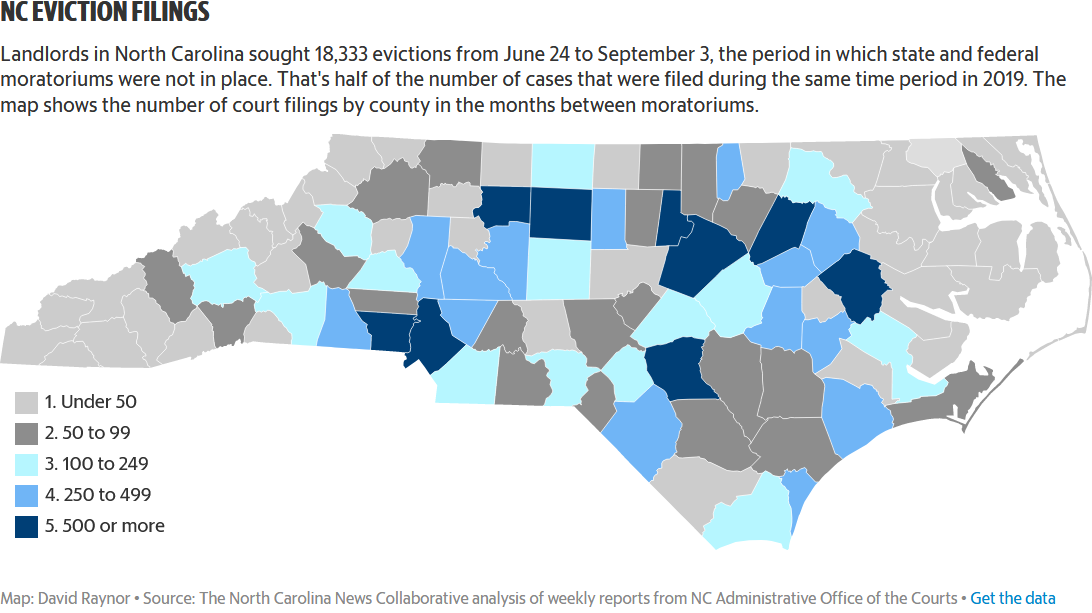
After North Carolina’s government moratorium on eviction lapsed over the summer, thousands of people contracted COVID-19. “From June 20 to Sept. 3, evictions in the state resulted in 15,690 coronavirus cases and 304 deaths,” according to a SSRN study. Evictions, the author of the study argues, “are a public health issue” which increase risks for everyone in the community. This study reveals how housing is a key part of health care, and housing instability can exacerbate the spread of COVID-19. The author of the study argues that rental assistance, as a long-term solution, helps both tenants and landlords.
|
|
|
|
This review of Sara Mayeux’s Free Justice: A History of the Public Defender in Twentieth-Century America concludes that “liberal legal reforms can function to legitimate material inequalities and distract from more robust commitments to social justice.” Mayeux’s history explores how elite lawyers came to embrace the idea of the public defender through a transformation in American legal culture. By the late 1950s, in the context of the Cold War, lawyers embraced the public defender as a symbol of liberalism—individual rights, national unity, and the egalitarian potential of the legal system. The implementation of this indigent-defense system has left much to be desired. This history informs Clair’s conclusion: “Fixing the failures of our criminal legal system requires more than the provision of effective legal representation to the poor; it requires a redistribution of power and wealth to the marginalized communities and individuals whom criminal law targets for punishment.”
|
|
|
|
The Thirteenth Amendment prohibits slavery or involuntary servitude except “as punishment for a crime.” This loophole allowed for profitable systems of convict labor to arise throughout the U.S., especially in the Jim Crow South. During Reconstruction, states erected a system of labor that exploited mostly Black people in barbarous conditions. The legacy of this system remains: incarcerated people today often are required to work. Foner argues that the Constitution needs an abolition amendment to eliminate the criminal exemption of the Thirteenth Amendment. Foner argues: “Approval [of the abolition amendment] would recognize the basic human rights of those convicted. Reinforcing the idea all people who work should be paid for their labor, it would be a major step in bringing to fruition the ‘new birth of freedom’ promised by the Civil War.”
|
|
|
|
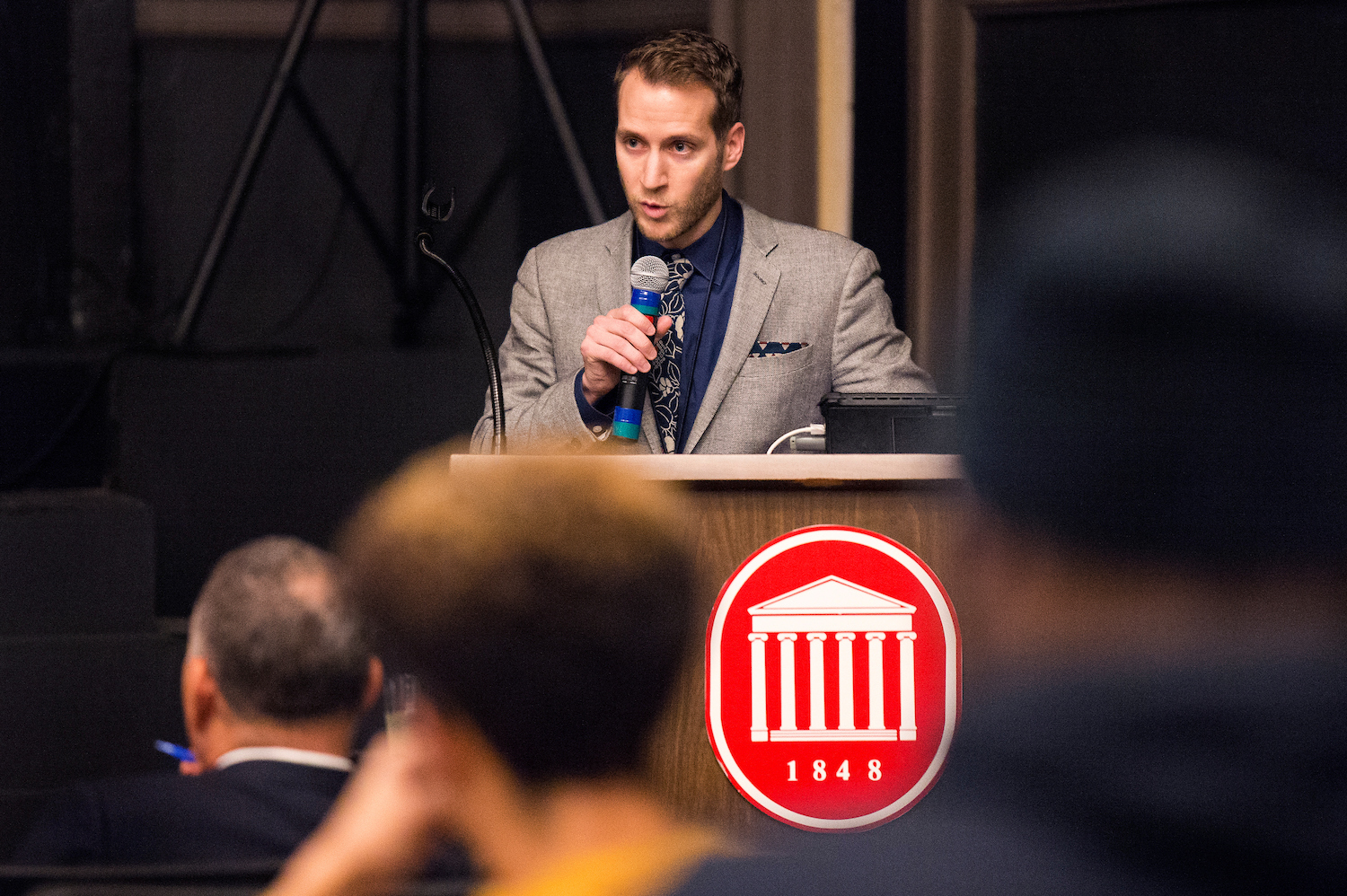
Dr. Garrett Felber, a tenure-track assistant professor of history at the University of Mississippi and author of Those Who Know Don’t Say: The Nation of Islam, the Black Freedom Movement, and the Carceral State, was terminated. Although the pretext given for Felber’s firing is his alleged refusal to meet with his department’s chair while currently on research leave, Middleton argues that Felber was terminated because of his anti-racist, engaged scholarship. Felber, for example, criticized publicly the University of Mississippi for rejecting a grant he was awarded for Study & Struggle (a political education project that supports books for incarcerated participants, ASL and translation services, etc.) and for criticizing a major university donor who sits on the board of the nation’s second-largest for-profit private-prison company. Felber “had to reconcile an undertaking of anti-racist work at a university that has never properly faced and atoned for its racist past.” Felber’s termination comes at a time when the university is investigating the whistleblower who revealed racist, sexist, and homophobic emails between a now-former dean and donors.
|
|
|
|
Defeating Trump failed to repudiate the “structural racism, settler colonialism, sexism, classism and policing” that his politics represented and deepened. Organizers recognize that they must continue to “build upon already existing organizing, campaigns and movements, create transformative projects based on mutual aid, political education and alternative institution building, and engage in political struggle to eradicate the aforementioned oppressive structures and to build the world we would like to see.” McCoy highlights multiple local campaigns engaging in this radical mass politics to demand resources that focus on justice and transformation, and he argues that these examples are the “building blocks for growing grassroots power” that is vital in the larger struggle against oppressive systems.
|
|
Announcements & Opportunities |
|
CSC Welcomes New Board Members
The Carceral Studies Consortium is pleased to introduce its new Core Affiliate and Affiliate Board Members.
Core Affiliate Board Members: Constance Chapple (Sociology), A. Miles Francisco (Foundation for Liberating Minds), Julie Gerlinger (Sociology), Stefanie Heinrich (Educational Leadership and Policy Studies), Sara Mata (Office of the Vice President for Research and Partnerships), Ellen Stackable (Poetic Justice), Jermaine Thibodeaux (African and African American Studies)
Affiliate Board Members: Emma Colven (International and Area Studies), Kendra Guthrie (Student Entrollment Center), Baily Hoffner (OU Libraries), Anthony Levenda (Geography and Environmental Sustainability), Olivia Robson (Letters and International and Area Studies), Julie Ward (Modern Languages, Literature, and Linguistic)
|
|
|
Apply for Carceral Studies Consortium Grants
In support of the CSC mission, the Consortium offers a small number of micro-grants of up to $500 to OU faculty, staff and students to support the development of research, pedagogy, and community engagement projects relating to Carceral Studies. The Consortium encourages applications for projects that engage the community and/or support social or policy outcomes.
Spring 2021 applications are due February 1, 2021
|
|
|
CORRECTION
In the 12/3/2020 Carceral Studies Newsletter, we misspelled Thomas Sugrue's name.
|
|
ABOUT
The Consortium Newsletter will offer a roundup of a few selected articles that reflect today’s news, organizing, and thinking related to the carceral state. We understand that freedom work is built on education and engagement. Education requires an understanding of contemporary issues informed by their historical context. We hope that these curated articles will help you analyze the issues that we face and understand the community that we strive to construct.
Join the conversation!
We encourage feedback, suggestions, and article suggestions. Please reach out to carceralstudies@ou.edu with any ideas, thoughts, or recommendations.
If anyone you know is interested in receiving this newsletter and other information from the Carceral Studies Consortium, please forward them this email and they may click this link to subscribe.
|
|
Land Acknowledgment
The University of Oklahoma is on the traditional lands of the Caddo Nation and the Wichita & Affiliated Tribes. This land was also once part of the Muscogee Creek and Seminole nations. It also served as a hunting ground, trade exchange point, and migration route for the Apache, Cheyenne, Comanche, Kiowa, and Osage nations. Today, 39 federally-recognized Tribal nations dwell in what is now the State of Oklahoma as a result of settler colonial policies designed to confine and forcefully assimilate Indigenous peoples.
|
|
The University of Oklahoma is an equal opportunity institution. ou.edu/eoo |
|
|
|
|
|
|