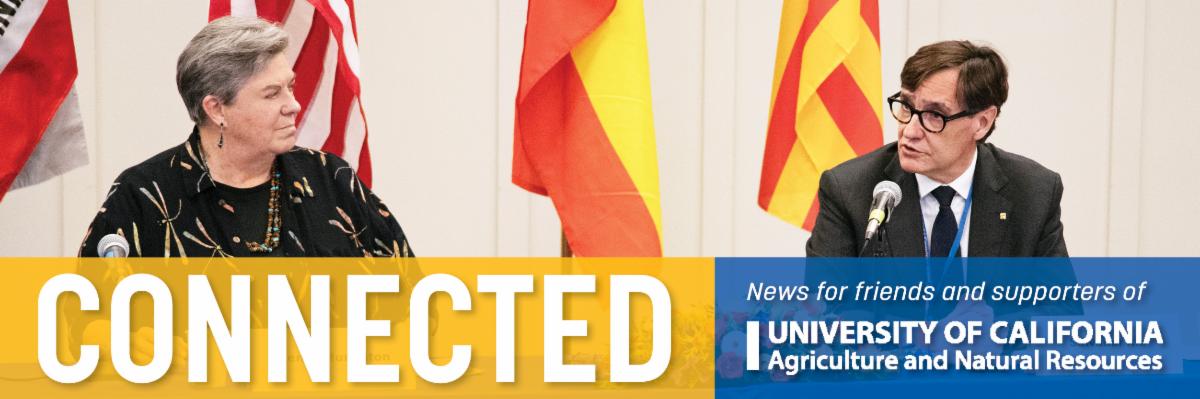
Vice President Glenda Humiston listens as Catalonian President Salvador Illa speaks into a microphone at an MOU signing event

May 2026 | Volume 10, Number 5

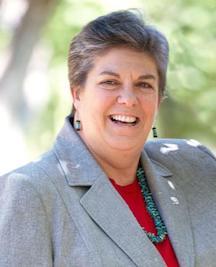
Headshot of Glenda Humiston

The Vantage Point


Glenda Humiston 

Vice President

UC Agriculture and Natural Resources 


On May 14, we had the great honor of welcoming Catalonian President Salvador Illa to our Davis offices. President Illa; Ángeles Moreno, ambassador of Spain to the United States; Nuria Montserrat, minister for Research and Universities, Government of Catalonia; and Javier Selva Sánchez, director general for Knowledge Transfer and Society, Government of Catalonia were among those in attendance as UC ANR signed a major agreement with a Catalonian research institute.


With Erik Porse, director of UC ANR’s California Institute for Water Resources, and a host of UC leaders and scientists looking on, I signed a memorandum of understanding alongside Vicenç Acuña, director of the Catalan Institute for Water Research (Fundació Institut Català de Recerca de l’aigua, or ICRA). We agreed to develop and strengthen partnerships in vital research on water quality, sustainability and resilience through a variety of initiatives, including collaborative research workshops and a visiting scholar exchange program. This builds on an equally significant MOU we signed last fall with Catalonia’s Institute of Agrifood Research and Technology.


With California and Catalonia recovering from floods and droughts in recent years, better water management will be crucial as our shared Mediterranean climate continues to shift. Given the need to focus on water research and policy, I was pleased to see that Gov. Newsom is once again making UC scientific discovery a key priority in his May revision of the 2026-27 proposed state budget.


We are deeply grateful for Gov. Newsom’s continued support of science, innovation and the UC’s base budget. I look forward to working with UC President Milliken, the Legislature and the Governor on negotiating a budget that fully funds UC and supports our essential work that benefits all Californians.


Evidence of the state’s exceptional return on investment can be found in our 2025 Annual Report (pdf), which chronicles how UC ANR is making a positive impact for people, planet and prosperity. Many thanks to Katherine Webb-Martinez, Jennifer Sedell, Sandi Osterman and the entire team that put together this beautiful report.


I was proud to tout many of these accomplishments during the California Stewardship Network Exchange meetings in Fresno, May 11-13. A special note of gratitude to Ish Herrera, an esteemed member of the President’s Advisory Commission on Agriculture and Natural Resources, for his help in nurturing the relationship between UC ANR and this fantastic organization, which convenes civic leaders to develop innovative and region-focused solutions.


Helle Petersen provided an update about our F3 Local work on the food economy in the San Joaquin Valley. I had the pleasure of meeting with the Morgan Fellows, mid-career leaders seeking to enrich their policy knowledge and expand their skills in steward leadership – a cohort that includes UC Cooperative Extension specialist Ali Hill. We had an excellent discussion on how to build, optimize and maintain productive regional collaborations that meet broad needs, while also attaining the individual goals of each constituent organization.


On May 21, I was honored to emcee the awards ceremony for the fourth annual Farm Robotics Challenge (see the winners and livestream recording), hosted by UC ANR Innovate and the AI Institute for Next Generation Food Systems. Congratulations to the impressive winning teams, as well as to the director of the Challenge, Kelly Scott. Kelly has overseen the incredible growth of this contest, the only student design competition focused exclusively on real-world, on-farm solutions in robotics, AI and automation. This year, 96 teams from 13 countries took part across three divisions, with middle and high school students participating for the first time.


I also want to give a shout-out to Director John Bailey and the entire team at Hopland Research and Extension Center, which marked 75 years of contributions to science and community education during commemorations this month. Researchers and staff did an outstanding job showcasing Hopland REC’s influential role in advancing our understanding of fire science, rangeland management, sheep biology, Lyme disease and more.


The wide-ranging, long-lasting impact of our RECs, UC Cooperative Extension and statewide programs and institutes were acknowledged by the many generous donors who participated in UC ANR Giving Day, May 14-15. In just 24 hours, donors gave over $73,000 to advance our work that improves lives across California. Thank you so much for your support!

Banner image above: Vice President Glenda Humiston listens to remarks by Catalonian President Salvador Illa during the MOU signing event on May 14; photo by Evett Kilmartin

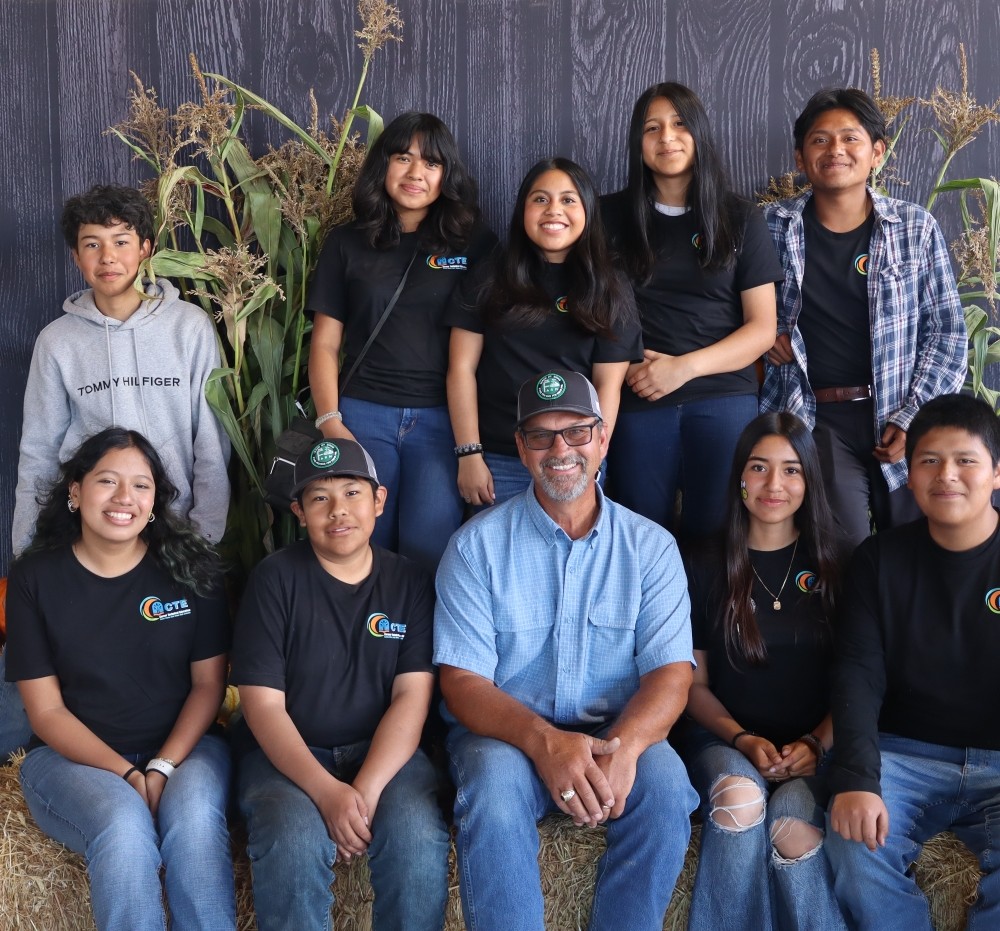
MRC Farm Robotics team of Mark Richardson CTE Center & Agricultural Farm

In the News


UC ANR was featured in stories on fire season worries, high-school winners in Farm Robotics Challenge, shade and urban heat relief, “Super El Niño” effects, wolf deterrence efforts, early honeybee swarms, this fall’s Agritourism Summit, surviving trees after LA fires, vast marine heat wave, cost of groceries, El Niño climate impacts, rising diesel prices, invasive shothole borers, 75 years of Hopland REC, boosts for strawberries, trainings by prescribed burn associations, ag research roadmap, Auburn wildfire preparedness tour, manual on chicken care, drug-resistant salmonella, longer fire seasons, New World screwworms and more.

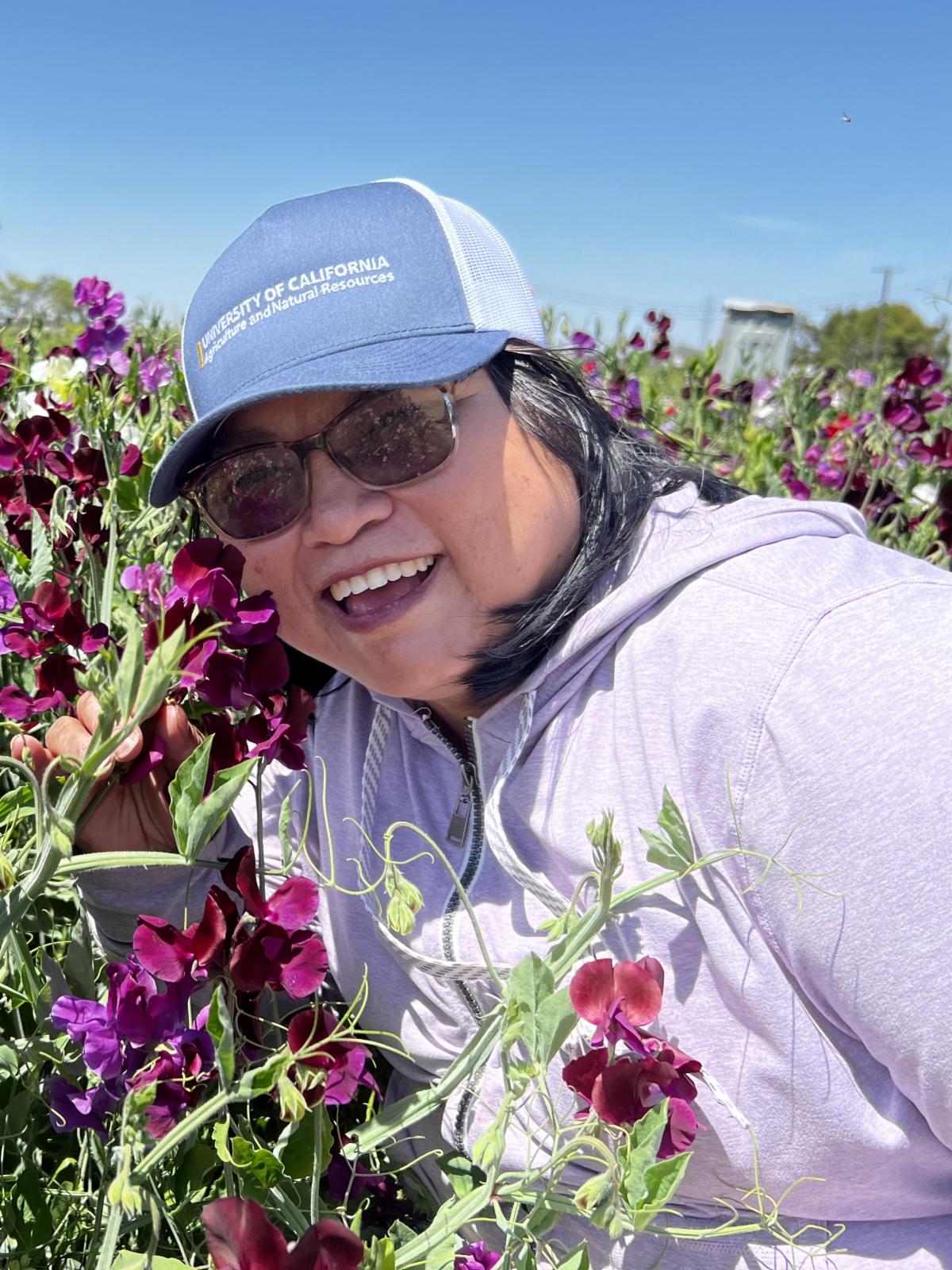
Community educator Fam Lee leans toward some flowers in a field

UC ANR news stories


Lee: Seeing Iu Mien strawberry farmers’ success ‘makes my heart sing’


Registration open for 2026 California Agritourism Summit Sept. 23-25


U.S. ‘not yet ready’ to implement school-based Presidential Youth Fitness Test, UC researcher says


Student teams from across California and around the world win Farm Robotics Challenge awards


UC ANR, Catalonian research institute to partner on water sustainability, resilience


4-H summer camp introduces youth to wild horses, natural resource careers 

Aug. 6-8


UC Cooperative Extension moves to area director model to better serve California


New report: Rising tide of invasive pests requires dynamic, resilient, comprehensive system


More news stories


The Donor Difference

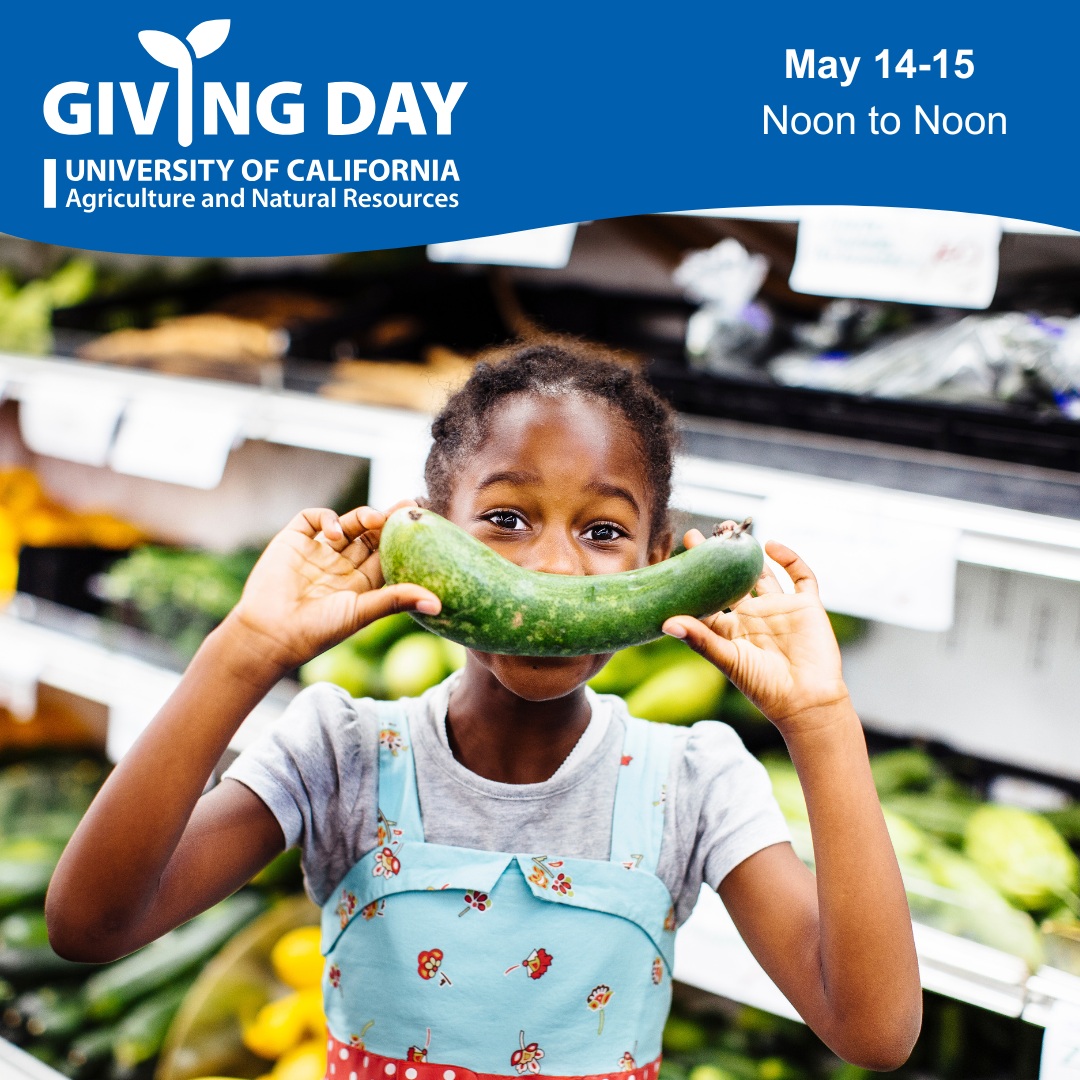
Young girl in a grocery store holds up a squash to her face, pretending it is her smile

UC ANR Giving Day donors make meaningful, personal impact

UC Agriculture and Natural Resources extends sincere thanks to supporters across California who came together during UC ANR Giving Day, May 14–15. In just 24 hours, donors contributed more than $73,000 to strengthen programs and research that serve communities throughout the state.


This outpouring of generosity highlights the vital role donors play in advancing UC ANR’s work. Their support fuels science-based solutions, expands outreach and ensures that communities have access to trusted knowledge and resources.


Local giving was further amplified by generous matching gifts offered by donors in counties across California. These matches energized regional campaigns, inspired participation and helped extend the impact of every contribution.


“Thank you to everyone who gave through our Giving Day campaign,” said Emily Delk, UC ANR’s director of donor engagement. “You are leading by example. As one donor shared: ‘Learning from my community and peers is a joy! Together, we can make a better world for people and the environment.’”


Every gift made on Giving Day goes directly to the program, location or research area chosen by the donor – ensuring a meaningful and personal impact. UC ANR is grateful to its entire community of donors, partners, staff and volunteers whose collective efforts demonstrate the power of giving and the lasting difference it makes for Californians. Join our community of support at give.ucanr.edu.


Spotlight on Practical Resources

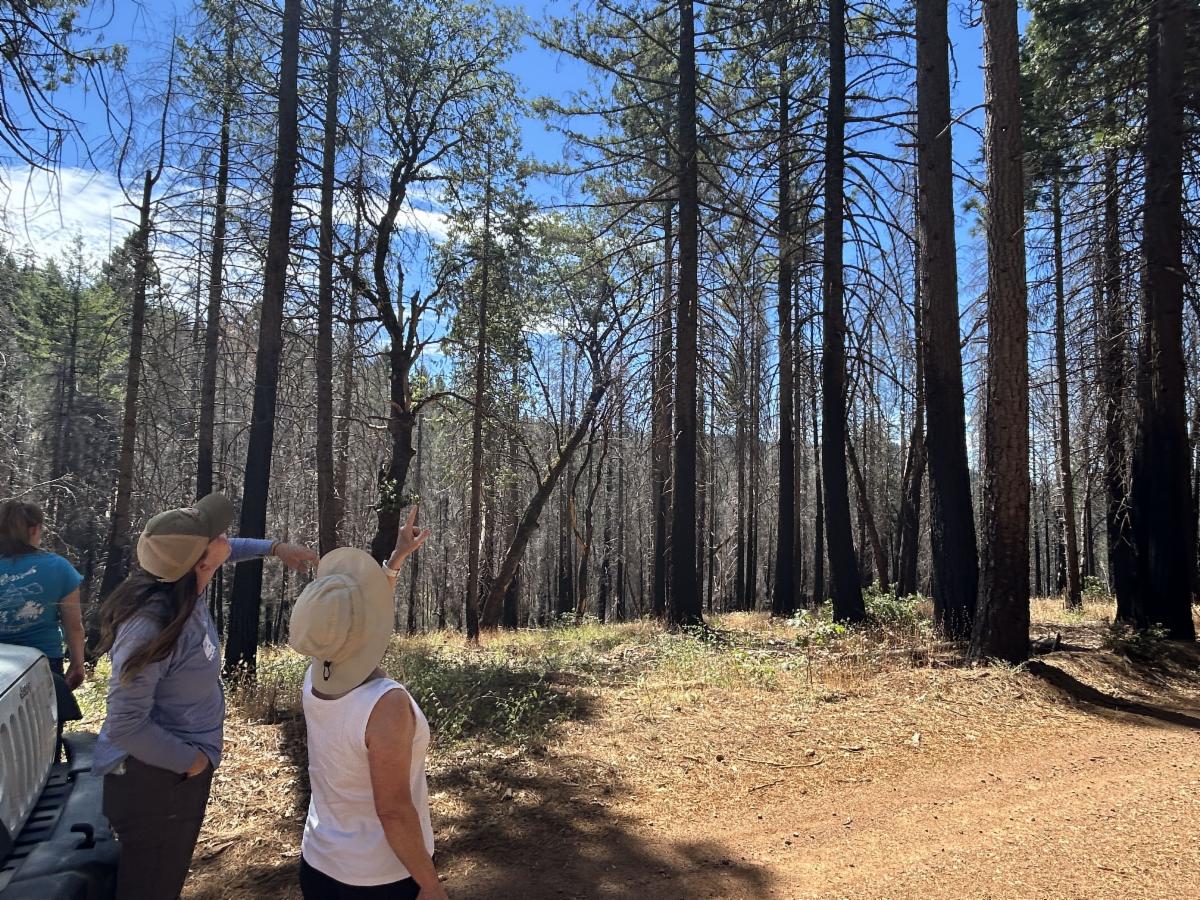
Post-Fire Forest Resilience workshop participants point up at trees during a field trip to the Caldor fire footprint

New online course from UC ANR offers wildfire recovery guidance for forest landowners

Forest management after wildfire can be an overwhelming process. Post-fire management activities depend on a wide range of factors: ecosystem type, fire severity, resource availability and a landowner’s individual goals. For family forest owners (typically described as small, non-industrial forest landowners), navigating this information following a disaster can be daunting. To address this, UC ANR has launched a free online Post-Fire Resilience course. Learn more about the course, an updated reforestation manual and an in-person learning opportunity in Mendocino County, June 16-17.


Notes from the Field

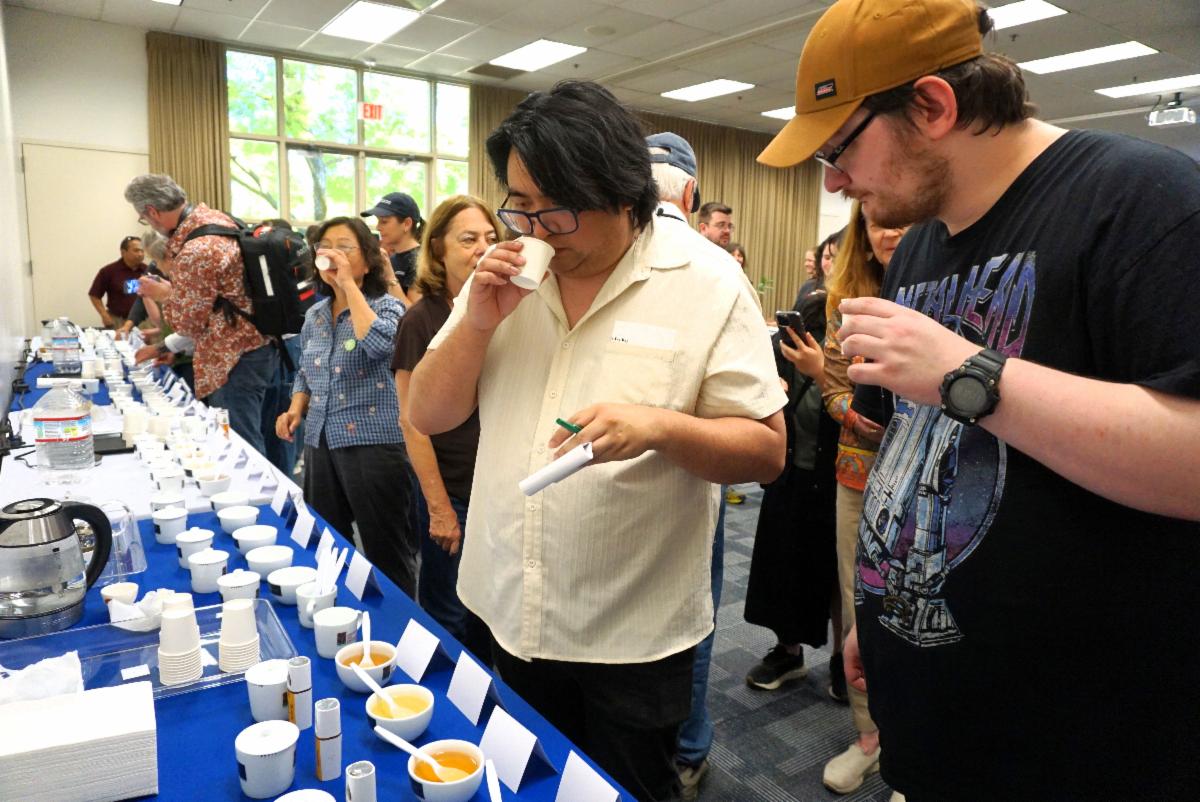
Two Tea Day participants place their noses into their cups to get the aroma of the tea during a tasting activity

Brewed awakening: UC explores tea’s potential as ‘champion crop’ for California

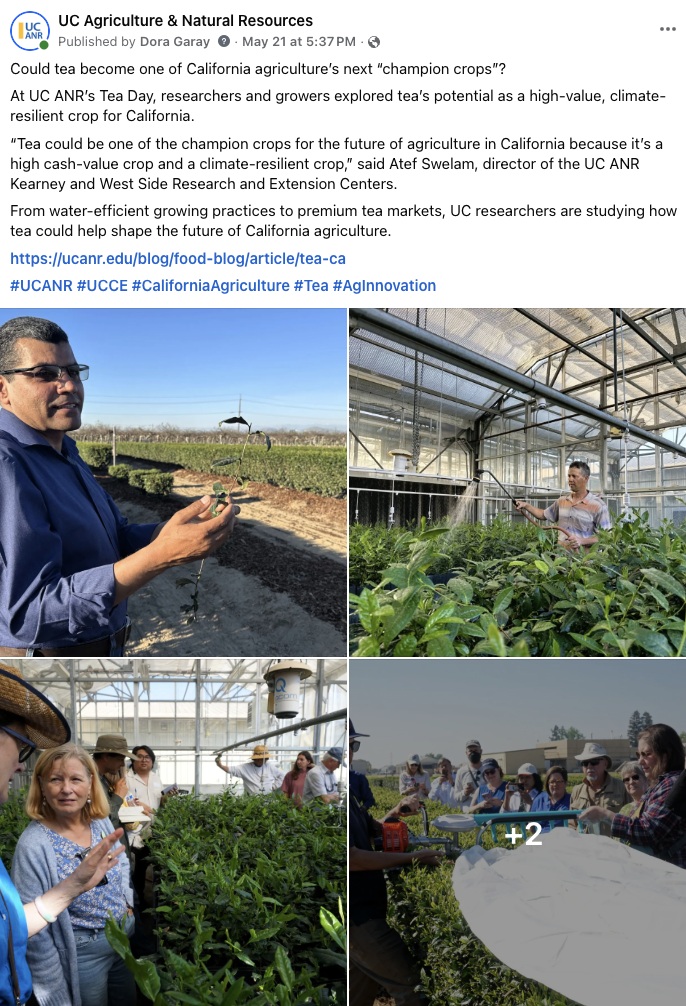
Interest in tea is brewing in the San Joaquin Valley and across the state, according to Atef Swelam, director of Kearney and West Side Research and Extension Centers. “Tea could be one of the champion crops for the future of agriculture in California because it’s a high cash-value crop and a climate-resilient crop,” Swelam said. “We have found that tea is growing fantastically here under the Mediterranean climate of California.” He envisions tea as part of the solution for growers who must make more profit with less land under the Sustainable Groundwater Management Act. Read the story and watch the video.

 
Productive Partnerships
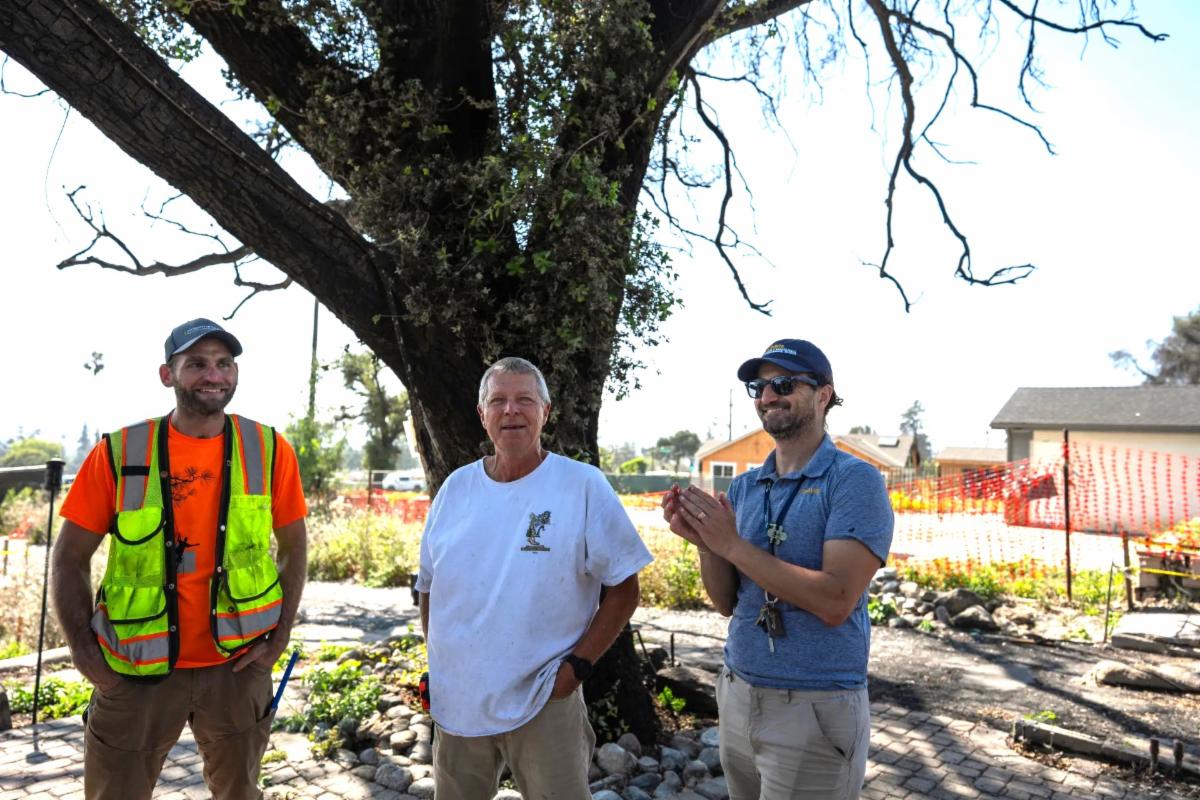
UC ANR's Chris Shogren (left) and UC Davis' Alessandro Ossola (right) flank Jeff Henderson as they provide research-based guidance on the recovery of trees

After L.A.’s fires, UC ANR ‘tree doctors’ help protect urban canopy for science, residents

The 2025 Los Angeles fires dealt a blow to the urban forest. Then, premature tree removals alarmed local residents. UC Cooperative Extension environmental horticulture advisor Chris Shogren and arborists with Altadena Green, an advocacy group, reached out to the Army Corps of Engineers to offer their guidance on properly assessing tree health. Now Shogren and scientists from UC Davis, UCLA, the U.S. Forest Service and the University of Florida are gathering valuable data on how urban trees respond to climate-driven blazes like those that ravaged Los Angeles. Read full story.

 
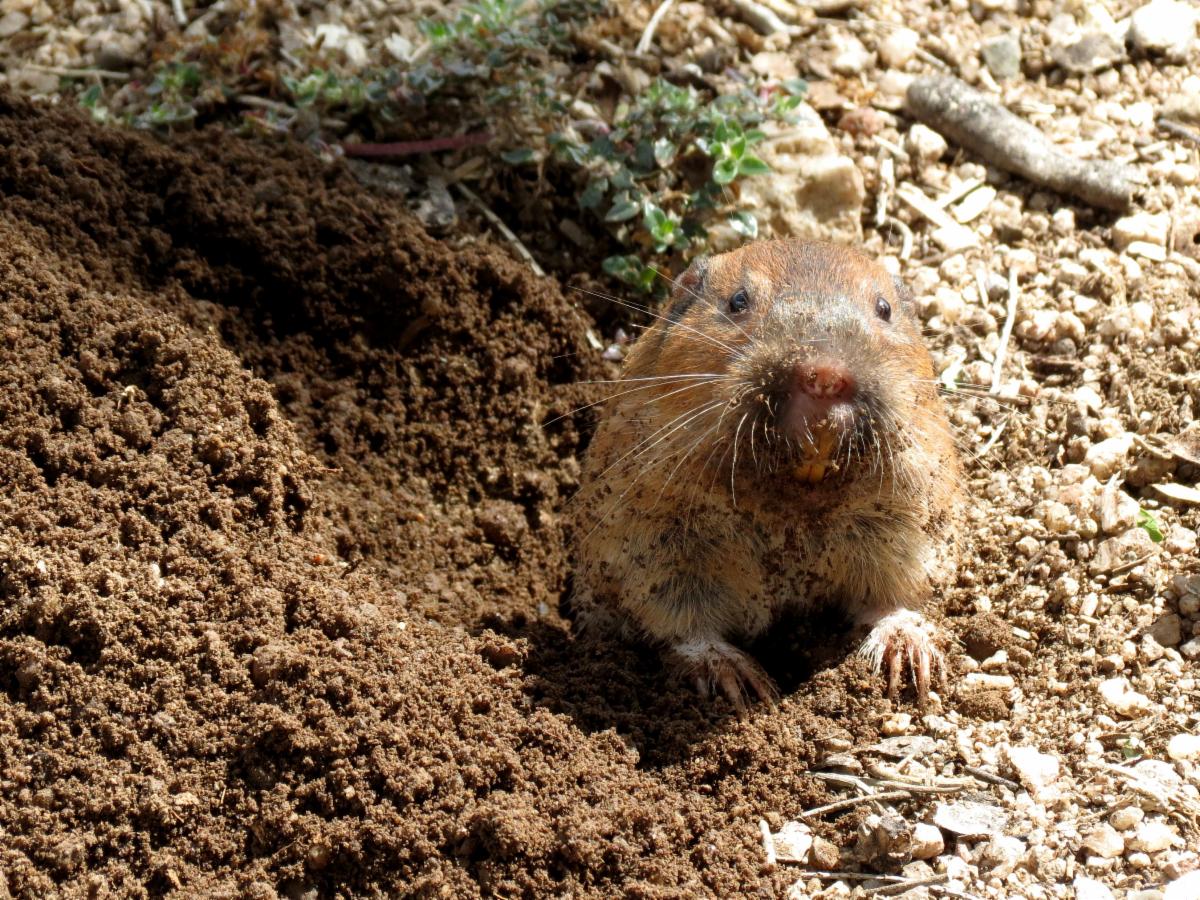
Texas Canyon - Botta's Pocket Gopher 2 by Katja Schulz, licensed under CC BY 2.0

Managing Gophers and Moles 
in Your Garden

June 6, 7-8:30 p.m.

Saratoga Library

13650 Saratoga Avenue, Saratoga, CA 95070

Join the UC Master Gardeners of Santa Clara County for a presentation by Master Gardener Bonnie Wagner, who brings decades of experience in managing vertebrate pests. Learn about the differences between gophers and moles in their appearance, behavior and tunnels. Bonnie will cover effective controls, including exclusion methods and trapping. Learn more about event.


Firewise Living: From Structure to Landscape

June 9, 4-5 p.m.

Port Hueneme Library

510 Park Avenue, Port Hueneme, CA 93041

Taught by UC Master Gardener Dani Brusius, this practical workshop equips participants with essential skills to reduce wildfire risks. Attendees will learn strategies for creating defensible space around structures, including vegetation management, landscaping techniques and home modification approaches. The class covers fire-resistant landscaping principles, structural hardening methods and emergency preparedness in wildfire-prone regions. Register for event.


Dehydration: Meals for Camping, Backpacking 
and Even Your Pantry

June 13, 10 a.m.-Noon

Sonoma Clean Power Customer Center

741 4th Street, Santa Rosa, CA 95404

In this class led by UC Master Food Preservers of Sonoma County, you’ll start the morning with samples of dehydrated snacks, tea and coffee while learning the basics of dehydration, food safety and the science behind the process. Then, you’ll prepare three meals to take home: one breakfast and two dinners with options to customize based on your preferences. $50. Space is limited. Registration is required.


When Composting Goes Rotten

Online, June 18, Noon-1 p.m.

Decomposition is a natural process that’s happening in your garden constantly! Despite that, managing our compost piles gets complicated, and you could encounter pests and problems. Learn the common mishaps to avoid when composting, as well as how to manage pests when they arrive. Part of the Urban and Community Integrated Pest Management Webinar Series, this presentation is by Kevin Marini of UC Cooperative Extension in Placer and Nevada counties. Learn more and register for webinar.


See more UC ANR events


Social Media Posts of the Month
 
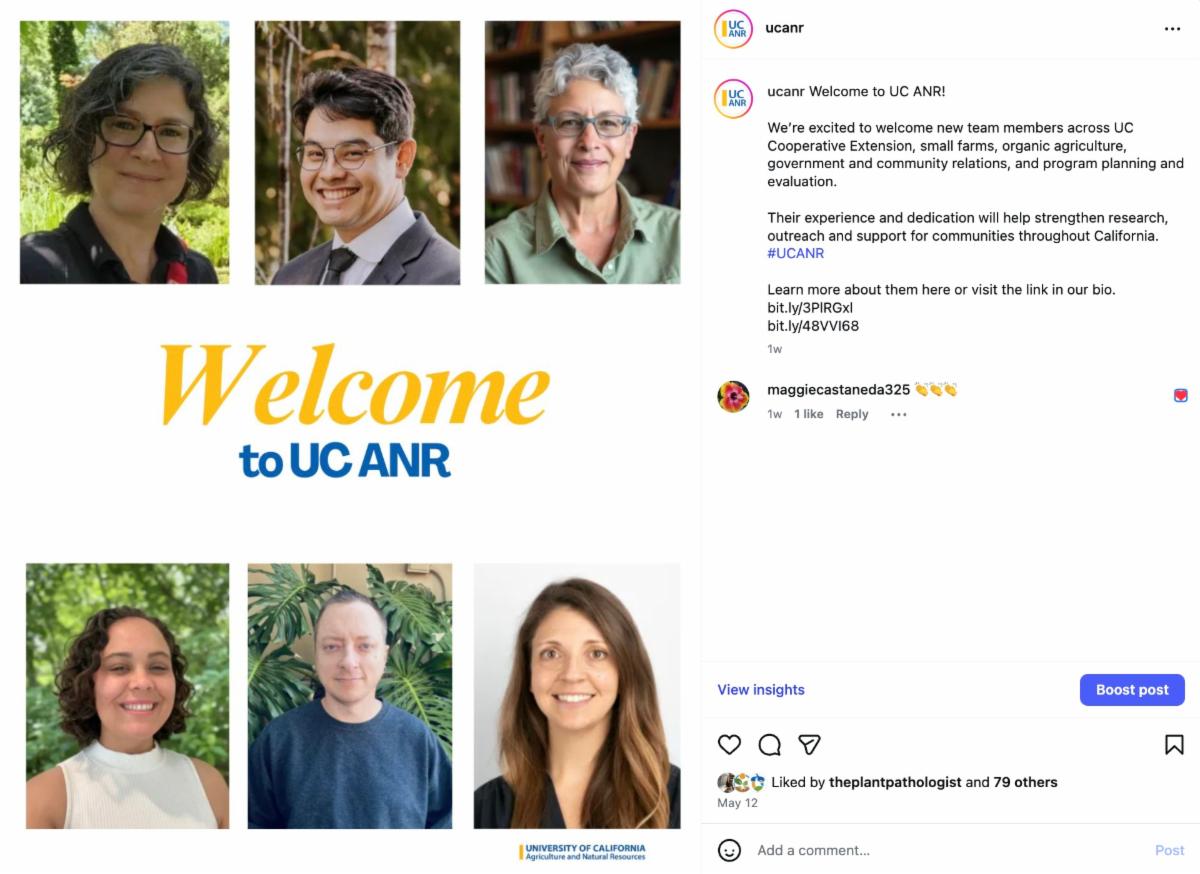
Instagram post collage that says "Welcome to UC ANR" and includes images of new employees
Facebook post with images from Kearney REC Tea Day accompanying a link to a story about tea growing in California
 

Follow us on Bluesky, X (Twitter), Facebook, Instagram, YouTube and LinkedIn

for more UC ANR highlights!


Subscribe to our Food blog, Green blog and Healthy Communities blog.


It is the policy of the University of California (UC) and the UC Division of Agriculture & Natural Resources not to engage in discrimination against or harassment of any person in any of its programs or activities.Inquiries regarding nondiscrimination policies may be directed to UC ANR, Affirmative Action Compliance & Title IX Officer, University of California, Agriculture and Natural Resources,
2801 Second Street, Davis, CA 95618, (530) 750-1280, tljordan@ucanr.edu.
 
University of California Agriculture and Natural Resources
2801 Second Street
Davis, CA 95618
Website: ucanr.edu
STAY CONNECTED
Facebook  X  Instagram  Linkedin  Youtube