Fall/ Winter 2025 Newsletter | | |
Emergency Management Planning Program Still Paused
Emergency planning work that RPCs routinely do is now much more limited as our funding under the Emergency Management Performance Grant (EMPG) is still paused.
It’s unclear how long this pause will last and what its full impact will be. One immediate short-term impact is our reduced role in coordinating and supporting the Regional Emergency Management Committee, which will temporarily fall to Vermont Emergency Management (VEM) Regional Coordinator staff. (For the MARC region this is Taiga Christie.) Taiga Christie is also available to help towns prepare local emergency operations plans, exercises and trainings.
In the event of an emergency or declared disaster, VEM can still activate RPCs to serve as Local Liaisons to the State Emergency Operations Center (SEOC) or support SEOC staffing roles as needed.
That said, if you need assistance, please don’t hesitate to reach out to Allison as you normally would. She will do her best to help where possible within the current funding limitations.
_____________________________________________
More Self-Reliance for Future Disasters
On August 25th, Vermont requested a federal disaster declaration for expenses resulting from flooding on July 10th. That request was denied on October 24th. On November 21st, Governor Scott formally appealed that denial. See the VT Digger article for more information.
Vermont state and local governments are heavily reliant upon federal funding for emergency preparedness, and disaster response and recovery. The future of this federal funding is now uncertain.
Nonetheless, a municipality can do things to better recover from a future disaster, given this federal funding uncertainty, such as the following actions:
- Establish a dedicated disaster reserve fund.
- Establish a line(s) of credit before a disaster ever strikes.
- Learn about public financing tools and options for mitigation projects, recovery and rebuilding.
- Develop a capital improvement plan and related budget to identify and prioritize projects. This could be as simple as a prioritized list with reasonable cost assumptions.
- Use your town plan and your local hazard mitigation plan to inform your capital improvement planning.
- Give serious consideration to what infrastructure must be rebuilt and what can be abandoned if damaged or destroyed, also known as “strategic abandonment.”
Hopefully, federal disaster funding will continue to be available for future and recent past events, alike. But if not, these actions can serve a municipality well regardless of the future of federal policy and funding.
| | |
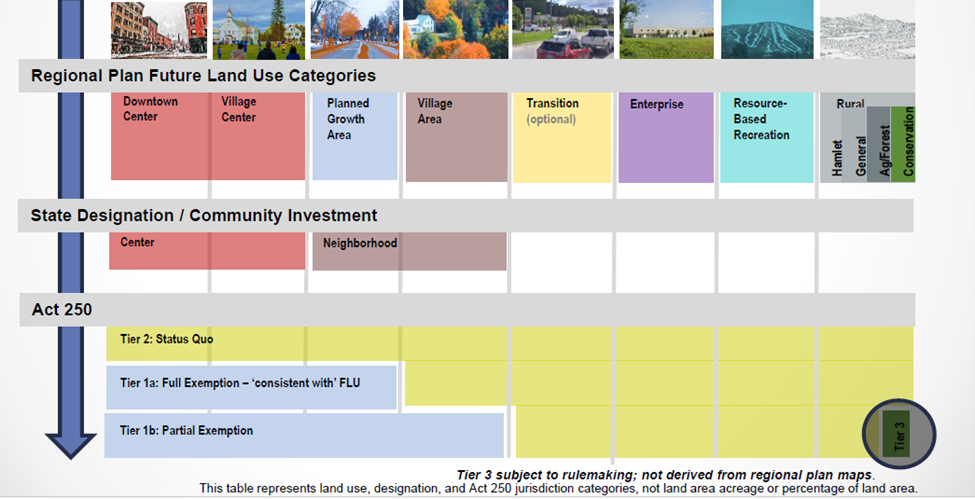
The Mount Ascutney Regional Commission is updating its regional plan to comply with Act 181, and staff are visiting with town planning commissions and selectboards to get feedback. The new future land use categories are spelled out in state law and mapped according to statewide guidance. These new categories are summarized in the image below.
| |
The state designation program is also changing as a result of Act 181, which is summarized on DHCD’s website. Previously state-designated Downtowns, Village Centers and Neighborhood Development Areas will be incorporated into the regional plan’s future land use map as well as potential new or expanded designations. Once approved by the state, these will get automatic designation, which include a variety of benefits, including Act 250 exemptions for housing projects via Neighborhood Designation.
See a recent Chester Telegraph article for more detail about these changes.
If you have questions, please contact Kellen regarding the regional plan maps, including the proposed Future Land Use Map. Contact Otis for the Regional Transportation Plan. Martha and Allison are working on updating many of the chapters.
To view the plan and maps go to 2026 Regional Plan page.
| | |
The Mount Ascutney Regional Commission is pleased to welcome two new employees and to have a former employee rejoin us.
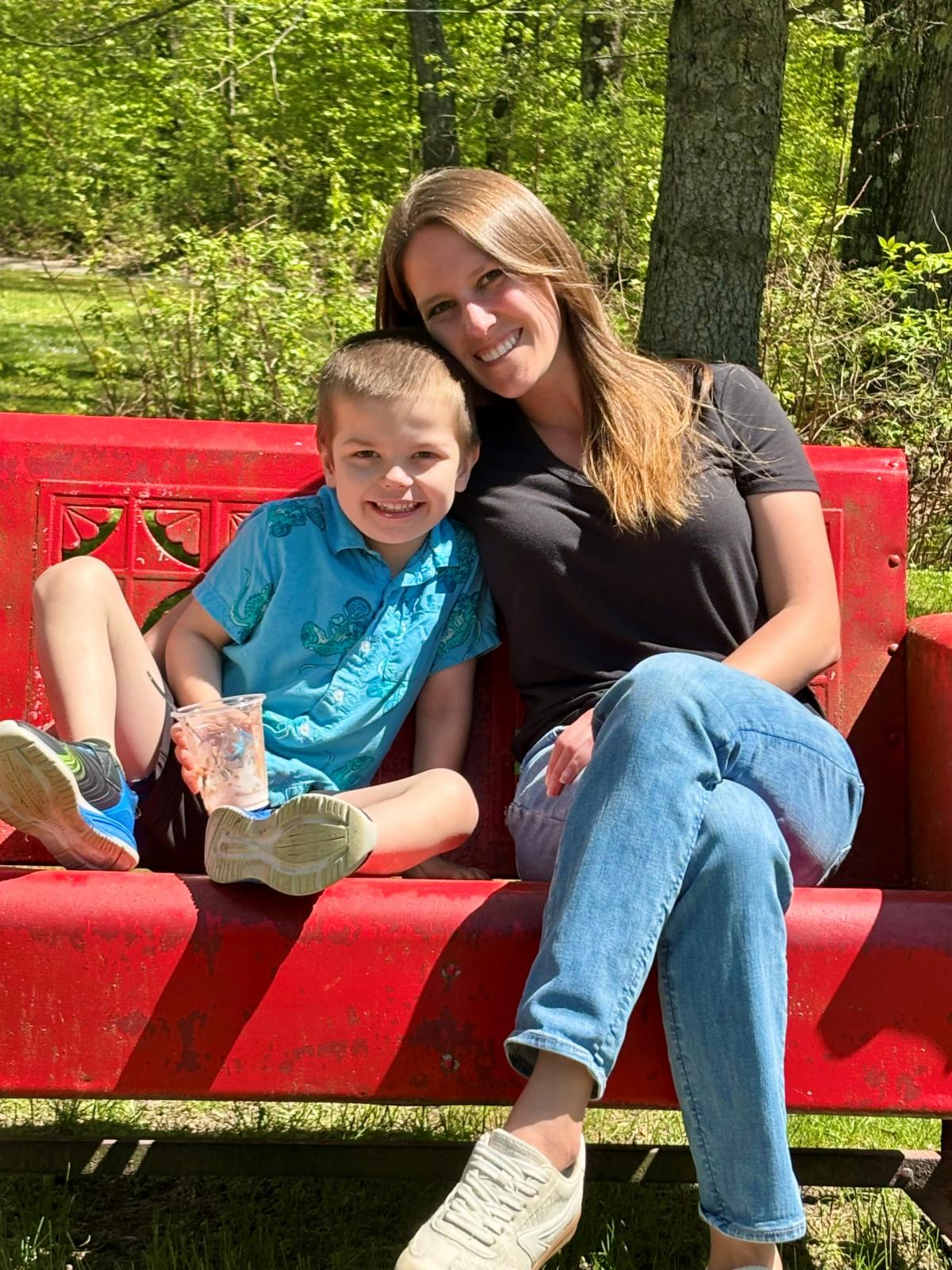
Please join us in welcoming Alexandria “Ali” Hamilton to the team. She joined us in August as the Finance Manager. She is responsible for the fiscal management of the Commission, supervises up to two administrative staff positions, and provides administrative support to staff.
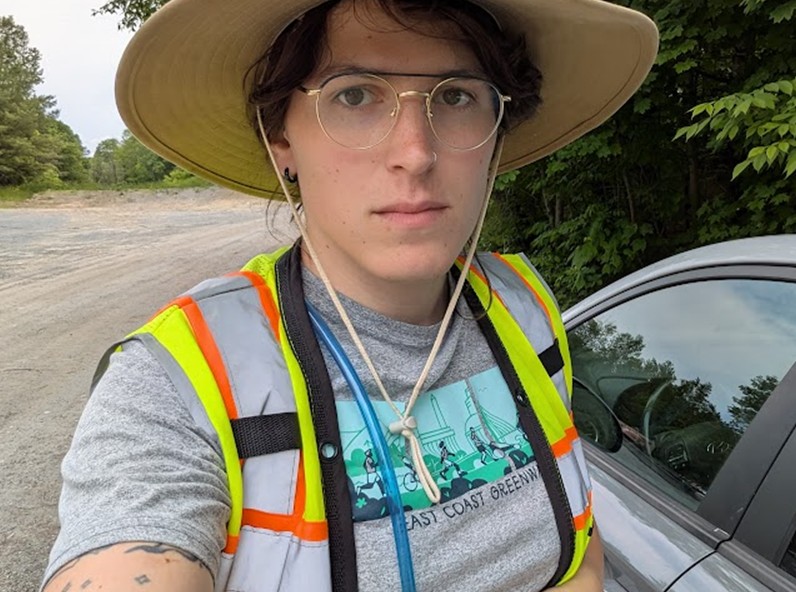
Kellen Appleton joined us in June as a temporary intern in transportation planning, and she accepted a full-time position in July. Kellen is responsible for GIS mapping program and assists with municipal project management, natural resources and flood hazard programs.
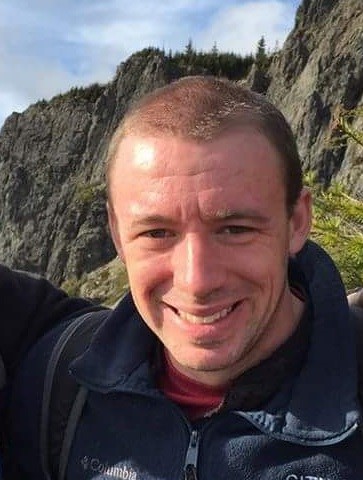
Otis Ellms-Munroe returned to the MARC team in November as a senior planner. He will be managing our transportation planning program, and will assist with municipal project management, natural resources and land use planning programs. We are pleased to welcome him back!
| | |
We had to say good-bye to Cynthia Porter, who retired after 27 ½ years of service to MARC, as Financial Administrator, at the end of October to be a full-time grandmother. Chris Titus, who had been with MARC for 12 years, most recently as the Solid Waste Franchise reviewer for the state of Vermont and bookkeeper for the two solid waste districts that MARC manages, left at the end of September. Erin Ladd left the MARC team at the end of September to serve as Ludlow’s Planning and Zoning Director. Logan Nicoll left his position as our transportation planner at the end of October to pursue other interests. Scott Reigel, who had been our GIS planner left in July for another opportunity.
We wish them all the best now, and in the future.
| | Regional Priority Project List | | |
The Mount Ascutney Regional Commission (the MARC) board of commissioners met on November 24, 2025, and finalized the Regional Project Priority List, in coordination with Bob Flint of the Springfield Regional Development Corporation (SRDC).
For more details and to see the list, visit the SRDC website If you have questions, please contact Jason R.
| | |
RFP - QEP Shortlist
Brownfield Assessment, Clean-up and Oversite
| | |
RFP to get one QEP Shortlist for Brownfield assessment, cleanup and Oversite
The Mount Ascutney Regional Commission is seeking up to a maximum of six (6) qualified firms (QEP Short-List) that specialize in Brownfields environmental professional services to provide brownfields assessment, cleanup planning and oversight related services for a period of five (5) years. Submit any questions and proposals by email to Cindy I.
Please visit the MARC website at Information and forms to view documents and submission forms
Deadline to respond with questions: 11/4/25
Deadline to submit proposals: 12/5/25
| | Springfield Area Home Creators Expo | | |
MARC, with its Keys to the Valley partners, co-hosted a Home Creators Expo on November 8, 2025 at the River Valley Tech Center in Springfield. Nearly a dozen vendors were on hand all morning to help residents that want to build an accessory dwelling or other home creation projects to get started. Vendors included builders, engineers, bankers and others who could help jump start these projects that will hopefully help to create new housing options in the region.
Media coverage of the event is available on the WCAX website
| | Valley Street Dam Removal | | |
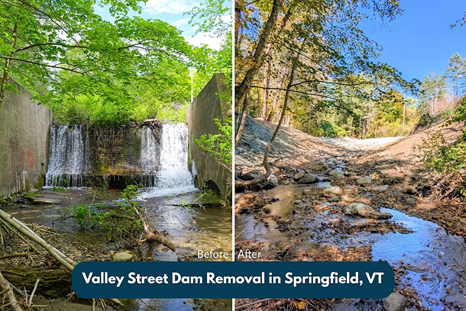
The Mount Ascutney Regional Commission (MARC) and Connecticut River Conservancy (CRC), in partnership with the Town of Springfield, have removed an old dam on Valley Street in Springfield, VT.
The removal of the 14-foot high by 33-foot wide concrete structure will improve flood safety, water quality, and fish passage on a tributary (locally known as Mile Brook) of the Black River. CRC and MARC began working with the Town and State of Vermont on this project in 2018, and after 8 years of grant writing, engineering design, and permitting, the removal of the old dam was completed in September 2025.
The Town originally built the dam in 1938 to create a swimming area but closed the pool in 1953 due to “contamination and unhygienic conditions.” For the past 72 years the dam was slowly degrading and trapping sediment upstream, resulting in significant water quality impacts.
Funding for design, permitting and construction was provided by the State of Vermont Ecosystem Restoration Program (ERP), a Dam Removal Design and Implementation Block Grant (DRDIBG) administered by Watersheds United Vermont (WUV) and the U.S. Fish and Wildlife Service National Fish Passage Program. Local contractors hired for this project include Ripple Natural Resources LLC of Randolph, Paula Sagerman, an historic preservation consultant based out of Brattleboro, and Crown Point Excavation LLC of Springfield, Vermont.
| | ** Photo taken by the Connecticut River Conservancy | | Assistance for Water Systems | | |
Thanks to the Vermont Bond Bank, MARC has funding to assist the municipal water systems in our region. Since each system is unique, the initial goal is to conduct a needs assessment to get a better understanding of the type(s) of assistance that each system needs.
Possibilities could include grant writing, rate setting, budgeting, financial modeling, mapping, policy development, issues with water quality or quantity, infrastructure, etc. Once each system’s needs are identified, we can tailor our assistance accordingly or put the system in touch with other resources or project partners.
This program runs through December 1, 2028. Participation is voluntary. If you are interested, please contact Martha H.
| | |
Our own Kellen Appleton helped promote Vermont Transit recently and her story was recorded in the VTDIGGER.
The goal was to “kind of push the public transit system to its limits,” Kellen Appleton said of the daylong, seven-vehicle odyssey.
Appleton had asked herself, 'How far could local buses', like the ones she relies on in the Upper Valley, 'really take her?' Earlier this month, she set out with her housemate, Ana Chambers, to put the question to the test — at least, within the confines of Vermont.
The duo rode what they think was the longest-possible trip across the state, within a single day, using only public buses. The journey, which Appleton documented on Instagram, started just below Vermont’s southwestern corner in Williamstown, Mass. Eleven hours and seven different buses later, they made it to St. Johnsbury in the heart of Vermont’s Northeast Kingdom.
For the full story – follow this link: Promoting Vermont Transit
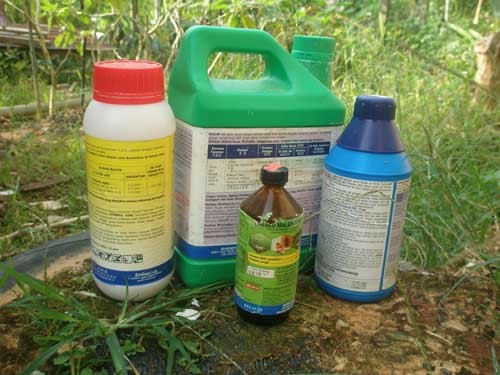
| | | | SWWCSWMD runs a household hazardous waste depot in Springfield on leased land at the Alva Waste Transfer Station. The Depot is a seasonal facility (May through September), operating two mornings a week, by appointment, for its fourteen-member towns. Over two hundred residents and ten small businesses took advantage of the service. | | |
The three part-time employees handled tons of pesticides, paint, used oil, solvents, and antifreeze, keeping trash haulers safer and many dangerous materials out of the landfill and drinking water.
The Depot will re-open on Tuesday, May 5, 2026 for its fifth season.
For question please reach out to Mary O
| | |
The Southern Windsor/Windham Counties Solid Waste Management District (SWWCSWMD) held a public hearing to receive comments on its draft Solid Waste Implementation Plan (SWIP) on November 6, and will be holding a second public hearing on January 22, 2026 at 1:00 p.m. These will be hybrid meetings, held in person at Mount Ascutney Regional Planning Commission office at 38 Ascutney Park Rd in Ascutney and via Zoom.
To view a copy of the draft SWIP, find the Zoom links, and copies of agendas, go to www.vtsolidwastedistrict.org.
| | |
Maintaining the MARC website is an on-going effort. We are currently working to bring the site up to ADA compliance standards.
Your feedback and comments on anything that is missing, or ways to make it more user friendly, will be helpful to us as we work to get the site perfect.
Please send them to Lisa C.
| | Sign up for the MARC Newletter | | If you know someone that would benefit from, or would enjoy reading, the MARC Newsletter - please advise them to reach out to Lisa C | | On behalf of the Staff of MARC | | Thank you, and we hope you have a great and fall and upcoming winter Holiday Seasons! | |
Mount Ascutney Regional Commission | Website
| | | | | |