Weekly Digest Number 5 - January 31st, 2023 |
|
Welcome to the RWU Rail & Labor News! This news bulletin is produced and emailed out each Tuesday morning. We hope you find each week's news and information useful. If so, please share with co-workers, friends, and colleagues. If you like, you can sign them up to get all the news from RWU HERE. Or forward them the link. Note: If you read over this news bulletin each week, you will be sure to never miss the important news of what is going on in the railroad world from a worker's perspective!
|
|
(Editor's Note: The rail carriers got a black eye from all the bad publicity thee last 6 months or so. And they can expect more bad PR with the latest numbers. We need to keep up the pressure and continue to embarrass and shame these corporations.) |
|
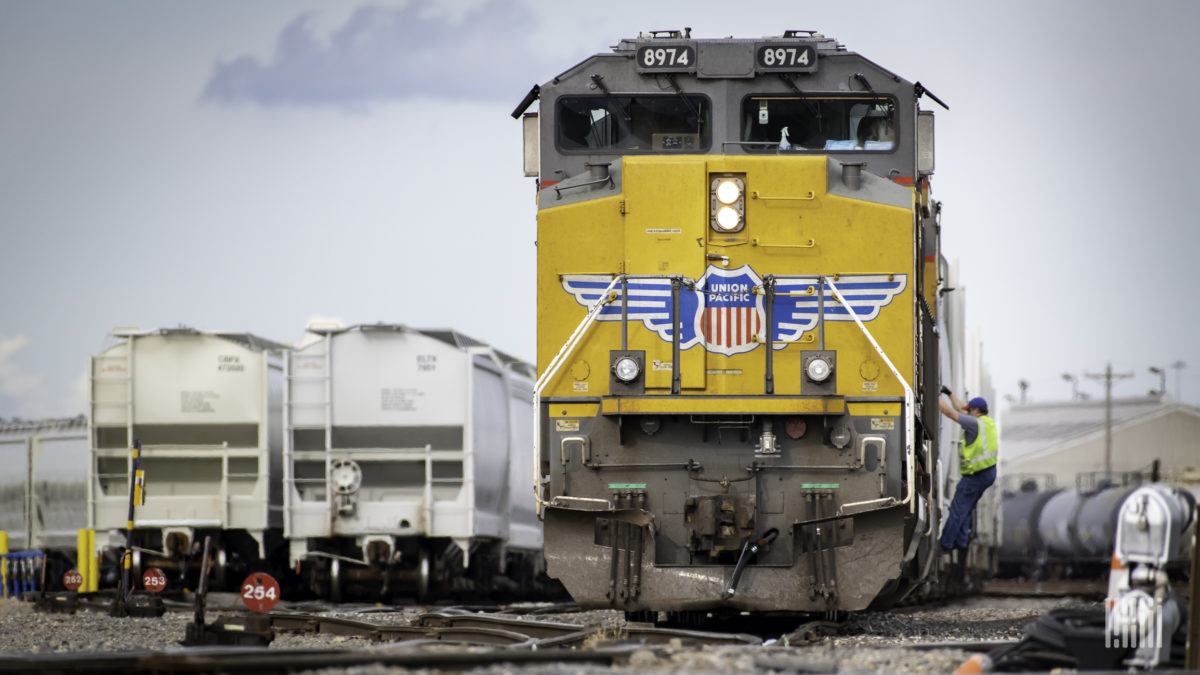
While Blocking Paid Sick Leave, Union Pacific Spent More on Stock Buybacks Than Workers
"Instead of buying back their own stock, UP should be investing in their employees by offering paid sick leave, reasonable schedules, and a better quality of life for railroaders," said one union president.
|
|
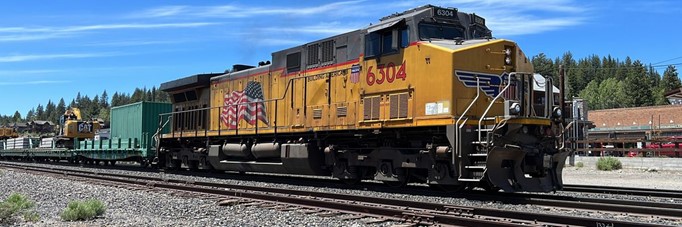
Union Pacific, one of the largest rail corporations in the United States, said Tuesday that it brought in record revenue and profits last year as it successfully fought off workers' push for paid sick leave.
The company reported $7 billion in net income for 2022 as a whole and said it spent a whopping $6.3 billion repurchasing its own shares—significantly more than the $4.6 billion it spent on employee pay and benefits last year.
“Instead of buying back their own stock, UP should be investing in their employees by offering paid sick leave, reasonable schedules, and a better quality of life for railroaders," Ed Hall, the newly elected president of the Brotherhood of Locomotive Engineers, told CNN on Tuesday. "This is the only way the railroad will be able to solve their recruitment and retention problems and keep the trains running."
Union Pacific was one of the major rail carriers involved in White House-brokered contract talks late last year that produced an agreement without any guaranteed paid sick days, rejecting a central demand of rail workers.
Labor unions representing a majority of U.S. rail workers rejected the proposed agreement and threatened to strike, but Congress intervened in the long-simmering contract dispute in December to impose the White House-backed deal on employees, sparking furious backlash from rank-and-file union members and progressive allies.
"President Biden campaigned on a week of paid sick leave for all working people, and then he had the opportunity right here but didn't take action. He favored the corporations," Matt Weaver, a rail worker and member of the Brotherhood of Maintenance of Way Employes Division (BMWED) in Ohio, told In These Times contributor Jeff Schuhrke, who detailed rail workers' ongoing fight for paid leave and safety measures in a piece last week.
|
|
(Editor's Note: CP was not party to the National Agreement in this round of bargaining so everything is being negotiated "on property." RWU urges every railroader in the Twin Cities to attend the Rally scheduled for February 3rd. See below.) |
|
Canadian Pacific Stonewalls U.S. BMWED Workers in Bargaining
Rally Planned for Minneapolis on Friday 2/3/23
|
|
The BMWED has been in negotiations with Canadian Pacific Railroad since January of 2022. Unlike the other U.S. class 1 railroads CP maintenance of way workers are only on the national healthcare plan but negotiate their working agreements that affect wages, and working conditions directly with CP.
Like other railroads CP was one of the first railroads to implement PSR (Precision Scheduled Railroading), by drastically cutting the workforce and essential operations to make a quick buck. CP BMWED workers endure long hours and are forced to work on their holidays and rest days to keep the railroad running.
CP spits in the face of BMWED workers by denying to come to the table and negotiate in good faith. Fair wages, away from home expenses, eliminating contracting out, and work rules are the major sticking points in this round of negotiations. CP is demanding extreme concessions and to implement irregular and unpredictable working hours.
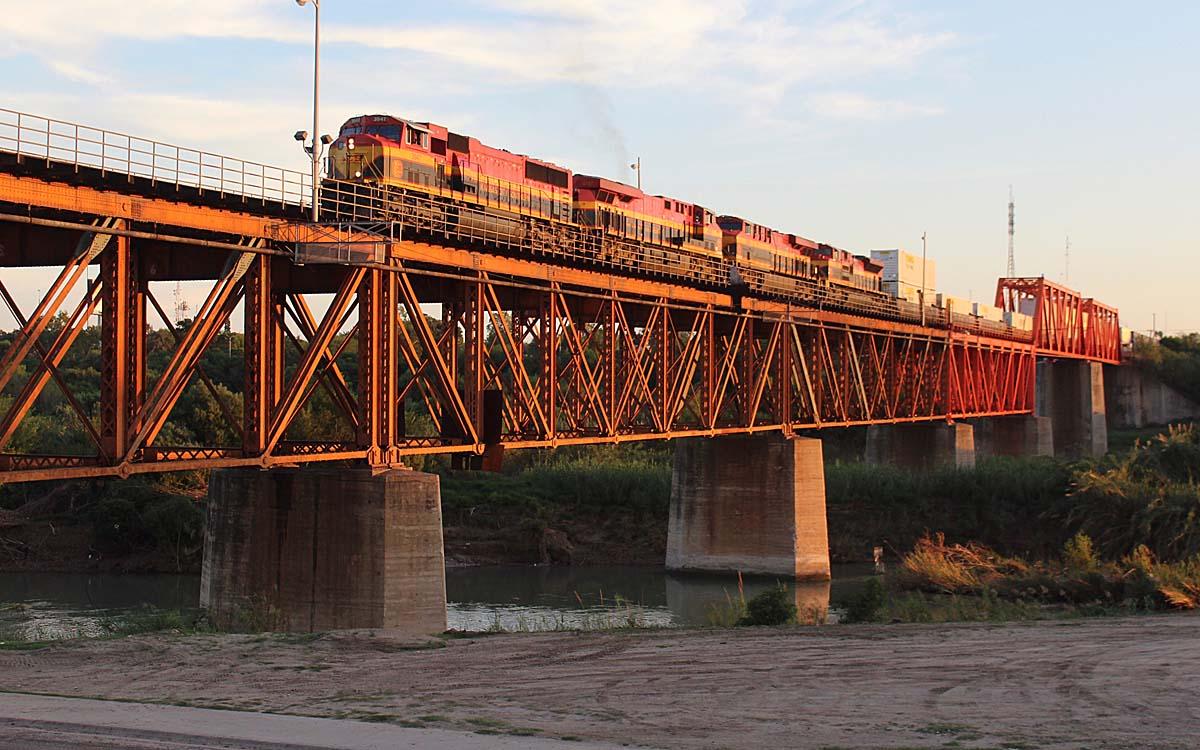
Recently CP offered $27 BILLION to acquire Kansas City Southern essentially building a railroad monopoly. If CP can afford to offer this extreme amount of money, they can afford to take care of the workers that made their record profits.
There will be a rally February 3rd in Minneapolis on 2nd avenue, between 5th and 6th Streets downtown 11:00pm-1:00pm. Media inquiries can call or email Tom Steinbrenner (218) 435-6504 tsteinbrenner@bmwedbsd.org.
|
|
(Editor's Note: OK folks, do we really have faith that Union Pacific - or any of the other Class Ones - are going to change their ways when they are making this kind of money? No way! They have the nation in a vice grip. They are going to keep on screwing the nation's shippers, passengers, workers, communities, consumers, and the national economy. Check out the next 3 articles for some details on just how the UP was able to make these kind of profits. Let's put an end to this madness by taking them into public ownership.)
|
|
Union Pacific Reports Record Revenue and Profits for 2022 |
|
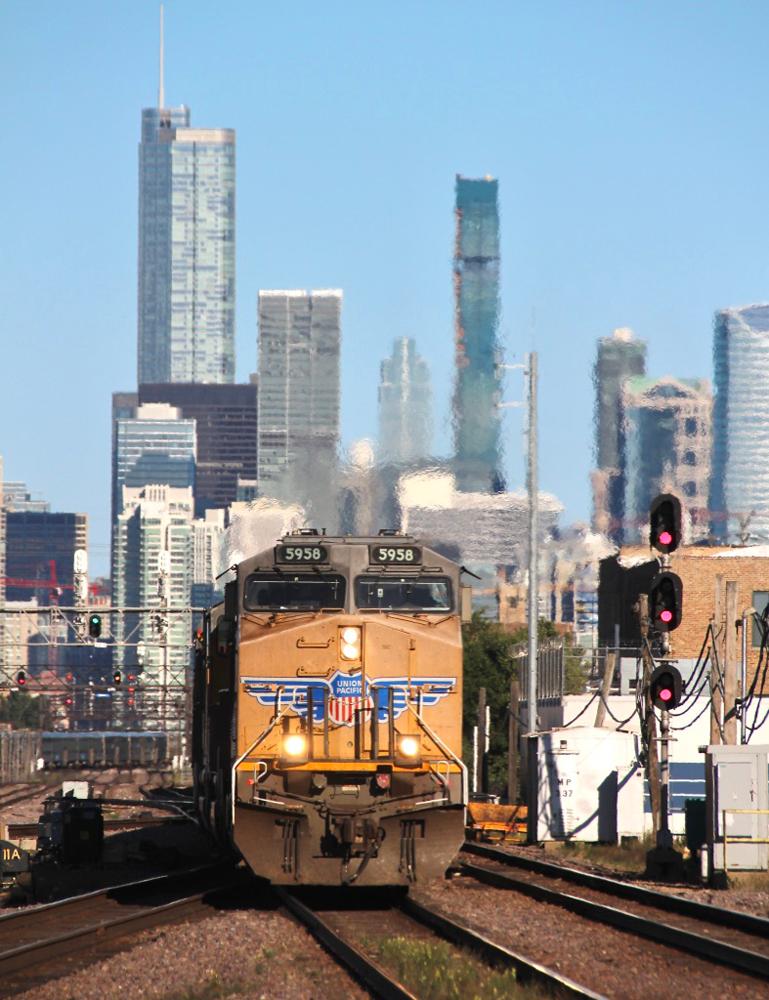
OMAHA, Neb. — Union Pacific generated record revenue and profits last year despite the impact of crew shortages that snarled operations, hurt service, and limited traffic growth.
“The fourth quarter and 2022 overall were challenging for Union Pacific and our employees. The lengthy labor negotiations tested our workforce, while customers felt the impact of our service issues,” CEO Lance Fritz told investors and analysts on the railroad’s Tuesday morning earnings call.
Fritz acknowledged that 2022 didn’t meet expectations, but said the railroad is on the mend, pointing to UP’s rebound from recent winter storms and a trend of velocity improvements that began in the summer. “We are building resiliency into the network through hiring efforts, shifting critical resources, and better operations,” Fritz says.
Due to economic uncertainty, the railroad’s outlook for 2023 is fuzzy. UP expects volume to be ahead of the rate of industrial production, which the railroad currently expects to decline by 0.5%. UP forecasts that its operating ratio will improve this year as service improves.
For the year, UP’s operating income rose 6%, to $9.9 billion, as revenue grew 14%, to $24.9 billion. Overall traffic volume was up 2%. Earnings per share surged 13%, to $11.21. UP’s full year operating ratio was 60.1%, a 2.9-point increase.
For the fourth quarter, operating income declined 1%, to $2.4 billion, as revenue grew 8%, to $6.1 billion. Earnings per share of $2.67 was up a penny from a year ago. UP’s operating ratio rose 3.6 points, to 61%, as costs rose due to higher fuel prices, inflation, and inefficient operations.
|
|
(Editor's Note: Once the UP got its hands on the Southern Pacific in 1995, the parallel route across Northern California, Nevada, and Utah, the former Western Pacific - also owned by UP - has continually been downgraded. Just a handful of bulk commodity trains are routed westbound each day on this railroad that came fully equipped with CTC. If UP refuses to maintain it properly and make good use of it, perhaps it can be parsed out to competitor BNSF as it should have been in 1995. Better yet, take it into public hands and properly utilized.) |
|
Track Conditions on Short Stretch of Main Line in Nevada Prompt UP to Seek Permission to Temporarily Deactivate Signals and CTC
Union Pacific blames harsh weather for problems on Winnemucca Subdivision, but unions claim the railroad has deferred maintenance and spread its track and signal workers too thin
|
|
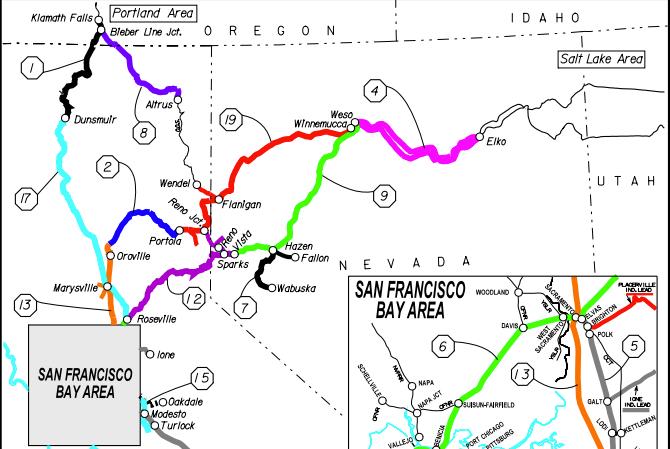
WASHINGTON – Union Pacific has asked the Federal Railroad Administration for permission to temporarily deactivate the centralized traffic control on a 13.4-mile section of its Winnemucca Subdivision in Nevada, saying that windblown sand and soil has made the signal system unreliable.
UP says it can’t make repairs until spring because the track structure is frozen due to a wave of heavy rainstorms that were followed by freezing temperatures and snow. The former Western Pacific main line carries an average of six trains per day — five of which typically require recrews due to signal problems related to the contaminated track structure.
And that’s been causing delays to train sets that deliver Midwestern corn to Foster Farms, the California poultry producer that twice last year sought Surface Transportation Board emergency service orders directing UP to prioritize its grain trains.
UP told the FRA last week that the signal problems are jeopardizing its ability to expeditiously serve Foster Farms, as required under a December order from the STB. UP wants to operate the troubled section of the Winnemucca Subdivision under track warrant control for up to six months once the CTC and block signals are deactivated.
Unions representing signal and maintenance of way workers say that UP itself — not bad weather — is to blame for the track and signal problems.
“UP acts as if the service problems are something that happened to it. In actuality, these problems are a direct result of deliberate decisions by UP to cut staffing and inspection, maintenance and repair of its infrastructure in order to reduce its Operating Ratio,” Randy Quinn Norman, vice president of the Brotherhood of Railroad Signalmen, told the STB last week.
The unions claim that a combination of underinvestment in track maintenance and a reduction in the signal and maintenance-of-way workforces are responsible for the conditions on UP lines linking Ogden, Utah, with central California.
Overall since 2017, UP has reduced its signal maintainer workforce by 31% and its maintenance of way ranks by 16%, according to the unions. But on the Winnemucca Subdivision there’s been a 30% reduction of maintenance-of-way forces, the unions say.
The unions also say UP has not properly undercut the ballast in years and has failed to maintain sand fences designed to keep sand from fouling the tracks.
|
|
(Editor's Note: The STB gets it right! Why in the hell should UP or any common carrier be able to hide from public view information related to whether or not it intends to ship or embargo a customer's freight. The arrogance of this corporation knows no bounds.) |
|
STB: ‘Transparency Should Be Pursued’
|
|
The Surface Transportation Board (STB) on Jan. 20 denied Union Pacific’s (UP) motion for a protective order regarding documents requested at a hearing on the railroad’s institution of embargoes.
An embargo suspends a shipper’s right to common carriage by restricting freight movements. Issued by a railroad when weather, congestion, labor strife, natural disasters or track conditions prevent fluid operations, embargoes may not be used as an alternative to seeking regulatory approval for line abandonments, to avoid handling unprofitable or undesired traffic, or to influence routing. Shippers may ask the STB to cancel an embargo.
The STB reported that UP embargoes had increased from a total of 27 in 2017 to more than 1,000 as of Nov. 17, 2022. According to agency, between Nov. 1, 2022, and Nov. 17, 2022, UP issued 126 embargoes with congestion as the stated cause. Of those, 89 were issued on Nov. 16; as of Nov. 17, UP had 128 active embargoes in place and, for all, congestion was the stated cause, the agency wrote in its Nov. 22 decision to hold the hearing. “The Board understands that embargoes may vary in scope and that all carriers do not report and use embargoes in the same way,” the STB reported. “Nevertheless, the use of embargoes by all other Class I carriers, combined, pales in comparison to the number of embargoes issued by UP. Given UP’s sizeable role in freight rail, its increased use of embargoes in recent years, and the considerable increase just this month, it is imperative that the Board hear from UP directly about this matter and how UP plans to reduce, if not eliminate, the use of embargoes to control congestion.”
|
|
(Editor's Note: Once again, UPs record profits are directly related to train delays attributable to the company's cost cutting measures that has left it incapable of performing adequately for it customers. If it were not in such a monopoly situation, it would simply go out of business. Instead it makes record profits. How long will the American people tolerate this fraud and sham that is costing the economy billions? |
|
Midwest Lawmakers Call on Regulators to Halt Union Pacific Embargoes
Lawmakers insist UP has managed operations in bad weather before
|
|
Eight members of Congress representing districts in Iowa, Minnesota and Wisconsin want the Surface Transportation Board to compel Union Pacific to lift weather-related embargoes in their states.
A Jan. 13 letter addressed to STB Chairman Marty Oberman asks the agency to “exercise its statutory oversight authority” and conduct a forum that would involve UP and affected rail shippers and result in UP lifting its embargoes.
UP placed a temporary embargo on operations in Iowa, Minnesota and Wisconsin in late December amid severe weather events and arctic temperatures. That embargo started on Dec. 29 and was to last an estimated 14 days. A Jan. 11 update said the embargo would remain in place another estimated 14 days amid continued severe weather and extreme cold.
The lawmakers’ letter also said UP has been able to manage service successfully in previous winters under similar weather conditions.
“The delays resulting from Union Pacific’s embargo and subsequent inadequate service for their customers is unacceptable. Current and forecasted weather conditions in the upper Midwest are not abnormal for this time of year, and similar conditions in the past have not significantly disrupted rail service,” the letter stated, adding that farmers, biofuel producers and manufacturers are being affected by the embargoes. “We have urged Union Pacific to address this as quickly as possible as the embargo will result in increasingly devastating effects on American industry in the upcoming days and weeks if not quickly resolved.”
|
|
(Editor's Note: Great news! As ridership continues to rebound post-pandemic, while highways become ever more congested and inefficient and the cost of driving skyrockets, trains are the answer!) |
|
Transit Agencies Score Billions in Omnibus Bill |
|
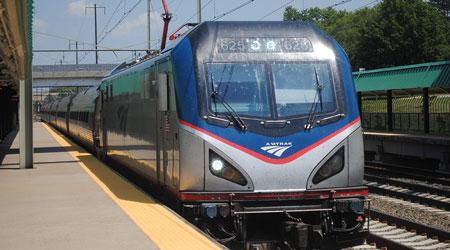
Congress’ omnibus appropriations bill that passed late last month includes billions for transit and passenger rail — $21.2 billion and $16.6 billion, respectively.
The House and Senate appropriations committees approved federal funding for fiscal-year 2023 that includes an increase of $704 million over funding for transit in FY2022, American Public Transportation Association officials said in a press release. Passenger rail also received $69 million more year over year.
The funding is a combination of dollars from the Transportation, Housing and Urban Development, and Related Agencies Appropriations Act and advance appropriations from the Infrastructure Investment and Jobs Act passed in late 2021.
The largest items in the bill include $4.2 billion for Capital Investment Grants (CIG) administered by the Federal Transit Administration; $2.5 billion in grants to Amtrak; and $560 million for Consolidated Rail Infrastructure and Safety Improvement (CRISI) grants, which also fund freight-rail projects, APTA officials said.
About $25 million in CRISI grants is reserved for specific commuter-rail projects that implement or sustain positive train control systems.
The CIG program’s appropriations include $1.8 billion for the New Starts program, which helps fund new or extended fixed transit systems; $415 million for the Small Starts and Expedited Project Delivery programs; and $425 million for projects with existing full funding grant agreements.
|
|
(Editor's Note: It is great to see ridership rebounding post pandemic. This shows there is a huge pent up demand for passenger train service. And in a handful of states like North Carolina and Virginia where Amtrak service has been expanding in recent years, the demand is certainly there.) |
|
North Carolina by Train Logged Record Ridership in 2022 |
|
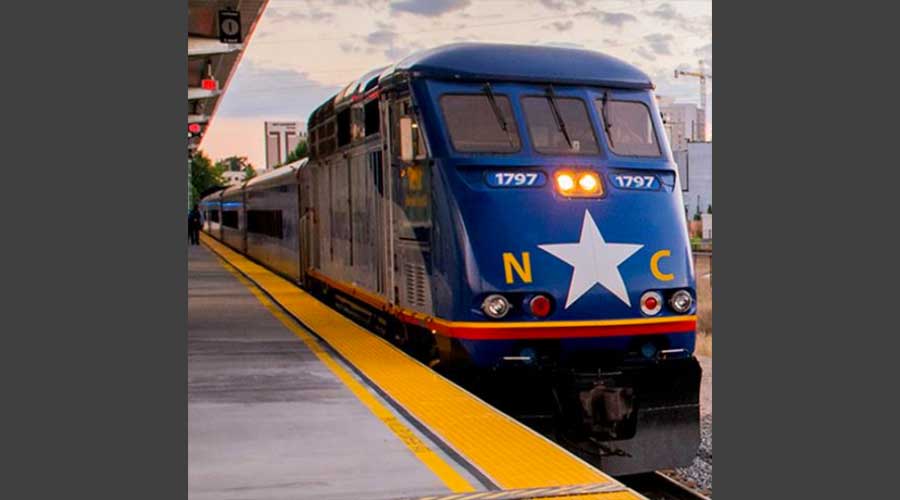
A North Carolina passenger-rail service between Raleigh, Charlotte and the Northeast logged record ridership at 522,000 passengers in 2022.
December 2022 also set a record of 48,600 passengers, which was the third-best monthly ridership record of NC by Train’s 32-year history, they said.
NC by Train serves two routes: the Piedmont, which travels from Charlotte to Raleigh; and the Carolinian, which travels from Charlotte to Washington, D.C., and New York City.
"North Carolina's passenger rail is critical to connecting our communities, and it’s great to see a record number of people taking advantage of it," said Gov. Roy Cooper. "We're going to continue to invest in public transportation across our state."
|
|
(Editor's Note: Given the near complete lack of competition, the reduction in Class One railroads from 40 or so in the 1970s to just 7 now, and the basic duopoly in the east and west of just 4 railroads, it is a bit silly to be all of a sudden be so concerned about "preserving competition." Hell that train left the station decades ago!) |
|
Justice Department Chimes in, Again, with Concerns About CP-KCS Merger
Antitrust division has concerns about merger, despite absence from CP-KCS hearings last fall
|
|
WASHINGTON — No one from the Justice Department bothered to testify at the Surface Transportation Board’s September hearing on the proposed merger of Canadian Pacific and Kansas City Southern.
But that absence doesn’t mean the Justice Department doesn’t have concerns about the first merger of Class I railroads in two decades.
In a letter to the STB this week, the Justice Department emphasized that all the issues it raised about the deal in April — including the potential for a reduction in railroad competition, a reduced incentive to invest in new technology, and more concentration of the industry — still stand.
At the September hearing, CP and KCS argued that the STB could infer that the Justice Department’s Antitrust Division does not believe the merger has the potential to cause harm, eight Justice Department lawyers, including Assistant Attorney General Jonathan Kanter, wrote to the STB.
|
|
(Editor's Note: The 24.2 billion Euros Spain expects to spend is roughly the equivalent of 26.3 billion dollars. Spain has just 10,000 miles of track compared to the U.S. 150,000. Spain's economy is 1/15th the size of that of the U.S. The country is about 5% the size of the U.S. If the U.S. were to make a similar commitment to its rail system, proportionately, this would roughly equal 15 X $26.3 or $394.5 billion to be invested in the next 5 years. So when the Class Ones tout their "capital investment" numbers, remember how pathetic that is, especially when one considers that the vast majority of that is simply basic upkeep and maintenance.) |
|
Spain Confirms Financial Framework for Rail Spending up to 2026
Spain expects to spend €24.2bn on development, maintenance and renovation in entire five-year plan, which runs to 2026.
|
|
SPAIN’s Ministry of Transport, Mobility and Urban Agenda (Mitma) has approved the Indicative Railway Strategy (IRS) for 2021 to 2026, which establishes the financial framework for the development, maintenance and renovation of Spain’s conventional and high-speed railways for the next three years.
The strategy foresees the allocation of €24.2bn to support these activities over its entire five-year duration.
Mitma describes the IRS as the “highest ranking instrument within railway sector planning” and adds that the strategy will act as a “fundamental lever” to deliver the paradigm shift in transport policy promoted in Spain’s Safe, Sustainable and Connected Mobility Strategy 2030, which calls for a shift to more sustainable modes of transport.
Mitma says the purpose of the strategy is to encourage investment policy to optimise resources and the use of existing infrastructure as well as to prioritise plans and actions that benefit the largest possible number of users. There is an added emphasis on improving efficiency and increasing social cohesion.
Specifically, the strategy aims to strengthen the rail freight network, the European TEN-T corridors, and improve interoperability to contribute to creating a single European railway area. It says that while having less prominence than in previous plans, construction of the high-speed network will continue. In addition, improving maintenance will help to increase network reliability and security.
|
|
(Editor's Note: Rail workers and unions continue to take the lead on the working class uprising across France. Rail and other unions in the US have a lot to learn from our brothers and sister across the ocean in places like the UK, France, and Italy.) |
|
French CGT, Sud Rail Unions Eye Three More Days of Rail Strikes Over Pension Reforms |
|
PARIS (Reuters) – French trade unions CGT and Sud Rail on Tuesday called on railway workers to take part in a nationwide strike on Jan. 31 over pension reform, and opt for further strike action on Feb. 7 and Feb. 8.
“Our federations are asking railway workers to strike en masse on Jan. 31 and to hold a meeting on Jan. 31 to decide whether to intensify their action through two consecutive days of strikes on Feb. 7 and Feb. 8,” the two unions said in a joint statement.
More than a million people marched through French cities on Jan. 19 to denounce President Emmanuel Macron’s plans to raise the retirement age, with a wave of nationwide strikes halting trains, blocking refineries and curbing power generation.
Buoyed by their success, the country’s leading trade unions called for a second day of strikes on Jan. 31 in a bid to force Macron and his government to back down on the pension reform plan that would see most people work an extra two years to age 64.
|
|
|
|
|
|
|