|
The American Society of
Le Souvenir Français Inc.
Monthly Bulletin - Vol. V, No 3
March 2025
| | |
French Generals
of the U.S. Army
| | |
Cover illustration:
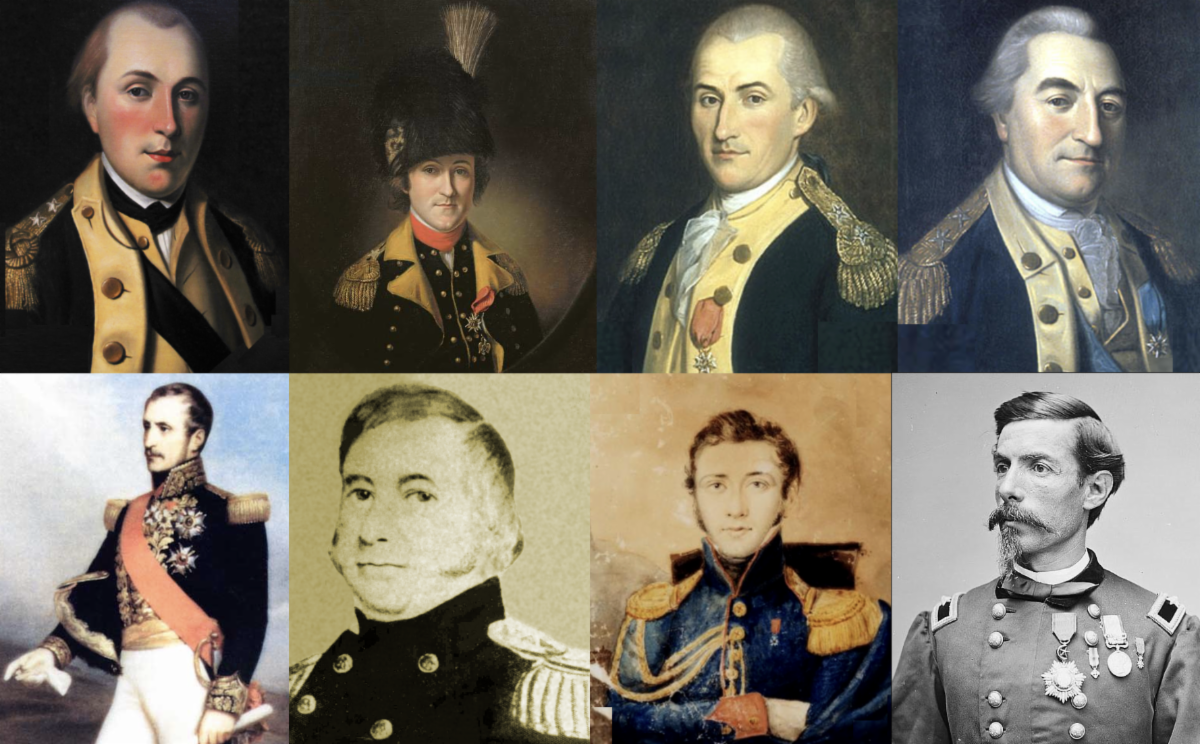
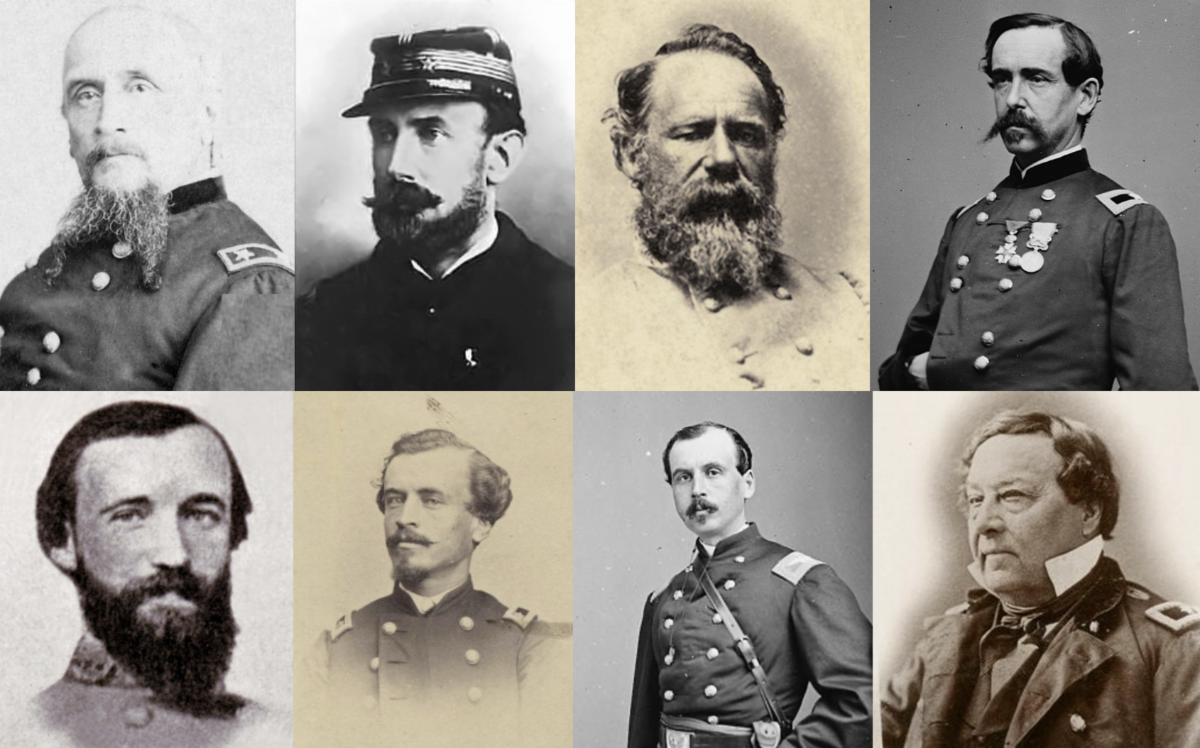
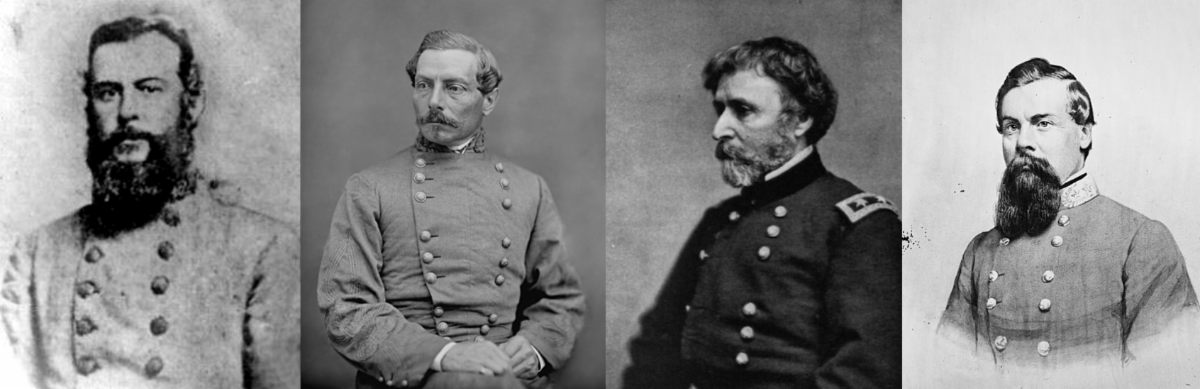
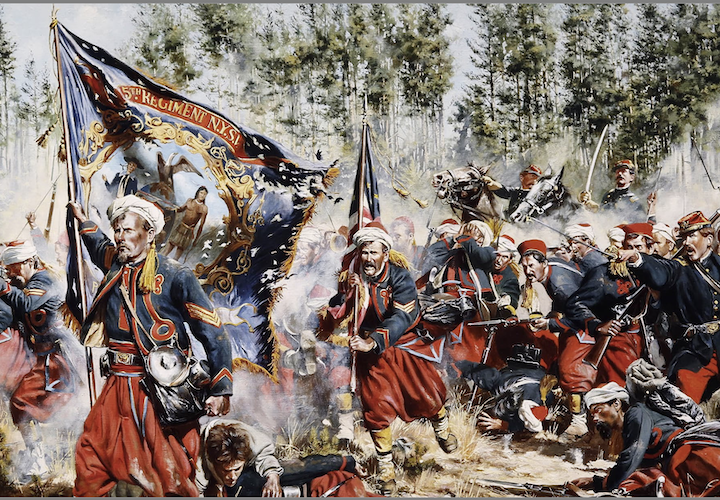
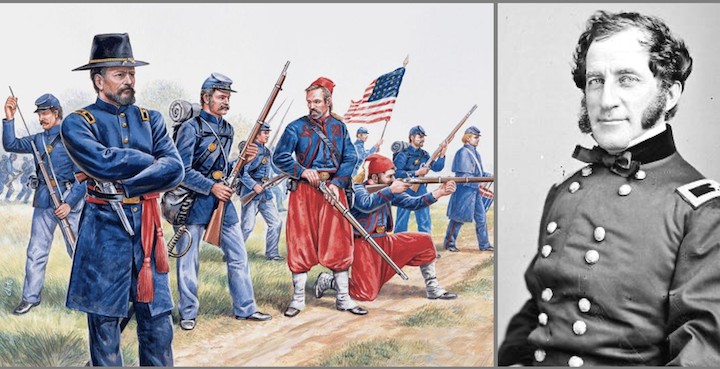
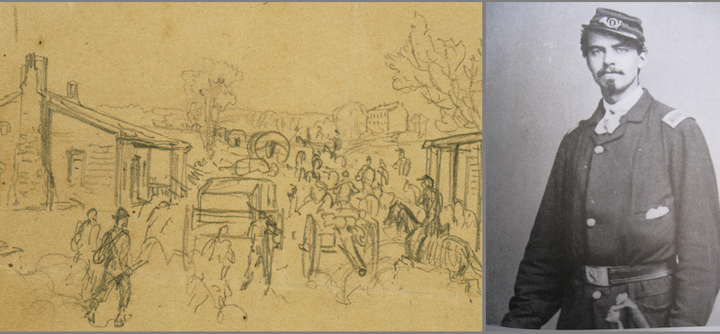
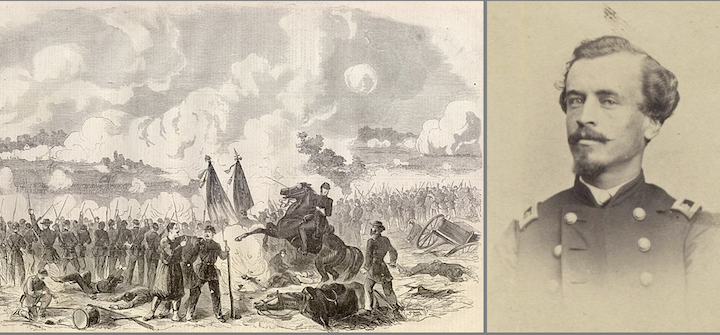
All these 20 generals served in various American uniforms (five in the Continental Army, two in the U.S. Army, six in the Confederate Army, seven in the Union Army). Seventeen were born in France, three were of immediate French ancestry.
Scroll down for photo credits and interpretive links.
| | |
Editorial
Much has been written about the long fraternity and cooperation between the French and American military forces since 1778. As our Society is uniquely focused on memorializing the past, it is appropriate that we would narrate the diverse stories of these French general officers who fought here, from the birth of the Nation and throughout the tragedy of the Civil War.
Some of them are still remembered, some fell in obscurity, and yet their tales could be the subject of Hollywood movies.
Of course, to be historically accurate, we have to start with general Lafayette, however we will only briefly address his military contributions, as many of our past Bulletins already narrated many aspects of his multi-faceted life. Lafayette casts such a long shadow, that many of his contemporaries as well as successors are often forgotten.
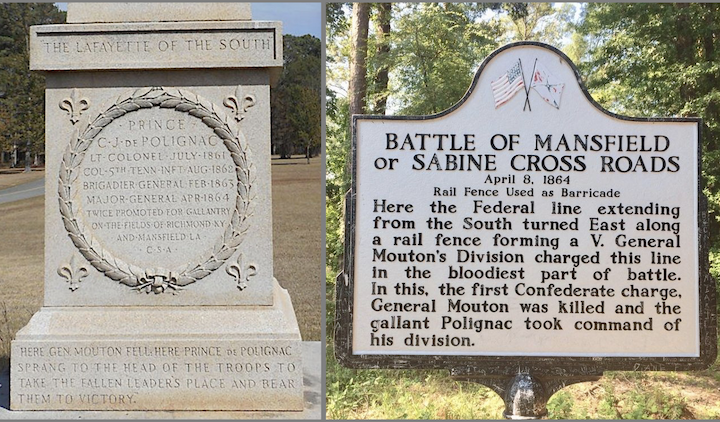
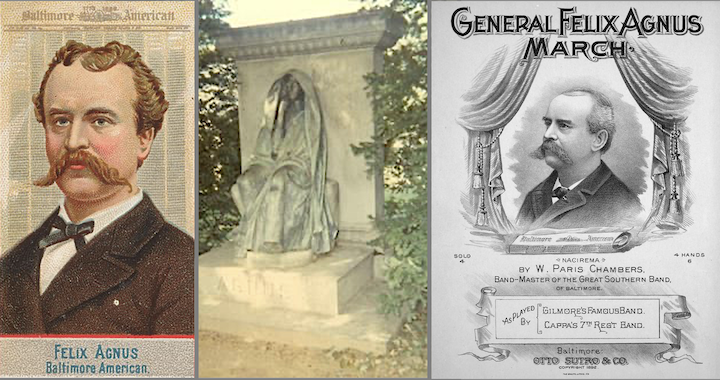
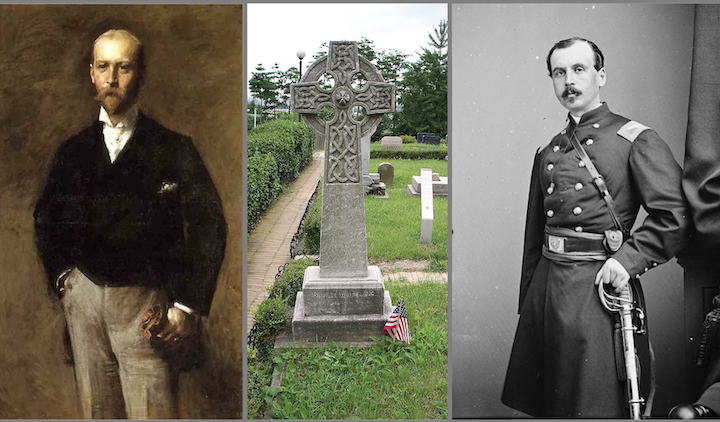
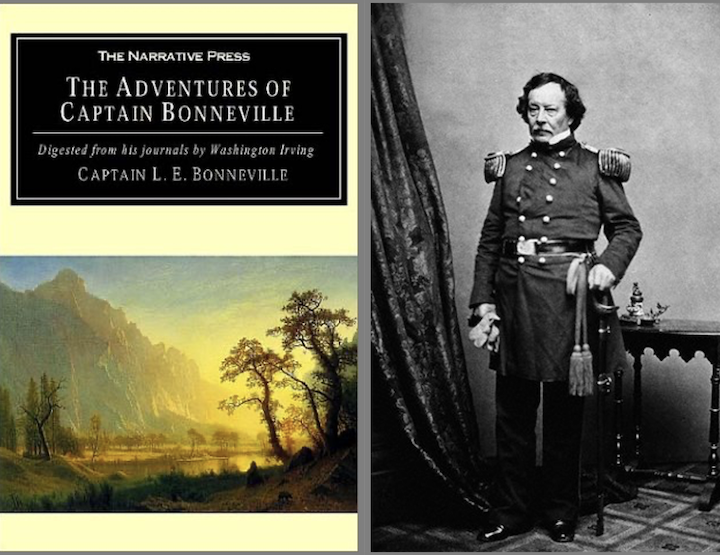
Few remember Armand Tuffin de la Rouërie, and yet his contributions to American Independence deserve more than a couple of interpretative markers. Duportail fares better with his own statue on Lafayette Square in Washington D.C. but chances are tourists do not know who he was, and what he did for the United States. Same with General Bernard Simon, who designed and oversaw the long chains of military forts in the US eastern seaboard to protect the new Republic. A few decades after, Brig. general Bonneville opened much of the American northwest territories, but who knows it is a family surname? As for the Civil War, the likes of Generals de Polignac, de Trobriand (and his 55th New York Infantry regiment made up of primarily French volunteers), Duffié, Agnus, LeGendre, they are forgotten (for good or bad reasons), yet they left lasting memories among their soldiers. We also included a couple of very famous Generals such as P.T. Beauregard and Mouton, as their French ancestry was quite recent (in fact, the former only spoke French until the age of twelve).
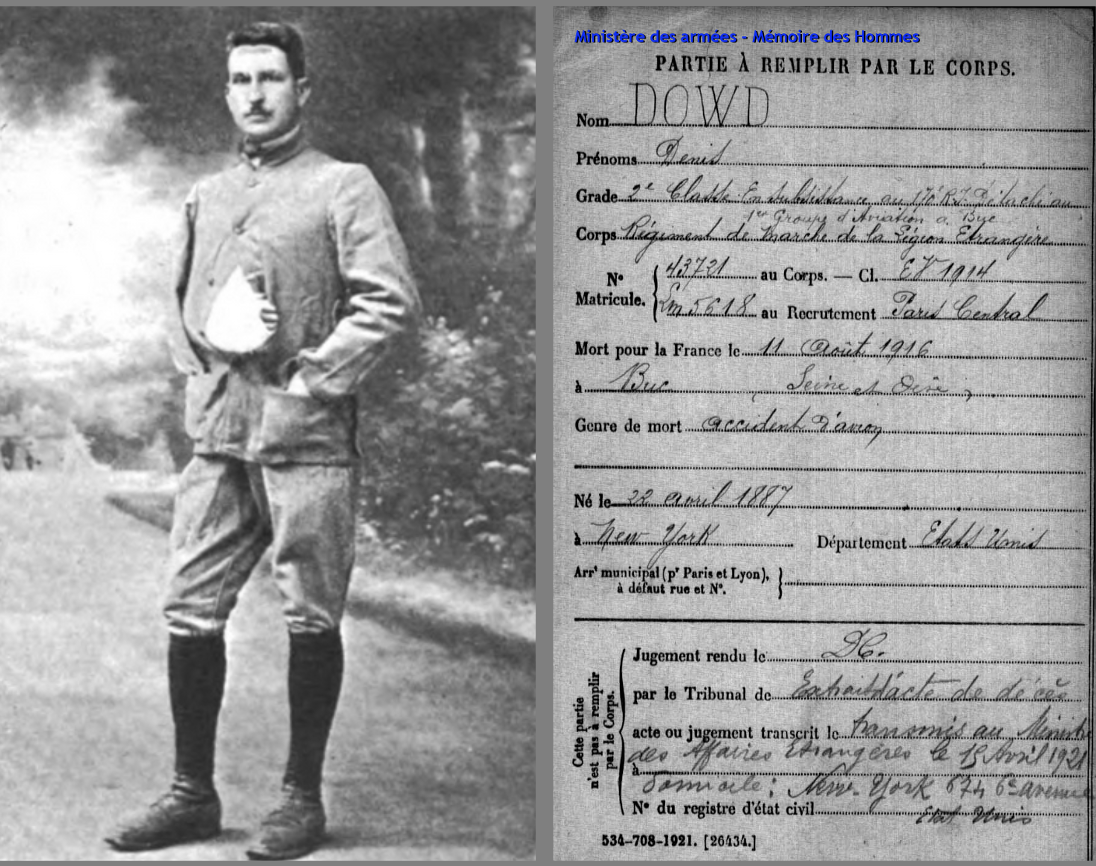
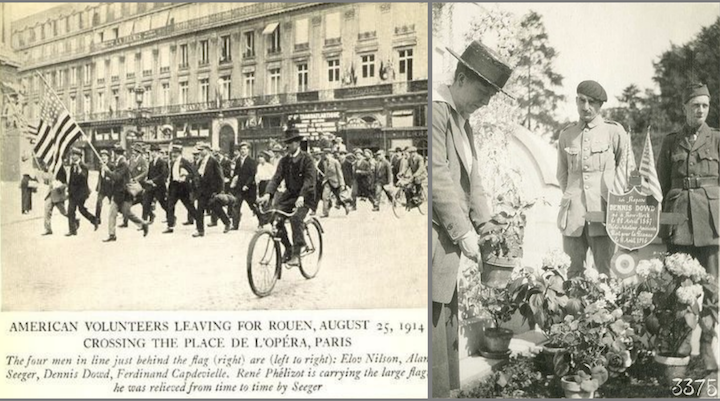
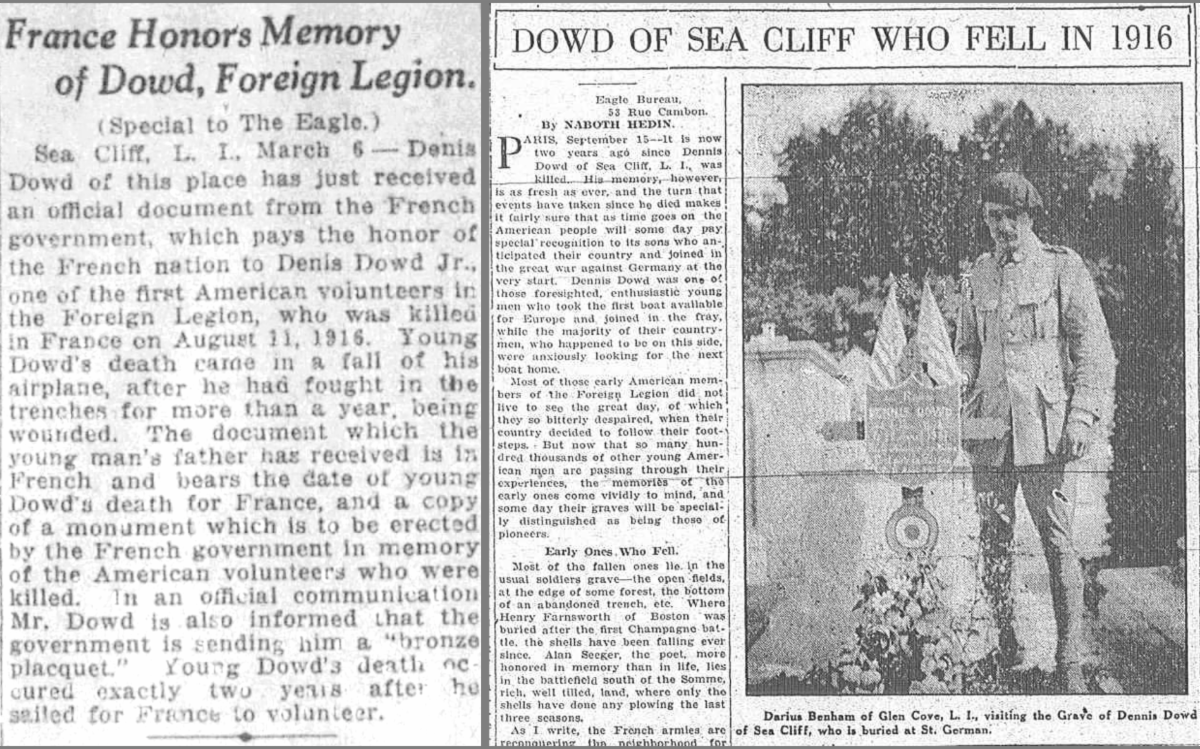
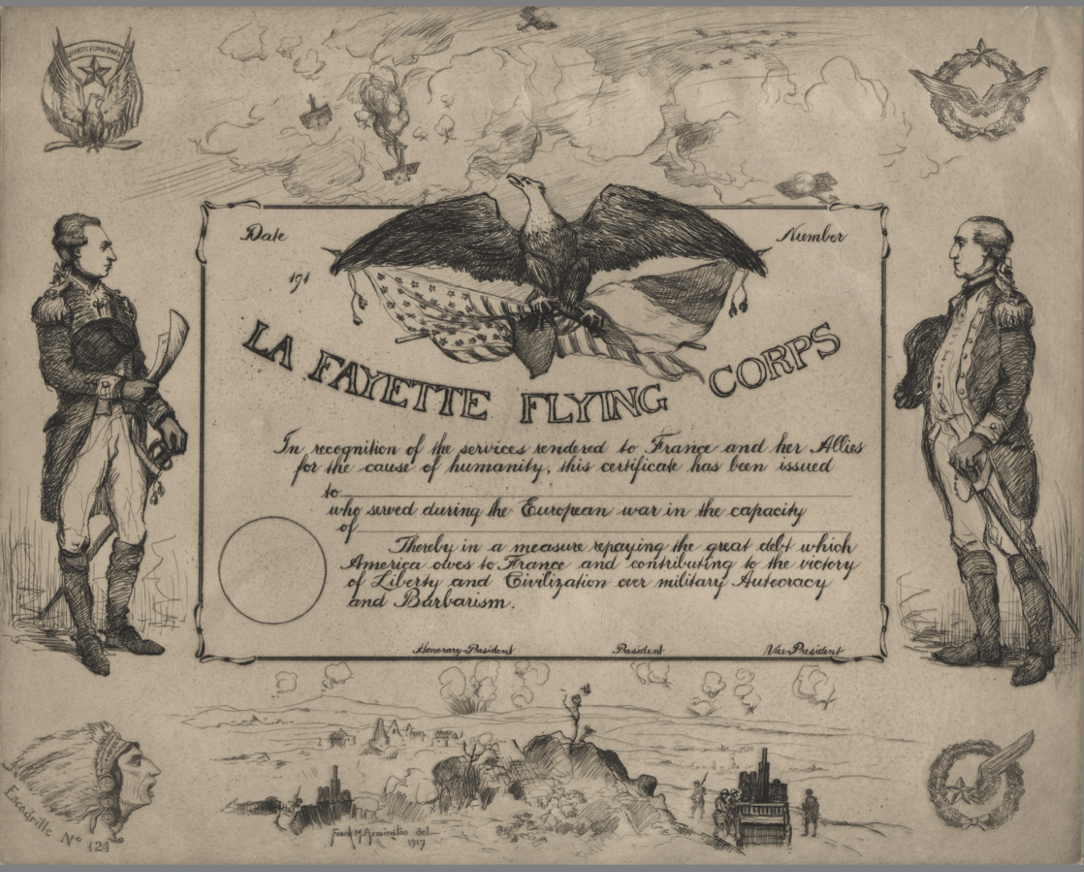
In our second part of our Bulletin, we will pay homage to another volunteer of the Lafayette Air Corps, Private Dennis Dowd, of New York, among the very first American volunteers who rushed to enlist in the French Army soon after the war broke in 1914 and who officially “Died for France" on August 8, 1916, at an aviation school right outside of Versailles. He volunteered to fight for the noble cause of Freedom and Democracy, and made the ultimate sacrifice.
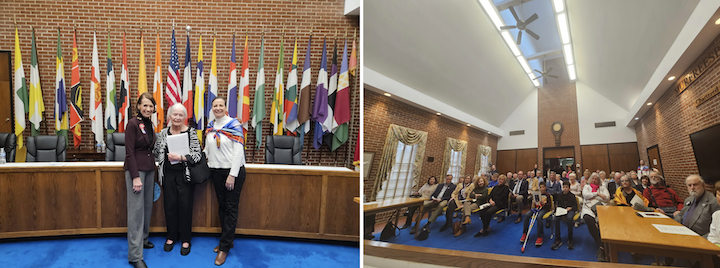
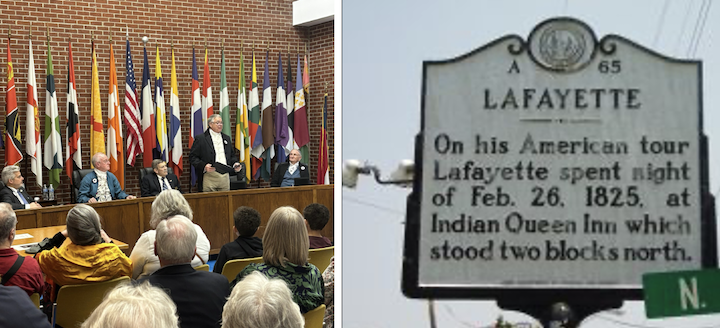
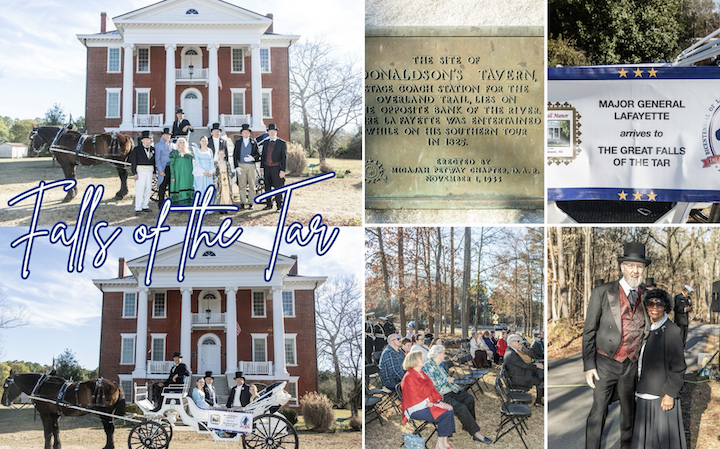
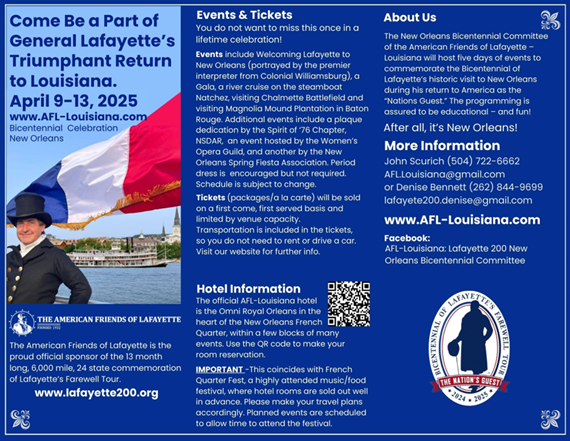
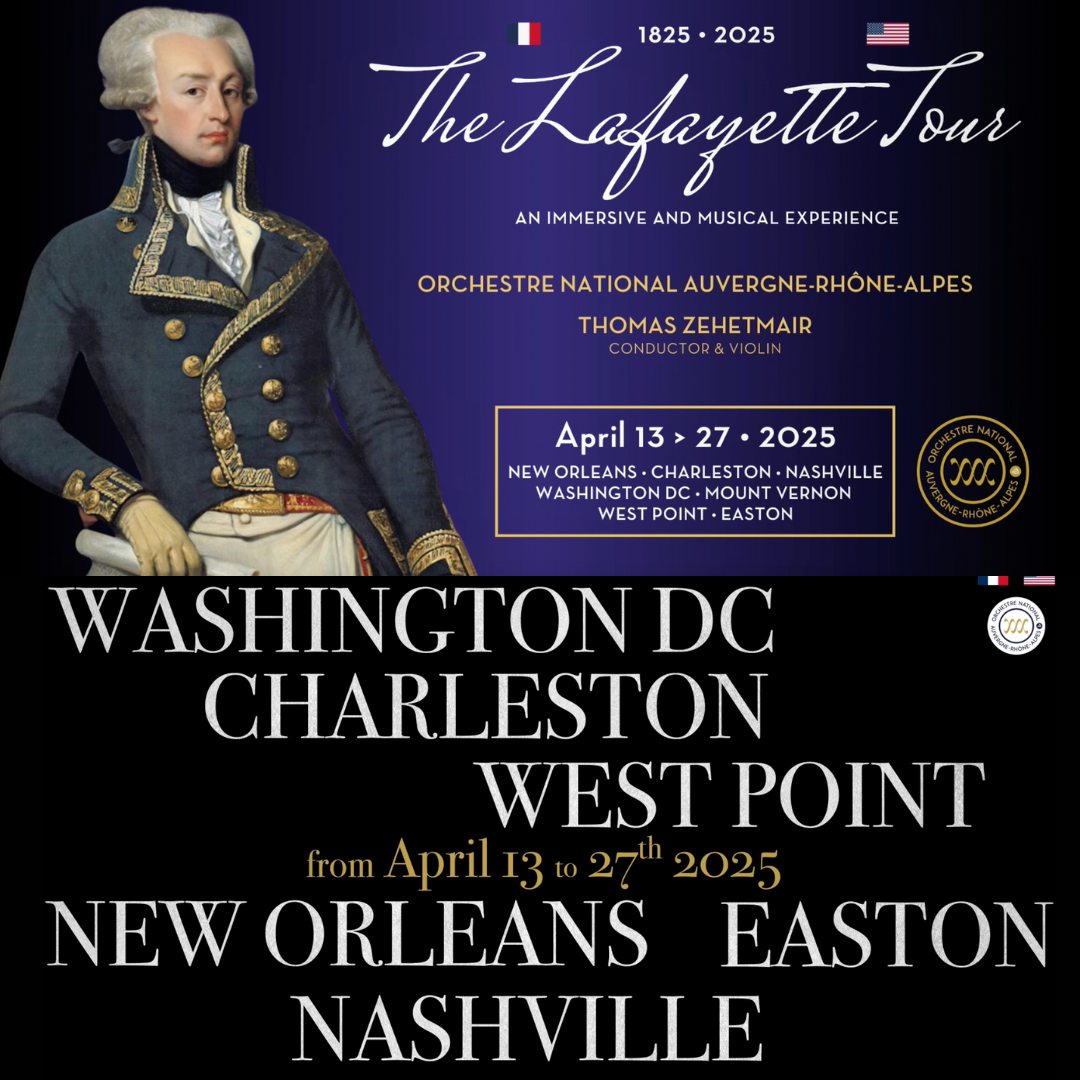
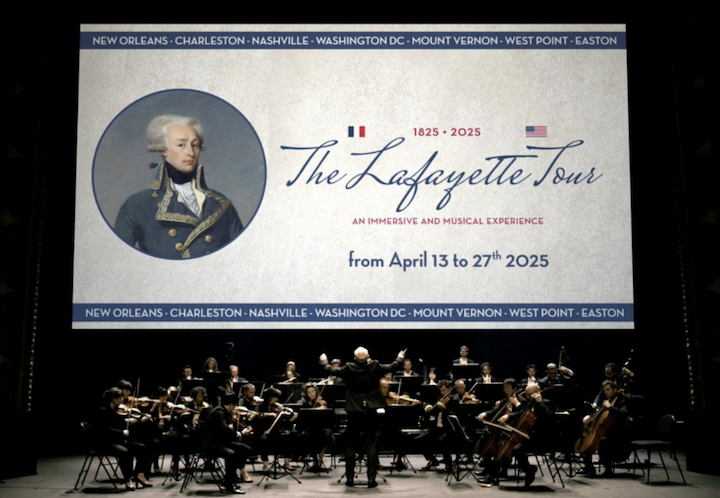
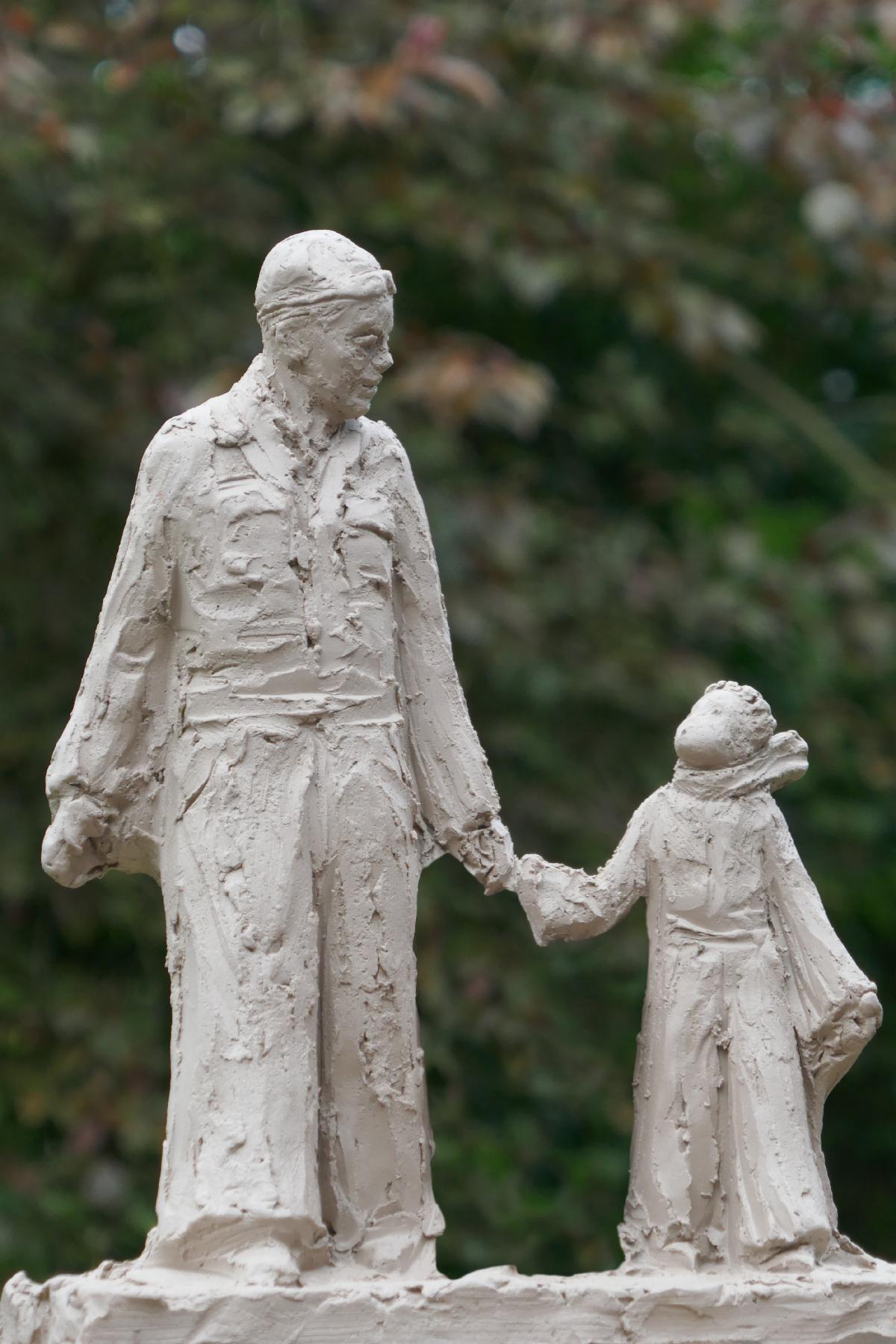
Our third part “News and Save the Dates” will report on events since our last Bulletin, including several commemorations of the ongoing Bicentennial of Lafayette’s Farewell Tour organized by the American Friends of Lafayette. Do not miss the last pages, where we announce the launch of the fund raising campaign for the sculpture of Antoine de Saint Exupéry and his Little Prince in downtown Miami, Florida!
Finally, we are also announcing our next General Assembly to be held via Zoom on Thursday, April 10, 2025. All members are invited to participate and vote! In order to do so, and as per our By-laws, one has to be current with their dues. So, it is not too late to renew via PayPal. Your dues allow us to plan several new plaques and monuments honoring Frenchmen and women who accomplished great deeds in, and for, the United States of America.
Thank you for your support.
On behalf of the Board of Directors,
Thierry Chaunu
President, American Society of Le Souvenir Français, Inc.
| | |
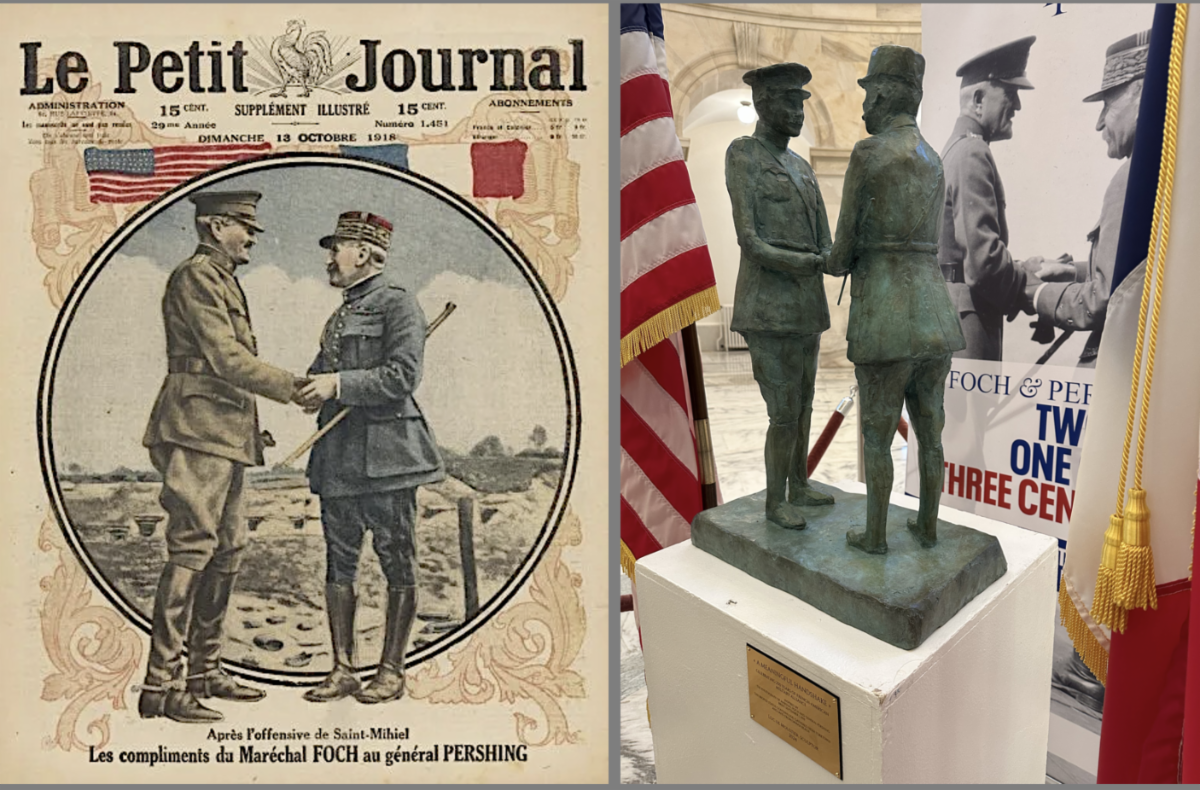
Above: To mark the 250th anniversary of the U.S. Army and the U.S. Marine Corps, France presented this bronze sculpture to their general officers at the Pentagon last February.
Top Left: Marshal Foch congratulates General Pershing of the American Expeditionary Force on their success after the Battle of Saint-Mihiel in September 1918, Le Petit Journal, October 13, 1918 issue, family archives.
Top Right: Sculpture of Foch and Pershing by French artist Luc de Moustier exhibited at the U.S. Congress, Russel Rotunda, photo by TC © ASSFI December 10, 2024
| | |
When the 13 colonies rebelled against the British Crown, apart from their state militias, the Continental Army was very weak: no armements, no defense factories, unpaid soldiers with no uniform or military training. It is a testimony to the bravery of these Patriots that could even engage against a powerful military. It is only after the victory at Saratoga on October 7, 1777 that the French King Louis XVI resolved to declare war against England and side with the Insurgents (after authorizing covert military supplies and the departure of volunteers, French, Polish, German, all leaving from French ports).
As all impartial historians have demonstrated since, the independence of the United States would not have been possible without the arrival of French soldiers, sailors and money. After the allied French-American victory at Yorktown on October 19, 1781, it would take almost two years of negotiations to sign the Treaty of Paris of September 3, 1783.
In 2025, the nation commemorates the 250th anniversary of the start of the Revolutionary War and the 250th birthday of the United States Army. The security of the fledgling republic needed to be guaranteed by a strong army, capable of standing on its own. To this end several French officers either stayed as engineers or instructors, or came back to escape the French revolution, or the fall of the Napoleonic empire.
In our Bulletin of February 2023: George Washington’s French engineers, we narrated the stories of several of these officers who fought during the Revolutionary War and continued to serve in the United States for several decades thereafter:
https://conta.cc/3XBjqMp (original version in English)
https://conta.cc/412e0Nr (version en français)
Contrary to popular belief, Lafayette is not the only Frenchman serving with the rank of general in an American uniform. There were many others, who, regardless of their ranks in the French Army, were officially named Generals of the U.S. Army.
After the first decades of the republic, the second "wave" occurred during the tragedy of the American Civil War.
France, similar to the United Kingdom, remained officially neutral in this conflict, leading some French officers to join both sides. We will introduce them in the following pages.
But first, “à tout seigneur tout honneur” (give honor to whom honor is due) and let us start with Lafayette...
| | |
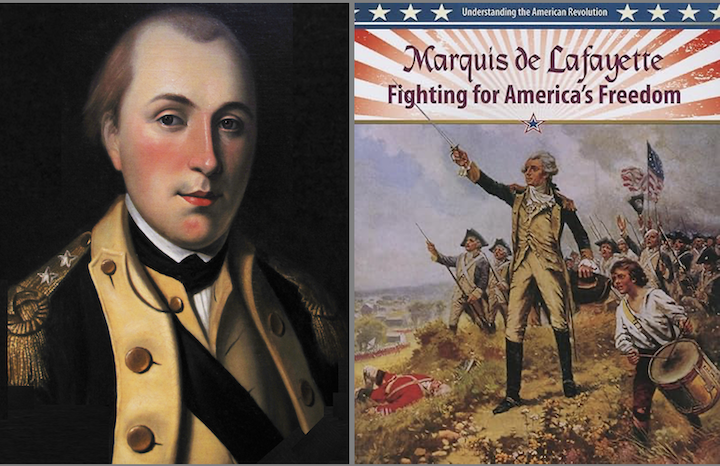
Marquis de Lafayette
Major General of the Continental Army
July 31, 1777
| | |
An introduction is unnecessary:
Lafayette's contribution during the Revolutionary War is well-known. His name frequently appears in our monthly Bulletins, and this issue is no different. We will focus here on his military talents, courage, and bravery, which became clear soon after he arrived in America, justifying afterwards his promotion to Major General by the Continental Congress at just 19 years old.
His military training: In May 1771, when he was under 14 years old, Lafayette became an officer in the Musketeers, holding the rank of sous-lieutenant. His responsibilities mainly involved participating in military parades at Versailles, which were mostly ceremonial, while he kept up with his studies. He received a commission as a lieutenant in the Noailles Dragoons in April 1773, after his transfer from the royal regiment was requested by Lafayette's father-in-law.
He was in Metz when he attented a dinner in the summer of 1775 with the Duke of Gloucester, the brother of King George III, who was visiting France. Lafayette later remembered this dinner as a key moment. "My heart was enlisted," he later confessed in his memoirs, "and I thought only of joining my colors to those of the revolutionaries" when he found out that Washington was looking for recruits for the Continental Army. In September 1775, after turning 18, Lafayette went back to Paris and became a captain in the Dragoons.
On March 25, 1777, he set sails to America on board La Victoire, and the rest is history.
His appointment: Soon after he reached Philadelphia, after Lafayette offered to serve without pay, Congress commissioned him a major general on 31 July, 1777. He first met for dinner with George Washington a week later on August 5, 1777. General Washington brought the Frenchman to see his military camp. When Washington felt embarrassed about the camp and the soldiers, Lafayette replied, "I am here to learn, not to teach." He joined Washington's staff, but there was some confusion about his role. Congress saw his position as honorary, while he believed he was a real commander who would lead a division when Washington thought he was ready. Washington explained to Lafayette that he could not lead a division because he was not born in America.
| | |
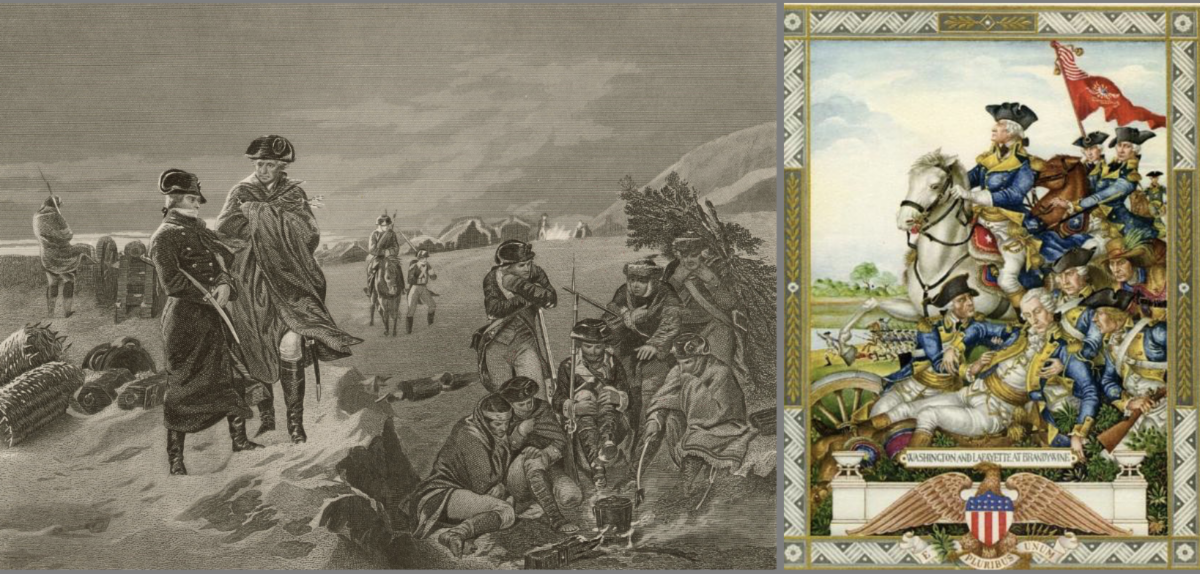
Above:
Left: The painting "George Washington 1732 to 1799 and Lafayette at Valley Forge after Alonzo Chappel" depicts a meeting between George Washington and Marquis de Lafayette at Valley Forge during the American Revolutionary War, with the image published in "Life and Times of Washington" Volume 1 in 1857. New York Public Library, Public Domain, https://digitalcollections.nypl.org/items/510d47e0-f5e0-a3d9-e040-e00a18064a99
Right: Lafayette wounded at Brandywine, by famous Polish artist Arthur Szyk, who created the 38 original watercolor paintings of the George Washington and His Times portfolio between 1930 and 1931. The works were exhibited at the 1931 Exposition Coloniale in Paris. In 1935, the President of Poland, Ignacy Moscicki, purchased the original miniatures from Szyk for US$66,000 (in today's dollars) and presented them to President Franklin D. Roosevelt. The paintings hung in The White House until 1941. They reside today in the FDR Library in Hyde Park, New York. https://marq-de-laf.tumblr.com/post/161005327116/pics-of-lafayette-wounded-at-brandywine
| | |
His bravery in battle: Lafayette experienced his first battle at the Battle of Brandywine near Chadds Ford, Pennsylvania, on September 11, 1777. After the British outmaneuvered the American forces, Washington directed Lafayette to assist General John Sullivan. Upon arriving, Lafayette joined the Third Pennsylvania Brigade, led by Brigadier Thomas Conway, and tried to encourage the troops to stand firm against the enemy. Despite being outnumbered, British and Hessian forces pressed on, and Lafayette was wounded in the leg. As the Americans retreated, he helped organize a more structured withdrawal before receiving medical attention for his injury. Following the battle, Washington praised his "bravery and military ardor" and recommended him for a division command in a letter to Congress, which was quickly evacuating as the British took control of Philadelphia later that month.
His valor in combat: He helped General Nathanael Greene by scouting British locations in New Jersey. With 300 troops, he won against a larger Hessian army in Gloucester on November 24, 1777. Lafayette spent the winter of 1777–1778 with Washington's troops at Valley Forge, enduring their struggles. While there, the Board of War, headed by Horatio Gates, requested Lafayette to organize an invasion of Quebec from Albany, New York. Upon reaching Albany, he discovered there were not enough soldiers for the invasion. He informed Washington about the situation and decided to go back to Valley Forge. Before leaving, he successfully enlisted the Oneida tribe to support the Americans. The Oneida called Lafayette Kayewla, meaning "fearsome horseman".
His military skills as a field commander:
On May 18, 1778, at Barren Hill, Pennsylvania, Lafayette had his troops come out from the woods on a hill (now called Lafayette Hill) to create the illusion of having more soldiers. They took turns shooting at the British forces.
| | |
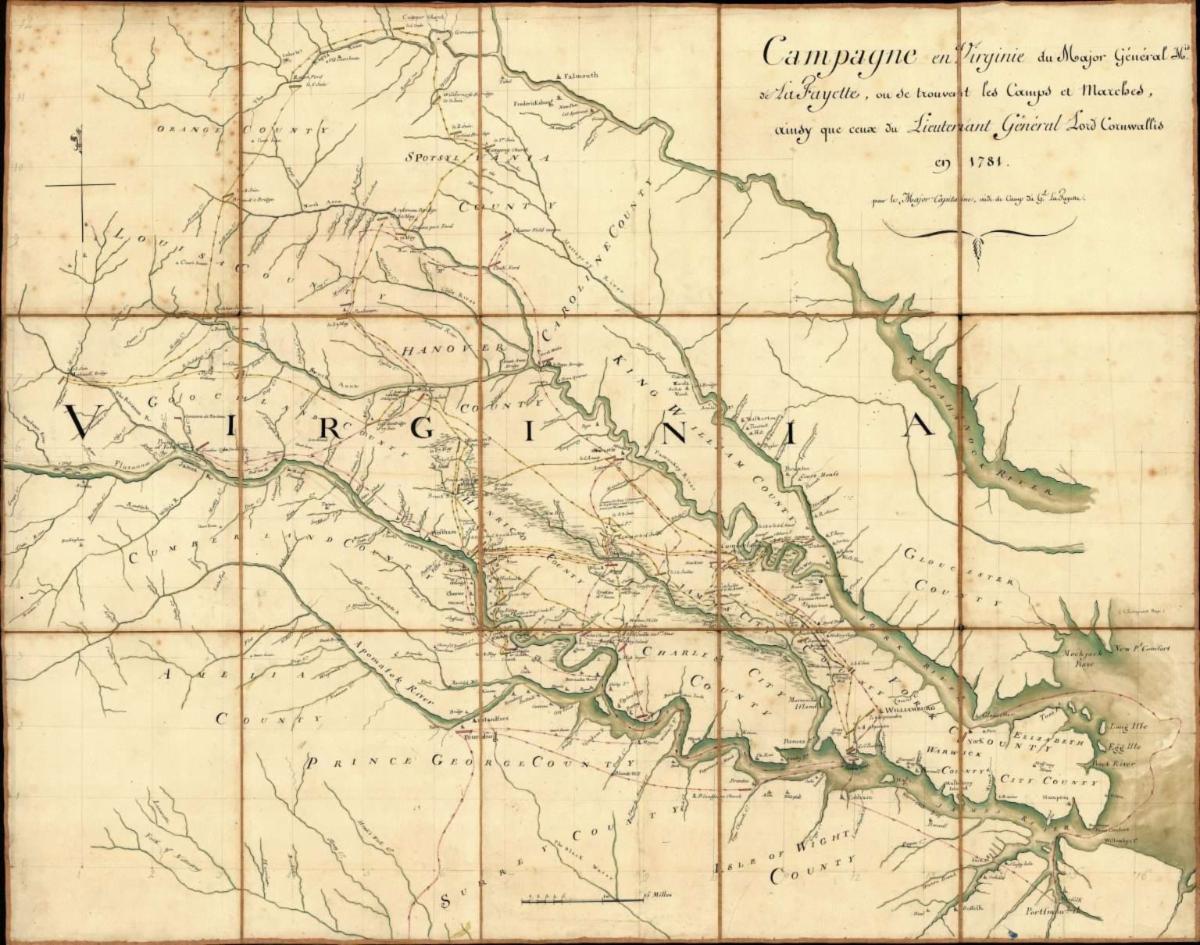
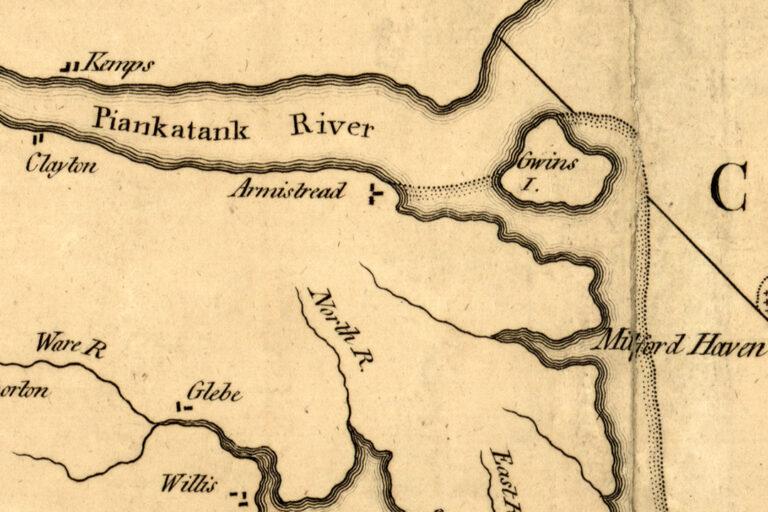
Above: Map of Lafayette's Virginia Campaign of 1781, by Capitaine Michel du Chesnoy, 1781, Pen-and-ink and watercolor map, Library of Congress, Public Domain, https://encyclopediavirginia.org/lafayettes-virginia-campaign/.
This map of central Virginia, named "Campagne en Virginie du Major Général M'is de LaFayette" (The Virginia Campaign of Major General the Marquis de LaFayette), was made by Michel Capitaine du Chesnoy, who was Lafayette’s aide-de-camp. It highlights key locations from Lafayette’s campaign in Virginia, along with notes and dates of military events. Capitaine du Chesnoys maps are known for their precision and their ability to convey a military story. In this instance, the map illustrates how Lafayette kept Cornwallis’s army occupied with small skirmishes until Washington’s and Rochambeau's troops and the French navy could come together strategically at Yorktown.
| | |
The Virginia Campaign and Yorktown, 1781:
Dozens of markers dot the Virginia landscape retracing Lafayette's American troops' constant harassment of Lord Cornwallis, and pinning him down to Yorktown while Rochambeau's and Washington's troops marched hurriedly to start the siege.
Lafayette successfully avoided being captured by Cornwallis in Richmond. As the British troops moved, Lafayette sent small groups to strike unexpectedly at the rearguard and foraging parties, making it seem like his forces were much larger. His strategy kept the British contained until the French fleet arrived and won the Battle of the Virginia Capes, cutting off Cornwallis's naval support. On September 14, 1781, the Allied French-American troops joined Lafayette. By September 28, with the French fleet blocking the British, the united French and American forces began the siege of Yorktown. On October 14, Redoubt No. 9 was attacked by 400 French soldiers from the Gâtinois and the Royal Deux-Ponts Regiment under the overall command of baron de Vioménil, while Redoubt No. 10 was targeted by 400 light infantry under Col. Alexander Hamilton. There was a brief disagreement over who would lead the assault on Redoubt No. 10. Lafayette wanted his aide, Jean-Joseph Sourbader de Gimat, to lead, but Hamilton argued he was the senior officer. Washington sided with Hamilton and gave him command. These two redoubts were crucial for breaking the British defenses. After a failed counter-attack by the British, Cornwallis surrendered on October 19, 1781 thus paving the way for American Independence.
• Upon his return to France in 1782, Lafayette was elevated to maréchal de camp (Brigadier General) in the French Army, bypassing many ranks, and he became a Knight of the Order of Saint Louis.
• On January 16, 1784, Major Pierre L'Enfant delivered the newly made Eagles to Lafayette (along with Admiral d'Estaing and General Rochambeau) for distribution to their officers to mark their official induction into la Société des Cincinnati de France.
| | |
Charles Armand Tuffin,
Marquis de la Rouërie
Brigadier General, Continental Army
March 26, 1783
| | |
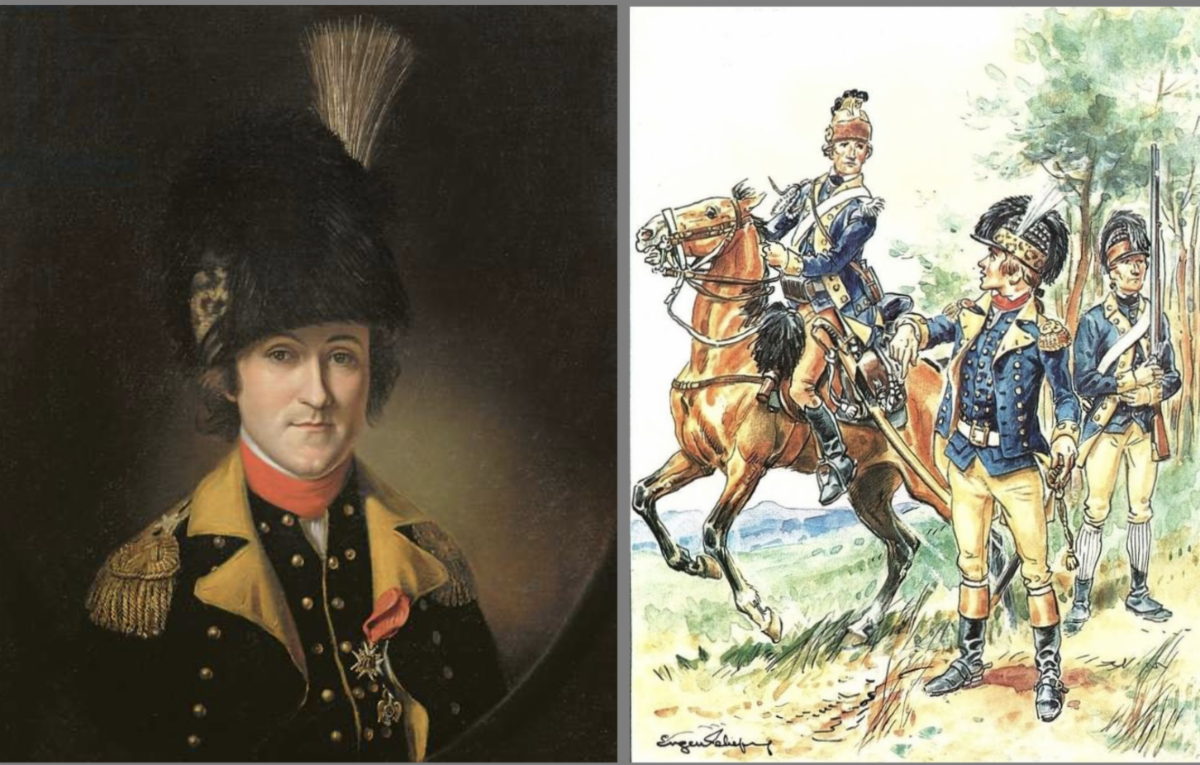
Above:
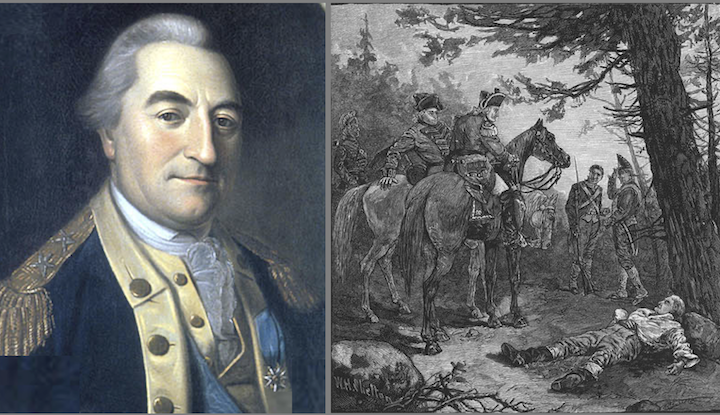
Top Left: Charles Armand Tuffin, marquis de la Rouërie Portrait d'Armand Tuffin de La Rouërie, par Charles Willson Peale. By Charles Willson Peale - Philadelphia History Museum at the Atwater Kent, Public Domain, https://commons.wikimedia.org/w/index.php?curid=125705820
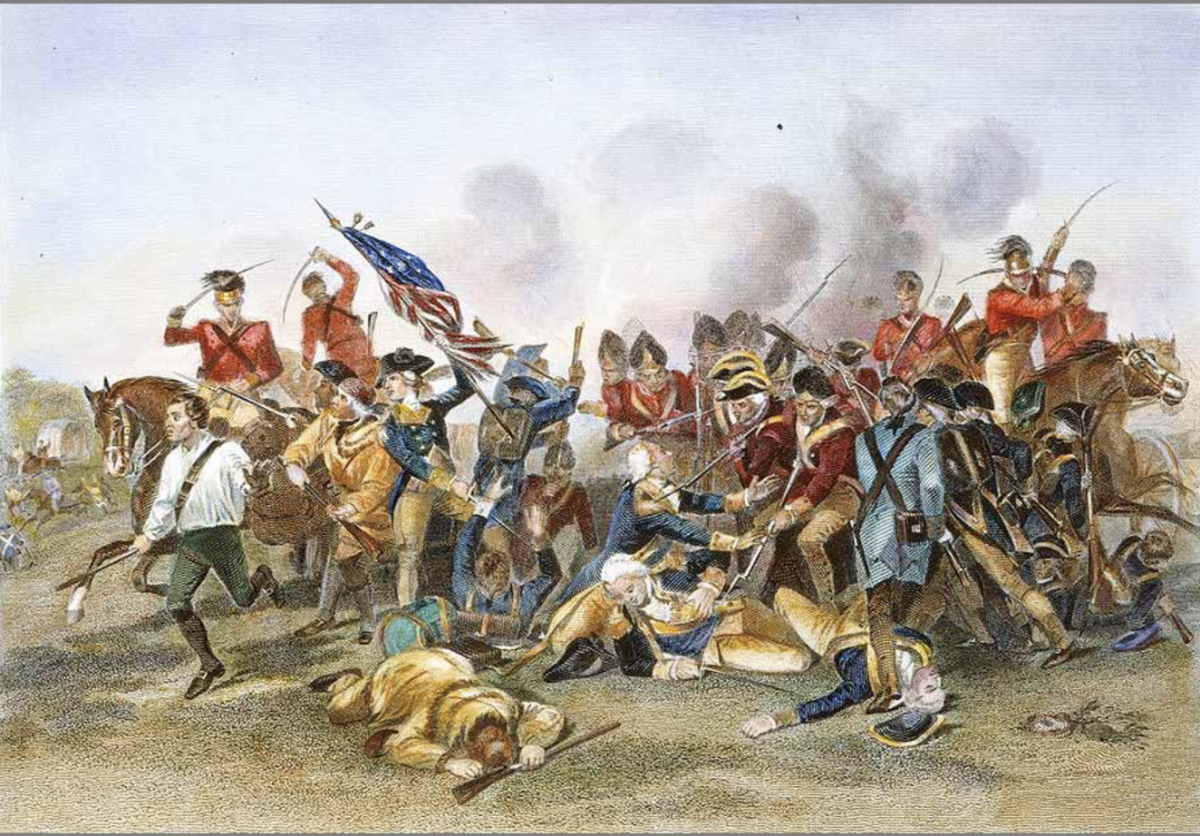
Top Right: Le Colonel Armand, Marquis de la Rouërie, et ses Partisans, 1781 by Eugène Leliebvre - Supplément au Carnet de la Sabretache, 1976/35, Planche No 1 , Carnet 35, https://hu.pinterest.com/pin/861032022484884344/
| | |
"Colonel Armand"
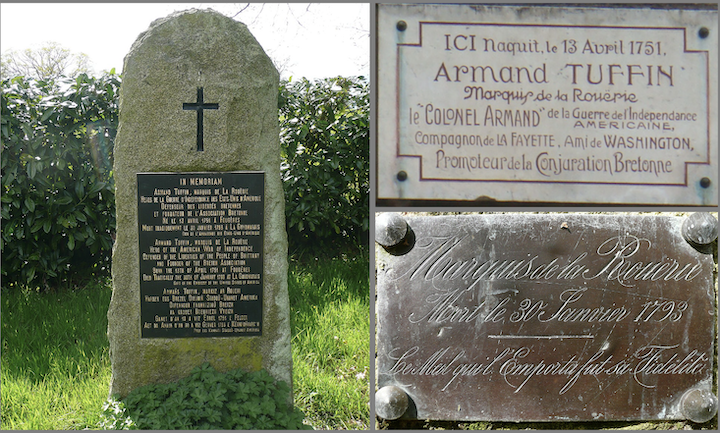
• Charles Armand Tuffin, marquis de la Rouërie (born in Fougères, Brittany, on April 13, 1751- died on January 30, 1793 at Saint-Denoual, Brittany), also known as "Colonel Armand," was a cavalry officer.
• In 1766, his family bought him a commission as a second lieutenant in the Gardes-Françaises regiment. At fifteen, he left the castle of Saint-Ouen-la-Rouërie, where he had spent his childhood, to move to Paris. He began his service at Versailles. Since the Gardes-Françaises was an elite ceremonial unit, leisure activities took precedence over duty. At first, he enjoyed life in Paris and Versailles, but soon he became bored.
• His desire for revenge against the English after the Seven Years' War, his taste for adventure, and the chance to boost his military career abroad for a cause he believes in are the main reasons that drive La Rouërie to set sail for America. La Rouërie boards the Morris, an American ship that departs from Nantes in early 1777, taking with him his valet Lefebvre. The journey is tumultuous and ends with a swim, as the English attack the ship in Delaware Bay.
• La Rouërie and Lefebvre arrived in Philadelphia and requested a meeting with Congress to offer their services to the Continental Army. The Marquis was recommended to Congress by Robert Morris. During the meeting, La Rouërie stated he was willing to serve without a salary, wanting only to contribute to the cause. He also expressed that he did not want to be known by his title or family name, preferring to be called by his first name, Charles Armand, and would be known as Colonel Armand. This spirit of dedication impressed Congress, which granted Armand a colonel's commission on May 10. Congress even offered the same rank to Lefebvre, which he declined.
• In spring 1778, La Rouërie received permission from Congress to form a legion of "Free and Independent Hunters" consisting of 452 men and 14 officers, under his command and funded by Congress. By March, he began recruiting volunteers from among prisoners of war. Friedrich Adolf Riedesel, a general from the Duchy of Brunswick-Lunebourg allied with Great Britain, noted in his memoirs:
"This French adventurer named Armand, who spoke enough German to be understood. Talkative and carefree like many from his country, he easily convinced the naive Germans of the joy they would find serving under him."
Among the officers serving in Armand's legion were:
Lieutenant Colonel de Ternant, (future French Ambassador to the United States, 1791-1792), Major George Schaffner, Major de Laumagne, Chevalier Jean-Baptiste Georges de Fontevieux, Charles Merckle, Captain Claudius de Bert de Majan, Captain John Sharp, Captain Le Brun de Bellecour, Captain Mercley, Captain Bedkin, Chevalier de Vaudoré, Lieutenant Ducos, Lieutenant Sibert, and Lieutenant Segner... Americans and French fighting side by side.
"Commando" action in Westchester, November 7, 1779:
While in Tarrytown with his legion, he received word from an informant that Loyalist Major Mansfield Bearmore was resting in a house in Morrisania, about fifty kilometers away. Bearmore, known for his brutal tactics, led a group of loyalist partisans and was feared by the locals. La Rouërie aimed to eliminate this threat and set off with his cavalry. The next day, just before dawn, Armand's legion crossed into British territory. He left most of his troops on a bridge to ensure their safe retreat, as an 800-man Hessian camp was nearby. With only 22 cavalrymen, he ventured 5 miles into enemy land, found Bearmore's house, and surrounded it. They charged in silently, catching Bearmore and five of his men off guard while they slept. La Rouërie and his cavalry returned with the prisoners without facing any British forces. Upon arriving at Camp Scott, they were met with cheers from the American soldiers. To reward his men for their discipline and for not looting Bearmore's house, La Rouërie gave them $400.
| | |
• He participated in several other battles, including Monmouth, Short Hills, Brandywine, Whitemarsh, Camden, the Campaign in Virginia, and the Siege of Yorktown.
• At the battle of Camden on August 16, 1780, at the sight of English riflemen charging with bayonets, the Americans troops buckled and retreated. Tarleton's dragoons again went into action and pursued the fugitives. La Rouërie then counter-attacked with what remained of his own dragoons, forcing the English cavalry to regroup and allowing more fugitives to escape. Tarleton himself wrote in his report that Armand's troops ‘with great composure blocked the road to the fugitives’.
Mission to Versailles:
La Rouërie left for France in February 1781, traveling with Colonel John Laurens, who is tasked with negotiating financial support from King Louis XVI, leaving Lieutenant Colonel de Ternant in charge of the legion.
La Rouërie acquired 100 leather saddles, 150 hussar sabers, 160 pairs of pistols, 975 shirts, 160 blankets, 150 pairs of boots with spurs, 320 copper helmets, 4 trumpets, and 4 shakos, along with various supplies worth 300 guineas. After six months away, La Rouërie returns to America. In the meantime, he was honored as a Knight of the Order of Saint-Louis.
| | |
Yorktown and the taking of Redoubt #10:
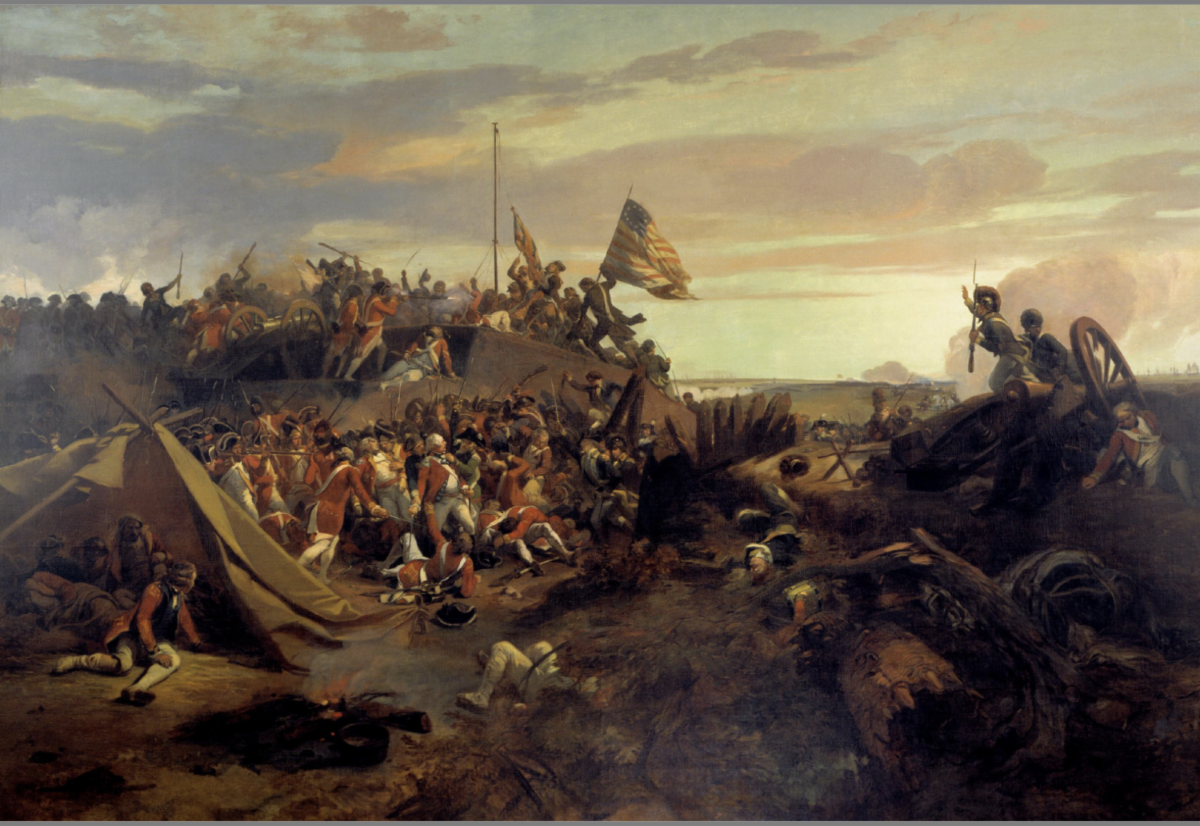
To capture Yorktown, the French and Americans had to first take two key redoubts in the same attack, to prevent the British to regain control of the other. It was decided that the French and Americans would each assault one redoubt. The French attack (redoubt #9) was led by the baron de Vioménil, with the main force commanded by Lieutenant Colonel Guillaume de Deux-Ponts, assisted by Baron de l'Estrade. For the second redoubt (#10), the American attack is led by Colonel Alexander Hamilton in charge of the offensive, supported by Colonel de Gimat, Lafayette's former aide-de-camp, and Colonel John Laurens.
In the afternoon, a few hours before the attack, Colonel La Rouërie approached General Washington to request permission to join the assault on redoubt #10 as an individual, without any command, and accompanied by just a few of his officers. Washington granted his request.
The attack was successful, with the Americans capturing their redoubt even faster than the French at redoubt #9. During the fight, La Rouërie was among the first to enter the redoubt.
Colonel Alexander Hamilton wrote after the battle:
"I would like to express our gratitude to Colonel Armand, Captain Legouge, Chevalier de Fontevieux, and Captain Bedkin, an officer from his unit, who fought as volunteers on this occasion. They led the right column and were among the first to enter the redoubt, contributing to the success of the mission through their bravery."
After Yorktown:
In early 1783, Colonel Armand is still serving in the American army. La Rouërie, one of the first Frenchmen to arrive in America, was among the last to leave.
• On March 26, 1783, he became a brigadier general in the American Army before returning to France in the summer of 1784. This promotion was requested by Washington in a letter to the president of Congress on March 7, 1783. On November 25, the soldiers of the Armand Legion march for the last time in Philadelphia in front of General Washington. On November 29, La Rouërie writes to him:
"It is impossible to describe this scene of sadness, with officers and soldiers in tears, all coming to me to express their sorrow over the separation; even those who had faced punishment asking their officers for forgiveness; and the entire troop promising to return if our services were needed again in this country..."
La Rouërie received many letters of thanks, showing great respect: from General Benjamin Lincoln, Secretary of War, Thomas Mifflin, President of Congress, the residents of York, where his troop was stationed, and the officers of his legion in a letter given to him the day before he left for France.
After his departure from America, he maintained a friendship with Washington and the two continued to correspond.
• La Rouërie became a member of the French chapter of the Society of the Cincinnati.
| | |
• During the French Revolution, La Rouërie was a strong supporter of the monarchy. He aimed to raise a peasant army in Brittany and nearby provinces to march on Paris, working alongside the Prussian army and émigrés. He established a network of contacts in each town and rural parish. This was similar to what he attempted in the United States, but it did not succeed this time. After being betrayed, La Rouerie had to flee and hide from castle to castle. He died from exhaustion and pneumonia at the Guyomarais manor in Saint-Denoual, near Lamballe, on January 30, 1793, before the uprising he had planned. His body was later exhumed and beheaded by republicans a few days after his death...
Disappointingly, there are no monuments or markers honoring La Rouërie, except this mention in New Jersey. Our Society is keen to install one in Westchester or Yorktown in the future.
Marker, “Battle of the Short Hills“
1210 Raritan Rd, Scotch Plains, NJ 07076
GPS: 40.611167, -74.373183
• Inscription (excerpts):
“On the 26th of June in 1777 Washington’s continental forces of under 6,000 men fought a running battle on the plains below the Watchung Mountains with the combined British and Hessian troops numbering about 12,000. [...] The first massed resistance by American troops was on the crossroads at Oak Tree where Cornwallis’ column was fired upon by a body of about 600 men under Brigadier General Thomas Conway at about eight a.m. His troops were joined by three companies of Pennsylvania-German volunteers of Major Nicholas Ottendorff, newly placed under the command of the French Colonel Charles Armand-Tuffin with three brass field pieces making the first use of French command and arms in the war. [...]
Erected 1977 by Scotch Plains American Revolution Bicentennial Committee."
| |
|
Louis Lebègue de Presle Duportail
Brigadier General, November 17, 1777
Major General, November 16, 1781
| | |
Above:
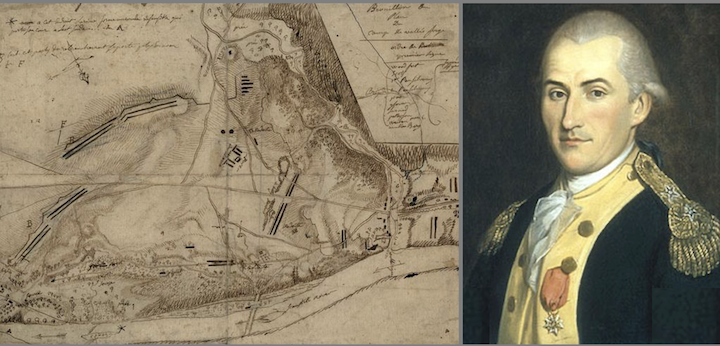
Top Left: Plan du Camp de Vallee Forge; Valley Forge Encampment Duportail map, 1777-78
This map was drawn by Antoine-Jean-Louis Le Bègue de Presle Duportail (1743-1802) and is labeled in French. Duportail served as tactical advisor to George Washington and later as the French Minister of War. The title on the map reads “Brouillon et Plan du Camp de Vallee Forge-Ordre de Bataille - Première ligne,” which when translated reads “Draft and Plan of the Camp of Valley Forge-Order of Battalion of the First line.” Courtesy of Cornell University via ARTstor.
https://dp.la/primary-source-sets/revolutionary-war-turning-points-saratoga-and-valley-forge/sources/1376
Top Right: Portrait of Louis Lebègue Duportail (1743-1802), By Charles Willson Peale -
Public Domain, https://commons.wikimedia.org/w/index.php?curid=917030
| | |
“One of the best and most honest officers upon this continent.”
• Louis Antoine Jean Le Bègue de Presle Duportail (14 May 1743 – 12 August 1802) was a French military leader who served as a volunteer and the Chief Engineer of the Continental Army during the American Revolutionary War.
• Lafayette once called him “one of the best and most honest officers upon this continent.”
• He also served as the last Secretary of State for War and first Minister of War during the beginning of the French Revolution.
• He graduated from the Royal engineer school at Mézières in 1765.
Promoted to lieutenant colonel in the Royal Corps of Engineers, Duportail joined Washington's Continental Army under a secret agreement between Benjamin Franklin and the government of King Louis XVI.
• He was one of the four French engineers (with de La Radière, Gouvion and de Laumoy)) whom the American commissioners in Paris engaged for the Continental army in February 1777. He worked on the defense of Valley Forge, West Point (where he is not acknowledged), Yorktown...
• Captured in Charleston, South Carolina in May 1780, he was freed in a prisoner swap.
In several letters he asked to be promoted to a higher rank in order to give the necessary weight to his orders. He not only proved to be an excellent technician during the Pennsylvania campaign, but was especially noted for his sound advices as a strategist during the first councils of war in which he participated. Washington would rally to his views, and made him head of combined operations during the decisive operations carried out with Rochambeau and De Grasse until the victory at Yorktown, where he also directed the construction of siege works.
• Returning to France in October 1783, Duportail was made a Maréchal-de-Camp (Brigadier general) in the French Army. He became a member of the French chapter of the Society of the Cincinnati. He served as France's minister of war during the beginning of the French Revolution, upon the recommandation of General Lafayette.
• Pursued by the most radical factions of the Revolution, he managed to seek refuge in America and bought a farm near Valley Forge, Pennsylvania. He lived there until 1802, when he died at sea during his return trip to France.
Legacy in the United States:
| | |
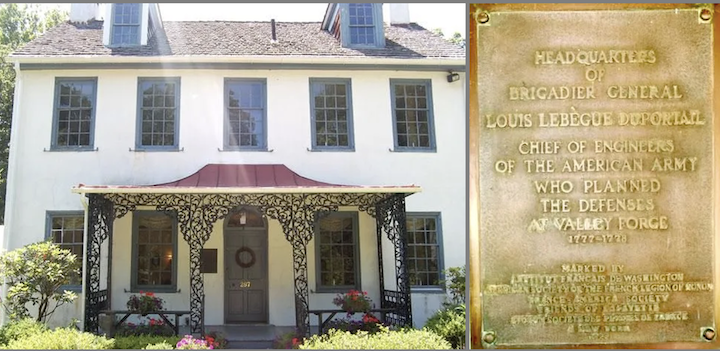
Cressbrook Farm, also known as Duportail House, was the former quarters of Brigadier General Duportail. The original house was built about 1745, and it has been enlarged several times since the main portion was added in 1825. During the American Revolution the house served as headquarters for Brigadier General Louis Le Bègue Duportail in late 1777 and early 1778, during the encampment at Valley Forge. It was listed on the National Register of Historic Places in 1972.
Cressbrook Farm, also known as Duportail House
South of Valley Forge, off Interstate 76, Tredyffrin Township, PA
GPS: 40.077200, -75.450845
• Inscription:
“Headquarters of Brigadier General Louis Lebègue Duportail Chief of Engineers of the American Army who planned the defense of Valley Forge”
Marked by Institut Français de Washington, the American Society of the Legion of Honor, France-America Society, Friends of Lafayette, (rest illegible)”
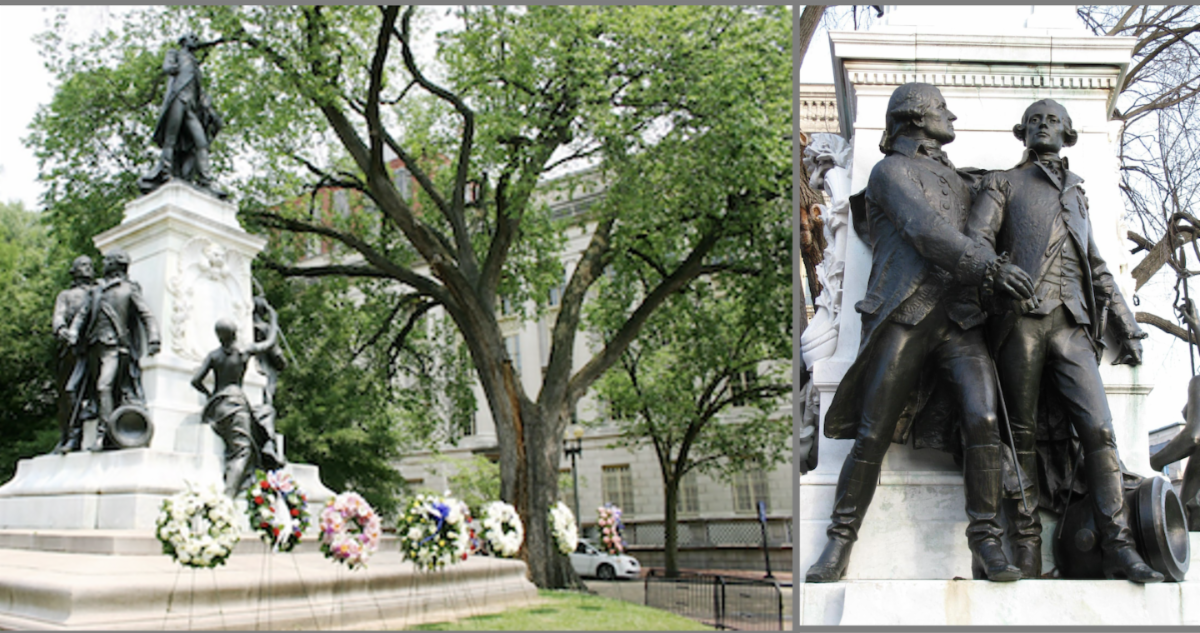
• In Washington, D.C., the west face of the statue of Lafayette at Lafayette Square across from the White House has two statues depicting Rochambeau (who has a statue in his own right, on the West side of Lafayette Square) giving an accolade to Duportail.
Statue, "Lafayette and his compatriots", Washington D.C.
Southeast corner of Lafayette square, across from the White House
Pennsylvania Ave NW &, 16th Street Northwest, Washington, DC 20001
GPS: 38.8988889,-77.0352778
• Inscription:
"By The Congress / In Commemoration / Of The Services / Rendered By /
General Lafayette / And His Compatriots / During The Struggle /
For The / Independence / Of The United States / Of America".
(Maurice Denonvilliers Fondeur, Paris, 1890)
"Erected 1891 By the United States Congress"
| | |
Johann von Robais, Baron de Kalb
Major General, Continental Army
September 5, 1777
| | |
In the service of Louis XV, Louis XVI, and America
• Johann von Robais, Baron de Kalb (June 19, 1721 – August 19, 1780), originally named Johann Kalb, was a military officer from Franconia who became a major general in the Continental Army during the American Revolutionary War. He was fatally injured while battling the British Army at the Battle of Camden.
Service in the French Army and French Nobility:
• De Kalb was born in Hüttendorf, a village in Germany close to Erlangen, in the Principality of Bayreuth. He joined the Loewendal Regiment of the French Army in 1743. After showing great skill during the Seven Years War, he became the assistant quartermaster general in the Army of the Upper Rhine, which was formed when the Loewendal Regiment was disbanded. In 1763, he received the Order of Military Merit and was elevated to nobility by King Louis XV who granted the title of baron.
• In 1764, he married a wealthy French woman from the cloth industry. He purchased the Milon-la-Chapelle chateau close to Versailles and led a peaceful life as a farmer. His family still resides in this town today.
• In 1768, Kalb went to North America on a secret mission from the Duc de Choiseul, France's Foreign Minister, to assess how unhappy the colonists were with Great Britain. Over four months, Kalb came to admire the colonists and their desire for independence, writing detailed reports for the French government. When he returned to Europe, he was eager to return to America and support the colonists in their early struggle against the British.
Service in the Continental Army:
• In July 1777, Kalb came back to North America with his student, the Marquis de Lafayette, who had introduced him to Silas Deane, the American recruiting agent in Paris. They both joined the Continental Army. Kalb was upset to find out he would not be promoted to major general, but thanks to Lafayette's support, he received the rank on September 5, 1777, just as he was heading back to France.
• In the Southern campaign, he felt let down when he found out that Horatio Gates was chosen to lead instead of him. Gates took the army into a terrible loss at the Battle of Camden on August 16, 1780. De Kalb's horse was shot, and he fell to the ground. Before he could rise, he was shot three times and repeatedly stabbed by British soldiers. His friend and aide, the Chevalier du Buysson, was badly hurt while trying to protect him from further attacks.
• When Cornwallis saw Kalb, he said, "I am sorry, sir, to see you, not sorry that you are vanquished, but sorry to see you so badly wounded." It is said that Cornwallis oversaw the treatment of Kalb's injuries by his own doctors in Camden, South Carolina.
As he was dying, Kalb reportedly told a British officer, "I thank you sir for your generous sympathy, but I die the death I always prayed for: the death of a soldier fighting for the rights of man." He passed away three days later.
| | |
Legacy in the United States:
• De Kalb was highly respected by those who lived during his time and is remembered as a hero of the American Revolution.
• He was made a member of the Society of the Cincinnati of France (and his son the Lieutenant Frédéric, baron de Kalb, a hereditary member in 1784)
• Many towns and counties across the U.S. are named after him, including places in Alabama, Georgia, Illinois, Indiana, Mississippi, Missouri, New York, Tennessee, and Texas. Navy warships have been named in his honor.
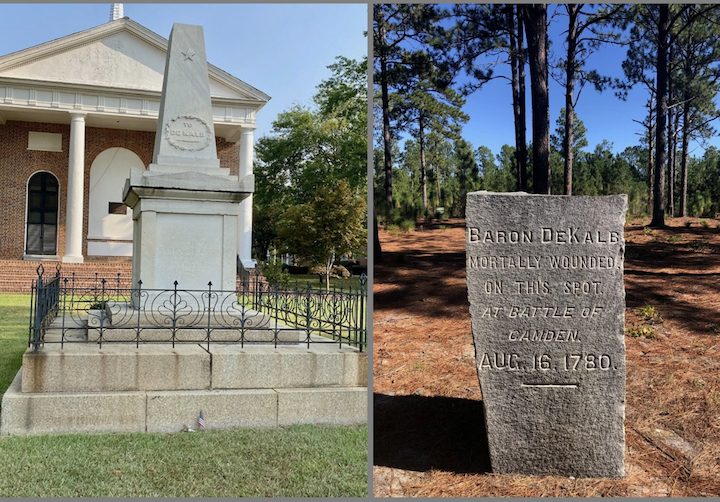
• Two centuries ago, during his visit in Camden, S.C. on March 9, 1825, the Marquis de Lafayette laid the cornerstone to his monument.
The Baron de Kalb Monument
Bethesda Presbyterian Church, 502, Camden SC 29020
GPS: 34.246860, -80.605087
• His memory is also honored on the Camden battlefield:
Stele, Baron DeKalb
1698 Flat Rock Rd, Camden, SC 29020
GPS: 34.357617, -80.610283
• Inscription:
“Baron DeKalb mortally wounded on this spot at Battle of Camden Aug. 16, 1780”
Erected by the Hobkirk Chapter, Daughters of the American Revolution.“
Marker, “Battle of Camden”
1698 Flat Rock Rd, Camden, SC 29020
GPS: 34.357567, -80.609967
• Inscription (excerpts):
“"I am sorry, sir, to see you, not sorry that you are vanquished, but sorry to see you so badly wounded.” -Lord Cornwallis confronting General Johann de Kalb
[…] Major General Johann de Kalb, a seasoned European officer who offered his services to the Patriots during the war, made a vigorous charge with a regiment of Continental infantry through the left division of the British. For more than 30 minutes, the bloody contest raged on the western side of the battlefield, directly across the modern road you see here today. Hit and bleeding, de Kalb fell from the saddle and continued to fight on foot, but he eventually collapsed from multiple wounded. A monument on these grounds commemorates his heroism. […] As Gates's army retreated north, de Kalb was taken to the British base in the town of Camden. He died there three days later, thousands of miles from his home. […]
De Kalb on his deathbed:
Bleeding profusely from his battle wounds, de Kalb was taken prisoner and moved to Camden, where he was treated by Patriot doctor Isaac Alexander of the North Carolina militia. From his deathbed, he dictated letters to his military aide Chevalier du Buysson."
Erected by Historic Camden Foundation, South Carolina Battleground Preservation Trust, American Battlefield Trust.”
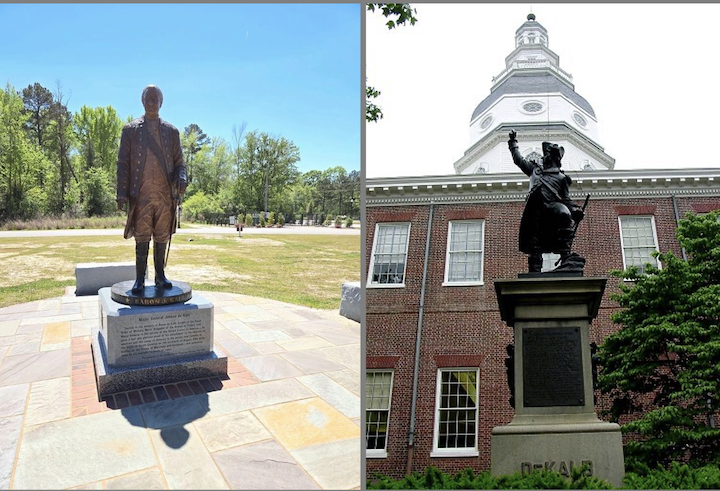
• And his own statue at the Maryland State House:
Statue “Sacred to the Memory of Baron de Kalb”
Grounds of Maryland State House, 100 State Cir, Annapolis, MD 21401
GPS: 38.978567, -76.491117
• Inscription:
“Knight of the Royal Order of Military Merit
Brigadier of the Armies of France and
Major General in service of the United States of America”
“Having served with honor and reputation for three years, he gave a last and glorious proof of his attachment to the liberties of mankind and the cause of America in the action near Camden in the state of South Carolina on the sixteenth of August, 1780. Where leading on the troops of the Maryland and Delaware lines against superior numbers and animating them by his example to deeds of valor, he was pierced with many wounds and on the nineteenth following, expired in the 48th year of his age.”
“The Congress of the United States of America in gratitude to his zeal, service and merit have erected this monument.”
Erected 1886 by Congress of the United States of America"
| | |
Philippe Tronson du Coudray
Inspector-general
Major-general, Continental Army
August 11, 1777
| | |
There are no known portraits of the unfortunate engineer. Note, several sites are mistakenly using other portraits, confusing him with other Du Coudray family members.
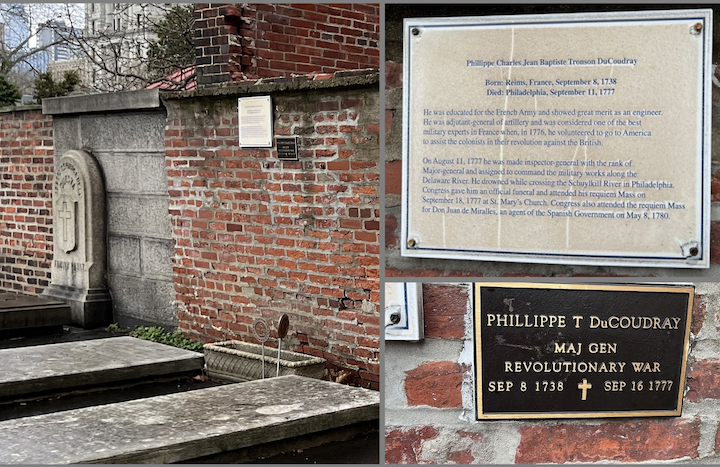
Above: The plaque above misspells his name Philippe with two "L". Old St Mary's Catholic churchyard, Philadelphia, PA. Photos by Devry Becker Jones (CC0)
https://www.hmdb.org/m.asp?m=213976
| | |
A great military destiny cut short
• Philippe Charles Jean Baptiste Tronson du Coudray (born in Reims, September 8, 1738 – died in Philadelphia, PA, September 16, 1777) was a French army officer who volunteered for service in the Continental Army.
• He entered the French military and became a noted Artillery officer, writing treatises on gunpowder and metallurgy, eventually reaching the rank of Adjutant general.
• He was well connected with the Court of Versailles, and gave military instruction to the Count of Artois, youngest brother of Louis XVI, and future King Charles X after the Restoration.
• Silas Deane described him as the "first engineer" of the French military establishment, and endeavored to recruit him with the rank of major general and command of the Continental Army's artillery and engineering corps. Overzealous in his drive to recruit volunteers and gathering 200 cannons, Du Coudray annoyed the French Court which wanted to keep things quiet at the time, and was ordered to stay in his residence. Instead, Du Coudray went on and embarked for America in May 1777.
• Silas Deane brought him on board and gave him the title of Major General. Although he didn't have the power to make that offer to du Coudray, the Continental Congress decided to respect it, and he was given the rank as promised.
• Upon his arrival, Du Coudray faced strong jealousy from the American officers who resented foreigners being awarded superior ranks and authority.
In a letter to General Heath, George Washington writes:
Middlebrook, June 1st, 1777.
Dear Sir I have your favor of the 19th of May. General Du Coudree (sic) arrived here last night, and set off this morning for Philadelphia. What his engagements with Mr. Deane are, I cannot say, but as he is represented to be a gentleman of great ability in his profession, I dare say his expectations are high, Congress will undoubtedly make a genteel and honorable provision for him, but I hope it may be done in such a manner as not to give disgust to any of the general officers in our army".
[Mass His. Soc. Col., Series V. Vol. YI. pp. 57-8)
• Finally, Du Coudray was appointed "Inspector General of Ordnance and Military Manufactories" with the rank of Major General, in August 11, 1777.
• His assignments in surveying the defenses around Philadelphia, Fort Mercer (Red Bank), Fort Billingsport, Fort Mifflin, led to recommendations that were not followed, increasing the mutual recriminations and effectively slowing work.
At one point his strong temper and inability to compose with his superiors (as well as his compatriot Duportail) and entourage became a critical issue.
A freak accident on the Schuylkill ferry:
| | |
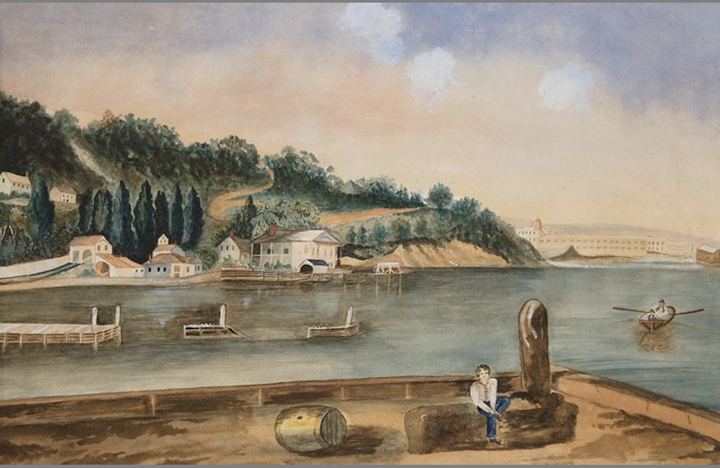
Above: "Schuylkill River at Gray’s Ferry", by P. Clark, ca. 1835 - Library Company of Philadelphia, Public Domain, https://commons.wikimedia.org/w/index.php?curid=22979505
"On the 16th, Sept. [1777.] Monsieur de Coudray, an officer of rank and distinction in the French service and acting as a volunteer in our army, having occasion to cross the Schuylkill ferry, rode a high-spirited horse into the boat, which taking fright leaped into the river and the rider was unfortunately drowned. Congress resolved that the corpse of Monsieur de Coudry (sic) be interred at the expense of the United States and with the honor of War." - Thatcher's Military Journal Rev. p. 117
| | |
• He died prematurely in a tragic riding accident when his horse leapt from a pontoon bridge into the Schuylkill River. His spurs got tangled and he drowned under his horse.
The annexed extract from the journal of Jacob Hiltzheimer tells the story of a freak accident :
"1777- Sept. 16th- Tuesday,- Cloudy and some rain. About 11 o'clock General Coutrie (sic) set off with nine French officers towards the camp over Schuylkill; but he the said French General, kept on his horse on the boat, crossing ; his horse leaped overboard, and thereby drowned the General. In the evening I went to Schuylkill, and saw the said General taken up out of the water." [...] "In crossing the Schuylkill his horse leaped out of the boat with him, who was foolishly in the saddle- and so was drowned yesterday. "
- Papers of Gov. Langdon, Letter Jas. Lo veil, M. C., to Gen. Whipple, September 17th, 1777
• On September 17th. Congress resolved :
"Whereas, Möns, Du Coudray, Colonel-Brigadier in the service of His Most Christian Majesty, the King of France, and Commander-in-Chief of the artillery in the French Colonies of America, gallantly offered to join the American Army as a volunteer ; but on his way thither, was most unfortunately drowned in attempting to cross the Schuylkill.
Resolved . That the corpse of Möns. Du Coudray be interred at the expense of the United States, and with the honors of war, and that the town Major carry this order into execution"
• His funeral, held at St. Mary's Church in Philadelphia, was attended by many Congressional representatives. He was buried in the church yard, but the exact grave location is unknown, although a tombstone with his (barely legible) initials exists.
• Coudray's death had the effect to make Duportail's position secure.
Plaque & tomb, «Phillippe (sic) Charles Jean Baptiste Tronson DuCoudray»
Old Saint Mary's Parish/Roman Catholic Church cemetery
242 S 4th St, Philadelphia, PA 19106
GPS: 39.945833, -75.148850
• Inscription:
“He was educated for the French Army and showed great merit as an engineer. He was adjutant-general of artillery and was considered one of the best military experts in France when, in 1776, he volunteered to go to America to assist the colonists in their revolution against the British.
On August 11, 1777 he was made inspector-general with the rank of Major-general and assigned to command the military works along the Delaware River. He drowned while crossing the Schuylkill River in Philadelphia. Congress gave him an official funeral and attended his requiem Mass on September 18, 1777 at St. Mary's Church. Congress also attended the requiem Mass for Don Juan de Miralles, an agent of the Spanish Government on May 8, 1780.”
| | |
Baron Simon Bernard
Brigadier-general, U.S. Army Corps of Engineers
November 16, 1816
| | |
"The Vauban of the New World"
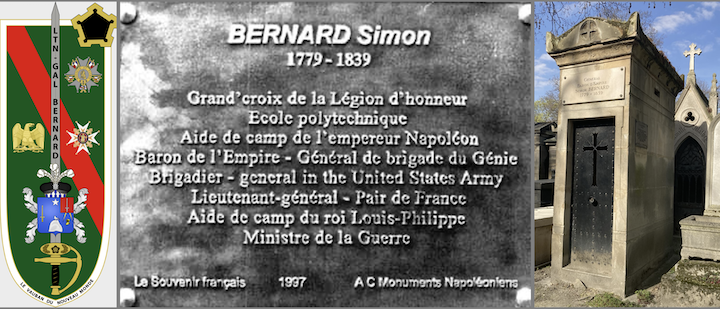
• Baron Simon Bernard (April 28, 1779 – November 5, 1839) was a French general in the engineering corps. He was born in Dole, a town in the Jura region near Switzerland. Bernard studied at the École polytechnique, where he graduated second in his class in 1799 before joining the army as an engineer.
• Simon Bernard, born to very poor parents, was accepted for free at the central school in Dole, his hometown, where he excelled in exact sciences. He joined the École polytechnique in 1794 and graduated second in his engineering class in 1799.
• He quickly advanced, becoming a captain in 1800 and a major in 1809. After working on the Port of Antwerp, Bernard served as aide-de-camp to Napoleon from 1809 to 1812. He was promoted to colonel in 1813 and was wounded at the Battle of Leipzig. On March 22, 1814, he was made a baron of the Empire, and the next day, he became a brigadier general.
• After Napoleon's first abdication, he supported the Bourbons and was honored as a knight of Saint Louis. Bernard was assigned by the war minister Clarke to conduct topographical work. When Napoleon returned from Elba, Bernard rejoined him and participated in the Battle of Waterloo in 1815.
Service in the United States:
• After the emperor's second abdication, he was exiled from France. He turned down a job offer from czar Alexander I of Russia and accepted instead an offer from President James Madison, upon the recommendation of Lafayette. On November 16, 1816, he was appointed Brigadier-general in the U.S. Army Corps of engineers with full rank and pay.
• His first task was to recommend the best routes for a connection between Washington D.C. and New Orleans, which are 1,084 miles apart. To accomplish this, he made four trips between the two cities, passing through Indian territories.
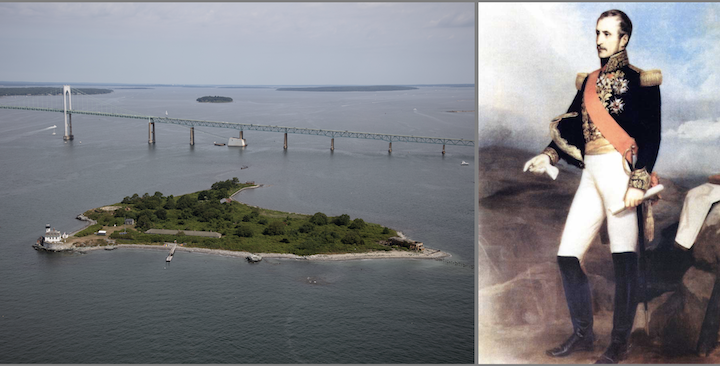
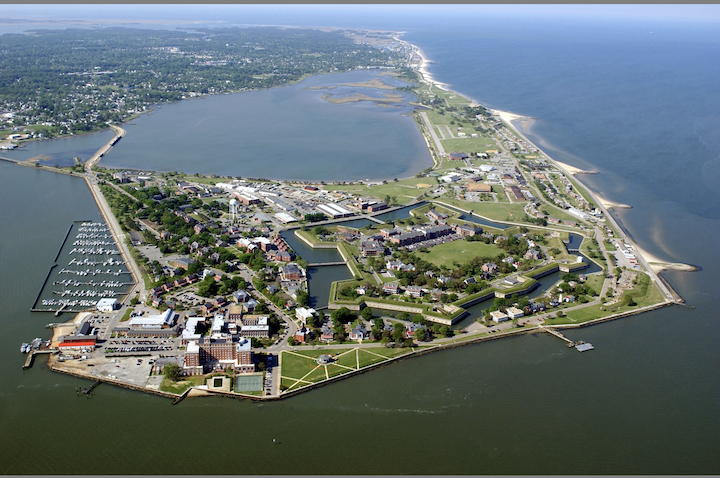
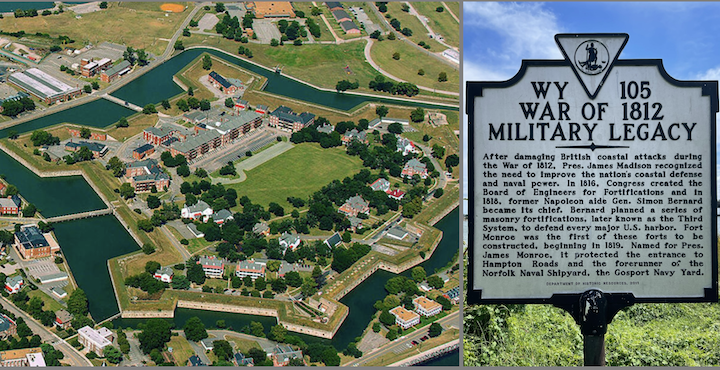
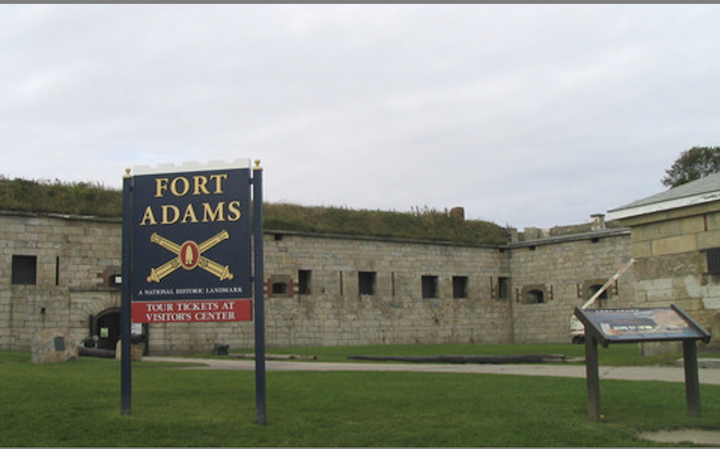
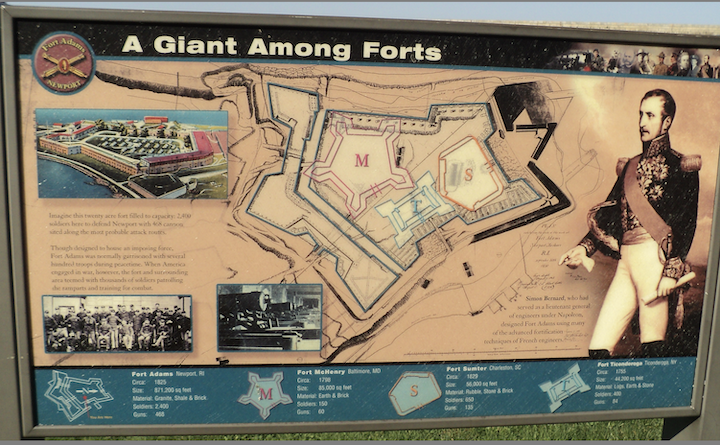
• He designed several large forts for the Army all along the coastline from Maine to Louisiana, including Fort Monroe and Fort Wool in Virginia, Fort Adams in Newport, Rhode Island, Fort Morgan in Alabama, Fort McRee in Pensacola, Florida, Fort Zachary Taylor in Key West, Florida, and Fort Pulaski in Georgia, to name a few. During his visit to the United States in 1824–1825, Marquis de Lafayette praised Fort Monroe, the Old Point Comfort stronghold that was also designed by Bernard. He resigned from the United States Army on July 10, 1831.
• He went back to France after the July Revolution of 1830 and was appointed lieutenant-général by Louis Philippe I. He joined the general committee on fortifications and was responsible for creating plans to enhance Paris's defenses. In 1834, he became a peer of France. He held the position of minister of war twice: first for eight days in November 1834 and then from September 1836 to March 1839 under Prime Minister Louis-Mathieu Molé.
| | |
• General Bernard passed away in Paris on November 5, 1839. U.S. President Martin van Buren, upon learning of his death, declared a 30-day mourning period for all army officers.
Legacy in the United States:
| | |
Marker, “Enormous Undertaking: The Fort's Construction - Fort Monroe”
32 Ingalls Rd, Fort Monroe VA 23651
GPS: 37.002350, -76.310567
• Inscription (excerpts):
“During the War of 1812, British soldiers burned Hampton and occupied the Old Point Comfort Lighthouse. The British Navy sailed unopposed all the way up the Chesapeake Bay to Fort McHenry in Baltimore, burning Washington, DC, along the way. After the war, President James Madison hired a French engineer—Brevet Brigadier General Simon Bernard—to design a network of coastal defenses to protect the nation from future attacks.[…]
"A Frenchman Comes To Help"
[…] “Brevet Brigadier General Simon Bernard designed Fort Monroe. He was a member of the French Army's Engineer Corps and former aide-de-camp to Napoleon. Bernard arrived in the United States in 1816 after being recommended to President James Madison by the Marquis de Lafayette. Madison placed Bernard at the head of the Board of Engineers, which was charged with constructing coastal defenses, forts, roads, and canals.
Erected by Fort Monroe Authority; National Park Service, U.S. Department of the Interior."
Marker, War of 1812, Military Legacy
Phoebus Waterfront Park, Hampton VA 23663
GPS: 37.014517, -76.318083
• Inscription:
"After damaging British coastal attacks during the War of 1812, Pres. James Madison recognized the need to improve the nation’s coastal defense and naval power. In 1816, Congress created the Board of Engineers for fortifications and in 1818, former Napoleon aide Gen. Simon Bernard became its chief. Bernard planned a series of masonry fortifications, later known as the Third System, to defend every major U.S. harbor. Fort Monroe was the first of these forts to be constructed, beginning in 1819. Named for Pres. James Monroe, it protected the entrance to Hampton Roads and the forerunner of the Norfolk Naval Shipyard, the Gosport Navy Yard.
Erected 2011 by Virginia Department of Historic Resources. (Marker Number WY-105.)”
| | |
Marker, “A giant among forts”
Inside entrance of Fort Adams, 80 Fort Adams Dr, Newport, RI 02840
GPS: 41.478700, -71.337350
• Inscription (excerpts):
[...] “Simon Bernard, who had served as a lieutenant general of engineers under Napoleon, designed Fort Adams using many of the advanced fortification techniques of French engineers.
Marker, “Newport Harbor”
King’s Park, Newport, R.I. 02840
GPS: 41.476200, -71.321717
• Inscription (excerpts):
[...] Fort Adams: ” The first American fort on the site was completed in 1799 and named in honor of President John Adams. Designed by French military engineer Simon Bernard and American military architect Joseph Totten, construction on the present fort began in the 1800s...”
| | |
Jean-Baptiste de Barth Walbach
Brigadier general of the U.S. Army
May 1850 (retroactive to 1823)
The oldest acting officer in U.S. history
| | |
Above:
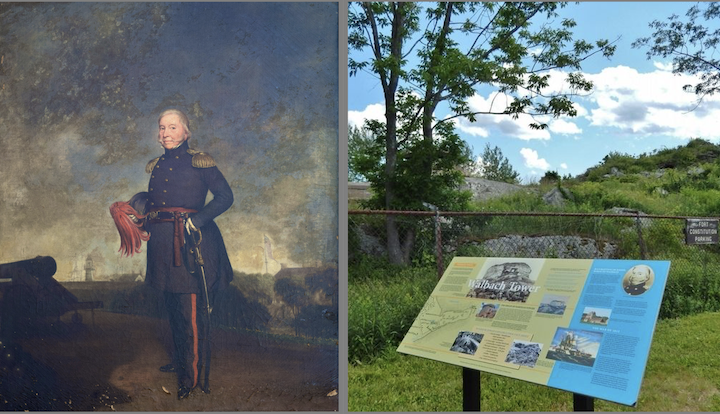
Left: Painting of Gen. John de Barth Walbach, Fort Monroe, Old Point Comfort, VA, 1846 Photograph of General Walbach ca. 1850s By Bo Gardiner 1 - Own work, CC BY-SA 4.0, https://commons.wikimedia.org/w/index.php?curid=73493634
Right: Marker, Photographed by Cosmos Mariner, June 28, 2017 https://www.hmdb.org/PhotoFullSize.asp?PhotoID=479413
| | |
The oldest acting officer in U.S. history
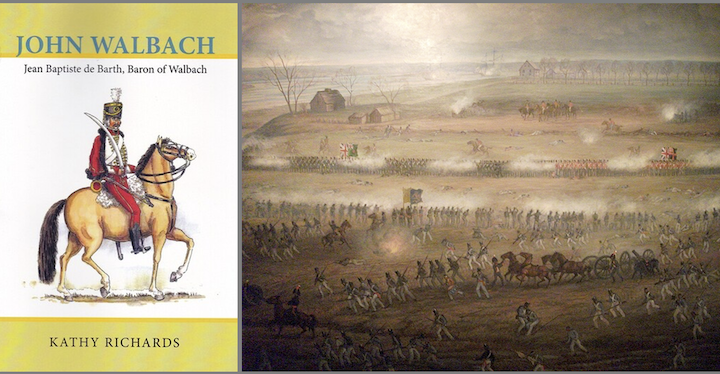
• Antoine Jean Baptiste de Barth, Baron de Walbach, later known as John Baptiste de Barth Walbach, was born on October 3, 1766 in Muenster (Dept of Haut-Rhin). He later americanized his name by using his title of nobility as his last name. Since the Alsace region was lost by France after the Franco-Prussian War of 1870, and was German territory from 1870 until 1918, his older biographies describe him as German.
• He received his military education at the military academy in Strasbourg in Alsace. He became an ensign in the Royal Alsace Regiment in 1782 and served in the famous Lauzun hussars of the French Royal Army from 1784 to 1789 until the French revolution erupted.
• His father, Comte Jean Joseph de Barth an aristocrat elected at the French National Assembly at the beginning of the French Revolution, led the "French 500" to escape the reign of Terror and settled a French colony of Gallipolis on the Ohio River.
• Jean-Baptiste stayed behind in Europe and fought on the side of the royalists, joining various forces in the Armée des Émigrés, including the army of Comte d'Artois, the Austrian Chasseurs of Condé, and Rohan's Hussars.
• In 1795, Rohan's Hussars, with Walbach as the 3rd officer, were sent by England to the French colony of Saint-Domingue (now Haiti) to protect British and royalist French planters from a slave revolt and to seize the colony from France. By 1798, only 130 out of the original 1200 men in the regiment had survived the yellow fever, a preview of what was in store for the expedition of general Leclerc sent by Napoléon Bonaparte.
An illustrious career in the U.S. Army:
• Walbach resigned from the Hussars in 1798 and decided to join his father, who was known to Washington and Thomas Jefferson. Unfortunately his father had died in 1793. Of this, he was not aware, and became apprised of it upon his landing in Baltimore. Shortly after his arrival, he was commissioned into the U.S. Army by George Washington. He became a 2nd lieutenant in the U.S. Regiment of Light Dragoons and was named aide-de-camp to Brigadier General William MacPherson (himself a former aide-de-camp to general Lafayette during the Revolutionary War).
• He then served as aide-de-camp to Major General Alexander Hamilton, then assistant adjutant-general to Brigadier General William North and finally joined Major General Charles C. Pinckney's staff, helping to create cavalry regulations.
• In February 1801, he was promoted to first lieutenant in the Regiment of Artillerists and Engineers, then served as aide-de-camp to Brigadier General James Wilkinson, who was the commanding general of the Army.
• In 1805 he became First Lieutenant, Captain in 1806, Major, then Colonel, Adjutant General of the United States two months later in 1813.
| | |
• During the War of 1812 against the British, he took part in the Battle of Crysler's Farm, Canada, on 11 November 1813.
• The list of all his commands at coastal fortifications in the following 30 years is very extensive, and he finally become a Brevet Brigadier general in 1850 at the age of 83.
• There was no mandatory retirement age in the US Army at that time. As a result, Walbach, who maintained both mental and physical strength uncommon for his time, remained on active duty until his death in Baltimore, Maryland on June 10, 1857, at the age of 90!
He holds the distinction of being the oldest officer in the entire history of the US Army.
• The official announcement of General Walbach's death contained this eulogy: "His long life and military career were characterized by some of the best traits of a gentleman and as soldier - unwavering integrity, truth and honor, strict attention to duty and zeal for service; and he tempered the administration of an exact discipline by the most elevated courtesies"
General Order No. 9. Headquarters of the Army, New York. June 13, 1857
Legacy in the United States:
| | |
Above:
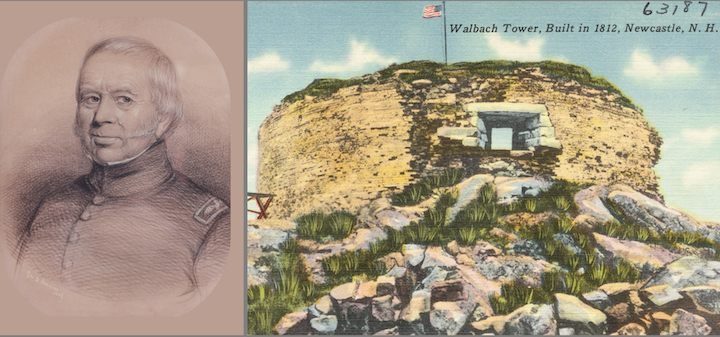
Left: Gen. John de Barth Walbach, 1843 portrait, Baltimore, by George d'Almaine,
Photo by Eileen Rowan https://www.findagrave.com/memorial/148679156/john-baptiste_de_barth-walbach
Right: Walbach Tower, built in 1812, Newcastle, N.H. [ca. 1930–1945], Boston Public Library, Arts Department, The Tichnor Brothers Collection
https://ark.digitalcommonwealth.org/ark:/50959/pz50h363m
| | |
• There was a Fort Walbach (closed in 1859), located on Lodge Pole Creek, about 25 miles northwest of Cheyenne, Wyoming and a battery named after him at Fort Wetherill in Jamestown, Rhode Island. Several streets named after him near Army installations in New London, Connecticut, New Castle, New Hampshire, and Philadelphia, Pennsylvania.
• The tow of Walback, West Virginia is named after him (USPS zip code 25285).
• There are also a couple of interpretative markers that narrate his accomplishments:
Marker #1, “Walbach Tower” (The age on the marker is erroneous)
29 Wentworth Road, New Castle NH 03854
GPS: 43.070683, -70.712017
• Inscription:
“Nearby Walbach Tower is one of several built along the Atlantic coast during the War of 1812. Its builder, John de Barth Walbach, came to America from France in 1797. He joined the U.S. Army the following year and rose in rank from a lieutenant in the Light Dragoons to a brigadier general. Walbach was assigned to Fort Constitution in 1806 and placed in charge of Portsmouth defense. He eventually became second in command of all New England seacoast defenses. At age 93, General Walbach was still on active duty, the oldest officer in the history of the U.S. Army.”
Marker #2, “Walbach Tower”
29 Wentworth Road, New Castle NH 03854
GPS: 43.070683, -70.712017
• Inscription (excerpts):
“Walbach Tower, built in 1814 during the War of 1812, was one of Fort Point's more interesting but mostly forgotten efforts at coastal defense. The fortification now stands as a ruin atop of Jordan’s Rock... [...]
“Jean Baptiste de Barth, Baron of Walbach”:
"Brevet Colonel John Walbach" arrived in New Castle in 1806 with a company of heavy artillery to garrison the post of Fort William and Mary. He spearheaded the reconstruction of the fort, rechristened Fort Constitution in 1808, and in 1814, he ordered the building of a Martello Tower to guard against British incursions from Little Harbor. A refugee escaping the terrors of the French Revolution, Jean Baptiste de Barth (1766 - 1857) left behind an aristocratic French upbringing and the baronetcy of Walbach, France, to become a soldier in the new Army of the United States, known simply as "John Walbach". He was born in Munster, France, and trained at the Military College in Strasbourg as an artillerist, serving with the Hussars of the Count d'Artois and the Prince of Rohan before coming to America in 1798. General Alexander Hamilton enlisted his aid in designing the structure of a new Cavalry for the young Army. During the War of 1812, he was cited for gallant conduct at the Battle of Crysler's Field. His urbanity, his charm and the fine leadership he exemplified, as well as the splendid marching band he created here, were remarked upon for generations. After a fifteen-year posting in New Castle, he went on to command other forts from Boston to Virginia, and rose to the rank of Brigadier General, but his influence in New Castle has never been forgotten.”
This historic marker was created by the New Castle Historical Society in 2014 on the 200th anniversary of Walbach Tower.
Erected 2014 by New Castle Historical Society."
He was the last living military witness from the era of George Washington to be active until right beforethe Civil War.
| | |
Changing of the guard
...and a new era...
The American Civil War
| | |
French military influence:
Schooling, manuals an tactics:
French Army officers exerted considerable influence over the first several decades of the U.S. Army. First, their actual conduct, their military skills and valor, from Rochambeau or Lafayette to the dozens of officers, throughout the chain of commande down to the rank and file soldiers, was a source of inspiration. In addition, the expertise of the many talented engineers and artillery officers served as a guide to follow.
It was thus normal for the nascent U.S. Army to study and replicate the methods of the French Army, after having fought side by side and winning the war over the British.
Starting with the military vocabulary, which was and still is predominantly made of French words. French military doctrines influenced early American officers. The adoption of certain formations, field artillery tactics, and the emphasis on infantry coordination can be traced back to French military practices. The structure of the U.S. Army, itself, in terms of organization and command, was also influenced by the example of the French Army.
Second, the foundations for a strong and capable U.S. Army were laid by French officers like Louis de Tousard (1749-1817) an artillery officer who fought in the American Continental Army alongside La Fayette.
Upon his return to the United States in 1795, he received a commission as a major before being promoted to Lieutenant Colonel in the U.S Army and he is the one who pushed for the creation of a United States Military Academy at West Point (which he headed in 1802 until an American-born officer could be found).
Tousard authored two important books: one proposed a training school for officers, which laid the groundwork for West Point in 1802. He also wrote a manual for artillery officers, The American Artillerist's Companion, or Elements of Artillery, published in 1809, that became a standard reference for the new army.
This influence continued until the end of World War One, when American officers who fought in France familiarized themselves with new tactics and weapons developed by the French.
This influence extended to military uniforms:
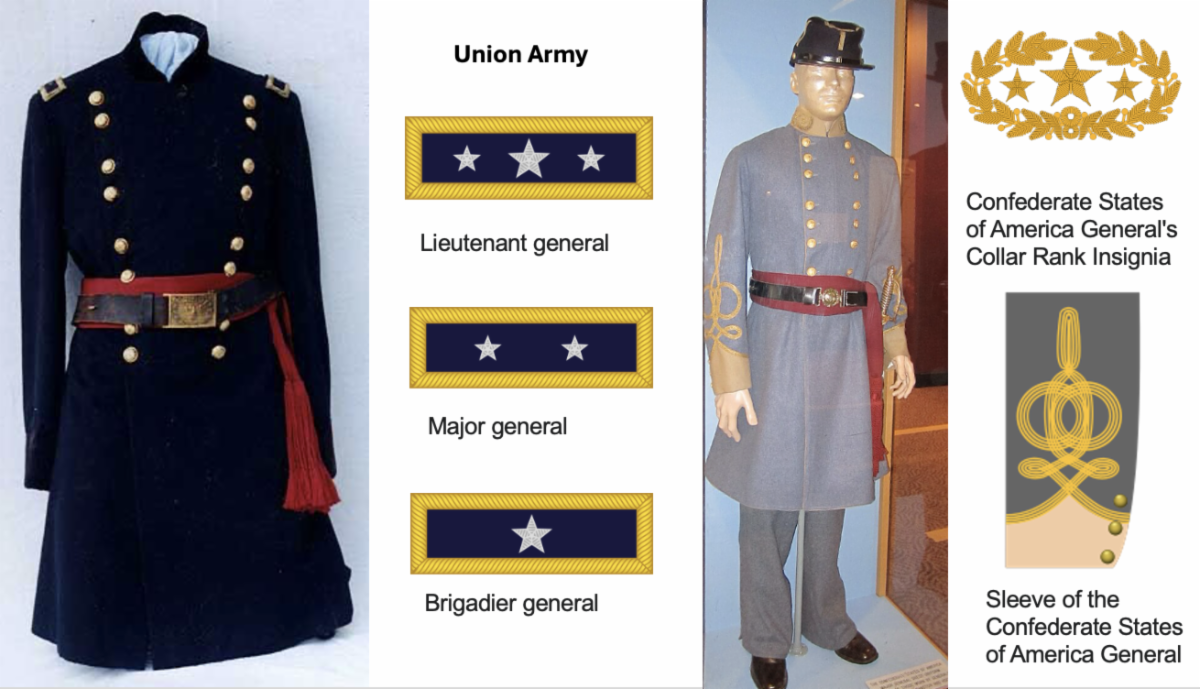
Uniforms of the Union Army:
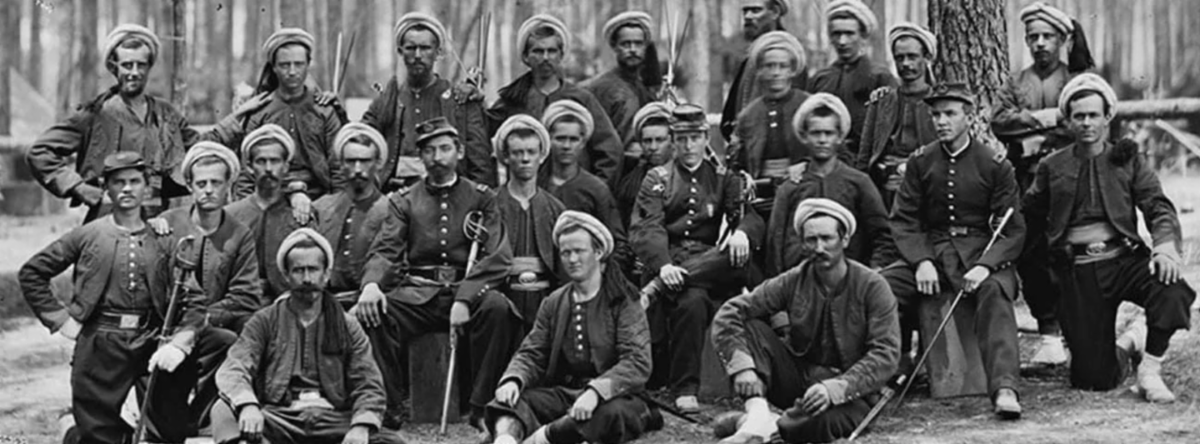
The uniform style chosen in 1851 was based on French designs. This included the forage cap worn by some soldiers and the frock coat, which also originated in France. One of the most notable adoptions was the use of zouave uniforms by some U.S. Army infantry regiments, along with the purchase of 10,000 chasseurs à pied uniforms for the Excelsior Brigade. Additionally, more subtle French elements, such as frock coats, kepi hats, and collar ornaments, became common in the uniforms of the Union Army during and after the American Civil War.
The army took it a step further than just adopting a French-style uniform. Some regiments wore uniforms similar to the French Imperial Guard voltigeurs, while others, like the 62nd Pennsylvania Infantry, 63rd Pennsylvania Infantry, New York Fire Zouaves, and the 18th Massachusetts, even donned Zouave uniforms of the French Army.
Uniforms of the Confederate States Army:
On June 6, 1861, the Confederate Council released General Order 9, which introduced new rules for the Confederate infantry, cavalry, and artillery.
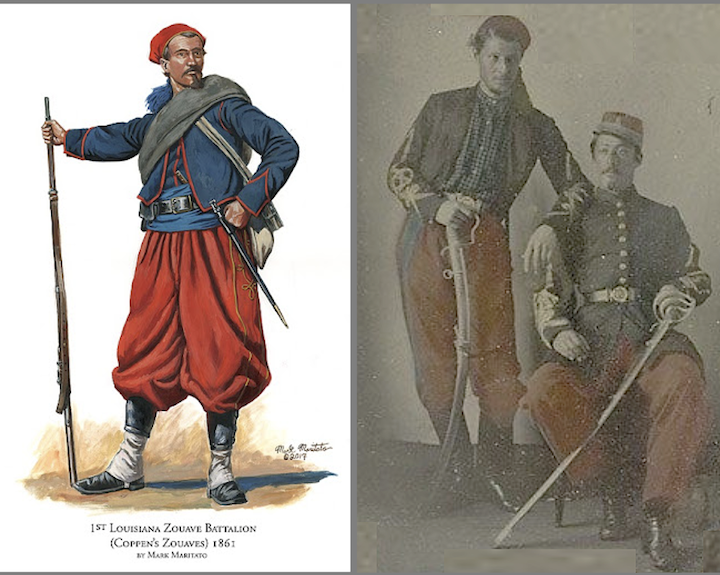
The new uniforms were created by Nicola Marschall, a German-American artist who also designed the first Confederate flag. He drew inspiration from the uniforms of the Austrian and French armies from the mid-1800s. For instance, Confederate soldiers wore the chasseur cap, also known as the "kepi," which is a type of French military cap. Another type of CS Army uniform jackets and coats is the Zouave. This jacket was designed to be loose-fitting and inspired by the French-African Zouave units. Several units wore this uniform, such as the "Richmond Zouaves" from the 44th Virginia Infantry Regiment, the "Louisiana Tigers" in the 1st Louisiana Special Battalion, and "Coppen's Zouaves" from Louisiana.
France being officially neutral in this conflict (like the U.K.) it is not overly surprising, considering all the points above, that several French officers proposed their services (on both sides, and for various reasons) and received commissions as generals.
Note: the difference between a General and a Brevet General:
A "General" is a complete military rank that includes all the power and salary that comes with it. In contrast, a "Brevet General" is a title awarded to an officer, often as a recognition for outstanding service, but it does not provide the full benefits or pay of a real General rank, but receiving the same respects.
As we will see below, some French-born generals were full rank Generals, while others were Brevet Generals.
| | |
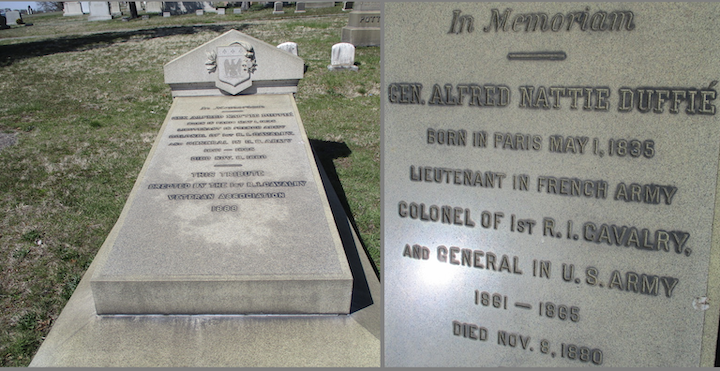
Alfred Napoléon Alexandre Duffié
Brigadier general, Union Army
June 23, 1863
| | |
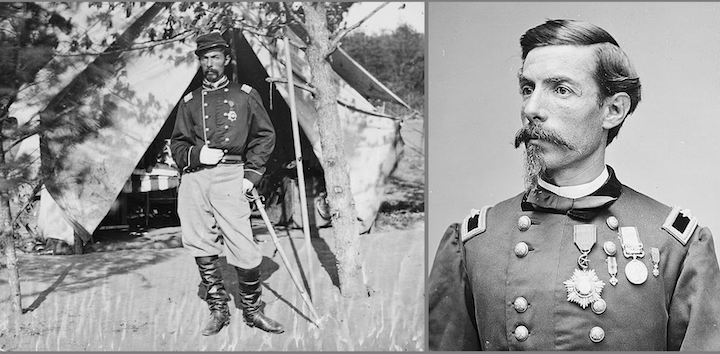
Above:
Top Left: Col. Alfred N. Duffie, Colonel of the 1st Rhode Island Cavalry, Bull Run, Virginia, July 1862, Photo by O'Sullivan, Timothy H., 1840-1882 - Public Domain, https://commons.wikimedia.org/w/index.php?curid=47032940
Top Right: "Portrait of Brig. Gen. Alfred N. Duffie, officer of the Federal Army", By Brady National Photographic Art Gallery, Library of Congress Prints and Photographs Division, Public Domain, https://www.loc.gov/resource/cwpb.05221/
| | |
A Napoléon in the Civil War
• Alfred Napoléon Alexandre Duffié1 (May 18, 1833 – November 8, 1880) was a French-American soldier and diplomat. His father, Jean August Duffie, was a successful sugar refiner and served as the mayor of La Ferte-sous-Jouarre. The family originally came from Ireland and had escaped to France during the Cromwellian conquest in the 1640s.
• Born in Paris, he started his military career as a dragoon officer in the imperial army and served in the Crimean War. Soon after being promoted 2nd Lieutenant in a regiment of hussard, he met and fell in love with Mary A. Pelton, an American lady from a prominent New York family. He tried to resign from his position but this was refused. He chose to leave France and boarded a ship with her to go to the United States. Because he left the army without authorization, Duffié was accused of desertion and sentenced to five years in prison in absentia. After arriving in the United States, the two were married August 19, 1860, at the Pelton homestead at West Brighton in Staten Island.
• He embellished his early military career in France. He claimed that he graduated from the École Spéciale Militaire de Saint-Cyr, fought in the Austro-Italian War of 1859, and received the Legion d'Honneur, which he displayed in several photos. He also claimed his father was a count. However, it is confirmed that Duffié joined France's Imperial Cavalry in 1852 and was part of the 6th Dragoon Regiment. While in this unit, he participated in the victorious Crimean War against Russia, taking part in the Battle of Balaclava (1854) and the Battle of Chernaya River (1855).
• When the American Civil War started, Duffié joined the Union Army. Helped by his father-in-law's political connections, he signed up with the 2nd New York Cavalry Regiment, also called the Harris Light Cavalry, on August 9, 1861, and quickly rose to the rank of captain.
• Duffié was flamboyant and created a uniform inspired by the outfits of French light cavalry soldiers. It featured leather boots that reached his knees and a tall fatigue cap. He quickly earned the respect of both his officers and fellow soldiers, and they referred to him as “Nattie.”
1: Note: historians have now now established that his real first name was Alfred Napoléon, but he had called himself Alexandre and also made up "Nattie" to cover his tracks when he left France.
| | |
• In July 1862, Duffié was made Colonel of the 1st Rhode Island Cavalry Regiment by Governor William Sprague IV. At first, the officers of the 1st Rhode Island were hesitant to accept a leader who was not born in the country, but Duffié quickly gained their trust and transformed the regiment into a strong fighting force. He told his officers, who had submitted their reisgnation when they heard he was coming, in his broken English “you not like me now, you like me by and by.”
After a few weeks, his training methods and strict but fair discipline, along with his funny and often colorful language, won the Rhode Islanders over.
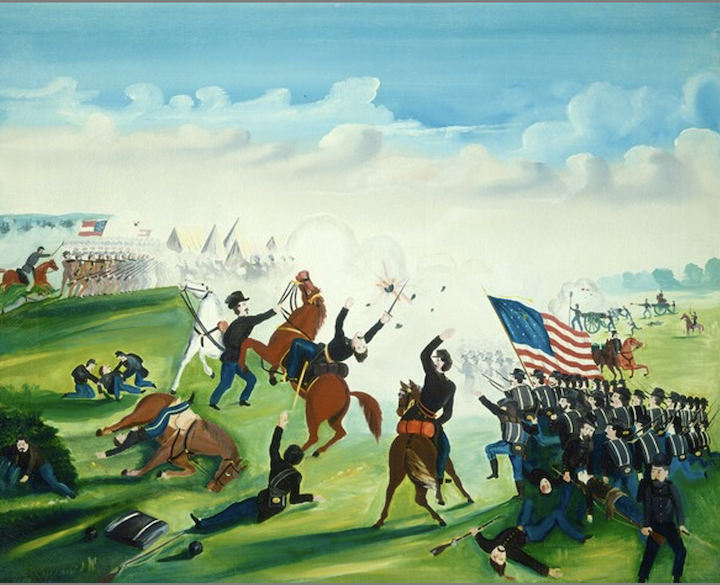
• In 1863, he had a strong performance at Cedar Mountain, the 2nd Battle of Bull Run and at the Battle of Kelly's Ford. As the enemy rushed forward, Duffie called out to his troops, “Steady men; don’t you stir; we fix ‘em; we give ‘em hell!” Shortly after, he led the U.S. 5th Cavalry Regiment in a counterattack that drove back the advancing Confederate cavalry. Duffie’s leadership played a key role in achieving the first major Union cavalry victory of the war. Kelly’s Ford highlighted Duffie as a bold and experienced leader.
• However his failure 4 months later at Brandy Station led Maj. Gen. Alfred Pleasonton, commander of the newly formed Cavalry Corps of the Army of the Potomac to declare: “I have no faith in foreigners saving our government or country” which led to a temporary demotion.
• A few days later at Middleburg on June 17, Duffie was assigned a difficult mission and obeyed his orders to the letter, which led his regiment to be encircled by a large group of Confederate cavalry. The following morning, Duffie’s regiment was attacked from all directions. As was reported at the time, the regiment was left as “gallant debris,” with 225 out of the 280 men who began the mission either killed, wounded, missing, or captured. Historians (and Duffié himself) believe that his orders were tantamount to an impossible mission in order to discredit him.
• At the lowest moment of his military career, Duffie was surprisingly promoted to Brigadier general of the U.S. Cavalry on June 23, 1863. This promotion was decided by Maj. Gen. Joseph Hooker of the Army of the Potomac, who admired Duffie’s actions at Kelly’s Ford. When he heard the news, Duffie is said to have exclaimed: “My goodness, when I do well, they take no notice of me. When I go make one bad business, make one fool of myself they promote me, make me general.”
• In October 1864, he was rather stupidly captured (while travelling without an escort) by Confederate forces and was paroled in April 1865.
• He became a naturalized American Citizen in 1867. Due to his status as a war veteran and the ongoing influence of his in-laws, he was appointed Consul of the United States in Cadiz, Spain in 1869, and died there of tuberculosis in 1880.
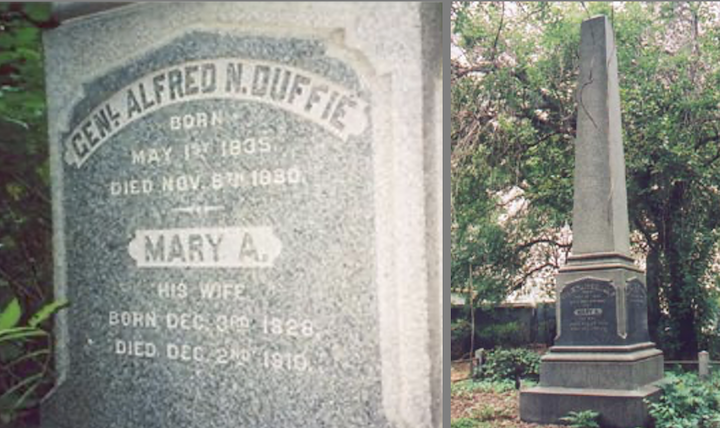
He is buried with his wife at Fountain Cemetery, West New Brighton, NY.
| | |
Above:
Left: Grave of Gen. Duffié, Photo Joe Ferrell, Fountain/van Street Cemetery in West New Brighton, Staten Island, NY, GPS: 40.639367, -74.120171
https://www.findagrave.com/memorial/5892257/alfred-napoleon_alexander-duffie
Right: Monument to Gen. Duffié, Photo Hybrasil, Fountain/van Street Cemetery in West New Brighton, Staten Island, NY https://www.findagrave.com/memorial/9261127/mary_a-duffie
Below Left and Right: Alfred N. Duffié cenotaph at North Burial Ground, Providence Rhode Island. Photos: courtesy Professor Norman Desmarais, Regional Delegate, New England, American Society of Le Souvenir Français Inc.
| | |
• After his death, some of Duffié's former officers from the 1st Rhode Island Cavalry established a subscription toward a monument to their old leader, to be placed at Old Burying Ground in Providence.
• A side tribute is paid to him during the annual ceremony to the 25 soldiers of Rochambeau in November.
Memorial / cenotaph:
Alfred “Nattie” Duffié, General of the Union Army
North Burial Ground, 5 Branch Ave., Providence, R.I. 02904
GPS: 40.639367, -74.120171
• Inscription:
"Gen. Alfred Nattie Duffié
Born in Paris May 1, 1835
Lieutenant in French Army
Colonel of 1st R.I. Cavalry
and General in U.S. Army
1861 - 1865
Died Nov. 6, 1880"
| | |
Pierre Benjamin Buisson
Brigadier General, February 17, 1862
The oldest brigadier general in the Confederate army
| | |
Above:
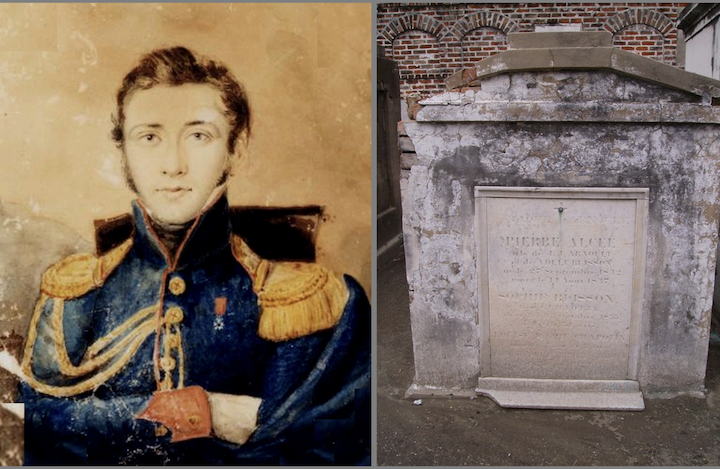
Top Left: Watercolor portrait of Pierre Benjamin Buisson (1793-1874), showing the young Buisson in his French uniform with the Legion of Honor. Louisiana State Museum - Public Domain, https://commons.wikimedia.org/w/index.php?curid=88816576
No photos of him could be found anywhere on the internet.
Top Right: According to St. Louis #2 interment records, Pierre Benjamin Buisson is interred in this tomb. Photo by Pat Dupuy, https://www.findagrave.com/memorial/16735099/pierre-benjamin-buisson
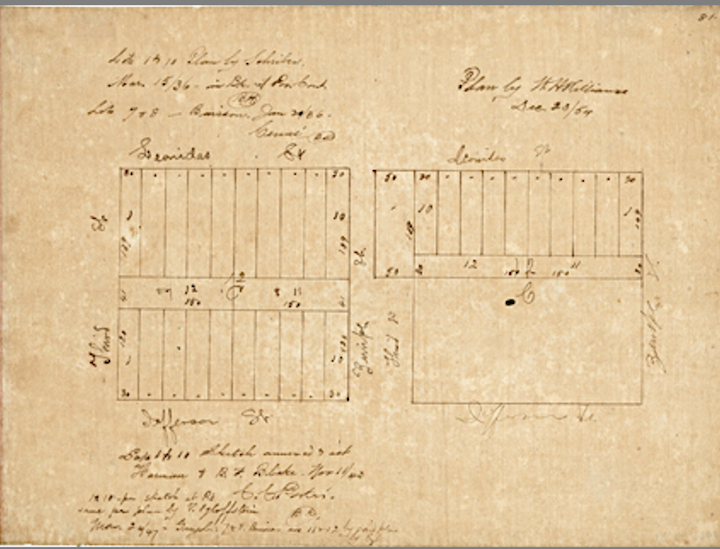
Bottom: A plan created by Benjamin Buisson between 1854 and 1859 for a New Orleans city square containing Leonidas St., Zimple St., Jefferson St., and Third St. Square bordered by Leonidas St., Zimple St., Jefferson St., Third St. Buisson, Benjamin (Draftsman), Courtesy of The Historic New Orleans Collection. https://64parishes.org/entry/benjamin-buisson
| | |
The oldest Brigadier General of the Confederate Army
• Pierre Benjamin Buisson was born in Paris on May 20, 1793. In 1811, he entered l’Ecole Polytechnique in Paris to study engineering, artillery, applied geometry, and mathematics. Like all Cadets of this most prestigious military Academy, Buisson served in Napoleon's Grande Armée and was assigned as a lieutenant in the Sixth Artillery regiment. He participated in the campaigns of 1814 and 1815, where he was honored for his bravery and awarded the Legion of Honor.
• Buisson went to visit his relatives in New Orleans in 1817 after the Battle of Waterloo in 1815. He quickly established himself as a civil architect and married Sophie Guillotte in 1820. They had six children together.
• In addition to his activities as an architect, he published the Courrier des Natchitoches, a bilingual newspaper in Natchitoches, Louisiana, from 1824 to 1827. He also worked on the Journal de Commerce in New Orleans from 1825 to 1829 and created a bilingual textbook on civil procedure. He also wrote an astronomy book titled Des Forces qui régissent le système solaire in 1849 and a military manual titled Instruction pour le service et manoeuvre de l’infanterie légère in 1861.
• Buisson's biggest impact on New Orleans was as a surveyor. He developed several suburbs upstream that later became part of the city and named many of the streets. According to James Beard, writing in the Daily Picayune of 1911, “As might be expected, the names reflect the history of the man whom all his life he most admired, his general and emperor, Napoleon. Many of the streets are named for battles, such as Milan, Berlin, Cortez [sic Cadiz], Jena, etc.” For his cherished Emperor, he gave the name of Napoleon Avenue to the widest street, and went on with Austerlitz, Marengo... There was a street named Berlin (to recall Napoleon's triumphal entry in Berlin), but due to anti-German feelings during World War I, it was renamed to honor General Pershing.
• Like all the certified Veterans of the French Republic and French Empire's armies, he received some 40 years later the St. Helena Medal, after it was established by Emperor napoléon III in 1857.
• In 1861, Buisson volunteered for the Confederate States of America, working on the City Defense Committee. He designed a breastworks (a low temporary defense, or parapet) and powder magazine in Jefferson Parish. The city's notables set up a “Légion française” and a “Brigade française” under the aegis of the municipal authorities (and of the consul of France) to provide a service of civic guards. Troops were made of local citizens concerned more with civil defense than a true fighting military unit. Their services were to be crucial when it came to maintaining order after the fall of the Creole city in April 1862.
• He became Brigadier General of Militia on February 17, 1862, making him the oldest brigadier general in the Confederate army, leading the 22nd Louisiana Volunteers, which collapsed when the Union fleet attacked on April 24, 1862. He returned to his civilian activities as surveyor and architect.
Legacy in New Orleans:
Buisson passed away on May 30, 1874. His long obituary in the New Orleans Bee/L’Abeille newspaper praised him for his honesty and loyalty, noting his popularity. Although he was well-respected in his time, Benjamin Buisson is not widely remembered today, even though many streets he designed and named are now part of Uptown New Orleans.
The City of New Orleans never named a street in his honor, due to the fact that he fought in the Confederate Army. No photos of him can be found anywhere on the internet.
| | |
Philippe Régis de Trobriand
Brigadier general, U.S. Army, January 5, 1864
Major general, U.S. Army, April 9, 1865
| | |
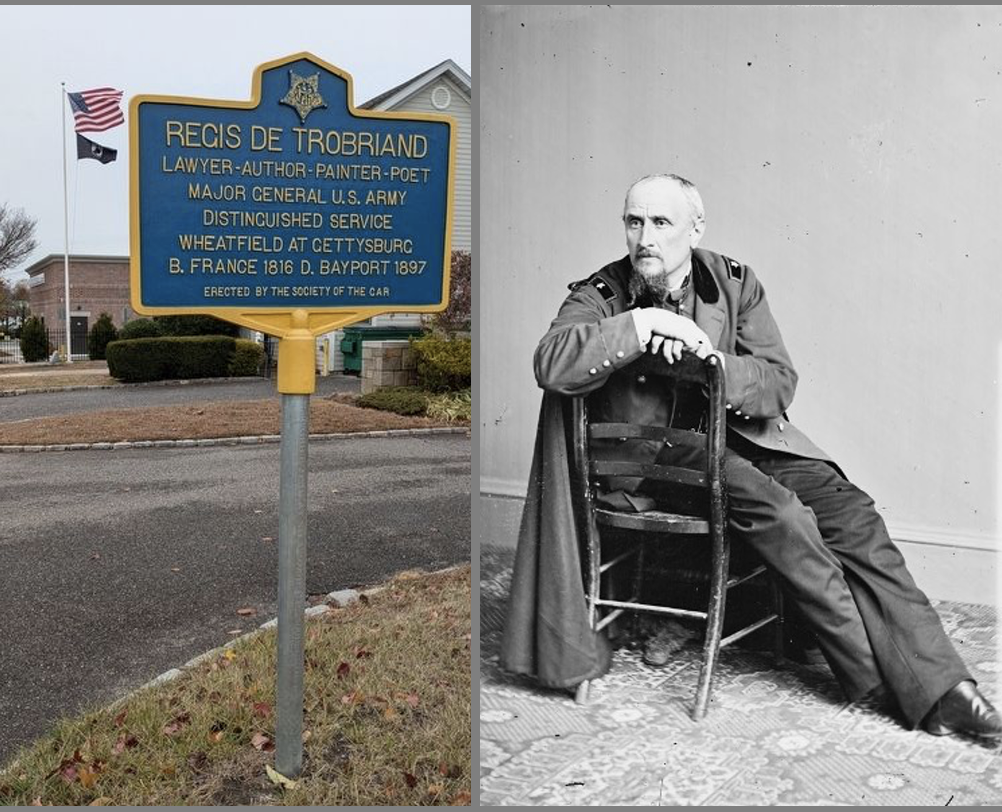
Above:
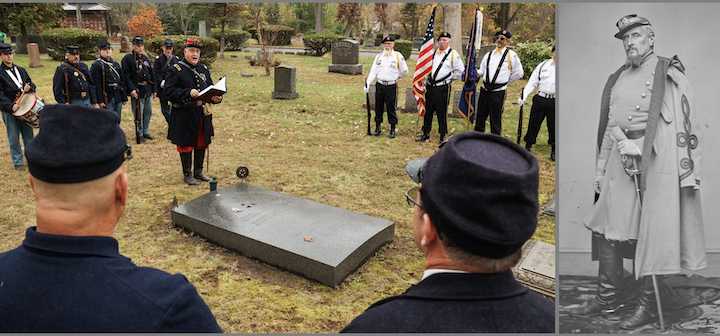
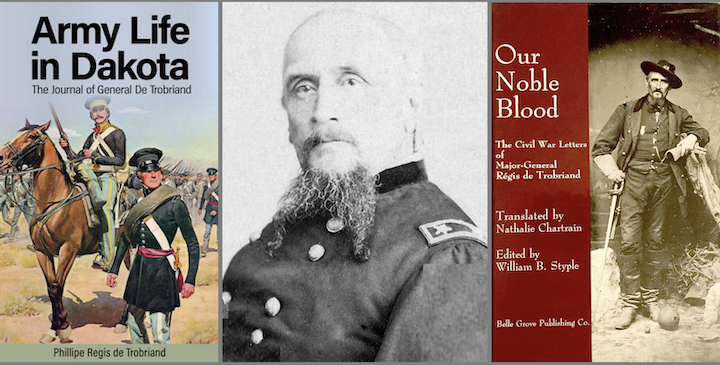
Top Left: Regis de Trobriand marker, located at 251 Middle Rd, Sayville, NY 11782
GPS: 40.737520, -73.077234, Photo:by Jordan Romano, https://www.hmdb.org/m.asp?m=261652
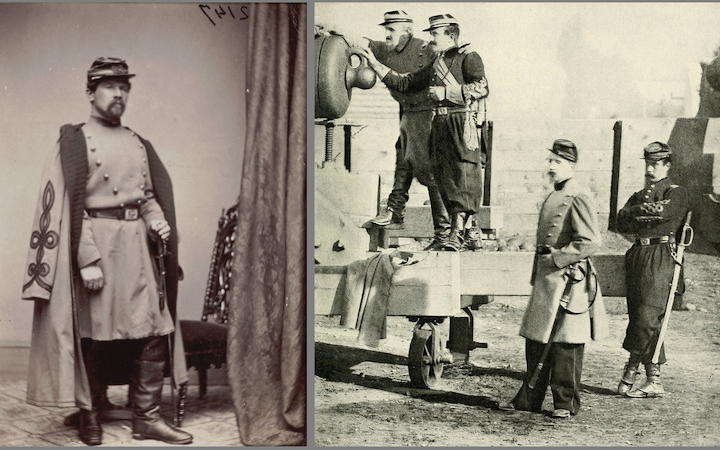
Top Right: Philippe Régis Denis de Keredern de Trobriand, Civil War glass negative collection, United States Library of Congress's Prints and Photographs, Public Domain, https://commons.wikimedia.org/w/index.php?curid=4494537
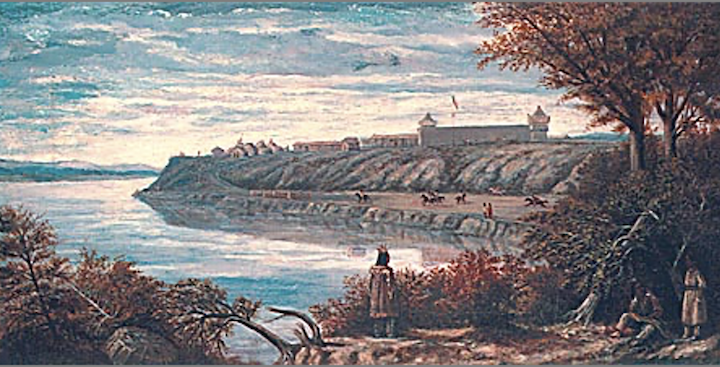
Middle: U.S. Army at Fort Shaw, MT. https://fortbenton.blogspot.com/2010/04/fort-shaw-military-post.html
Inset: Major General Philip Régis Denis de Keredern de Trobriand https://margaretsrecollections.wordpress.com/2010/02/13/regis-de-trobriand/
Bottom Left: Maj. Gen. Régis de Trobriand and the 55th NY Infantry Regiment
Grave site at St. Ann's Episcopal Cemetery, 251 Middle Rd, Sayville, NY 11782
Newsday.com, "Islip historic marker honors Régis de Trobriand, a Civil War soldier"
https://www.newsday.com/long-island/suffolk/regis-de-trobriand-state-historic-marker-islip-rchiisk0
Bottom Right: Major General de Trobriand, photo by Mathew Brady Studio, c 1860-1870
National Portrait Gallery, Smithsonian Institution; Frederick Hill Meserve Collection, Public Domain (he used this photo as his signed Carte de Visite: https://historical.ha.com/itm/photography/cdvs/regis-de-trobriand-signed-carte-de-visite/a/6223-47053.s)
| | |
The Army of the Potomac's French Poet-Warrior
• Philippe Régis Denis de Keredern de Trobriand (Tours, June 4, 1816 – July 15, 1897) was a French aristocrat, lawyer, poet, and novelist who became a warrior in his adoptive country.
• Trobriand was born at Chateau des Rochettes, close to Tours, France. He was the son of Joseph de Keredern de Trobriand, a baron and general in Napoleon Bonaparte's army, coming from a family with a strong military background. Trobriand became skilled with a sword and participated in several duels.
• At 25, Trobriand moved to the United States and quickly gained fame as a socialite among New York City's elite. He married Mary Mason Jones, an heiress he met in New York, where her father was a rich banker; their wedding took place in Paris. After spending some time in Venice mingling with local nobility, they returned to the U.S. A poet and novelist, he composed both poetry and prose, with his inaugural novel, Gentlemen of the West, being published in Paris in 1840. His subsequent novel, The Rebel, was released in New York in 184. In the 1850s, Trobriand made a living by writing and editing for French-language magazines. He served as the editor and publisher of Revue du Nouveau Monde from 1849 to 1850 and was a joint editor of Le Courrier des Etats-Unis from 1854 to 1861.
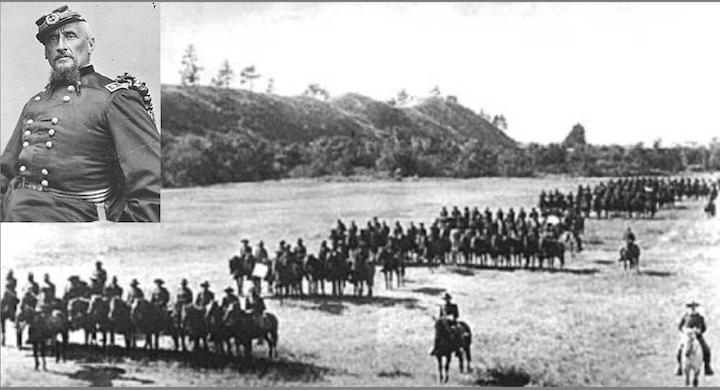
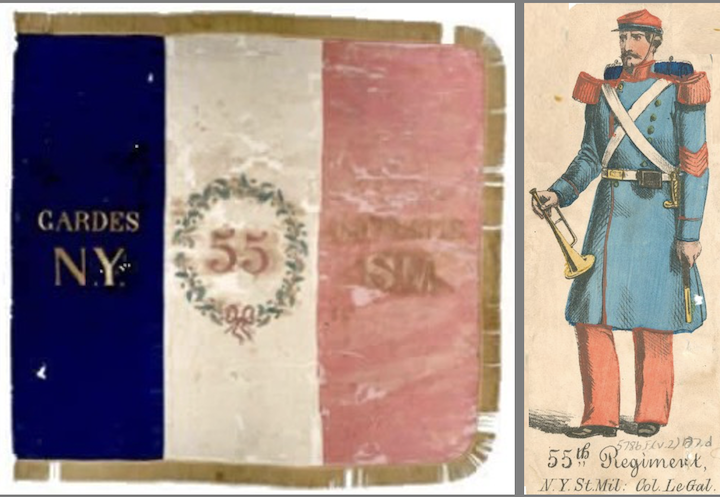
• After the Civil War started, Trobriand became a U.S. citizen. On August 28, 1861, he was appointed as an officer and took command of the 55th New York Infantry Regiment, which was mainly made up of French immigrants and called the Gardes de Lafayette. His regiment was part of the Army of the Potomac.
• In December 1862, the 55th merged with the 38th New York Infantry Regiment, and Trobriand became the colonel of the newly named 38th. He led this regiment during the Battle of Chancellorsville in May 1863.
• Trobriand's military career is best known for the Battle of Gettysburg, where he first saw significant action. He arrived on the second day of battle, July 2, 1863, and took up positions in the area known as the Wheatfield. His brigade put up a spirited defense against powerful assaults by Confederate forces. They managed to holdtheir ground until help arrived, but it was at a great cost—one in every three soldiers in Trobriand's brigade was lost.
After the battle, his division commander, Maj. Gen. David B. Birney, wrote:
"Colonel de Trobriand deserves my heartiest thanks for his skillful disposition of his command by gallantly holding his advanced position until relieved by other troops. This officer is one of the oldest in commission as colonel in the volunteer service [and] has been distinguished in nearly every engagement of the Army of the Potomac, and certainly deserves the rank of brigadier-general of volunteers, to which he has been recommended."
• He would have to wait a few months. Finally, Col. Trobriand was appointed brigadier general by President Abraham Lincoln on April 10, 1864, but his rank was backdated to January 5, 1864. On January 13, 1866, President Andrew Johnson nominated de Trobriand for the brevet grade of major general, effective April 9, 1865.
A word about the 55th Regiment NY Volunteer Infantry:
| | |
Above:
Top Left: 55th Regiment NY Volunteer Infantry | French National Flag | Civil War. It was carried in parades in New York City many years after the Civil War. Flag dimensions: 78" hoist X 79" fly. Supporters of the regiment presented this French tricolor to the regiment on January 8, 1862 at Camp Tenallytown with President and Mrs. Lincoln in attendance. New York State Military Museum, https://museum.dmna.ny.gov/unit-history/infantry-1/55th-infantry-regiment
Top Right: Cutout of a Civil War era paper soldier, 55th Regiment, N.Y. St. Mil: Col. Le Gal., Library Company of Philadelphia, https://digital.librarycompany.org/islandora/object/digitool%3A36421
Bottom Left: Lieutenant Colonel Louis Thourot, 55th New York Infantry, 1861–1865, (who commanded during the Seven Days Battles) - Carte de visite, The Medford Historical Society & Museum https://ark.digitalcommonwealth.org/ark:/50959/5712ng39d
Bottom Right: Officers of the 55th at Fort Gaines By Internet Archive Book Images - No restrictions, https://commons.wikimedia.org/w/index.php?curid=43853736
| | |
A regiment of mostly French New-Yorkers volunteers
• French volunteers, like other immigrant groups, initially tried to form cohesive units to maintain their national identity and celebrate their military heritage. At the start of the conflict in New York, three infantry regiments were established: the "Gardes La Fayette" (55th New York) led by Régis de Trobriand, the "Zouaves d’Epineuil" (53rd New York), and the "Enfants Perdus" battalion (Independent Corps).
• The NY 55th Infantry Regiment: de Trobriand organized an infantry regiment in New York in 1861 with recruits drawn primarily from the 55th Regiment NY State Militia, a predominantly French unit nicknamed the “Lafayette Guard.”
Some of the men were veterans, having served in the French Army in Algeria, the Crimean War and Italy
• They wore red trousers, red kepis and blue coats of the French Army.
• “There was to be fighting, how could a French regiment fail to be on hand?” de Trobriand observed. By the time de Trobriand and his men were in the capital, the practice of parading along Pennsylvania Avenue past the White House was banned as tiresome and distracting, but an exception was made in recognition of the panache of the 55th.
• The regiment was presented this French tricolor (photo above)on January 8, 1862 at Camp Tenallytown with President and Mrs. Lincoln in attendance, and fought with bravery notably in Fredericksburg.
• The flag features an embroidered inscription on each of the three vertical bands: “GARDES N.Y.” on the blue band, “55” within a circular wreath on the center white band, and “LAFAYETTE S.M.” on the red band.
• There is an amusing anecdote about the visit of President & Mrs. Lincoln at the Regiment's barracks in Washington D.C. on January 8, 1863.
The regiment’s French chefs had prepared their best dishes for a light afternoon meal called a “collation.” De Trobriand described what happened next:
"The president did honor to the collation. Never, said he, had he so well dined since his entry to the White House. He tried everything, and the gayety of his humor showed how well he appreciated that momentary diversion from the grave cares which weighed upon him at this time. He could not, however, escape the toast, which it was my duty to propose: ‘The health and prosperity of the president of the Republic. May he quickly see the Union reestablished under his administration; but not so soon, however, that that the 55th may have an opportunity to contribute to it on some field of battle.’
Then, according to de Trobriand, it was Lincoln’s turn. The president replied with a few words of thanks, which he closed by remarking:
“All that I can say is that, if you fight as well as you treat your guests, victory is assured to us. And, since the Union may not be reestablished before the 55th has had its battle, I drink to the battle of the 55th, and I wish it may be fought as soon as possible.” [...] "Meanwhile the regiment’s wonderful French cooks were lured away by dignitaries who had tasted the collation".
From Lincoln’s French Toast, by James H. Johnston.
A brilliant second act:
• At the conclusion of the Civil War, De Trobriand went to France to publish his memoirs, and returned to the United States in 1867 for his second act in his illustrious military career: The conquest of the American West.
• He commanded several forts in the Far West, was put in charge of New Orleans during the Reconstruction and retired there.
A future Bulletin will be dedicated to his accomplishments following the war. Below are a few markers honoring his memory in the West.
| | |
Legacy in the United States:
Below are a couple of markers:
• Marker, “Major General Philippe Regis de Trobriand (1816 - 1897)”
County Route 347 near Interstate 80, Sinclair WY 82334
GPS: 41.777833, -106.946050
• Inscription:
“Commander of Fort Fred Steele from October, 1871 until September, 1873; was born an aristocrat in Tours, France, but came to America as a soldier of fortune to fight in the Civil War. Commissioned as Colonel in 31st Infantry, he commanded Fort Stevenson on the Upper Missouri until taking charge of Fort Fred Steele. A Renaissance man, this officer vividly illustrated and wrote of his adventures.
"On the 26th of December, while riding along a line of recruites (sic) arrived the day before at his Post, my horse reared so violently that he fell back on me, then kicking, struggling and finally turning completely over while I was under him. By a most extraordinary chance, I escaped without any limb or bone broken." - Telegram, sent January 1st, 1872, to Department of the Platte, Omaha, Nebraska, from R. de Trobriand, Commander
Erected by Wyoming Recreation Commission
• Marker, “Image of Fort Fred Steele”
County Route 347 near Interstate 80, Sinclair WY 82334
GPS: 41.777817, -106.946067
• Inscription:
“This Tranquil Image of Fort Fred Steele... (ca. June 1872), by its artistic commander Colonel Philippe Regis de Trobriand, 13th Infantry, belies the post's relatively brief, but dynamic history (1868-1886). This encampment on the south bank of the North Platte River was the subject of at least six artistic renderings by Colonel de Trobriand, who skillfully depicted military forts to which he was assigned. He also painted portraits of Native Americans and sketched their artifacts. His oil paintings of Chief Joseph hangs in the National Portrait Gallery in Washington, D.C.
Erected by Wyoming Recreation Commission.”.
• In North Dakota there is De Trobriand Bay on Lake Sakakawea located near Ft. Stevenson State Park where he served.
| | |
Prince Camille de Polignac
Brigadier General, Confederate Army
January 1863
Major General of the Confederate Army
June 14, 1864
| | |
Above:
Left: Camille de Polignac at the Battle of Mansfield on 8 April 1864
https://mayenneaujourdhui.wordpress.com/2024/11/15/15-novembre-1913-deces-du-general-camille-de-polignac/
Right: Portrait of Camille Armand Jules Marie Prince de Polignac (1832-1913), Major General of the Army of the Confederate States of America (1864) By Unidentified photographer - Public Domain, https://commons.wikimedia.org/w/index.php?curid=448953
| |
"Prince Pol Cat", "The Lafayette of the South"
The last living general of the Confederate Army
• Camille Armand Jules Marie de Polignac was born on February 16, 1832, at the Millemont Castle in Seine-et-Oise, part of a prominent French noble family, dating back from the 9th Century. He passed away on November 15, 1913, in Paris.
• His father, Jules de Polignac, who received his title of Prince from the Pope in 1820, was a strong advocate for absolutism and served as Prime Minister of France during the final year of Charles X's reign. His grandmother, the Duchess of Polignac, was a close friend and confidante of Queen Marie Antoinette. His youngest son from his second marriage, Prince Victor de Polignac, passed away in our own era (1899–1998).
• During the American Civil War, he fought for the Confederate Army and rose to the rank of major general, earning the nickname "the Lafayette of the South." But how and why did this French aristocrat come to fight in America?
• In 1853, he joined the French Army and took part in the Crimean War from 1854 to 1855. He left the military in 1859 and traveled to Central America, where he studied geography, political economy, and botany. This is when he met the American ambassador to Costa Rica and Nicaragua, Alexander Dimitry, a Louisiana native of Greek descent, who was looking to enlist supporters for the brewing Southern rebellion. The Prince de Polignac would make a valuable target, due to his proximity with Emperor Napoléon III. When the Prince reached the United States in the early 1860s, he met influential Southerners who spoke French, such as major Beauregard, who would later become famous as a Confederate general as we will see further below. When war broke out a few months later, Camille de Polignac who had just returned to France decided to side with the South...
| | |
His role during the Civil War:
• At the start of the war, Polignac served on the staffs of Generals P. G. T. Beauregard and Braxton Bragg as a lieutenant colonel. He took part in the Battle of Shiloh and the Siege of Corinth. In January 1863, he was promoted to brigadier general. Two months later, he was moved to the Trans-Mississippi region to lead a Texas infantry brigade in the Western Louisiana army. Polignac is best known for his leadership at the Battle of Mansfield, which took place on April 8, 1864, in De Soto, Louisiana. This was a Confederate victory during the first offensive of the Red River Campaign. He received a battlefield promotion and took command of the division after Jean-Jacques Alfred Mouton passed away.
• His troops, who struggled to pronounce the last syllable of his name, affectionately nicknamed him "Prince Polecat."
• He was officially promoted to Major general on June 14, 1864. Polignac led the division throughout the campaign and during his service in Arkansas until the end of 1864. In 1865, he was sent to France to seek help from Emperor Napoleon III, but the war ended before his mission could accomplish anything.
• After the Civil War, Polignac returned to France and shared his travels and studies in Central America. He published many articles about his memories of the Civil War. He rejoined the French army as a brigadier general and commanded a division during the Franco-Prussian War in 1870.
• When Polignac died in Paris in 1913 at the age of 81, he was the last surviving Confederate major general.
Legacy in the United States:
| | |
• Prince de Polignac's actions are memorialized on Brigadier general Alfred Mouton's monument (see our entry about this Acadian general further below):
Monument, «General Alfred Mouton»
15149 LA-175, Mansfield, LA 71052
GPS: 32.010983, -93.666783
• Inscription:
"Prince C. J. de Polignac
Lt. Colonel July 1861, Col. 5th Tenn. Inft. Aug 1862, Brigadier General Feb 1863
Major General Apr 1864. Twice promoted for gallantry on the fields of Richmond, KY and Mansfield, LA C.S.A.
Here Gen. Mouton fell. Here Prince de Polignac sprang to the head of the troops to take the fallen leader's place and bear them to victory.
Erected 1925 by the U.D.C.”
Marker, « Battle of Mansfield or Sabine Cross Roads April 8. 1864»
14863 LA-175, Mansfield, LA 71052
GPS: 32.012817, -93.666333
• Inscription:
“Here the Federal line extending from the South turned East along a rail fence forming a V. General Mouton's Division charged this line in the bloodiest part of battle. In this, the first Confederate charge, General Mouton was killed and the gallant Polignac took command of his division.
Erected by the State of Louisiana.”
Prince de Polignac was a general, but the American Civil War also saw French royals in action: King Louis Philippe's own son and grand-sons who were commissioned in the U.S. Army and U.S. Navy.
| | French Royals serving the Union | | |
Above:
Top Right: Prince de Joinville, son of King Louis Philippe, Portrait by Franz Xaver Winterhalter, 1843 Public Domain, https://commons.wikimedia.org/w/index.php?curid=3679366
Top Left: "À l'Armée du Potomac", ("At the Army of the Potomac") watercolor by the Prince de Joinville, https://www.mutualart.com/Artist/Francois-d-Orleans--prince-de-Joinville/0129521B4052B293
Middle Left: Philippe d'Orléans (first from right) with staff and dignitaries of General McClellan (center). To his right, his uncle François d'Orléans, by Unknown author - File from The Photographic History of The Civil War in Ten Volumes: Volume One, The Opening Battles. The Review of Reviews Co., New York. 1911. p. 257., Public Domain, https://commons.wikimedia.org/w/index.php?curid=7211517
Middle Right: Portrait of Philippe Albert d'Orléans, Comte de Paris, by Isidore Alphonse Chalot Rijksmuseum - https://commons.wikimedia.org/w/index.php?curid=85888323
Bottom Left: Battle of Friday on the Chickahominy, Newspaper illustration after the original sketch by Alfred R. Waud - Son of the South (Civil War history), Public Domain, https://commons.wikimedia.org/w/index.php?curid=7540796
Bottom Right: Robert d’Orléans, Duc de Chartres, as Captain in the U.S. Volunteers, 1862, By Mathew Benjamin Brady - United States Library of Congress's Prints and Photographs division, Public Domain, https://commons.wikimedia.org/w/index.php?curid=10935911
| | |
They were on the side of the Union
Napoleon III declared neutrality on June 10, 1861, which prohibited French citizens from joining either army, warning that they would lose Consular protection if they did. However, this declaration did not deter anyone. The story of La Fayette was revived on both sides of the Atlantic, much to the annoyance of the Imperial authorities. Meanwhile, four princes from the Orléans family—Prince de Joinville, his son Pierre, Duc de Penthièvre, and his two nephews, Philippe Comte de Paris, and Robert, Duc de Chartres— who were in exile in England, offered their support to the Union and served for a year at General McClellan's headquarters.
• François d'Orléans, Prince de Joinville (14 August 1818 – 16 June 1900)
was the third son of Louis Philippe, King of the French (1830-1848), and Marie Amélie of the Kingdom of Naples and Sicily.
• He had served as an admiral in the French Navy and is well-known for bringing Napoleon's remains from Saint Helena to France in 1840. He married Princess Francisca of Brazil, the daughter of Emperor Pedro I and sister of Emperor Pedro II. As part of their marriage, he received the Brazilian city of Joinville as a dowry. Their grandson, Jean, later became the Orléanist claimant to the French throne, a claim that has continued through his son, grandson, and now great-grandson, Jean, Count of Paris, who is the current Orléanist claimant.
• François was also a skilled artist (see one of his watercolors above). Many of these sketches were later published in A Civil War Album of Paintings by the Prince de Joinville (New York, 1964).
• In 1861, when the American Civil War started, the Prince of Joinville traveled to Washington, DC, with his son Philippe and two nephews to offer their help to President Abraham Lincoln. In October, Lincoln assigned Joinville and his nephews to work with General George B. McClellan.
• General McClellan wrote to his wife: “[Joinville] bears adversity so well & so uncomplainingly. I admire him more than almost any one I have ever met with – he is true as steel – like all deaf men very reflective – says but little & that always to the point.”
• Joinville accompanied McClellan in the Peninsular Campaign in southeastern Virginia in early 1862. Gen. McClellan observed: "His excessive deafness sometimes exposed him unconsciously to fire, and when his horse comprehended the state of affairs the Prince would quietly jog along out of the fire with a quiet, pleasant smile, which showed that he moved more out of regard for the horse than himself. But whenever there was any occasion for remaining exposed, the horse was obliged to sacrifice his own preferences for those of the prince.
He possesses remarkable power with the pencil and brush, — is a true artist, — and constantly employed this power during the campaign, so that his sketch-book made a complete and interesting history of the serious and ludicrous events of the war. "
The Prince de Joinville came with his two nephews and his son:
Philippe d'Orléans, Comte de Paris:
• His full name was Louis Philippe Albert d'Orléans (24 August 1838 – 8 September 1894), son of King Louis Philippe's oldest son, and therefore heir to the throne, was a historian, journalist, and a strong supporter of democracy.
• He volunteered to join the Union Army during the American Civil War, serving alongside his younger brother, Prince Robert, Duc de Chartres.
• On September 24, 1861, Philippe became an assistant adjutant general with the rank of captain, using the name Philippe d'Orléans, Count of Paris.
• Like his uncle, he worked on the staff of Major General George B. McClellan, commander of the Army of the Potomac, for almost a year and made a name for himself during the Peninsular Campaign, despite its failure.
• Following tensions between Emperor Napoléon III and the Union over Mexico, he and his brother resigned from the Union Army on July 15, 1862.
• Philippe's book, History of the Civil War in America, is regarded as a key reference on the topic.
Prince Robert, Duke of Chartres:
• His full name was Robert Philippe Louis Eugène Ferdinan (born on November 9, 1840, and died on December 5, 1910), was Philippe's brother.
• On September 24, 1861, Robert was commissioned a captain in the United States Army. He worked as an assistant adjutant general for Major General George B. McClellan, who led the Army of the Potomac.
• Robert fought in the Battle of Gaines's Mill on June 27, 1862, and left the Union Army on July 15, 1862.
• In 1863, he wed his cousin, Princess Françoise of Orléans, who was the daughter of François, Prince of Joinville. The Third French republic forced him to go into exile in 1886 like the rest of the French royal family. was eventually allowed to return to France and he died in Saint Firmin in 1910.
• In June 1862, disagreements between France and the United States over Mexico led Joinville and his nephews to withdraw from the Union forces and return to Europe.
• Joinville’s son, Pierre, Duc de Penthièvre, (4 November 1845 – 17 July 1919), who entered the U.S. Naval Academy, received an honorary appointment as an ensign in the U.S. Navy on May 18, 1863, serving on the USS John Adams until 1864.
| | |
Xavier Blanchard Debray
Brigadier general, Confederate Army,
April 13, 1864
| | |
Above:
Top Right: Xavier Blanchard Debray Brigadier General Xavier Blanchard DeBray, Confederate States Army, SMU Digital Collections
Photo: By Unknown author, Public Domain, https://commons.wikimedia.org/w/index.php?curid=15124434
Top Left: Texas Monument, a memorial to Texans who served the Confederacy, Mansfield State Historic Site, photo by Mark Hilton, https://www.hmdb.org/m.asp?m=105467.
Bottom: Fort Esperanza was also known as Fort DeBray, in honor of Col. Xavier Blanchard DeBray, commander of the Sub-Military District of Houston. https://www.portlavacadodge.com/history-of-port-lavaca/
| | |
A Texan Brig. general from France
• Xavier Debray, originally named Xavier Blanchard, was born on January 25, 1818, in Épinal, France, to Nicolas Blanchard and Catherine Benezech. He reportedly studied at the École spéciale militaire de Saint-Cyr. Debray worked in the French diplomatic service but moved to the United States in 1848 after the disagreements with the policies of Louis Napoléon Bonaparte, then president of France under the Second Republic, and soon to become Emperor of the French under the name of Napoléon III.
• After serving in the 2nd Dragoons of the U.S. Army, he settled in Texas and became a naturalized citizen in 1855. Before the American Civil War, he published a Spanish-language newspaper in San Antonio, opened a successful academy, and provided translations for the General Land Office.
• When the war started, Debray became an aide-de-camp to Texas governor Edward Clark, serving as a major in the 2nd Texas Infantry Regiment. He formed a cavalry unit in Bexar County, was elected as the commander of Debray's Texas Cavalry Battalion, and received a colonel commission on December 5, 1861.
• He led this unit, which became the 26th Texas Cavalry, at the Battle of Galveston Bay in 1862 and later during the Red River Campaign, where he distinguished himself at the Battles of Mansfield and Pleasant Hill in 1864. He became the commander of his cavalry brigade and was appointed Brigadier General on April 13, 1864 by Kirby Smith for his contributions in that campaign. However, his promotion was never confirmed by the Confederate States Senate after the Civil War ended.
• After the Confederacy surrendered, Debray lived in Houston and Galveston. He later moved to the state capital and continued translating documents in Spanish, French, and English for the Texas General Land Office. Debray passed away in Austin on January 6, 1895, and was buried in the state cemetery there.
Legacy in the United States:
Marker, “General Xavier Blanchard Debray”
Texas State Cemetery, 909 Navasota Street, Austin TX 78702
GPS: 30.265333, -97.727167
• Inscription:
“Came to Texas from France 1848. Spanish newspaper publisher. Joined Confederate Army as 1st Lieutenant Tom Green's Rifles 1861. Served Aide-de-Camp Texas Governor Francis R. Lubbock. Major 2nd Regiment Texas Infantry. Colonel 26th Texas Cavalry known as Debray's Regiment, used extensively for frontier scouting, reconnaissance, attacking and fighting delaying actions. Commander Eastern District Texas and Galveston defenses. Made Brigadier General 1864 after Red River Campaign to prevent the invasion of Texas.”
Erected 1963 by State of Texas. (Marker Number 15061.)”
Texas Monument:
Mansfield State Historic Site visitors center
15149 LA-175, Mansfield LA 71052
GPS: 32.010767, -93.665050
• Inscription:
(Front)
"Texas"
"Remembers her sons by whose valor and devotion the federal enemy was defeated at Mansfield, April 8, 1864 and thereafter in several bloody engagements driven from the Red River
valley. Thus was Texas saved from the physical ruin wrought by the war in every other southern state. Texas commands in the Red River Campaign of 1864 were:
15th Tex. Inf.; 17th Tex. Cosldtd. Cav,
Dismtd, 27nd, 31st & 34th Tex. Cav, Dismtd,
(Brig Gen. Camille J. Polignac's Brigade, Mouton's Division)"
(Rear)
"23rd + 26th & 36th (Woods)+ Tex. Cav.
(Brig. Gen. Xavier B. Debray's Brigade, Bee's Division, Green's Cav. Corps)"
| | |
Gustave Paul Cluseret
Brigadier general, Union Army
October 14, 1862
| | |
An ardent activist and abolitionist
• Gustave Paul Cluseret (June 13, 1823 – August 22, 1900) was a French soldier and politician. He served as a general in the Union Army during the American Civil War and was a Delegate for War during the Paris Commune.
In the French Army:
• Cluseret was born on June 13, 1823, in Suresnes, Hauts-de-Seine. He joined the Saint-Cyr military academy in 1841 and became an officer in the French Army in 1843. After the February revolution of 1848, he became captain of the 23rd Mobile Guard battalion and took part in suppressing the June Days Uprising, which led to some animosity from socialists. His involvement in an anti-Bonapartist protest on January 29, 1849, resulted in his demotion, and he fled to London after Louis-Napoléon Bonaparte's coup in December 1851.
• In early 1853, he was reinstated as a lieutenant and participated in various missions in Algeria. He also fought in the Crimean War, where he was injured during the siege of Sebastopol. He earned the nickname "Captain Tin Can" for stockpiling canned food at the expense of his men. He left the army in July 1858.
With Garibaldi's Volunteers to unify Italy:
• After short stays in Northern Algeria and New York City, he went to Naples in 1860. There, he helped establish the De Flotte Legion, a French unit to support Italian unification, and soon took command. However, the legion was later integrated into the Piedmontese army, causing Cluseret to lose his rank as colonel.
In the American Civil War:
• Cluseret returned to the U.S. in 1861 to support the Union. He worked under generals Fremont and McClellan and was promoted to brigadier general. Later, he served with Robert H. Milroy in the 2nd division of Robert C. Schenck's VIII Corps. Many viewed him as a mercenary. Milroy ordered Cluseret to lead his brigade through the Allegheny Mountains into the Shenandoah Valley, which he did.
• Cluseret's brigade first took the town of Strasburg, engaging in skirmishes with Confederate forces and capturing some soldiers. He then moved north to Winchester, occupying the town on Christmas Eve in 1862 with 3,000 troops. Shortly after, his forces faced harassment from Confederate cavalry.
• Reports suggested that Cluseret's command was disorganized, leading to an incident where his troops mistakenly fired on their own cavalry, resulting in the death of a horse and complaints from his officers to General Milroy. Subsequently, several officers formally petitioned Milroy, criticizing Cluseret's "tyrannical behavior," his poor English skills, and his European background, which they believed hindered his understanding of American military culture.
• Milroy'streatment of pro-Confederate civilians was severe, and he frequently arrested or exiled women, which angered Cluseret. Due to their conflicts, Milroy sought to have Cluseret removed. Cluseret was ultimately forced to give up command in early January 1863, but he did not officially resign until March.
• After resigning, Cluseret co-founded the New Nation newspaper in New York City with Major general Fremont. The paper took a radical Republican stance, criticizing Lincoln's slow approach to ending slavery.
In 1866 the governor of New York encouraged him to become involved in the Irish Fenian revolt against England. After its failure he went back to France, participated in the ill-fated uprising of the Paris Commune, escaped to Belgium and Switzerland, published his memoirs, returned to France, was elected to the National Assembly as a member of the socialist party, and died in Hyères near Toulon on August 22, 1900.
| | |
Victor Jean Baptiste Girardey
Brigadier general, Confederate Army
August 3, 1864
| | |
Above:
Top Left: Captain and Acting Brig. Gen. Victor Girardey, Confederate States Army, By Unknown author, Public Domain, https://commons.wikimedia.org/w/index.php?curid=50993287
Top Right: Memorial to Civil War generals, Augusta, GA
https://www.augustaga.gov/1036/Notable-Graves
Bottom Left: Marker, Second Battle of Deep Bottom Marker, Henrico, VA, GPS: 37.450283, -77.282567 Photo by Bernard Fisher, https://www.hmdb.org/m.asp?m=16179
Bottom Right: Tombstone Brig. general Girardey, Magnolia Cemetery, Augusta, GA, GPS: 33.464938, -81.956047 Photo by Janet Greentree on 11 Jul 2004 https://www.findagrave.com/memorial/9068/victor-jean_baptiste-girardey
| | |
Girardey, a.k.a. "The Intrepid"
The official website of the City of Augusta, GA, states: "...buried August 17, 1864; Killed in action by the enemy near Richmond, VA; 26 years old; Serving the confederacy on General Wright’s staff, he was repeatedly commended for his skill, bravery, and efficiency, so outstanding was his performance at the battle of Crater that he was promoted from Captain to Brigadier General, this was the only instance in the Confederate army of such a promotion, killed 13 days after promotion"...
• Victor Jean Baptiste Girardey was born on June 26, 1837, in Lauw, (Haut Rhin) Alsace, France. He moved to Georgia with his family in 1842. By the age of 16, he was orphaned and finished his education in New Orleans, Louisiana, where he joined his brother Camille, who had started C.E. Girardey & Company, an auction house involved in the mercantile and slave trade. Soon after Victor married Clotilde LeSueur, a woman of French descent. Two of his three brothers served in the Confederate Army. Camille built ironclad gunboats for the Confederacy, Isidore developed a fuse for shells, known as the Girardey Fuse.
• When the war began, Girardey was in Georgia and was appointed by the Confederate Senate as an assistant adjutant-general from Georgia. His initial service in the Confederacy was as a Second Lieutenant in the Louisiana Militia, followed by a role as a Second Lieutenant in the 1st Louisiana Infantry Battalion. He resigned from this position on October 12, 1861, and was appointed aide-de-camp to Brigadier General Albert G. Blanchard on the same day.
• On June 21, 1862, Girardey was promoted to Captain and became the assistant adjutant-general for Brigadier General Ambrose Wright's brigade. He earned multiple commendations for his skill, bravery, and efficiency, having participated in the Seven Days Battles, the Battle of Chancellorsville, and the Battle of Gettysburg. During the Battle of Manassas Gap, he temporarily took command of a regiment when its colonel was injured. Later, during the Siege of Petersburg, he joined the divisional staff of Major General William Mahone. At the Battle of the Crater, Girardey excelled in organizing Mahone's counterattack after a Union mine exploded under the Confederate line, leading two brigades to fill the gap created by the explosion.
• On August 3, 1864, Girardey was promoted from Captain to temporary Brigadier General, effective from July 30, 1864. Historian Mark Boatner notes that General Lee made this promotion in the field. However, historians John and David Eicher do not recognize Girardey as a brigadier general since his appointment was never confirmed by the Confederate Senate.
• On August 16, 1864, during the Second Battle of Deep Bottom, Girardey commanded Wright's former brigade, which was positioned near the Darbytown Road in the Richmond defenses. On that day, he was shot in the head and killed while leading the defense against a Union Army attack near Fussell's Mill. His body captured by the Union was returned and buried on August 27, 1864 at Magnolia Cemetery, Augusta, GA. next to five other Confederate generals.
• His brother Isidore Girardey continued to live in Augusta after the war, where he built an opera house from which he flew the French flag.
| | |
French touch:
The Zouaves in the Civil War
| | |
Not long after the North African Zouaves joined the French army after the conquest of the Barbary Coast (Algeria), elite regiments in other countries began adopting the distinctive Berber-style uniforms and light-infantry tactics.
America's fascination with the French North African-inspired Zouave style began before the Civil War. Although a U.S. Army regiment wore this unique uniform during the Mexican War (1846-1848), it was Ephraim Ellsworth, an American militia officer, who created a Zouave touring group that captivated audiences across the country with their vibrant outfits and impressive drills. This sparked a trend where many, both civilians and military personnel, wanted to don the eye-catching attire. As the war progressed and their numbers decreased, Zouave units continued to fight until the very end.
By the Civil War's onset, around 100 volunteer regiments from both the North and South had swapped their traditional blue and grey uniforms for Zouave-inspired clothing. Despite the challenges of maintaining the elaborate pants, bright sashes, and exotic turbans in battle, Zouave regiments took pride in their unique look. Many regular Federal units were even allowed to adopt the Zouave style as a reward for their bravery. However, the striking uniforms made Zouave units easy targets for enemy fire, leading to heavy casualties. These units also fought with great determination.
The distinctive uniform remained a part of ceremonies and parades in the years following the war, with the final Zouave regiment, a militia group from Wisconsin, retiring their iconic attire in 1879.
Zouaves in the Confederate Army:
Zouave units were present in the Confederate Army, but in smaller numbers than the Union Army. Many were local groups formed during the Zouave trend. Two notable Zouave units in Confederate service were the 1st Special Battalion, Louisiana Infantry (known as Wheat’s Tigers) and the 1st Battalion, Louisiana Zouaves (pictured below), commanded by a French-born officer, Georges de Coppens.
| | |
• Georges Augustus Gaston De Coppens (1836–1862) was an officer in the Confederate States Army during the American Civil War, and he lost his life at the Battle of Antietam.
• Born in France, he went to the Marine Academy, before coming to New Orleans with his father, Baron Auguste de Coppens, from Dunkirk, France, via St. Pierre, Martinique. The French government had banned slavery in its colonies, which led them to move in 1854, and they quickly became part of New Orleans' elite. He was known for his strong interest in military studies and for being a frequent duelist.
• After joining the Confederate army, de Coppens received approval from President Jefferson Davis to create a Zouave battalion. His younger brother, Marie Alfred, led Company F and later took charge of the battalion. Another brother, Leon, was a sergeant, and their father, Baron August De Coppens, worked as quartermaster for most of the war.
The battalion included about 20 percent Swiss immigrants, along with volunteers from France, Germany, Italy, Ireland, England, and a few native-born Americans. Some officers had previously served in the French army. Many soldiers were drawn from New Orleans slums and prisons. Despite their backgrounds, Thomas DeLeon remarked that when the battalion was ready to head to Virginia, they were “were a splendid set of animals…sunburnt, muscular and wiry as Arabs; and a long, swingy gate told of drill and endurance….Graduates of the slums of New Orleans, their education in villainy was naturally perfect…and small disputes were usually settled by the convincing argument of a bowie knife…..Yet, they had been brought to a perfect state of drill and efficiency. All commands were given in French – the native tongue of nearly all of the officers and men, and in cases of insubordination, the former had no hesitation in a free use of a revolver."
• DeLeon pointed out that the officers of Coppens’ Battalion were distinctly superior to the enlisted men. They were “lively, intelligent Frenchmen, displaying genuine courtesy and military poise.” Coppens had put together an impressive group of officers, including three family members like Captain Marie Alfred Coppens of Company F. Others, such as Lieutenant Jean Baptiste Souillard and Captain Fulgence de Bordeaux, had prior experience as French officers in the Crimean War. Although de Bordeaux did not speak English, many others were multilingual, including executive officer Mayor Waldemar Hylsted from Switzerland, who had served as a captain in the Danish army and fought in both the American army during the Mexican War and the French army in the Crimean War. According to English correspondent William Russell, they enjoyed a privileged lifestyle, often seen “seated at a very comfortable dinner, with an abundance of champagne, claret, beer and ice..”
• Coppens’ Zouaves even took women with them as they prepared to go to Virginia. The New Orleans Daily Delta noted that the unit “had the good taste” to bring women with them to wash, cook ,and clean their quarters; however, some thought these were “disgusting looking creatures all dressed up as men.” The Commercial Bulletin added that Coppens’ battalion’s “dress lends to the Corps a martial and picturesque appearance….The company was accompanied by two vivandieres attired in appropriate uniforms.”
• Coppens’ men were known for their lack of discipline but were excellent fighters. They suffered heavy losses at the Battles of Seven Pines and Gaines’ Mill.
During Second Manassas, they, along with the rest of the 2nd Louisiana Brigade, ran out of ammunition and had to throw rocks at the Union soldiers. At Antietam, the battalion was greatly diminished and, although reorganized, did not see significant combat again.
Zouaves in the Union Army:
| | |
More than 75 Zouave units were part of the Union Army, varying from small companies to full regiments. Most of these units came from Eastern states, with 25 from New York alone. Others were from Illinois, where the first Zouave cadets were formed, as well as Indiana, Iowa, Michigan, Minnesota, Ohio, and Wisconsin. It's difficult to get exact numbers, and some Zouave units were short-lived. The Zouave uniform, which might have worked well in North Africa, struggled in the rain, mud, and thick brush of America. After a year of war, many Zouave units had replaced their worn-out uniforms with the common dark-blue sack coats, light-blue trousers, and kepis or bummer’s caps.
During the Battle of Second Manassas, the 5th and 10th New York volunteer regiments faced severe losses while defending against a Confederate assault on the Army of the Potomac's right flank. The 500-member 5th regiment suffered a staggering 90 percent casualty rate in just 10 minutes during the two-day battle in August 1862, marking one of the highest losses in such a short time.
• Abram Duryée (April 29, 1815 – September 27, 1890) was a general in the Union Army during the American Civil War. He led the well-known 5th New York Volunteer Infantry, a Zouave regiment.
• Duryée was born in New York City into a family with a military background, tracing his roots to French Huguenots. His grandfather fought in the American Revolutionary War, while his father and two uncles served as officers in the War of 1812.
• At the beginning of the Civil War, Duryée quickly organized the 5th New York Volunteers in under a week and became its colonel on May 14, 1861. This regiment was one of several Zouave units created in the mid-1800s. Known as "Duryée's Zouaves," they participated in the Battle of Big Bethel. He was promoted to brigadier general on August 31, 1861, with his nomination submitted by President Abraham Lincoln to the U.S. Senate on December 21, 1861, and confirmed on February 3, 1862.
• After the war, he became a controversial figure as the Police Commissioner of New York City and passed away in 1890.
| | |
Félix Agnus
Brevet Brigadier general, Union Army
March 13, 1865
The youngest general
| | |
Above:
Left: Battle of Big Bethel, by Alfred Waud - United States Library of Congress's Prints and Photographs division, Public Domain, https://commons.wikimedia.org/w/index.php?curid=3682749
Right: Photo of Agnus as a lieutenant in the 5th New York Infantry. Image taken from Brian Pohanka's regimental history "Vortex Of Hell".
| | |
The youngest general at age 26
• Félix Agnus was born on July 4, 1839, in Lyon, France. He attended Collège Jolie Clair near Paris and, in 1852, embarked on a four-year journey around the world. After returning, he pursued sculpting.
French Army:
• He left school to join the fight in the Franco-Austrian War, serving in the 3rd Zouave Regiment and participating in the Battle of Montebello.
• Once the war concluded in 1859, he moved from France to Newport, Rhode Island, and then to New York City, where he worked for Tiffany and Company.
American Civil War:
• During the Civil War, on April 25, 1861, Agnus joined Duryée's Zouaves.
• An anecdote:
He put on his Zouave uniform when he joined the army. Soon after the regiment was created and training started, Colonel Duryée was watching a drill when a “handsome little French sergeant” stepped out of line. With a polite bow and a cap tip, the Frenchman said, “Colonel, I will die for our flag if you please” before going back to his spot. This remark made the nearby soldiers chuckle nervously, but Sergeant Felix Agnus would later show his bravery on the battlefield at Big Bethel, where he rescued his captain, (and future general) Judson Kilpatrick.
| | |
• After Big Bethel, which was the first major battle of the war in 1861, he quickly rose through the ranks to sergeant, 2nd lieutenant, and then 1st lieutenant. In the Peninsula Campaign, he led a charge at Ashland Bridge and was seriously injured in the shoulder at the Battle of Gaines's Mill in 1862.
• Another interesting anecdote:
After Agnus was promoted to lieutenant, he was shot in the right shoulder during the Battle of Gaines’ Mill. When he came to in the midst of the chaos, he found himself trapped under an injured Confederate soldier. Agnus managed to push the soldier off him, and when the Rebel asked for water, the Lieutenant gave him his canteen, which had coffee inside. The Southern soldier drank it, sighed, and returned the canteen, saying, “Thank you, Yank—damn you!” Several Zouaves assisted the wounded officer, and with his right arm useless, Agnus was taken to the rear, joining the line of injured soldiers moving toward the Chickahominy crossings.
• Afterward, Duryée's Zouaves were stationed in Baltimore, Maryland, where the injured Agnus stayed with Charles C. Fulton, the publisher of the Baltimore American. It is believed that he met his future wife, Annie, Fulton's daughter, during this time. He also helped organize four companies of the 165th New York Infantry Regiment, where he became the captain of the color company.
• In late 1862, his regiment was deployed to Louisiana, stationed in New Orleans and Baton Rouge. Captain Agnus was injured on May 27, 1863, during the siege of Port Hudson. He was promoted to major on September 2 and briefly led his regiment. He later served in Texas and, after becoming a lieutenant-colonel, was sent east to join the 19th Corps. Under General Philip Sheridan, he fought in the battles of Opequon, Fisher's Hill, Winchester, and Cedar Creek. His final assignment was in the Department of the South as inspector general, where he was tasked with dismantling old Confederate forts in South Carolina, Georgia, and Florida, transferring all property to the U.S. government. On March 13, 1865, he received the brevet of brigadier-general, U.S. Volunteers, for "gallant and meritorious services during the war",
making him the youngest brigadier-general in the army at that time. Agnus was mustered out of service on August 22, 1865.
| | |
Above:
Left: Félix Agnus, Trade cards from the "American Editors" series (N1), issued in 1887 in a series of 50 cards to promote Allen & Ginter Brand Cigarettes., Metropolitan Museum of Art, https://www.metmuseum.org/art/collection/search/406028
Middle: Druid Ridge Cemetery, Pikesville, Maryland, Annendale Section, Lot 415, GPS: 39.380450, -76.723610. The original statue on his grave (an unauthorized copy of sculptor Saint Gaudens' "Grief") before it was removed in 1967 and later moved to the garden of Dolly Madison house on Lafayette Square, Wash. DC due to vandalism. By Pat Bailey - Fair use
https://en.wikipedia.org/w/index.php?curid=37720496
Right: General Felix Agnus arch, 1882 By W. Paris Chambers; Band-Master of the Great Southern Band, of Baltimore, John Hopkins University, https://levysheetmusic.mse.jhu.edu/collection/039/041
| | |
Postbellum career:
• After returning to civilian life, he became an assistant assessor at the Internal Revenue Service in Baltimore. On July 4, 1869, he took charge of the Baltimore American and later became its publisher. He also established the Baltimore Star. He was invited twice to be the Republican candidate for the U.S. Senate but turned it down. He was appointed as the U.S. Consul to Derry, Ireland, and confirmed by the Senate, but he declined the role. He chaired the Chesapeake and Delaware Canal Commission and was a member of the Board of Visitors at West Point and the commission that constructed the Baltimore Courthouse. He was also one of the founding members of the Associated Press, a delegate to several Republican national conventions, and a charter member of the Army and Navy Club.
• Gen. Félix Agnus passed away on October 31, 1925. In 1882, W. Paris Chambers composed a march titled the "General Felix Agnus March."
• "Black Aggie" is the folkloric name for a statue that used to be on Agnus's grave in Druid Ridge Cemetery in Pikesville, Maryland. The statue depicts a solemn seated figure in a cowl or shroud and inspired many urban legends.
On the back of the pedestal where Black Aggie used to be is the inscription on General Felix Agnus's gravestone. It captures the essence of his interesting life.
• Inscription:
“General Felix Agnus
Sculptor, Author, Orator, Brave Soldier, Gallant Officer,
True Friend, 40 Years Publisher of the Baltimore American.”
| | |
Charles Le Gendre
Brevet Brigadier general, Union Army
March 13, 1865
| | |
A soldier and a diplomat
• Guillaume Joseph Émile Le Gendre, was born on August 26, 1830, in Oullins, a suburb of Lyon, France, and passed away on September 1, 1899.
• Le Gendre was the son of Jean-François Legendre-Héral, a prominent painter, sculptor, and professor at the École de Beaux-Arts. He studied at the Royal College of Reims and graduated from the University of Paris. At 24, he married Clara Victoria Mulock in Brussels, the daughter of a well-known lawyer from New York. Shortly after their wedding, Le Gendre moved to the United States and became a naturalized citizen. He became known henceforth as Charles William.
American Civil War:
• Le Gendre played a key role in recruiting the 51st New York Volunteer Infantry when the American Civil War began in 1861. He became a major in that regiment on October 29, 1861. He fought in North Carolina and was part of the capture of Roanoke Island in 1862. Unfortunately, he was seriously injured at the Battle of New Bern on March 14, 1862, losing his left eye and part of his nose. For his bravery, he received a citation.
• Despite his injuries, Le Gendre stayed in the Army and was promoted to lieutenant colonel on September 20, 1862. In 1863, he joined the IX Corps and participated in many campaigns. He became a colonel on March 14, 1863, leading the 51st Regiment during the siege of Vicksburg. At the Battle of the Wilderness in Virginia on May 6, 1864, he was wounded again.
While recovering in Annapolis, Maryland, he helped defend the city against a Confederate raid. Later, he moved to New York to assist in recruiting for the IX Corps. He was honorably discharged on October 4, 1864, and was named Brevet Brigadier general on March 13, 1865.
Postbellum career:
• Le Gendre became an American diplomat in China from 1866 to 1872. He left the diplomatic service after a disagreement with the Consul in Xiamen regarding the unsuccessful Formosa Expedition. After that, he worked as an advisor for the governments of Japan and Korea until he passed away in Seoul in 1899 at the age of 69, where he is buried.
| | |
Benjamin de Bonneville
Brigadier general, Union Army
March 13, 1865
| | |
Explorer of the American West
• Benjamin Louis Eulalie de Bonneville (April 14, 1796 – June 12, 1878) was born in Paris. His father Nicolas was a publisher of note during the French Revolution, who lodged Thomas Paine when the latter was elected a deputy at the National Convention. Thomas Paine collaborated in Nicolas' publications, became a close friend of the family and was even godfather to young Benjamin.
• Thomas Paine paid for the family passage to America in 1803, eventually bequeathed his 100 acres estate in New Rochelle, NY, to the Bonneville family.
• Young Benjamin entered West Point in 1813. He completed his studies in just two years and became a brevet second lieutenant in light artillery. Early in his career, he was stationed in New England, Mississippi, and Fort Smith in the Arkansas Territory.
• In 1824, he moved to Fort Gibson in the Indian Territory and was promoted to captain. While visiting France, he was hosted by General Lafayette. After returning from France, he was reassigned in 1828 to Jefferson Barracks in Missouri.
• While in Missouri, Bonneville was inspired to explore the American West. He obtained a leave of absence from General Alexander Macomb, arguing that he could conduct valuable reconnaissance among Native Americans in the Oregon Country, which was jointly occupied by the U.S. and Britain.
• The journey that became the highlight of his life started in May 1832 when Bonneville set out from Missouri with 110 men. In the spring of 1833, he traveled along the Snake River in what is now Idaho, moving into the headwaters of the Salmon River and reaching Fort Nez Perce. He also sent a group to investigate the Great Salt Lake and find a land route to California. This route later became known as the California Trail, which was the main path for immigrants heading to the gold fields during the California Gold Rush.
• The outcome of this journey was The Adventures of Captain Bonneville, published in 1837.
• Afterwards he received assignments on the western frontier at Fort Kearny in Nebraska and at Fort Fillmore in New Mexico, where he became the commander of the third infantry regiment in 1855. He also participated in the Mexican–American War, joining the Veracruz campaign and taking part in the occupation of Mexico City. In 1855, he was promoted to colonel of the 3rd Infantry Regiment and commanded the Department of New Mexico twice.
American Civil War:
• Bonneville left active service in 1861 but was called back during the Civil War. He worked as the recruiting superintendent in Missouri from 1861 to 1863 and commanded Benton Barracks in St. Louis from 1862 to 1865.
• At the war's conclusion, he was promoted to brevet brigadier general in recognition of his notable career. On March 13, 1865, he received the brevet of Brigadier General, U.S. Regular Army for "long and faithful services in the army."
• Bonneville passed away at the age of 82 in 1878. He is laid to rest at Bellefontaine Cemetery in St. Louis, Missouri.
Legacy in the United States:
| | |
Above:
Left: Map of the Territory West of the Rocky Mountains," published in 1837, includes information from his 1832-35 expeditions. Though it was the best of its time, the map shows how sparse official U.S. knowledge of the West actually was in the 1830s. Bonneville did locate the Great Salt Lake on a Euro-American map for the first time, and named it for himself. And the map shows a rough understanding of the Snake River’s course out of present Wyoming and across Idaho—areas where Bonneville spent much of his time. Native knowledge, of course, would have been far superior, as would the knowledge of many Rocky Mountain fur trappers by this time. Library of Congress. https://www.wyohistory.org/encyclopedia/wyoming-adventures-captain-bonneville
Right: a couple of markers honoring Bonneville, out of several from Florida to Wyoming
| | |
Marker, “Captain Bonneville”, discoverer of Boise, Idaho
Bonneville Point, Rte of the Oregon Trail, Boise, ID 83716
GPS: 43.491883, -116.040567
• Inscription:
“According to tradition, a hunting party led by the explorer Captain Benjamin Bonneville reached this promontory in 1833. They saw the lush river valley below and exclaimed in French, “Les bois; les bois; voyez le bois!” (“The woods; the woods; see the woods!”) In this way, Captain Bonneville’s party became credited with naming the Boise Valley. A career soldier, Bonneville secured a leave of absence from the Army to “examine the locations, habits and trading practices of the Indian tribes, visit the American and British establishments, and study the best means of making the country available to American citizens.” He left St. Louis in May 1832 with 110 men and 20 wagons. Bonneville explored Utah’s Great Salt Lake and crossed southern Idaho several times. His routes helped establish what became the Oregon Trail for settlers entering the Boise River Valley. He finally returned to the East in 1835. Today, Bonneville County, Idaho, the Bonneville Salt Flats in Utah, and Bonneville Dam on the Columbia River are named in his honor.”
Marker, “Fort Denaud”
Ft. Denaud Bridgeway (South side), Labelle FL 33935
GPS: 26.743550, -81.510333
• Inscription (excerpts):
..."Captain B.L.E. Bonneville established Fort Denaud in 1838 as one of a series of posts linking American operations south of Tampa to the east coast. It was constructed on the south bank of the Caloosahatchee River 27 miles from Fort Myers on land owned by Pierre Denaud, a French Indian trader. The fort consisted of tents with a blockhouse in their midst. It served as a supply depot for troops in the Lake Okeechobee area and was utilized intermittently until the war ended in 1842..."
| | |
Other famous Civil War generals
of immediate French descent:
| | |
Alfred Mouton
Brigadier general, Confederate Army
April 16, 1862
| | |
Above:
Top Left: Portrait of General Alfred Mouton killed in the American Civil War in 1862. By Unknown author - Public Domain, https://commons.wikimedia.org/w/index.php?curid=15346221
Top Right: General Alfred Mouton Monument at the Mansfield State Historic Site, 15149 LA-175, Mansfield, LA 71052, GPS: 32.010983, -93.666783 The inscription reads: "Here Gen. Mouton fell; here Prince de Polignac sprang to the head of the troops to take the fallen leader's place and bear them to victory." Mouton's grave was later moved to Lafayette, Louisiana. By Billy Hathorn - Own work, CC BY-SA 3.0, https://commons.wikimedia.org/w/index.php?curid=7624603
Bottom Right: Alfred Mouton Portrait (Alexandre Mouton House), https://thesouthsdefender.blogspot.com/2010/03/alfred-mouton-hero-of-acadian-people.html
Bottom Left: The imposing statue of General Mouton, which one stood in front of the Lafayette Parish courthouse, Lafayette, LA, for nearly a century, was erected by the Louisiana Division of the United Daughters of the Confederacy on the 58th anniversary of his death. It was removed from the courthouse grounds by activists in July 2021 and re-erected at the Confederate cemetery at Camp Moore near Kentwood, Tangipahoa Parish, where the general's South Louisiana regiment was organized in October 1861. http://www.acadiansingray.com/photo gallery-j_j_a_alfred_mouton.htm
| | |
• Jean-Jacques-Alfred-Alexandre "Alfred" Mouton (1829-1864) was a prominent Confederate general. Born in Opelousas, Louisiana, he was the son of Alexandre Mouton, a former Governor of Louisiana.
• Despite his French-speaking background and limited knowledge of English, Mouton decided to attend the United States Military Academy in West Point where he struggled with his poor English. He graduated in 1850.
• When the Civil War started, Mouton formed a group of local men in Lafayette Parish. Most of the members were farmers from the area. Mouton was chosen as the captain of this group. Later, when the group became part of the 18th Louisiana Infantry Regiment, he was elected as colonel.
• One of his soldiers had this to say about him: "As a drillmaster, he had few, if any, equals. I have seen him drill the regiment for an hour in a square, the sides of which ware equal to the length of his line of battle, without once throwing a company outside or recalling a command when given. He was a strict disciplinarian and allowed no deviation from orders either by officers or soldiers."
• He was made Brigadier general on April 16, 1862, confirmed April 18, 1863.
• During the Civil War, Mouton's brigade played a crucial role at the Battle of Mansfield. Mouton's brigade was the first unit to attack during the Confederate assault at the Battle of Mansfield.
While leading his men in a charge towards the Union forces, Mouton was shot and died.
Historian John D. Winters wrote: "On his horse, Mouton made a perfect target, and a Federal marksman dropped him from his saddle. The gallant Polignac now rode forward and took over the command. With tears of grief and rage in their eyes, the yelling men followed Polignac. They ran on through the deadly hail, determined to avenge the death of their leader...”
Legacy in the South:
• He is considered as an Acadian hero, a "defender of the South"
• He was interred on the battlefield and later re-interred at St John Cathedral cemetery in Lafayette, LA. (whose iron gates state in French "Il essuiera toute larme" ('He'll wipe away any tears'). On his obelisk monument near his grave, the inscription reads:
"Above all, the death of gallant Mouton affected me...
modest, unselfish, and patriotic,
he showed best in action, always leading his men."
General Richard Taylor"
Marker, Battle of Mansfield or Sabine Cross Roads, April 8. 1864
15149 LA-175, Mansfield LA 71052
GPS: 32.012817, -93.666333
• Inscription:
"Here the Federal line extending from the South turned East along a rail fence forming a V. General Mouton's Division charged this line in the bloodiest part of battle. In this, the first Confederate charge, General Mouton was killed and the gallant Polignac took command of his division.
Erected by the State of Louisiana."
• A street in the Lakeview neighborhood of New Orleans was named after Mouton, but was renamed in 2021, the City stating that Mouton played a key role in supporting slavery and owned enslaved individuals.
• In 1922, a statue of General Mouton was put up in downtown Lafayette by the United Daughters of the Confederacy. The statue was taken down on July 17, 2021, and has since been moved to the Confederate museum at Camp Moore.
• A street in downtown Lafayette still bears Mouton's name, as does a street in Bossier City, close to Barksdale Air Force Base.
| | |
General P.T. Beauregard
Brigadier general, Provisional Army, March 1, 1861
Full general of the Confederate Army, July 1, 1861
| | |
"Sir Galahad of Southern Chivalry"
• Pierre Gustave Toutant-Beauregard1 (May 28, 1818 – February 20, 1893) was a notable American military officer recognized as the Confederate general who initiated the American Civil War at Fort Sumter on April 12, 1861. He is often called P.G.T. Beauregard, though he seldom used his first name as an adult and preferred to sign his letters as G.T. Beauregard.
• His father was Jacques Toutant-Beauregard, of French and German ancestry, while his mother had French and Italian ancestry. He had three brothers and three sisters. Like many Louisiana Creoles, his family spoke in French. Beauregard also had several cousins and uncles who were Creole of color. This side of his family came from the union of Marguerite Pantalon, a member of a well-known Creole of color family in New Orleans, and one of Beauregard's uncles, Martin Barthelemy Toutant Beauregard. As a child, he made friends with slave boys his age, especially a tall and strong storyteller named Baptiste, whom he often followed and played with. Beauregard was cared for by a slave woman from Saint-Domingue, known as Mamie Françoise Similien.
• Mamie and Beauregard shared a close bond, frequently seen hugging and kissing each other. The Beauregard family held her in high regard, and after Pierre's grandfather passed away, they gifted her a Creole Cottage in the Faubourg Treme area of New Orleans. Pierre often spent time with Mamie, and duing an interview with a reporter from the New Orleans Times in 1882, she reminisced about Pierre's childhood. She pointed to a portrait he had given her in 1867, saying, "that's my son."
Beauregard attended private schools in New Orleans before going to a French school in New York City. During his four years in New York, starting at age 12, he learned to speak English, having only spoken French in Louisiana before that.
1Note: Beauregard tried to Americanize himself. For instance, he avoided using his first name "Pierre" and always signed his name as "G.T. Beauregard" to appear less foreign.
| | |
• Beauregard was trained in military and civil engineering at the United States Military Academy at West Point. He distinguished himself as an engineer officer during the Mexican-American War. After a short time as the superintendent of the U.S. Military Academy in 1861, he resigned from the United States Army when Louisiana seceded and became the first brigadier general in the Confederate States Army. He led the defense of Charleston, South Carolina, at the start of the Civil War during the battle at Fort Sumter on April 12, 1861. Three months later, he played a key role in the Confederate victory at the First Battle of Bull Run near Manassas, Virginia.
• Beauregard held several important commands in the Western Theater, including leadership at the Battle of Shiloh in Tennessee and the Siege of Corinth in northern Mississippi, both in 1862. He returned to Charleston in 1863 to defend the city against repeated attacks from Union forces. He is best known for his defense of Petersburg, Virginia, in June 1864, which helped delay the fall of the Confederate capital, Richmond, Virginia, until April 1865.
• Beauregard was the first general officer of the Confederacy, becoming a brigadier general in the Provisional Army of the Confederate States on March 1, 1861. On July 21, he was promoted to full general in the Confederate Army, making him one of only seven to hold that rank. His promotion placed him as the fifth most senior general, following Samuel Cooper, Albert Sidney Johnston, Robert E. Lee, and Joseph E. Johnston.
Postbellum legacy:
| | |
• He was one of many Confederate officers issued a mass pardon by President Andrew Johnson on July 4, 1868. He was among the numerous Confederate officers who received a blanket pardon from President Andrew Johnson on July 4, 1868. After the war, Beauregard's first job was in October 1865 as the chief engineer and general superintendent of the New Orleans, Jackson and Great Northern Railroad. In 1869, he showcased a cable car. In 1888, he was elected as the commissioner of public works in New Orleans. • Beauregard passed away in New Orleans and was buried in the Army of Tennessee vault at the historic Metairie Cemetery.
• A note on prejudices:
His Anglo-American peers mostly held anti-Catholic and anti-foreign views, leading to his rejection by many. During the Civil War, they often disregarded his opinions, including his focus on defending New Orleans and Louisiana. In the Confederacy, being a Creole Frenchman made him the target of various rumors. Non-Creoles often viewed him as immoral because he was popular with women, receiving many letters, flags, scarves, writing desks, and flowers.
Due to his French background and perceived differences, he faced many unfounded rumors. Accusations of immorality were common, with some soldiers believing he traveled with a group of mistresses and wagons full of champagne. Even in Louisiana, non-Creoles claimed he was unfaithful to his wife, suggesting that infidelity was a Creole trait.
• However the soldiers under Beauregard had a deep respect for him. A Confederate soldier shared a moment after the Battle of Shiloh, describing how his men cheered for him: "As he rode away after a shout such as Napoleon might have heard from the lips of the "Guard," went up, "Hurrah for Beauregard our Chief." It is strange Pa how we love that little black Frenchman, but there is not a man in the army who wouldn't willingly die in following his lead."
P. G. T. Beauregard: Napoleon in Gray” by T. Harry Williams, page 148.
| | |
John Charles Frémont
Major general, Union Army
May 15, 1861
| | |
"The Pathfinder of the West"
• John C. Frémont, was the son of Charles Frémon, a French Canadian, or a French royalist who escaped the French Revolution.
His father claimed that he was born in Lyon, France, fought in the French Revolution on the side of the Royalists, and was travelling to Saint-Domingue when he was captured by the British. This would be consistent with his arrival in Savannah, like many French émigrés at the time.
Historian Andrew Rolle suggests that the unclear details of his past were a way for him to avoid being recognized.
• John Charles Frémont was born in Savannah on January 21, 1813.H. W. Brands noted in 2005 that John C. Frémont changed his surname by adding an accent and a T later on. However, Rolle claims that Frémont started using the accent in 1838 when he was 25 years old.
• John Charles Frémont became a noted explorer of the West who had a very long and illustrious career. He started as an assistant to Joseph Nicollet, the French cartographer who mapped a significant portion of the West, and to whom we will dedicate an entire future Bulletin.
• At the beginning of the Civil War, Frémont was in Europe looking for investors for his ranch in California called Las Mariposas. President Abraham Lincoln considered making Frémont the American minister to France because of his French roots and his strong anti-slavery views, which were well-received in Europe. However, Secretary of State William Henry Seward opposed Frémont's extreme views, so the appointment did not happen.
• On May 15, 1861, Lincoln appointed Frémont Union Army Major General on May 15, 1861.
In July 1861, President Lincoln appointed John C. Frémont to lead the Department of the West, based in St. Louis. However, just a few months later, his decision to keep a proclamation that allowed for the confiscation of property from rebel Missourians and the freeing of their slaves led to a loss of trust from the president and his command. This situation made Frémont popular among radical, antislavery Republicans, who urged Lincoln to reinstate him.
• In the spring of 1862, he received a new command in Virginia but was quickly outmatched by Confederate general Thomas “Stonewall” Jackson. Frémont later chose to resign rather than serve under General John Pope. In 1864, anti-Lincoln Republicans nominated him for president, but he withdrew after being persuaded by loyalists that his run could help the Democrats win in November.
Legacy in the United States:
• There are dozens of cities, counties, geographic sites, schools, hospitals, as well as many monuments, markers and plaques honoring John C. Frémont throughout the West. Here is just one example of a marker .
Marker, Military Explorers
4001 Fort Caspar Road, Casper WY 82604
GPS: 42.836217, -106.371850
• Inscription:
“John C. Fremont, the “Pathfinder”, was born in 1813 and explored a large portion of central Wyoming including the Casper area. He made an independent survey to the Wind River Mountains of Wyoming in 1842, and the 13,743’ Fremont Peak of the Wind Rivers is named in his honor. Fremont tried unsuccessfully to navigate the North Platte River through a canyon southwest of Casper in August of 1842. The boat capsized, resulting in the loss of important mapping equipment, journals, registers, maps and supplies. Subsequently, he received the dubious honor of having this area come to be known as Fremont Canyon. Through the recommendation of Fremont, the government purchased and garrisoned Ft. Laramie in 1849.
Benjamin L.E. Bonneville passed this point in the summer of 1832 during the exploration of the central Rockies. Bonneville, an American soldier, was born in France in 1796 and served with the 7th U.S. Infantry. In 1832 he led an expedition of 110 men and 20 wagons along the North Platte River, thus becoming the first to take wagons through South Pass. In 1833 he found an oil seep at Dallas Dome near present day Lander, Wyoming. The drilling of the No. 1 Murphy well in 1884 kicked off the production of oil in Wyoming.”
Erected by Natrona County Historical Society.”
| | |
Raleigh E. Colston
Brigadier general, Confederate Army
December 24, 1861
| | |
• Raleigh Edward Colston (October 1, 1825 – July 29, 1896) was a French-born American professor, soldier, cartographer. He became a notable brigadier general in the Confederate States Army during the American Civil War and was one of the few former Confederates who worked in Egypt after the war.
• Colston was born in Paris and was adopted by Maria Theresa, the 2nd Duchess of Valmy, and Dr. Raleigh Edward Colston. His mother divorced her husband, François Étienne de Kellermann, a well-known cavalry general for Napoleon Bonaparte. Both he and his father were named after Rawleigh Colston, a lawyer and merchant from the Revolutionary War. Dr. Colston's marriage to a Catholic divorcee caused a scandal in the Virginia Colston family.
• At age 17, Colston moved to the United States in 1842 to study, living with an uncle in Berkeley County, Virginia, which is now part of West Virginia. He joined the Virginia Military Institute in 1843 and graduated on July 4, 1846, ranking fourth in his class of fourteen. After graduation, he taught French and military science at VMI.
• Colston became the colonel of the 16th Virginia Infantry after Virginia seceded in early 1861. He led the Confederate forces opposite Newport News during the famous 1862 battle between the USS Monitor and CSS Virginia. On December 24, 1861, he was promoted to brigadier general. In mid-1862, he served under James Longstreet in the Peninsula Campaign, commanding three regiments. His actions at the Battle of Seven Pines drew criticism. After falling ill, Colston left the Army of Northern Virginia until December 1862.
• In April 1863, he commanded a brigade under Stonewall Jackson, who recommended him for a division command due to their past as professors at VMI. At the Battle of Chancellorsville on May 2, Colston led a division in Jackson's attack on the Union army's right flank. His division was in the second line on May 3, suffering 31% casualties over two days. However, on May 3, Colston was criticized for being slow to direct his troops. He was relieved of his command on May 20.
• In 1864, R. E. Colston served under P.G.T. Beauregard during the Siege of Petersburg. By early 1865, he was in charge of defending Lynchburg, Virginia, protecting one of the last open railroads for the Confederacy.
Postbellum career:
In May 1873, Colston came to Egypt after being hired by Isma'il Pasha, the Khedive of Egypt, to teach geology and serve as a military colonel. He led a few expeditions in Sudan during this time and fell gravely ill. In 1879, he went back to the United States, where he gave lectures and wrote articles about his time in North Africa and his experiences in the Civil War. Even though he was disabled, he worked as a clerk and translator at the U.S. War Department and the Surgeon General's office from 1882 to 1894. He spent the rest of his life as an invalid at the Confederate Soldiers' Home in Richmond, Virginia, where he passed away penniless. He was laid to rest in Hollywood Cemetery in Richmond, close to fellow Virginia general George Pickett.
| | Epilogue: back to the beginnings | | |
United States Military Academy at West Point
As we mark the 250th anniversary of the U.S. Army and the U.S. Marine Corps in 2025, it is appropriate to highlight the contributions of French generals to American history, from the founding of the nation to the tragedy of the Civil War.
A lot of these generals showed impressive skills and made important contributions. Their soldiers often held them in high regard and remembered them warmly even after their time in service was over.
We also should honor the many, many Frenchmen who served honorably in the U.S. Armed forces but did not reach the rank of general.
Our respects go to them as well, and several will be recognized in future Bulletins, starting with Louis de Tousard (1749 - 1817).
• A French volunteer and American Patriot, he lost an arm at the Battle of Rhode Island in 1778 and returned to the U.S. in 1795, where he became a major in the 2nd U.S. Artillery Regiment in the Corps of Artillerists and Engineers. By 1800, he had risen to lieutenant colonel and Inspector of Artillery.
• In this role, he oversaw the building of several forts along the Eastern seaboard, including Fort Adams and Fort Hamilton, as well as the development and testing of cannons.
• De Tousard also authored in 1809 a manual for artillery officers that became a standard reference for the U.S. army for several decades: The American Artillerist's Companion, or Elements of Artillery.
• In 1798, he wrote to Secretary McHenry proposing the establishment of the nation’s first Military School, modeled after the Ecole Polytechnique in France. As Norman Wilkinson reminded us in an article published in Military Affairs in 1960, "The Forgotten Founder of West Point", he is indeed the overlooked founder of West Point Military Academy, serving as its first unofficial superintendent, while an American-born superintendent could be designated. Regrettably, he is not mentioned on the institution's website.
West Point Military Academy has since served as a significant institution that has shaped numerous renowned U.S. Army generals throughout history.
| | |
Tribute to the American Volunteers
who joined the Lafayette Flying Corps:
We continue our series started in October 2023 with individual tributes to members of the Escadrille Lafayette, later part of the Lafayette Flying Corps. To access our Bulletin dedicated to the Escadrille Lafayette, visit:
https://conta.cc/3Qz0Xjl (original version in English)
https://conta.cc/3QCRqYM (version en français)
This month we are paying tribute to another volunteer who fought for freedom and democracy:
Private Dennis Dowd
"Mort Pour la France"
August 11, 1916
(Buc aviation camp, near Versailles)
He was the second American airman to be killed in France and the first one to meet his death at an aviation school.
Note*: "Mort pour la France" meaning "Died for France," is a legal term in France. It is an honor given to those who lost their lives in conflicts while serving the country. This phrase appears on their death certificates. Both French citizens and foreign volunteers can receive this recognition.
| | |
Above:
Top Left: Dennis Dowd photo on service record, added by the Grand Army of the Republic, 1917, https://www.findagrave.com/memorial/175355074/dennis-dowd/photo
Top Right: "Livret Militaire", Mémoires des Hommes, Ministry of Defense, https://www.memoiredeshommes.sga.defense.gouv.fr/fr/ark:/40699/m005239e4fd5e543/5242bd67c7259
Middle Top: newspaper clip, In the photo at left, he can be seen next to poet Alan Seeger, marching through Paris with a group of American volunteers. They later signed the flag, which is now in the French Army Museum at Les Invalides in Paris. https://www.uswarmemorials.org/html/documents/oct5_2009.pdf
Middle Bottom: newspaper clip. Numerous Americans who volunteered to serve or support the war effort during World War I prior to the United States' formal entry on April 6, 1917, were ineligible for burial in American cemeteries if they lost their lives before that date. As a result, more than 600 Americans are known to be interred in various locations across Europe, including Commonwealth War Grave Commission cemeteries, the Lafayette Escadrille Memorial, and various churchyards or municipal cemeteries. An example of this is the gravesite of Dennis Dowd, located in the town cemetery of St Germain-en-Laye, France.
https://www.uswarmemorials.org/html/documents/Newsletter 35.pdf
Bottom: Lafayette Flying Corps Certificate, Photo added by the Grand Army of the Republic, 1917, https://www.findagrave.com/memorial/175355074/dennis-dowd/photo#view-photo=150924725
| | |
• Dennis Dowd is often regarded as the first American to travel from the United States to France with the intention of enlisting in the French Foreign Legion. Although several of his compatriots had arrived a few days earlier to offer their services, they were either long-term residents of France or present in the country for business or leisure when the war was declared.
• Dennis Dowd was a graduate of Columbia University and of Georgetown University, and a lawyer by profession.
• Dowd, whose affection for France was only surpassed by his devotion to America, set sail immediately following the outbreak of hostilities and enlisted on August 26, 1914. He was not an advocate of war and possessed no illusions regarding the nature of his impending service. Nevertheless, his former comrades in the Legion and the 170th Infantry Regiment, to which he later transferred, noted that he never expressed dissatisfaction with the hardships he faced nor failed to fulfill his duties.
• A keen observer, Dowd wrote about the realities of war with a distinctive style that rendered his letters both engaging and significant. He remarked, "I have never seen the kind of bayonet charge I read about. It is usually the slow amble of a lot of brutally tired men, over ground that has been torn to pieces by big guns, so that when the enemy is reached, there is none of the fancy play with the bayonet as taught at school. Men of both sides have a real distaste for that yard of cold steel, and they just poke dully and rather carefully at one another, until one side or the other runs."
• Dowd sustained injuries during the Champagne offensive in September and October of 1915, subsequently spending the autumn and winter in a hospital. • • Once he was fit for duty again, he transferred to the French Air Service, where he achieved an impressive record during his training. He was nearing the completion of his brevet tests when he tragically lost his life in an accident during an altitude flight. Dowd became the second American airman to die in France and the first to perish at an aviation school.
• He is buried at the Saint Germain-en-Laye Old communal cemetery outside of Paris.
• His death was a blow to the Franco-American Corps, as it was known at that time. However, occurring during a period when American sentiment towards the Allied cause remained ambiguous, the news of his passing spread widely and significantly contributed to garnering American support for nations that cherished liberty. Thus, Dowd continued to serve his country through his death, just as he had during his life, fulfilling a noble purpose.
| | |
Standing Room Only in Murfreesboro, NC for Lafayette. Lafayette’s first overnight stop in North Carolina was to be at Murfreesboro on February 26, 1825
Pictured: Left, Dr. Patti Maclay, AFL’s Vice Bicentennial Chair. Center, Gertrude Reveille Right, Bonnie Fritz AFL’s secretary. Gertrude Revelle arranged to have the French Regimental flags (behind them) installed 50 years ago with the Consul General (at the time). On February 26 ,2025 the Town of Murfreesboro, the Murfreesboro Historical Association, and The American Friends of Lafayette celebrated the 200th anniversary of General Lafayette's visit to the town. Murfreesboro was the first stop in North Carolina for Gilbert du Motier, Marquis de Lafayette during his celebrated return visit to the United States. A reception followed in the Hertford Academy across the street. Thank you to Caroline Stephenson of the local non-profit, The Cultivator for providing the video footage of the event.
| | |
Donaldson’s Tavern Marker Rededication Ceremony
The History: Henry Donaldson, Esq. was one of the founders of Rocky Mount Mills along with Joel Battle, Peter Evans, and John Hogan. These men purchased 35 ½ acres of land at the Great Falls of the Tar River in 1817. The mill was constructed in 1818 and is the second oldest cotton mill in North Carolina. Henry Donaldson hosted Lafayette during his overnight stay of February 28, 1825. In November 1933, a bronze marker was placed to commemorate this special place and time. Ninety-two years later, we will ceremoniously rededicate the marker on the 200th anniversary of Lafayette’s 1825 visit to the
Lafayette and his personal assistant, Auguste Levasseur, were portrayed by interpreters. They arrived
by horse-drawn carriage. Remarks were given by Lafayette and John Mebane, direct descendant of Joel Battle and Rocky Mount Mills Superintendent until closing of the mill in 1996. The marker rededication
ceremony was given by the Micajah Pettaway-Halifax Resolves Chapter, NSDAR.
| | |
Lafayette in Raleigh, North Carolina. A huge thank you to Dan Hopping and the Raleigh Lodges for making this incredible event come together so smoothly. The support was amazing, and it wouldn't have been the same without our Grand Master and Deputy Grand Master, the Capitol Curator, and the Honorary Consul to France, Marie Claire Ribeill, who joined us in making this event unforgettable!
With around 100 people in attendance, including a school group and families who wandered in from Union Square, we couldn’t have asked for a better turnout.
Here’s to many more moments of unity and tradition!
| | |
Lafayette's Triumphant Return to Fayetteville!
Fayetteville, NC, relived a moment of history! Just like 200 years ago, Lafayette arrived in style, greeted by a horse-drawn carriage and the Fayetteville Independent Light Infantry, his dedicated bodyguard.
A warm reception followed at the Lafayette statue in Cross Creek Park on Ann Street, where attendees enjoyed coffee and croissants, just as they might have centuries ago. It was a beautiful tribute to Lafayette's legacy!
Special MERCI to Morgaine Beck for capturing all our Fayetteville events!
| | |
Lafayette in Camden, S.C. General Lafayette’s Return to Camden! Reception at the Cornwallis-Kershaw House, speeches by Col Dixon, The Mayor, and General Lafayette, a parade to Bethesda Presbyterian Church, and the Free Masons Corner Stone Ceremony at the De Kalb Monument. Just as it was done 200 years ago!
Lafayette’s Trowel, used in the 1825 Free Masons Corner Stone Ceremony at General De Kalb’s Monument at Bethesda Presbyterian Church, Camden, SC by General Lafayette himself. Photo: courtesy Brooks Lyles
| | |
Ongoing Exhibits
The Tennessee State Museum
“Welcome Lafayette, Friend of Liberty”
Open now through June 15!
| | |
The Tennessee State Museum have opened their temporary display, “Welcome Lafayette, Friend of Liberty” as part of the nation’s Lafayette 200th Commemoration!
This display is open now through June 15!
| | |
SAVE THE DATE
Events in March & April 2025
| | Lafayette Bicentennial Events | | |
Lafayette anniversary Ball
Staten Island, NY
Saturday, March 29, 2025
| | |
Lafayette Anniversary Ball
Saturday, March 29 · 7 - 10pm EDT.
Doors at 6:30pm
309 Saint Pauls Avenue Staten Island, NY 10304
Join us in instructed dance of the early 19th century, led by Susan de Guardiola, to commemorate the 1824-1825 visit of General Lafayette to America, his adopted country.
Enjoy period-appropriate refreshments, table games, and live music!
Early 19th century clothing is encouraged, but no costume or experience is necessary to attend.
This event will be held at Trinity Lutheran Church at 309 St. Pauls Ave, in scenic Stapleton Heights on Staten Island. There is parking available on-site, as well as on the nearby streets.
Additionally, there is access via public transit, with a bus stop for the S78 across the street from the Church.
| | |
Wreath Laying and City Proclamation
Saturday, April 5 at 11:30 AM
Lafayette Plaza Park, 3530 Plaza Way, Lafayette, CA 94549
(Rain location: Don Tatzin Community Hall, Lafayette Library)
Join Us in Honoring the Marquis de Lafayette!
This free event is sponsored by Acalanes Chapter of the Daughters of the American Revolution (DAR) and the Lafayette Historical Society.
Experience a moving tribute as a fife-and-drum procession leads to a tribute to the Marquis de Lafayette, city proclamation and a wreath-laying ceremony at Lafayette’s statue, commemorating the 200th anniversary of his historic journey.
In the event of rain, the ceremony will be held at the Don Tatzin Community Hall in the Lafayette Library.
RSVP by March 20.
More info: https://lp.constantcontactpages.com/ev/reg/gc7chn4
| | |
Lafayette in Georgia
March 21 to March 30, 2025
Exciting Bicentennial plans!
| | |
Lafayette in Georgia
Please find details: HERE
You can register for all events by clicking: HERE
You can find more information regarding our big day in Milledgeville: HERE
On March 26, 2025, Milledgeville, Georgia, will mark a significant milestone in its rich history—the 200th anniversary of General Marquis de Lafayette’s visit to the city. As a revered hero of both the American and French Revolutions, Lafayette’s journey to the United States in 1824-1825 was a momentous occasion, uniting a young nation in celebration of its revolutionary past. Now, two centuries later, Milledgeville will honor his enduring legacy with a series of special events highlighting his contributions to American independence and the ideals of liberty, equality, and freedom.
| | |
Lafayette in Louisiana
April 9 - 13, 2025
| | |
Lafayette in Louisiana
Louisiana is gearing up to celebrate the 200th anniversary of Major General Marquis de Lafayette's farewell tour, an historic event that captivated a nation and brought Americans together during a time of political and social division not unlike the present. One of the greatest marks of esteem Lafayette bestowed on New Orleans was the length of his stay. Five days marked a major public visit.
The schedule of events will provide opportunities for Louisianians and very welcomed visitor to learn about Lafayette’s legacy and his enduring connection to Louisiana.
Louisiana 2025 events on the Bicentennial tour include:
For more information, visit: https://afl-louisiana.com/events/
| | |
The Orchestre national Auvergne-Rhône-Alpes
The Lafayette Tour
| | |
The Orchestre national Auvergne-Rhône-Alpes is organizing a United States tour to celebrate the bicentennial of the Marquis de Lafayette’s travels back to America as “Guest of the Nation”, 50 years after his heroic fight for American Independence. Born at the Château de Chavaniac, in Auvergne, the Marquis de Lafayette is an emblematic historical figure who fought and shed his blood for America’s cause. He is a lasting symbol of the strong bond between France & the United States.
The tour will focus on some key cities and landmarks of Lafayette’s visit in 1825 : Washington, Charleston, Nashville, New Orleans, the United States Military Academy at West Point, and Mount Vernon.
Led by conductor Thomas Zehetmair, the Orchestre national Auvergne-Rhône-Alpes will perform a wonderful program related to Lafayette’s story.
For the complete tour, click: https://onauvergne.com/en/
About the Orchestra:
Since it was founded in 1981, the French National Orchestra Auvergne- Rhône-Alpes has always strived to reach a broad audience both regionally and internationally. Nestled in the heart of the French mainland, the ensemble is praised amongst orchestral music lovers for its unique sonority, strength, and quest for absolute perfection.
| | |
News from the "Merci Train"
| | |
"Merci train" story: click above or: https://vimeo.com/18495973
• Our November 2022 Bulletin narrated the incredible story and ongoing legacy of the "Train de la Reconnaissance Française", affectionately called "The Merci Train" (November 2022: "The Merci Train, 49 boxcars of French gifts"
https://conta.cc/3OLtgJ3 (original version in English)
https://conta.cc/3VpKzRP (version en français)
• The Merci Train, the 40&8 National Box Car Association and many other local organizations, custodians of the various "Merci train" boxcars in several States are planning various events throughout the year. We invite you to check their respective websites and follow them on social networks. We express our admiration for the fantastic work they are doing and we are honored to help get the word out.
| | |
Did you know?
New Mexico has actually two boxcars
| | |
Photos: Thomas Dorman, https://www.facebook.com/groups/376860855827747
Merci Train boxcar of New Mexico
State Fairgrounds, 300 San Pedro Dr. NE, Albuquerque, NM 87111
GPS: 35.077709, -106.570220
New Mexico Merci boxcar at the Albuquerque Fairgrounds. New Mexico actually has two boxcars - the original, which was neglected, and a replacement. When a group wanted in the 1980s to restore the original they found that the undercarriage had been scrapped, so they brought another from a private collection in France to use for spare parts. On further consideration they decided to keep the original in its stripped form as an historical example, and recreate the appearance of the original using the replacement.
http://mercitrain.org/NewMexico/
https://www.themetrains.com/merci-train-boxcar-new-mexico.htm
| | |
Above: reel from https://www.facebook.com/reel/1368738840805700
Click on photo above to access video clip
• The Four Peaks Chapter of Questers in Arizona did an amazing job on a special project to enlighten visitors about the history behind the Arizona Merci Boxcar.
The dedication of the eight informational panels that tell the story of the Merci Train at McCormick-Stillman Railroad Park took place Sunday, Feb. 9 at 1 p.m.
Telling the unique relationship between France and the U.S. following World War I, the Four Peaks Questers Chapter, under the direction of President Nell Bigley, was instrumental in raising the funds for this historic project.
For those who are unfamiliar, Questers is an international organization interested in preservation, restoration and education.
Click on the photo above to access a reel. Congratulations and Merci to all the volunteers from civic and patriotic associations that participated in this endeavor!
The markers next to the Arizona Merci Train boxcar educate the public.
Merci Train Boxcar of Arizona – “A Gift of Friendship”
McCormick-Stillman Railroad Park Playground
7301 E Indian Bend Rd, Scottsdale, AZ 85250
GPS: 33.538050, -111.923200
• Inscription:
“This boxcar is one of 49 that comprised the French Gratitude Train. Once filled with 50 tons of gifts, the Gratitude Train was a way for the people of France to say “Thank You” to the American people for their help during and after World War II. More than six million French families contributed gifts from their own possessions to help fill the cars, which were distributed to each state of the Union after their arrival in the United States in 1949.
The boxcar belonging to the people of Arizona has been restored to 1949 condition." "Today, it serves as a remembrance of two countries who always fought “for the liberty and dignity of man" Dedicated November 11, 1989, Scottsdale, Arizona”
• (Interpretive Panel 1 – located in kiosk near marker) Excerpts:
"...Arizona’s boxcar held a surprising array of gifts: a Peugeot bicycle, military helmets, an elegant silk wedding gown, about sixty wind-up toy Renault cars, a handmade lace bonnet, and a mother-of-pearl fan. More striking than the gifts were the emotional notes that accompanied them... The train began as an aid project after the end of WWII. Today it stands as a reminder of friendship between the great countries of France and the United States. Long live the Merci Train!”
| |
Publications - In the News
Captain Louis d'Ohicky Arundel
French Army, volunteer in the Continental Army
Died for American Independence, July 9, 1776
| | |
An informative article on French patriot Louis d’O’hickey Arundel was published this past month. The article was written by Dr. Patrick Hannum, compatriot of the Norfolk Chapter, SAR and contributing author to the Journal of the American Revolution. A link to the article is contained below.
Captain Arundel was the only Patriot casualty at the Battle of Gwynn's Island / Cricket Hill on July 9, 1776. A French artillery officer by background, Captain Arundel "was one of many French volunteers who sought commissions from the Continental Congress. During this early portion of the revolution the skills of many trained, educated and professional European military officers were needed but not always appreciated because of the many challenges associated with integration of international officers into the evolving structure of the Patriot force." (Quote from Dr. Hannum's article)
Here is a link to the article:
Cricket Hill / Gwynn's Island - Captain Arundel's Only Fight
https://allthingsliberty.com/2025/02/cricket-hill-and-gwynns-island-captain-arundels-only-fight/
On July 9 through 12, 2026, the 250th Anniversary of the Battle of Gwynn's Island / Cricket Hill will be celebrated at the battle site in Hudgins, Virginia at Morningstar Marinas and across the water on Gwynn's Island. Celebrations will include a special ceremony recognizing Captain Arundel. These events are being developed and coordinated by the Mathews 250 Committee.
Patrick H. (Pat) Hannum served for 45 years the Department of Defense, 29 years as a U.S. Marine (Assault Amphibious Vehicle Officer), including battalion command, and 16 years as a civilian professor at the Joint Forces Staff College, National Defense University, where he specialized in operational-level warfare and Phase II Joint Professional Military Education. He continues to study and promote the history and relevance of the American Revolution as a member of the City of Virginia Beach VA 250 Committee, through membership in the Norfolk Chapter of the Sons of the American Revolution and the Great Bridge Battlefield & Waterways History Foundation, including staff rides, battlefield tours and other educational venues. He is an author and frequent contributor to the Journal of the American Revolution and Encyclopedia Virginia. "
| | |
"La Fayette, un vent de liberté"
by Patrick Giro & Marie Avril
is now published!
| | |
The only historical "Bande dessinée" (comics book) on the life of the Marquis de Lafayette has been publsihed! Written and drawn by French artists Patrick Giro and Marie Avril. To find out more, discover a summary of the story and see some of the drawings and order your own album (17 euros, about $17), go to: www.patline.fr
Click on the illustration above for more ordering options.
It is in French, however pictures are worth a thousand words. A version in English is planned in the future. It is historically very accurate and complete, with amazing drawings and colors. It is a great read - - a must read - - for fans of all ages.
Two artists with a passion for comics and history. They have published numerous historical works on various towns and characters in the Charente-Maritime region. Brouage, Royan, Marie Mancini, Champlain, Dugua de Mons etc... Graphic designer, author and illustrator, Patrick Giro is an award-winning illustrator of comics, children's books and novel covers in France (from the age of 14) and overseas. Creator and editor of a comic book fanzine. Produces posters, logos and illustrations for retailers, local authorities and magazines. Marie Avril excels in the choice of colors that really set the mood of this comic strip. Their latest comic, “En route pour la Nouvelle-France”, won the Académie de Saintonge prize. And the one on the history of Royan has already been republished.
| | |
2025: Tricentennial of Rochambeau
Born July 1st, 1725
| | |
Just as we are in the midst of celebrating the 200th anniversary of General Lafayette's Farewell Tour, it is also high time that we pay proper tributes to Jean-Baptiste-Donatien de Vimeur, comte de Rochambeau, who played a major and decisive role in the war of American Independence.
July 1st, 2025 will be the 300th anniversary of his birth, and our Society will continue, more than ever, to celebrate this great general, commander of the Expédition Particulière sent by King Louis XVI to come to the rescue of a beleaguered Continental Army. An excellent general, beloved by his troops, a keen diplomat who developed a close friendship with General George Washington, Rochambeau (along with Admiral de Grasse) deserve much more attention in history books.
Stay tuned, as we will announce in future Bulletins specific events commemorating this illustrious Frenchman, from Newport, R.I. to Yorktown, VA.
We are pleased to announce below the increasingly popular Tribute weekend to Rochambeau and encampment of the French Army in Yorktown, NY spearheaded by Lynn Briggs, Chairman, Yorktown Heritage Preservation Commission / Yorktown 250 and Chair, New York State Washington Rochambeau Revolutionary Route Organization
| | |
The Odell House - Rochambeau Headquarters which is entering the last phase of its transformation into a museum is busy making preparations for the installation of our Society's memorial to the four soldiers of the Régiment Royal-Deux-Ponts. We will share updates soon in our future Bulletins.
The dedication is planned for Friday, October 24 2025.
News from OHRH
Odell House - Rochambeau Headquarters
Future Museum
| | |
The funding for their exhibits is not included in the restoration budget, so their need to raise funds to create a compelling, interactive museum within the house. The more money raised, the more exciting and informative the exhibits will be.
Please give what you can—and let them know if you have connections to organizations or individuals who could make major donations. Thank you for your support!
Click HERE to donate
Video and photos of Susan Seal and future museum, courtesy Friends of Odell House-Rochambeau Headquarters. Preliminary sketch TC © ASSFI 2021 - Final memorial may be different.
| | |
Announcing our
Projected sculpture of
Antoine de Saint Exupéry & The Little Prince
Phillip & Patricia Frost Museum of Science
Downtown Miami, Florida
| | |
Dear Friends of The Little Prince,
Generations of children -- and with them generations of adults -- have fallen under the spell of Antoine de Saint Exupéry’s The Little Prince since its 1943 publication. Appearing in over 600 languages to date, it is the most translated book of fiction in the world. Dozens of plaques and statues commemorate the Little Prince who touches down from his lonely planet to offer a bouquet of wisdoms to this one.
As an international city, very much a crossroads of the Americas, Miami surely deserves a monument to the Little Prince, that most endearing of cultural ambassadors.
The American Society of Le Souvenir Français, Inc., and the France-Florida Foundation for the Arts, both non-profit 501 (c) 3 organizations, are proposing a bronze sculpture of Saint Exupéry and his most beloved creation for the Phillip and Patricia Frost Museum of Science. The statue would be installed on the esplanade near the museum entrance, in the heart of downtown Miami.
The life-size bronze sculpture designed by renowned artist Jean-Marc de Pas will depict the aviation pioneer, WWII hero, poet, and novelist Antoine de Saint Exupéry in his flight suit, holding the hand of his “petit bonhomme”. Another de Pas sculpture currently sits along a wall opposite Central Park on Fifth Avenue in New York City. It has been an overnight success with the public, who have lined up daily for photos since its 2023 inauguration. We expect the same in Miami, especially at a museum and planetarium frequented by so many families and young children.
This project, a gift to one of Miami’s most vibrant cultural institutions, has received the official endorsement of H.E. Mr. Laurent Bili, Ambassador of France to the United States and Mr. Olivier d'Agay, President of the Antoine de Saint Exupéry Youth Foundation and grand-nephew of the author of The Little Prince. On behalf of our Honorary Committee, we are soliciting your tax-deductible assistance in underwriting the sculptures, along with their transportation and installation. Our goal is to raise $200,000 and to conduct a dedication ceremony in 2026, in the presence of state, county and city officials and dignitaries from both countries.
Any donation of $100 or more will be duly recognized. Names of donors above $1,000 will be engraved on a plaque to be installed inside the Museum, according to the following levels:
Bronze $1,000-$5,000 // Silver $5,000-$10,000 // Gold $10,000-$20,000 Platinum: $20,000 or more.
Our goal is to permanently secure some of the novel’s magic for future generations of Miamians and for millions of Florida tourists from all over the world.
Thank you for your generous response.
Please send your donation (specify: Petit Prince)
by ACH wire to:
The American Society of Le Souvenir Français Inc.
TD BANK - 1031 1st Avenue, New York, NY 10022
Routing # 026013673 - Account# 4326011741
Or by check, made payable to:
The American Society of Le Souvenir Français Inc.
500 East 77th Street #2017, New York, NY 10162
| | |
OUR PAST MONTHLY BULLETINS
OUR AIM: To turn the spotlight on a famous, or less famous, episode or historical figure during the long shared history between France and the United States, with illustrations and anecdotes.
You can have access to our past monthly Bulletins
(in English and French) at: www.SouvenirFrancaisUSA.org
Click on each photo for further access to sources and references
Erratum last Bulletin February 2025
"The Siege of Savannah of 1779"
The illustration of the (successful) assault of Redoubt #9 by the French at Yorktown was incorrectly inserted to describe the (failed) assault of Spring Hill Redoubt at Savannah. Our apologies for this mistake. We express our sincere thanks to Dr. Robert A. Selig, Ph.D. for spotting this error.
| | |
Discover more than 2,000 sites of French presence in today's United States, spanning 5 centuries, and in all 50 States!
This e-book is a unique compilation of statues, monuments, memorials, markers, plaques, tablets, in all 50 States, from 1524 to the turn of the 20th century, as well as a gallery of portraits of famous and less famous Frenchmen who contributed to the exploration and the development of the United States - - many of whom will surprise you.
This comprehensive reference work, grounded entirely in factual information and accompanied by photographs, details 2,230 distinct locations (the first edition in 2022 consisted of "only" 950 sites).
Each site is provided with a precise address, GPS coordinates, a succinct contextual description, and links to further resources.
It stands as the sole publication of its nature.
It is a tribute to French explorers, missionaries, soldiers, adventurers, pioneers, illustrious or unknown, who left their mark in the United States and are recognized, whose memory is honored.
"Kindle" e-book versions can be easily read on any smart phones, tablets and desktops. Simply download the free app, and the e-book is transferred instantly after purchase. Click on cover photo above to learn more.
The French version "Mémoires de France" (20 euros) is available both at Amazon.com for US residents and at Amazon.fr for residents in France.
Buy yours today! Or offer it as a gift!
Price is $19.50 per copy.
Royalties support the activities of the American Society of Le Souvenir Français, Inc.
| | |
Book Cover :
"Scenes from the American Revolution: The French "Soissonnais" Regiment Being Reviewed at Philadelphia by President Washington and Congress, 1781" By Charles MacKubin Lefferts (American, 1873 – 1923) ca. 1916. Watercolor, gouache, black ink, and graphite on board.
New York Historical Society Museum, Gift of the Estate of Charles M. Lefferts 1923.120 - Reproduced with permission of the New York Historical Society Museum.
| | |
OUR GENERAL ASSEMBLY
Thursday, April 10, 2025
Dear Members,
You are cordially invited to attend our General Assembly on April 10, 2025
via a Zoom meeting. This important gathering will provide an opportunity for
discussion, updates, and to participate in the vote for the renewal of our
board members.
Details of the Assembly:
Date: Thursday, April 10, 2025
Time: 6:00PM to 7:00PM (EST)
Zoom link: https://us02web.zoom.us/j/83634710796
Meeting ID: 836 3471 0796
One tap mobile: +16469313860,,83634710796# US
No need for prior registration, however in order to be let in and to vote, you need to be current with your 2025 dues as per our by-laws.
Agenda:
1. Opening of the meeting and welcoming remarks
2.Proposal and adoption of the agenda submitted
3. Review of Past Year Activities: President’s general report
(submission for adoption) and Financial report by the treasurer
(submission for adoption)
4. Presentation of candidates (see list of candidates below) and vote for
Board Renewal
5. Open Forum for Member: Questions and Suggestions
6. Closing Remarks
Your participation is vital to the decision-making process, and we encourage all
members to join us as we shape the future of our organization.
We look forward to seeing you there!
OUR MISSIONS:
• To preserve the memory of the French soldiers, sailors and airmen who gave their lives for freedom, and who are buried in the United States.
• To honor French Citizens who did great deeds in the United States, or with a strong connection with the United States,
• To promote the appreciation for French culture and heritage in the United States, and the ideals that unite our two nations, in order to pass the torch of memory to younger generations.
• To strengthen the long-standing traditional bonds of friendship between the American and French peoples, and to this end: erect or maintain memorials and monuments and encourage historical research, public presentations and publications in the media.
The American Society of Le Souvenir Français, Inc. is an independent American corporation, apolitical, established in 1993 in NY, with 501 (c) 3 non-profit status.
| | |
Board of Directors
Candidates 2025 - 2028 (New candidates in italics):
Françoise Cestac • Gabriel Chalom • Thierry Chaunu • Yves de Ternay • Patrick
du Tertre • Francis Dubois • Alain Dupuis • Daniel Falgerho • Bertrand Jost •
Domitille Marchal-Lemoine • Mathias Maisonnier • Clément Mbom • Jean-
Hugues Monier • Patrick Pagni • Harriet Saxon • Nicole Yancey • (nominations
from the floor accepted)
| | |
Join us and vote!
Help us implement several historic commemorative projects!
Your contribution is essential to our activities!
- $ 25 for Veterans and Students
- $ 50 for a membership ($80 for a couple)
- $100 for a Supporting Level membership
- $100 for an civic or patriotic association (US only)
- $150 for a Benefactor Level membership
- We are an IRS-qualified 501(c)3 non-profit organization. Donations are tax deductible.
You can send your donation via PayPal by clicking on:
https://souvenirfrancaisusa.org/donate/
(100% secure - no need to have an account with PayPal - major credit cards accepted)
or
By check, payable to "American Society of Le Souvenir Français, Inc"
Mailing address:
Yves de Ternay, Treasurer
5650 Netherland Avenue #4G Bronx NY 10471
| | |
The American Society of Le Souvenir Français, Inc. is a registered NY State non-profit corporation and has full IRS tax exempt 501(c)3 status. All donations are tax deductible.
Copyright © 2025 The American Society of Le Souvenir Français, Inc.
All Rights Reserved
Merci de nous contacter si vous souhaitez recevoir ce bulletin dans sa version traduite en français.
Contact: Thierry Chaunu, President
Email: tchaunu@SouvenirFrancaisUSA.org
| | | | |