|
The two photographs above are of the top of "Bird Rock," the center of this stunning colony of Northern gannets. I took the top photo last year at about this time. The second photo is of the same rock today, in foggy weather. You will notice far fewer birds in the second photo.
Last summer, while sailing the Newfoundland coast, we saw numbers of sea birds floating, belly up, dead in the water. It was due to the outbreak of avian flu, which has reached pandemic proportions around the globe in birds. Today, I spoke to one of the naturalists at Cape St. Mary's, remarking that it looked like fewer birds, less dense nesting sites and not spread over as wide an area. They told me that this year they are seeing a 40% drop in the number of birds, down from 100,000 to 60,000, due to devastation from avian flu.
There are no quick, easy answers about why avian flu is running rampant. However, some data from the National Institute of Health suggests that climate change may be a factor, changing migration routes. Climate change also brought much warmer than normal temperatures to Newfoundland last year. In this typically cold climate, it is probably harder for the avian flu virus to survive for long outside of a live bird. But, warmer air and water may allow the virus to live longer and infect more birds in the environment..
Whatever the cause, Newfoundlanders are concerned about their seabird populations.
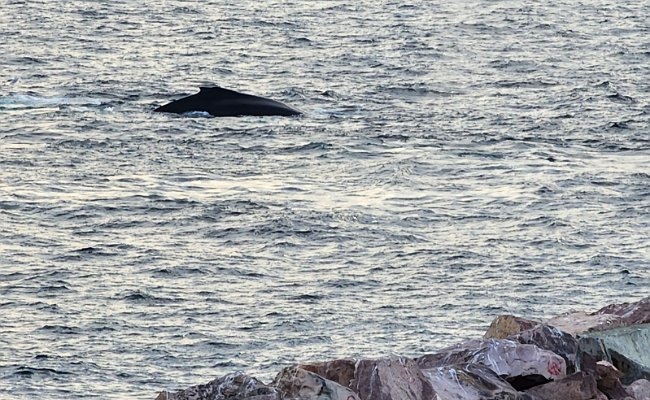
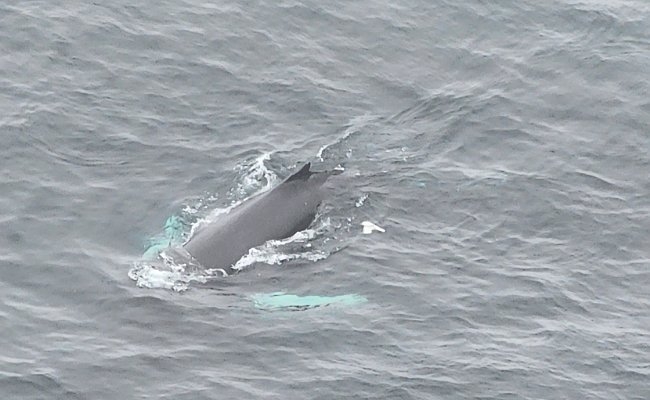
The final photo below is a view looking down from the top of Cape St. Mary's to see a humpback whale feeding on the same fish the gannets are feeding upon. The views are amazing.
Tomorrow we cast off our lines and head north.
Bill
|