Having trouble viewing this email? click here to read online. | | |
At this very moment, one of us is traipsing through the fallen cherry blossoms of Japan. Knee deep in beauty and tranquility. Ensconsed in zen-like contemplations and experiencing untold levels of joy.
Irritating isn't it?
I mean, we really should be working on the July issue.
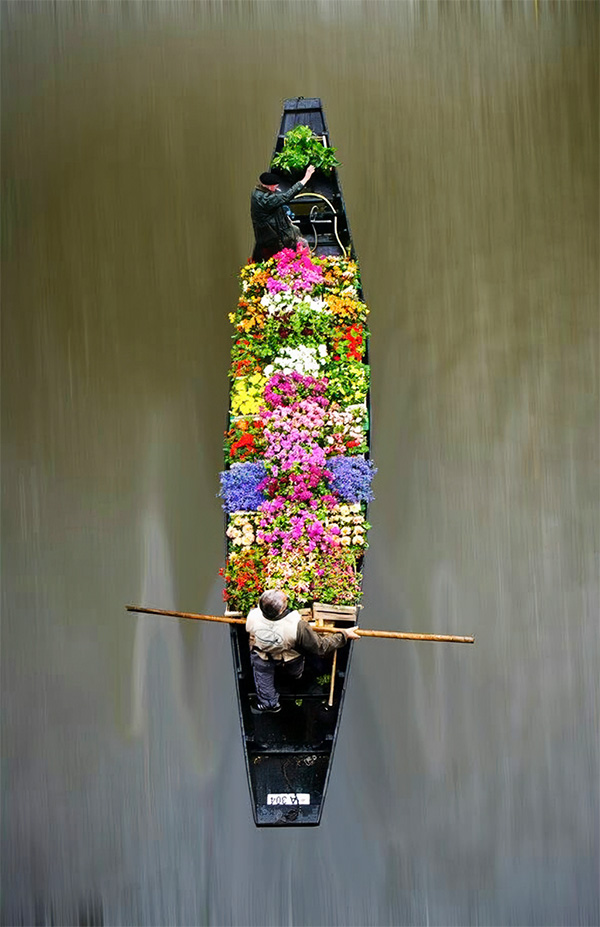
With this in mind, we thought we'd sprinkle as much beauty as we could find into this month's epistle. Something to soothe your day and inspire your own bit of joy.
Thank you very much for your continued patronage.
|
| Stuff That Never Comes Up In Conversation | | |
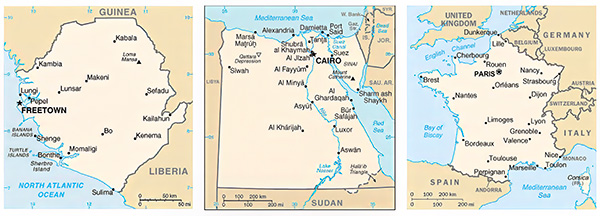
In 2016, University of Buenos Aires computer science student Gonzalo Ciruelos worked out that the roundest country in the world is Sierra Leone, with a roundness index of 0.934 on a scale of 0 to 1.
He’d been inspired by David Barry, who’d found that the world’s most rectangular country is Egypt (0.955 on the same scale).
Metropolitan France is known as the Hexagon. I suppose each country has its claim to fame. -- (Gonzalo Ciruelos, “What Is the Roundest Country?”, Math Horizons 26:3 [February 2019], 26-27.)
|
| Word of the day is ‘Bayard’ (16th century), beautifully defined as ‘one blind to the light of knowledge, who has the self-confidence of ignorance.” | | |
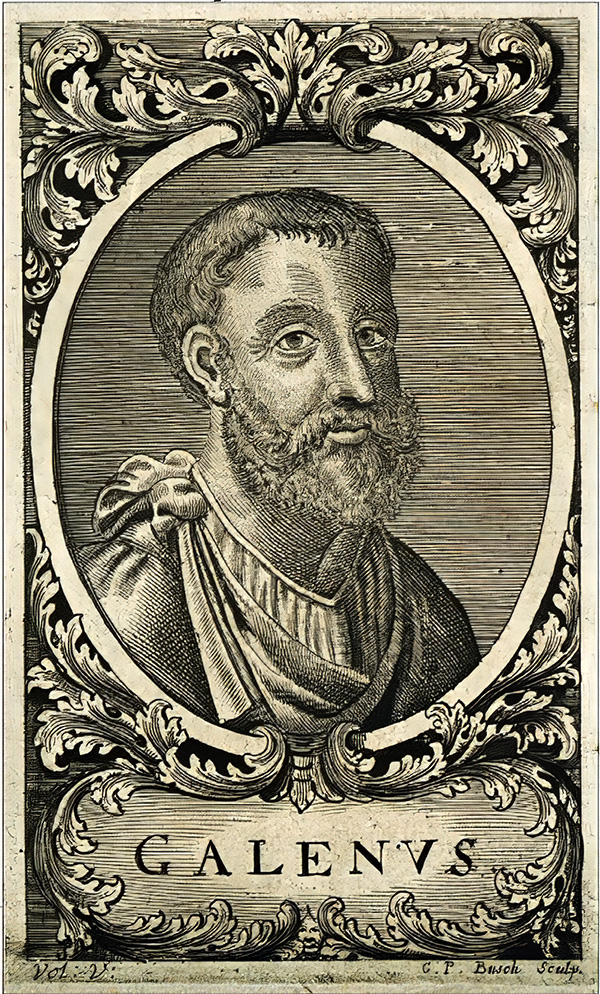
Aelius Galenus or Claudius Galenus
September 129 – c. 216 CE), often anglicized as Galen or Galen of Pergamon, was a Roman and Greek physician, surgeon, and philosopher.
Considered to be one of the most accomplished of all medical researchers of antiquity, Galen influenced the development of various scientific disciplines, including anatomy, physiology, pathology, and neurology, as well as philosophy and logic.
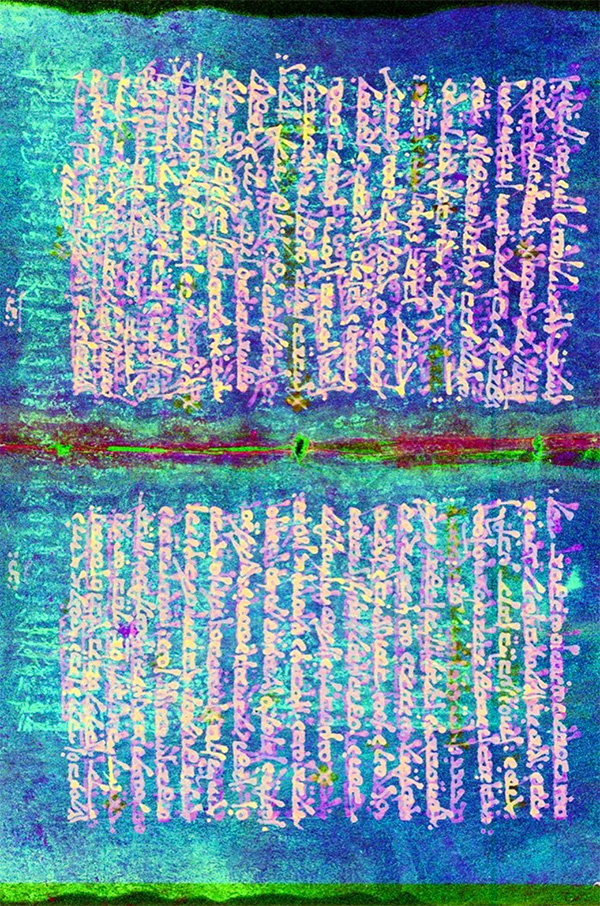
This 1400-year old book of archaic hymns and religious text is being examined by scientist at the Department of Energy’s SLAC National Accelerator Laboratory in California.
It’s being examined not because it’s a priceless and historic artifact, but because the original text contained in the book belonged to Galen during the Roman Empire of the 2nd century.
| | |
His teachings and writings, became known as one of the greatest medical minds of antiquity. The parchment contained within this 1400 year old book was originally inscribed with the teachings of Galen, translated by an unknown hand centuries after the physician’s death, before being hidden by psalms for an entire millennium.
Scientists believe that Galen’s text was covered up for economic reasons (parchment used to be expensive) and not for malicious reasons.
For nearly a decade, scientists and scholars have been using multi-spectral imaging to try to reveal the scrubbed traces of the ancient underlying text, and thanks to a team at Stanford, we might finally succeed in deciphering the hidden words.
What they have found so far has been “incredibly mind-blowing” and they still have over 200 pages left to decode.
| | This is What 100 Years Looks Like | | |
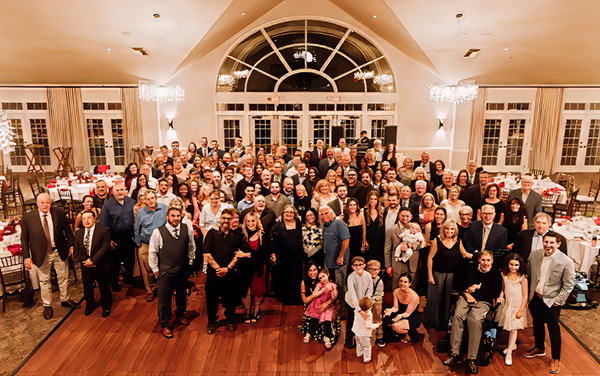
On April 30th, 135 members of the very extended Daniels family – employees, vendors, friends, customers and five generations of Daniels family members – and their spouses (or BFFs) – gathered to celebrate the 100th Anniversary of Daniels Energy.
Hosted by David & Carolyn Daniels and their son, John the evening was a “thank you” to all those who have contributed to its success and longevity.
David invited one customer Ron M. whose grandfather purchased coal from Dominick Daniels back in the early ‘30s. Ron’s father purchased oil from David’s dad, Sebastian and today Ron’s son, Chris buys his oil from David’s son, John. David wanted Ron to represent you – all of you – who have been wonderfully loyal customers over the years.
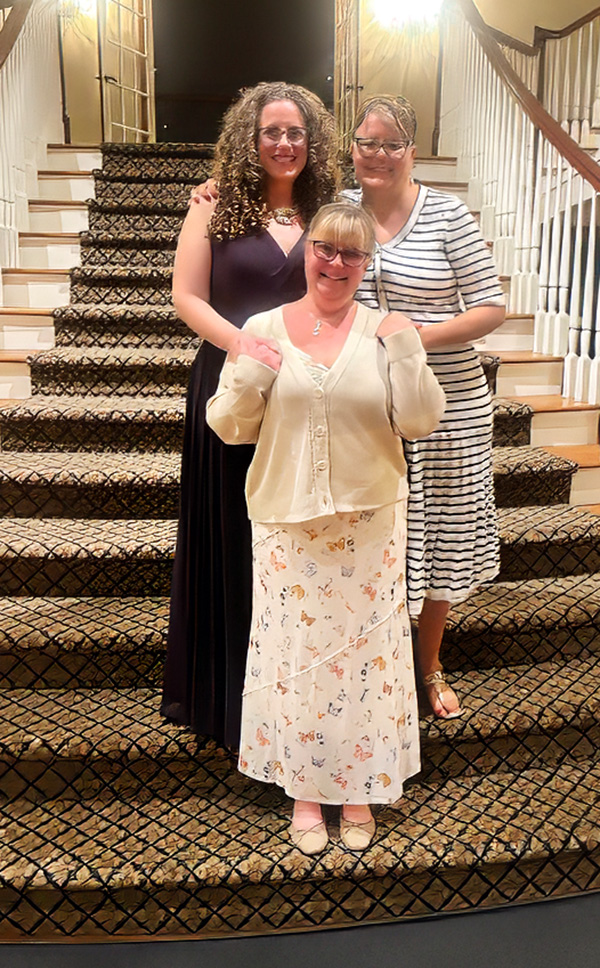
And to bring a bit of beauty – that is the theme of this month’s epistle – here are three of Daniels employees –Alana, Tina and Kelly.
| | |
She can do anything.
Astonishing range. Wonderful actor. We love her. Just tell us who she is and maybe take home a $25 Amazon gift card…just like Irma S-F and Caroline M did for identifying Audrey Plaza last month (77 got it).
And Audrey F, Erick L and Andrew L recognized one of our favs – David Duchovny from X-Files & Californication.
91 of you remember him as either Fox Mulder or Hank Moody.
| | Introducing... The Golden Ratio City. | | |
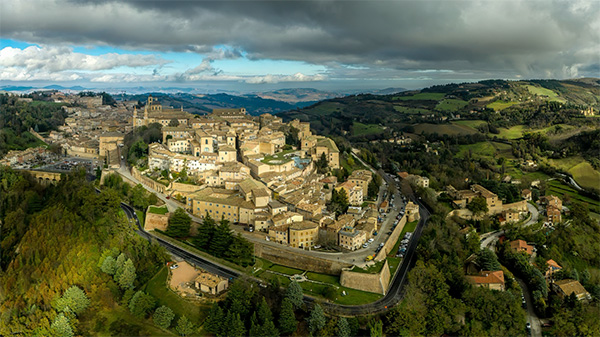
Urbino, Italy, is considered a cornerstone of the Italian Renaissance, where the artistic and architectural obsession with mathematical proportion—including the Golden Ratio (1:1.618)—converged to create a "dream city" of balance and harmony.
Under the rule of Duke Federico da Montefeltro (1444–1482), the city, located in the province of Marche, became a center for integrating Euclidean geometry, linear perspective, and humanistic philosophy into art and architecture.
Urbino and the "Ideal City"
-
The Ducal Palace (Palazzo Ducale): Designed to be a "city in the form of a palace," its architecture features precise, mathematical harmony. Luciano Laurana and Francesco di Giorgio Martini, key architects in Urbino, utilized rigid geometric principles, which were often aligned with proportional theories that favored the golden ratio.
-
Piero della Francesca: A painter and mathematician who worked in Urbino, he was instrumental in developing the "perspective construction" used in the famous painting, The Ideal City (often attributed to him, Laurana, or Martini). This painting reflects the "measure and rigor" of the Urbino style.
The Role of Mathematical Theory
-
Luca Pacioli: A close friend of Piero della Francesca and Leon Battista Alberti (both influential in Urbino), Pacioli wrote De Divina Proportione (The Divine Proportion), published in 1509 with illustrations by Leonardo da Vinci. This work, which formalized the mathematical theory of the Golden Ratio, was profoundly influenced by the artistic environment of the Montefeltro court.
-
Perspective and Proportion: The artists in Urbino believed that mathematical proportion was key to creating beauty that mirrored divine, cosmic harmony.
Raphael and the Legacy of Urbino
-
Birthplace of Genius: Raphael (Raffaello Sanzio) was born in Urbino in 1483, growing up surrounded by this environment of symmetry, balance, and light, which profoundly influenced his later masterpieces, including The School of Athens. Raphael used the Golden Ratio in his compositions to establish the harmony for which his work is renowned.
| | |
Daniels Energy: CT License S1-385517 HOD#19 / Daniels Propane LLC #846 CT License S1-302857. $88 example is for single 12,000 btu single head unit installed and priced at $9,100 with 2.99% EnergizeCT financing over 10 years. Complete details and lenders are here:www.ctgreenbank.com/smart-e-heat-pump-special. Daniels Energy is an approved Smart-E contractor in good standing and part of EnergizeCT’s Heat Pump Installer Network (HPIN).
| | |
Warm summer sun,
Shine kindly here,
Warm southern wind,
Blow softly here.
Green sod above,
Lie light, lie light.
Good night, dear heart,
Good night, good night.
— Mark Twain’s epitaph for his daughter Susy, adapted from Robert Richardson’s poem “Annette”
| | |
Screenwriter Harry Kurnitz’ most quoted observation was made when he became involved in a running feud with Lynn Loesser, then the wife of Frank Loesser, the songwriter.
‘Lynn,’ Kurnitz said, ‘is the evil of two Loessers.’— Richard Gehman, ”The Little World of Henry Kurnitz" Playboy, June 1958 I have a copy.
| | |
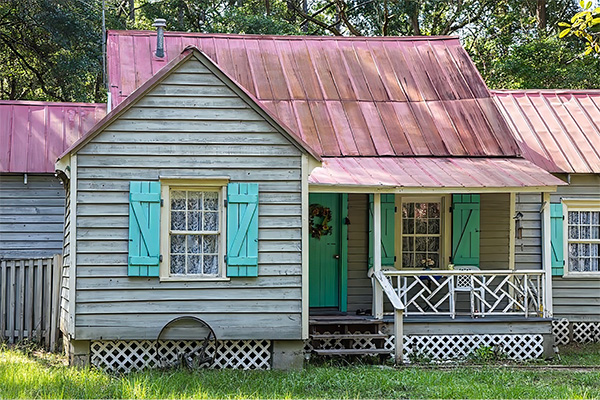
Beauford County, South Carolina is a marshy world of low-lying coastal islands, is awash in blue. The cerulean of the skies that darken to shades of cobalt in storm-kissed summers. The blue-gray of the churning Atlantic. The sapphire waters of the rivers and saline estuaries that account for almost 40 percent of the county’s 923 square miles.
But while the color blue dominates Lowcountry skies and waters, for centuries it was nearly impossible for human hands to reproduce.
Only indigo—a leggy green plant that emerges from the soil in bushy, tangled clumps—can generate the elusive jewel tones.
| | |
In Beaufort County and elsewhere in the Lowcountry of South Carolina and Georgia, blue had the power to protect enslaved Africans and their descendants, known as the Gullah Geechee, from evil spirits.
But the color was also the source of incomparable suffering. Indigo helped spur the 18th-century transatlantic trade, resulting in the enslavement of thousands.
The town of Beaufort, the county seat of the eponymous Lowcountry district, is accented in blue. The elegant riverside town was one of the South’s wealthiest before the Civil War, and one of the few left standing by the Union Army, which set up a base of operations here after its residents skipped town in the Great Skedaddle of 1861.
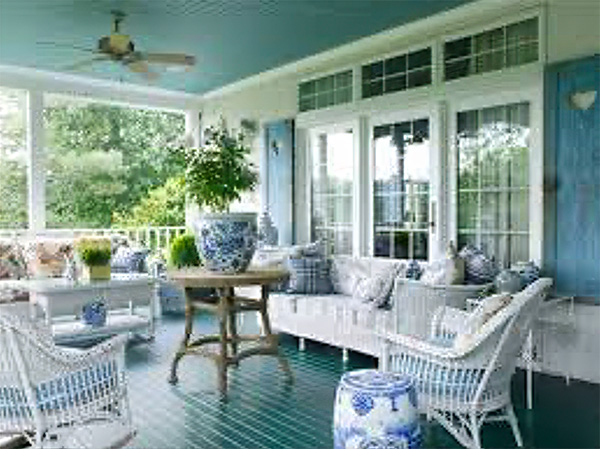
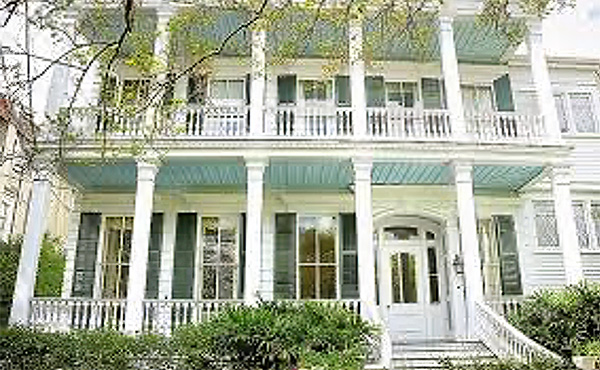
| Dozens of antebellum mansions still line the streets, restored to the opulence of their plantation days. The ceilings of their broad summer porches are painted almost universally in just one color: a soft, robin’s egg blue. | | |
This “haint blue,” first derived from the dye produced on Lowcountry indigo plantations, was originally used by enslaved Africans, and later by the Gullah Geechee, to combat “haints” and “boo hags”—evil spirits who escaped their human forms at night to paralyze, injure, ride (the way a person might ride a horse), or even kill innocent victims.
The color was said to trick haints into believing that they’ve stumbled into water (which they cannot cross) or sky (which will lead them farther from the victims they seek). Blue glass bottles were also hung in trees to trap the malevolent marauders.
Yet not all Gullah Geechee identify with the color’s use. Oral histories recorded as late as the 1930s and 40s mention haint blue, but a lot was lost when the community became less isolated and more spread out during the mid-20th century.
“Haint blue was never mentioned in my family on Hilton Head Island,” says Louise Miller Cohen, founder of the island’s Gullah Museum.
“People are saying that we paint our houses blue to ward off the evil spirits. If that was true, all the houses on the island would be painted blue.” Nevertheless, the museum—once the home where her father lived—is painted blue.
| | It’s Really Just Supply and Demand | | |
We had a few customers ask, “How is it that the US is a net exporter of oil and natural gas, yet our prices are so high?” It’s a fair question.
The answer, truly is, supply and demand.
If we think of all oil production, all over the world, and think of it as one big barrel with the world’s oil production in that barrel. Then the market comes along and demands that oil and pays the asking price.
Then the US goes to war with Iran. While we only use about 3% of the oil in the Middle East, 14 million barrels of oil – a day – can’t get through the Strait of Hormuz and so - they don’t go into the world’s barrel.
Demand remains the same. Or maybe even increases.
Europe wants more. China needs more. Supply down. Demand up. That is pricing in a nutshell.
David goes to the barrel and makes his purchase based on what the market does. And we have lost 75-90 days supply – a billion and a quarter++ barrels – so it will be some time before the world catches up.
So let’s hope cooler heads prevail and that we are soon back to what passes for peace.
| | |
Father DeBlasi was wrong.
He was my Latin teacher and he said I would probably never use Latin. Well, Roman numerals maybe. Sure enough, along comes the Super Bowls – and now…this quiz.
What’s the largest number that can be expressed in Roman numerals - If no single letter can appear more than three times in a row.
Now it’s your turn! Tell us the number here and you may win a fabulous prize consisting of a $XXV Amazon gift card.
| | |
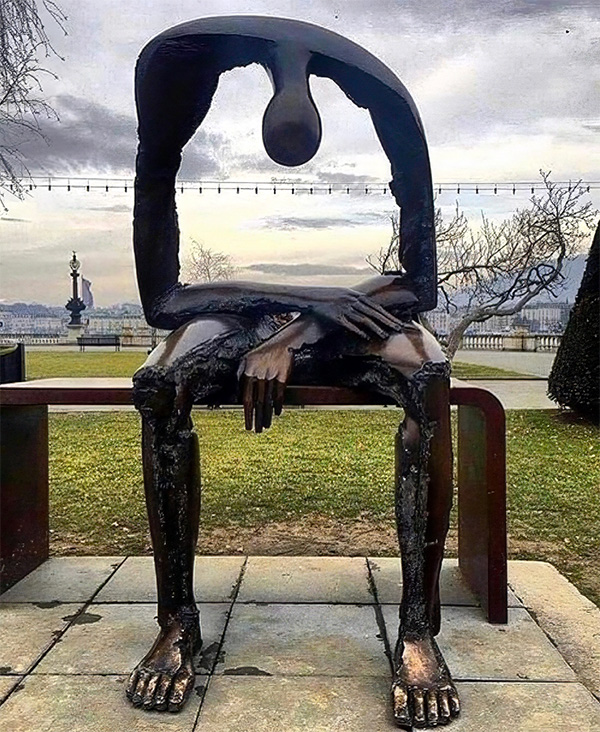
Melancholy by Romanian artist, Albert Gyorgy
The sculpture, "Melancholy" is also sometimes called "Emptiness". It depicts a man sitting on a bench with a large hole in his torso, symbolizing the emptiness and grief associated with loss.
The sculpture is located in Geneva, Switzerland, on the shores of Lake Geneva. The sculptor's career is marked by a double human and artistic adventure, which has always been a sort of tension between contrary aspirations. Romania and Switzerland.
Somewhat more here: https://www.facebook.com/media/set/?set=a.2960491900638209
| | It’s wild to think about “futuristic visions” from the perspective of someone in the 1800s. | | |
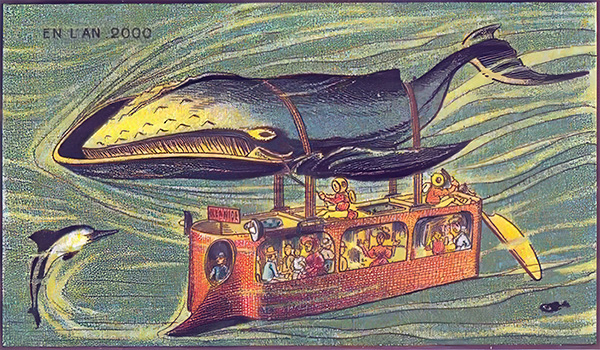
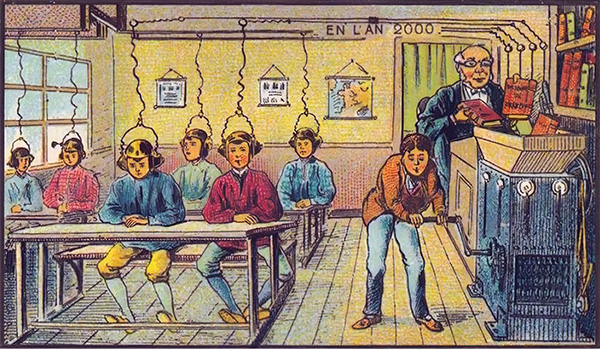
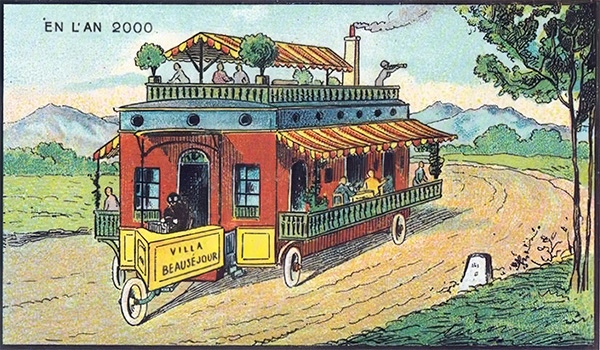
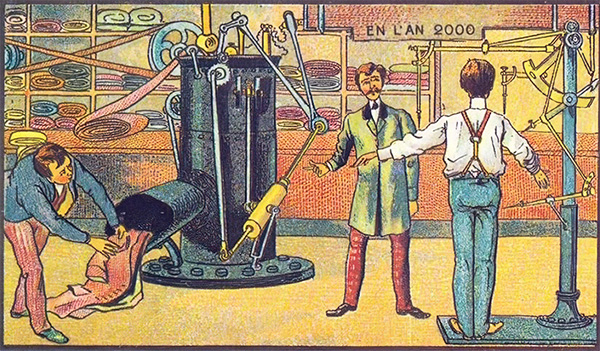
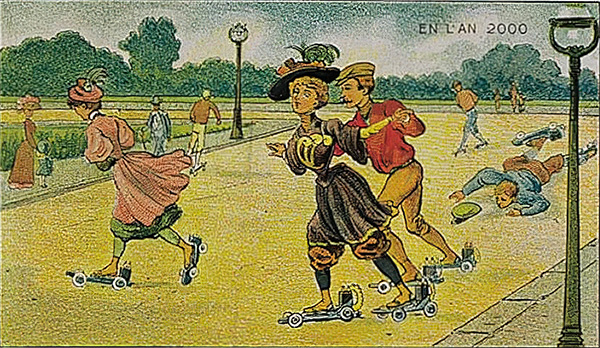
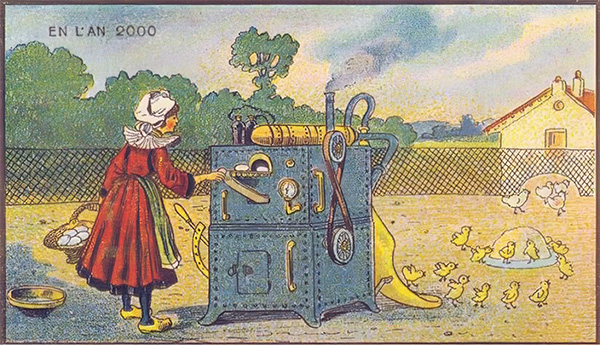
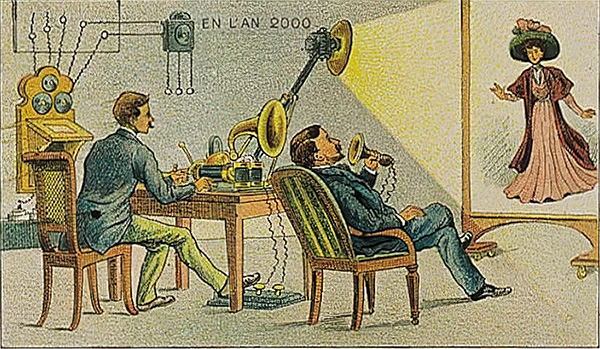
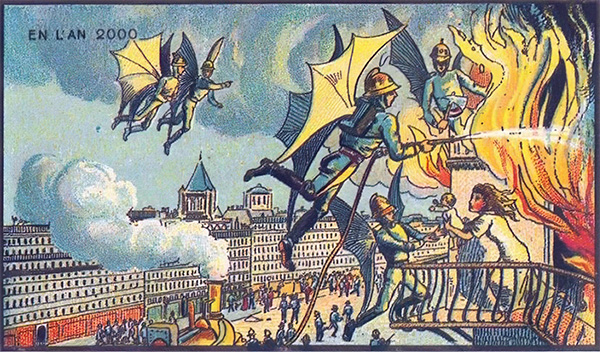
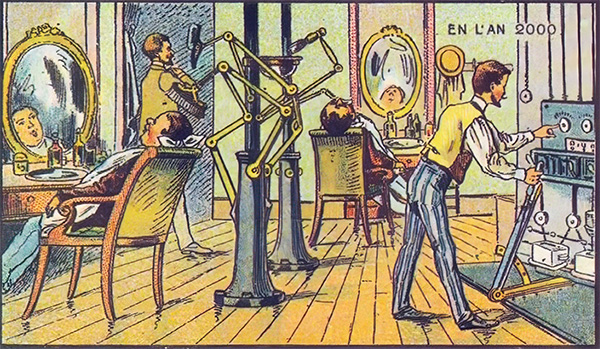
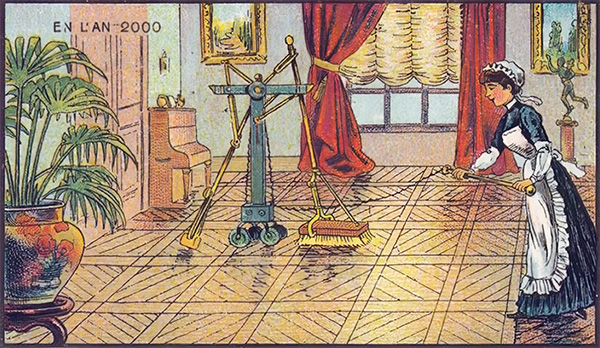
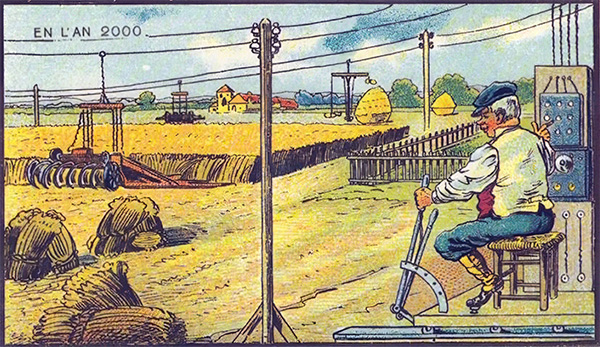
First released in 1899, “France in the Year 2000“ was a series of postcards that envisioned a future one hundred years ahead.
The designs and concepts are both naive and adorable, with some accurate predictions, and some very strange ideas, indeed. We love the creative optimism in these concepts. It’s undoubtedly clear that the styling is 120+ years old, but the ingenuity and foresight in some of them is pretty remarkable.
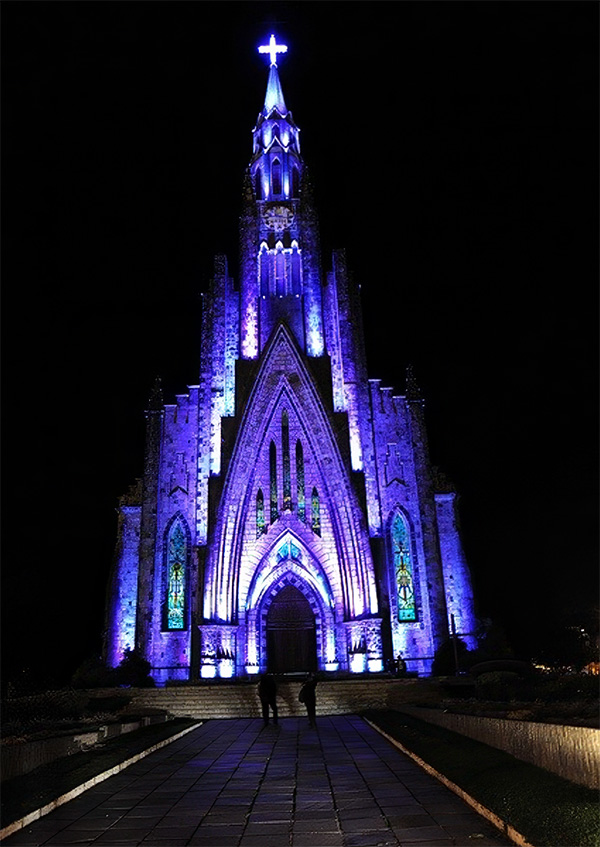
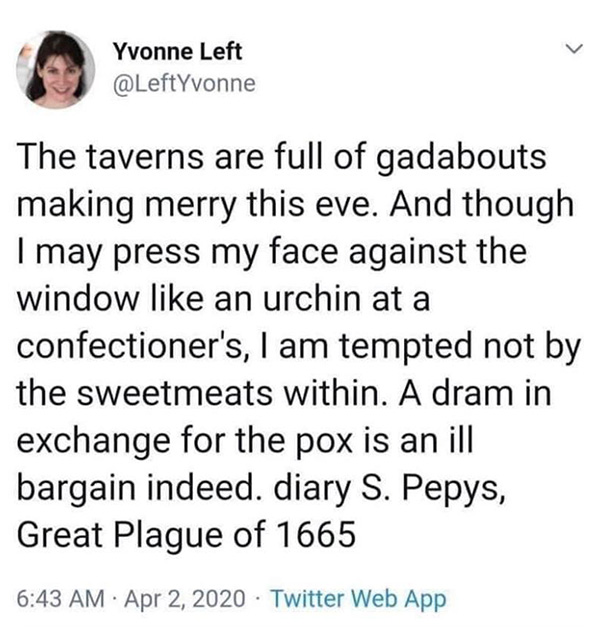
| | Rolling House – again, think VW Bus! | | Intensive Breeding – think mega farming. | | Correspondence Cinema - Zoom Meetings | | Fire Fighting – Drones, anyone? | | Auto Barber - we got nothing on this. | | Electric Scrubbing – think Roomba! | | Future Farming – maybe not? | | The La Nossa Cathedral in Brazil | | June Philosophical Observsation | | |
Of course you do know them.
Tell us their names – and sing the song when you send us the answer. Your Amazon gift card awaits.
| | |
danielsenergy.com
Daniels Energy: CT License S1-385517 HOD#19 /
Daniels Propane. LLC: #846 CT License S1-302857
| | | | | |