April 2022 Markets Newsletter (51,000+ subscribers!)
|
|
In This issue:
- Spring Forward with Your Writing by Angela Mackintosh
-
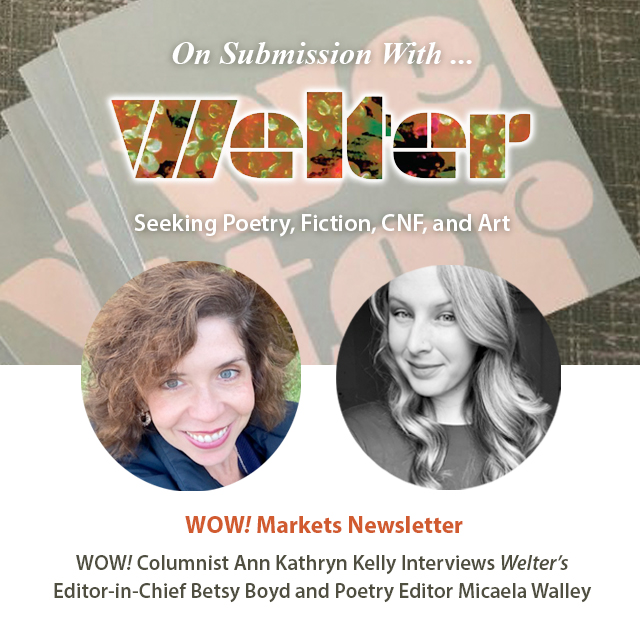
On Submission With... Welter: Ann Kathryn Kelly Interviews Welter’s Editor-in-Chief Betsy Boyd and Poetry Editor Micaela Walley
- April Deadlines: Poetry, Fiction, Nonfiction, Multigenre, Just for Fun
- How to Successfully Repurpose Your Articles by Marcia Peterson
|
|
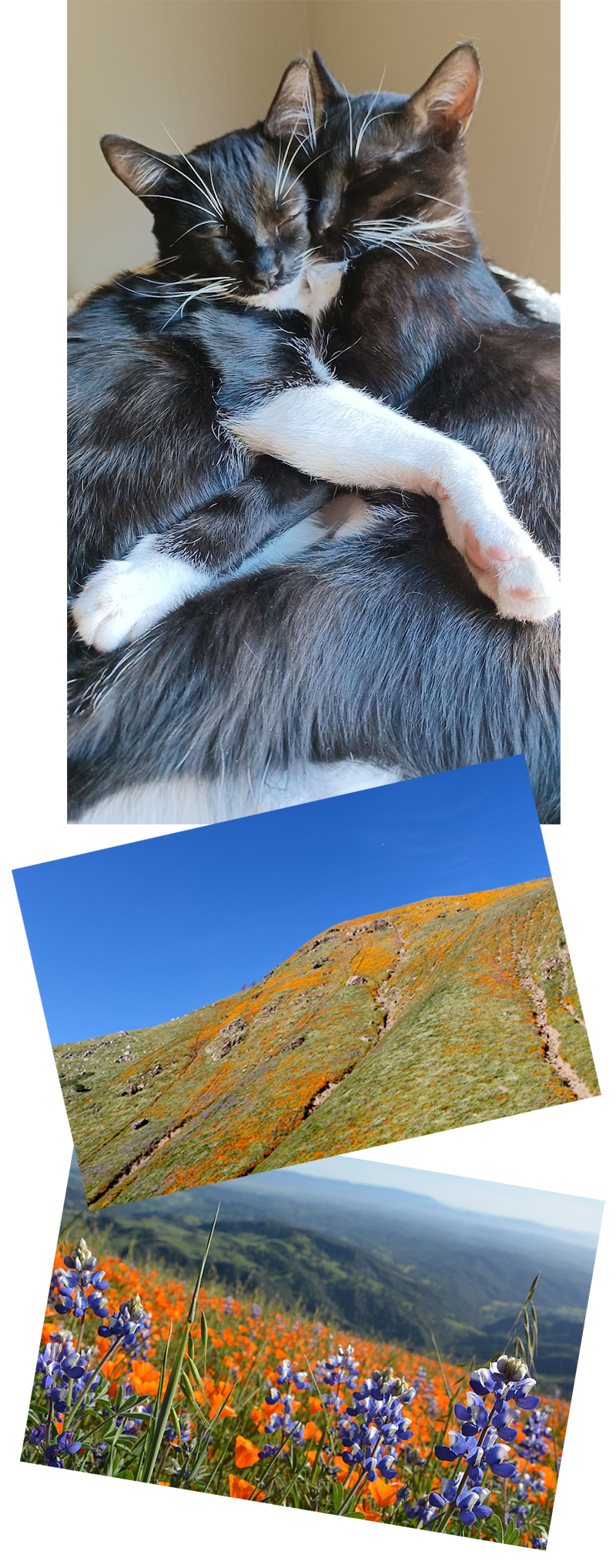
This week marked the vernal equinox, and here in the Los Padres National Forest, I’m seeing more signs of spring every day: warmer weather, brightly colored flower buds, and sunrays that stretch long into the evening. Animals are pairing up, and my resident ground squirrel has emerged from hibernation with a mate! I recently adopted two kittens who were found in a storage facility, and they are growing so fast. I mention all this to say that spring reminds us of the momentum of life and offers a reassuring continuity, lessons that we can apply to our work.
In my writing group, we’ve been talking about the importance of maintaining momentum. I know it’s difficult to concentrate on writing with the war in Ukraine dominating our hearts and minds (check out Marie Claire’s roundup on organizations to help those in need), along with life, work, and family commitments. When I take my father to his daily radiation treatments for his cancerous brain tumor, I’m sad sometimes but find solace in the momentum of nature. As I drive on the freeway that snakes through the brown hills turned green and swathed with orange poppies, I’m reminded how precious our time is and the importance of creating art. |
|
One member of my group, Ashley Memory, who you know as a writer and editor here at WOW, has been revising an essay she first drafted last year in a WOW class led by the talented writer and teacher Naomi Kimbell. She was proud to have it place as a finalist in several contests but at the same time disappointed it wasn’t accepted for publication. Having provided feedback, I was equally invested. After all, individual successes are collective ones for the entire group and proof of the power of women helping women. So where did Ashley turn, but to the WOW March Markets Newsletter! As the theme implied, she truly “found the missing piece” in her writing life. Here she learned of a call for podcast stories, which prompted her to consider her essay in the form of voiced narration due to its dramatic and rather spooky elements. So she submitted it to PenDust Radio, and they accepted “My ‘Haunted’ Lamp” for their upcoming Episode 3 scheduled for April. She’s thrilled because 1) the format is not something she’s explored before and 2) it reinforces the value of repeated revisions and critical feedback from her writing partners. I personally can’t wait to hear her essay performed! At the same time, on a whim, Ashley submitted another essay to a state contest, and it won 2nd place. I’m thrilled for her! The act of submitting created a chain reaction, and believing in her work enough to try new markets was the key to her success. As Ashley says, “Take nothing for granted and keep the momentum going.” |
|
Here are five tips for maintaining momentum while submitting:
If you’re receiving rejections, try switching your target market. I’d submitted an essay to literary journals, and it even placed as a finalist in a creative nonfiction contest. But after showing it to my writing group, we realized the essay wasn’t right for the literary market, but it could be a magazine feature, which would pay more anyway. If your essay isn’t literary, consider adding research or statistics and submitting it to a newspaper. If it’s more about your problems and feelings, try submitting it to a parenting or lifestyle magazine. Does your essay have a strong opinion? Give it a central issue and solution, cut the word count down to 1500 words or less, and submit it as an op-ed. Tie it to a news peg or a celebrity and submit it as an opinion essay to NBC Think or The Independent Voices column. Give it a killer hook and sharpen the focus and submit it to the New York Times or HuffPo. Conversely, if you want your essay to be more literary, consider trying a new structure, like a braided narrative or hermit crab; write it from a different point of view, like second person; or take one scene and work it into a flash. Don’t let your writing molder! You can revise any draft into a publishable piece.
Schedule writing time on your calendar. One of my writing partners is hard at work on her second draft, and if you’re writing a novel or memoir, you know just how challenging it is to stay motivated in a process that often takes years. Similar to a lunch date or salon time, my friend sets writing dates on her Google calendar. She schedules three days a week for one hour of writing time (no matter the word count), and two days for revision or research. When she hears Google chime, she scrambles to her chair with a cup of coffee, throws open the curtains, and starts writing. She also schedules quarterly meetings to exchange drafts with a critique partner, and these solid deadlines provide her with the accountability she needs to maintain momentum. You can schedule time for shorter pieces as well, and I find that writing first thing in the morning keeps my pen moving.
|
|
Exchange topic ideas in between submissions. I currently have five pieces on submission and five in revision, which helps keep me focused on my goal of publication. In between publishing cycles, friends in my two writing groups exchange a list of ideas for first-person confessional essays. Writing and submitting these pieces is a great way to beat the odds and break into a national publication. In a recent WOW interview, New York Times bestselling author of The Byline Bible and teacher Susan Shapiro offered this tip: “My rule for all first-person writing is you have to question, challenge, out, and trash yourself more than anyone else.” Your essay could be about a nasty breakup or how you lost your job or became a shopaholic. Just remember to end as a victor, not a victim, and don’t forget to share your wisdom. My writing partners and I post our lists on Dropbox Paper or Google Docs and then vote on the most viable ideas and discuss potential markets. I found this exercise does two things: 1) it keeps my mind actively mining my life for essay ideas and thinking about my experiences in terms of conflict and wisdom, and 2) having feedback on which headlines are most interesting saves me time before writing a piece. It’s also not a big ask from writing partners because it’s quick and fun to vote on ideas. If you’re still not sure which ideas are the most feasible, try writing a pitch summary for each one and the best is certain to rise to the top. As writer Joan Didion said, “I write entirely to find out what I’m thinking.” |
Start or join a discussion group. WOW subscriber Myna Chang loves to write and read flash fiction, but realized that most book clubs focus on full-length novels. She decided to start her own group, Electric Sheep, to read short speculative pieces. On The Muffin, she shared tips on starting your own group. Reading as a writer is the best way to study craft, and sharing a story with other writers is one of my favorite things to do. I recently shared “ The Crane Wife,” a fantastic essay by CJ Hauser, with one of my writing partners and felt rewarded when she told me she observed a technique she wanted to try in one of her essays. I’m also a member of an accountability group, and we post monthly goals, discuss the business side of writing, publishing, and marketing. All of us are at different stages of our work—some are currently querying book-length projects to agents, while others are vigorously revising short stories—but as a group we’re there to help each other every step of the way. |
Believe in your work. Above all else, writing is a spiritual journey, and we must stay the course and trust our innate wisdom. For some writers, the path is straightforward, but for others it often meanders like a winding river. Try to have patience and be receptive to changes in the current. After a little time and reflection, we often realize that our piece isn’t really about one thing but another. If we go with the flow, surprising things can happen. Maybe you received a soul-crushing rejection, but then realized it was a gift because the editor shared why the piece wasn’t working. You revise and submit it, and receive an acceptance from your dream publication. Let go of your fears, doubts, expectations, and just keep writing. In time, you will meet your goals and more. |
We have a great issue for you! Ann Kathryn Kelly interviews Welter’s Editor-in-Chief Betsy Boyd and Poetry Editor Micaela Walley. Ann tried poetry writing for the first time last year, and was surprised when several of her poems were accepted for publication. That included her prose poem, " Bands of Honey," which was published in Welter and chosen out of 1,000 poem submissions! Ann's story reinforces the importance of staying flexible and maintaining writing momentum. She says, "It was an empowering reminder that we all can surprise ourselves when we stretch outside our comfort zones." Celebrate National Poetry Month by getting acquainted with this fantastic journal!
Did you know that most successful freelancers resell each piece they write, in some form or another, about five times? In our feature article below, WOW’s blog editor, Marcia Peterson, shares her best tips for re-purposing your work, along with advice from freelancers Kelly James-Enger, Shirley Jump, and Moira Allen. This article goes hand-in-hand with my suggestion for targeting different markets, but Marcia tailors her tips towards freelancers who want to earn money by turning one idea into multiple sales.
|
Don't forget, WOW's Q3 Creative Nonfiction Essay Contest closes at the end of this month! Submit your best creative nonfiction, memoir, lyric essay, hybrid, and more for a chance to win $1,175 in cash prizes and publication. 200 - 1,000 words. Only 300 essays accepted. Enter by April 30.
Small steps create momentum. Momentum leads to forward motion and continuity. Continuity builds hope, and as our friends in Ukraine demonstrate every day, hope will keep you going no matter what obstacles you face. Trust in your work and follow its unique path. Celebrate small successes, and you’ll gain confidence, which will lead to even bigger writing achievements down the road.
Good luck this month!
|
Angela Mackintosh is an editor at WOW! Women on Writing and a graphic designer at Mackintosh Multimedia. Her creative nonfiction has been published in various literary journals. She's currently working on pitches for essays she realized were better suited for mass media.
|
Would you like to see your product, book, contest, or service in this section and reach over 51,000 subscribers? Email Angela for current specials. |
CreateWriteNow: Courses for Writers |
CreateWriteNow's Courses for Writers are for new and experienced journalers who want to challenge themselves with a guided journaling journey.
Dive into challenges like 53 Weekly Writing Retreats, 12 day Guide to Morning Pages, 14 Days of Journal Magic for Writers, Build a Lasting Journaling Practice in 14 Days, and Overcoming Page Fright in 7 Days.
Led by self-transformation guide, Mari L.McCarthy, these journaling journeys are available for instant download, so you can get started today! Embark on a path of healing and self-discovery.
|
Booksie First Chapter Contest - $1,000 in Prizes |
You don't need to have finished the book. You don't even need more than the first chapter. Booksie's site editors are looking for an original, well-written start that will grab their attention—one that makes them want to read what comes next.
You can submit your entire manuscript, but only the first chapter will be judged. They are open to any genre, fiction and nonfiction, and the maximum length is 7,500 words.
First place receives $500 cash, gold winner badge, a week of Promote for any published content, and a review of the winning chapter. Runners up receive $100.
|
The Heart of Memoir Event |
Memoir is a genre of the heart. Memoir is powerful. Memoir is deep. Memoir changes lives, even saves lives.
Mary Karr has written that in memoir, the heart is the head. If you’re looking for how to access the heart in your memoir, look no further than this next 6-week intensive hosted by Brooke Warner and Linda Joy Myers, co-founders of Write Your Memoir in Six Months, and co-leaders of the popular memoir classes through Magic of Memoir.
6 Weeks, 6 Expert Teachers
April 5 - May 10
Teachers: Kiese Laymon, author of Heavy; Ashley C. Ford, author of Somebody's Daughter; Joshua Mohr, author of Model Citizen; Anna Qu, author of Made in China; Linda Joy Myers, author of Don't Call Me Mother; and Brooke Warner, author of Write On, Sisters!
|
Authors: LitNuts Readers Want Indie Books - Show Them What You Got! |
Promote Your Book for Only $8 with the Discount Code: WOW8
LitNuts is a free newsletter created to share the "Best of he Indies" with book lovers. That means indie authors and publishers won't be competing with the Big 5 corporate publishers or their imprints.
Equally important, LitNuts built their following from scratch to ensure they have subscribers who are genuinely interested in and supportive of indie publishing.
LitNuts readers want indie books. Show them what you've got!
60% off the regular price, now through May 31
|
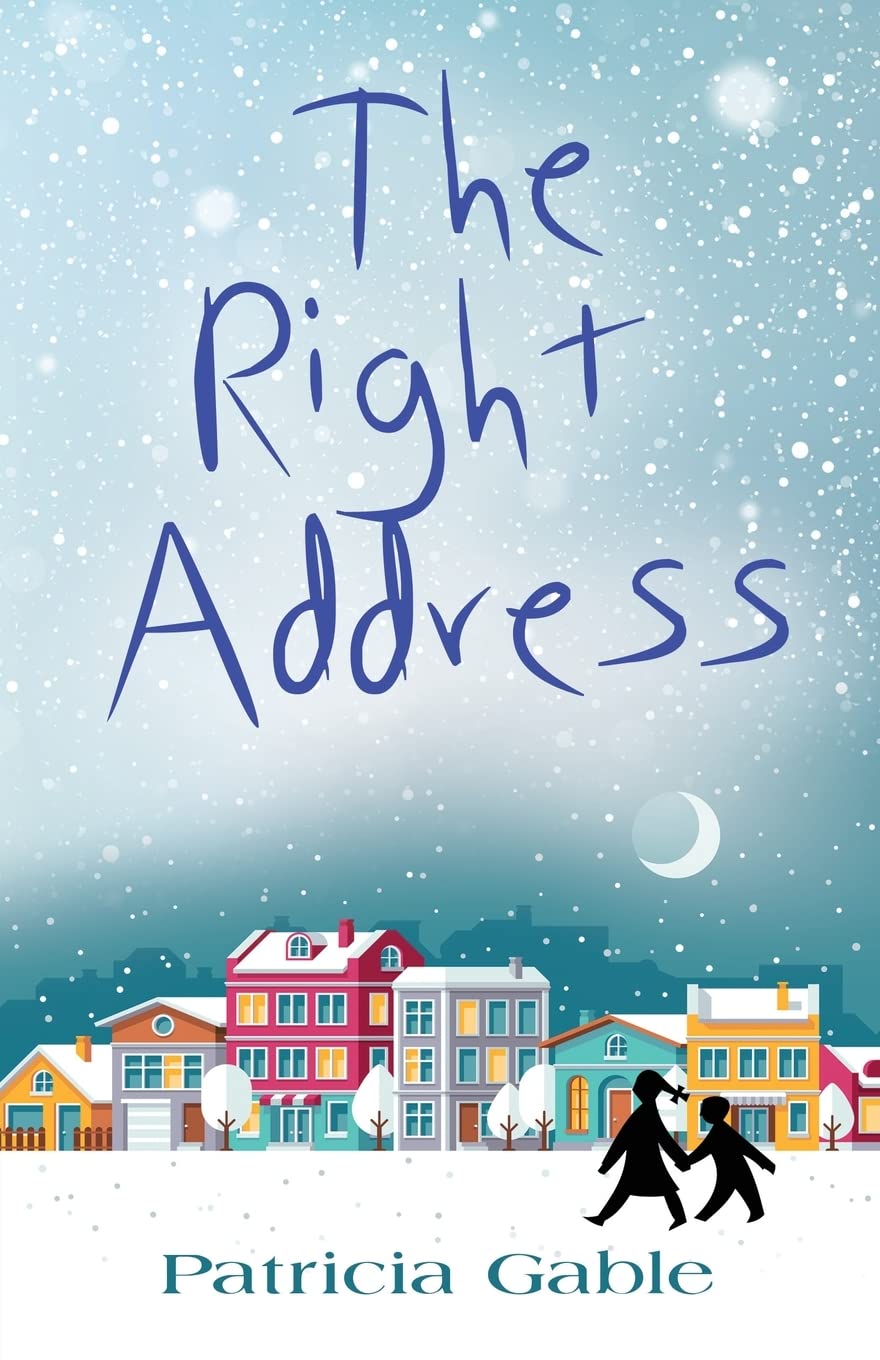
Book Giveaway: The Right Address by Patricia Gable
|
The Right Address is Dynamic and Heart-Warming Middle-Grade Read from WOW! Subscriber Patricia Gable
Annie hears that her foster parents are going to send her little brother, Willie, to another foster home. She can't let that happen! She devises a plan for the two of them to run away in the middle of a wintry night. That's when the adventure begins!
Annie is the protective sister and Willie is bold and comical. They meet new friends and find places to sleep and eat. But how long can they last in the winter weather? And who is the strange man watching them?
When they are given a card with only an address written on it, will this be the break they need or will it spell disaster?
Giveaway ends April 3rd.
|
Black Memoirs Matter Anthology |
Black Memoirs Matter Anthology
The Black Memoirs Matter Anthology will highlight crucial creative nonfiction by writers of African descent. Submissions are open to all writers of the African Diaspora, regardless of country of origin or residence.
Our goal is to chronicle the global Black Experience through memoir. At the same time, we are looking for universal truths that transcend race, like mental health, self-love, parenting, etc.
Submissions should be written in first person and range anywhere from 500 to 4,000 words.
Tell us your story!
We pay a $50 honorarium upon acceptance.
|
There's still time to join these WOW workshops: |
Food Writing for Fun and Profit: Blogs, Restaurant Reviews, Recipes, Fiction, Memoir, and More
5 weeks: Apr 8 - May 12
Famed epicure James Beard once wrote, “Food is our common ground, a universal experience.” In this five-week course, we will explore the wide and exciting range of food-themed genres. Via the instructional text, Will Write for Food 4th edition, by Dianne Jacob, students will find inspiration for their own weekly writing assignments. In addition, students will read food writing from some of the top journalists and food bloggers in the industry in Best American Food Writing 2021. Each week, students will submit a prose assignment based on an exercise from our class text for constructive and supportive instructor feedback. Led by Melanie Faith!
|
Curiosity and Creative Nonfiction
4 weeks: Apr 11 - May 8
Where do we get ideas for our writing? As nonfiction writers, we are inspired to write because of our experiences. But sometimes we don’t know how to put our experiences into words or how to write about them. This is where curiosity and research come to the rescue. This class will look at the different ways in which being curious about an experience, an event, an object, an anything that catches your attention can fuel your writing and bring a deeper level of meaning to what you write. By combining (fun!) research and personal experience, your writing can take on new meanings. Led by Chelsey Clammer!
|
|
Pitches, Remote Jobs, Calls from Editors
Fifth Season Recipe Blog
Editor Ali Trachta is seeking food writers, comedy writers, essayists to contribute to "The Green Room," Fifth Season's Recipe Blog. They're looking for writers to provide a complete recipe (with ingredient list and steps) along with a well-told anecdote that gives the dish some life. Solid storytelling skills are required, and attention-grabbing ledes are a must. Pay is $500 per piece. Check out their writer's guidelines and send your pitches with at least one writing sample to Ali at thegreenroom@fifthseasonfresh.com.
Elite Daily
Elite Daily is a site for and by women who are discovering the world and themselves in the process. Jonathan Borge, senior entertainment editor, is accepting pitches for essays, original reporting, cultural commentary, and/or thoughtful reactions to Bridgerton season 2. Rates start at $250. Email your ideas to: jonathan.borge@bustle.com.
Elite Daily - Experiences Writer
Elite Daily is also looking for a remote, part-time writer with an interest in covering travel, lifestyle, social media, and health/ wellness topics to join its Experiences team. Day-to-day responsibilities include covering viral TikTok recipes, the best quotes from popular TV shows, wanderlust-inducing travel pieces, and experiential holiday stories. Pay is $20/hour and is negotiable. Apply here.
GUTS: Revenge
GUTS is a Canadian feminist website that publishes journalism on Canadian politics, lives (including short, critical memoirs and personal essays), as well as poetry, fiction, comics, video art, and more. They are seeking pitches for their "Revenge" theme. Pay is CAD $500-$2,000. Check out their theme call details and guidelines, and submit a short pitch (maximum 300 words) describing your proposed project no later than March 31 to submit@gutsmagazine.ca. Please include a link to or copy of a writing sample.
McGraw Center Fellowship for Investigative Econ/Biz Stories
They are looking for journalists with a great idea for a high-impact story that “Follows the Money.” Get $15,000 for econ/biz journalism on workplace, health, immigration, trade, inequality, climate & more. Apply by March 31. More info here, and apply here.
Room Magazine: work-from-home publisher
Room Magazine is a feminist literary journal. They are hiring a full-time work-from-home publisher. The ideal candidate will have previous work experience in literary, grassroots, scholarly, or academic magazine or book publishing. Apply by March 31. $20/hour for 38 hours per week, with health benefits. Apply here.
Neon Door: The Immersive Future
Neon Door is an immersive literary exhibit. They are currently accepting pitches for essays about the intersection between art and technology for their online column on Neon Door called “The Immersive Future.” They're seeking pieces that explore the potentials that virtual reality, the metaverse, and immersive technologies create for a new form of storytelling. Pay is $250. The deadline for pitches is April 5. Pitch via Submittable.
Sasee
They want first-person, non-fiction material that is for or about women, of 500-1,000 words. Essays, humor, satire, personal experience, and features on topics relating to women are their focus areas. They do not publish fiction or poetry. They have three upcoming themes: "Celebrate" (deadline April 15); "Clean Community" (May 15); and "Laugh Until You Cry" (June 15). Pay is $.10 per word. Check out their writer's guidelines, and send your submission to editor@sasee.com.
Narratively - True Deceptive & Extraordinary High School Sports Stories
The editors are seeking pitches for first-person or reported stories on two themes: "True Deceptive" (People who have let a seemingly simple lie turn into years of increasingly complex deception, and are willing to speak openly about how the weight of that choice affected their life and relationships — and what it feels like to finally come clean.); and "Extraordinary High School Sports Stories" (Profiles of inspiring high school sports teams that have both an unexpected success story and a one-of-a-kind hook.) Pay starts at $500. Pitches are due by April 15. Check out their guidelines and send a pitch.
Book Art Review
They publish book art criticism, and are reading pitches for their second issue. The theme is "The Hidden Parts of Design and Publishing." They want pitches for reviews and features. Check out their guidelines. Pay is $250 for reviews and $450 for features. Pitches by April 18 to bar@centerforbookarts.org.
Cricket Media: Faces - Snakes; Chile
Faces is a magazine of world cultures and geography for 9-14-year-old readers. They are seeking pitches for two themes: "Snakes" (pitches by April 18), and "Chile" (pitches by May 23). They publish feature articles (700–800 words), supplemental non-fiction (300–600 words), fiction (up to 800 words), activities, including crafts, games, recipes, projects, etc., and puzzles and games. Pay is up to $.25/word. Check out their submission guidelines and send your pitch to faces@cricketmedia.com.
Chicken Soup for the Soul: Crazy, eccentric, wacky, lovable, fun families
CS publishes true stories and poetry (up to 1,200 words). For their upcoming theme on families, they say: “We all have them! Those eccentric, goofy, wacky, lovable, and oh so fun family members—the ones we tell all the stories about. They could be a parent or grandparent, an in-law, a brother or sister, an aunt, uncle or cousin. Or grown children. …” Pay is $200 per story. Writers can use a pen name if they like. Submit by April 30. They have more themes to write to! Check out their upcoming themes, writer's guidelines, and submit here.
Bob Vila
Bob Vila is looking for freelance deals writers to cover the best deals & sales on quality products for their readers. Pay: $75-$300 (depends on story length, amount of research, & the number of products highlighted). Apply here. Or feel free to email managing editor Samantha Matt at amanda.tarlton@recurrent.io as well with pitches/bylines/experience!
Inverse
Inverse publishes work on science, innovation, entertainment, gaming, and more. The deputy editor is looking for pitches for April and beyond on the topics of science, health, space, innovation, movies, TV & video games. Looking for narrative features, exciting profiles, oral histories, and more. Pay is $1,000 for a great story. Check out their pitch guide and send your pitch to Jacob at jacob@inverse.com.
YES! Magazine
Editor Kate Schimel is looking to commission writers for solutions-oriented Indigenous rights pieces. Interested in reported pieces (particularly from Indigenous journalists). Also looking for a few environment/climate stories! Pay: $.40/word for reported pieces, although she's also looking for perspective & opinion (stipend offered). Check out their writer's guidelines. Email Kate to pitch or to discuss ideas! kschimel@yesmagazine.org
Input Magazine
Input Magazine is a technology and culture publication. Editor Mark Yarm is seeking feature pitches. 4/20 is less than a month away, so he's looking for tech-related weed stories (or weed-related tech stories?) Pay is $.50 to $1/word. Pitches to mark.yarm@inputmag.com.
The Institute for Science & Policy
The Institute commissions freelance submissions year-round on topics involving science, policy, and decision-making (climate, health, energy, natural resources). They pay $300-$500 for reported work and essays, usually in the 1k word range. Check out their writer's guidelines, then pitch via this form.
NY Blacklight
They are looking for talented and experienced investigative journalists. Right now their focus is the impact of COVID-19 on Black and brown communities, especially in NYC. Long form articles pay $2 a word for 1500+ words; medium length articles pay $1 a word for 800-1500 words; data visualizations pay $250-$500 per piece; fact checks pay $250 for 500-1000 words. Send pitches to blacklight@amsterdamnews.com. Please include your CV as well.
Rwebel
A digital production company providing resources for BIPOC. They are looking for freelancers to add to their database. In particular, they're seeking culture stories for their "Culture Digest" column. Pay range: $.20 to $.50 per word. Email Javanna at javannaplummer@rwebelmedia.com.
Neighborhood Guides
Travel journalist Jamie Ditaranto is seeking local experts to write neighborhood guides for Manhattan, Brooklyn, and Chiang Mai. This project is for the launch of a new startup targeting professional remote workers, so knowledge of coworking spaces is a plus! Budget is $400 per guide, 2,000 words. No deadline to get in touch. E-mail Jamie with your clips at jamieditaranto@gmail.com.
Verywell Health - Content Brief Writer
They are looking for a content strategist with strong analytical and editorial skills to be a key contributor to Verywell Health. In this role, you’ll work closely with their editorial and growth teams to create content briefs for new articles and their existing body of evergreen content. Remote position that pays $30/hour. Must live in the US. Apply here.
Better Homes & Gardens - Content Update Editor
BHG is looking for an update editor to join their team of remote editors, producers, and fact checkers, who work on their sizable library of existing articles to improve the reader experience, drive additional traffic, and ensure accuracy of all of our content. Update editors may revise outdated information, polish dull or error-ridden copy, and expand text to ensure articles are detailed and comprehensive. Remote position that pays $25/hour. Must live in US or Canada. Apply here.
Transformations
An online magazine of narrative essays, produced by the Narrative Storytelling Initiative at
Arizona State University and a publishing channel of the Los Angeles Review of Books. They are accepting submissions (600 to 750 words) for personal narrative essays on one of these topics: "Days of Displacement" or "Courageous Acts." Pay is $100. If interested, send your essays to transformations@asu.edu.
Sentient Media
A news organization that reports on the impact of animal agriculture. Their associate editor, Claire Hamlett, is looking for pitches for solutions and culture stories. She says, "Remember that a Sentient Media story says something about how humans use and treat nonhuman animals.” Rate is $150 per piece (700 to 1,000 words). Check out their submission guidelines, and send your pitches to Claire at claire@sentientmedia.org.
Writers for New Editorial Platform
Editor Anna Cafolla is looking for writers who are solid on the following themes for some stories on a new editorial platform launching soon: streetwear, skating + sport, drug culture, wellness, skincare etc as it relates to a younger audience. Pay is 30p per word. If interested, email anna.cafolla@itv.com.
SFWA Blog
The Science Fiction and Fantasy Writers of America Blog is seeking pitches for nonfiction articles on topics of interest to new and established writers. Posts are between 500-800 words. Bulletin articles are a deeper dive of up to 3,000 words. Pay is $.10 per word. Pitch via this form.
AWP The Writer's Chronicle
A forum for writing on the craft and art of poetry, fiction, and nonfiction, The Writer’s Chronicle serves a wide, diverse community of writers, students, teachers, and professionals. The editors are looking for articles that demonstrate an excellent working knowledge of literary issues and a generosity of spirit. They are seeking Essays on the Craft of Writing (2,500 to 5,000 words); Interviews (3,000 to 5,000 words); Profiles and Appreciations (2,000 to 5,000 words). Pay is $18 per 100 words. Check out their writer's guidelines. To propose an essay or interview for consideration for The Writer’s Chronicle, please email Editor Supriya Bhatnagar at chronicle@awpwriter.org.
Writer's Digest - Sinister Stories
Writer’s Digest, a magazine for writers, celebrates the writing life and what it means to be a writer in today’s publishing environment. They are seeking pitches for their "Sinister Stories" issue: on how to write the creepy, the horrific, the unsettling, the evil in fiction and nonfiction. Plus, how to identify and avoid potential scams or those who would take advantage of writers on the business side. Pay is $.30-$.50/word. Check out their submission guidelines and editorial calendar/themes here. Send your pitches to wdsubmissions@aimmedia.com.
|
|
On Submission With... Welter
|
|
By Ann Kathryn Kelly
It’s soon to be April, which means National Poetry Month is around the corner. During last year’s National Poetry Month, I was inspired to try writing poems for the first time and signed up for a class that introduced me to a taste; everything from sonnet and villanelle, to haiku and haibun, to sestina and prose poetry. I gravitated to prose poems, given my love for creative nonfiction and memoir writing. But I also found I really enjoyed trying sonnets and villanelles … and I ended up shocking myself when several of my poems were accepted for publication over the last year. It was an empowering reminder that we all can surprise ourselves when we stretch outside our comfort zones.
I was especially proud of where one of my first prose poems found a home, given this journal’s respected profile of championing beautiful writing and visual art in both print and online for 57 years, and going strong! Please give a warm welcome to our two guests from Welter: Betsy Boyd, Editor-in-Chief and a professor and class advisor to the University of Baltimore MFA students who produce the journal, and Micaela Walley, Poetry Editor. Let’s start by taking a look at Welter’s mission statement:
We’ve been thrashing for 57 years in a city that’s as chaotic, creative, and charming as the words that have graced our pages for decades. We hope the messages and art within Welter serve not only as a beautiful distraction and source of peace during turbulent times but also as a source of inspiration and empowerment. Welter publishes high-quality poetry, fiction, creative nonfiction, and visual art from writers and artists around the world.
The print journal is published each spring, while Welter Online is published in autumn. The reading cycle for the next print issue recently closed on March 9, and submissions for Welter Online will open in early fall—so keep this exciting journal on your radar, readers!
|
|
WOW: Welcome, Betsy and Micaela!
Betsy: Thanks, Ann, nice to be here.
Micaela: Hi, Ann!
WOW: With a nod to the upcoming National Poetry Month, let’s start with how the Welter team selects poetry. Micaela, you recently blogged about the process. I was amazed to read that your team received more than 1,000 poetry submissions in your last reading cycle, and accepted only 20! (I was one of those 20: exciting!) As you noted in your post, the pool of submissions was “vast and extraordinary.” I’m sure it’s hard to turn away good work, whether for space reasons or perhaps related to fit with a particular theme. Aside from the tips you shared in the blog, how else do you make those tough choices and narrow the field from that many subs?
Micaela: We had a very diverse group of readers who helped me tackle the submissions pile. Despite all our different poetry preferences, the poems that were the best got high scores from all of us. I like to say that the strongest poems will naturally float to the top of the pool, and they definitely did. While some of us had favorite poems that did not make it to the final rounds of selection, we all agreed that the poems that were chosen were excellent.
WOW: Is that a usual number for each reading period—1,000 or more for poetry? That’s a ton of subs! What stood out for you of the 20 poems chosen for Welter’s Fall 2021 issue?
Micaela: It was more submissions than I’d ever handled before, for sure. I was deeply connected to all the poems we published. I read them so many times at the very end. I think what stood out for me with the poems that were selected was that they all clearly established their own voice, avoided abstractions, and weren’t afraid of including the nitty gritty details of everyday life. I love a poem that doesn’t shy away from specifics, and I think all of the selected poems rose to that challenge.
WOW: Betsy, we’d love to hear what stood out to you in the latest issue, as well—across all genres.
Betsy: We found that COVID brought out the awesome poetry in many talented writers, one of the few positives of this moment in time. The Welter Online issue was terrific across the board in terms of poetry, fiction, nonfiction, and art. Perhaps because more creatives had quiet, meditative time to work, and to be at home, more were in natural submission mode. We’ve seen strong numbers for a while now, but 2021 brought record submissions. I loved all the poems we selected, including your gorgeous piece, but WWJD by Michele Meyer has stayed with me like a song. Funny, mournful, rare.
WOW: Micaela, in celebration of National Poetry Month, what do you think makes poetry poetry? Is it mood? Musicality? Message? What should poems include to make a lasting impression?
Micaela: As a poet and essayist, I always say that I write essays to explain myself and I write poems about that which can’t be explained. Poems are collages of moments, thoughts, sounds, and images that work together to create a vivid, brief experience on the page. Poems make every word, every punctuation mark, count. It’s an extreme showcase of craft and expression. You may not remember the entire poem after you’ve read it, but you remember how it made you feel.
WOW: I love the way you contrast essays to poems. You sum up the differences so well. What’s your favorite poetry form, by the way? And how do you approach writing poems?
Micaela: I’m a free verse gal. The weirder, the better. I want to read poems that let me escape from my mind and experience life through someone else’s. I think poems are a great showcase of how the writer thinks, and what most grabs their attention. When I write poems, I try to be true to my own internal dialogues. I like writing poems that are accessible to other people, but still entirely true to myself.
|
|
WOW: I was thrilled when Welter chose my prose poem, Bands of Honey, and I enjoyed taking part in the online reading event that you organized this past December, Betsy. It’s always wonderful to hear writers read their work, and notice where they pause or what they emphasize. It brings an extra layer of meaning to a piece when it’s read. What do you most enjoy about Welter’s reading events?
Betsy: To be able to put a human face and voice with a writer’s name is such a great feeling, a name that means something important to your mind and imagination as a reader. The reading events are always festive and real and just complete celebrations. We’re all in awe of the writing and even the day at hand.
|
|
“Poems are collages of moments, thoughts, sounds, and images that work together to create a vivid, brief experience on the page. Poems make every word, every punctuation mark, count. It’s an extreme showcase of craft and expression.” ~ Micaela Walley |
|
WOW: Betsy, what do you love about being a class advisor to the University of Baltimore’s MFA students, and overseeing Welter’s vision? I’m guessing the masthead may change each year or every other year with a new incoming class, is this right? How have you seen incoming editorial teams keep things fresh?
Betsy: I so love the energy. I’ve worked at many magazines, and the publication process is sometimes grueling but always rewarding—however, when you’re making the same book every month, for example, the roles can become stale or at least predictable. In the case of Welter, yes, the masthead is brand new each term. For a couple of years we’ve been running a class called “E-Publishing” as Welter Online. The website is fairly new. We intend to keep it going. The print journal has traditionally been published each spring in a class called “Creating the Journal.” The students come in fresh in each case, and sometimes a tad bit nervous, but they learn fast. They bring passion and focus, the two central requirements for creative editing and idea generation.
WOW: I’m sure the infusion of fresh ideas and approaches with each new class benefits Welter issues. As Editor-in-Chief overseeing all genres, what might you recommend to writers to make their work stand out and be a good fit for Welter?
Betsy: Same advice as I give my writing students: Write as often as you’re able; engage with your work; let your writing evolve; treat it with respect. Welter loves all good writing.
|
|
“Our university’s administration believes in our product, believes in the future of academia and art, and we believe for good reason that they will continue to support us. May art live, thrive, and continue to heal us!” ~ Betsy Boyd |
|
WOW: We always like to share with our readers how journals differentiate themselves. What do you each think sets Welter apart from others?
Betsy: Welter is produced by an MFA program (and English undergrad program) that prizes a writing process that is playful, human, literary, and unique.
Micaela: I think Welter truly gives everyone a shot. All the submissions are read with care. Because of how often the staff shifts from semester to semester, you won’t find any two Welter issues that are exactly like each other. It’s an excellent showcase of talent.
WOW: While on the topic of other journals, care to give a shout-out to any you admire?
Betsy: I’m a big fan of so many.
WOW: Our global situation is framed by an abundance of alarming issues. How does Welter interact with the current times? Does the team, across genres, want to see more work that is “of the moment,” or does unrelated work stand just as much a chance of being published? How do you balance this?
Betsy: We talk about “current” events in class—it’s impossible not to, and extremely important to check in with one another—and I think that we respond to all good work that helps us to understand where we are in time. But we aren’t looking for anything in particular when we sit down to enjoy and assess the work. That openness is important. Because the past couple of years have been, well, what they’ve been, creative work that touches on or conjures the truth of this unprecedented period may rock us harder than an abstract story set in a green park in a vague town in any year, but again, I like to remind students to look for the art. The work that is its own animal.
WOW: I agree with you, Betsy, that good writing helps us understand where we are in a given period of time. It’s needed. That’s why it’s disheartening to read about any literary journal that folds—and lately, it seems there’s been a fair number of these closures making the news. I read a recent CNN article where they describe it as “ … lit mags going from being coveted to abandoned.” As a professor and class advisor—and given Welter’s impressive 57-year history—what’s your perspective on this upsetting trend? And do you agree, as the article points out, that this could have a potential upside as it makes space for new online journals to pop up?
Betsy: It’s always sad news when a lit journal folds, and I do think that this current, uncertain landscape (COVID, recovery after terrible POTUS, etc.) makes life for any ambitious young student more harrowing than usual. The media plays into such natural drama in many cases. That spreading stress leads to lower national enrollments and funding, especially in liberal arts settings, and this can lead to compromised arts funding. Look at the recent scare with Conjunctions, that was joyfully/surprisingly averted.
However, so many great journals are going strong after decades and decades. The Iowa Review, for example, now in its 50th year. Welter: 57 years. Our university’s administration believes in our product, believes in the future of academia and art, and we believe for good reason that they will continue to support us. May art live, thrive, and continue to heal us!
WOW: Amen! More so than ever, we need the arts and the wider and crucial perspectives it brings. I also enjoyed seeing that the CNN article called out X-R-A-Y Magazine as a “newer” and promising journal on the scene. I had a great chat last year with X-R-A-Y CNF Editor, Jo Varnish, for our column.
OK, what gives each of you joy as an editor? On the flip side, can you share a challenge?
Micaela: I love it when we publish writers who are brand new, or still emerging. Giving them that assurance they need to keep writing really feels good, because as a writer, I know how much an acceptance means toward generating even more work. Alternatively, it’s a challenge to say no to so many. I have also been on that end, and as much as it sucks to get a rejection, it’s important to remember that it’s not a “No, forever.” It’s just a “No, not right now.”
Betsy: The number of submissions! The saying no. In combination.
WOW: Not “No, forever,” just “No, not right now.” Micaela, that’s such an important reminder for all of us who deal with our fair share of passes on submissions. By the way, what can our readers expect for an average response time from Welter?
Betsy: Right now, about two months max for online. For print, because of the way the semester schedule rolls out, six to eight weeks.
WOW: We like to turn the tables in these interviews and hear more about what our guests pursue with personal writing and other literary interests. Let’s start with each of your first publications, which is a big milestone for any writer. Where was it published and what made it especially memorable?
Micaela: My first published poem was written about my mom in 2016! I See My Mother was published by Eunoia Review.
Betsy: My first published story is not online, but it was in a university magazine, Clerestory at Brown University. Cool to see the connection here! Here’s my latest publication, Adult Swim, at Kenyon Review.
WOW: Such a deeply personal and moving poem, Micaela. To your earlier point, you bring together moments, sounds, tastes, and images to create a vivid experience on the page. And Betsy, I found the audio recording for your piece in the Kenyon Review and thought our readers would enjoy listening to your reading, so I dropped that link above.
A final question on the almost eve of National Poetry Month: People sometimes joke that with poets there’s a lot of gazing involved. At clouds. At flowers. There’s deep thinking. Maybe some doodling in the margins. I say this with a wink, but also with true admiration for what poets do. What do you think poets bring to the world, to help us understand it better?
Micaela: Poets are attuned to the little things as well as the big things. They notice details that wouldn’t otherwise be mentioned in other genres. They offer us the ability to see through another set of eyes. And they work within brevity—making it easy to pull out and read again. They help us to see what would otherwise be ignored.
|
|
My thanks to Betsy Boyd, Welter’s Editor-in-Chief, and Micaela Walley, Poetry Editor, for chatting with me. As a reminder, submissions for Welter Online will open again in the autumn of 2022. That gives all of you a full spring and summer to polish your poetry, prose, or visual art selections in between your barbeques and beachgoing!
To our audience of poets, we hope this upcoming month of celebrating poetry is full of wonderful work that you’ll read—and write. For our fiction and nonfiction audience, we wish you a productive month, as well. Until next time!
|
|
Ann Kathryn Kelly writes from New Hampshire’s Seacoast region. She’s an editor with Barren Magazine, a columnist with WOW! Women on Writing, and she works in the technology sector. Ann leads writing workshops for a nonprofit that offers therapeutic arts programming to people living with brain injury. Her essays have appeared in a number of literary journals. https://annkkelly.com/
|
|
Lascaux Prize in Poetry
Deadline: March 31
Poems may be previously published or unpublished, and simultaneous submissions are accepted. Winner receives $1,000 and a bronze medallion. Finalists receive $100. Winner and finalists are published in both the online and annual print editions of The Lascaux Review. Two copies of the journal will be supplied to every poet appearing in it. There are no length restrictions. All genres and styles are welcome. Fee: $15
The Alpine Fellowship Poetry Prize
Deadline: April 1
This prize is awarded to the best poetry on the theme of the Alpine Fellowship 2022 - Freedom. The winner will receive a £3,000 cash prize and will be invited to their symposium. Runners up will be invited to attend the symposium and travel expenses will be reimbursed up to a total of £500. All food and accommodation will be covered. Open to all nationalities and to anyone aged 18 and above, however, entries must be in English. You may submit one poem or a collection of poems as long as ALL the poems in the collection speak to the theme. There is a maximum of 500 words per entry. No fee.
Wergle Flomp Humor Poetry Contest
Deadline: April 1
Now in its 21st year, this contest seeks today's best humor poems. No fee to enter. Submit published or unpublished work. $3,500 in prizes. Judge: Jendi Reiter, assisted by Lauren Singer. One poem only, please. Length limit: 250 lines maximum. No restriction on age of author. The poem you submit should be in English. Inspired gibberish is also accepted. No fee.
FreezeRay Poetry
Deadline: April 11
FreezeRay accepts previously unpublished work during their open submission periods. They will accept 1-5 poems, submitted in one .doc or .pdf file. Subject matter is simply anything to do with pop culture. "TV, movies, comic books, video games, music...we're keeping this pretty broad because we geek out on everything and we keep it nerd real like that." No fee.
Phantom Kangaroo
Deadline: April 13
Phantom Kangaroo accepts poetry in all forms and styles, as long as the subject matter is esoteric, paranormal, surreal, mystical, or supernatural. Simultaneous submissions accepted. Published poets will receive two complimentary copies of the print issue. Submit 1-3 poems or artwork, and a 3rd person bio. Phantom Kangaroo will publish 13 poems by 13 authors. No fee.
2022 Agha Shahid Ali Prize in Poetry
Deadline: April 15
Honoring the memory of a celebrated poet and a beloved teacher, the Agha Shahid Ali Prize in Poetry is awarded annually and is sponsored by The University of Utah Press and The University of Utah Department of English. $1,000 Cash Prize and Publication; Reading in The University of Utah's Guest Writers Series. This year's judge is Monica Youn. Manuscripts must be in English and should be between 48 and 100 typed pages. The competition is open to poets who have previously published book-length poetry collections, as well as unpublished poets. Fee: $25
2022 Passager Poetry Contest - For Writers Over 50
Deadline: April 15
Passager is a nonprofit journal and book press that publishes authors over 50. Writers must be age 50 or older at the time of publication to submit. Include up to 5 poems (40-line maximum each). Winner receives $1000 and publication. Honorable mentions will be published. Reading fee includes a one-year subscription to Passager. Fee: $20
Palette Poetry Emerging Poet Contest
Deadline April 17
This individual poem prize is specifically for emerging poets, and will only accept submissions from poets with fewer than two full-length collections out at the time of submission—though poets with no books published are especially encouraged to submit. The winning poet will be awarded $3,000 and publication on Palette Poetry. Second and third place will win $300 & $200 respectively, as well as publication. The top ten finalists will be selected by the editors, and guest judge Safia Elhillo will then select the winner and two runner ups. Fee: $20.
First Flashes
Deadline: April 20
This is a call for submissions for an anthology featuring unpublished poets. The goal is to spotlight and reveal new poets. "With your help and creative talent, I think we can put together an anthology that will blow people away. I also think we can get it in front of enough people to make it worth doing." Submit one poem. 60 lines max. Any theme, any style. Payment for poems is $0.10 to $1.00 per line for first print and electronic rights only. You can only submit if you've never published a poem. No fee.
Breakwater Review: 2022 Peseroff Prize in Poetry
Deadline: May 1
“The Peseroff Prize honors Joyce Peseroff’s work as a poet, teacher, editor, innovator, and mentor. She helped found the MFA Program in Creative Writing at the University of Massachusetts Boston, served as its first director, and retired from teaching in 2014. 2021 Finalist Judge: torrin a. greathouse. Submit up to three poems. There are no restrictions on content or form: “it’s all poetry.” Poems should be previously unpublished. Fee: $10.
|
|
Gemini Short Story Contest
Deadline: March 31
“We are pleased to announce our 13th annual Short Story Contest. First prize is $1,000, with four additional cash awards. All five winning stories will be published online in the June/July issue of Gemini Magazine. We are open to stories of any subject, style, or length. All entries are read blind so everyone gets an equal chance.” Fee: $8.
Great Wars Fall Anthology
Deadline: April 1
Lost Boys Press is pleased to announce they are accepting stories for their next anthology with the prompt: "Write a story about a historical war of any culture and any era and change one aspect of it to see how the war might change and explore from there." They will choose 8-12 submissions to be published in our 2022 fall anthology, Great Wars. Every genre qualifies. Must be at least 3k but no more than 9k. If accepted, contributors will receive $50 as a flat fee for their story and receive (1) author copy of the printed anthology after publication. Contributors will be paid via PayPal. No fee.
Cemetery Gates Media: Seeking Novellas
Deadline: April 1
Editor Sadie Hartmann is seeking novella submissions (25k-40k words) for the My Dark Library series in the genres of psychological, folk, quiet, supernatural, paranormal, body, found-footage, coming-of-age, spiritual, demonic, occult, cosmic, slasher horror, and more. Pay is a $1,000 advance, with a 60% royalty share to the author. No fee.
Picnic in the Graveyard
Deadline: April 1
Cemetery Gates Media has an open call for their next anthology. The theme is, "Picnic in the Graveyard." Submissions must be 2000-4000 word horror stories that take place in a cemetery/burial place. Pay is $.07 per word. No fee.
The Fifth Periscope Contest
Deadline: April 2
They want your very best hard-hitting flashes on the theme of: ‘FATE KNOCKING AT THE DOOR.' "We want your tongue-in-cheek clichés, your desperate reinterpretations, your hopes, dreams and nightmares. We want your frustrations, your ‘I told you so’s and whatever else your characters might come up with in the struggle for on-page survival, or death. We want precision, perspective and mind-blowing revelations. Make us see the theme in ways we couldn’t possibly conceive of, without you!" Entries must be a maximum of 900 words. £4,000 First Prize. Maximum of three entries per author. Fee: £9 first entry, £6 second entry (free for 3rd).
Brilliant Flash Fiction Writing Contest
Deadline: April 15
Submit your flash fiction with a limit of 500 words. Awards include $200 first prize, $100 second prize, $50 third prize, and $20 and publication on our website for shortlisted stories. One entry per author. Open to writers worldwide, no age requirement. No fee.
Desperate Literature Short Fiction Prize
Deadline: April 15
The aim of this contest is both to celebrate the best of new short fiction and to give winners the most visibility possible for their writing. First prize winner receives: €1500, a week’s residency at the Civitella Ranieri Foundation, a consultation with a Literary Agent Charlotte Seymour from Johnson & Alcock, and a manuscript assessment and follow-up meeting with a literary editor from The Literary Consultancy. Two runner-up winners will receive €750. All Shortlisted Writers will be published in a truly smashing, limited edition book, as well as publication with one of their partner journals, and participation in Desperate Literature Prize Salons. Submit an original work of fiction under 2000 words. Fee: €20 for the first entry, €10 for every further entry
Fractured Lit Ghost, Fable, and Fairy Tales Prize
Deadline: April 17
Fractured Lit is looking for stories of ghosts, fables, allegory, and fractured fairy tales in 1,000 words or less. Guest judge Rumaan Alam will choose three prize winners from a shortlist. "We're excited to offer the winner of this prize $3000 and publication, while the 2nd and 3rd place winners will receive publication and $300 and $200, respectively. All entries will be considered for publication." Fee: $20
Midnight in the Stage Coach
Deadline: April 30
Silver Shamrock Publishing is announcing the Open Call for the MIDNIGHT IN THE STAGECOACH anthology. "We’re looking for original splatterpunk western short stories set in the late 1800s Old West. Any horror trope is fair game. You can do a straight up killer cowboy tale, vampires, werewolves, aliens, a Cthulhu sighting, zombies, cryptids, ghosts, ANYTHING! Just as long as it’s horror and you’re not bashful with red stuff. But, we caution, gore doesn’t replace story. If the story isn’t there, it doesn’t matter how much you’ve painted the pages crimson, it won’t make the cut. So put on your 10-gallon thinking cap and give us a story we can’t refuse!" Length: 2,500 - 6,000 words. Professional rate of $ .06/word. No fee.
Tadpole Press 100 Word Writing Contest
Deadline: April 30
All writers. All genres. Write from anywhere in the world. Theme: The power of words. Limit: 100 words per entry. Word limit includes the title and introduction, though these are not required. Submit as many entries as you'd like. Prizes include: 1st place: $1,000; 2nd place: $450 writing coaching package; 3rd place: $250 developmental or diversity editing package. Fee: $10
Water Dragon Publishing
Deadline: April 30
"If you could catch a glimpse of the future, what would you hope to see? An environmentally-friendly paradise? High-tech advancements? Newly-evolved species of wildlife? For this collection, we want positive visions of the future. Show us terraces covered in gardens and solar panels, sprawling colonies under glass on Mars, and the explorers of tomorrow. Tell us what you think cities will look like in the year 2300, what it would be like to take a cruise on a spaceship, or what new organisms might evolve in the Amazon rain forest." Science fiction, fantasy, humor, and weird fiction are all welcome. Story length must be between 2,000 and 8,000 words. Payment is $0.02 per word and two contributor copies. No fee.
|
|
HerStry - Before and After
Deadline: April 1
Every story has a before and an after. That moment when you reach the precipice and can’t go back. What was that moment for you? All stories must be true and about you. They must follow the theme in some way, interpretations can be wide and stay between 500 - 3,000 words. Please submit only once per theme. All accepted pieces receive $20 payment. Fee: $3
Streetlight Magazine 2022 Essay/Memoir Contest
Deadline: April 4
Streetlight Magazine is seeking strong and stirring personal stories. Essay/memoir submissions should be between 800 and 1500 words. Please do not submit previously published work. Entries will be read blind. 1st place receives $125; 2nd: $75; 3rd: $50. Winners announced April 18th, and will be chosen by a committee of Streetlight staff led by Susan Shafarzek. Fee: $10.
Panther Creek Book Award in Non-Fiction
Deadline: April 15
Hidden River Arts offers an award of $1,000 and publication on Hidden River Press, an imprint of Hidden River Publishing, for an original, unpublished book-length work of non-fiction. (This includes creative non-fiction, memoir, biography--all forms of non-fiction are welcome.) We consider ALL forms of publication as disqualification. This competition is open to international submissions for all writers in English. Fee: $20.
Masks Literary Magazine: Nonfiction Prose Award
Deadline: April 15
One poet and one prose writer will be awarded a prize of $100 each and publication in our Summer 2022 issue (Note: the window for poetry and fiction has closed due to the volume of submissions, but nonfiction is open!) We're looking for creative nonfiction pieces no longer than 3,000 words. No fee.
Mad Creek Books: The Gournay Prize for Essays
Deadline: April 16
The Gournay Prize will select one book length collection of essays each year to receive a cash prize of $1,000 and publication in the 21st Century Essays series on Mad Creek Books, an imprint of The Ohio State University Press. Please note that all manuscripts submitted to the prize will also be considered for the 21st Century Essays series. The award is open to all writers for first books of essays. (writers may have published books previously in other genres.) We publish manuscripts that range from 40,000-85,000 words. Fee: $20.
Whiting Foundation: Creative Nonfiction Grant
Deadline: April 25
The Whiting Creative Nonfiction Grant of $40,000 will be awarded to as many as ten writers in the process of completing a book-length work of deeply researched and imaginatively composed nonfiction for a general readership. Projects must be under contract with a publisher in the US, UK, or Canada to be eligible. Contracts with self-publishing companies are not eligible. The subjects are history, cultural or political reportage, biography, memoir, the sciences, philosophy, criticism, food or travel writing, graphic nonfiction, and personal essays, among other categories. It is intended for multiyear book projects requiring large amounts of deep and focused research, thinking, and writing, after significant work has been accomplished. The work should be intended for general, not academic, audiences. One of the application requirements is sample chapters, up to 25,000 words. No fee.
The Sunlight Press Creative Nonfiction Contest
Deadline: April 30
"This spring we're delighted to offer a writing contest for creative nonfiction of 1,000 words or less. Please submit your previously unpublished personal essay. Submissions will close when we get 200 entries, or on April 30 at 5 p.m. (ET), whichever comes first. Only one entry per writer. The winning writer will receive a $500 cash prize as well as regular payment for their work. We will also choose two top finalists to receive $50 (regular payment + cash prize). Additional entries will be chosen for regular publication at The Sunlight Press." No fee.
Brick Mag
Deadline: April 30
"Brick prides itself on publishing the best literary non-fiction in the world, and we are eager to read your freshest, most impeccable, most compelling non-fiction submissions." While Brick does not set a word limit, they tend towards a range of 1,000–5,000 words. Of course, rules like this were made to be broken. Whatever the length, the piece must be exemplary. Brick pays its contributors upon publication and offers $55–$660, depending on the length of accepted work, plus two copies of the issue the work appears in and a one-year subscription to the magazine. No fee.
|
|
Zone 3
Deadline: April 1
All poems, essays, and stories accepted for publication in the journal will be considered for the Zone 3 literary awards. One winner will be selected from each genre. The winners will be announced in the fall and receive a prize of $250. They seldom publish prose that is more than 5,000 words in length. For poetry, please submit no more than 6 poems. Fee: $3
Gulf Coast Journal of Literature and Fine Arts
Deadline: April 8
Gulf Coast is now accepting entries for the 2022 Gulf Coast Prizes. For fiction and nonfiction contests, submit one story or one essay (twenty-five double-spaced pages max). For their poetry prize, submit up to five poems, ten pages max. These contests award $1,500 and publication in Gulf Coast to the winner. Two honorable mentions will be awarded $250. All entries will be considered for publication, and the entry fee includes a one-year subscription to Gulf Coast. Fee: $26
First Pages Prize
Deadline: April 10
Open to un-agented writers worldwide, the FIRST PAGES PRIZE invites you to enter your FIRST FIVE PAGES (1250 words) of a longer work of fiction or creative nonfiction. Five prizes are awarded annually to emerging writers. The competition is for writers who are NOT currently represented by a literary agent. The winners receive: a cash award (1st - $2,000, 2nd - $1,500, 3rd - $1000, 4th - $750, 5th - $750 in US dollars); a tailored edit up to the first 100 pages to support the completion of their full manuscript (must be completed before end of prize year); a consultation with an agent via Zoom. Eligible writers from anywhere in the world may enter. The judge is author Justin Torres. Submit the first pages (1,250 words maximum) of a longer work of fiction or creative non-fiction. Fee: $20
Pangyrus
Deadline: April 15
They publish well-crafted, thought-provoking writing, comics and visual art in every genre online and in one or two print editions per year. They're interested in any well-told story or well-crafted poem. Specific subjects spotlighted include the following: Zest! - Food writing; In Sickness and In Health - Health and the Body, in the pandemic and beyond; Field Notes - Science, Nature, and the Environment; Schooled - Education. For nonfiction, they favor two kinds of submissions: short, focused essays between 600 and 1500 words, and longer, more reported features of up to 7,500 words. Please send only one selection at a time. For fiction, they are looking for well-crafted, thought-provoking fiction in all forms, and submissions should be a maximum of 7,500 words. They publish poetry in a wide range of styles and voices that moves us deeply and has us see the world in a new way, and send a maximum of 3 poems contained within a single document. Fee: $3
The Florida Review 2022 Editors Reward
Deadline: April 15
The Florida Review welcomes submissions. Please submit no more than one piece of fiction, nonfiction, graphic narrative, review, or digital story at a time. Poets and visual artists may submit up to (but no more than) five poems or artworks as a single submission. For fiction and nonfiction, please limit each submission to 6000 words. Up to 5 poems per entry. Winner in all categories receives publication and $1,000 prize. Fee: $25
Consequence Forum
Deadline: April 15
All submissions need to address in some manner the human consequences and realities of war or geopolitical violence. They accept: Fiction: Short story (up to 5,000 words), Flash (up to 3 pieces or 1000 words), and Excerpts (up to 5,000 words); Nonfiction: Interviews, Reviews, Essays, and Narrative Nonfiction (all up to 5,000 words); and Poetry: Up to 5 poems of any form (please label the file with the number of poems, e.g. “Three_Poems”). Pay rates are: Print Poetry: $40 per piece; Print Prose: (1-4 pps) $40 | (5-10 pps) $60 | (11+ pps) $80 ; Online Prose: $80 per piece; Online Poetry: $40 per piece; Reviews: (online only) $40 for long form & $20 for short form. No fee.
2022 Honeybee Prize
Deadline: April 15
The Good Life Review is a quarterly online literary journal committed to exploring the overlooked. "Based out of Omaha, Nebraska—astride the oft unnoticed—we recognize that there are a myriad of voices that call the regions surrounding us home. Our mission is to lift up the strange, the daring, and the underrepresented to reveal complexities hidden in our heartland and beyond." Three to six finalists in each category (Poetry, Nonfiction, Script Writing, and Fiction) will be sent to our guest judges, who will select a winner and runner-up. Prizes total $1400. The winning entry in each of the four categories will receive $300 via PayPal, publication in our summer 2022 issue, and a jar of honey from a Midwest apiary. The runner-up in each category will receive $50 via PayPal. There is no length limit on individual poems, but please send no more than six poems per submission and no more than 10 pages in total. Essays should not exceed 5,000 words. Fiction should not exceed 8,000 words. All finalists may be published in our summer issue. Fee: $15
New Ohio Review Contests
Deadline: April 15
They are accepting submissions for their 2022 contests. For fiction, entries should be typed, double-spaced, and be no longer than 20 pages. Fiction prize winner receives $1,500 and publication in New Ohio Review 32. For poetry, submit up to 6 single-spaced pages of poetry per submission entry. Poetry prize winner receives $1,500 and publication in New Ohio Review 31 or 32. Submit one essay/memoir, double-spaced, and no longer than 20 pages. Nonfiction prize winner receives $1,500 and publication in New Ohio Review 31 or 32. Pieces that are not selected will still be considered for publication. Fee: $22
Sequestrum Literary & Art - Themes "Optimism" and "Desire"
Deadline: April 15
They are accepting submissions with the theme of "Optimism." "Yes. We know how un-literary “optimism” sounds. To be clear, we aren’t looking for any sickly-sweet submissions. But we’ll read heartbreak if we get a little redemption. Give us a mystery with some hope. Poetics with ambition. Humor is fine too. Hell, we’ll even take revenge. Revenge is optimistic, right? We want tense, imaginative, literary-quality writing that doesn’t end with gout/the sun being a dried-out prune."
They are also seeking submissions for the theme of "Desire." "If writing is all about tension, desire is the fuel. Desire doesn’t pause to contemplate etiquette or question what’s possible. Desire complicates, evolves, produces triumphs and tragedies. Desire moves forward. And that’s the sort of writing we’re after. We want complex, ambitious writing with tension and innovation to spare."
Fiction: Submissions should generally not exceed twelve thousand (12,000) words. Creative Nonfiction: Submissions should generally not exceed twelve thousand (12,000) words. All genres of nonfiction (articles, reviews, memoirs, personal essay, cross-genre, etc.) are acceptable, though they rarely publish scholarly essays or literary criticism. Poetry: Submissions should be no more than thirty-five (35) lines. Maximum four (4) poems per submission. They offer a small cash honorarium of $20 for all writers we publish. In addition, all contributors receive a complimentary 6 month subscription redeemable at any time after acceptance. Fee: $6.35
South 85
Deadline: April 15
They are accepting submissions for their summer issue. For poetry, you may submit up to 4 poems and up to 8 pages. Fiction submissions should be between 2000 and 5000 words. They do not publish genre fiction or children's stories. For nonfiction, submissions should be no longer than 6,000 words. They seek to publish non-fiction essays that give a new perspective, make undiscovered connections, or show something new. Fee: $3
Short-Short Prize & Short Fiction Prize
Deadline: April 16
Passages North is open to submissions for their short-short prize and short fiction prize. For their short-short prize, send your best short-shorts (1000 words maximum). They are open to any genre: stories, nonfiction, prose poems, hybrids, etc. Submit up to 3 short-shorts in a single document. One or more honorable mentions may also be selected and published. For their short fiction prize, send your best fiction up to 10,000 words. They are open in terms of content and form. For both prizes, first prize winners receive $1,000 and publication in Passages North. Fee: $15
Alchemy
Deadline: April 17
Alchemy, a magazine of Portland Community College literature and art, is published annually in early June as a class project by the students of Writing 246 and WR 249, Advanced Creative Writing--Editing and Publishing I and II, at the Sylvania Campus. All writers working in English, regardless of location, are welcome to submit as-yet unpublished writing and artwork. Submit up to 5 poems, 5 photographs, and 5 artworks. Submit up to 3,000 words of prose per piece. No fee.
F(r)ictions Spring Contest
Deadline: April 28
They are accepting short stories, flash fiction, poetry, and creative nonfiction. Short stories: 1,001 – 7,500 words; Flash fiction: up to 1,000 words per piece; Poetry: up the three pages per poem; Creative Nonfiction: up to 6,500 words. They accept work, written in English, from anywhere in the world—regardless of genre, style, or origin—and welcome speculative writing and experimental literature. For their short story and creative nonfiction contests, first prize receives $1,000 and will be considered for publication in F(r)iction, our triannual print collection or through our online blog F(r)iction Log. Up to five finalists will be considered for publication too. Flash fiction and poetry first prizes receives $300 and will be considered for publication in F(r)iction, our triannual print collection or through our online blog F(r)iction Log. Up to five finalists will be considered for publication too. Fee: $15 for short story/CNF; $10 for single poetry/flash fiction submissions; $12 for 3 poetry/flash fiction submissions
FIYAH - Food and Cuisine
Deadline: April 30
FIYAH is a quarterly speculative fiction magazine that features stories by and about Black people of the African Diaspora. This definition is globally inclusive (Black anywhere in the world) and also applies to mixed/biracial and Afro-appended people regardless of gender identity or orientation. They are seeking submissions for their next issue with the theme of: food and cuisine. "Give us your tales of scents, sounds and flavors. Of contacting ancestors to answer the grits debate once and for all. Of cloning long extinct spices, cookbook grimoires, or assimilation plots through bland monotonous fare. We want your Blackest, most drool-worthy stories." We accept submissions of short fiction 2,000 – 7,000 words, novelettes up to 15,000 words, and poetry with speculative elements. No fee.
Ninth Letter 2022 Literary Awards
Deadline: April 30
They are accepting entries for their Literary Awards in three categories: Fiction, Poetry, and Creative Nonfiction. The winning manuscript selected in each category will receive publication in our Fall/Winter 2022-23 issue (vol. 19 no. 2) and a publication rate of $1000. Fiction and Creative Nonfiction submissions should be a maximum of 8,000 words. Poetry submissions should include 3-5 poems, no more than 10 pages total in the submission. Fee: $18
The Threepenny Review
Deadline: April 30
Submit stories and memoirs 4000 words or less, and poetry 100 lines or less. At present The Threepenny Review is paying $400 per story or article, $200 per poem or Table Talk piece. No fee.
Tom Howard/John H. Reid Fiction & Essay Contest
Deadline: April 30
Welcome to the 30th annual Tom Howard/John H. Reid Fiction & Essay Contest. Submit stories and essays on any theme, published or unpublished work. Story prize and essay first-place winner receives $3000 each. The top two winners will also receive two-year gift certificates from our co-sponsor, Duotrope (a $100 value); 10 Honorable Mentions will receive $200 each (any category); Top 12 entries published online. Entries may be published or unpublished. Length limit: 6,000 words maximum. Fee: $20
|
|
WOW! Women on Writing Quarterly Flash Fiction and Creative Nonfiction Contests - Deadlines: May 30 (Fiction) and April 30 (Creative nonfiction). Our favorite writing community offers quarterly contests judged blindly with multiple cash prizes and more for 20 winners, up to $1,350 (fiction) and $1,175 plus a gift certificate to CreateWriteNow (nonfiction), an affordable critique option, and a 300-entry limit on each contest. What’s not to love? This season's guest judge is Literary Agent Sharon Pelletier with DG&B. Fee: $10 (Flash Fiction) and $12 (Nonfiction).
|
|
Did you know that April 23rd is National Lover's Day? Why not use the inspiration of that day to write a piece for Eastern Iowa Review's themed issue on "love." Although, they aren't restricting it to romantic love, but they are interested all kinds of love. Whether it be friendship, family, nature, animals, or something else entirely, they want your creative nonfiction and poetry on this theme. Get it in by April 2nd!
|
|
How to Successfully Repurpose Your Articles |
|
By Marcia Peterson
What if every time you came up with an article idea, you could turn that effort into multiple assignments, doubling or tripling your earnings? Successful freelancers do it all the time, and you can too. The secret is to repurpose your articles.
Repurposed articles are spin-offs or variations of your original work. You re-slant or change the form of your articles to suit a different readership. I've heard of an editor who says most of the successful freelancers she knows resell each piece they write, in some form or another, about five times.
While you'll need to write a new article each time you repurpose, you'll already be familiar with the topic and have much of the research at hand. Creating several works from the same information is an efficient use of your valuable time. Additionally, as you write about a topic more than once, you begin to establish yourself as an authority on the subject.
|
|
Finding New Sales Opportunities |
|
How do you repurpose an article that you've already written? It's a fairly simple process of taking your article idea and coming up with a somewhat different way that you can pitch it to another market. You find a new angle, another approach, or a different audience for what you've written about previously. Here are some examples:
Alter the original work for a larger or smaller market. You could take a local-oriented piece and broaden it for a regional or national market. Conversely, you can take a national article concept and tailor it to several different regions or cities.
Explore new demographics. Re-slant the contents of an article for women to appeal to men; alter an article for parents to apply to grandparents; change an article that's geared to an intermediate or expert into one for a beginner; revise a trade piece to interest the general consumer. Consider different types of magazines (business, health, animal, travel, hobbies, etc.) and think of ways to use the information from your original work to appeal to each of those target audiences.
Switch genres or styles. Expand a tips piece into a full-length feature; use an article topic to create an essay or editorial; condense an article into a filler or front-of-book piece; write articles based on chapters of your book; revamp an essay, turning it into a how-to article.
Get creative. Take a serious approach if your previous piece was humorous, or vice versa; give different advice or argue the other position from your original stance; pull out one fact or section from your original article and take a brand new direction.
To come up with more repurposing ideas, ask yourself who else might be interested in the ideas or information contained in your original article. Brainstorm as long a list as you can, including ideas that may seem silly at first. Then, go through your list and find at least five new projects to work on.
|
|
"Most successful freelancers resell each piece they write, in some form or another, about five times." |
|
Let's look at some actual examples to further motivate you to get more mileage from your writing. Here are some ways that successful freelancers have made re-purposing articles work for them:
Freelance writer Margaret Littman wrote a business story for a trade magazine about a kid-friendly wine bar (with milk tastings for the kids) in her city. She wrote about the wine bar a few more times for consumer magazines, including several wine publications, and a local magazine. (Source: Six-Figure Freelancing by Kelly James Enger)
Freelancer Roberta Sandler wrote an article about converting a spare room into a personal fitness center and sold it to one of her local newspapers. She added advice from a doctor and an aerobics center and sold the article to a fitness magazine, and later to a magazine for older consumers. She then expanded the article for a magazine for mobile-home owners, and also narrowed the focus to how to buy an exercise bike, which she sold to one of her local newspapers. (Source: The Writer Magazine)
Roberta Sandler also wrote an article about how to childproof your home, which she sold to a newspaper. With an additional interview, she was able to customize the article for a regional magazine. With small changes, she also sold it to another regional magazine and a home ideas magazine. Finally, she re-slanted her article toward grandparents and sold that article to a maturity publication.
A writer took the information from her essay on a humorous camping trip experience and changed the focus several times, selling how-to's, anecdotes, travel advice, and more to seven different publications.
Freelancer Donna Bear sold a how-to article based on her yard sale experience to her local newspaper. She rewrote the piece with a new angle (getting your house in shape for the summer) for a home magazine. She rewrote it a second time for the teen market. (Source: The Writer Magazine)
Got it? Now you're ready to turn one article into multiple projects, just like the pros.
|
|
“Make up your potential market list before you start your research, slotting different angles for each publication. Then write a brief synopsis of each angle and outline the piece, so that you know what additional material you will need to write the article.” ~ Shirley Jump |
|
The inspirational cases above illustrate one of the main concepts of repurposing: re-use the research you've already done. The best advice is to save everything, always. You may need those facts, statistics, links, and scribbled notes for additional creations. It's important to include fresh material, but there's no need to reinvent the wheel with each new undertaking.
Take a look at the information you've already compiled for other assignments. You probably have more than you needed for the original articles. Is there a different part of your research that you can use for a new article? Is there a great fact, quote, or story that you didn't put in the first piece? These can be starting points for a re-slant, and a quick way to earn more money.
You can also plan ahead to create multiple articles from your research. Shirley Jump, New York Times bestselling author and freelance writer of over 3000 articles, recommends over-interviewing and over-researching with the intent of developing future articles. "If you think you have an article idea that can fit many markets, sit down and make up your potential market list before you start your research, slotting different angles for each publication. Then write a brief synopsis of each angle and outline the piece so that you know early on what additional material you will need to write the article."
As part of this planned research, you can ask interviewees extra questions so you'll have fresh quotes for several different slants. Since you've already determined your potential markets, consider the various kinds of readers and what they would be interested to know. Be sure to obtain permission from your interview source whenever you intend to use the interview for more than one publication.
|
|
“I use fresh quotes—I don’t want to reuse the exact same material in an original piece.” ~ Kelly James Enger
|
|
How different does the new article need to be? |
|
As you start to look at your work with an eye toward revising and re-selling to new markets, you may wonder just how different your new articles need to be from the originals. Can you simply change the lead paragraph or cut a few sentences? Do you need all new quotes?
Expert opinions vary as to just how much alteration is enough to make the second (or third) piece a new article, and not a reprint. Most agree, however, that the new article needs to be considerably different from the first one. This usually means using different words and expressions, and more often than not, fresh quotes.
You can occasionally use a few of the same quotations in the new piece, but this works best with a change in the article's direction, so that you've got a completely different readership base. However, Kelly James Enger, author of Six-Figure Freelancing and Writer for Hire, says that she never reuses a quote when re-slanting an article, and she usually relies on different expert sources. "The exception to the rule is when there's an expert I need—because he or she has conducted important research in the field. Even then I use fresh quotes—I don’t want to reuse the exact same material in an original piece."
In Starting Your Career as a Freelance Writer, author and freelance writing instructor Moira Allen states that changing a few words, adding a paragraph or dropping a sentence isn't enough to turn a reprint into a new, original piece. "The best way to test whether something is rewritten sufficiently to be considered a new article is to put yourself in the reader's shoes," she says. "If you read the two articles in two different publications, would you think they were different articles? Or would you regard them as being the same? If you would regard them as being the same (or regard one as being an excerpt of the other), then they are, essentially, the same." |
|
“The best way to test whether something is rewritten sufficiently to be considered a new article is to put yourself in the reader's shoes.” ~ Moira Allen
|
|
There are some cases where you may need to make only small changes to an article, but this is really a reprint sale. For example, an article geared to mom writers may contain information that could also appeal to dad writers, or to writers in general. With some minor alterations, such as changing the mother references to parent ones or removing the parent references altogether, you could re-sell it—although not as a new article. Author Kelly James-Enger calls this sort of change a "tweak." As another example of this, she altered a diet story she wrote for a women's magazine for publication in a bridal magazine, simply by rewriting the lead and some other sections. |
|
Repurposing your articles is a great way to build your expertise and earn more money from your writing. Just customize the information you've already got for another publication, and you've got a new sale. There are very few stories that fit only one market, so brainstorm all the possible angles and get busy. |
|
Marcia Peterson is the editor of WOW! Women on Writing’s blog, The Muffin and co-manager of WOW!’s classroom program. She enjoys reading whenever possible, crossword puzzles and of course, writing. She lives in Northern California. |
|
 |
Narrative Structures
6 weeks: May 3 - June 14
Have you always wanted to write a novel but don’t know where to start? This class is aimed at writers of all levels who want to deepen their understanding of plot, narratives, and structures. Through a range of lectures, masterclasses, live Q&A sessions, and structural analyses, students will learn a number of different narrative structures, experiment with new frameworks, and understand which methods work best for them as a writer.
|
|
|
|
Travel Writing 101 Webinar
May 4, 2022: 2-4 PM ET
You have stories to tell from your travels and you think they should be published in a newspaper, magazine, or your own blog, but where do you start? This class provides an overview of the travel-writing world from ideation to publication, including tips on how to get started, different types of stories, a brief look at how to write a travel feature story, potential markets, and successful pitching. Led by Barbara Noe Kennedy, former longtime editor of National Geographic Travel.
|
|
|
|
|
Pitching, Querying, and Submitting Your Work
4 weeks, Multiple Sessions
Whether you write essays, short stories or novels, sending your work to an agent, editor or publisher is a daunting task. This course will teach you to assemble submission basics including a pitch and a query letter. We'll discuss how to find markets and manage rejection. Led by Sue Bradford Edwards, an author with over 600 sales, including 30 traditionally published books.
|
|
|
|
What Our Bodies Have to Say: Writing About, Writing With the Body
4 weeks: May 23 - Jun 19
The body is an unavoidable fact of our lives. Students will read a variety of authors to explore the different ways that the body can be a part of our writing. We'll also look at a number of craft techniques such as juxtaposition, tone, use of metaphor, integrating research, and gestures that can all influence the essay in subtle, yet very significant ways. Led by Chelsey Clammer!
|
|
|
|
|
|
|
|
|