The mission of the American Guild of Organists

is to foster a thriving community of musicians who share their knowledge

and inspire passion for the organ.

- February 2026 -

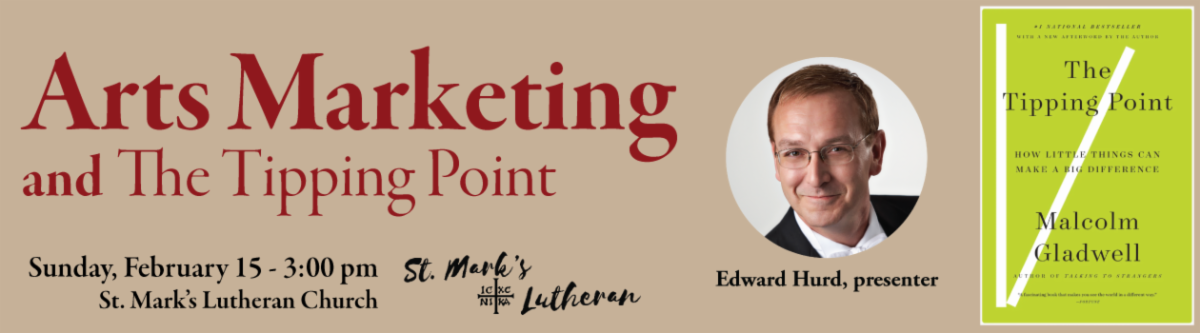
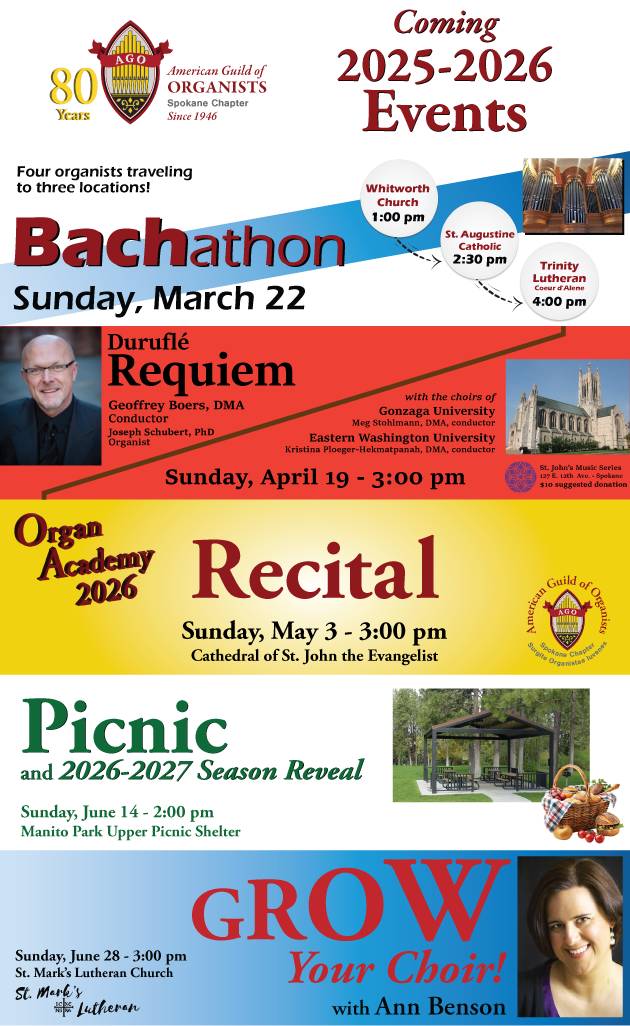
Arts Marketing

Sunday - February 15, 2026

3:00 p.m.

St. Mark's Lutheran Church


Edward Hurd discusses specific differences between arts marketing and conventional marketing. Additionally, he relates insights from Malcom Gladwell’s “The Tipping Point: How Little Things Can Make A Big Difference.”


This presentation will be fascinating and applicable to your music program recruiting and growth efforts. Come and learn what it takes to make a product or activity "tip" and become irresistible. You'll be glad you did!


You're invited!

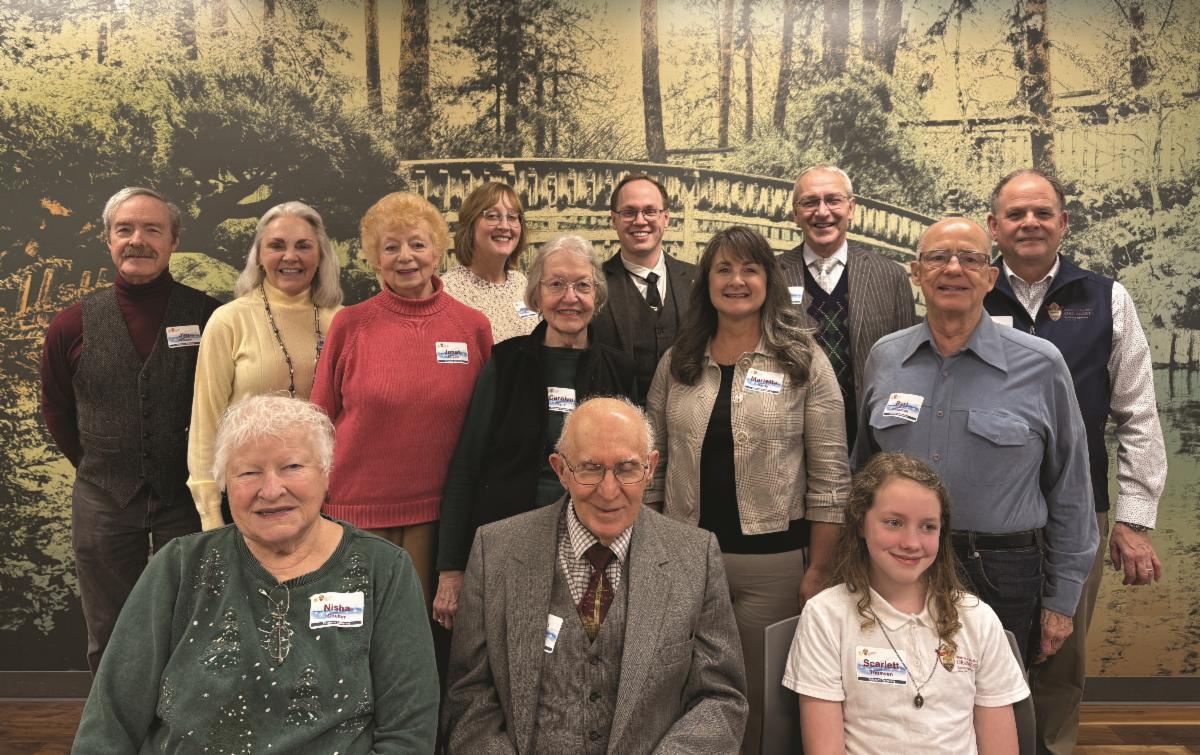
Chapter members and friends had a wonderful time of food and fellowship at the South Hill branch library. It was wonderful to hear stories from the fall and learn the latest news.


Thank you to everyone who came and brought delicious dishes to share!

Back: James Tevenan, Mary Jo Beck, Jenelle Scott, Taylor Giese, Edward Hurd, Mark Haberman

Middle: Janet Ahrend, Carolyn Payne, Marietta Hardy, Byrl Cinnamon

Front: Nisha Coulter, Floyd Czoski, Scarlett Thomsen

Photo credit: Todd Hardy

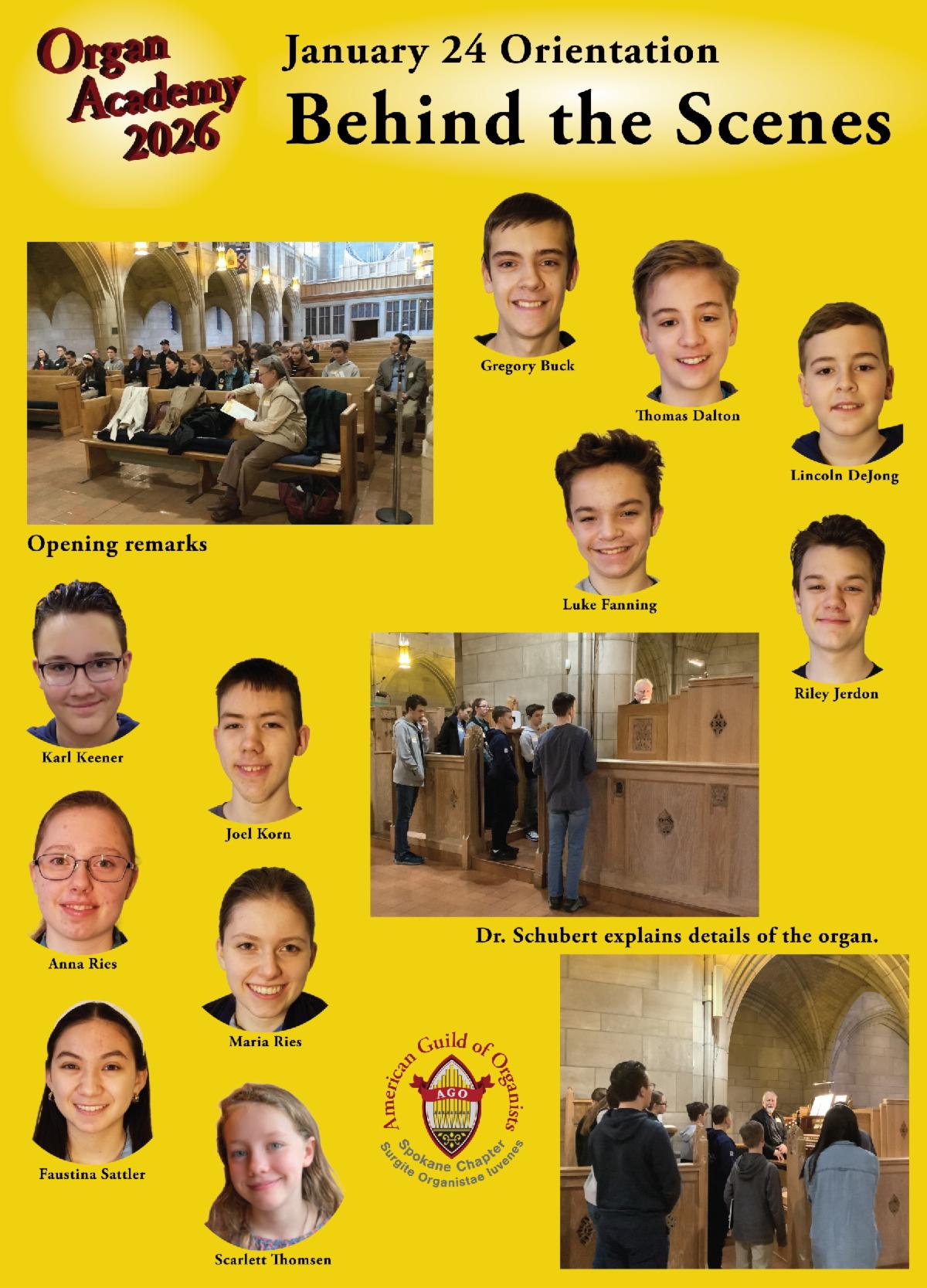
Organ Academy 2026

January 24 Orientation Meeting


Organ Academy 2026 began Saturday, January 24 with an exciting meeting of young organists and parents at Cathedral of St. John the Evangelist. Now the fun begins!


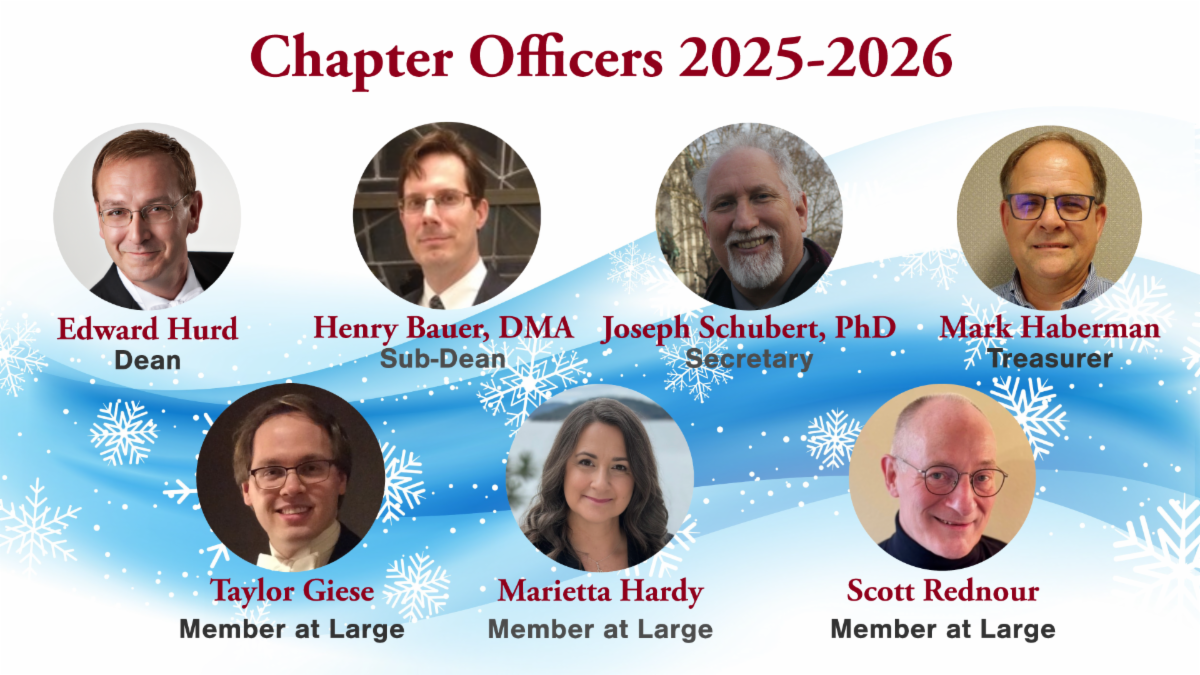
This week, our dedicated faculty begins guiding the talented group toward their May 3 recital. Private lessons and Saturday practice sessions at nine different churches will provide invaluable experience. Thank you: Dr. Henry Bauer, Helen Byrne, Marietta Hardy, Edward Hurd, and Dr. Joseph Schubert.


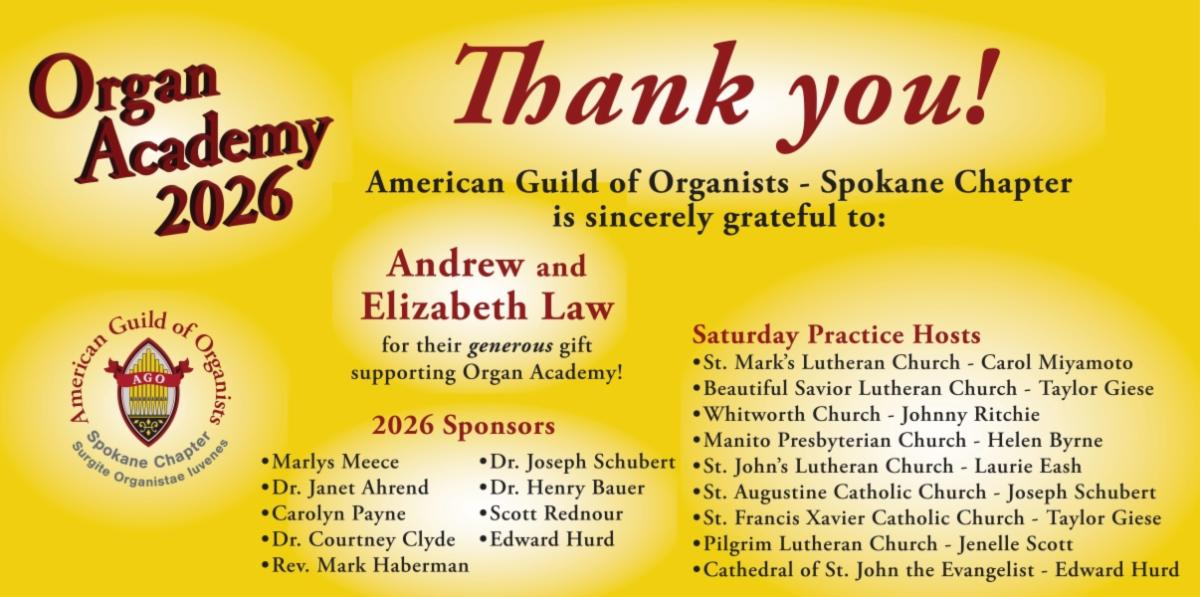
We are deeply grateful for our generous sponsors:

  • Andrew and Elizabeth Law
  • Marlys Meece
  • Dr. Janet Ahrend
  • Carolyn Payne
  • Dr. Courtney Clyde
  • Dr. Joseph Schubert
  • Dr. Henry Bauer
  • Scott Rednour
  • Edward Hurd


Not pictured below: Madeline Emmans and Joseph Gaunt, absent due to unavoidable circumstances.

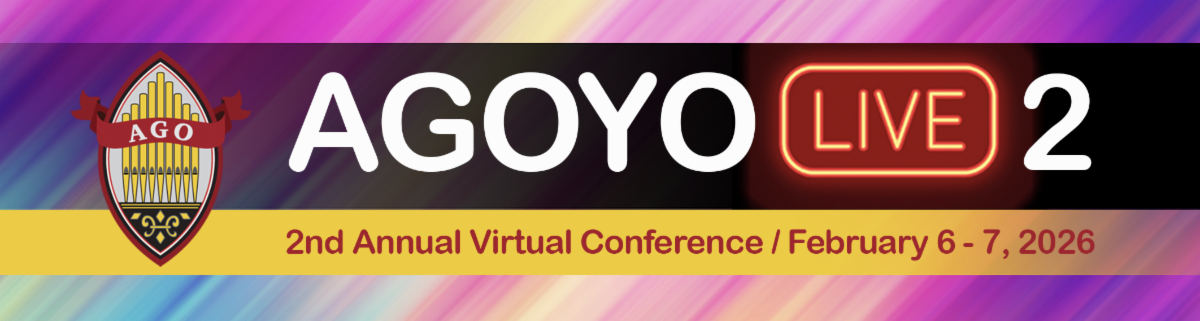
The American Guild of Organists Young Organists (AGOYO) Virtual Conference is designed to foster community, professional development, and artistic excellence among young organists. This dynamic event features a diverse range of presentations, panel discussions, and performances showcasing the organ. Young organists have the opportunity to network with colleagues and established professionals. By providing a platform for emerging talent and academic exchange, the AGOYO Virtual Conference aims to advance the field of organ studies and inspire the next generation of organists.


Please take a look at the conference schedule HERE.


You must be under 30 to register for this event. AGOYO members register for FREE.

Choir and Person-Centered Theory

By Sarah J. Graham, DMA

from American Choral Directors Association


Many people refer to choral singing as “therapy.” While most choirs are not designed for the purpose of music therapy, nor are they directed by licensed music therapists, they can resemble some aspects of therapeutic environments. This may be one reason why the choral ensemble and rehearsals can be deemed “therapeutic.” One counseling theory that mirrors the experience of successful choirs is Person-Centered Theory (PCT).


20th-century psychotherapist Carl Rogers (1902-1987) developed what is now known as PCT. PCT asserts that change or growth toward becoming a fully functioning person occurs when three things are present in the therapy relationship:


  • Unconditional positive regard
  • Authenticity
  • Empathy


Similar to therapy, one can assert that the number one predictor of success in a choral ensemble is the alliance between all involved, thinking of the conductor as the therapist and the choir members as the client. Rogers felt that he was more successful with clients when he acted naturally (authentically), rather than approaching therapy from the perspective of an expert. A parallel may be drawn between PCT and the way one approaches the choir. The elements of unconditional positive regard, authenticity, and empathy help create a positive and transformative choral experience.


Read the full article on the NW ACDA blog.

from Michelle Kardos, AGO Director of Education


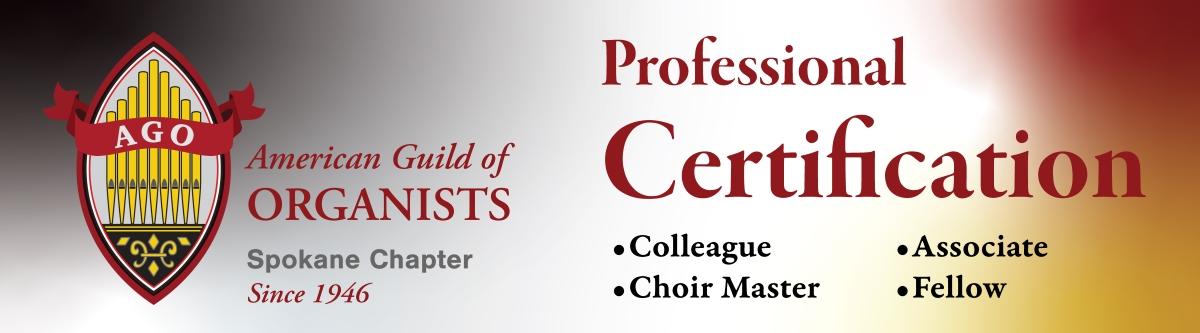
Whether you are gearing up for Colleague, ChM, AAGO, or FAGO, now is the time to prepare and a little structure goes a long way!


 Quick check-in:

  • Which exam are you preparing for?
  • Where do you feel strongest right now?
  • What kind of support will actually help? Study resources, accountability, or a study group?


Certification Details (click link):


If you haven't already, take a minute to review the certification requirements and jump into a study group that keeps you accountable.


Built-in deadlines + peer support = game changer. Let's get you across the finish line!

Facebook  LinkedIn  Web