|
Can Palliative Care (PC) help your loved one?
If your loved one has a serious illness involving the lungs, heart, kidneys or liver, a serious neurological disease, has suffered a stroke or is living with cancer, you know the problems and symptoms that come with the disease. Ongoing treatments, debilitating pain, fears and anxiety about the future, and the ways in which the illness affects your family - all of these can be as challenging as the illness itself. But do you know about the support available in Palliative Care? There are many benefits of accessing services, regardless of a long or short-term prognosis.
Here are a few real-life examples of people who have benefitted from PC:
-
Debbie D - living with multiple myeloma, palliative care gave her treatment options that relieved her pain and symptoms; Debbie says their support over these 10 years has helped her be more productive (she's still working as a hairdresser) and like her old self, putting her "in the driver's seat"
-
Aly B - at 23 years old, Aly has been living with multiple diagnoses including autoimmune disease that restricts blood flow to vital organs and tissues; a referral to palliative care has helped her with pain management, stress and the depression that comes with her limitations; they help her set goals and improved communication with all her doctors
-
Daniel K - at age 48, Dan went from being a palliative care nurse practitioner to a palliative care patient, living with frontal lobe dementia, Through the support of palliative care, he is finding ways to work with the challenges and symptoms to live his best life with a realistic view of what 'quality of life' means for him
-
Rae Anne - had stage 4 head and neck cancer, and, after chemo and radiation were completed, palliative care support helped her coordinate care with doctors and improve communication between them; they helped her manage new meds and their side effects, and wean off pain meds at the right time; her family also received emotional support as caregivers which made a very big difference; all of this helped get Rae Anne back to her life before the diagnosis
Two recent studies from JAMA (Journal of the American Medical Association) tell us that Palliative Care consults don't need to be complicated, even as they make a difference to patients and more people are taking advantage of the services:
- in one study, about 300 (predominantly male) veterans with chronic lung disease or heart failure each received 6 phone calls from both a nurse and social worker focusing on symptoms, psychosocial needs and healthcare navigation. The primary outcome showed 'quality of life' improvement with positive effects lasting months after the calls ended and all this with little training on the part of professionals making simple phone calls
- in the other study, researchers made Palliative Care consults an automated order for more than 15,000 people (across 11 hospitals in 8 states) living with COPD, kidney failure or dementia. Doctors had to "opt out" of this order rather than take the extra step of "opting in." This intervention increased the number of patients receiving Palliative Care consults from 17% to 44%
What kind of help can you receive from a Palliative Care team?
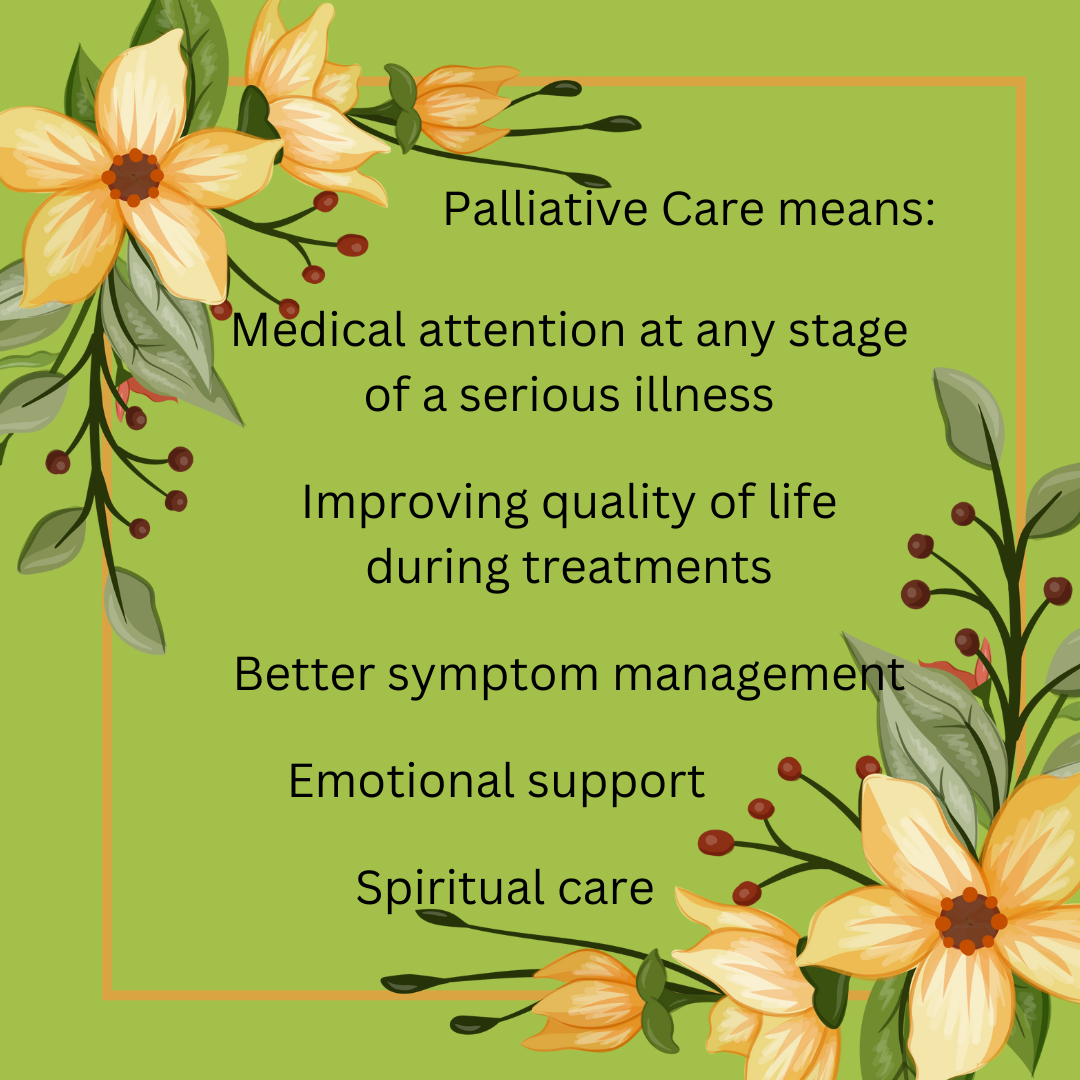
As the study above described, help is offered in the form of medical visits (zoom and in-person) for problematic symptoms (like nausea, constipation, insomnia and pain) and medications, nursing help to navigate the healthcare system and a social worker for psychosocial concerns such as: adapting to the illness, anxiety, loneliness and distress that come with illness and family relationships. Palliative Care teams also include spiritual support which can be simple conversations about who or what you turn to when life is challenging. A life-limiting illness deserves extra help. Anyone receiving Palliative Care services may continue receiving medical treatments for their disease! These professionals are excellent communicators and know how to help you coordinate the care your loved one is receiving between any/all the doctors involved; they can also help you make decisions along the way.
If you are a Caregiver for a loved one with a serious illness, Palliative Care professionals help you deal with the stress of lost work hours or lost jobs. In fact, the earlier a Caregiver is introduced to Palliative Care support, the more they are able to cope with the caregiving experience.
How do you know it's time to ask for a Palliative Care consult?
If there is a cancer diagnosis, this consult can add months to someone's life when it's initiated in those early weeks. This benefit is often overlooked and underused, but a real gift! Medicare covers most Palliative Care services; in some cases there is a copay. Outside of a cancer diagnosis, advanced, life-limiting diseases, like those described above, bring the same issues, so ask yourself: how is your loved one feeling and how are they managing daily life with this disease?
When you notice an increase in symptoms, like more shortness of breath in daily activities, more changes in heart function, chronic kidney disease that is headed to dialysis, neurological diseases like ALS or a stroke, anything that leads to more hospital visits, these can all invite the conversation for a Palliative Care consult.
How do you ask for a Palliative Care Consultation?
Three instances come to mind. First, if your loved one receives a terminal illness diagnosis, it's usually in a specialist's office. That's a good time to ask about a Palliative Care referral. Second, when you notice changes in your loved one as described above (increasing pain, worsening shortness of breath, greater difficulties with showering, dressing), you can ask their Primary Care Doctor for a referral. This is a simple task and becoming more common. Third, during a hospitalization, and especially if a serious diagnosis was just given to your loved one, you can ask for a referral. You'll want to speak about your loved one's greatest needs, but find out how a Palliative Care Team can help with the stressful load you are carrying.
The only agenda you'll hear from Palliative Care professionals are those with goals and topics that match your loved one's desire for treatment with their personal preferences. The PC team will get to know the person behind the illness and understand who they are, what they fear and what they hope for. Then, coupled with a shared understanding of the prognosis, they can provide guidance in decision making so that treatments match the individual's immediate objectives while considering anticipated future scenarios.
In our country, over 50 million people need Palliative Care support, but only 14% of those actually receive it. Please share these benefits with someone you love and make a difference in their illness!
|