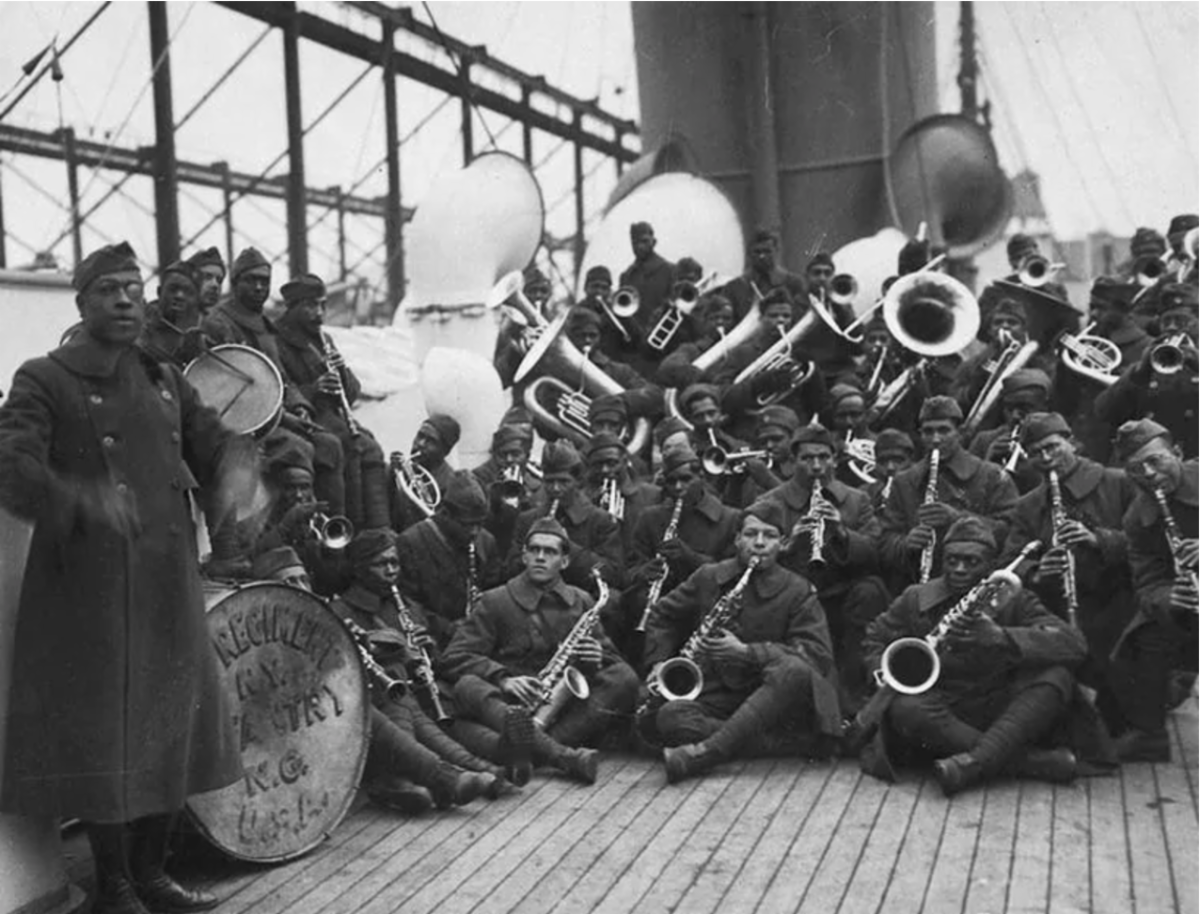
The American Society of Le Souvenir Français Inc.
Monthly Bulletin - Vol. IV. No 2 - February 2024
|
|
Tribute to the Harlem Hell Fighters - 369th Regiment
Today's 369th Sustainment Brigade, NYNG
|
|
Cover photo:
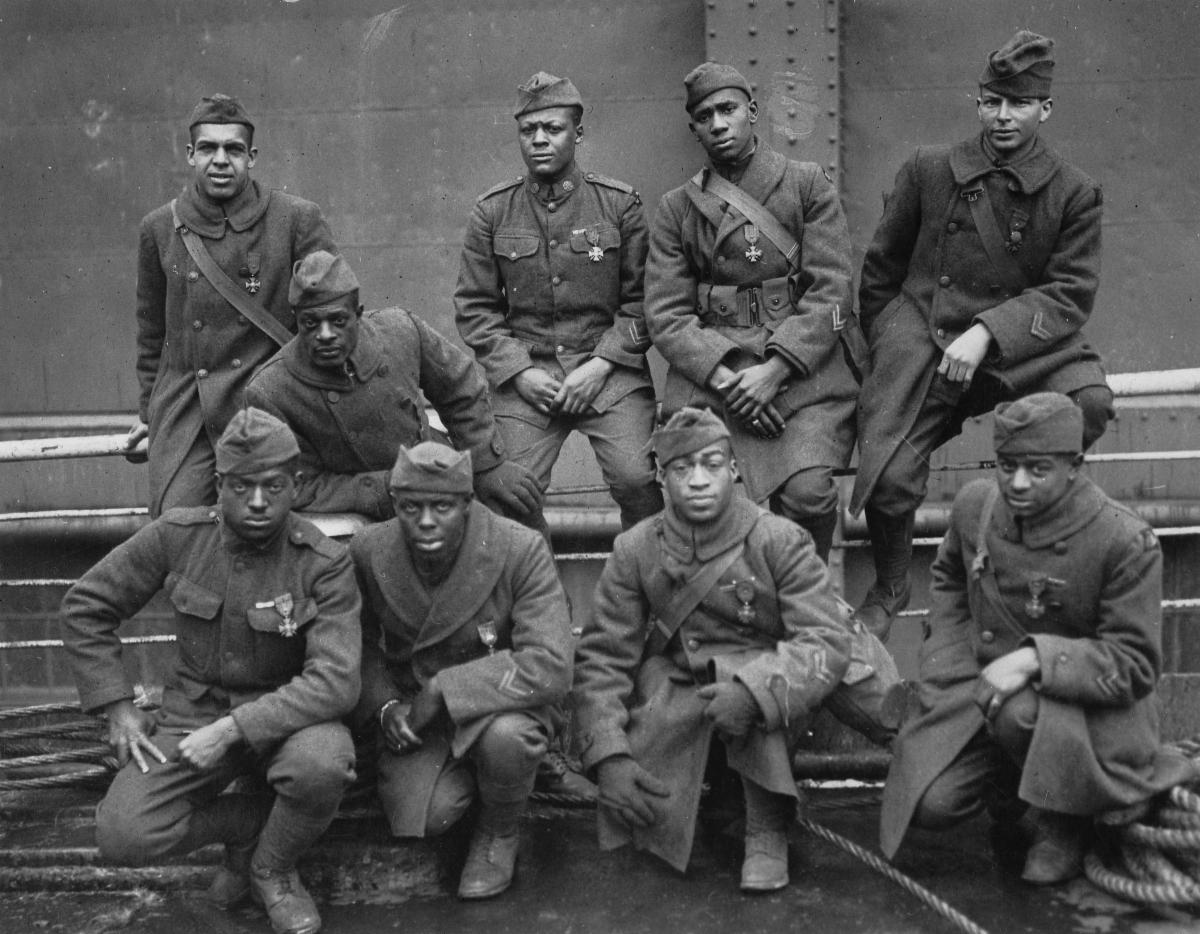
Soldiers of the 369th (15th N.Y.), awarded the Croix de Guerre for gallantry in action, 1919.
Left to right. Front row: Pvt. Ed Williams, Herbert Taylor, Pvt. Leon Fraitor, Pvt. Ralph Hawkins. Back Row: Sgt. H. D. Prinas, Sgt. Dan Storms, Pvt. Joe Williams, Pvt. Alfred Hanley, Cpl. T. W. Taylor
By an unknown photographer - ARC Identifier: 26431282US National Archives website, Public Domain,
The photo shows these brave soldiers waiting to disembark in New York on February 12, 1919. This particular photo is among the famous ones of the 369th Infantry. Unfortunately, only a few of these photos have captions that provide information about the soldiers' names or any details about them.
|
|
EDITORIAL
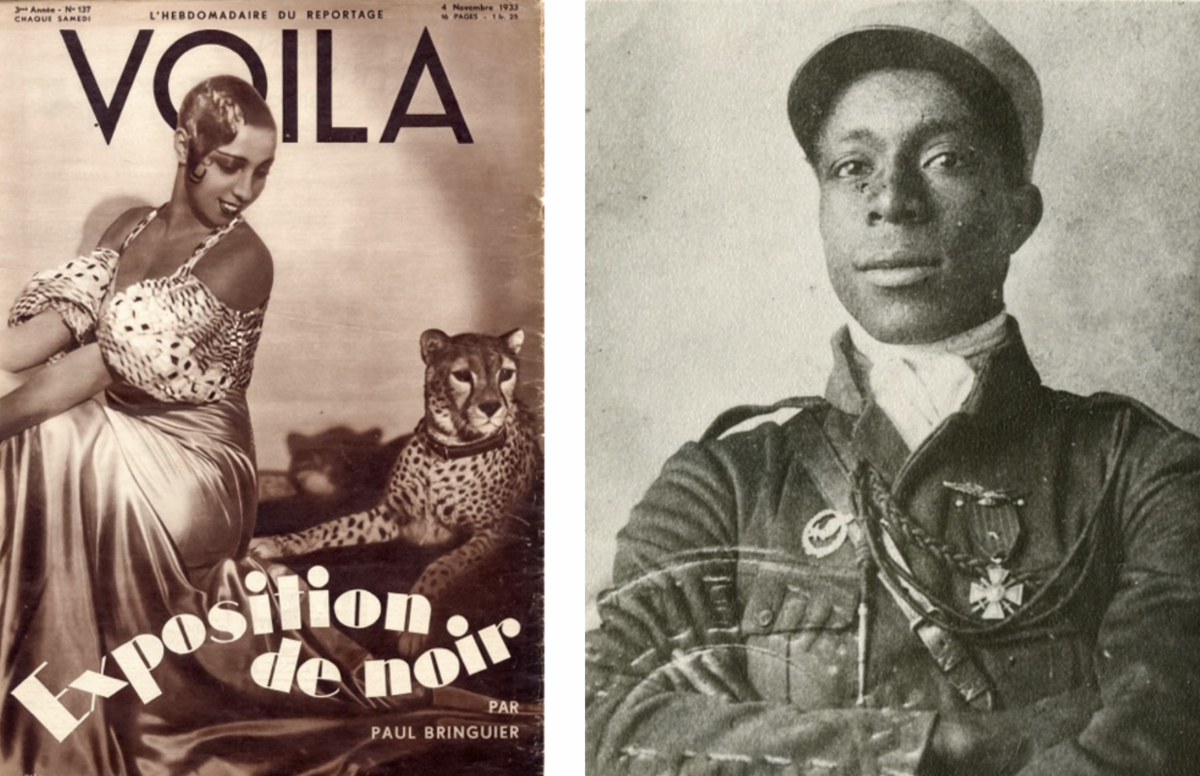
This month is "Black History Month"! After paying homage to Eugene Bullard in 2021 and Josephine Baker in 2022, we are going to narrate the incredible story and achievements of this legendary US Army military unit, the most decorated of WWI, consisting of African-American soldiers from Harlem who fought and died under French uniform for the cause of freedom and democracy.
Theirs is a story of unbelievable bravery in combat, unflinching patriotism in spite of the prejudices prevalent at the time, and an often overlooked contribution to the history of music: the introduction of jazz in France, and ultimately Europe and the world - - no less.
The French Army and the French people at large welcomed them with open arms, and they returned to America proudly wearing their Croix de Guerre on their chests - - 171 decorations plus the coveted "Fourragère" worn by each officer and soldier of the Regiment!
For full disclosure, this Bulletin borrows in great part from remarks I pronounced at the 369th Sustainment Brigade, New York National Guard's annual gala on October 21, 2023, when I had the distinct honor to be inducted as an Honorary Harlem Hell Fighter, as well as a speech at the Association of French Reserve Officers in the United States on December 18, 2023. Both events were the occasion to remind the audiences that our elders' shared sacrifices are still very much an inspiration for our current generation, and that the two sister republics' shared values must be defended in today's increasingly dangerous world.
In keeping with our series honoring members of the Lafayette Flying Corps, we will honor this month James Ralph Doolittle, who also fought in WW1 under French uniform and whose ashes rest at the Lafayette Escadrille Memorial in Marnes-la-Coquette just outside Paris.
As announced upon several occasions before, we will continue to alert you on several upcoming events that are part of the Lafayette Bicentennial. We will include in this Bulletin several announcements, as there are many events which will be held in several States. It is also the 75th anniversary of the "Train de la Reconnaissance Française", also known as the "Merci Train", and we will relay news of celebrations in Nevada, Utah,Texas South Carolina and Florida.
We are honored to work hand-in-hand with many like-minded patriotic associations. It is important that we collaborate, or at least give a proper echo, to so many grass-roots initiatives around America, each of which keep alive and give real meaning to the immutable bonds of alliance and friendship between France and the United States. To all the volunteers who give their time and money to this noble cause, we extend our warm greetings and gratitude.
We thank you for your numerous comments and suggestions. We invite you to share this Bulletin with friends, associates, and most importantly, the education community: nothing is more important than passing the torch to younger generations!
On behalf of the Board of Directors.
Thierry Chaunu, President,
American Society of Le Souvenir Français, Inc.
|
|
Historical Context:
a cataclysmic conflict
|
|
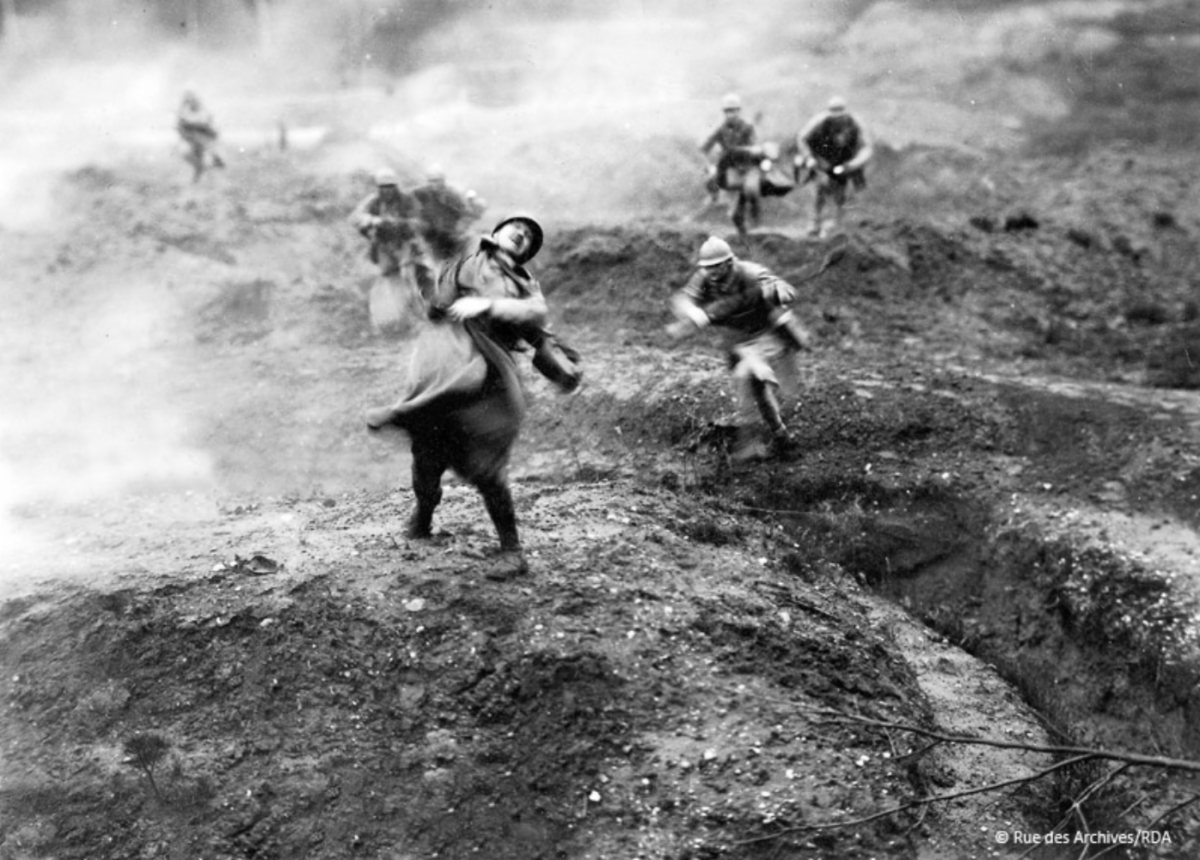
Above: Still photograph from the film by Léon Poirier, "Verdun, visions d’Histoire" 1928: French soldier shot on the battlefield. The battle of Verdun is depicted in the film by recreating the battle on its actual location. Newsreel footage and dramatic scenes are used to render the reality of the battlefield. The majority of the individuals in the film are real French and German World War I veterans.
|
|
World War One: A cataclysmic conflict
The situation was dire in 1917. After 3 years of ceaseless combat, heroically resisting the Germans onslaught, buried in trenches stretching hundreds of miles, and barely surviving the carnage at Verdun (350,000 casualties on each side, French and German, in just 10 months!) and the dreadful battles at the Somme, France and Britain were clinging to the hope that America would eventually come to the rescue...
|
|
A long, long, long hesitation... |
|
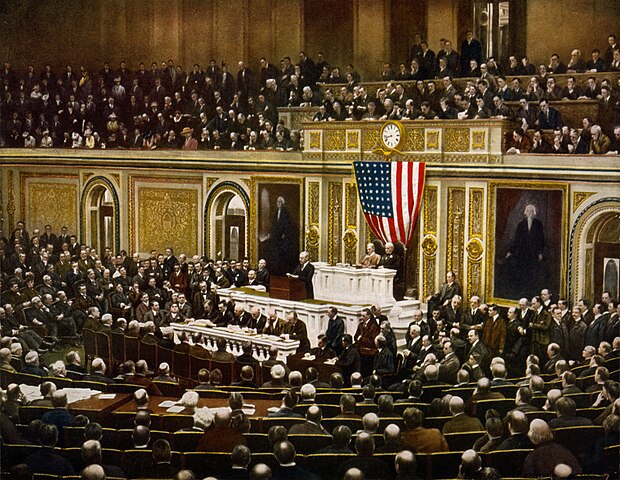
Photo: President Woodrow Wilson asking Congress to declare war on Germany on April 2, 1917
|
|
A long hesitation
For all these years, from 1914 until 1917, the United States adhered to its policy of neutrality.
• As President Woodrow Wilson famously declared: "We must remain impartial in thought as well as in action"
• Even the sinking of the USS Lusitania in May 1915 by a German U-Boat submarine did not trigger the declaration of war... (Secretary of War William Jennings issued a note of protest).
... However, US public opinion was tipping more and more towards the Allies:
• The impact that the US volunteers of the Escadrille Lafayette, and American Field Service ambulance drivers had on US public opinion was significant. The press and the general public were admiring their courage and "panache".
• The tireless efforts of French ambassador Jean-Jules Jusserand (Pulitzer Prize 1916) in Washington and around the nation were starting to appeal to American conscience.
• The "cup was full" when German Foreign Minister Zimmermann's secret telegram of January 1917 was intercepted, in which he proposed a German alliance with Mexico, and when German U-boats resumed torpedoing US freighters in February-March 1917.
• Finally, war was declared on April 6, 1917 - - even though Wilson had just been re-elected under the slogan: "He Kept Us Out of War"...
Upon the Declaration of War, the American army was totally unprepared.
• In April 1917, the U.S. Army had only 127,151 soldiers, nicknamed "Doughboys", and the National Guard 181,620 soldiers - - to be compared with 4 million "Tommies", 8.3 million "Poilus", 11 million "Boches", 7.8 million Austro-Hungarians, 2.9 million Turks...
• Since the American Civil War, the U.S. Army had fought quasi exclusively against the Native American Indians, Cubans, Filipinos and Mexicans...but it was not equipped with artillery, tanks or planes, nor trained to fight effectively in this radically new era of warfare, which saw the first use of poison gas, flame throwers, and many other mass weapons of destruction.
However, contemporary observers were stunned by the swell of patriotism. Conscription was immediate and massive, and the mobilization of the entire country's industrial might was swift.
|
|
Illustrations:
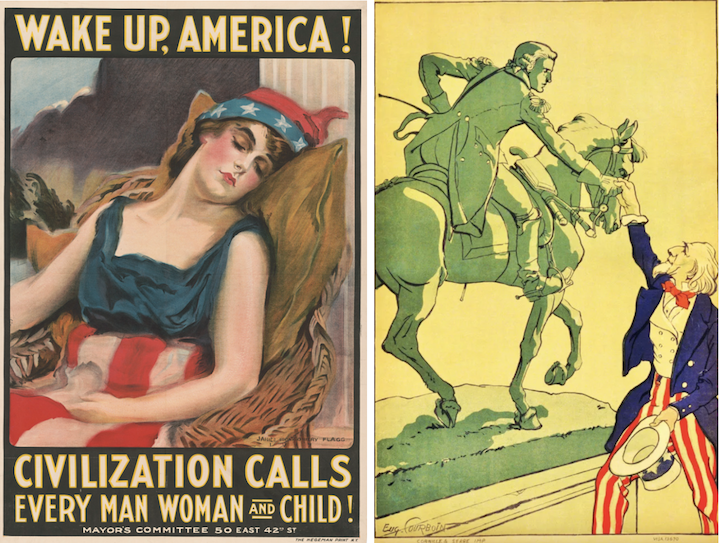
Top left: "Wake up America! Civilization calls every man, woman and child!" Lithograph by James Montgomery Flagg (1877-1960), who created some of the war's most indelible images, sounded the alarm for all citizens in this poster which was featured in "Wake Up, America" Day in New York City on April 19th, shortly after the Declaration of War. Actress Mary Arthur was Flagg's model for Columbia who is a personification of America and Liberty.
Top right: Uncle Sam shaking hands with the marquis de Lafayette (1757-1834), by Eugène Corbin, Paris : Cornille & Serre, [1917], French World War I posters Collection, Library of Congress, Public Domain, https://lccn.loc.gov/99613683
|
|
A nation mobilizes
The entry of the United States into the war astonished the world: Congress allocated the astronomical sum of $3 billion ($80 billion today) to build up an army of a million men!..
• Hundreds of thousands of men had to be recruited, equipped and trained, and conscription was used for the first time. Despite the eagerness of numerous African Americans to participate in the war effort, they frequently encountered rejection when attempting to join the military.
•The United States Congress took action by enacting the Selective Service Act of June 1917, a conscription law, which stipulated:
"every American citizen between the ages of twenty-one and thirty shall register for conscription, regardless of skin color"...
|
|
Photos;
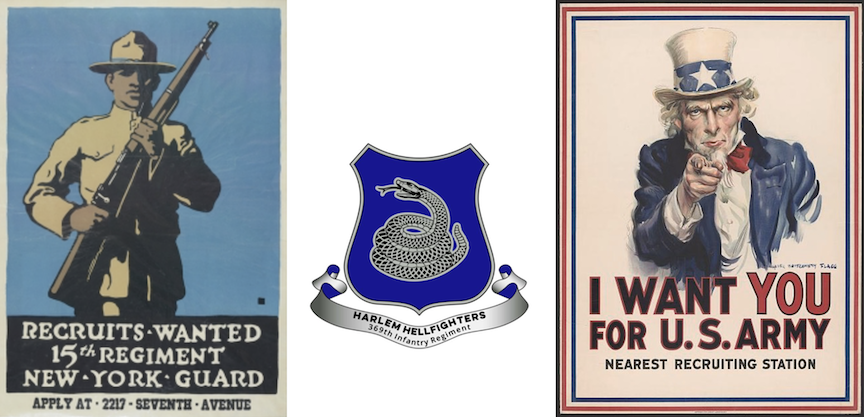
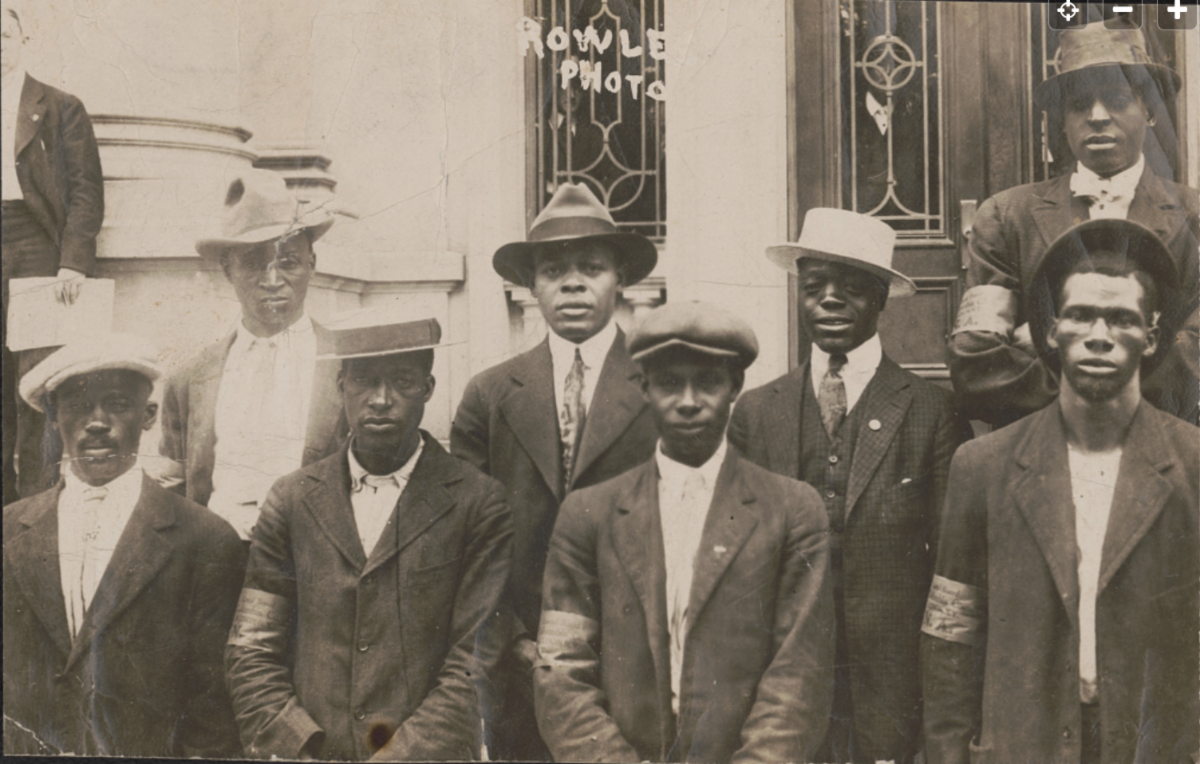
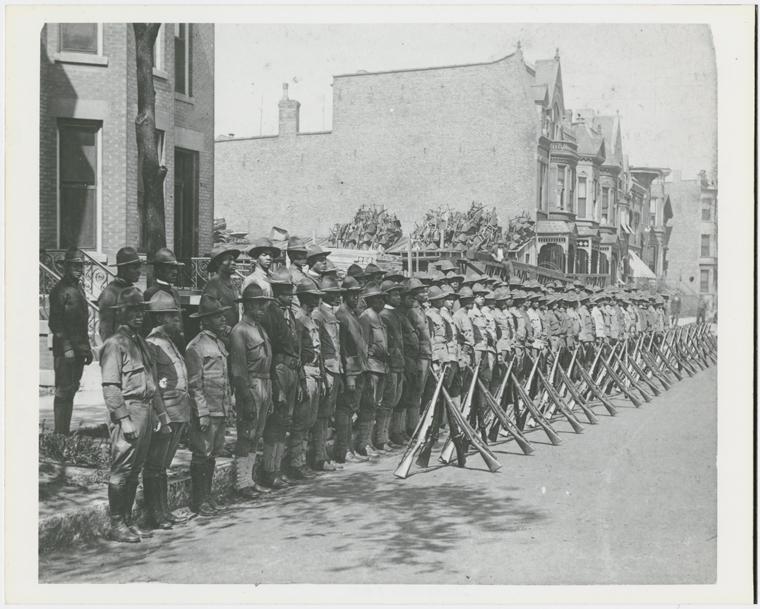
Top Left: Recruits Wanted, 15th Regiment New York Guard, Artist: Unknown, Printer: Unknown, Publisher: New York National Guard, New York State Museum Collection, H-1975.185.4
Top Middle: 369th Infantry Regiment Snake Patch
Bottom: Unidentified African American recruits for the 15th New York National Guard Regiment heading to Camp Upton, New York, Library of Congress, Public Domain
|
|
However, racism and segregation collide with conscription:
• For racial prejudice, 50 years after the end of the Civil War, was still widespread. It pains me to report the following quote (and I long hesitated doing so) because of its inherent ugliness, but I believe it is unfortunately necessary for the reader to grasp the profound injustice and bias which were present among a fairly significant portion of the citizenry at the time.
An American diplomat posted in Paris, Warrington Dawson, wrote a book "The Negro in the United States", published in 1912, to explain to a European public his views on the question. To quote just one passage: "For it clearly appears that, made up of inconstancy in the workshop, free drunkenness, frequent laziness, spontaneous anger, [...], blind and furious envy, the Negro ideal closely resembles that of our most naive but influential energetics who advise the crowds of industrial cities"...
• These prejudices and racist stereotypes against them did not deter, in fact, African Americans to mobilize. They saw joining the armed forces as a chance to earn respect from white Americans and considered it a blessing.
William Edward Burghardt Du Bois, the famous Pan-Africanist civil rights activist and author, argued that "we should forget our special grievances and close our ranks shoulder to shoulder with our white fellow citizens and allied nations that are fighting for democracy."
• To fully appreciate the scope of the African Americans' exceptional achievements and commitment to the Nation's war efforts, the reading of the book "History Of The American Negro In The Great World War, His Splendid Record In The Battle Zones Of Europe, Profusely And Beautifully Illustrated" by W. Allison Sweeney, Contributing Editor Of The Chicago Defender, and published in 1919, shatters in pieces the prejudices so prevalent 50 years after the Civil War.
|
|
Enter the 15th Regiment, New York National Guard |
|
Barred from the August 30, 1917 Farewell parade... |
|
Photos:
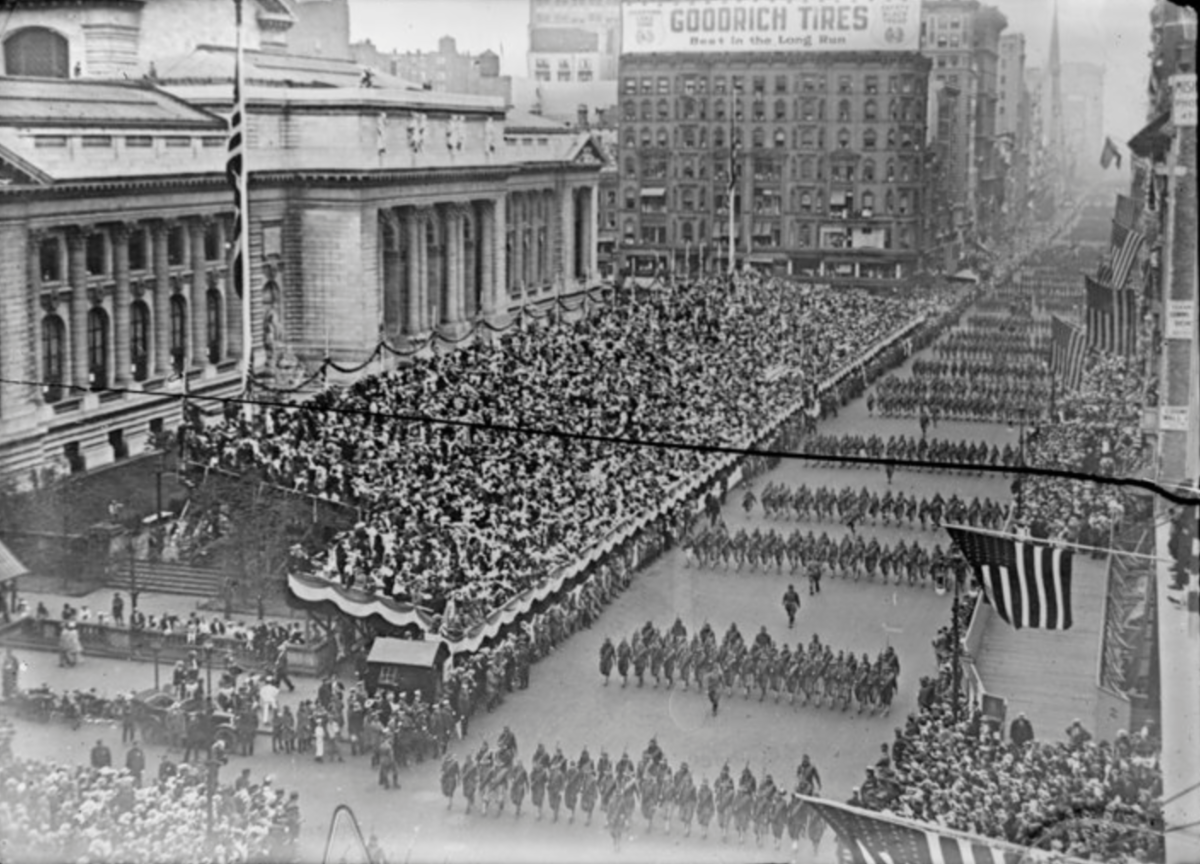
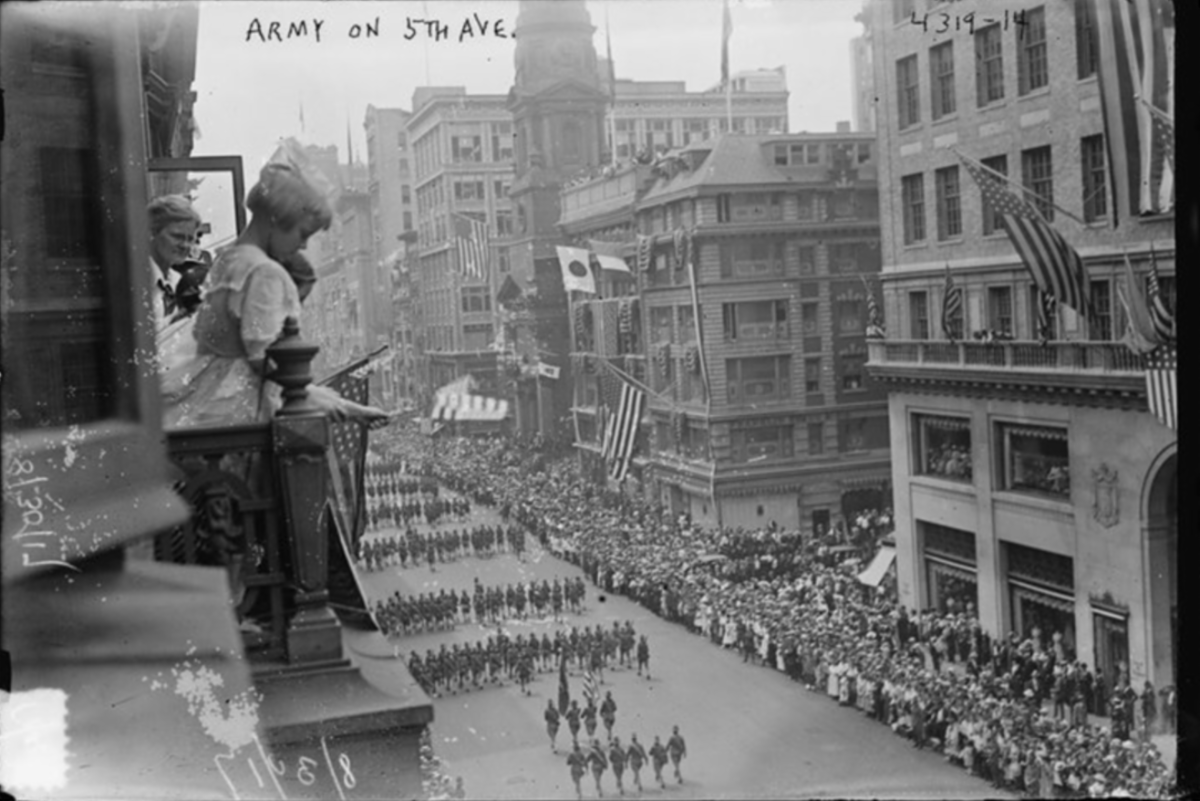
Top: photo of the Aug.30, 1917 parade of the "Rainbow" Division. Thousands of New Yorkers gathered on Fifth Avenue for five hours, as marching men filled the street with their steady tramp and the crowd cheered them on with enthusiasm, bidding them farewell. “A thrilling, stirring sight!” is how a New York Times reporter described the event.
Bottom: Library of Congress Prints and Photographs Division Washington, D.C. 20540 USA http://hdl.loc.gov/loc.pnp/pp.print, Public Domain
|
|
• The 369th Infantry Regiment was originally called the 15th New York. It was formed in 1913 in the New York Army National Guard. As per military segregation policies, the unit was entirely composed of colored volunteers from Harlem, mostly African Americans and also several Porto Ricans. Officers were white.
• Soldiers of the Regiment called themselves Harlem’s Rattlers, after the snake on the Revolutionary War-era Gadsden flag.
• President Woodrow Wilson mobilized the National Guard on July 12, 1017, consisting of 122,000 members. However, it would take some time to prepare these troops for combat. The New York and Pennsylvania National Guard had large units, and the New York soldiers had recently served on the Mexican Border in 1916. This meant that these units could be ready for deployment relatively quickly.
• The War Department was concerned about showing favoritism if one state division went to France first, which could upset other parts of the country. To address this, Major Douglas MacArthur, who would later become a five-star general during World War II and the Korean War, came up with a solution. He proposed combining National Guard units from different states into one division. This way, the division could be deployed to France without favoring any specific state or region. When describing the division to his superiors and later to newspaper reporters, MacArthur, who was also acting as the War Department's press person, compared it to a rainbow stretching across the United States. As a result, the division became known as "The Rainbow Division," even though it didn't have a specific number yet. MacArthur was soon promoted to colonel and became the division's first chief of staff.
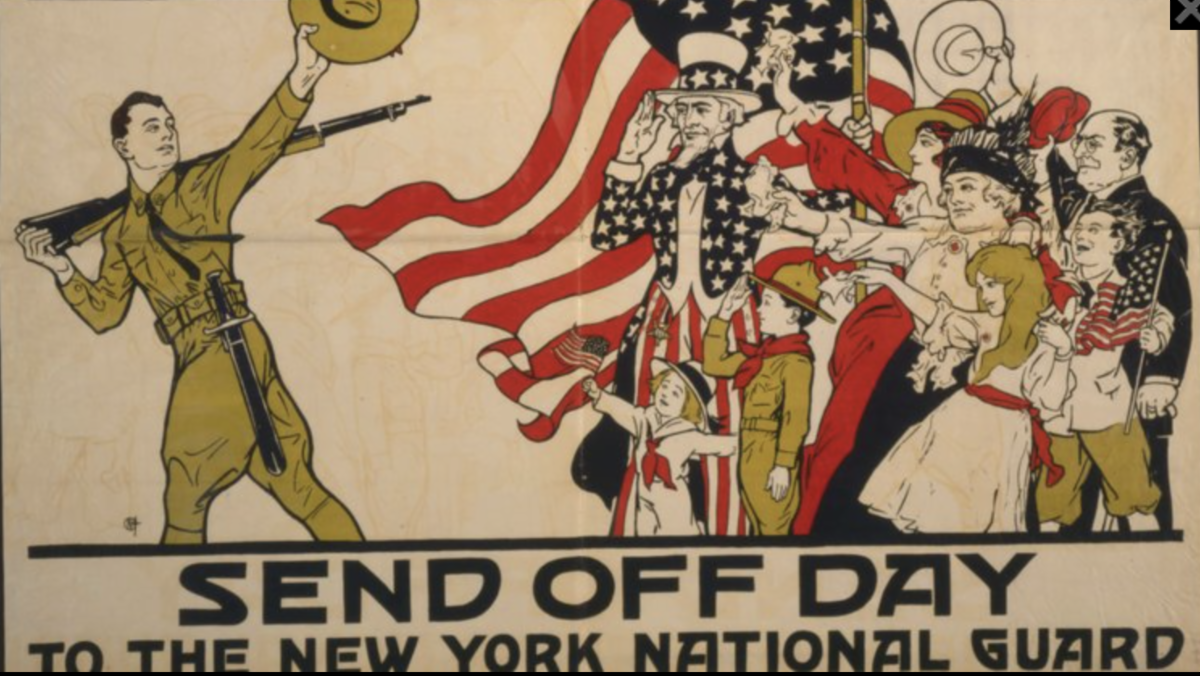
• The famous "Farewell parade" in New York with the "Rainbow Division" took place on Fifth Avenue on August 30, 1917 and two million newyorkers lined the sidewalks.
• However, the all-colored 15th Regiment was denied permission to join...
The reason given was that... "black is not a color in the rainbow"...
|
|
Difficult training in the South... |
|
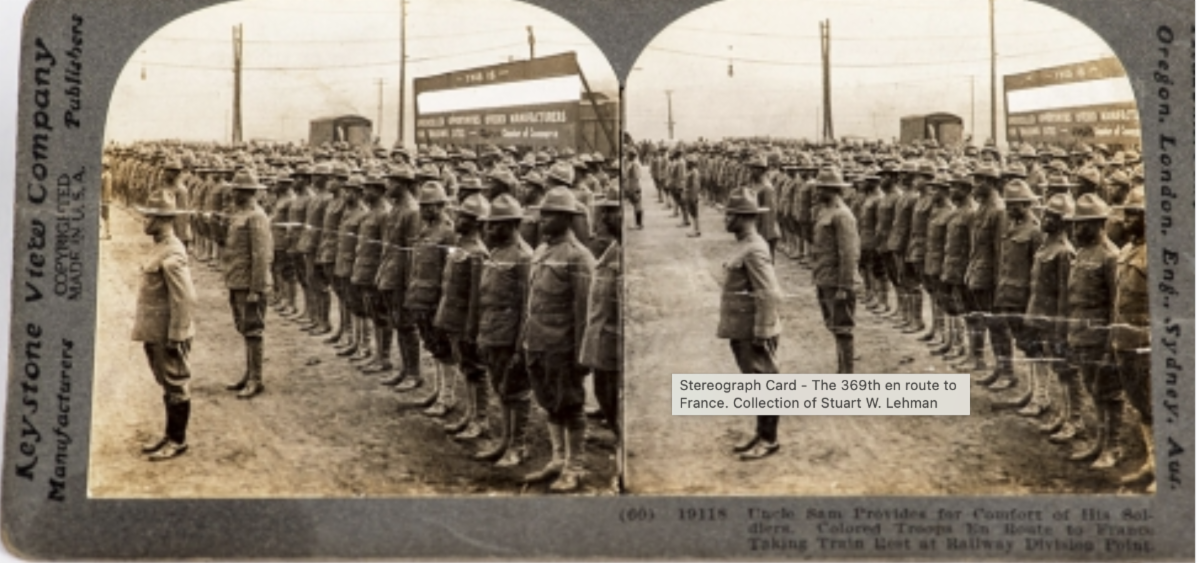
• About two thousand soldiers began training at Camp Whitman (in New York). In October 1917, the unit was ordered to Camp Wadsworth (Spartenburg, South Carolina) for further training. Conditions there were much different, with colored service members facing outright hostility.
• Some white officers even refused to teach many essential combat skills to camp enlistees. Even in the limited focus on infantry, training was minimal, and often the recruits efforts were belittled. It was expected that colored troops would be employed as "stevedores", i.e. loading and unloading cargo ships far from the front lines. The prevalent view at the army's headquarters was that colored troops didn't have the courage to fight.
|
|
Arrival in Brest, Dec. 26, 1917, after a dangerous crossing |
|
Photos:
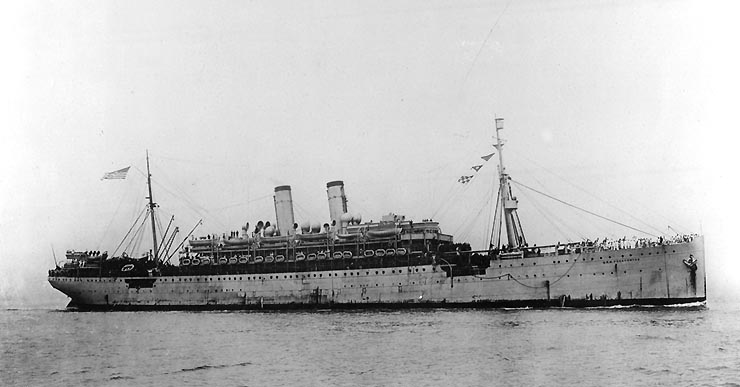
Top: USS Pocahontas (SP-3044), formerly Prinzess Irene from the Norddeutscher Lloyd, underway in 1919, while transporting U.S. service personnel home from Europe. Photo by US Naval Historical Center - U.S. Naval Historical Center Photograph # NH 68722-A, Public Domain, https://commons.wikimedia.org/w/index.php?curid=6727483
|
|
• In November 1917, the regiment embarked on the USS Pocahontas, and headed towards France. However, due to engine issues, the ship had to return to shore shortly after. Following another unsuccessful attempt to depart, the ship finally set sail on December 13, 1917. Despite encountering a collision with another vessel and lacking a destroyer escort to safeguard against German submarines, the regiment successfully arrived in France.
• A captain of the Regiment, Hamilton Fish (who had served in the New York State legislature) complained to Assistant Secretary of the Navy, Franklin D. Roosevelt regarding the absence of an escort ship). As we will see further down in this Bulletin, Captain Fish played a significant role in the after war period.
• Right after disembarking in Brest, the regiment's band performed for the French public who came en masse to applaud the Americans. As we will see further in this Bulletin, this also changed the course of music history in Europe!
|
|
Organization of the American Expeditionary Force (AEF)
• President Wilson appointed Major General John J. Pershing in May 1917. Pershing insisted that American soldiers be well trained before going to Europe. As a result, few troops arrived before January 1918. General Pershing fought to keep the American forces as a separate fighting force (indeed, the USA was not part of the Allies, but an "Associated Power").
The Colored Regiments consisted of:
• The 92nd Infantry Division, officially created in October 1917. It was composed in the same way as the other American divisions: 4 infantry regiments, 3 artillery regiments, 1 mortar battery, 3 machine-gun battalions, 1 signal battalion, 1 engineer regiment, 1 train battalion and several maintenance units. This division, which retained the nickname "The Buffalo Division", a nickname given by the Indians to black recruits because they had the same skin color as the buffalo, landed in France in June 1918.
• The 93rd Infantry Division was made up of 4 infantry regiments, two of which came from the National Guard. These were the 15th New York Regiment, commanded by Colonel Hayward, whose recruits were blacks from Harlem (and also Puerto Ricans), renamed the 369th Infantry Regiment in March 1918 by the French. And the 8th Illinois Infantry Regiment, made up of volunteers from Chicago, which the French renamed the 370th RI. The French then formed the 372nd RI from various National Guard battalions from Ohio, Massachusetts, Connecticut and Maryland, and the 371st RI from colored soldiers from South Carolina and Florida.
In the course of World War I, a significant number of 380,000 African Americans valiantly served in the Army. Out of this total, around 200,000 individuals were deployed to Europe. Although a majority of these soldiers were assigned to labor and stevedore battalions, their contributions were indispensable as they undertook crucial tasks such as constructing roads, bridges, and trenches to support the frontline battles. Approximately 42,000 African American soldiers actively engaged in combat, demonstrating their bravery and dedication.
• General Pershing avoided sending the 369th Infantry and other Black units to the front lines, believing they couldn't be effective combat soldiers. Instead, they were deployed in support and logistics roles. However, the French were desparately in need of fresh troops..
• In consequence, General Pershing made several compromises. One was to arrange for the "black" American 369 R.I. to join the French 15th Division, made up of black French troops from Senegal. Other "white" American regiments, four in all, joined British units. The rest of the American army stayed together.
• Still, the Americans cautioned the French not to treat the 369th Infantry and other African Americans like white troops, but the French disregarded this and fully integrated them into their fighting force.
By June 1917, only 14,000 American troops had arrived in France, and the American Expeditionary Force played only a minor role until October 23, 1917, when the 1st Division fired the first American shell of the war into the German lines. However, by May 1918, over a million American soldiers were stationed in France (although only half of them had reached the front lines by then) and started making a significant impact in the course of the war.
|
|
Equipment and training by the French Army |
|
Photos:
Top:
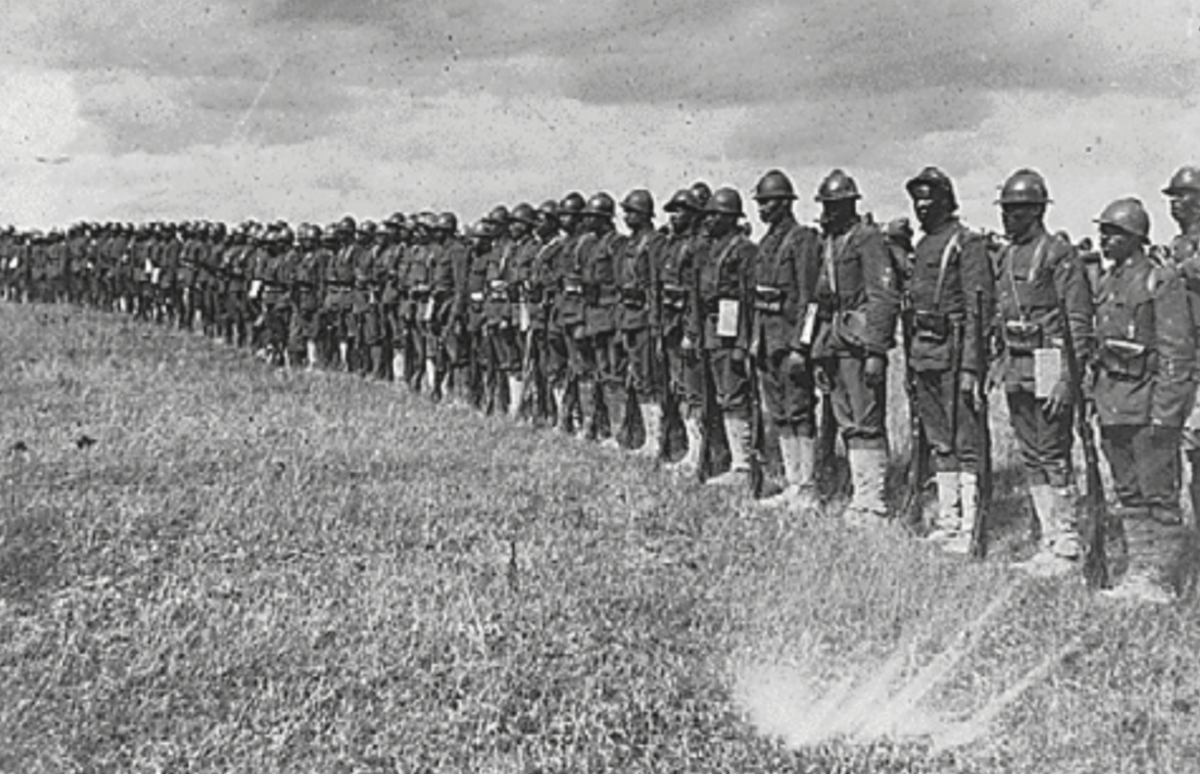
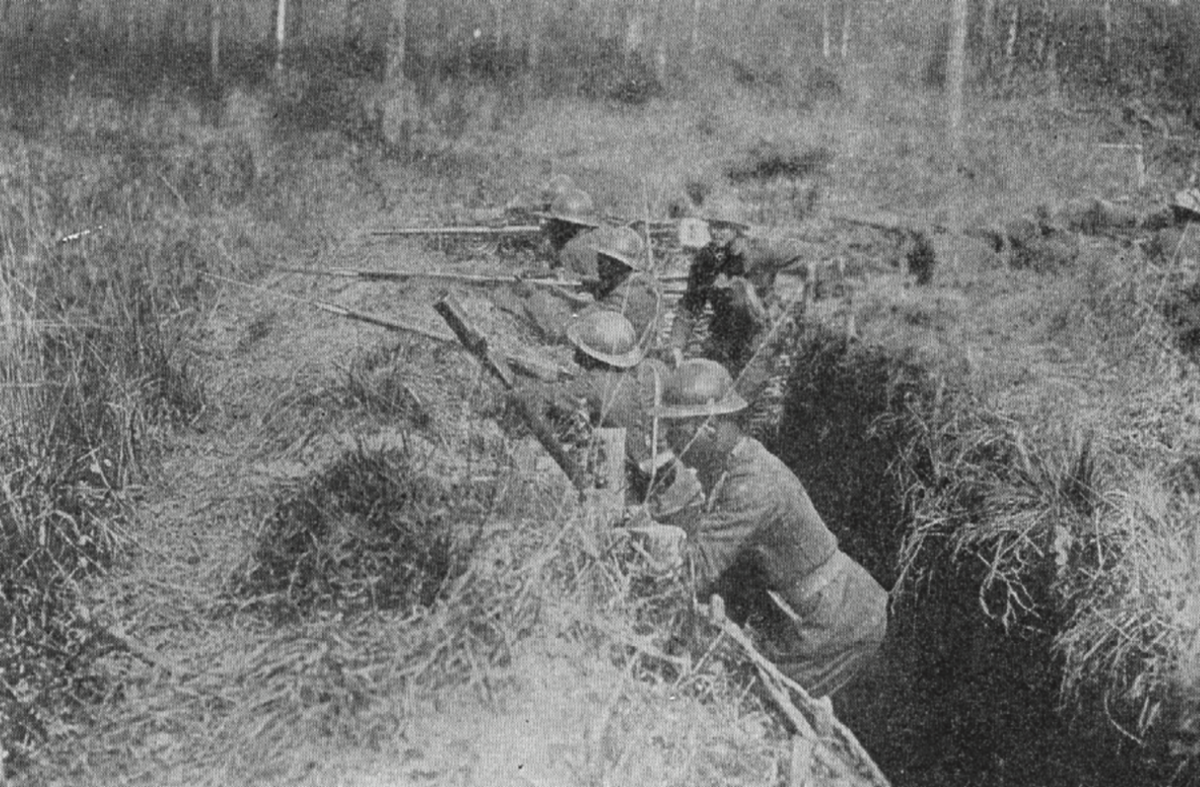
In the trenches and in French uniforms: Members of the 369th Infantry stand in formation in France. They wear the French helmets rather than the broad British helmets the rest of the American Expeditionary Force wore. (National Archives, 165-WW-127A-4). Photographer: International Film Service.
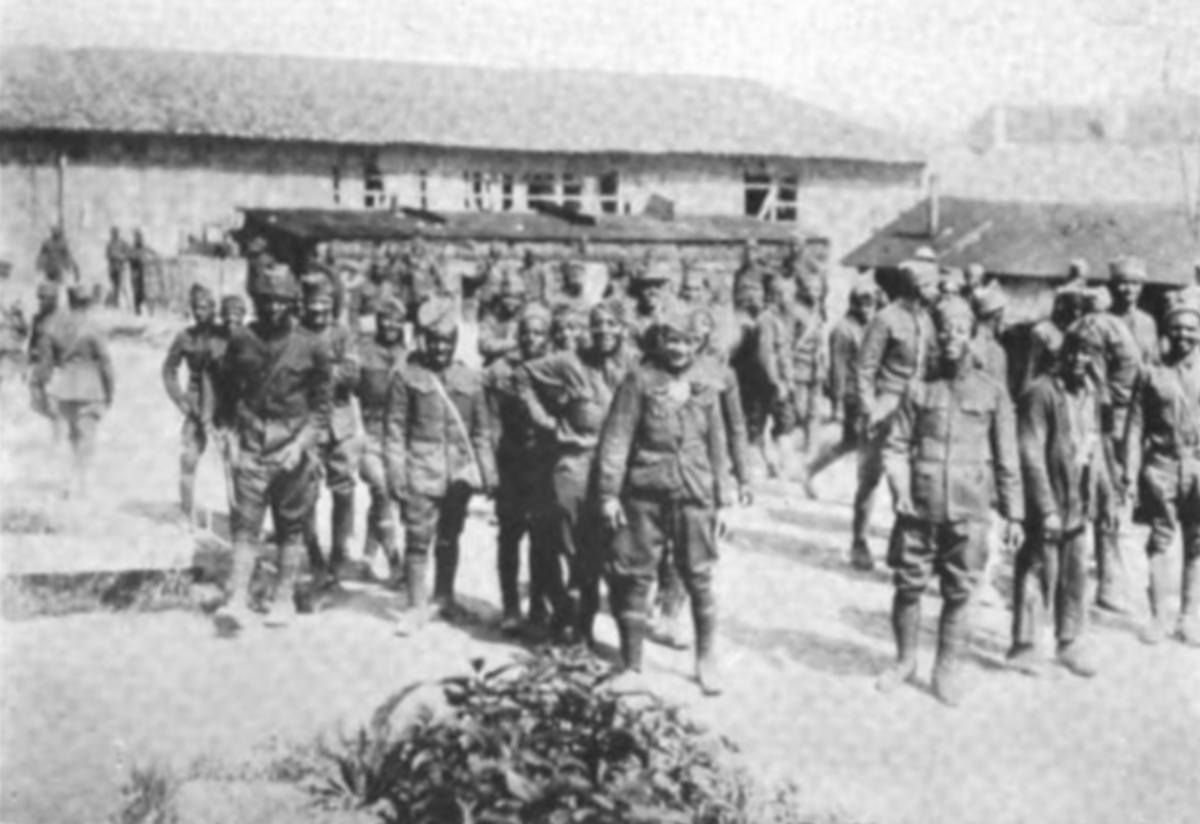
Bottom: The 369th Infantry in rest billets at Maffrécourt, France. You can spot pvt. Henry Johnson with his famous smile in the right at the foreground. Official photograph U.S. Army, Public Domain
|
|
The 15th New York Regiment is renamed
the 369th Régiment d'Infanterie
• The 369th RI consisted of fifty-six (mostly white) officers and two thousand black men. Disembarking in Brest on December 26, 1917, the regiment was transferred to nearby Saint-Nazaire on January 1, 1918, then to the Coëtquidan camp for training.
• The next month, the regiment became part of the 93rd Division (Provisional) and continued its training, now under French instructors. The soldiers of the 369th were trained in less than three weeks to navigate trench warfare, operate a machine gun, and protect themselves from gas attacks.
• In mid-March, it moved to Givry-en-Argonne, where it was attached to the 16th French Infantry Division. It received French equipment and was organized as a typical French infantry regiment.
• The 369th was treated in the same way as all other French units, and was quickly equipped and trained. The French showed no hatred or segregation towards them, although there was a colonial attitude towards their own colonial troops and racism was not absent from some parts of French society. When a French liaison officer assigned to the American headquarters relayed a note warning the French High Command on the supposed vices of the American colored soldiers, he was called to explain himself in person and duly reprimanded. On the whole, the French army warmly welcomed the all-black 369th regiment.
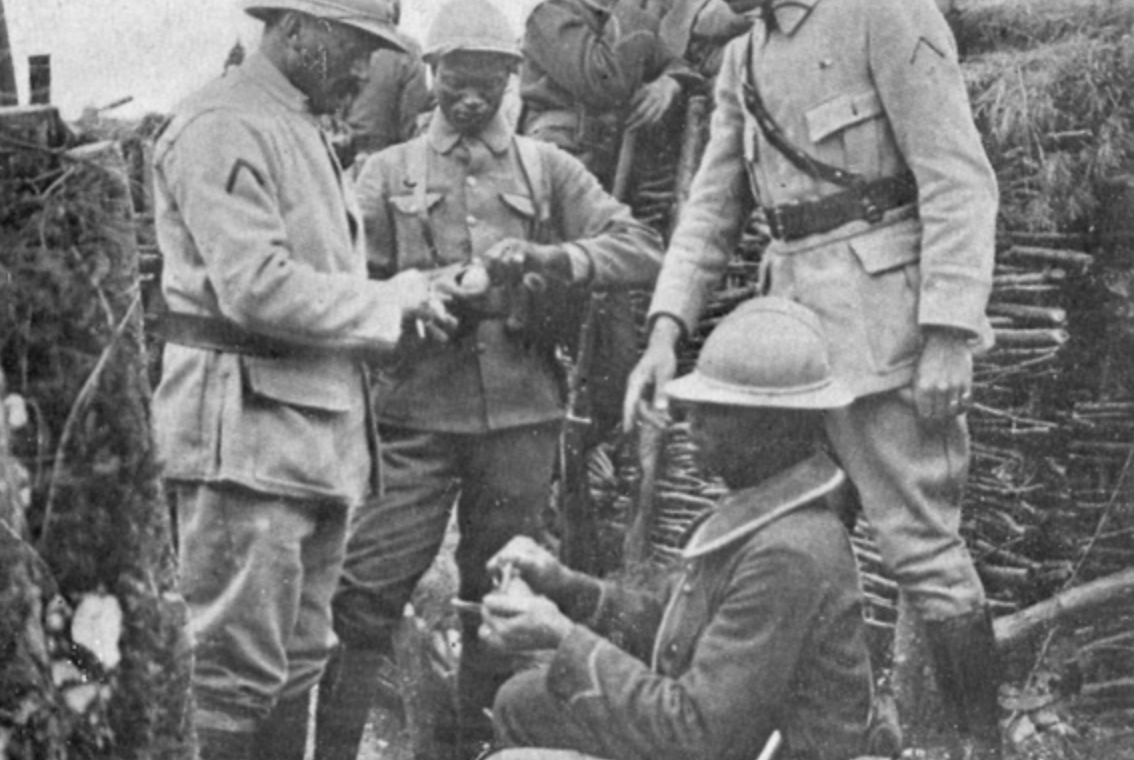
• One thing is well documented, French culture knew no skin color. The experienced French infantry, who had fought in the trenches, welcomed them warmly. However, because of the language barrier, the French soldiers had to resort to practical demonstrations to teach the New York soldiers trench-clearing tactics.
• American soldiers had to quickly learn these tactics and become adept at using their new French equipment, which included Lebel rifles, French maps, rifle grenades and machine guns, but they kept their fearsome knife, the famous "bolo knife", a two-pound knife with a 20 cm blade that had been popular during the War, a kind of small machete used by local troops auxiliary to the Americans.
• French enthusiasm for the Black Americans was real and sincere. Relations between the French and their African-American counterparts were generally described as good. French officers befriended African-American troops and officers, while non-commissioned officers "treated our boys with all the courtesy and comradeship one could expect" according to Noble Sissle of the 369th RI.
• African-American soldiers had much more freedom in France than in the U.S., as France didn’t have Jim Crow segregation. Black Americans dated French women, angering their white American Expeditionary Force counterparts, who would spread rumors: “U.S. troops were busy spreading rumors among the civilian population that blacks were rapists, thieves, and had tails,”Historian Jennifer Keane wrote.
Moreover, the "MPs" (Military Police) were not kind to colored soldiers when they went out for drinks at a bar ...
However, it is in combat that these Harlem soldiers will make an indelible impression.
|
|
Military operations in which the AEF took part |
|
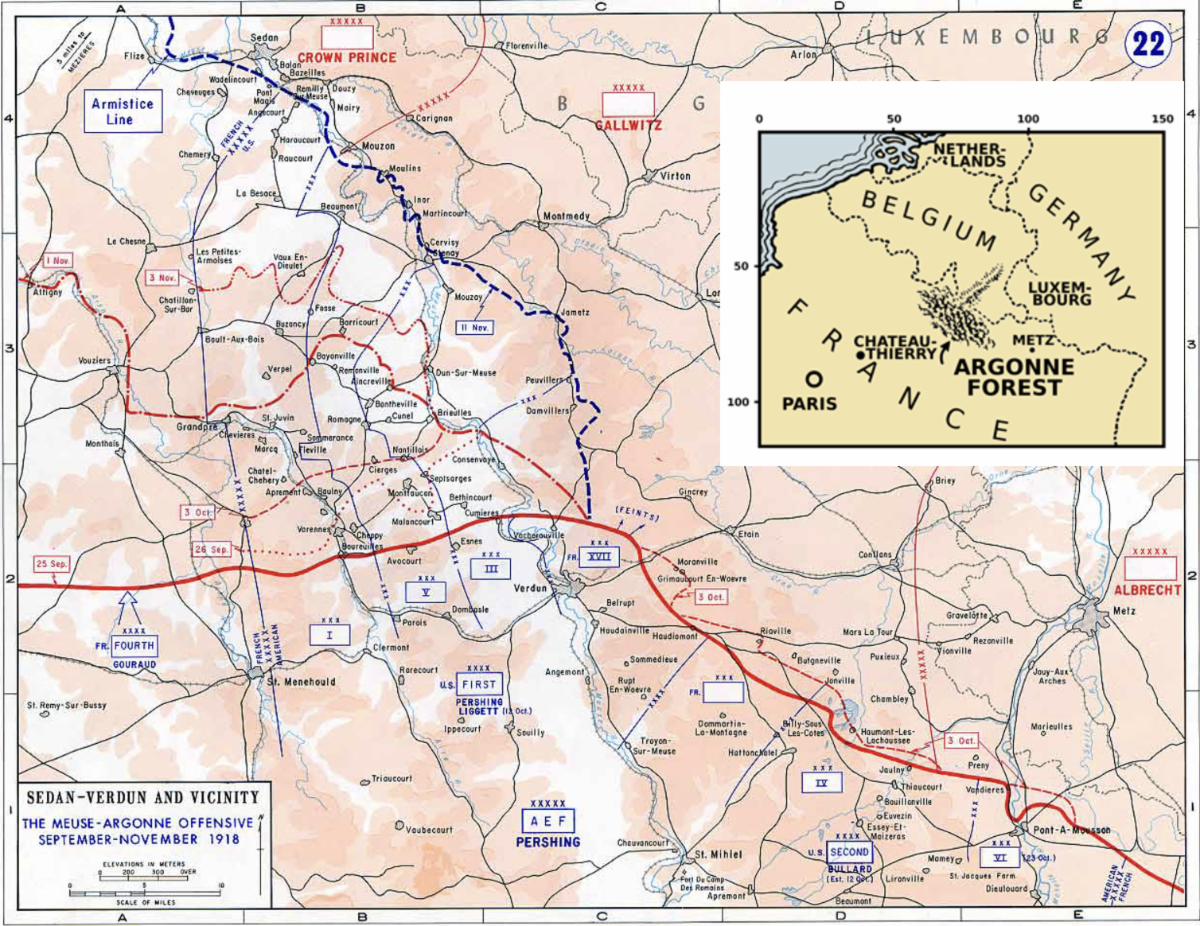
Map: Meuse–Argonne offensive, September–November 1918
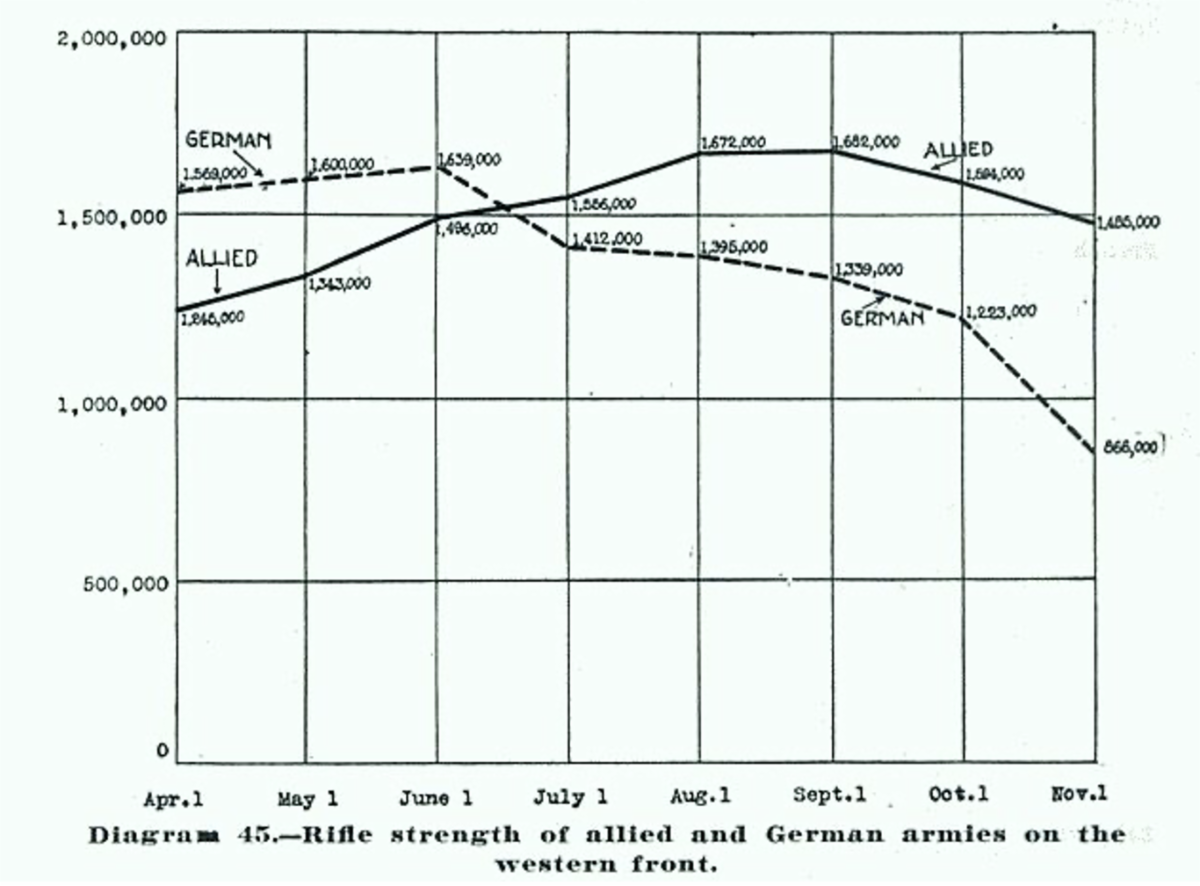
Diagram: The contribution of American intervention: one can clearly see the impact in "rifle power" starting in mid-June of 1918.
|
|
Significant impact
The American Expeditionary Force's action was immediately beneficial, as the graph above clearly shows.
The Americans played a role in halting the German push towards Paris during the 2nd Battle of the Marne in June 1918 (Château-Thierry + Bois-Belleau). But the first major American offensive was the reduction of the Saint-Mihiel salient in September 1918, with the 1st US Army (7 divisions and over 500,000 men), the largest offensive operation ever undertaken by the US armed forces. This successful offensive was followed by the Meuse-Argonne offensive, which ran from September 26 to November 11, 1918. During these two military operations, Allied forces recaptured 500 km2 of French territory from the German army.
Course of operations:
• Americans: 15 divisions. French: 31 divisions, including the IV Army (under General Gouraud). All heavy equipment (tanks, artillery and aircraft) was supplied mainly by the French army. For the Meuse-Argonne front alone, this represented 2,780 artillery pieces, 380 tanks and 840 aircraft. In terms of armored support, the 35th Division was supplemented by the 1st Tank Brigade (under the direction of a certain... George S. Patton...) with 127 Renault FT light tanks with American crews.
• The Meuse-Argonne offensive was an important part of the final Allied offensive on the entire Western Front. It ran from September 26, 1918 to the armistice of November 11, 1918, a total of 47 days. The Meuse-Argonne offensive was the largest in US military history, involving 1.2 million French, American and Siamese soldiers. It was also the deadliest campaign in US military history, costing the lives of 26,277 Americans and around 70,000 French, and 19 Siamese.
The 3 phases run from September to the Armistice:
• 1st phase (September 25 - October 4, 1918): To give you an idea of the scale of the fighting, in the 3 hours before H-hour, the Allies expended more munitions than in the entire Civil War. The cost was then estimated at $180 million, or $1 million per minute (about $24 million in 2024 dollars)...
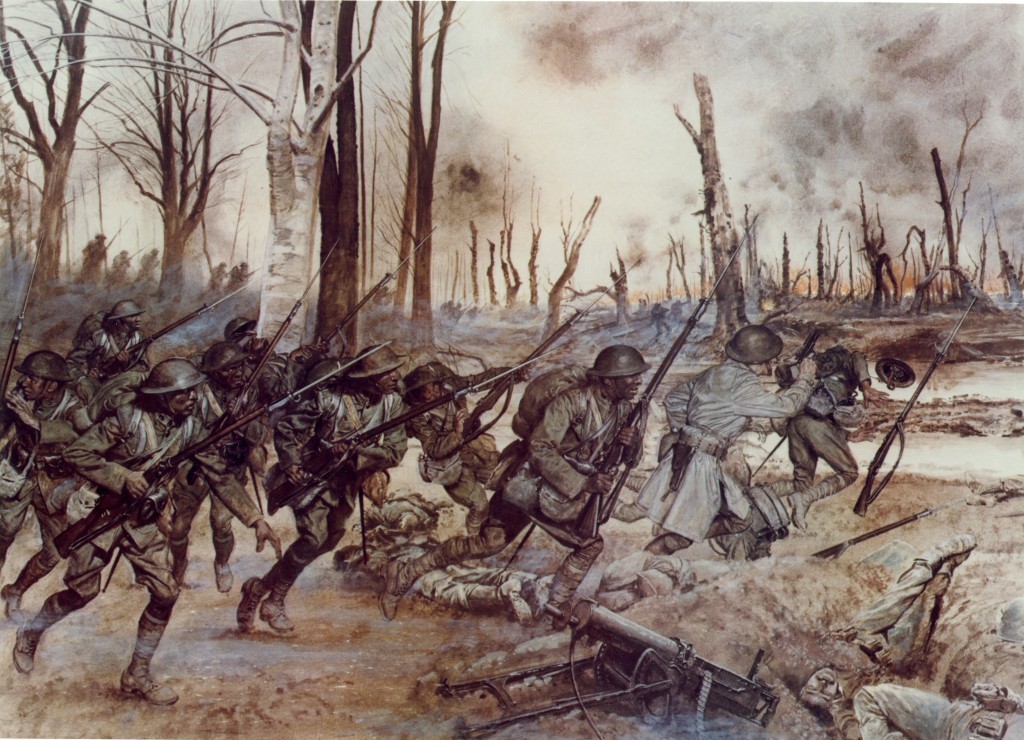
On September 25, 1918, the French IV Army went on the offensive in connection with the American thrust into the Meuse-Argonne. The 369th achieved a breakthrough in heavy fighting, albeit with heavy losses.
The unit captures the important village of Séchault. At one point, the 369th outpaced French troops on its right and left flanks, and risked being cut off. By the time the regiment withdrew to reorganize, it had advanced 14 kilometers (8.7 mi) through severe German resistance.
• Second phase (October 4-28, 1918):
The second phase began on October 4, when the Americans launched a series of costly frontal assaults that finally broke through the main German defenses (Hindenburg Line) between October 14 and 17 (at Montfaucon). During the Battle of Montfaucon, the Rainbow Division (42nd Division) under the command of Brigadier General Douglas MacArthur was finally able to take the Côte de Châtillon after discovering a breach in the German defenses. This victory at Côte de Châtillon is considered the decisive turning point in the entire Meuse-Argonne offensive. By the end of October, American troops had advanced 16km and cleared the Argonne forest. On their left, the French had advanced 38km, reaching the Aisne. It was during this operation, on October 8, that Corporal (later Sergeant) a certain....Alvin York (who gave his name to York Avenue in Manhattan) made his famous capture of 132 German prisoners near Cornay.
• Third phase (October 28 - November 11, 1918):
By October 31st, the Americans had advanced 15 km and cleared the Argonne forest. On their left, the French had advanced 30 km to the Aisne. American troops captured the German defenses at Buzancy, enabling French troops to cross the Aisne river, from where they rushed back, capturing Le Chesne (the Battle of Chesne). In the final days, French forces captured Sedan and its key railway junction (the Poussée vers la Meuse) on November 6.
• On November 11, news of the German armistice brought an end to four years of carnage and devastation.
|
|
Where did the name "Harlem Hell Fighters" came from? |
|
• The Germans, impressed by their bravery and ferocity, called the Black Americans “blutdürstige schwarze Männer,” or “bloodthirsty black men” — or more respectfully, “Hollenkampfer”, German for "Hellfighters".
“They are devils,” a Prussian officer captured during the Meuse-Argonne offensive told his American captors about the 369th. “They smile while they kill and they won't be taken alive".
• The French called them "Hommes de Bronze" (Men of bronze) for their steeling resolution, their bearing under fire and overall valor in battle.
• The regiment was also nicknamed "Black Rattlers" by the Americans for its rattlesnake insignia, and soldiers of the regiment themselves reportedly used that nickname.
|
|
The fight for the village of Sechault |
|
Illustration and photo:
Top: The Harlem Hellfighters in Séchault, France on September 29, 1918 during the Meuse Argonne Offensive. The 369th in action. After being detached and seconded to the French, they wore the French "Adrian helmet", while retaining the rest of their U.S. uniform. Seen here at Séchault, France on 29 September 1918, during the Meuse-Argonne Offensive, they wear the U.S. Army-issue "Brodie" helmet, correct for that time. Illustration by H. Charles McBarron, Jr. Public Domain, https://commons.wikimedia.org/w/index.php?curid=86977618
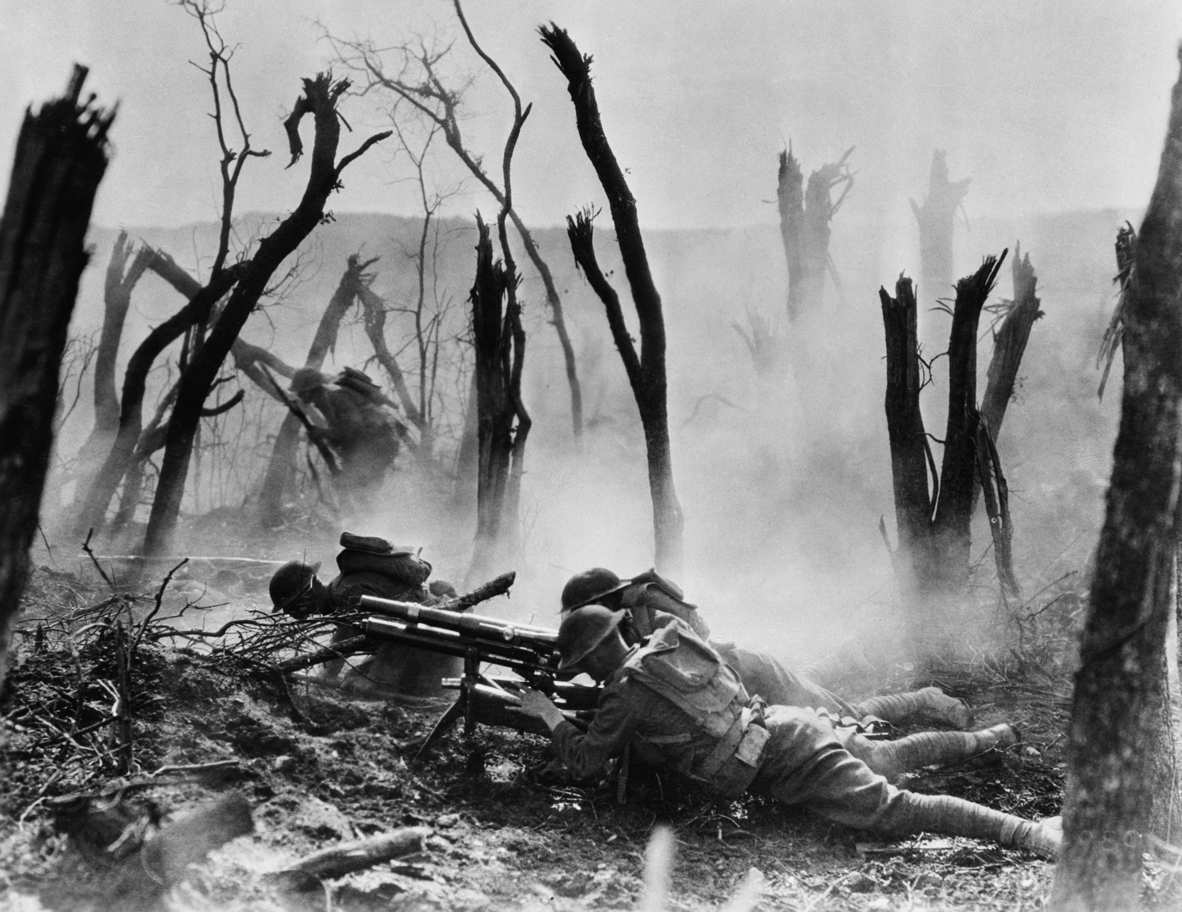
Bottom: An American gun crew from Regimental Headquarters Company, 23rd Infantry, 2nd Division, firing a 37mm gun during an advance against German entrenched positions. Photo by Department of Defense. Department of the Army. Office of the Chief Signal Officer Public Domain,
|
|
• Immediately after training, the 369th went to front on April 8. It remained there for 191 days, the longest of any black American infantry regiment.
• It occupied a sector stretching from the Main de Massiges (west of the Aisne) to northeast of Châlons-en-Champagne (forty-one kilometers of linear front).
• The 369th RI was the 1st of the 4 black regiments to come under fire.
• In June, it carried out patrols and reprisals in the enemy lines; then, at the beginning of the following month, it prepared for the counter-offensive planned by the Allies.
• On the 15th, it relieved a Moroccan infantry regiment and fought continuously for 3 days.
• From July 18 to 21, it recaptured some of the ground previously lost to the Allies and advanced north of Minaucourt; on the 23rd, it took up positions between the Butte du Mesnil and the Main de Massiges.
• After 130 days under enemy fire, the regiment reached Châlons-en-Champagne for a week's rest, before returning to the front. It was finally relieved on September 15 and sent to the Somme.
• Ten days later, it took part in the Allied offensive, capturing Ripont, Fontaine-en-Dormois and Séchault.
• On October 3, severely tested, it was relieved and sent to Vitry-le-François.
• On the 12th, it reached Belfort, then Thann (Vosges) on the 16th. It remained there until the armistice.
• On November 17, it crossed the Rhine at the head of all Allied forces.
|
|
The exploits of Privates Henry Johnson and Needham Roberts |
|
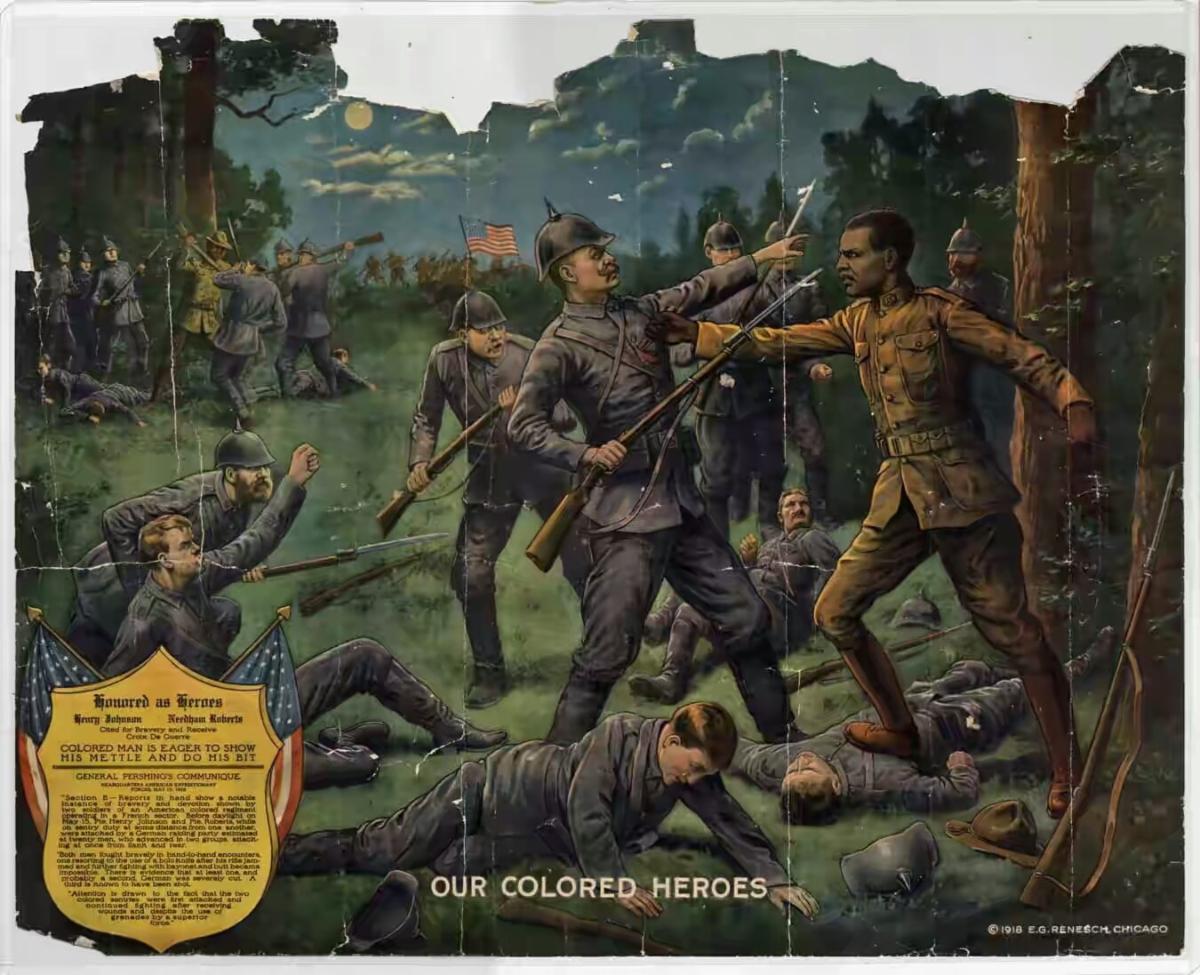
Illustrations: Our Colored Heroes (1918), by E.G. Renesch of Chicago
Image courtesy of the Tennessee State Library and Archives)
|
|
• The Regiment gained fame for its fighting skills when Henry Johnson and Needham Roberts triumphantly repelled a German attack, earning the prestigious Croix de Guerre from the French military. Noble Sissle wrote, "The American Army's first heroes emerged from that regiment."
What these two soldiers did is simply unbelievable, and one would think that their exploit came straight from the imagination of a Hollywood script writer...
|
|
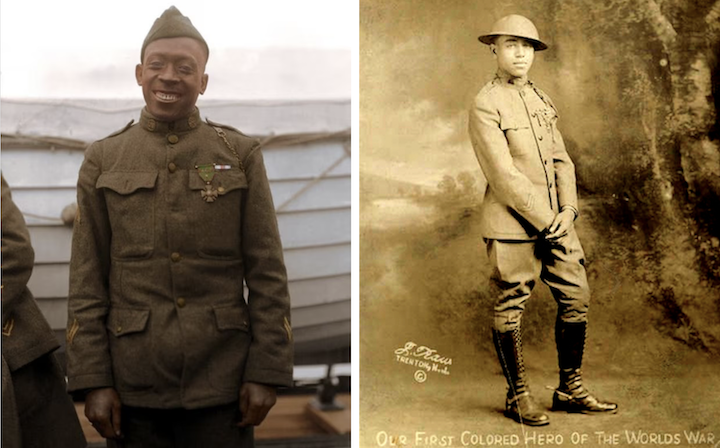
Right: Pvt. Needham Roberts, also the first American to be decorated with the Croix de Guerre
|
|
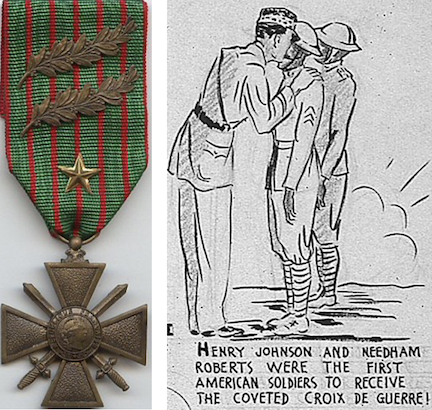
• In May 1918, Private Henry Johnson and Private Needham Roberts, fought off an entire German patrol despite being severely wounded and out of ammunition. After Roberts became incapacitated, Johnson ultimately resorted to using his bolo knife. They fought off a 24-man German patrol, with both being severely wounded. Johnson killed at least four German soldiers and might have wounded 30 others. Johnson was the first American to receive the Croix de Guerre.
• Pvt. Henry Johnson earned the nickname "Black Death" for his actions
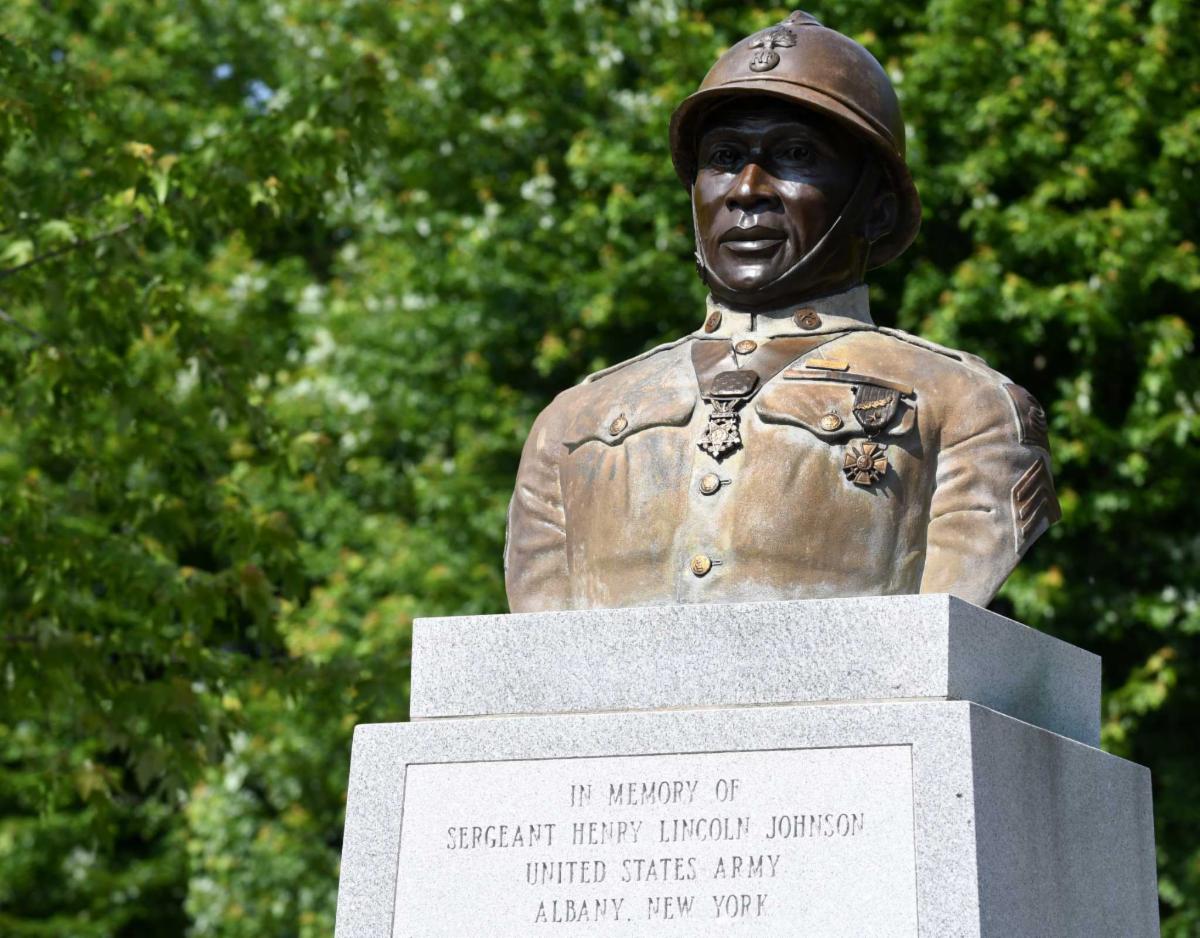
• Henry Johnson was the first American alongside Needham Roberts to receive the Croix de Guerre. He was awarded the Croix de Guerre with special citation and a golden palm for bravery in fighting off a German raiding party. Also posthumously awarded the Purple Heart (1996), the Distinguished Service Cross (2002), and the U.S. Army Medal of Honor (2015) for his actions in the battle.
• Needham Roberts was the first American alongside Henry Johnson to receive the Croix de Guerre.
|
|
We feel it is important to quote these heroes, as reported in the aforementioned book "History Of The American Negro In The Great World War"
"...A most conspicuous Negro hero of the war, and for that matter of any race serving with the American army, was Sergeant Henry Johnson of Albany, N.Y. His exploit was shared by a company mate, Needham Roberts. For pure bull dog grit and tigerish fighting, the exploit has seldom, if ever, been equalled in the annals of any war. It resulted in the War Crosses for each with a special citation, and the whole French force in that section of the Champagne lined up to see them get the decorations. Across the red and green ribbon of Johnson's decoration was a golden palm, signifying extraordinary valor. Johnson was the first private of any race in the American army to get the palm with his Croix de Guerre.
Here is the story as told in Johnson's own words after his arrival back in New York:
"There isn't so much to tell", said Johnson with characteristic modesty. "There wasn't anything so fine about it. Just fought for my life. A rabbit would have done that. "Well, anyway, me and Needham Roberts were on patrol duty on May 15. The corporal wanted to send out two new drafted men on the sentry post for the midnight-to-four job. I told him he was crazy to send untrained men out there and risk the rest of us. I said I'd tackle the job, though I needed sleep.
"German snipers had been shooting our way that night and I told the corporal he wanted men on the job who knew their rifles. He said it was imagination, but anyway he took those green men off and left Needham and me on the posts. I went on at midnight. It was moonlight. Roberts was at the next post. At one o'clock a sniper took a crack at me from a bush fifty yards away. Pretty soon there was more firing and when Sergeant Roy Thompson came along I told him.
"What's the matter men' he asked, 'You scared?'
"'No I ain't scared', I said, 'I came over here to do my bit and I'll do it. But I was jes' lettin' you know there's liable to be some tall scrappin' around this post tonight'. He laughed and went on, and I began to get ready. They'd a box of hand grenades there and I took them out of the box and laid them all in a row where they would be handy. There was about thirty grenades, I guess. I was goin' to bust that Dutch [sic] army in pieces if it bothered me. "Somewhere around two o'clock I heard the Germans cutting our wire out in front and I called to Roberts. When he came I told him to pass the word to the lieutenant. He had just started off when the snippin' and clippin' of the wires sounded near, so I let go with a hand grenade. There was a yell from a lot of surprised Dutchmen and then they started firing. I hollered to Needham to come back.
"A German grenade got Needham in the arm and through the hip. He was too badly wounded to do any fighting, so I told him to lie in the trench and hand me up the grenades.
"'Keep your nerve' I told him. 'All the Dutchmen in the woods are at us, but keep cool and we'll lick 'em.' Roberts crawled into the dugout. Some of the shots got me, one clipped my head, another my lip, another my hand, some in my side and one smashed my left foot so bad that I have a silver plate holding it up now.
"The Germans came from all sides. Roberts kept handing me the grenades and I kept throwing them and the Dutchmen kept squealing, but jes' the same they kept comin' on. When the grenades were all gone I started in with my rifle. That was all right until I shoved in an American cartridge clip—it was a French gun—and it jammed.
"There was nothing to do but use my rifle as a club and jump into them. I banged them on the dome and the side and everywhere I could land until the butt of my rifle busted. One of the Germans hollered, 'Rush him! Rush him!' I decided to do some rushing myself. I grabbed my French bolo knife and slashed in a million directions. Each slash meant something, believe me. I wasn't doing exercises, let me tell you.
"I picked out an officer, a lieutenant I guess he was. I got him and I got some more of them. They knocked me around considerable and whanged me on the head, but I always managed to get back on my feet. There was one guy that bothered me. He climbed on my back and I had some job shaking him off and pitching him over my head. Then I stuck him in the ribs with the bolo. I stuck one guy in the stomach and he yelled in good New York talk: 'That black —— got me.'
"I was still banging them when my crowd came up and saved me and beat the Germans off. That fight lasted about an hour. That's about all. There wasn't so much to it."
No, there was not much to it, excepting that next morning the Americans found four German bodies with plentiful indications that at least thirty-two others had been put on the casualty list and several of the German dead probably had been dragged back by their comrades. Thirty-eight bombs were found, besides rifles, bayonets and revolvers.
It was Irvin Cobb, the southern story writer, who first gave to the world a brief account of the exploit of Johnson and Roberts in the Saturday Evening Post during the summer of 1918. He commented as follows: "If ever proof were needed, which it is not, that the color of a man's skin has nothing to do with the color of his soul, this twain then and there offered it in abundance."
|
|
The most decorated Regiment |
|
Photos above:
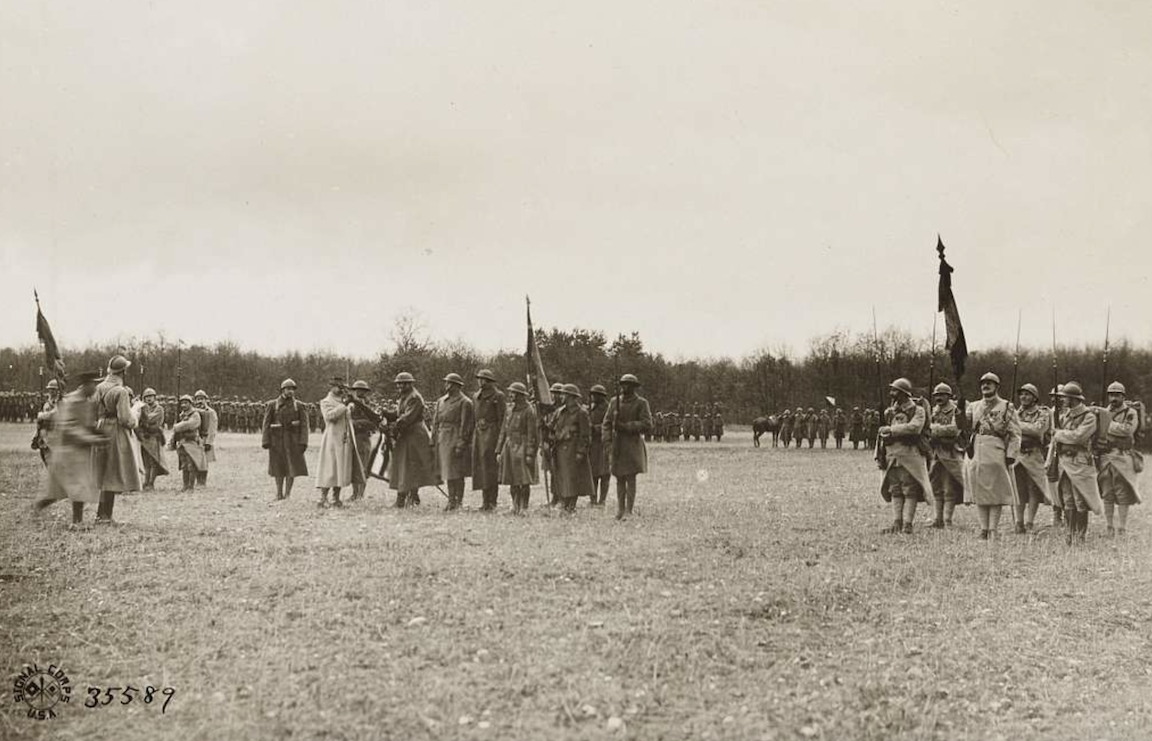
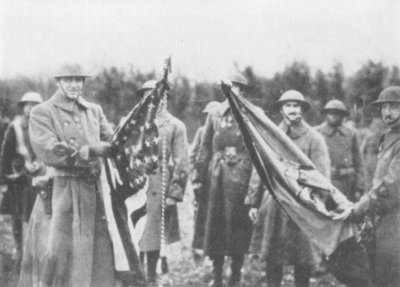
Top: General Lebouc, commanding the 161st French Infantry Division, pinned the croix de Guerre on the flag of the US 369th Infantry Regiment on 1918-12-13 near Mulhouse. Photo by US Signal Corps.
Two rare newsreels can be viewed by clicking the links:
and
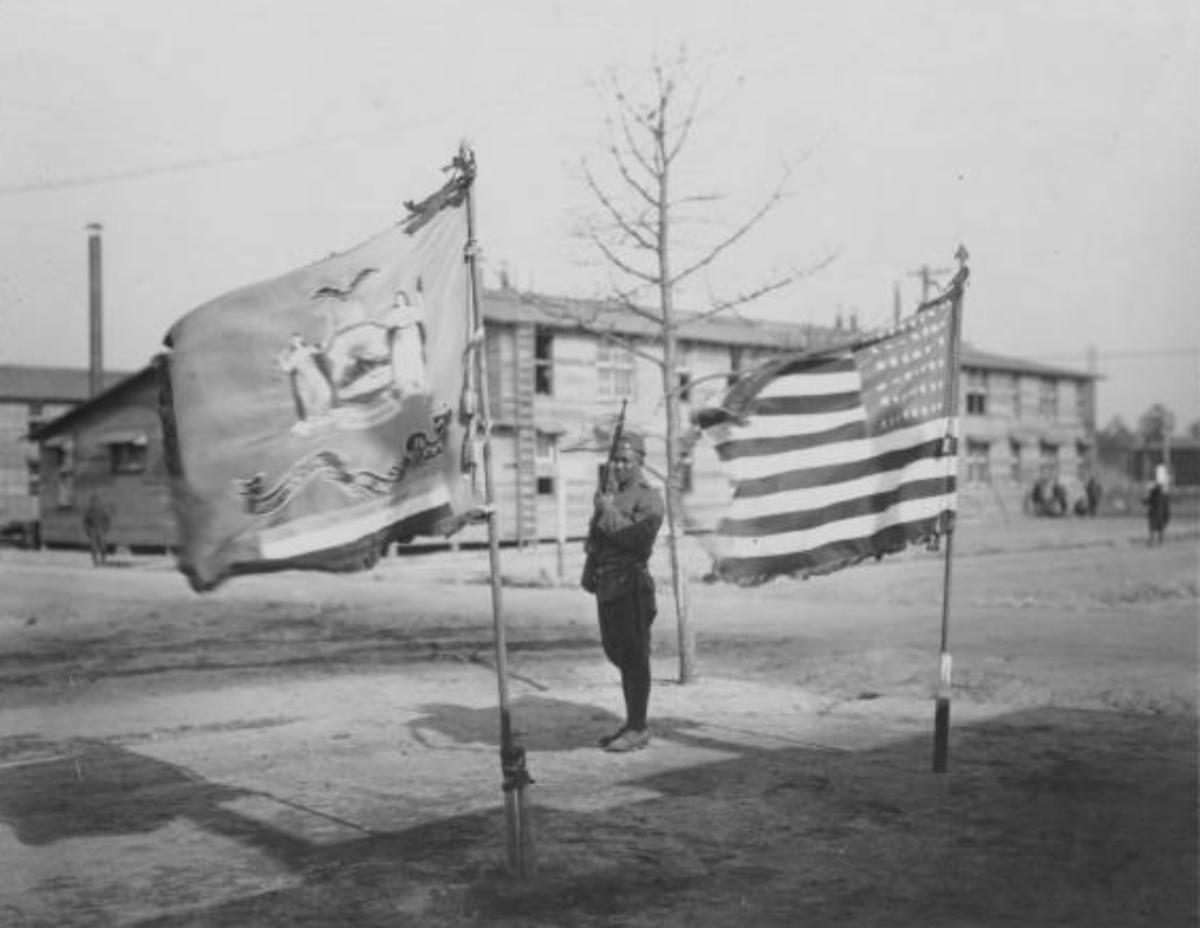
Middle: U.S. Flag And 369th Regiment Flag, Decorated With Croix De Guerre At Ungersheim, Alsace, France.
Bottom: Guarding the flag; The flag of the old 15th (decorated by the French) and Old Glory, by Miller, Kelly, 1863-1939 (Author),The New York Public Library, Public Domain,
|
|
A unique achievement
Trained and equipped by the French Army, the 369th never served under American command during the war. They fought in the Champagne-Marne Defensive and Aisne-Marne Offensive. During the Meuse-Argonne Offensive, they suffered 851 losses while advancing and were relieved from the front lines. A unit citation was awarded to the entire regiment.
• The Harlem Hellfighters had the longest combat duration among American units of its size, spending 191 days in the front-line trenches.
• Black troops assigned to the French military saw the most combat compared to any other group. They also endured the highest number of casualties compared to any other American regiment.
• "My men never retire, they go forward or they die," said Colonel Hayward. Indeed, the 369th was the first Allied unit to reach the Rhine!
• During the war, the Harlem Hellfighters spent more time in continuous combat than any other American unit of its size, with 191 days in the front-line trenches. They also suffered more losses than any other American regiment, with more than 1,400 total casualties.
• The extraordinary courage of the Harlem Hellfighters earned them fame in Europe and America, as newspapers recounted their remarkable feats. After the war, the French government awarded the coveted Croix de Guerre medal to 171 members of the regiment, as well as a Croix de Guerre citation to the unit as a whole. Some members of the Harlem Hellfighters received military awards from the U.S. government, including the Distinguished Service Cross. In 2015, Johnson was posthumously awarded the Medal of Honor, our nation's highest military honor.
• Dubbing themselves “Men of Bronze,” the soldiers of the 369th were lucky in many ways compared to other African American military units in France in 1918. They enjoyed a continuity of leadership, commanded throughout the war by one of their original organizers and proponents, Colonel William Hayward. Unlike many white officers serving in the black regiments, Colonel Hayward respected his troops, dedicated himself to their well-being, and leveraged his political connections to secure support from New Yorkers.
• While the 369th suffered approximately fourteen hundred casualties but received only nine hundred replacements. The poor replacement system coupled with no respite from the line took its toll, leaving the unit exhausted by the armistice in November.
• There is a Monument called "The Battle of Henry Johnson Memorial", located at Washington Park Rd, (aka Henry Johnson Blvd) Albany, NY 12210
• Inscription:
“First Allied regiment to reach the Rhine
Never lost a man captured, a trench or a foot of ground
191 Days in Combat Longest of any American unit
367 Men Killed in Action
1097 Men Wounded in Action"
|
|
But fighting was not the Regiment's only contribution.
These brave fighters were also... musicians!...
|
|
Photos:
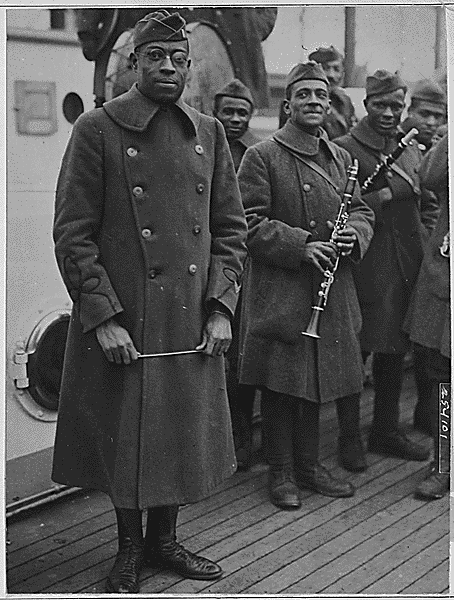
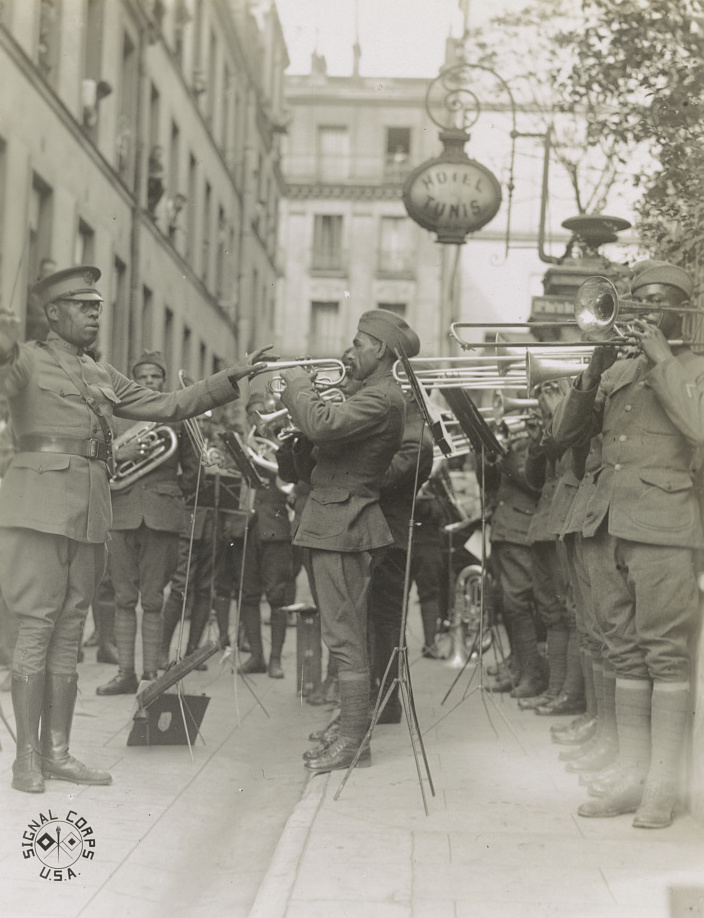
Top and Middle: Jazz Band leader Lt. James Reese Europe back with 15th New York By Underwood & Underwood - U.S. National Archives and Records Administration, Public Domain
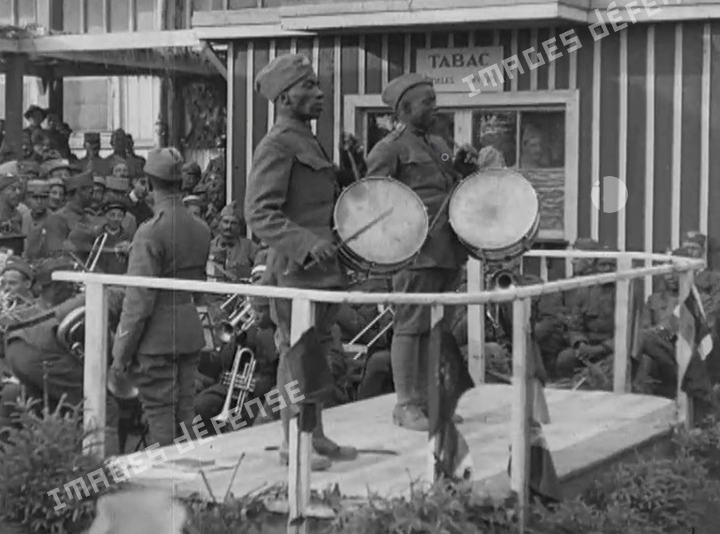
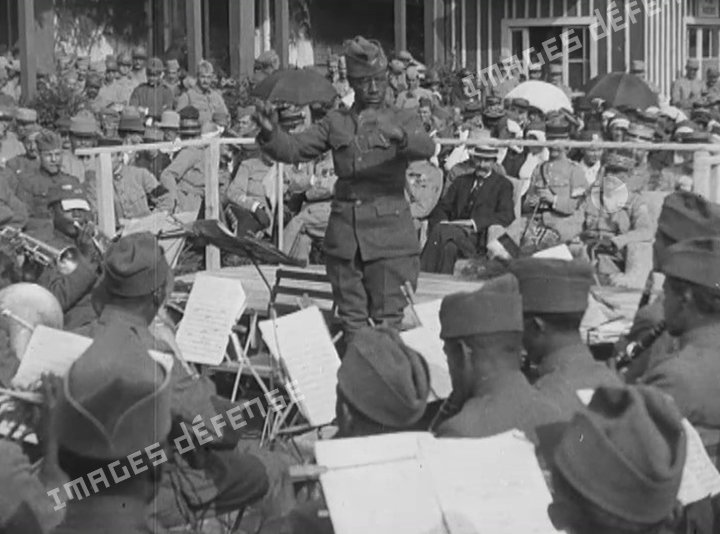
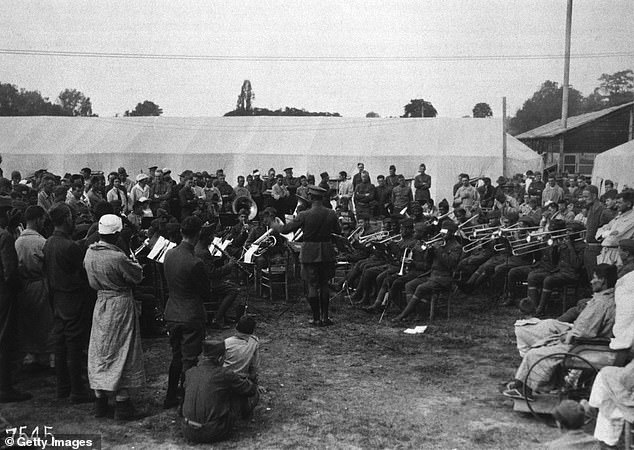
Bottom: "L'orchestre du 369e régiment d'infanterie américain donnant un concert en France en 1918" (The 369th American Infantry Regiment Band giving a concert in France in 1918.) © ECPAD (Extraits de la vidéo 14.18 A 370))
|
|
Lieutenant James Reese Europe and the 369th regiment band:
The introduction of jazz to French audiences
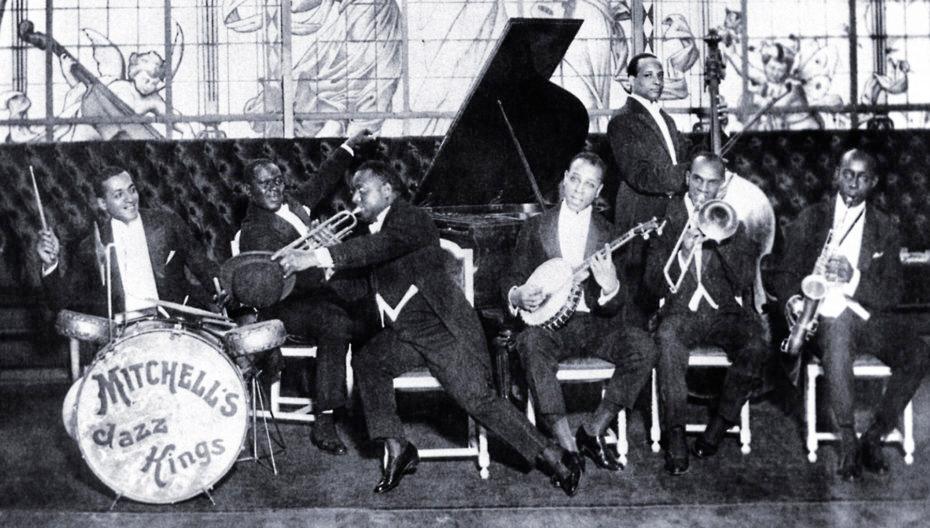
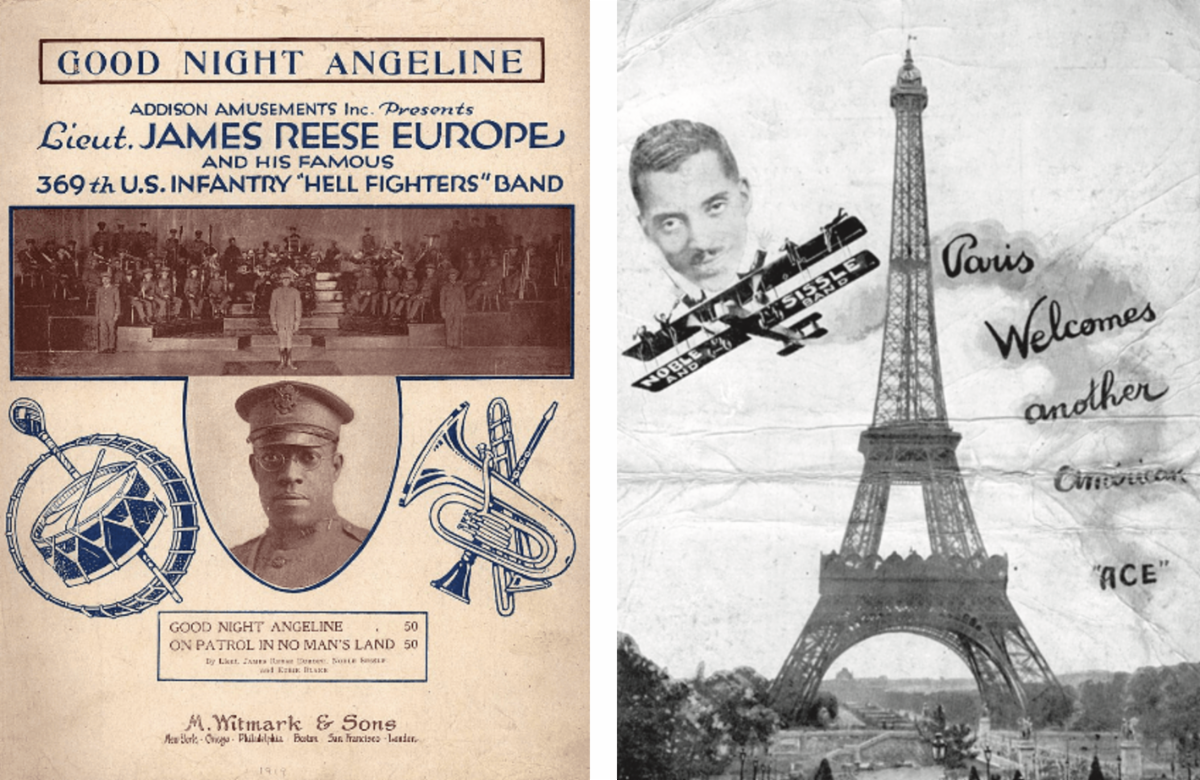
• Among the 25 military bands accompanying the deployment of the American Expeditionary Force, one figure is well documented: Lieutenant James Reese Europe (1881-1919). A defender of black rights, nicknamed "the King of jazz", pianist and dance band leader, he was an important figure on the New York music scene.
• Lieutenant Europe, a machine gun commander in the Regiment, was tasked with leading the regimental band when they joined the French Army. Sergeant Noble Lee Sissle supported him as the lead singer. He convinced forty musicians to enlist, including the notable composer Rafael Hernández Marín.
• From February to March 1918, when they were not fighting at the front, played to entertain the troops and locals. Jim Europe and his military band traveled 2,000 miles in France, performing for troops and civilians, including wounded soldiers.
• The 369th Regiment "Hellfighters Band" was not only relied upon in battle, but also for boosting morale of French audiences during travel throughout France.
But they were not playing military marches, only, nor any music...
They were playing an unknown music in Europe: ... Jazz!!
|
|
Introducing ragtime and jazz to France
and prompting a nationwide accute case of "Ragtimitis"
|
|
Photos:
Top: Établissement de communication et de production audiovisuelle de la Défense (ECPAD) (From video excerpt 14.18 A 370))
Middle: The 369th band played jazz for American wounded in the courtyard of a Paris hospital
|
|
A surprising rendition of "La Marseillaise" in St Nazaire
• James Europe, with his 44-piece band made up of some 50 African-American and Puerto Rican musicians, won the immediate support of the French people by playing the French national anthem "La Marseillaise" on Dec 31, 1917soon after they landed. The timbre of the instruments and the rhythmic treatment were in stark contrast to what the French knew at the time, so much so that they had trouble recognizing their national anthem!
• “We've seen that a [...] rhythmic interpretation appealed to the French. In fact, it carried them to a much higher level than their own orchestras did. It was the unusual rendition of their anthem that explained the French soldiers' and sailors' delay in standing to attention”. - Noble Lee Sissle
• After this warm reception, James Europe began exploring jazz and ragtime music in various small villages, introducing audiences to American black melodies for the first time.
• On February 12, 1918, during the final stage of the First World War, James Reese Europe's band from the 15th New York Infantry Regiment performed at the Theatre Graslin in Nantes, France. The band, originating from Harlem, impressed the audience with their diverse repertoire of anthems, military marches, African-American songs, originals, blues, and ragtime pieces. The program included French military marches, "negro spirituals", "The Stars and Stripes Forever", a few "ragtime" pieces, and the apotheosis: "Memphis Blues", by W.C Handy, which sent the hall into raptures. At the end of the concert, the audience showed their respect by standing silently while the band played both national anthems. A journalist described this moment as a significant symbol of unity between France and the US.
• The press called them a "jazz band" and their music was a sensation in France.
• Even the very staid Gen. Henri Gouraud was enthralled, asking the band to play at his headquarters.
• "Even the German prisoners [...] stopped their work and tapped their feet to the sound of those rousing American tunes [...]. I became convinced that American music would one day become the music of the whole world”. - Noble Lee Sissle
• France was hit by “ragtimitis”, a term coined by journalists at the time.
• The musicians played wherever their music could bring comfort, in hospitals, parks, casinos and railway stations. Their music raised morale, entertained the population and paid tribute to the fallen.
• What is most amazing is that they switched from fighting in the most atrocious battles to playing music on a stage… Despite being affected by phosgene gas, Jim Europe continued to conduct. He performed until January 1919 in recreation camps, barracks, and hospitals.
• The band made a significant impact in Paris at the Théâtre des Champs Elysées on August 18, 1918, with French President Raymond Poincaré present. They also performed at the Tuileries Gardens in November during the armistice celebrations, before embarking back home to America.
|
|
Photos:
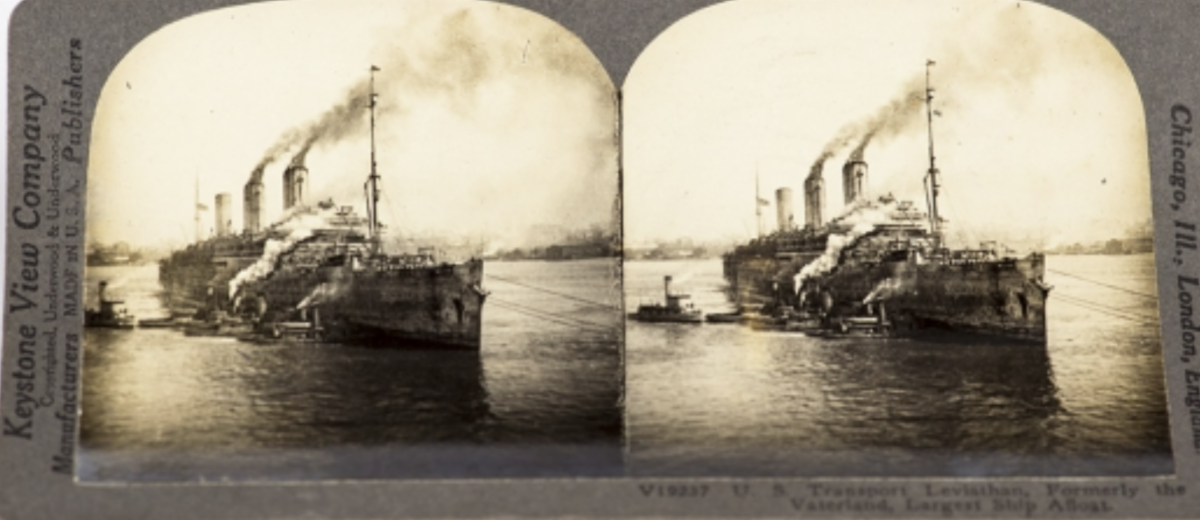
Top: Stereograph card, US Transport Leviathan, formerly the Vaterland. The 369th were transported back from France on board the Leviathan and also La France. Photo: Boston Public Library, stereographs photographic prints
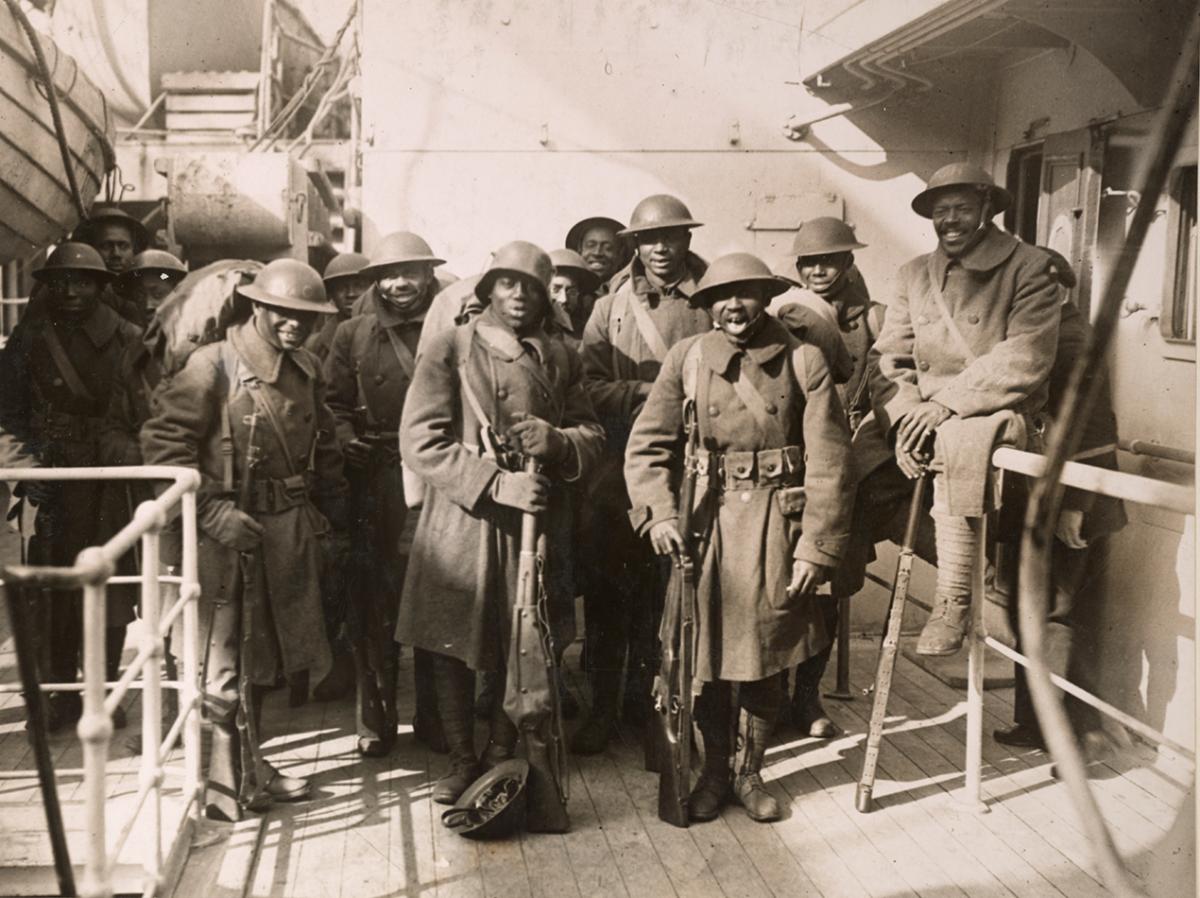
Middle: Members of the all-Black 369th, or Harlem Hellfighters, pose on the boat home from World War I after fighting valiantly, Feb. 10, 1919. Photo via National Archives, originally captured by Western Newspapers Union
|
|
Homecoming: Highs and lows
When the Regiment attempted to return home aboard the USS Virginia, the ship's commander allegedly refused to take them aboard "on the grounds that no Negro had ever traveled on an American battleship". The regiment returned to New York harbor on a transport ship, the Leviathan... only to be discharged on February 28, 1919 at Camp Upton in Yaphank, New York, and returned to the NY National Guard.
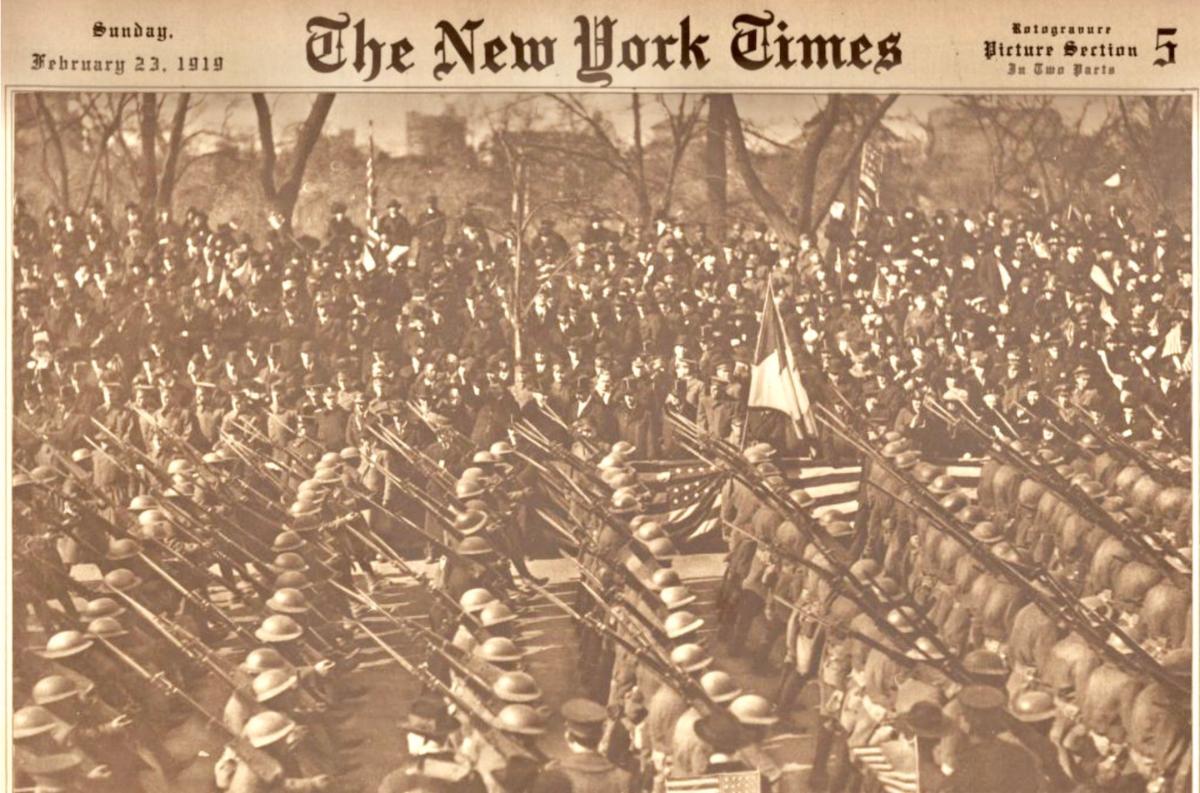
• Certainly, on February 17, 1919, the 369th Regiment marched through New York City, marking the end of the war, to great applause. Thousands of people, including schoolchildren and black adults, gathered in the streets of Harlem to watch the parade. The parade became an important event symbolizing African-American service and civil rights. "For a moment, silence was almost total, as crowds of men and women gazed upon the dark-skinned warriors who had defeated the best veteran regiments the enemy could send their way," wrote the New York Tribune.
However, the warm welcome was short-lived, of spotty.
• Shortly after their return, the band scheduled an extensive tour of the country which was advertised as “The Band That Set All France Jazz Mad!”
• However, upon discharge, Veterans were given a lump sum payment of $80 ($1,464 in today's dollars). World War I veterans did not receive general pensions, only small disability pensions, even for those with records.
• To illustrate what lay ahead for black veterans, even Roberts and Johnson were arrested in the 1920s for wearing their military uniforms after post-war demobilization. Most authors and historians believe that these arrests and indictments were probably motivated by racism rather than actual misconduct, given their backgrounds.
• Johnson died at age 32 in New Lenox, Illinois at the Veterans Hospital, on July 5, 1929, penniless, estranged from his wife and three children and without official recognition from the U.S. government. He is buried in Arlington National Cemetery.
• Needham Roberts, incapacitated by the injuries he sustained, faced challenges in securing stable employment. On occasion, he would deliver paid lectures recounting his experiences during the war. In the early 1940s, he actively participated in the Army's campaign to enlist African-Americans for World War II, delivering radio addresses and other speeches. Tragically, Roberts passed away in Newark, New Jersey on April 18, 1949, and found his final resting place at Fairmount Cemetery in Newark.
|
|
Long lasting legacy: the "Roaring Twenties" in France
and the French love for jazz ever since
|
|
The Golden Age of the Roaring Twenties for American Expats in Paris
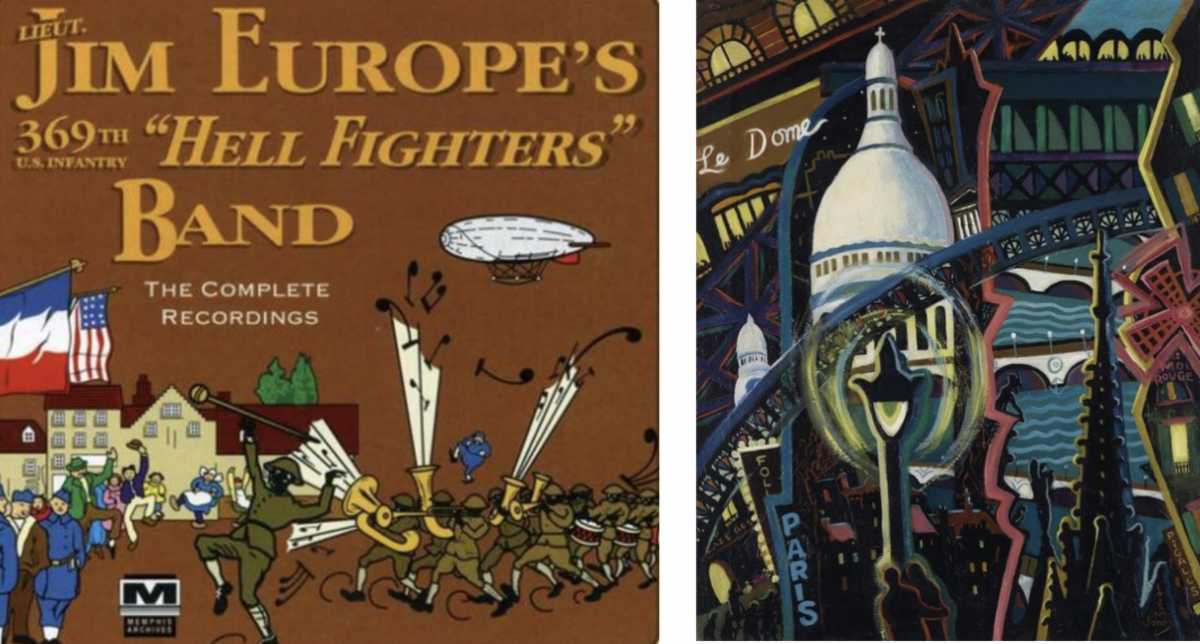
• After the war, jazz became popular during les "Années folles, or “the Crazy years”, known as the "Roaring Twenties" in the US. Unconventional and exotic art forms were in demand. This new music made people feel alive again after the horrors of the First World War.
• France was the first country to take jazz seriously as an artform, even before America. By the 1920s, French classical composers Maurice Ravel and Darius Milhaud, as well as Paris-based Russian Igor Stravinsky, had all started incorporating jazz elements into their works. Composer Darius Milhaud was amazed by the joy of jazz. Jazz, in his words, “was a pleasant shock to his generation, like a cold shower when you're half asleep with boredom”.
• Black musicians were so highly in demand that it didn’t even matter how good they were. An ex-Harlem Hellfighter trumpeter wrote a friend, “Man, you should haul over here lickerty-split, they got flowing wine, willing women & no hassling of the colored man. In fact, they ain’t color blind—they’re color-crazy!”
• During "Les Années Folles", Montmartre was hailed as Harlem-on-the-Seine, a cultural utopia free from racial segregation, far from the Jim Crow era in the United States. In this brief period, color lines were nonexistent, creating a unique and vibrant atmosphere.
• Black American culture became hugely popular in France with Josephine Baker causing a sensation as the headliner at the Folies Bergère in 1926. American clarinettist Sidney Bechet came to France in 1925 with the Revue Nègre and soon became a regular at Chez Bricktop, a jazz club run by Ada 'Bricktop' Smith. The club was a hub for the African American community in Paris and attracted French high society and American ex-patriate artistic figures like Cole Porter, F Scott Fitzgerald, Ernest Hemingway and John Steinbeck.
|
|
Two celebrated figures in Paris in the Interwar |
|
• Eugene Bullard:
Bullard enlisted in the French Foreign Legion and was decorated with the Croix de Guerre for bravery in the trenches of Verdun. Then, at a time when Black men were still not allowed to fly for the U.S. Army, he managed to get assigned to the Lafayette Flying Corps (a name given to the American volunteer pilots who flew in the French Air Force) and became the first Black combat pilot. After the war he opened a nightclub Zelli’s Box Open from midnight to dawn, Zelli’s Royal Box was an instant success, drawing celebrities like Charlie Chaplin, Louise Brooks, and F. Scott Fitzgerald. Our first Bulletin in February 2021 was dedicated to him:
February 2021: honoring Eugene Bullard, America's First-ever Black Fighter Pilot
• Josephine Baker
In 1925, Josephine Baker came to Paris with Le Revue Nègre and became an international sensation. A slapstick provocateur, she combined the erotic with the parodic, crossing her eyes while gyrating in nothing but bananas or a single strategically placed flamingo feather. Bricktop took her under her wing and the two may have started a romantic relationship. Within a year, Baker had opened up her own club in Montmartre, Chez Josephine.
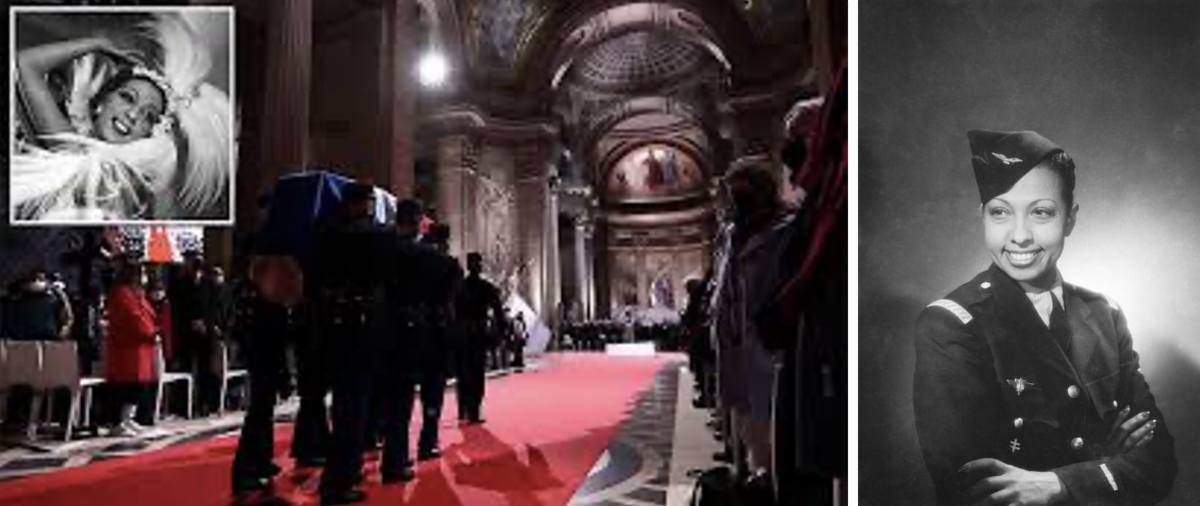
Our February 2022 Bulletin was dedicated to her after her remains were transferred to the Panthéon in Paris:
February 2022 Bulletin: Tribute to Josephine Baker
|
|
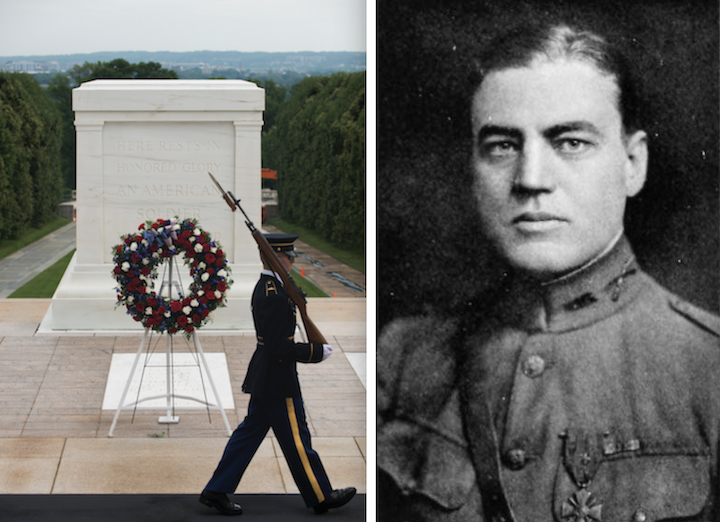
Hamilton Fish, the 369th, and the Unknown Soldier |
|
Photos:
Left: Tomb Guard on duty at the Tomb of the Unknown Soldier, Arlington National Cemetery.
|
|
Hamilton Fish III (December 7, 1888 – January 18, 1991) ) served three terms in the NY State Assembly prior to WW1.
Before the United States joined the First World War, Fish served as the captain of Company K in the 15th New York Infantry. When the 15th Infantry was called to serve in the Federal service, Fish agreed to keep his position upon receiving an offer from Col. William Hayward, and served as captain of the 369th Regiment throughout the war. Fish was honored with the Silver Star and the French War Cross 1914–1918 for his bravery in combat. Furthermore, both Fish and his sister Janet, who had worked as a nurse near the front lines, were later recognized for their wartime service and inducted into the prestigious French Legion of Honor.
He was elected to Congress and as the sole World War I veteran in the House at the time he proposed a resolution on December 21, 1920, to establish Veterans Day as a nationwide holiday. Additionally, Fish introduced House Resolution 67 of the 66th Congress, which outlined the burial of an unidentified American soldier in a revered tomb to be constructed adjacent to the Memorial Amphitheater in Arlington National Cemetery. This resolution received unanimous approval from Congress on March 4, 1921. The tomb, which was completed in 1937 with Fish's input, became known as the Tomb of the Unknown Soldier.
Recent controversies about his alleged pro-Nazi sympathies prior to WWII (he was certainly a staunch anti-communist and a chief critic and political opponent of Franklin Delano Roosevelt) are non existent in France.
|
|
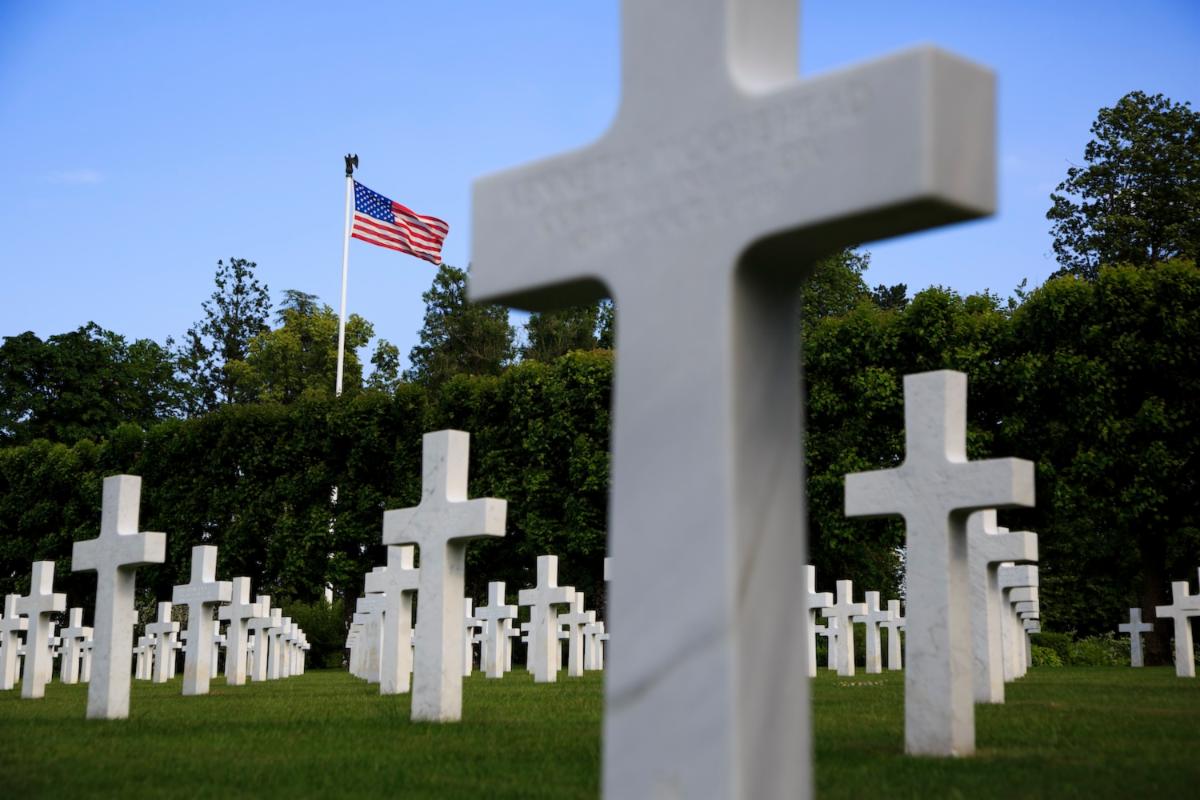
Remembrance in France and in the United States |
|
Photo:
The Stars and Stripes in the background of the Meuse-Argonne American Cemetery in France, the final resting place for more than 14,000 Americans who gave their lives in World War I. American Battlefield Monuments Commission photo, June 16, 2015.
There are 169 members of the 369th Infantry Regiment, 93rd Division, buried or memorialized at ABMC cemeteries. The majority are at Meuse-Argonne, but also at Aisne-Marne, Oise-Aisne, St. Mihiel and Suresnes American cemeteries.
As at all ABMC sites, the cemeteries are integrated. Race, rank, gender or creed had no determination on burial location and every day the fallen are remembered for their selfless sacrifice
|
|
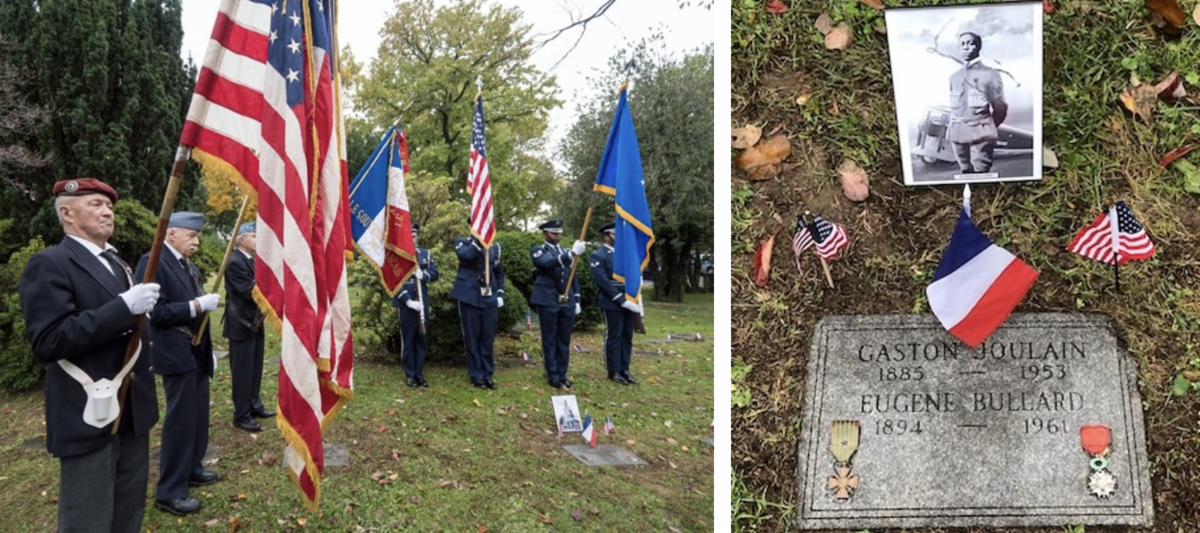
Photos:
Top Left: ceremony at the French War Veterans Lot, at Flushing Cemetery
Top Right: Eugene Bullard grave marker
Flushing Cemetery, 163-6 46th Ave, Queens, NY 11358 Section C, No. 7, Plot 53
Photos by Daniel Falguerho, Federation of French War Veterans, Inc.
Middle Left: Joséphine Baker at the Panthéon, Paris, November 30, 2021
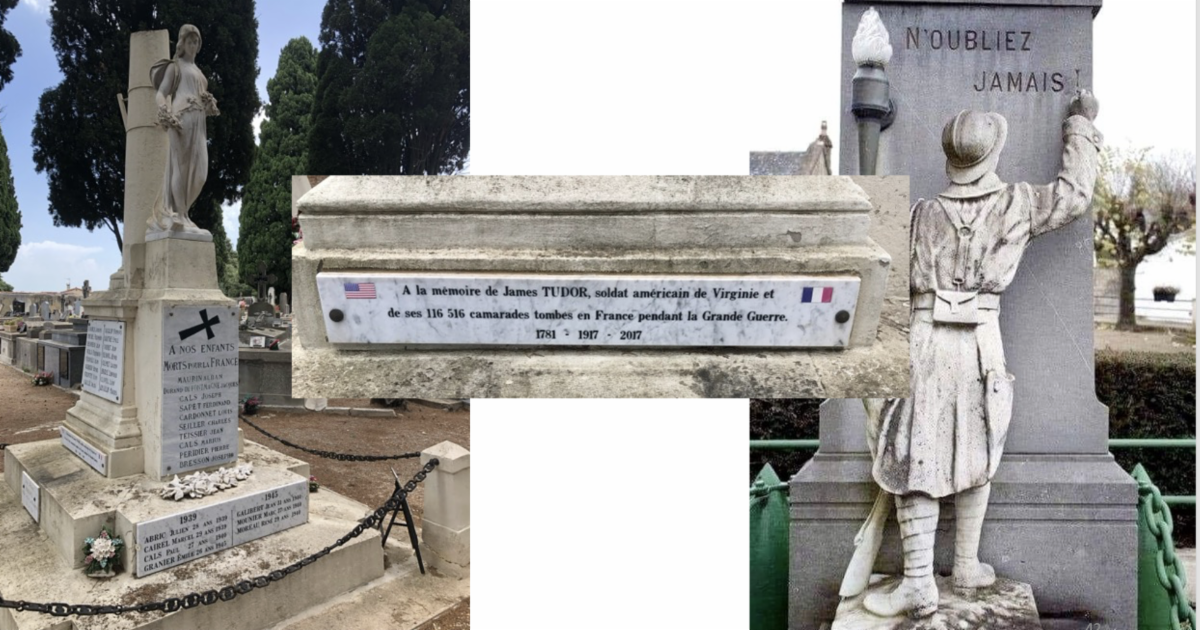
Bottom Left and Center: Veterans monument in the village of Castries, photo Amis du Château de Castries
Bottom right: "Never Forget" Monument aux Morts, Blagny, Departement des Ardennes
|
|
Conclusion: Never Forget!
How we can honor their legacy and pass the torch of friendship and alliance to the next generations?
Commemorations on both sides of the Atlantic:
• 5 years ago, a "concert of the century" was performed in Nantes on Monday February 12, following a ceremony and the unveiling of a commemorative plaque in the presence of Geneviève Darrieussecq, Secretary of State to the Minister of the Armed Forces, and three granddaughters of the lieutenant and leader of the 369th regiment, James Reese
• In the US, the Federation of French War Veterans regularly pays tribute to Eugene Bullard who is buried at the French War Veterans lot at Flushing Cemetery, NY. Our Society joins them upon this occasion, as well as other American and French patriotic associations.
• In France, Joséphine Baker was buried at the Panthéon on Nov 30, 2021 at a ceremony presided by French President Emmanuel Macron.
• Last year on October 21, 2023 in New York, the 369th Sustainment Brigade, NYNG invited us to join them at their annual gala at the Union Club. It was a very moving evening where the bonds forged in 1917 are still strong today.
Among the countless demonstrations of respect and affection towards American soldiers throughout French villages:
• Never Forget!... How a “Doughboy” is honored amidst the names of “Poilus” in a little French village of Castries (population 1,300 in 1914)
It is crucial to pass on the torch of remembrance to the next generation, so that history does not repeat itself.
|
|
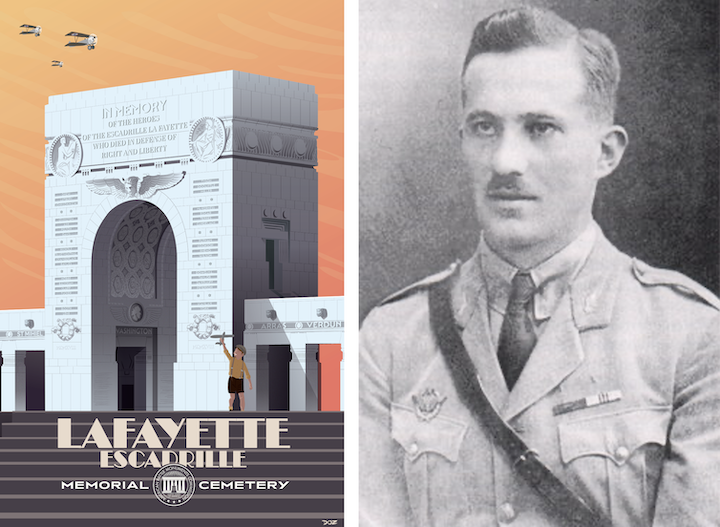
Homage to Corp. James Ralph Doolittle
37th member of Escadrille Lafayette
|
|
Buried at Escadrille Lafayette Monument, Marnes-la-Coquette, France
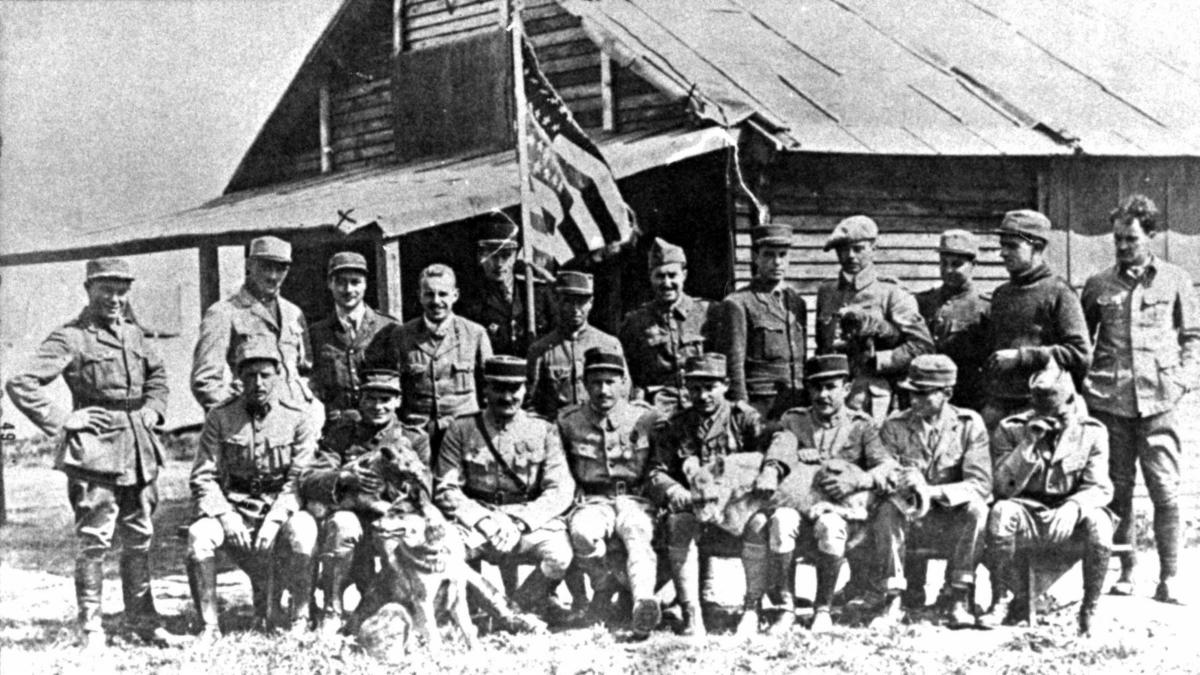
In the photo above, James Ralph Doolittle is standing, second on the left.
https://www.findagrave.com/memorial/158894081/james-ralph-doolittle
|
|
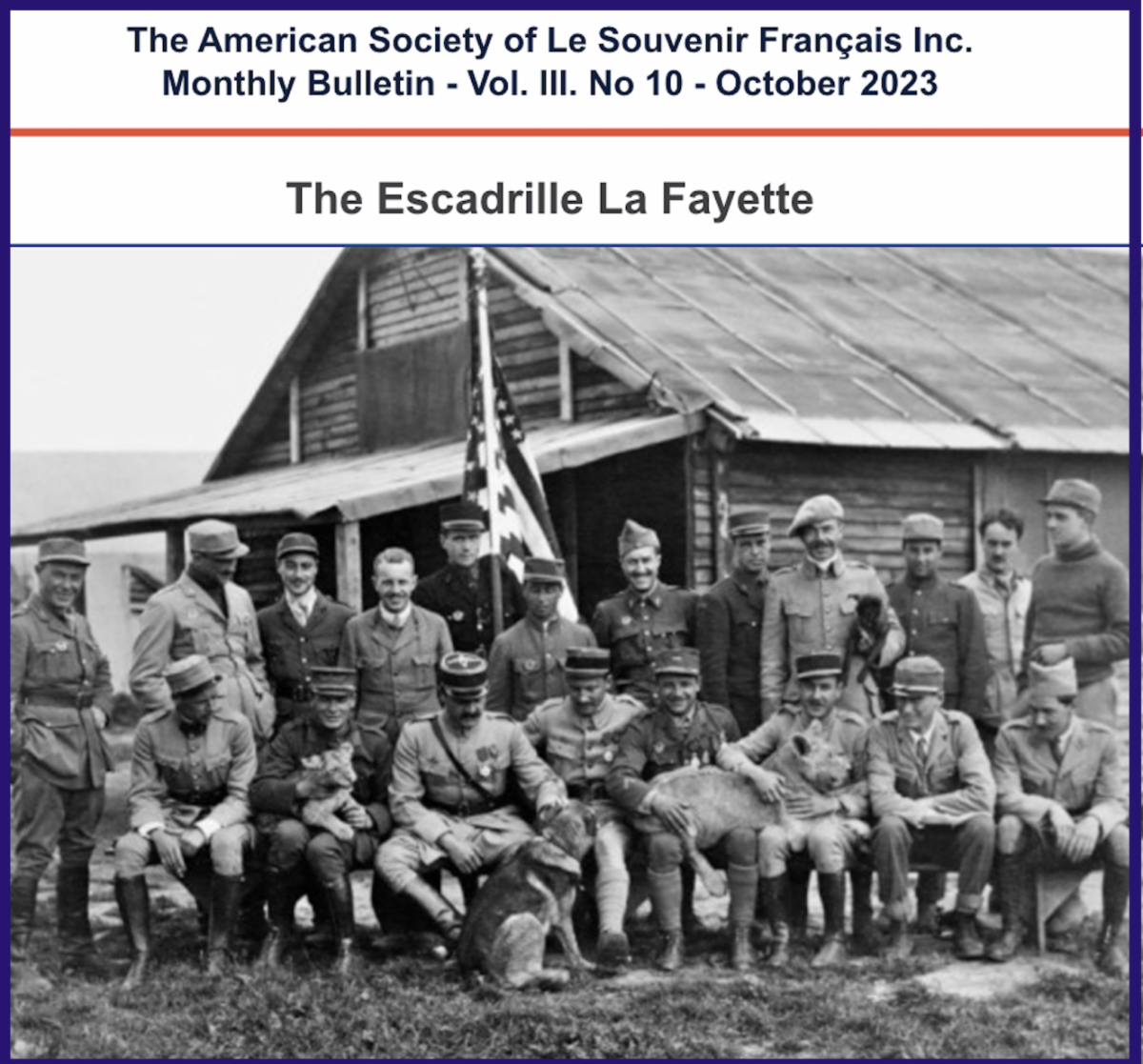
We continue our series started this past October with tributes to members of the Escadrille Lafayette, later part of the Lafayette Flying Corps. For access to our Bulletin dedicated to the Escadrille Lafayette, please click on:
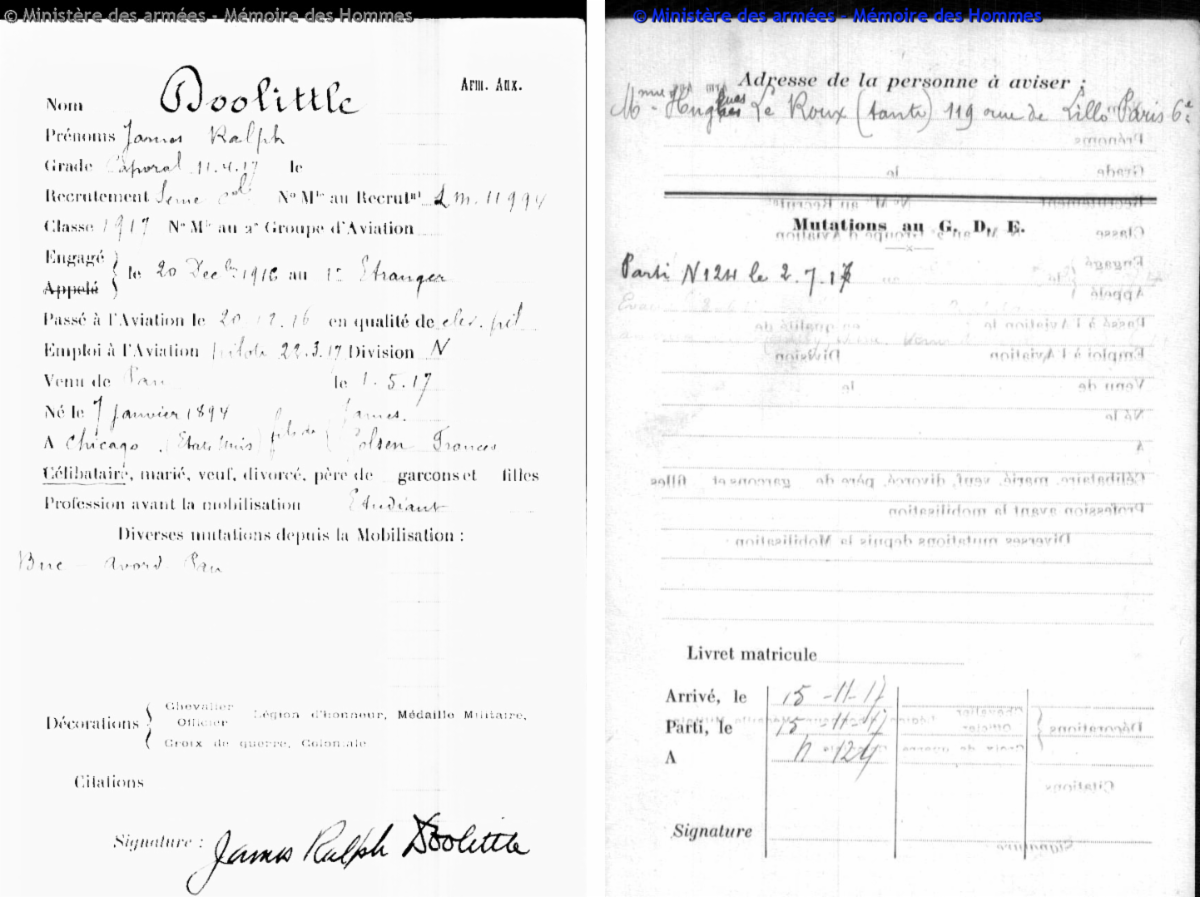
This month, we pay hommage to James Ralph Doolittle, the 37th volunteer of the Lafayette, was born in Chicago on 6 January 1894. He was the son of James R Doolittle, a publisher. Initially, Doolittle served in the Norton-Harjes Ambulance Service before transitioning into aviation. Unfortunately, on 2 May 1917, while piloting a French-made Spad biplane, the aircraft side-slipped into the ground, resulting in a broken ankle and severe facial cuts. As a result, he spent a total of 8 weeks in the hospital and was left with permanent scars. Despite this setback, Doolittle joined the Lafayette Escadrille on 2 July 1917.
On 17 July, while en route to the squadron's new base at Dunkirk, Doolittle found himself lost in the clouds. During this disorienting situation, he was shot down by German fighters, sustaining two leg injuries. As he descended, British anti-aircraft fire wounded him further as they attempted to deter his pursuers. Upon landing behind the British lines, his Spad overturned, reopening his previous facial wounds. Following his recovery, Doolittle was released from the French aviation service to return to America. There, he became a civilian instructor for the US Air Service.
During his time at Kenilworth Field near Buffalo, NY, Doolittle encountered Miss Mary Louise Thomas of Buffalo and the two became engaged. Tragically, just one week before their scheduled wedding, Doolittle was piloting a prototype Curtiss aircraft powered by a Liberty Motor. While attempting a sharp turn, he lost control. The aircraft subsequently crashed from an altitude of 300 feet, resulting in the death of his passenger and fatal injuries for Doolittle. He passed away one hour later on 26 July 1918. Eventually, his ashes were relocated to the Lafayette Escadrille Memorial in France.
Errata from our past Bulletin: there are 9 (not 25) French military personnel from World War One buried at Arlington National Cemetery. Our Society plans to honor as well William John Mckerness with a "Never Forget" rose at a ceremony on Memorial Day, 2024. Although this is not engraved on his cross, he was officially declared "Mort Pour la France".
|
|
ANNOUNCEMENTS AND SAVE THE DATES |
|
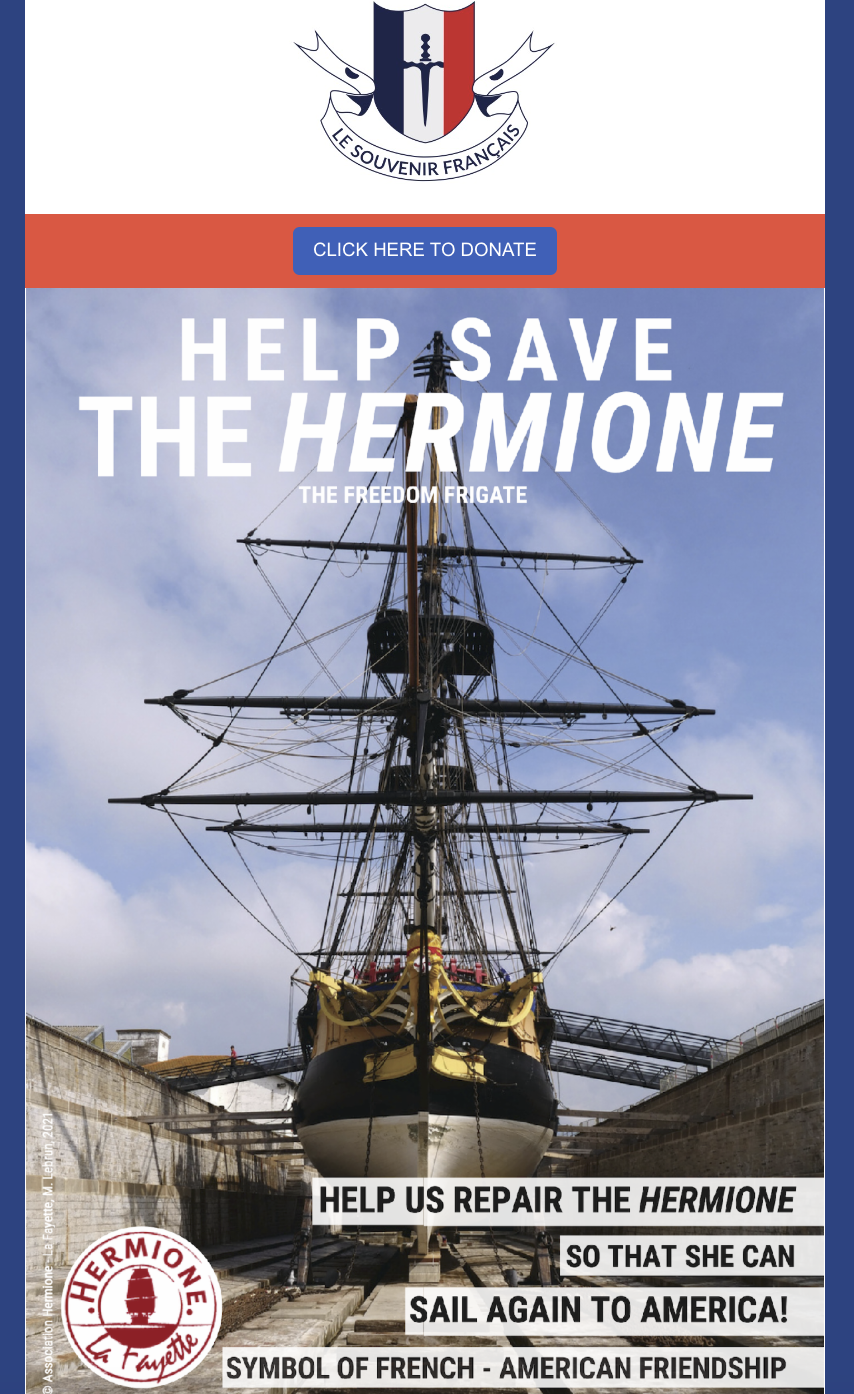
Our Hermione Fund raising appeal continues!
|
|
• In November, our Society kicked-off the US Fund raising campaign to help Save the Hermione and have it sail back in time for the United States Semiquicentennial. This is an ongoing campaign and all donations are tax-deductible.
|
|
"Merci Train" 75th Anniversary Celebrations |
|
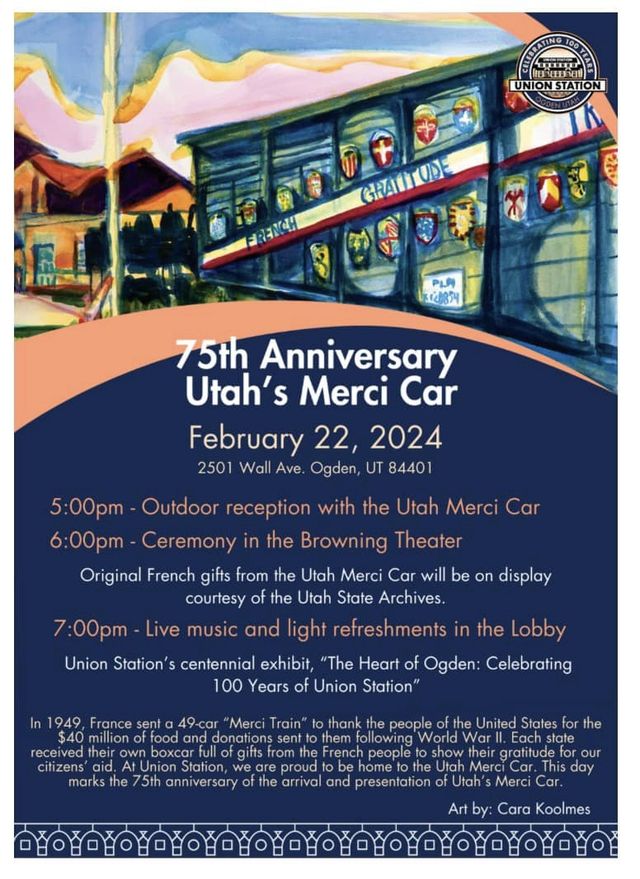
• Our November 2022 Bulletin narrated the incredible story and ongoing legacy of the "Train de la Reconnaissance Française", affectionately called "The Merci Train" (November 2022: "The Merci Train, 49 boxcars of French gifts"
• 2024 is the 75th anniversary of the "Merci Train", a gesture of friendship and gratitude from the French people to Americans who gave 49 boxcars full of gifts for each State in 1949.
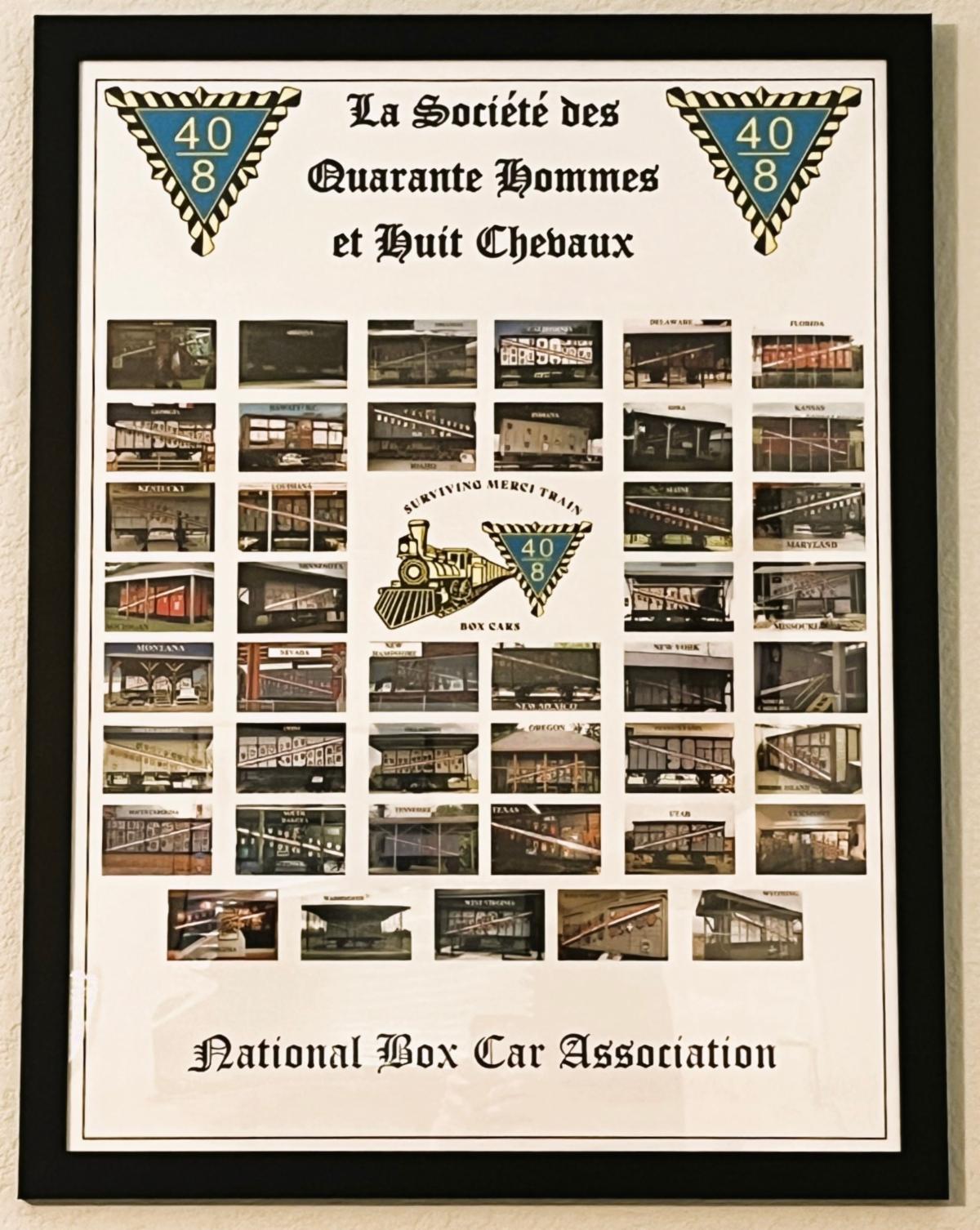
• The Merci Train, the 40&8 National Box Car Association and many other local organizations, custodians of the various "Merci train" boxcars in several States are planning celebrations throughout the year. We are honored to help get the word out.
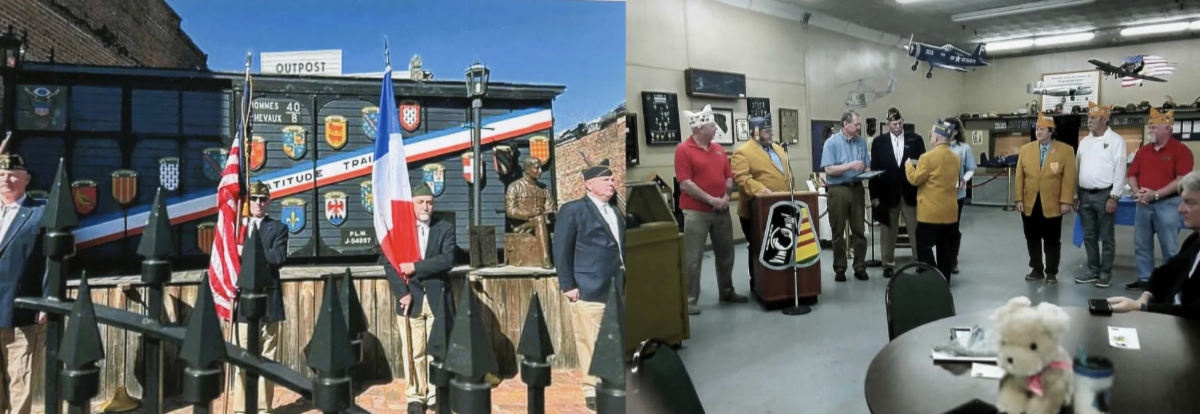
• If you're in the Las Vegas area on the 25th, come down to the Nevada State Railroad Museum, 601 Yucca Street, Boulder City, NV 89005 for our 75th Anniversary commemoration. Members from Voiture 306 will be there from 1000-1400 on the 24th and 25th, with the official ceremony on the 25th at 1300.
• The Historic Museum of Holly Hill is planning with our Society, represented by Brigitte van den Hove-Smith, Déléguée Générale Adjointe, South East USA a special commemoration in Holly Hill, Daytona Beach, FL at the Florida boxcar on November 11 at 11:00AM. Stay tuned for more details!
Our Society applauds the dedication and efforts of the American Legion and all the patriotic associations all over the United States who are the custodians of these boxcars. Their preservation work and dedication are admirable.
|
|
Houston, TX.
February 2, 2024
|
|
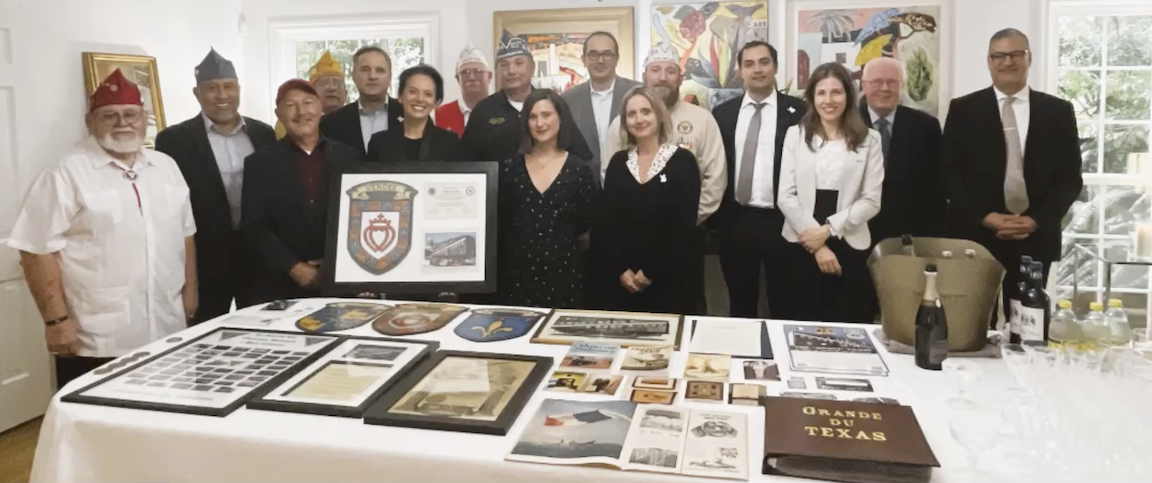
Seven members of Grande Voiture du Texas were guests of the Consul General of France in Houston, Mrs. Valérie Baraban hosted the Texas Voyageurs along with members of the French Veterans of Texas, Souvenir Français and Honor Flight Houston.
Grand du Texas Attendees included: Grand Chef de Gare Keith Reiss Jr, Grand Chef de Train Jim Sweeney, Grand Directeur Boxcar David Knutson, Locale Correspondant Onorio Villarreal, Voyageur Militaire Jose “Tony” Lopez, Voyageur Militaire Rolando Salinas and Sous Chef de Chemin de Fer John Rodgers.
French Guests included: Lex Parker and Nadia Teyssier / French Veterans in Texas, Bruno Cateni / Regional Delegate, American Society of Le Souvenir Français, Inc and Gary Watt / Honor Flight Houston.
|
|
Bishopville, South Carolina
February 3, 2024
|
|
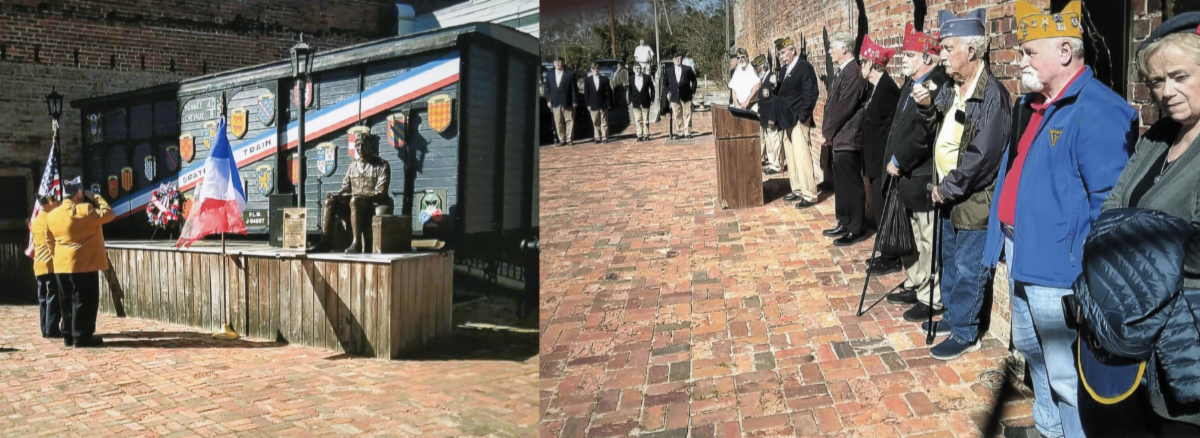
75th Anniversary event hosted by the Grande Voiture du South Carolina!
"Dignitaries and Guests leading the South Carolina boxcar 75th Anniversary event at Bishopville S.C.Ron Williams at the podium and on his left is Honorary Consul of France Luc Chasleries in Charleston. Presentation of Colors was by the Honor Guard of Bishopville. During the ceremony, the National anthems of the United States and France were played (Photo by Carolyn Cumalander). Presentation of the wreath to honor the American and French soldiers of WW1 William Simpson and Brian Masterson of the South Carolina Grande. Inside the Lee County Veterans Museum at Bishopville, S.C.. William Simpson and the 40&8 Grande du South Carolina Leadership presented Ron Williams with a $1,000.00 check for sustaining the upkeep of the South Carolina boxcar. The Honorary Consul of France Mr. Luc Chasleries is sitting in the right edge of the picture. He gave kind and informative remarks just prior to this presentation"
|
|
If you don't have one of these posters and the Merci Train posters, please contact National Box Car Association Secretaire Virgil Blum via email. You can find his contact information at the Forty & Eight website: https://www.fortyandeight.org/box-car/
Funds raised help support the National Box Car Association and their programs!
|
|
Almost Sold Out!
March 7, 2024
Launch of Lafayette's Farewell Tour Bicentennial
Under the high patronage of His Excellency
Mr Ambassador Nicolas de Rivière,
Permanent Representative of France to the United Nations in New York
|
|
Please join the American Friends of Lafayette for an extraordinary evening filled with elegance, culture, and philanthropy and help RAISE FUNDS for the Lafayette Bicentennial KICK-OFF in August 2024.
Thursday, March 7, 2024 at 7:00pm EST
972 5th Ave, New York, NY
Spend an evening with General Lafayette and his heroic wife Adrienne. Immerse yourself in a journey through time, experiencing the sophistication of French culinary refreshments, while relishing the tastes and aromas that have delighted palates for centuries. This exclusive event offers a unique blend of 18th-century American and French history, coupled with the luxury of the 21st century. From exploring the opulent halls of the Villa Albertine, sampling 18th-century dances and amusements, a chance to take home unique Lafayette merchandise, and indulging in a feast for the senses, this evening guarantees an unforgettable experience.
Highlights of the Evening:
• Indulge in A Culinary Extravaganza: Delight your senses with a curated menu of flavors reflecting the bounty of the French countryside, providing a unique culinary experience.
• Stroll Through History: Wander through the opulent halls of the Villa Albertine a living testament to the elegance of a bygone era.
• Meet General Lafayette and his Heroic Wife Adrienne: Be in the esteemed company of General Lafayette, a figure synonymous with the spirit of liberty, and his heroic wife Adrienne, adding an extra layer of grace and charm to the festivities.
• Immerse Yourself in the Splendor of Historical Dance Presentations: Enjoy the enchanting spectacle of costumed dancers evoking the grace and elegance of the past. Guests are invited to join in the festivities and try their hand (or feet) at these timeless dances adding a dynamic and participatory element to the evening.
• Experience the Charms of 18th Century Gaming: Transport yourself to bygone eras as you participate in classic pastimes such as skittles and whist infusing the evening with a delightful playfulness and offering a charming glimpse into the entertainment of yesteryear.
• Bid on Lafayette Items: The evening will feature special Lafayette items to be auctioned in live and silent format offering you a unique opportunity to take home a piece of history while supporting this noteworthy cause.
Special Access to Villa Albertine:
Situated across from Central Park and on Museum Mile the Villa Albertine boasts an iconic location that seamlessly blends historical significance with modern allure. Immerse yourself in the enchanting ambiance that combines the essence of Renaissance Europe with the sophistication of 21st-century New York. Your attendance not only enhances the grandeur of the evening but also contributes to a noble cause.
Individual tickets will sell for $150. Tickets and sponsorship opportunities will be available soon. Look for an email regarding ticket sales.
Of Note:
-
All proceeds generated from this event will support the August 2024 kickoff events in New York City for the Bicentennial Lafayette Farewell Tour commemorating the General’s 13-month journey through America as the “Guest of the Nation” between 1824 and 1825. For more information on the tour visit www.Lafayette200.org
- A portion of every ticket purchase is tax-deductible, as The American Friends of Lafayette is an IRC 501(3)(c).
We eagerly anticipate the pleasure of your company as we celebrate the iconic General Lafayette and his heroic wife, Adrienne, supporting a worthy cause in an evening that promises to be nothing short of magical.
|
|
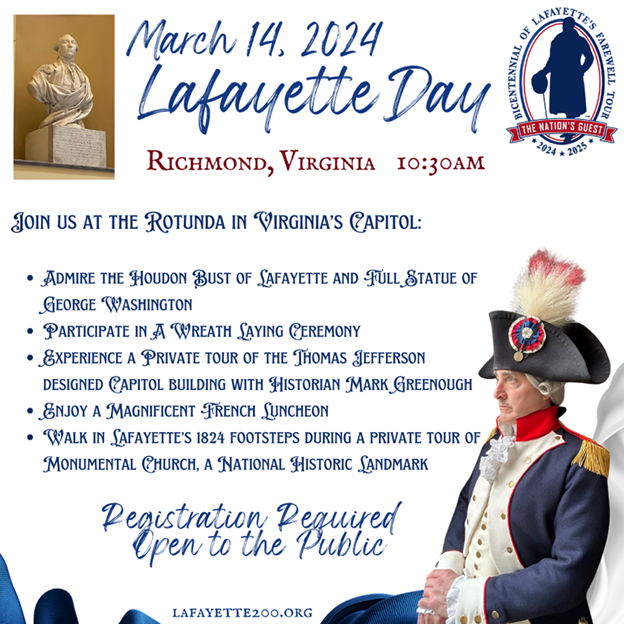
Lafayette Day in Virginia
March 14, 2024
An announcement from the American Friends of Lafayette
|
|
On February 24, 2015 the Virginia Assembly passed House Joint Resolution No. 797 “Designating March 14, in 2015 and in each succeeding year, as a Day of Honor for the Marquis de Lafayette in Virginia.”
We will gather once again, for the 10th time at the Virginia State House on March 14, 2024 at 10:30am. We expect many dignitaries in attendance.
The itinerary for March 14th, 2024 is:
- 10:30am: We will start with the Lafayette Day ceremony in the Rotunda of the Virginia State House (1000 Bank St. Richmond, VA 23219). Pay parking lots and decks are nearby on 8th & Grace Streets and 7th & Marshall Streets. PLEASE NOTE: The entire day's events are within walking distance, so you will only need to park your car once.
- The Virginia Statehouse houses the oldest elected legislative body in North America. We will conduct a wreath laying ceremony (again, 10:30am) in front of Houdon’s Lafayette bust (see above) and Washington's statue in the Capitol Rotunda. This is a free event.
Immediately following the ceremony, we will:
- have a private tour of the Capitol Statehouse. This is a not-to-be missed tour (even if you've done it before). This is a free event. We will then walk over to….
- a group luncheon within walking distance of the statehouse (Meriwether's). This lunch was a HUGE hit in year's past as the chef flexes his culinary muscles with a delicious and authentic French four-course meal, (Mushroom Soup, Salad Nicoise, Coq au Vin, Creme Brulee) ($35pp)
Our magnificent, limited edition, Lafayette Bicentennial Calendars will be sold at this luncheon. Bring cash. Don't miss out.
- After lunch, we will walk over to Monumental Church for a private tour (this is a free event). Lafayette visited this unique church during his farewell tour. Monumental Church is also the scene of one of the most horrific tragedies of the 19th century. We will be given a tour of this architectural masterpiece by a local historian.
|
|
The "French American Wounded Veterans
Sustainable Fashion Show"
|
|
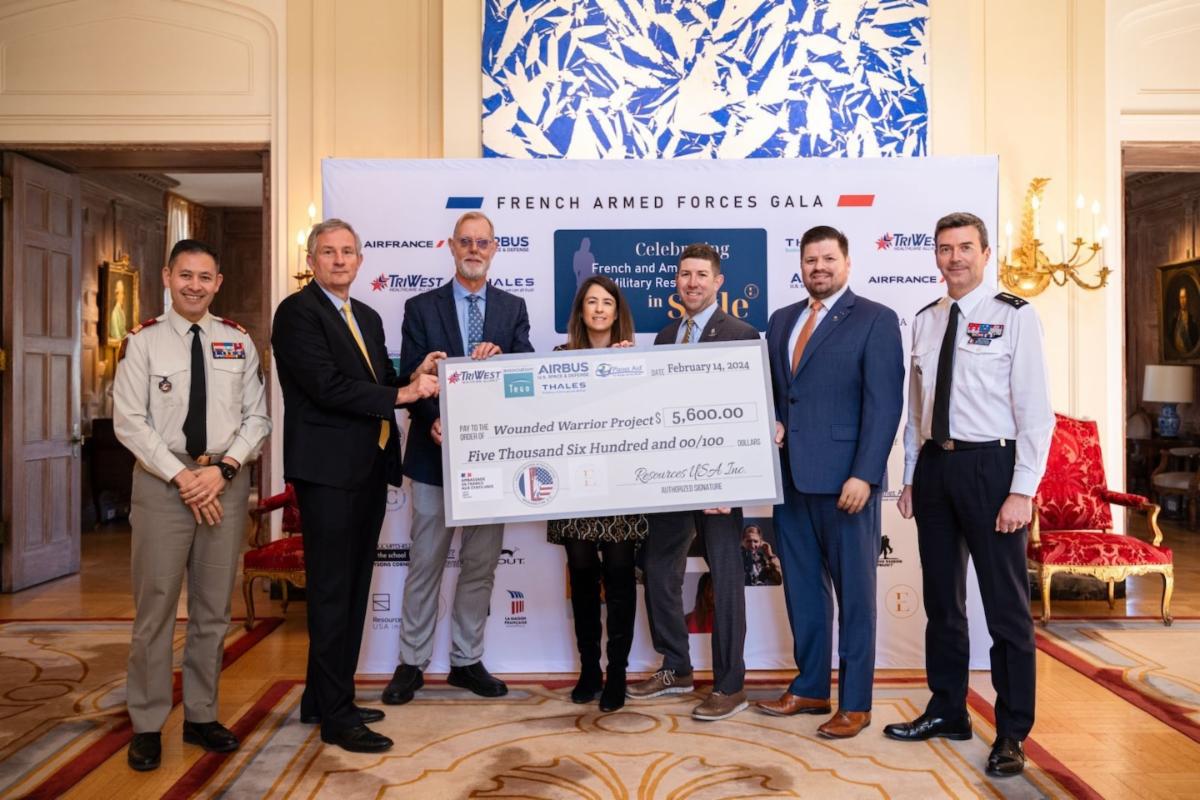
His Excellency Mr. Laurent Bili, Ambassador of France to the United States, General Jardin, Defense Attaché and Valérie Coulloumme-Labarthe, ENCORE-dc, with the presence of Fred Olsen - CEO of Planet Aid, Inc, officially gave Wounded Warrior Project the money that has been raised thanks to the "French-American Wounded Veterans Sustainable Fashion Show " organized last November 14, 2023, for the French Armed Forces Gala at Ambassade de France aux Etats-Unis. Terre Fraternité, the French counterpart of WWP will receive it in the coming weeks in Paris.
Both associations received a $5,600 donation check. “The funds we received from the event will be used to support programs focused on connection, independence, and mental, physical, and financial wellness – a 360-degree model of care and support.” saidJose Ramos, vice president of government and community relations for WWP.
ENCORE is very proud to have produced a show that contributed to this endeavor and ...that's only the beginning! We want to go bigger and show how much we can do when we are together - both for the Veterans and for the audiences, who get such a life lesson about courage, resilience and tenacity from our wounded models.
|
|
80th anniversary of D-Day - events in preparation |
|
There will be countless official ceremonies celebrating the 80th Anniversary of D-Day on June 6, 2024, at the beaches of Normandy, in Paris, and at commemorations with the participation of French Consulates throughout America.
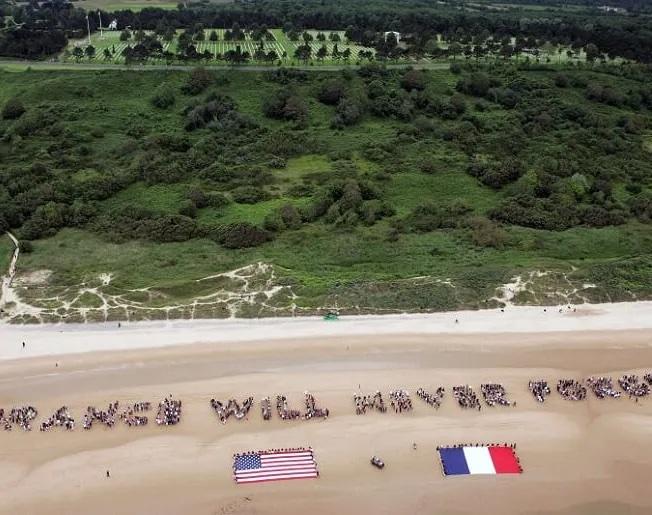
• We are proud to announce that our First Vice-President, Patrick du Tertre, who is also co-Founder of TheFrenchWillNeverForget.org, along with Paul Bensabat, Jean-Pierre Heim, and Christian Millet (in memoriam), are planning a momentous celebration in Paris, with 1,944 schoolchildren waving American and French flags at the foot of the replica of the Statue of Liberty, Pont de Grenelle, with the Eiffel Tower in the background. This event is supported by Le Souvenir Français in France and will be joined by many French and American local patriotic associations, including Post#1 of the American Legion in Paris.
More details in our next Bulletins…. TheFrenchWillNeverForget is collecting funds to support this event, and welcomes any idea around the concept. You can contact Patrick directly at patrick@dutertre.com
• We are also proud to announce that our Society will honor Anna Marly, the composer of the "Chant des Partisans", who is buried in Palmer, Alaska, on June 7th. Her hymn galvanized the French Resistance and became the second unofficial French national anthem. She became an American Citizen in 1965. The wreath-laying will be done by the French Honorary Consul in Alaska, Ms. Sonia Lelarge, in cooperation with the Alaska Chapter of the Daughters of American Revolution and other local associations. More details in our next Bulletins.
• You may remember that 3 years ago we also supported premiere in New York
the incredibly moving documentary "The Girl Who Wore Freedom", by filmmaker Christian Taylor.
This is the perfect time to view it again, or for the first time! It is now widely available on several platforms such as AppleTV or Amazon Prime Video. For a complete list, visit: https://thegirlwhoworefreedom.com/
• We are pleased to relay this announcement from Delta Airlines (who also generously transported the heroin of the documentary, Danièle Patrix Boucherie).
News release - February 12, 2024
For the third year in a row, Delta Air Lines is honored to fly 60 World War II veterans back to Normandy, France, to commemorate the 80th anniversary of the D-Day invasion that catalyzed the war’s end – marking only the third time a U.S. passenger airline will fly directly to Normandy, with the other two being the Delta Charter flights to Normandy in 2022 and 2023.
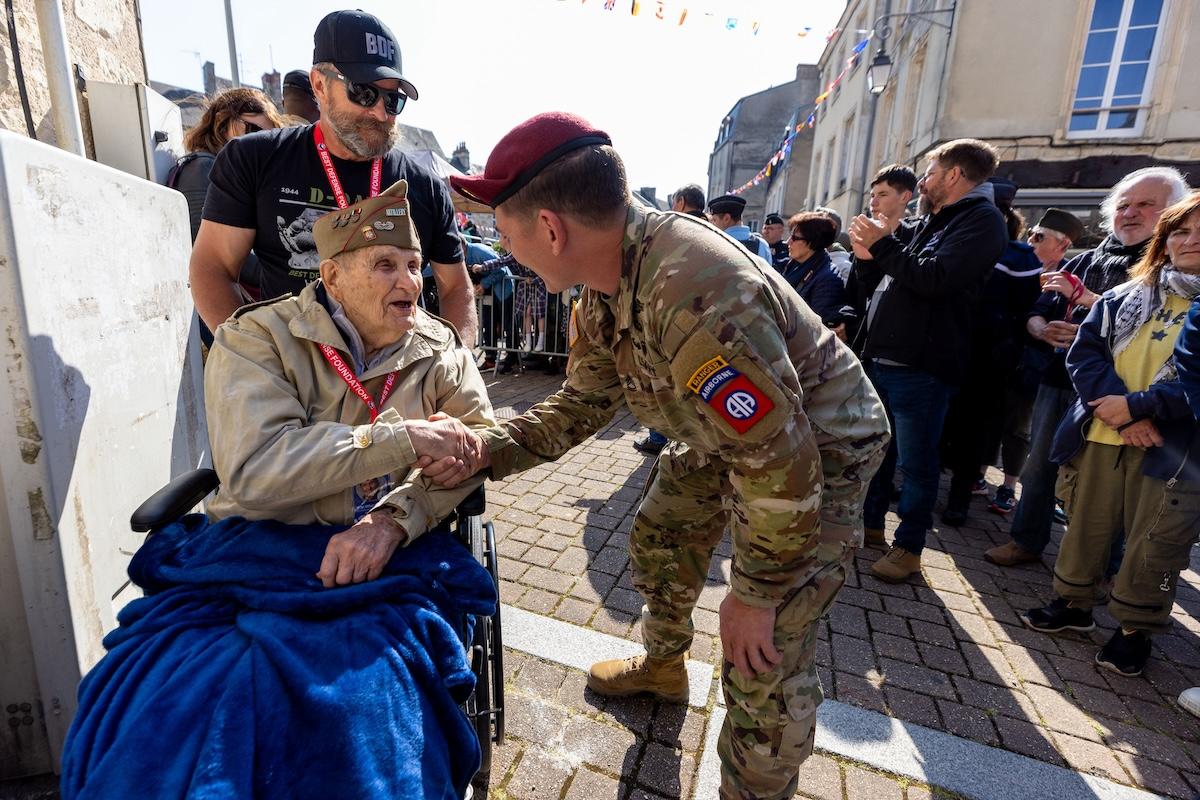
In partnership with Best Defense Foundation and the support of Michelin North America, Inc., Delta will provide a special charter flight directly to Deauville, Normandy Airport from Atlanta on June 2 on a Boeing 767-300, returning June 12, to support the veterans as they are recognized and celebrated with parades, school visits, ceremonies, the official D-Day Commemoration and more.
Best Defense Foundation provides caretakers for each WWII veteran throughout the program, including 15 Delta employees from its Veteran Business Resource Group – who receive special training to provide the safest and most memorable experience for the veterans. The airline is also piloting a volunteer program this year for its employees, which will pair an employee with a WWII veteran to build a relationship and offer support throughout the year.
“It is our privilege to celebrate and honor these heroes by flying them directly to Normandy and recognizing their incredible sacrifices and contributions to the world,” said Delta CEO Ed Bastian. “Supporting our armed service members and veterans, which we have proudly done throughout our history, is central to Delta’s values of always putting people first.”
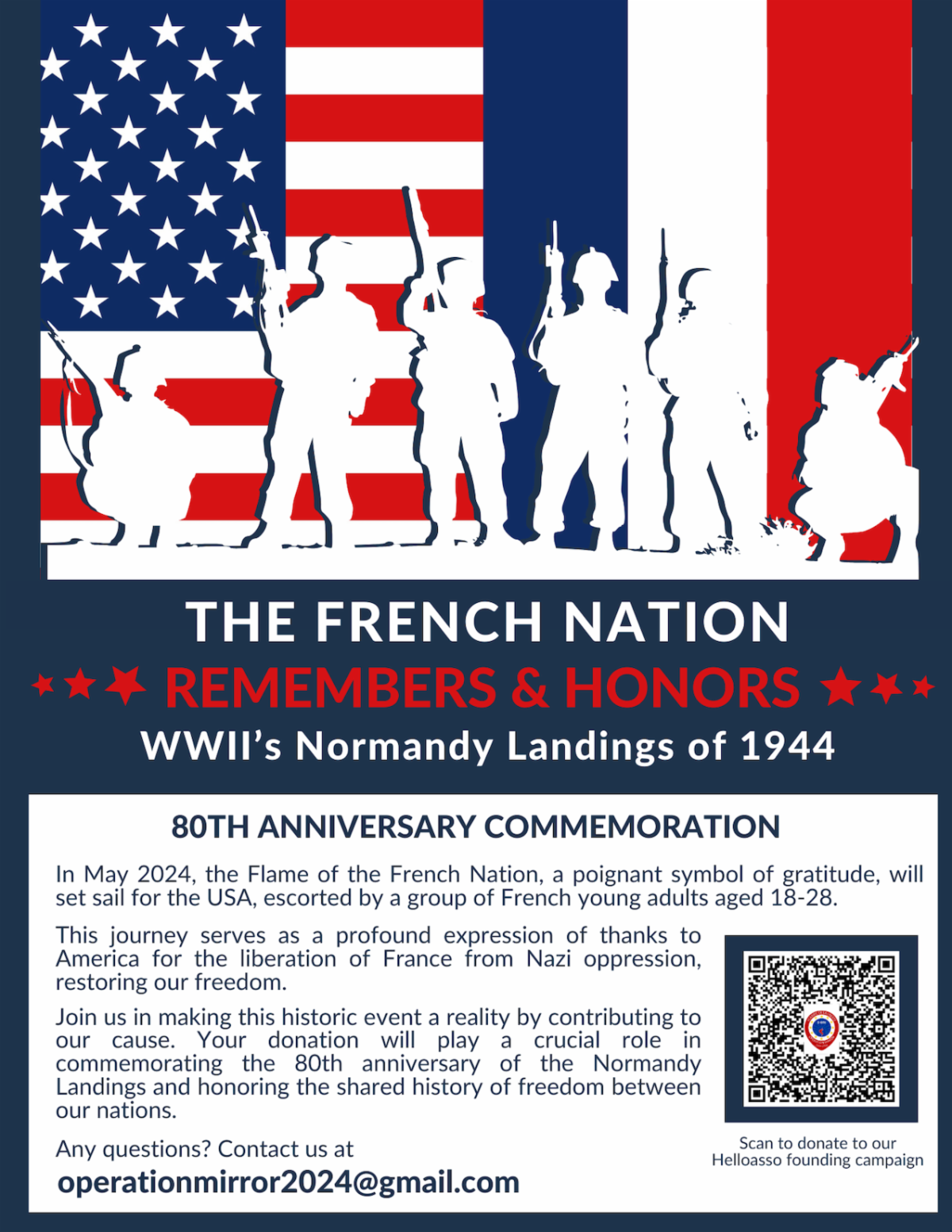
• "Operation Mirror 2024": Flame of Liberty from the arc of Triumph, Paris to Arlington National Cemetery
As part of the 80th anniversary of the Normandy landings, the organizers of the "Flame of Liberty" plan to physically transport the Flame of the French Nation to the United States. The flame will make a stopover in the United Kingdom, which played a significant role in the liberation and served as the departure point for the Allied armada. A replica of the flame will be placed at Southwick House, near Portsmouth, which served as the headquarters for the Allied naval forces during 1943. It was at this location that General Eisenhower decided to postpone the landings until June 6, 1944. Additionally, the project aims to place this French flame on the tomb of the Unknown Soldier at Arlington National cemetery in Virginia. This gesture is intended to express France's gratitude to its two allies, as their commitment was crucial in regaining its freedom. The "Flame of the Nation", which has been burning since November 11, 1923, on the tomb of the Unknown Soldier under the Arc de Triomphe, will be collected on May 8, 2024, around 7:30 pm, following the daily rekindling of the flame. It will be transported in a convoy of vintage 1944 military vehicles along the "Voie de la Liberté" from the village of Saint Symphorien-le-Château. 44 young Frenchmen will accompany the flame on its 915 km journey from Paris to Cherbourg, cross the Atlantic on board a Cunard cruiseship, land in New York and ultimately reach Arlington, VA. This project is placed under the High Patronage of Mr. Emmanuel Macron, president of the French Republic.
Le Souvenir Français in Paris, which is an association placed under the high patronage of the president of the Republic, is an official partner.
|
|
OUR NEXT ANNUAL GENERAL ASSEMBLY
As per our By-Laws, our Society will hold its annual General Assembly during which the President will present its annual report and the Treasurer the annual 2023 financial statements.
This meeting will be held on Zoom on Thursday, March 14, from 6:00PM to 6:30PM at the following link.
Meeting ID: 862 4486 6158
---
One tap mobile
+16465588656,,86244866158# US (New York)
+16469313860,,86244866158# US
Important: Meeting is open to all Members current with their 2024 dues.
|
|
PAST MONTHLY BULLETINS
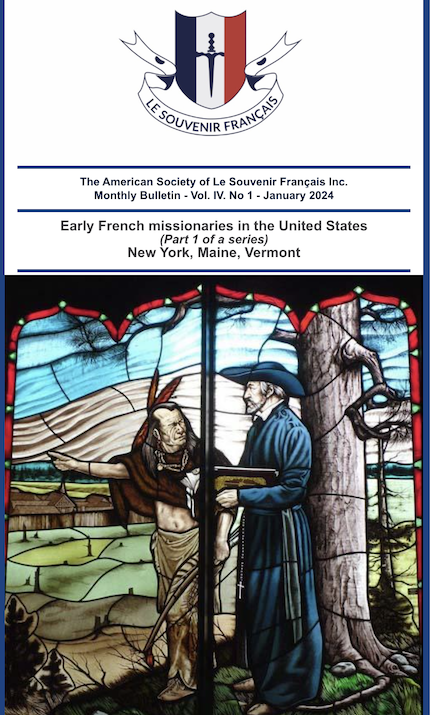
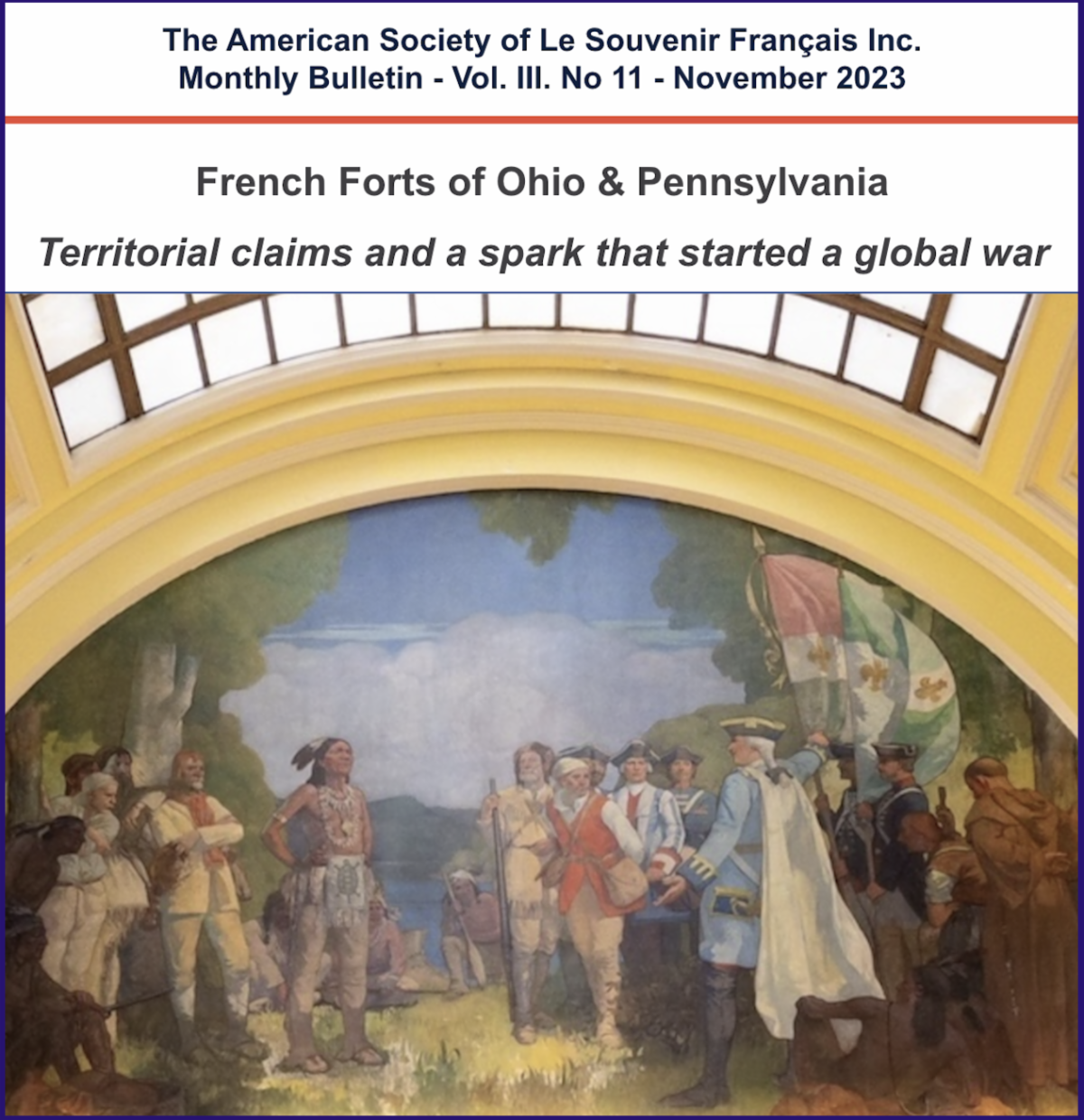
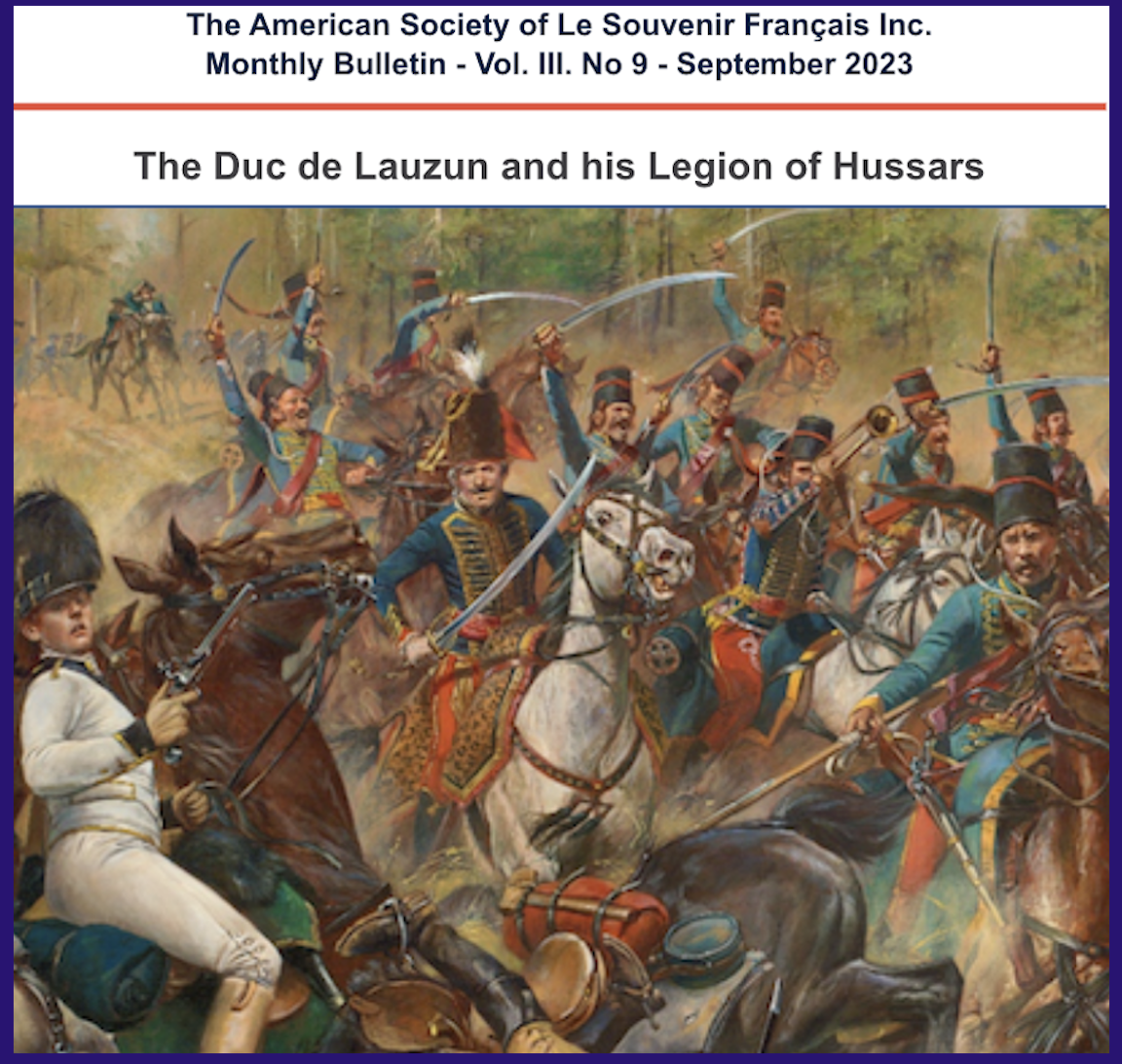
OUR GOAL: turn the spotlight on a famous, or less famous, episode or historical figure during the long shared history between France and the United States, with illustrations and anecdotes.
You can have access to all our past 2023 monthly Bulletins
(in English and French) by clicking these thumbnails below or by
|
|
CALENDAR OF EVENTS 2024
List is subject to change. All dates to be confirmed
|
|
2024 promises to be a busy year with several projects and events!
It will be the start of the Bicentennial of Lafayette's Farewell Tour with many, many events starting in August, to celebrate his triumphal tour as "Guest of the Nation" throughout 24 States and lasting 13 months! This Bicentennial is organized by The American Friends of Lafayette and we will provide in future bulletins all details.
• Thursday, March 7: fund raising gala at Villa Albertine, NY by the American Friends of Lafayette
• Thursday, March 14: Virginia Lafayette Day
• Sunday, May 5: celebration of French Alliance Day at Washington Memorial Chapel, Valley Forge, PA
• Monday, May 27: Memorial Day
• May 23-25: "Operation Miroir" In honor of the 80th Anniversary of
D-Day: Fifty young French students will carry "La Flamme de la Nation" from the Arc de Triomphe in Paris to Arlington National Cemetery
• Thursday, June 6: D-Day allied landing in Normandy celebration
• Thursday, June 6: TheFrenchWillNeverForget.org is planning a memorable event in front of the replica of the Statue of Liberty in Paris at the Pont de Grenelle, with the Eiffel Tower in the background, with 1,944 schoolchildren waiving American and French flags. With the support of Le Souvenir Français in Paris and several other French and American patriotic associations.
• Friday, June 7: American Society of Le Souvenir Français wreath-laying at Anna Marly's grave, Pioneer cemetery, Palmer, Alaska (composer of Le Chant des Partisans) by Mme Sonia Lelarge, Honorary Consul of France in Alaska, in cooperation with the Daughters of the American Revolution.
• Tuesday, June 18: Appel du 18-Juin
• Friday July 5: annual wreath-laying at the tomb of general Lafayette at Picpus cemetery, Paris, by the American Ambassador.
• Weekend July 12-13-14: annual wreath laying ceremony in front of the Statue of Rochambeau in Newport, R.I., homage at the tombs of Admiral de Ternay, Chevalier Pierre Rousseau de Fayolle, LT Benjamin de la Villemarais at Trinity Churchyard and "Tribute to France"
• Saturday, July 13: Bastille Day celebration in Central Park
• Thursday, August 15: 80th anniversary of Allied landing in Provence
• Friday, August 16: Lafayette Farewell Tour Bicentennial Parade on Broadway
• Friday, October 18: stele and boulder with bronze plaque honoring by name the hussars who died at the Battle of Hook, to be installed between our two markers at Abingdon Elementary School park.
• Saturday, October 19: celebration of French-American Victory at Yorktown, dedication of a bronze plaque "Sailors buried at sea” at the French Memorial
• Sunday, November 10: Annual wreath-laying at the 463 "Morts Pour la France", Notre Dame Church in Manhattan
• Monday, November 11: Veterans Day / Armistice Day, 5th Avenue Parade in NYC, Washington DC, Houston, TX
• Monday, November 11: wreath-laying ceremony at the Merci Train boxcar in Holly Hill , Daytona Beach, Florida
Exact dates to be announced in the future:
• Tribute at Varian Fry's grave, Green-Wood cemetery, Brooklyn, NY (Righteous Among the Nations)
• Ceremony at the Texas "Merci train" boxcar at Camp Mabry, Austin, TX
• Ceremony to honor the memory of 8 French Soldiers who are buried by Old St. Peter's Church in Old Hillside Cemetery, Cortlandt, NY
• Re-dedication: La Pérouse Memorial restoration at LaPerouse Bay, Maui, HI
• Dedication of 4 commemorative plaques in honor of the 4 American “Companions de la Libération”: General Dwight D. Eisenhower, John Hasey, James Worden, Jacques Tartière
• Sculpture of Le Petit Prince in Miami, Florida
• Dedication of a bronze plaque honoring "Le Tigre" French prime minister Georges Clemenceau in New York, where he spent four years as a young journalist from 1865-1869
• Dedication of a bronze plaque at Gramercy Park, New York, honoring Varian Fry who lived in Marseilles in 1940 and 1941 and helped many jews escape to America.
• Dedication of the Memorial to 4 soldiers from the Royal-Deux Ponts regiment who are buried in the vicinity of the Odell House – Rochambeau Headquarters
• Other sites of exhibits in France of the touring US Unknown Soldier exhibition in Paris will be announced as they are confirmed.
• Statue of Alexis de Tocqueville, author of the 1835-1840 classic "Democracy in America" (university site TBD)
• Bronze plaque to the memory of 3 soldiers of the Auxonne, Saintonge and Soissonnais regiments who died at West Point in 1782.
• Bust of Antoine de Saint Exupéry at the Intrepid Pier, New York
• Commemoration at Odet Philippe's monument, Philippe's Park, Safety Harbor, FL (Founder of grapefruit industry in Florida)
• Bust of Jean Ribault, site of the Trinity shipwreck, near Cape Canaveral, FL
• Beautification of "Matanzas" marker at the site of Jean Ribault's colony massacre in 1565, Saint Augustine, FL.
Last but not least, we will pursue our national fund-raising campaign in partnership with other US patriotic and cultural organizations to help the frigate Hermione sail again and participate in the upcoming semiquincentennial (250th anniversary) of the United States.
Help us make these a reality with your tax-deductible financial support!
You are welcome to specify the project(s) you wish to help.
Un grand "Merci"!
|
|
OUR MISSIONS:
• To preserve the memory of the French soldiers, sailors and airmen who gave their lives for freedom, and who are buried in the United States.
• To honor French Citizens who did great deeds in the United States, or with a strong connection with the United States,
• To promote the appreciation for French culture and heritage in the United States, and the ideals that unite our two nations, in order to pass the torch of memory to younger generations.
• To strengthen the long-standing traditional bonds of friendship between the American and French peoples, and to this end: erect or maintain memorials and monuments and encourage historical research, public presentations and publications in the media.
The American Society of Le Souvenir Français, Inc. is an independent American corporation, apolitical, established in 1993 in NY, with 501 (c) 3 non-profit status.
|
|
Board of Directors
American Society of Le Souvenir Français, Inc.
Members (2024):
Françoise Cestac, Honorary President • Thierry Chaunu, President, and General Delegate, Le Souvenir Français in the United States • Yves de Ternay, Treasurer • Patrick du Tertre, 1st Vice President • Henri Dubarry • Francis Dubois • Alain Dupuis, 2nd Vice President & Deputy General Delegate, Le Souvenir Français in the United States • Daniel Falgerho, General Secretary • Pierre Gervois • Caroline Lareuse • Clément Mbom, Education Advisor • Jean-Hugues Monier, Auditor • Harriet Saxon • Nicole Yancey
Regional Delegates:
Jacques Besnainou, Great Lakes and Midwest • Bruno Cateni, South
Prof. Norman Desmarais, New England • Alain Leca, Washington D.C. •
Marc Onetto, West Coast • Brigitte Van den Hove – Smith, Southeast • Nicole Yancey, Yorktown & Virginia, former Honorary Consul of France in Virginia
|
|
Help us implement several historic commemorative projects celebrating the 246-year-old Franco-American friendship and alliance! |
|
The American Society of Le Souvenir Français, Inc. is a registered NY State non-profit corporation and has full IRS tax exempt 501(c)3 status. All donations are tax deductible.
Copyright © 2024 The American Society of Le Souvenir Français, Inc.
All Rights Reserved
Merci de nous contacter si vous souhaitez recevoir ce bulletin dans sa version traduite en français.
Contact: Thierry Chaunu, President
500 East 77th Street #2017, New York, NY 10162
|
|
|
|
|
|
|