Rail Workers Weekly News Digest
Number 36 - September 8th, 2020
|
|
Below is a series of articles compiled over the previous week.
They are of interest to railroad workers and activists.
|
|
ARTICLE #1 - AMTRAK NEWS
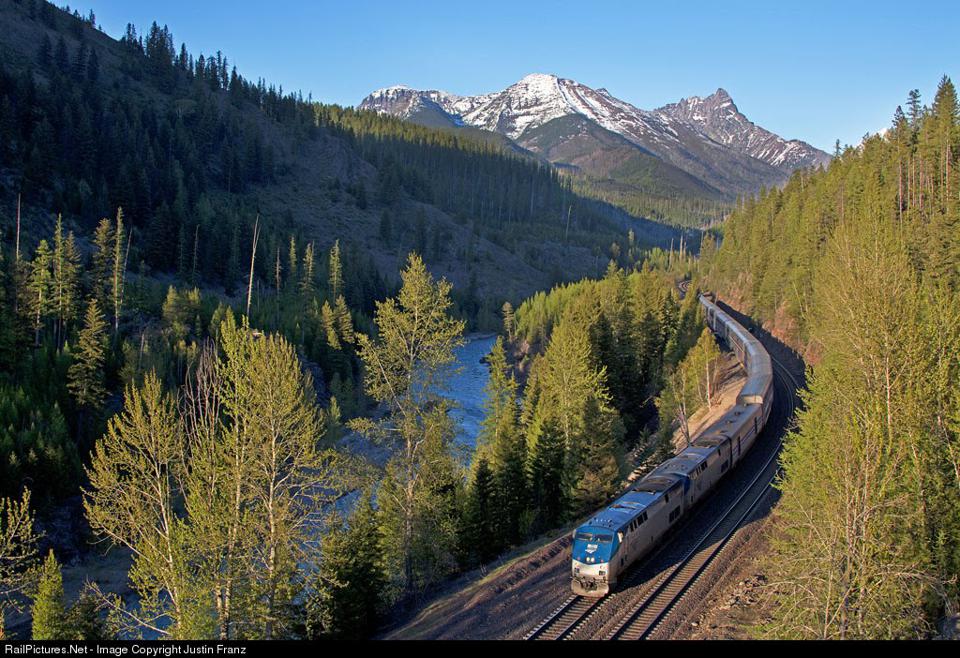
Amtrak to Furlough Nearly 2,000 Workers, Cut 100 Managers
|
|
Amtrak last week announced plans to furlough 1,950 workers and cut 100 management positions due to contracted operations and pinched finances.
For several weeks, the railroad conducted a thorough review of its fiscal-year 2021 operating plan and planned service levels, which revealed reduced staffing needs for the next fiscal year, Amtrak officials said in a prepared statement.
“While we have implemented initiatives to minimize the number of furloughs and involuntary separations, significant reductions remain necessary due to the slow recovery of ridership and revenue,” they said.
Brotherhood of Locomotive Engineers & Trainmen (BLET) leaders are urging members to ask their U.S. senators to adequately fund Amtrak, provided the railroad maintains full daily services to prevent the nearly 2,000 job cuts. The furloughs will impact about 400 BLET members.
“Earlier this summer, the U.S. House of Representatives passed the Moving Forward Act, which would have tripled Amtrak funding to nearly $29 billion,” BLET officials said in a press release. “It conditioned the extra funding on Amtrak maintaining service levels no lower than in 2019, and bars furloughs.”
“Congress must immediately provide this carrier with the funding it needs to preserve its operations and keep its employees on payroll. If lawmakers fail to do so, Amtrak won’t stop at 2,000 jobs,” they said. “The carrier could ultimately lay off nearly 50 percent of its staff, leaving communities in both urban and rural areas without a vital transportation lifeline, and sending 10,000 workers to the unemployment line.”
|
|
ARTICLE #2 - RAIL INFRASTRUCTURE NEWS
USDOT Releases National Freight Strategic Plan
|
|
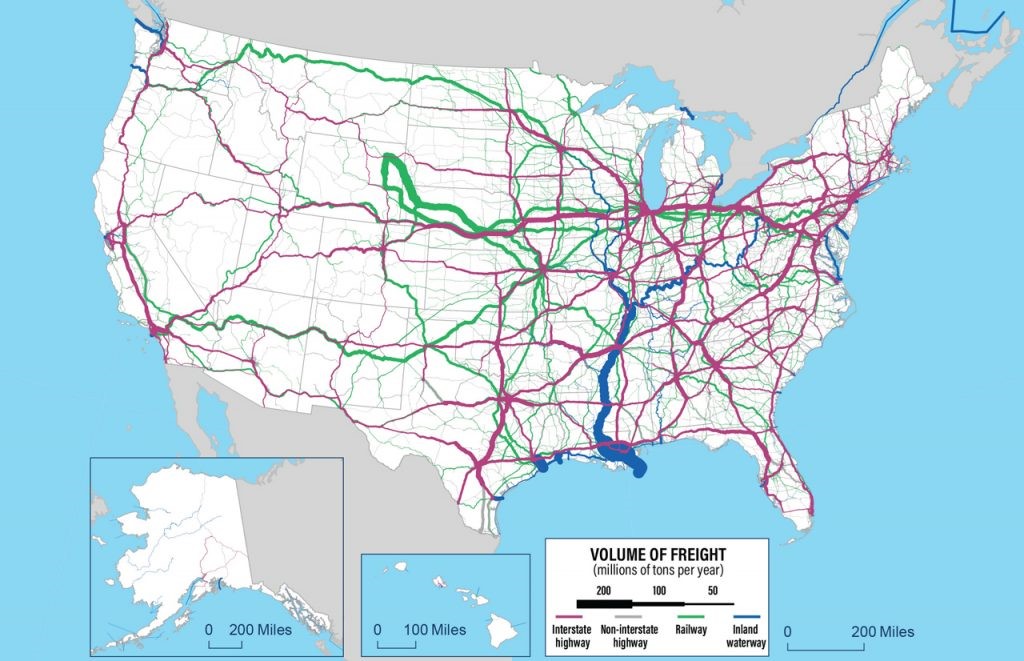
The United States Department of Transportation has released a National Freight Strategic Plan, which the agency says is the “first ever.” The NFSP, USDOT says, “lays out a vision for long-term investments in infrastructure, the workforce, and other essential parts of the freight system.”
The NFSP has three “goals,” each of which has “strategic objectives”:
Safety: Improve the safety, security, and resilience of the national freight system:
- Support the development and adoption of automation, connectivity, and other freight safety technologies.
- Modernize safety oversight and security procedures.
- Minimize the effects of fatigue and human error on freight safety.
- Reduce conflicts between passenger and freight traffic.
- Protect the freight system from natural and human-caused disasters and improve system resilience and recovery speed.
Infrastructure: Modernize freight infrastructure and operations to grow the economy, increase competitiveness, and improve quality of life:
- Fund targeted investments in freight capacity and national goals.
- Improve consideration of freight in transportation planning.
- Prioritize projects that improve freight intermodal connectivity, and enhance freight flows on first- and last-mile connectors and at major trade gateways.
- Develop a methodology for identifying freight bottlenecks across modes.
- Advance freight system management and operation practices.
- Stimulate job growth and economic competitiveness in rural and urban communities.
- Mitigate the impacts of freight movement on communities.
|
|
ARTICLE #3 - TRACK WORKER NEWS
BMWED Statement on New FRA Rail Inspection Technology Rule
|
|
The Federal Railroad Administration has broadened the railroads’ ability to use new rail inspection technologies, officially allowing continuous rail testing to satisfy FRA inspection frequencies.
The new rule would rescind the four-hour verification timeframe, which requires a follow-up, human inspection of any defect identified by a rail testing vehicle. Under the new rule, any on-track inspection vehicle can now find a defect and continue riding, speeding up the inspection process.
While the BMWED is not necessarily against the use of continuous rail inspection technology, we are concerned with the timeframe extension the new rule grants the railroad is remedying defects. This rule has created substantial gaps in ensuring track integrity and comes at the same time the FRA is considering replacement of track inspectors with other new technologies (namely drones), where we have elements of concern.
This new rule seems to be more focused on the railroads ability to more quickly run inspections in order to move train traffic. During the comment period before the FRA issued its final rule, the BMWED asked the FRA to shorten the remedial action table to correct and repair the defects. Our recommendation was not included in the FRA’s final rule despite our requests.
|
|
ARTICLE #4 - FREIGHT RAIL TRAFFIC NEWS
Three Cheers for Intermodal!
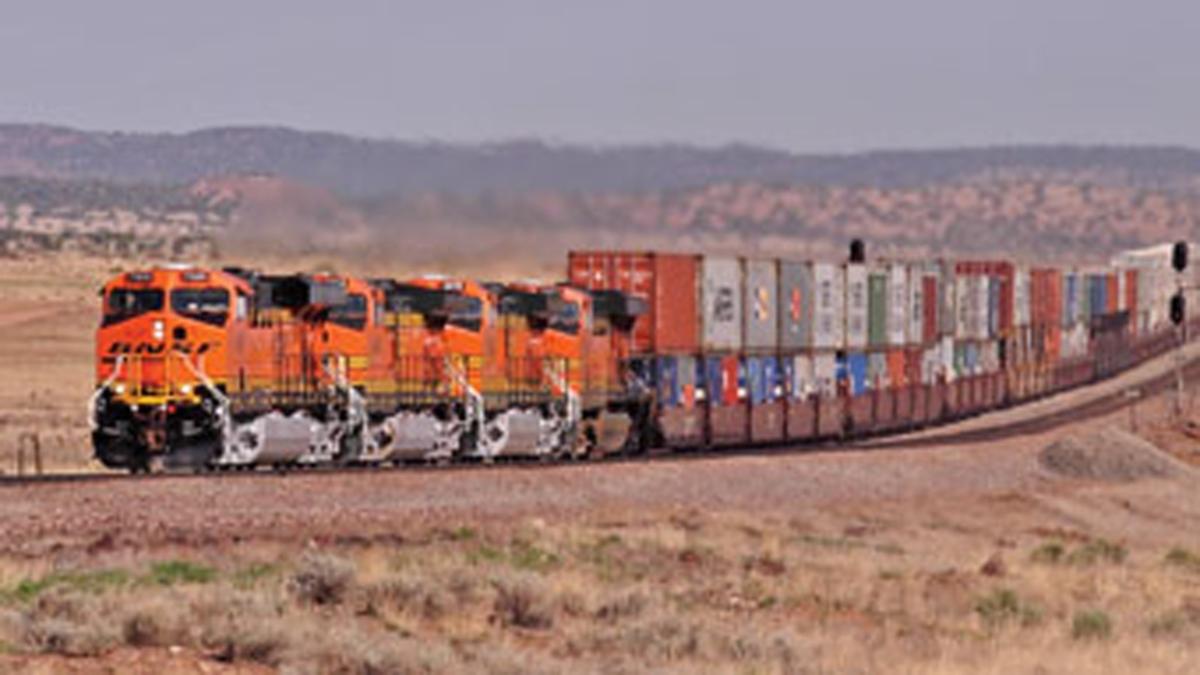
The Association of American Railroads (AAR) reported U.S. rail traffic for the week ended Aug. 22, 2020, which saw, for the third consecutive week, U.S. weekly intermodal volume up from the same week last year.
|
|
(Editor's Note: One can only imagine just how well intermodal could be doing if we had the infrastructure to carry more of it at faster speeds. The traffic is out there, millions of boxes on the nation's highways. Just a small fraction of it diverted to rail - moving in fast trains - could replace every single vanishing coal and oil train out there and provide work for every trainman and engineer in North America!)
U.S. weekly intermodal volume was 285,086 containers and trailers, up 5% compared to 2019. However, total U.S. weekly rail traffic was 514,914 carloads and intermodal units, down 3.3% compared with the same week last year. And total carloads for the week ended Aug. 22 were 229,828 carloads, down 12% compared with the same week in 2019.
Two of the 10 carload commodity groups posted an increase compared with the same week in 2019. They were grain, up 1,489 carloads, to 22,530; and farm products excl. grain, and food, up 705 carloads, to 15,951. Commodity groups that posted decreases compared with the same week in 2019 included commodities such as coal, down 16,929 carloads, to 64,500; nonmetallic minerals, down 8,464 carloads, to 30,294; and metallic ores and metals, down 2,467 carloads, to 18,981.
|
|
ARTICLE #5 - DERAILMENT NEWS
Semi-truck Crash Causes Train to Derail in Garvin County
|
|
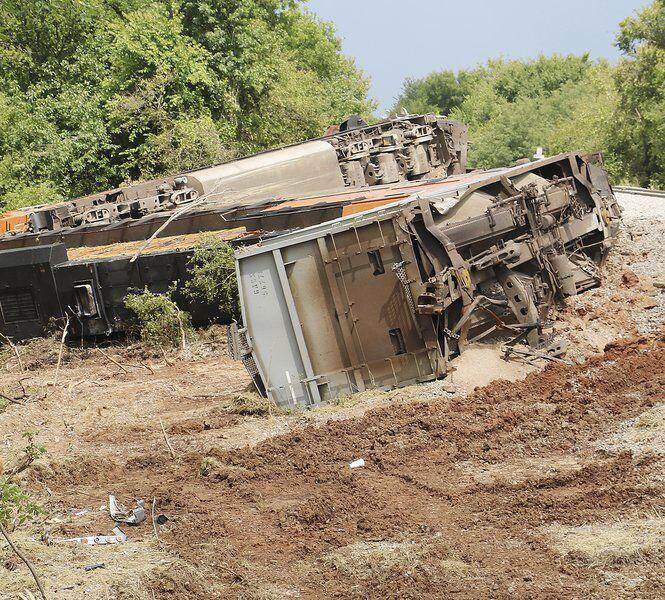
GARVIN COUNTY, Oklahoma (KXII) - A Garvin County driver was flown to the hospital Saturday afternoon after getting hit by a train, which derailed during the crash.
Troopers say it happened Saturday just after noon on County Road 1590 at the BNSF railroad tracks near Pauls Valley.
A 70-year-old man driving a semi-truck failed to yield at a stop sign running into the path of the train.
Troopers say the train was pulling 95 train cars, and 11 derailed in the crash, along with three locomotives.
The truck driver was flown to an Oklahoma City hospital.
|
|
ARTICLE #6 - RAIL WORKPLACE INJURY NEWS |
|
NOTE: Each month, the Poolson-Oden Law Firm publishes an article in their newsletter - Right on Track - sent by RWU. See their most recent newsletter Here. The RWU article is on Page 2. In return, RWU features an article which they submit to the RWU Weekly Summary. See below ...
Short-Term Fixes with Long-Term Problems;
Helping Your Spouse Maneuver an On-Duty Injury
“We can’t always control what happens to us, only our response. And it is in this response that we find empowerment, strength, inspiration, and our opportunity to craft a better culture.”
As carriers continue to waive safety practices, take short-cuts, and cut necessary crew, railroaders and their spouses face uncertain times, especially in the event of an on-duty injury. We previously published an article with RWU explaining the seven steps railroaders need to take to protect themselves immediately after an on-duty injury. Those steps are helpful to the railroader, but we also wish to empower the spouses of railroad workers to help maneuver the landscape after an on-duty injury.
We have learned throughout the years that railroaders absolutely love their jobs and are anxious to return to those jobs after an injury. But what is the next best step? There are several “short-term fixes” that end up creating more problems in the future, and we have listed those below to help tackle those issues.
Returning to Work Too Quickly
Many railroaders will simply want to go back to earning the money that they earned before they were injured and in doing so, your spouse may rush back to work too quickly before being physically able. This can worsen the injury and ruin any type of claim available down the road. It is best to follow the advice of the treating physicians, and not return to full duty until after your spouse makes sure he is able to work without pain.
|
|
ARTICLE #7 -INTERNATIONAL RAIL NEWS
Pandemic Fails to Slow China’s High-Speed Network Expansion
|
|
(Editor's Note: While the U.S. remains embroiled in the Coronavirus pandemic - with passenger and commuter train ridership remaining depressed and freight shipments off by double digits, China is forging ahead with new projects, passenger counts are bouncing back, and freight is booming! One cannot help but be envious and wonder why we cannot do this in North America?)
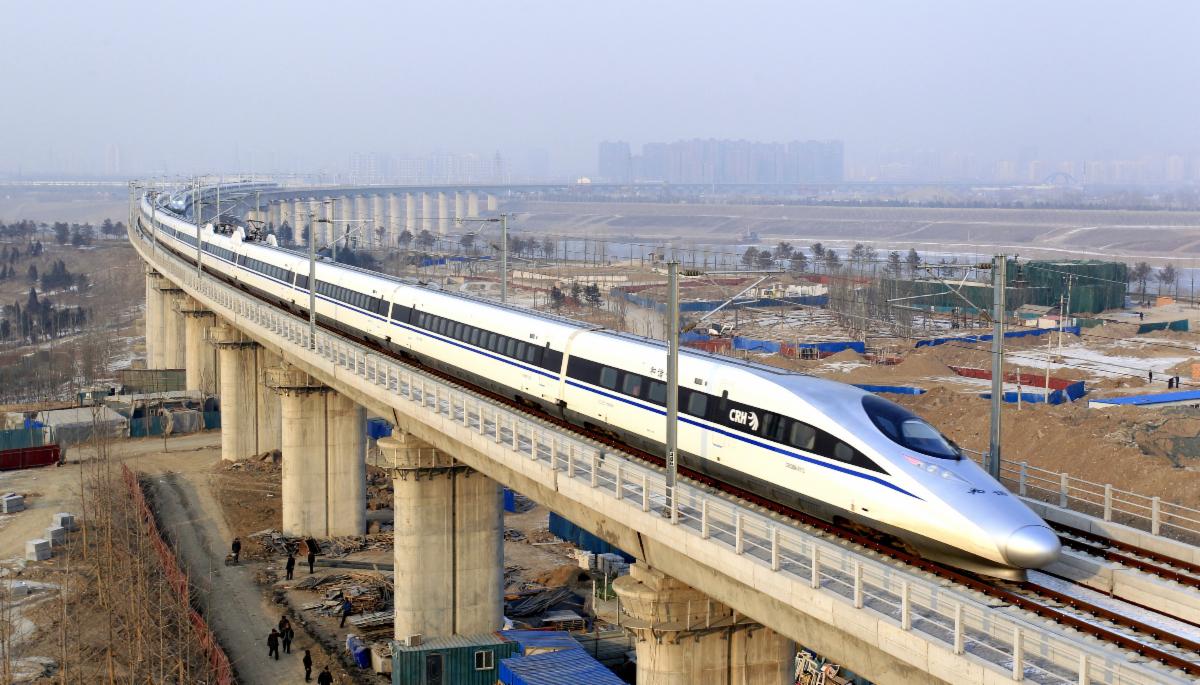
China is continuing the development of the world’s most extensive high-speed network at a breakneck pace. David Burroughs looks at the lines that have opened as the country begins to recover from the coronavirus pandemic, and the sections nearing completion.
AS the source of the coronavirus, China was the first country to begin shutting down its economy and limiting movements in order to control the spread of Covid-19.
This also meant that China was one of the first to lift its lockdowns. As restrictions began to ease in March, construction was able to resume on a number of high-speed rail projects, as momentum was restored to the national high-speed network development programme.
Overall, China National Railways (CR) opened 1178km of new lines in the first half of 2020, including 605km of high-speed lines. For scale, the first stage of Britain’s High Speed 2 (HS2) project will be 225km long, with the full network around 531km long. June 30 also marked the ninth anniversary of the opening of the 1318km Beijing – Shanghai high-speed railway, which has since carried 1.11 million trains.C
|
|
(Editor's Note: In the article below, it is worth noting that despite huge losses due to the pandemic, China has doubled down on its rail system as outlined above, and is investing massively in track, signalling, stations, new right-of-way and other infrastructure. Meanwhile in the U.S., railroad service, frequency and investment are all being scaled back) |
|
ARTICLE #8 - RAIL TECHNOLOGY NEWS
Robotic Brakemen (Updated)
|
|
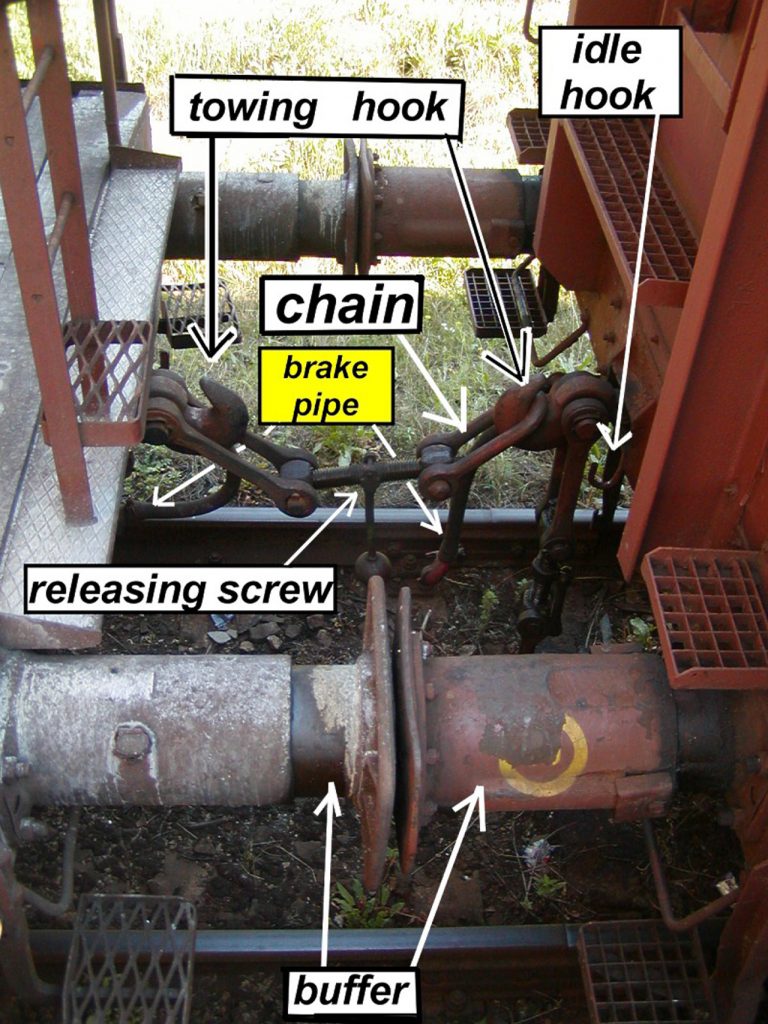
For one reason or another, European railroads have never universally adopted semi-automatic knuckle couplers, a technology that revolutionized operations and improved safety on North America railroads generations ago. We take them for granted. But if you think about it, our system is still labor-intensive, as air brake hoses must be manually connected, and uncoupling is lever-activated, manually. Now it seems as though our European counterparts may leapfrog us, with a technology called DAC, for “Digital Automatic Coupling.”
As International Railway Journal News and Features Writer David Burroughs recently reported, a consortium known as DAC4EU led by Deutsche Bahn AG (DB, or German Rail) has embarked on a pilot DAC program for freight trains, with DB Systems Engineering installing versions from four suppliers of this new technology on several freight cars at its facility in Minden, Westphalia. “DAC removes the high level of manual labor that coupling usually involves,” Burroughs notes. “It is designed to accelerate the coupling and uncoupling of freight trains, which currently involves a high level of manual labor, using screw couplings. It is hoped the technology will also increase the capacity and quality of freight services.”
|
|
|
|
|
|
|