Earlier this month, Ohio Lt. Gov. Jim Tressel and the Ohio Department of Education and Workforce kicked off the Team Tressel Fitness Challenge for students in grades 4-8. Former Ohio State and NFL wide receiver Ted Ginn Jr. is the “Challenge Captain” and is travelling with Tressel around the state to teach students healthy lifestyle habits. | | “Families can’t afford to pay the true cost of care, [and] it puts stress on the educators and the families, because both of them are being tapped out to make the model barely work.” | | |
Who:
Michelle Corrigan, children’s division director for the Corporation for Appalachian Development
| |  | | |
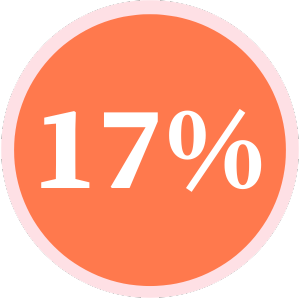
| A survey conducted by The Harris Poll on behalf of March of Dimes finds a huge discrepancy between how many new mothers report needing help and what proportion actually receive it — aka the “support gap.” Nearly one in five (17%) of mothers with children age three or younger report having not received any outside support (excluding their own spouse or partner), and among those who did report receiving help, 42% said it was not enough to meet their needs. At the same time, 90% of Americans report willingness to help a new parent, highlighting another type of gap between willingness to help and action. These findings also reinforce the challenges for families who wish to build strong support networks yet face larger societal dynamics that fail to support that effort. That is, most of us understand the ethos of “it takes a village” to raise children, but the work to do so — personally, financially, emotionally — often falls to the individual parent. | | |
Ohio
WOSU highlights how a simple logistical change to the state’s publicly funded child care (PFCC) application — a change to the process and application portal — has led to delays in providers receiving payments. Meanwhile, additional changes to how the state defines part-time or full-time hours among working parents (as passed in the FY 2026-27 state budget) will impact providers’ revenues at a time when stable, predictable budgets are critical to being able to enroll and serve children. Previously, providers received full-time rates for child care above 25 hours a week, with part-time defined as between seven and 25 hours. The change, which goes into effect this fall, now requires that working parents work at least 33 hours a week to be authorized in the full-time category. Full-time rates are significantly higher than part-time rates, so the recategorization could have significant impacts on providers. For example, for infants in a center in Franklin County, the difference is $325 per week versus $221 at a part-time rate. This represents a nearly one-third (32%) reduction in payments to providers for children/families who will be recategorized as part-time. These changes reinforce how impactful seemingly technical policy revisions from a state-agency level can be, and highlight the importance of creating payment structures, systems, and policies that enable providers to predictably plan their budget forecasts and reduce administrative burdens on them.
| | The Center for American Progress summarizes what some states are doing to bolster and grow the early education workforce. They categorize these methods into three areas: 1) recruitment, training, and skills development like apprenticeships in Alabama and Washington; 2) wage increases and worker protections like supplemental pay in Wisconsin and union benefits in California that provide subsidies, retirement funds, health care and more; 3) comprehensive supports and benefits like health care in Washington, D.C., and scholarships in Delaware. | | New Mexico Gov. Michelle Lujan Grisham announced that the state is lifting all income requirements for families to receive state child care assistance on November 1. Additionally, an expanded rule in the state's Child Care Facility Loan Fund allows local governments and schools to apply for low-interest loans for child care facilities. The new rule proposes that providers will earn additional funding if starting pay for early educators is at least $18-$21 an hour and operational hours are 10 hours a day for five days a week. This comprehensive early childhood ecosystem is a result of a voter-based constitutional amendment passed in 2022 that allowed lawmakers to build a state-funded early childhood system. Dr. Neal Halfon of UCLA states, “This portfolio of strategies — I’m telling you as an outsider — is a really big deal. As a developmental scientist, we’d like to see every place have this kind of scaffolding in place. This is a national model.” | | The city of Akron has announced the launch of the first phase of its Unified Early Learning System, a yearlong pilot program meant to stabilize child care providers, boost enrollment, and streamline referrals for families. Funded through a mix of public and private sources, the almost $1 million initiative will offer providers in greater Akron help with recruitment, business development, access to early childhood substitute teachers, and other resources meant to address behavioral health and other challenges. WOSU shares more about the initiative here. | | The Prenatal-to-3 Policy Impact Center at Vanderbilt University published an evidence brief outlining findings from nine studies in the U.S. showing that telehealth services can improve parental health outcomes like stress, nutrition and hypertension. The authors suggest that states can support telehealth interventions by allowing Medicaid reimbursement for telehealth services and investing in broadband expansion that makes telehealth possible. | |
This edition was written by Jamie O’Leary and Janelle Williamson.
| | | | |