|
BHIPP Bulletin
Volume 12, Issue 2
August 2026
| | How Pediatric Primary Care Providers Can Help Families to Address Bullying | | |
This month's BHIPP Bulletin is a contribution from
Grace McIlmoyle, MPH, MS, Research Project Manager for Maryland BHIPP.
| | |
This month, BHIPP is sharing resources related to bullying prevention and intervention. Bullying is defined as repeated, unwanted, aggressive behavior involving an observed or perceived power imbalance intended to cause harm.1,2 Bullying may include physical (e.g., hitting, pushing), verbal (e.g., name calling, teasing), or relational (e.g., harming the target's reputation and/or relationships) forms or involve property damage.1,2 Verbal or relational bullying, when conducted in the context of digital devices, is often described as cyberbullying.3 Data from the 2024 National Survey of Children's Health underscores the significance of bullying as a public health problem: approximately 33.5% of 6-17 year-olds in Maryland were reportedly bullied during the past 12-months, and around 9% of Maryland youth reportedly bullied another child during the past 12-months.4,5
Pediatric primary care providers (PCPs) can help to prevent or address bullying by encouraging caregivers to maintain open lines of communication with their children about things happening at school and with their peers by checking in and asking questions about everyday things like:
- What was one good thing that happened today?
- Were there any bad things that happened today?
- What is lunch time like at school? Who do you sit with? What do you talk about?
- What is it like to ride the school bus?
Pediatric PCPs can also encourage parents to speak directly with their children about bullying to help children identify if it happens to them or their peers. Some example questions that can start this conversation include:
- What does bullying mean to you?
- Why do you think people bully?
- Have you ever felt scared to go to school because you were afraid of bullying?
- Have you or your friends left other kids out on purpose?
- Do you think that was bullying?
PCPs can also encourage caregivers to discuss with their children how to respond to other children who are bullied and model how to treat others with respect and kindness.
If pediatric PCPs learn that one of their patients has been involved in bullying as a bully or as a victim, they can also collaborate with caregivers to support the child in the following ways6:
For bullies:
- Help the child understand that their behavior is problematic and can hurt others
- Talk to the child about why they engaged in the bullying
- Provide appropriate consequences for the behavior
- Connect the child with a mental health provider who can address underlying difficulties that may be contributing to bullying behavior
For victims:
- Assure the child that what happened to them was not their fault
- Talk to the child about what to do if the bullying occurs again, including speaking to a trusted adult
- Connect the child with a mental health provider who can support them in talking about their experience and learning coping strategies
| |
Pediatric PCPs can also encourage youth and parents to report bullying experiences to schools using Maryland Local Educational Agencies (LEA) Forms. These forms can be used to report alleged incidents of bullying, harassment or intimidation on school property, at a school-sponsored activity or event off school property, on a school bus, on the way to and/or from school, or through electronic communication on or off school property. Bullying Reporting Forms can be found on the Bullying Prevention page of the Maryland State Department of Education (MSDE) website. MSDE provides leadership and technical assistance to local school systems; additional resources about bullying from the Maryland State Department of Education can be found here:
Moreover, schools can help prevent and address bullying through the implementation of bullying prevention and intervention programs:
Examples of universal school-based interventions that schools can implement for all students to help prevent bullying:
Examples of selective school-based interventions that schools can implement with students already experiencing bullying or who are bullying others:
-
Coping Power Program: Intensive social-emotional skills training, coping skills, and de-escalation strategies
-
Check-in/Check-out: Provides targeted support to students with chronic, disruptive behaviors in the form of frequent positive feedback, adult contact, and reinforcement for meeting desired behavior goals
Examples of indicated/intensive school-based interventions that schools can implement with students with a history of being bullied or who bully others and who are experiencing impacts on their physical, social, emotional, or academic functioning as a result of their bullying involvement:
Please see our September 2022 newsletter and January 2026 webinar for additional information about the psychological and functional impacts of bullying.
Additional Resources
| | |
As always, if you have questions about the behavioral health needs of your patients, we encourage you to call the BHIPP consultation line at
855-MD-BHIPP (632-4477), open 9am-5pm Monday-Friday, for resource/referral networking or consultation support.
We will keep you informed about all our services and training events through our website (www.mdbhipp.org) and monthly e-newsletters. Additionally, BHIPP is on LinkedIn, Facebook, and Instagram. We invite you to follow us there to stay up-to-date on upcoming training events, pediatric mental health research, and resources for providers, families and children.
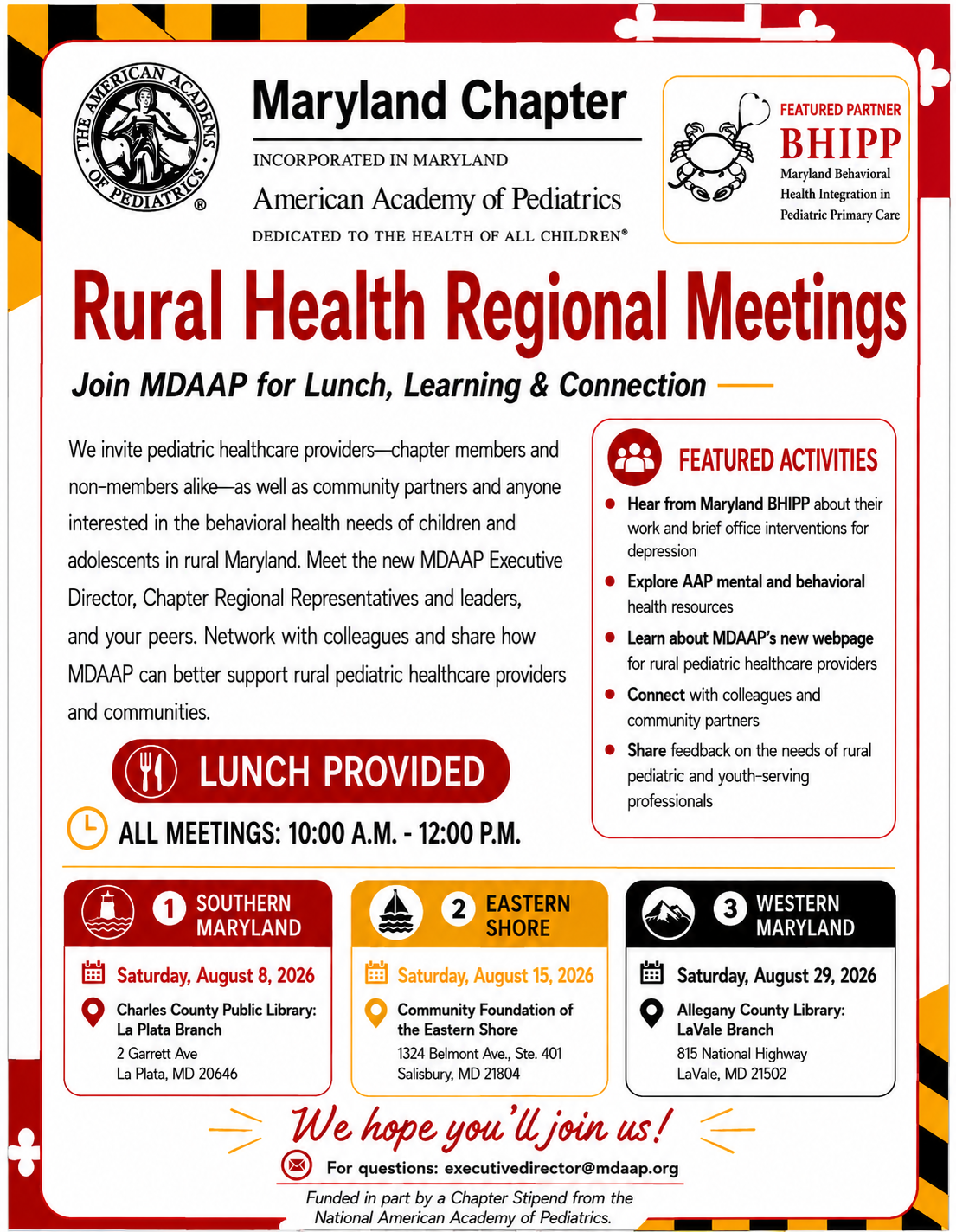
| | There is still time to register for the CareFirst BlueCross BlueShield Webinar! | | Join CareFirst BlueCross BlueShield and BHIPP for a free webinar on the Assessment, Diagnosis, and Management of Anxiety in Pediatric Primary Care Settings on August 27th from 5:30–6:30pm. Presented by Dr. Phillip Sojka, this webinar will strengthen pediatric primary care providers' skills in recognizing pediatric anxiety disorders, conducting developmentally informed assessments, and implementing evidence-based interventions. | | The last Rural Health Regional Meeting is this Saturday! | | |
Pediatric healthcare providers, join the Maryland Chapter, American Academy of Pediatrics for the last Rural Health Regional Meeting this August! Hear from BHIPP about our services and on brief office interventions for depression, connect with colleagues and community partners, explore AAP behavioral health resources, and share feedback on the needs of rural pediatric providers.
The last meeting will be held on August 29th from 10:00am to 12:00pm in Western Maryland. To learn more and register, click the button below.
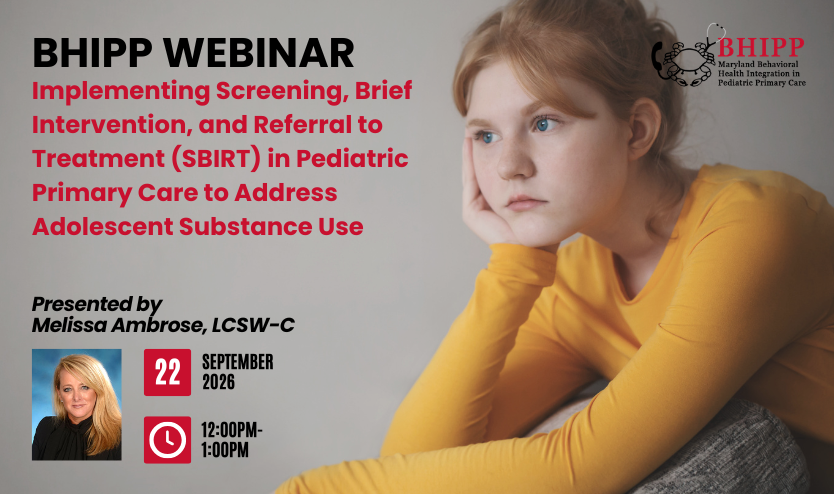
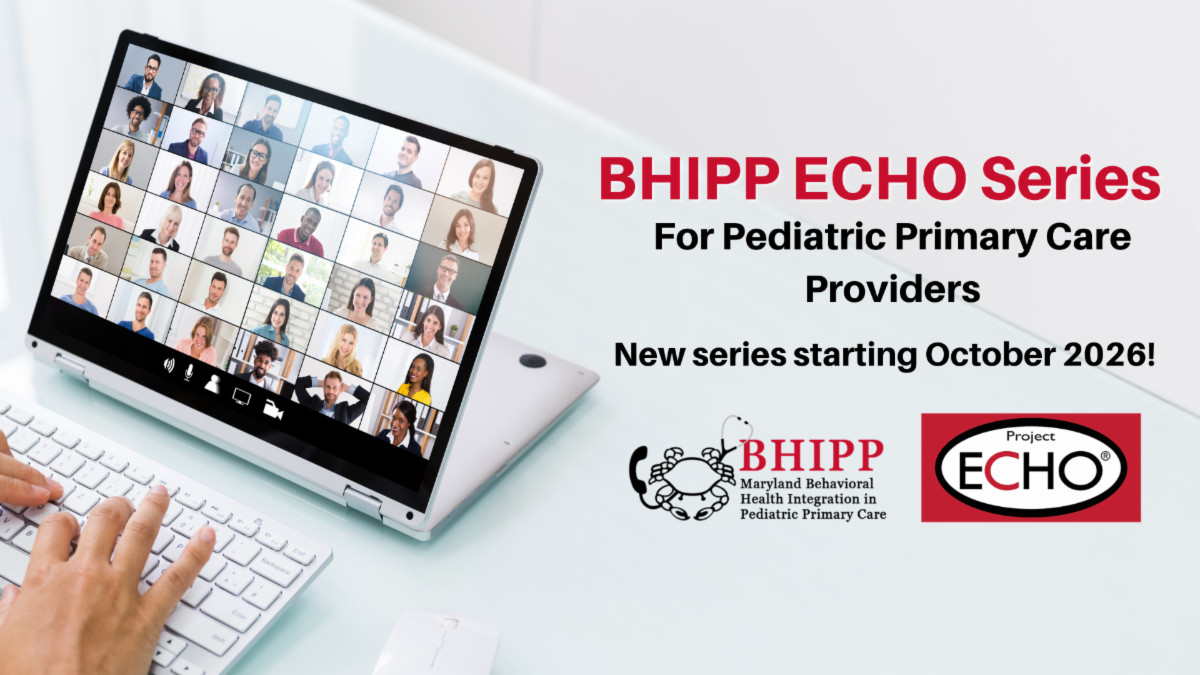
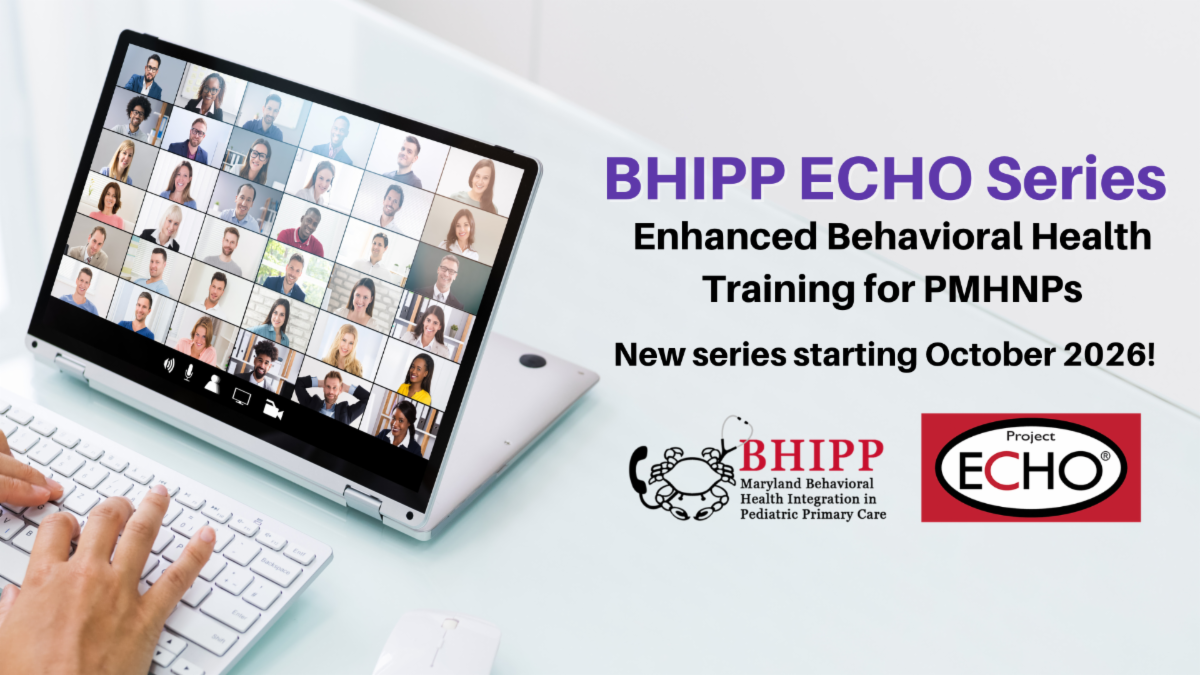
| | Register for the next BHIPP Webinar! | | Register for the next BHIPP Webinar on September 22 at 12:00pm! BHIPP Webinars are a series of interactive, web-based learning sessions that are a virtual space for pediatric primary care, emergency medicine, and behavioral health providers to connect, learn and share about strategies, practices and resources to promote mental health and resilience among children and families as well as providers. Free CME and CEU credit is available for participation! | | New BHIPP ECHO for Pediatric Primary Care Providers Series Starting in October 2026! | | A new BHIPP ECHO for Pediatric Primary Care Providers series is starting in October! This series is great for providers who want to improve their knowledge of child mental health and develop skills. Stay tuned for more information. | | New BHIPP ECHO PMHNP Series Starting in October 2026! | | A new BHIPP ECHO Enhanced Behavioral Health Training for PMHNPs series is starting in October! This series is designed for Maryland Psychiatric-Mental Health Nurse Practitioners (PMHNPs) who want to deepen their knowledge of child and adolescent mental health. Stay tuned for more information! | | Follow BHIPP on Instagram! | | Follow BHIPP on Instagram @marylandbhipp for behavioral health resources, continuing education and training opportunities, clinical tools, and updates to support pediatric primary care, emergency medicine, and mental health providers across Maryland in managing their patients' mental health concerns. | | |
BHIPP is supported by funding from the Maryland Department of Health, Behavioral Health Administration and operates as a collaboration between the University of Maryland School of Medicine, the Johns Hopkins University School of Medicine, and Salisbury University.
BHIPP and this newsletter are also supported by the Health Resources and Services Administration (HRSA) of the U.S. Department of Health and Human Services (HHS) as part of an award totaling $1,379,327 with approximately 20% financed by non-governmental sources. The contents of this newsletter are those of the author(s) and do not necessarily represent the official views of, nor an endorsement, by HRSA, HHS or the U.S. Government. For more information, visit www.hrsa.gov.
Copyright © 2021 Maryland Behavioral Health Integration in Pediatric Primary Care (BHIPP), All rights reserved.
| | | | |