|
“I’m well aware, of course, that to paraphrase Anat Shenker-Osorio, ‘facts won’t set us free.’ But I do think that striking numbers or contrasts can jar people and make them momentarily open to new ideas. Why are we spending upwards of $20,000 a year for kids once they reach kindergarten, but only $2,000 before? What’s so fundamentally different about a 3-year-old versus a 5-year-old? Why are toddler teachers making poverty wages while first-grade teachers make a middle-class salary with benefits, and why are the parents of that toddler forking over a second mortgage while parents of the first-grader are promised a free slot?
“It’s just a hypothesis, but if we can do a better job helping the American public understand the basic contours of how much the country spends on different ages, we may be able to open the door for spending enough across the board to set families up for success.”
| | |
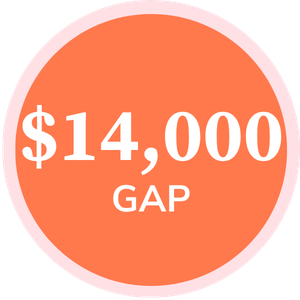
| An analysis published on The Family Frontier (Elliot Haspel’s Substack newsletter) illuminates the wide government spending gap between local, state, and federal funding for K-12 education, and the public money provided for early care and education — as well as polling data from Americans indicating large misperceptions on this topic. Using methods from a 2021 analysis from The Hamilton Project, Haspel calculates per-child government spending for the youngest children in the U.S. (ages 0 to 2), 3- and 4-year olds, and school-age children (5-18) in 2024. The gap is vast, with average spending on infant and young toddlers just $907 annually; $3,576 for preschool-aged children; and $17,592 for K-12 aged students. This is an over $14,000 per child spending divide between preschool children and their school-aged peers. Put another way, spending for the youngest children is just 5% of what’s spent on K-12 students, and 20% as much for preschoolers — despite the fact that early care and education provides “real” learning during a crucial period of more active brain development than for older children. | | New York Gov. Kathy Hochul recently unveiled a plan to provide universal pre-K for 4-year-olds by the 2028-29 school year and launch pilots for infant care in three upstate counties. The price tag would be a hefty $4.5 billion — though still a fraction of what families are spending out of pocket on child care ($14 billion) and part of what advocates say is an affordability crisis pushing middle-class families out of the state. | An early learning program in New Haven, Connecticut, (Friends Center) is providing free housing to a select number of its teachers (thus far, 10 of its 47-person staff) as part of an effort to address high rental costs. Participating teachers also receive financial coaching and support in their goals to increase savings and credit scores. | | | |
WHAT WE’RE READING (& LISTENING TO)
| | Dr. Gina Ginn, CEO of Columbus Early Learning Centers, spoke on a local podcast (“So, Let’s Talk With Michael Wilkos”) about early brain science, kindergarten readiness, and childcare access and affordability in Franklin County. | | A piece in The 74 discusses the surprising reality that, for as much attention as has been garnered around student attendance and absenteeism, states — and sometimes even districts within a state — have very different methods for counting attendance. | | A study from researchers at Vanderbilt University’s Prenatal-to-3 Policy Impact Center and Peabody College of Education and Human Development examined how access to infant and toddler childcare varies across regions within a single state, using Texas as a case study. Drawing on multiple administrative and demographic data sources, the authors compared regions across several dimensions of childcare access, including the availability of regulated infant-toddler care, affordability for families, provider finances, and access to subsidized care. They found that most regions of Texas qualify as infant-toddler childcare deserts, with especially limited availability in areas with larger Hispanic populations and higher levels of poverty. Childcare costs exceeded federal affordability benchmarks across all regions, access to subsidized care was limited statewide, and providers generally lacked sufficient resources to deliver high-quality care. While these findings sound familiar — representing common challenges with childcare across the U.S. — the study affirms how much variation exists within states and how regional differences in poverty, demographics, labor markets, and provider capacity can lead to very different childcare realities even between neighboring communities. As the authors write, “Inequity in the childcare system is shaped by the same structural determinants that influence place-based resources, such as racial discrimination, anti-immigrant policies, historical and present-day segregation, underinvestment in rural infrastructure, and concentrated poverty.” States would do well to supplement statewide data — where averages can obscure shortages and local challenges — with localized analysis and solutions that are tailored to regional needs. | |
This edition was written by Jamie O’Leary and Janelle Williamson.
| | | | |