Blocked Crossings, Delayed Emergency Response, and the Cost of BNSF's Expansion
The West Valley is one of the fastest-growing regions in America. With that growth comes challenges. We need roads, utilities, schools, public safety resources, and infrastructure capable of supporting hundreds of thousands of new residents.
One challenge that receives far less attention than it deserves is rail traffic.
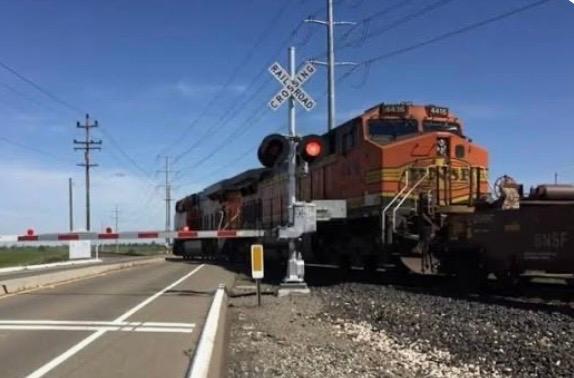
Residents throughout Surprise, El Mirage, and other West Valley communities regularly encounter trains stopped across major intersections for extended periods. Sometimes the delays are a few minutes. Other times residents report being trapped for 45 minutes, 60 minutes, or even longer.
The frustration is understandable.
Taxpayers spend millions of dollars building and maintaining roads and intersections designed to move people efficiently through their communities. Yet when a train stops across all crossing, traffic comes to a complete standstill. Businesses are impacted. Workers are delayed. Parents are late picking up children. Entire traffic corridors can become gridlocked.
Many states have laws that prohibit railroads from blocking intersections for extended periods and authorize fines when trains obstruct crossings beyond a specified amount of time. Unfortunately, those laws often provide little practical relief because railroads frequently operate under federal authority that limits state and local enforcement.
Thirty-seven states and the District of Columbia have adopted laws or regulations limiting how long trains may block crossings.
Courts have repeatedly struck down or rendered those laws unenforceable on the grounds that federal law preempts state and local regulation of railroad operations.
Legal analyses note that virtually every court to consider these blocked-crossing laws under federal preemption has ruled against the states or municipalities attempting to enforce them.
States including Oklahoma, Ohio, Indiana, Texas, Illinois, California, and others have been involved in major court battles over blocked-crossing statutes. In each case, railroads argued that federal law gives the federal government exclusive authority over railroad operations, and courts largely agreed.
The frustrating reality is that states have repeatedly tried to hold railroads accountable for blocking crossings, only to be told they lack the authority to do so. Oklahoma enacted a law allowing fines against railroads that blocked intersections for more than ten minutes. After BNSF challenged the law, federal courts ruled that federal railroad regulations preempt state authority, and in 2022 the U.S. Supreme Court declined to hear Oklahoma's appeal, leaving the lower court ruling in place. As a result, Oklahoma's blocked-crossing law became essentially unenforceable. The message to local communities was clear: even when trains block roads, delay commuters, and potentially impact emergency response times, states and cities have very limited power to force railroads to change their behavior.
The result is a frustrating reality for local governments and residents alike. Cities receive complaints. Councilmembers make calls. Discussions occur. Sometimes conditions improve briefly. Then the problem always returns.
Local officials often find themselves with very few tools available to address the issue.
This is one reason many West Valley residents are concerned about BNSF's proposed intermodal facility in Wittmann.
The project would dramatically increase rail activity in the area while generating thousands of additional truck trips each day. More rail activity means more opportunities for blocked crossings and more disruptions to surrounding communities.
The concern goes far beyond inconvenience.
What happens when an ambulance is transporting a patient to a hospital and encounters a blocked crossing?
What happens when firefighters are responding to a structure fire?
What happens when law enforcement officers are attempting to reach an emergency situation?
In emergency response, seconds matter. Delays can have serious consequences.
BNSF often emphasizes the economic benefits of its projects, and economic development is important. But residents also deserve to know what the real-world impacts will be on the communities that must live with those projects every day.
Many West Valley residents already feel that BNSF has not been a good neighbor. Complaints have ranged from blocked crossings to maintenance issues, debris concerns, and lighting impacts. Whether those concerns are justified or not, they reflect a growing frustration among citizens who feel their voices are not being heard.
The proposed Wittmann intermodal hub would bring those concerns to an entirely new scale.
This is not simply a debate about trains. It is a debate about quality of life, public safety, local control, and whether communities have any meaningful ability to protect their residents from the impacts of projects imposed upon them.
The people of the West Valley deserve infrastructure that moves traffic efficiently, supports emergency response, and respects the communities it serves.
Before approving a massive rail project in Wittmann, policymakers should ask a simple question:
If residents are already struggling with blocked crossings today, what will conditions look like after one of the largest rail facilities in the Southwest is built?
The answer should concern every resident of the West Valley.
|