|
For about 1 penny per American per year, the Marine Mammal Commission has met its Congressional mandate to conserve marine mammals for over 40 years.
We work to ensure that marine mammal populations are restored and maintained as functioning elements of healthy marine ecosystems in the world's oceans.
|
|
|
2017 In Review:
An Interdisciplinary Approach to Marine Mammal Conservation
|
|
|
This past year was another busy one for us! We worked to ensure the effective co-management of marine mammals in Alaska, fought to save the most endangered marine mammal on earth, took significant steps toward addressing marine mammal bycatch, funded novel, low-cost research projects to achieve large impact, and the list goes on… all while receiving the highest employee satisfaction score in the Federal Employee Viewpoint Survey for the second year in a row! Check out our latest
Performance and Accountability Report
for more details on our accomplishments this year.
|
|
|
The Marine Mammal Commission welcomes new Executive Director
|
We are excited to announce that
Dr. Peter Thomas
will be the new Executive Director for the Marine Mammal Commission starting on Jan 1, 2018! Peter is a cetacean biologist and animal behaviorist and brings almost two decades of experience in environmental diplomacy at the U.S. Department of State and Fish and Wildlife Service to his new role. Peter has been the International and Policy Program Director with the Commission for over 8 years and will be replacing our current Executive Director, Dr. Rebecca Lent, who is moving on to lead the
International Whaling Commission
as its Executive Secretary. Rebecca has been an outstanding leader, colleague and friend of the Commission. Although she will be missed, we are pleased that Rebecca is staying within the broader marine mammal community and look forward to supporting her and Peter in their new roles!
|
|
|
MMC seeks proposals at the cutting edge of conservation
|
|
|
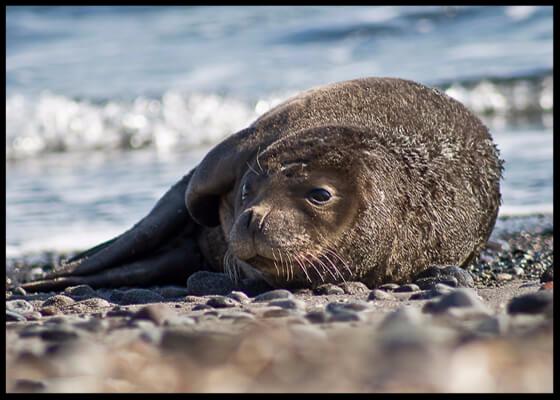
A Mediterranean monk seal rests on a rocky beach. One of our 2017 Small Grant recipients will work to protect this species on the peninsula of Karaburun and Sazan Island in Albania.
|
|
|
Successful marine mammal conservation programs require not only an understanding of species and ecosystems, but also of the needs, values, perceptions, and cultures of the relevant human communities. Individuals need to become engaged, informed, and inspired to work toward altering human behavior. Our grants and research program is requesting proposals for projects focused on innovative, community-driven conservation approaches to eliminate, manage, or mitigate threats to marine mammals. Interested applicants can view
proposal requirements
and details
here
.
Deadline for pre-proposals: 11 January 2018
|
|
|
Captivity is not the answer for vaquitas -
their habitat must be protected
|
|
|
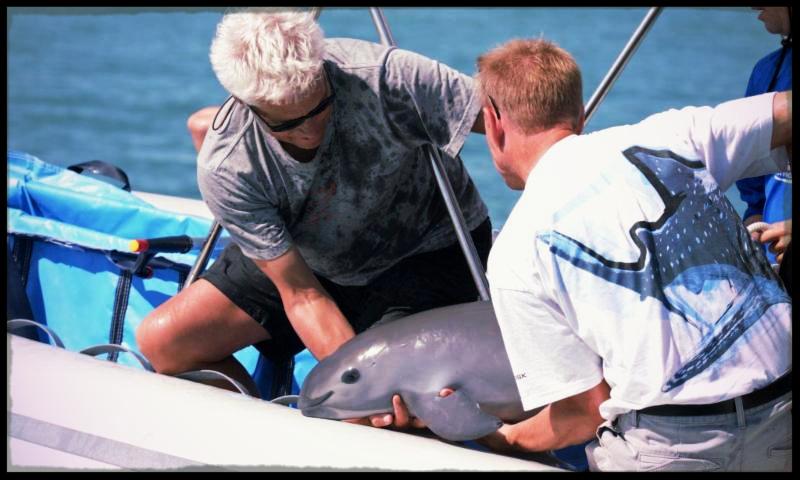
A vaquita is cared for and monitored during transport to an at-sea pen.
(Photo credit: VaquitaCPR)
|
|
|
The Vaquita Conservation, Protection, and Recovery program (
VaquitaCPR) - an ambitious field effort to explore the viability of captive care as an option to prevent extinction of this small porpoise species in the upper Gulf of California, Mexico - ended in disappointment with
one vaquita released soon after capture when it was not adapting to human care and another that suffered mortality in the hours after it was caught. VaquitaCPR was only launched after the death by entanglement in illegal gillnets of more than six wild vaquitas in the first few months of 2017. These deaths, due to the failure of enforcement to stem the setting of illegal totoaba gillnets, and acoustic monitoring of the continued decline of the species in the wild, convinced
the International Recovery Team and the Mexican government to pursue captive care. Now, with that option off of the table, it is incumbent on the authorities of Mexico to redouble enforcement as the most pressing immediate step to avoid extinction of the vaquita. Enforcement effort, gillnet removal programs, and continued monitoring should focus first and foremost on those areas of greatest overlap between the vaquita range and illegal totoaba fishing.
|
|
|
The Commission continues efforts in the Arctic with new
co-management review
|
|
|
The Commission, led by former Knauss Fellow Dr. Jennafer Malek, is conducting a
Co-management Review of Marine Mammals in Alaska
in 2018. With funding from the
North Pacific Research Board
, the Commission is working with Alaska Native partners, other federal agencies, and co-management stakeholders to assess the key components of, and impediments to, effective co-management of marine mammals that are harvested for subsistence in Alaska. In November, Commission staff attended several Alaska Native Organization (ANO) meetings in Anchorage, Alaska, including the
Indigenous People’s Council for Marine Mammals
(IPCoMM) Board of Directors Meeting and Governance Training for ANO members. During these meetings, the Commission assembled a Steering Committee for the review that will play a large role in identifying which co-management agreements will be evaluated as part of the review and which communities and stakeholders to engage with during the project. More details of this review will be available in the new year on the Commission website and social media.
|
|
|
Bycatch experts unite to discuss tools, mitigation, and research on reducing marine mammal – fishery interactions
|
|
|
The greatest threat to marine mammals is
fisheries bycatch
, the accidental capture of non-target species such as whales, dolphins, seals, and sea lions. It is estimated that over 600,000 marine mammals are killed through these accidental interactions every year, some of which lead to damaged or lost gear. Recent population declines such as those of the
vaquita
and
North Atlantic right whale
, for instance, can be largely attributed to fishing gear interactions. In order to reduce these interactions and conserve
species of concern
, a broad range of solutions can be considered, from gear modifications to time/area closures to community development. At the recent
Society for Marine Mammalogy Biennial Meeting
in Halifax, Canada, researchers gathered to discuss these solutions through the course of three workshops aimed at discussing the latest developments in the field. The first provided an overview of marine mammal bycatch and a wide range of potential measures to address it; the second focused on low-cost gear modifications to prevent interactions; and the third presented a tool that can be used to identify, map, and manage bycatch interactions in data-poor situations. View the
joint workshop report
, organized by the Commission, for more information.
|
|
|
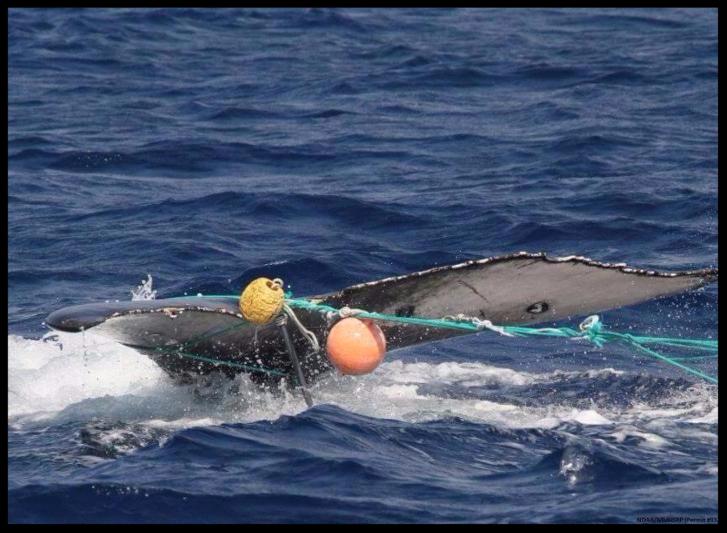
Large whales often encounter fishing gear and can become entangled, like this humpback.
Research has shown that up to 78% of humpbacks in Southeast Alaska, for instance, bear scars indicating recent entanglements (Neilson, 2007).
|
|
|
Highlighting the importance of biological collections in marine mammal research and conservation
|
|
|
Antarctic leopard seal skulls in the National Museum of Natural History research collection.
(Photo credit: Matt Leslie, Smithsonian Institution)
|
|
|
Marine mammal biological research collections, such as those found in museums, are invaluable resources for investigating differences between marine mammal populations, understanding how long different species can live, what they feed on, their age at maturity, and how many offspring they can produce. They also provide an opportunity to learn about basic anatomy, physiology, and specialized adaptations to living in the marine environment. This type of information is critical in developing conservation strategies and implementing management plans. Often, the specimens found in these collections come from stranding events or
bycatch interactions in fisheries
. Out of such events come a lot of data, including why and how that stranding or accidental capture occurred. In this way, the specimens help in the efforts to reduce threats to populations in the future (sometimes even decades down the road!) as new technologies emerge that allow us to better collect and analyze data from old samples.
At the
Society for Marine Mammalogy Biennial Conference
in Halifax, Canada, the Commission teamed up with colleagues from stranding networks, research institutions, and museums from around the world to discuss strategies for support of these collections and how to improve coordination, foster connectivity among specimen-based researchers and collections, and highlight their importance in conservation and global health initiatives. It is our hope that outcomes of this workshop will make these invaluable collections, as well as the breadth of research conducted on them, more visible, useful, and accessible.
|
|
|
|
|
|
|