Connecting

Nov. 11, 2026


Click here for the sound of the Teletype

Top AP News

Top AP Photos

AP Merchandise

AP Emergency Relief Fund

AP Newsletters

AP Donations

AP News Tips

Good Wednesday morning on this Nov. 11, 2026,


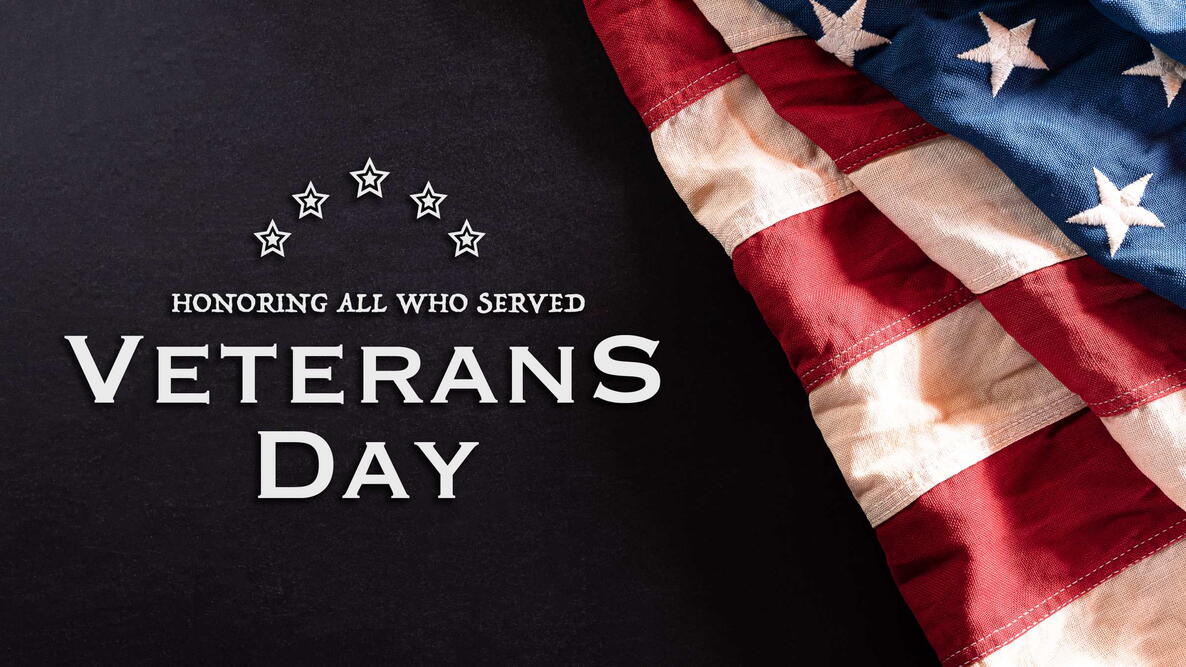
A salute on this Veterans Day 2026 to those who served our country in one of the branches of our nation’s military services.


A veteran is someone who, at one point in their life wrote a blank check made payable to "The United States of America,” for an amount up to and including Their Life.


We thank you for your service.


We lead with responses received to Connecting’s call to veterans to share what their service meant to them and their lives.


And we follow with comment from AP leaders on the AP’s performance in the 2026 mid-term elections.


(Ye Olde Connecting Editor is a bit bleary-eyed this morning. Our guard dog Ollie didn't get the memo about the yard flags we place alongside our sidewalk and driveway for the holiday and he was convinced, with frequent barking from the safety of his bedroom perch, that the flags were out to get us!)


Have a great day – be safe, stay healthy and live it to your fullest.


Paul


Connecting veterans on what their service meant to their lives

Hank Ackerman, U.S. Army, 1965-1967 - Greatest respect for the leveling perspective of government service. and, most of all, for the talented corps of U.S. Army non-commissioned officers.


-0-


Hal Bock – U.S. Army Reserve, 1961-1967 - Service taught me to accept circumstances especially meals. You eat what they serve. Not what you choose.


-0-


Jim Carlson – U.S. Army, 1968-70 - Once I was on infantry duty, I managed to get a job serving as a stringer doing stories and photos for Army publications and hometown news outlets. That experience helped me greatly as I later got a newspaper job and then joined the AP. But it took months of unwinding before I was ready for any job search. More than a year later, I met my future wife, Ellen, who helped me deal with lingering effects of the service, such as occasional anxiety attacks that soon stopped happening. As someone who experienced campus protests against the war but also felt obligated to go when called, I still have mixed feelings about my service, and I'm concerned and ready to speak out whenever the U.S. seems headed for another questionable, potentially tragic military action.


-0-


Michael Embry, U.S. Air Force, 1969-73 - The military brought needed discipline and structure into my life. I was more focused when I returned to college and in my career path.


-0-


Ken Fields – U.S. Army, 1970-72 - The discipline I learned in the Army has been helpful and my tour of duty changed my view of the world and war.


-0-


Charlie Hanley, U.S. Army, 1969-1970.


-0-


Aron Heller - Although I don’t know of anyone in my family who has served in the American military, I and several relatives have served in the Israeli military. In my case, I was a liaison to foreign forces between 1994-1997 and for 20 years after in the reserves. More notably, my grandfather and great-grandfather served Canada in both World Wars.


It’s all covered broadly in my book Zaidy's Band, The Untold Stories of a Jewish Band of Brothers in World War II. As for how my service affected by life: “Zaidy’s wartime experiences and conclusions echoed those of his father in World War I and, to a far lesser degree, my own as a soldier in the Israeli military in the mid-1990s. Like my grandfather, I also struggled to find my role in what I largely felt was an inconsequential service buried amid extraordinary times. Mostly, though, it made me a writer. I started observing how all the things around me represented this shaky bridge between Israel’s early, pioneering spirit to its powerful, yet often idealistically compromised, present. My American and Canadian upbringing was clashing with this Israeli reality, and I started to see my life experiences as just a small slice of this bigger geopolitical puzzle.”


-0-


Mike Holmes - U.S. Navy, 1970-1972 - My experience as a Navy journalist (radio, print, TV, book editing) got me in the door of my first newspaper, which got me a job with a second paper, which led me to the AP, which eventually led me back to my first newspaper.


-0-


Lindel Hutson, U.S. Army, 1969-71 - I used the military as an educational experience. I learned a lot during my brief career as a military journalist. I was exposed to different ideas, different people, different states and then Europe. I also fired “expert” with an M-14 rifle but never put those talents to use. I never lost sight of the fact that while I was enjoying dinner in Brussels, people my age and with similar backgrounds were slogging through rice paddies in Vietnam.


-0-


Gerald (Jerry) Jackson – U.S. Naval Reserve, 1966-92 - Military service gave me a great appreciation for this country and my role in defending its independence. Many early family sacrifices, but still enjoying the benefits on my many years of service.


-0-


Bill Kaczor – U.S. Air Force, 1969-72 - The Air Force changed my life by sending me from my hometown of Chicago to Eglin AFB in the Florida Panhandle, where I have been ever since except for a year of grad school in WDC and Evanston, Illinois. While here, I found post-service employment with the Pensacola News Journal, Gannett News Service and AP in Tallahassee and Pensacola.


-0-


Brent Kallestad, U.S. Navy, 1966-70 - Often reflect on my military time as one of, if not the most significant parts of my life in many ways. And a salute to my other AP colleagues who have served over the years.


-0-


Abner Katzman, U.S. Army, 1969-71 - It changed the direction of my life from being an aspiring Master's candidate in Cultural Anthropology to a beginning in journalism. (I ended up learning more Cultural Anthropology in Vietnam than I ever would have at the University of Pittsburgh.)


-0-


Dick Lipsey – U.S. Army, 1968-1988 - Military service gave me broad experience with people from all walks of life as both a leader and a subordinate, in conditions of desperate stress and of mind-numbing routine. It allowed me to live in seven far-flung states and three foreign countries; to lead troops in peace and war; to manage and supervise a large civilian work force; and to be an instructor to university students, senior officers on the Army staff, and young soldiers in training. It taught me that there are times to carry out orders immediately, times to insist on clarification, and when to know which response was appropriate.


-0-


Tim Litsch – U.S. Navy, 1966-69 - My Navy training led directly to my being hired by AP, and my subsequent 32 years of service.


-0-


Larry Margasak - Pennsylvania Air National Guard, 1965-71 - Got to fly to islands in the Pacific (Guam, the Philippines, Kwajalein), Asia (Including Vietnam), the Azores and Germany at Uncle Sam’s expense. Also got to honor fellow airmen by writing stories about their service with the unit for their hometown newspapers.


-0-


Roland Rochet - U.S. Navy, 1974-1981 - My military, electronics, and survival training shaped my life. Advancing quickly to a high rank allowed me to influence and shape others’ lives. At the AP, my survival training and quick thinking proved invaluable during global assignments: the Mexico earthquake that destroyed our office in the 1980s; the hurricane that destroyed our Puerto Rico office; and the Haiti earthquake, where my team spent more than 21 days supporting staff deployed from around the world.


-0-


Jeff Rowe – U.S. Air Force, 1971-75 - Among many lasting lessons, military service stressed the worth of "attention to detail." That proved to be extremely valuable in a journalist's life.


-0-


Hal Spencer, U.S. Marine Corps, 1966-1968 - I spent two years living shoulder to shoulder among the deepest cross-section of Americans you'll find. I didn't cherish it then, but I do now. And it proved invaluable on many levels.


-0-


Paul Stevens – U.S. Air Force, 1968-72 – My four years of service were growing-up years for someone who to that point had lived a pretty sheltered life. Those years broadened my horizons, presented me with many teachable moments that applied to leadership roles later in my AP career, and led to friendships, some of which continue to this day.


Behind the News

‘Our collective strength’: How AP delivered the results of the 2026 midterm elections


In a note to staff on Tuesday, Executive Editor Julie Pace, Chief Revenue Officer Kristin Heitmann and Chief Technology Officer Gianluca D’Aniello thanked colleagues across The Associated Press for their contributions to the 2026 U.S. midterm elections, highlighting the organization’s unique role in counting the vote, declaring winners and delivering independent, fact-based journalism to audiences around the world.


Here is their note to staff:


For nearly 180 years, The Associated Press has been trusted to report the results of elections in the United States accurately and without fear or favor.

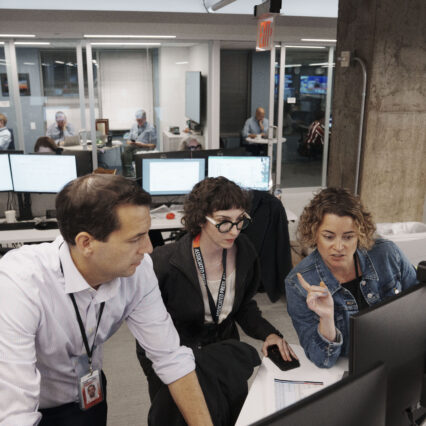
From left, Deputy Washington Bureau Chief Zeke Miller, Politics Editor Katie Vogel and Washington Bureau Chief Anna Johnson review election coverage at AP’s Washington bureau, Tuesday, Nov. 3, 2026. (AP Photo/Jon Elswick)


Last Tuesday, we delivered on that mission once again, counting the vote, declaring the winners, and explaining who the voters have chosen to lead the nation and why.


This is an extraordinary, sweeping effort across the whole of the AP that brings together colleagues from all corners of the organization, including News, Technology and Revenue. The results we provided to our customers and audiences reflect the dedication of every one of you and our collective strength when we work together across teams in service of AP’s mission.


Here are some highlights:


• We have counted the vote in nearly 7,000 races and declared winners with 100% accuracy to date, upholding the standard we’ve set for nearly two centuries.


• We reinforced AP’s position as the undisputed source of truth in the U.S. elections ecosystem, providing results to thousands of customers, including all the major U.S. broadcast networks and the world’s foremost technology companies like Google and OpenAI. We grew elections revenue by 83% compared to the 2022 midterms, including a 400% jump in revenue from tech companies.

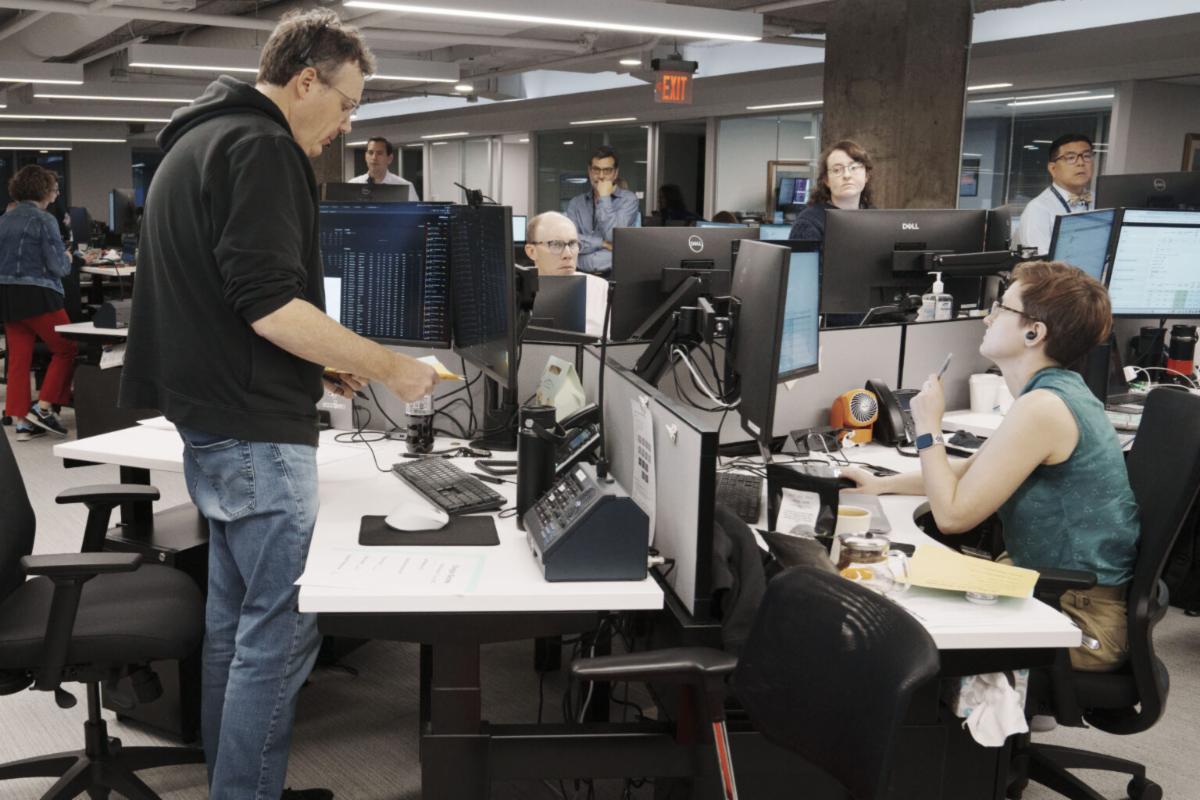
Vice President of Elections David Scott, left, and Director of Public Opinion Research Emily Swanson work together on election night at AP’s Washington bureau, Tuesday, Nov. 3, 2026. (AP Photo/Jon Elswick)


• Our election results were paired with strong, nonpartisan journalism from AP reporters in all 50 states, covering the candidates, campaigns and issues shaping Americans’ choices. APNews.com saw its highest traffic since the 2024 election, with over 23 million page views, a sixfold increase over election night in 2022.

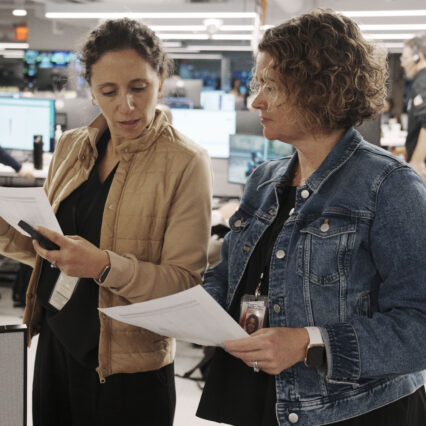
Executive Editor Julie Pace, left, and Washington Bureau Chief Anna Johnson on election night at AP’s Washington bureau, Tuesday, Nov. 3, 2026. (AP Photo/Jon Elswick)


• We also had our highest day of reader donations in 2026, underscoring the public’s appetite for AP’s nonpartisan, fact-based reporting around one of the biggest, most consequential stories of the year.


• Our live show hosted by Meg Kinnard and Sagar Meghani generated over 7 million views on election night and — based on available data — ranked third in live views among major news media outlets.


None of this is possible without the technology that allows us to count the vote, declare winners and deliver the results, and the support teams who work tirelessly behind the scenes.


AP has counted the vote since 1848. We have once again fulfilled our unique role in the American democracy with care, commitment and determination, because of all of you. Thank you.


Julie, Kristin and Luca


Click here for link to this story.


Your election memories


Larry Margasak - I was among many AP reporters assigned during Bush V Gore to Tallahassee, then under the able leadership of Brent Kallestad. One day we needed to reach one of the top Democratic leaders in the statehouse about the role then-Gov. Jeb Bush was playing. I can’t remember his name now, but I learned that he grew up in Philly, as I did. I’m sure I got through to him by starting to talk about the famous cheese steaks, the Phillies and Eagles, and got the confirmation I needed for the story. It was a major story for that day.


AP moving photo editor jobs offshore


Doug Pizac - I got a call from former staff photog Barry Sweet yesterday about the loss of more photo staff. I called the guild and was directed to its Facebook site.


According to the guild's account "...AP will offshore eight photo positions after already gutting its U.S. video production team. These highly experienced editors are key to our visual journalist's speed and accuracy.


"These photo editors are key to our visual journalism's speed and accuracy. Far beyond selecting images from AP's photographers, the editors provide direction, ask for shots, correct essential information and scrutinize images for alterations.


"They bring decades of local knowledge, news judgement and connections. They negotiate with outside photographers to buy the rights to photos -- a now essential part of covering breaking news.


"In the words of one photo editor, "the desk knowledge has no price tag. It is invaluable. Priceless."" 

Stories of interest


Pentagon Reporter Calls out Hegseth’s Press Restrictions After Fiery Presser


By Alex Griffing

Mediaite


The Washington Post’s Pentagon correspondent Tara Copp called Pete Hegseth out on Tuesday for taking only one question from media outlets that refused to sign his press restrictions, which caused a mass walkout of reporters from the building last year.


Hegseth’s combative presser kicked off in the morning with aides threatening to remove reporters from the room.


Copp reported on the scene on social media, writing, “A security agent for Defense Secretary Pete Hegseth just warned the reporters here — for Hegseth’s first press conference in 6 months — that we will be physically removed from the briefing room if we are not professional and maintain decorum.”


Read more here. Shared by Doug Pizac.


-0-


‘We are not the problem,’ editor of news outlet that Egyptian court ordered to close tells AP


By The Associated Press


Facing a potential prison sentence and the court-ordered closure of the news site she co-founded, the editor-in-chief of one of Egypt’s last independent media outlets said silencing journalists is not the answer and will only allow disinformation to flourish.


“We are not the problem. I think our disappearance is a problem,” Lina Attalah told The Associated Press in an interview Monday, as the 13-year-old site Mada Masr fights the decision to shut it down.


Its closure would mean “butchering what’s left of a space that’s keeping this country sane and healthy, and a societal need for information that cannot just be ignored.”


Mada Masr has been a unique voice in Egypt, investigating allegations of corruption and human rights violations, providing deep coverage on economics and politics, and hosting cultural discussions. Meanwhile, authorities have clamped down on other newspapers and television.


Read more here. Shared by Doug Pizac.


-0-


Press Forward completes nearly $600M in journalism investments about 2 years early


By Glenn Gamboa

The Associated Press


Press Forward, the nonprofit launched in 2023 to strengthen local news as outlets struggle with economic and technological changes, announced Tuesday that it has completed investing nearly $600 million in journalism organizations, about two years ahead of schedule.


However, Press Forward Executive Director Dale Anglin said the organization’s work is far from complete. Not only will the group continue raising and investing money, it will also expand its range of initiatives to support journalism.


“The industry is going through an incredible transformation,” Anglin told The Associated Press in an interview. “It took 20 years to get to this point – if not longer. It’s going to take us a while to get out of it.”


According to “ The State of Local News 2026 ” from Northwestern University, the number of news deserts – counties that have no locally based professional sources of news – grew by 12% this year to 238, as advertising and audiences continued to decline. Though there were dozens of newsrooms started this year, more than two newspapers closed for each outlet launched.


Read more here. Shared by Doug Pizac.


-0-


In another shake-up at DC Studios, Gunn and Safran are out as Skydance appoints Marvel vet Latcham


By Jake Coyle

The Associated Press


Superman, Batman and the rest of the DC heroes are getting a new boss, yet again.


Skydance Motion Picture Group announced Monday that James Gunn and Peter Safran are stepping down as co-chief executives after four years leading DC Studios. Although their first film leading the superhero factory, “Superman,” reached theaters only last year, their DC run has come to an abrupt end.


Gunn and Safran initially survived Skydance’s acquisition of Warner Bros. Discovery. The studio’s merger with Paramount Pictures was finalized just as DC’s “Clayface” was released.


However, it turns out Gunn and Safran aren’t surviving the merger. Instead, Skydance chairman and chief executive David Ellison is turning to Jeremy Latcham, a veteran of Marvel Studios, to steer DC.


Read more here. Shared by Doug Pizac.


-0-


Appeals court limits order for LinkedIn to disclose journalists’ communications in leak probe


By Michael Kunzelman

The Associated Press


A judge must narrow an order requiring LinkedIn to divulge journalists’ communications on the social media platform to the Trump administration as part of a leak investigation, a federal appeals court ruled Tuesday in a case with profound free-speech implications.


A three-judge panel from the 4th U.S. Circuit Court of Appeals said the government isn’t entitled to a “blanket” order for LinkedIn to disclose a broad array of user records belonging to the journalists, whose employer isn’t identified in court records.


“A request by the government to scoop up reporters’ records wholesale and ascertain the identity of their sources would tip the balance against informed discourse in a manner inimical to democratic health,” Judge J. Harvie Wilkinson III wrote in the court’s unanimous opinion.


But the panel also rejected LinkedIn’s request to entirely quash the district court’s “substantially overbroad” disclosure order. The panel recognized that the journalists’ First Amendment rights must be balanced against the administration’s duty to protect national security information.


Read more here. Shared by Doug Pizac.


-0-


German photographer turns cancer treatment markings into powerful portraits in “crosshairs for life” exhibition


By Daniel Niemann

The Associated Press


German photographer Herlinde Koelbl is turning cancer treatment markings into portraits celebrating survival in her latest exhibition at Kunstmuseum Bonn. The series features 40 people living with cancer, exploring themes of illness, vulnerability, and hope.


Watch video here. Shared by Doug Pizac.


-0-


As Israel Moves Right, Israel’s Liberal Newspaper Bolsters Its U.S. Presence


By Marc Tracy

The New York Times


The century-old newspaper Haaretz has long been favored by Israel’s more liberal readers, its journalism and commentary often casting a harsh light on right-wing leaders and government policies toward Palestinians in Gaza and the West Bank.


But its editorial outlook is increasingly out of step with a country that has moved rightward in recent decades — something seen as recently as in last month’s elections, in which a healthy majority of parliamentary seats went to center, right-of-center and Orthodox Jewish parties. At the same time, the digital edition of Haaretz’s English-language journalism has experienced growing popularity as an increasing number of Jews around the world, especially younger ones, view Israel more critically than in the past.


Now Haaretz is leaning in.


It has more than doubled the size of its small U.S. bureau, including hiring four correspondents to cover beats like national politics and a younger generation of American Jews, and is making more vertical videos and podcast episodes to reflect the country’s news consumption habits. In recent weeks, Haaretz’s reporters filed dispatches from Maine and Michigan, Texas and Florida, and Georgia and New York exploring the midterm races from Jewish perspectives.


Read more here. Shared by Doug Pizac.


-0-


Appeals court says VOA director was fired illegally by former head Kari Lake


By Scott Nover

The Washington Post


Michael Abramowitz, the director of Voice of America, was illegally fired from his role by former agency head Kari Lake, an appeals court panel ruled Tuesday.


Abramowitz was dismissed by Lake in August 2025 after refusing an ultimatum: move to a lower-level post in North Carolina or be fired. Abramowitz refused and was terminated, calling Lake’s move “illegal.”


Abramowitz already was suing the government over Lake’s effort to dismantle Voice of America, the international broadcaster first set up in 1942 to counter Nazi propaganda, and asked the court to rectify his firing, as well.


Read more here. Shared by Doug Pizac.


-0-


Sarah Huckabee Sanders Under Fire for Allegedly Using AI in Photo of New Book: ‘Those Aren’t Even Real Words!’


By Ahmad Austin Jr.

Mediaite


Arkansas Gov. Sarah Huckabee Sanders faced a wave of backlash online for uploading a photo of her new book that appeared to be heavily altered by AI.


On Saturday, Sanders posted a photo on X showing herself holding her book titled, “Unapologetic: Clarity and Conviction in a World Gone Crazy.”


Upon closer inspection of the photo, however, several details stood out.


In addition to “clarity” being spelled with the letter E instead of the letter A, the word “crazy” has a strange symbol in place of the letter Z. Several of the letters on the cover of the book also appeared to be crooked.


Read more here. Shared by Doug Pizac.


-0-


Popular Television Anchor Found Dead in Her Home as Husband Confesses to Fatal Shooting: Reports


By Kathianne Boniello

Mediaite


A well-liked and popular television anchor was found dead in her own home from a gunshot wound — and her husband reportedly confessed to the killing.


The body of Rabia Ahsan was discovered Sunday “in a pool of blood” in the bedroom of the home in Pakistan she shared with her mom and sister — and her spous, Ahsan Tahir, was allegedly standing next to her with the gun in his hand, according to local reports cited by People and other outlets.


Ahsan, 41, share two kids ages 11 and 13 with Ahmed, according to local outlets who said Ahmed admitted to accidentally killing his spouse of more than 15 years.


Read more here. Shared by Doug Pizac.


-0-


AI is becoming an information gateway. Audiences still don’t want it making their news.


By Felix M. Simon

Nieman Lab


In my Nieman Lab prediction this time last year, I wrote that “in 2026, the use of AI as an information gateway will only rise further.”


As it turns out, I was right. In new research that I published with my colleagues Rasmus Kleis Nielsen and Richard Fletcher, one of our many findings is that generative AI systems are becoming ever more significant information intermediaries, both when intentionally used and when incidentally encountered.


For our new report, “Generative AI and News Report 2026: From Standalone Tools to Information Infrastructure,” we surveyed audiences across nine countries, including the United States, on their use of AI in their everyday lives, what they think its impact will be on different sectors of society, and what they think about its use in news and journalism specifically. I obviously think you should read the whole report, but here are some of the major takeaways.


The use of standalone conversational AI systems such as ChatGPT, Claude, and Gemini continues to grow rapidly, with 51% of respondents across the six countries where we have past data saying they now use AI weekly (49% in the U.S.). That’s a faster spread, at least in the U.S., than smartphones or the internet saw.


Read more here. Shared by Doug Pizac.


-0-


Some local news outlets are losing physical newsrooms


By Jackie Spinner

Northwestern/Medill


Since it was founded in 2018, the Denver-based Sun has won several local and national honors, including a 2025 national Edward R. Murrow Award. It dominated the four-state Top of the Rockies competition this year, including earning the Public Service award for the second year in a row. Despite such successes, the Sun’s founders — most of whom came from The Denver Post — began to think something was missing. As they reflected, they realized that their journalists are scattered across the state and don’t experience the informal learning and connections that were common in the Post newsroom.


“We miss the social values of the physical newsroom, where you were in community with the people who worked next to you,” said Sun editor Dana Coffield, who spent nearly 15 years in various editing positions at The Denver Post. “This environment helped encourage team feelings and promoted an understanding that none of us were on an island.”


“We do not have the luxury, now, of inviting someone to roll up a chair while their story is edited,” Coffield said.


Scholars have been tracking the decline in local news outlets and journalists for years. The Medill School’s 2026 State of Local News report detailed the increase in newspaper closures, growth in news-desert counties and loss of journalism jobs over the past year. But there’s another loss in local news diminishing the connection between communities and their outlets: physical structures.


Read more here. Shared by Doug Pizac.


-0-


How Can We Save Local Journalism?


By Amanda Follett Hosgood

The Tyee


April Lindgren could be considered Canada’s local news guru.


Lindgren spent the first half of her career working as a journalist before moving to Toronto Metropolitan University’s school of journalism, where she launched the Local News Research Project nearly 20 years ago. She is currently compiling a national local news directory — the first of its kind in Canada.


If anyone knows a thing or two about community news, it’s her. So I ask the pressing question: How do you build a successful local news outlet in today’s media landscape?


The industry has been in precipitous decline for decades. Over the past 20 years, tech companies have been siphoning advertising away from traditional news outlets, leading corporate media owners to consolidate news outlets and reduce editorial staff. Rural and remote areas have been hardest hit, leaving the remaining small-town reporters to do more work with fewer resources and reducing the volume of local news coverage.


When it comes to solutions, Lindgren doesn’t hesitate: the key to survival is doing good journalism.


Read more here. Shared by Doug Pizac.

Today in History - Nov. 11, 2026

By The Associated Press

Today is Wednesday, Nov. 11, the 315th day of 2026. There are 50 days left in the year.


Today in history:


On Nov. 11, 1918, fighting in World War I ended as the Allies and Germany signed an armistice aboard a railroad car in the Forest of Compiègne (kohm-PYEHN’-yeh) in northern France.


Also on this date:


In 1620, 41 Pilgrims aboard the Mayflower, anchored off Massachusetts, signed the Mayflower Compact, creating a local government for the colony that called for a “civil body politick, for our better ordering and preservation.”


In 1831, Nat Turner, an enslaved man who led dozens of followers in a bloody revolt in Virginia that resulted in nearly 60 deaths, was executed by hanging. Although authorities quickly quelled the uprising, Turner evaded capture for several weeks before being captured.


In 1889, Washington was admitted to the Union as the nation’s 42nd state.


In 1921, the remains of an unidentified American service member were interred in a Tomb of the Unknown Soldier at Arlington National Cemetery in a ceremony presided over by President Warren G. Harding.


In 1926, the U.S. Bureau of Public Roads launched the nation's first federal highway system, marking the official start of famed Route 66, which first stretched from Chicago to Los Angeles but later spanned the entire country.


In 1938, Irish-born cook Mary Mallon, who’d gained notoriety as the disease-carrying “Typhoid Mary” blamed for the deaths of three people, died on North Brother Island in New York’s East River at age 69 after 23 years of mandatory quarantine.


In 1966, Gemini 12 blasted off on a four-day mission with astronauts James A. Lovell and Edwin “Buzz” Aldrin Jr. aboard; it was the 10th and final crewed flight of NASA’s Gemini program.


In 1987, following the failure of two Supreme Court nominations, President Ronald Reagan announced his choice of Judge Anthony M. Kennedy, who went on to win confirmation.


In 2022, Sam Bankman-Fried's FTX crypto exchange platform filed for Chapter 11 bankruptcy protection amid a collapse of its assets; Bankman-Fried was convicted in November 2023 of seven counts of wire fraud and conspiracy to commit fraud and was sentenced to 25 years in prison.


Today’s Birthdays: Nicaraguan leader Daniel Ortega is 81. Music producer Mutt Lange is 78. Actor Stanley Tucci is 66. Actor Demi Moore is 64. Actor Calista Flockhart is 62. TV personality Carson Kressley is 57. Actor David DeLuise is 55. Actor Leonardo DiCaprio is 52. Actor Scoot McNairy is 49. Musician Jon Batiste is 40. Former NFL quarterback Mark Sanchez is 40. Retired American figure skater Adam Rippon is 37. Actor Tye Sheridan is 30. WNBA player Azzi Fudd is 24. Actor Oakes Fegley is 22.

Got a photo or story to share?

Connecting is a daily newsletter published Monday through Friday that reaches more than 2,000 retired and former Associated Press employees, present-day employees, and news industry and journalism school colleagues. It began in 2013. Its author, Paul Stevens, retired from the AP in 2009 after a 36-year career as a newsman in Albany and St. Louis, correspondent in Wichita, chief of bureau in Albuquerque, Indianapolis and Kansas City, and Central Region vice president based in Kansas City.


Got a story to share? A favorite memory of your AP days? Don't keep them to yourself. Share with your colleagues by sending to Ye Olde Connecting Editor. And don't forget to include photos!


Here are some suggestions:


- Connecting "selfies" - a word and photo self-profile of you and your career, and what you are doing today. Both for new members and those who have been with us a while.


- Second chapters - You finished a great career. Now tell us about your second (and third and fourth?) chapters of life.


- Spousal support - How your spouse helped in supporting your work during your AP career. 


- My most unusual story - tell us about an unusual, off the wall story that you covered.


- "A silly mistake that you make"- a chance to 'fess up with a memorable mistake in your journalistic career.


- Multigenerational AP families - profiles of families whose service spanned two or more generations.


- Volunteering - benefit your colleagues by sharing volunteer stories - with ideas on such work they can do themselves.


- First job - How did you get your first job in journalism?


- Most unusual place a story assignment took you.


Paul Stevens

Editor, Connecting newsletter

paulstevens46@gmail.com