|
The Torah portion of Eikev includes the mitzvah of reciting Birkat HaMazon (Grace after Meals), colloquially known as bentching, as the verse says,[1] וְאָכַלְתָּ וְשָׂבָעְתָּ וּבֵֽרַכְתָּ אֶת ה אֱלֹ-הֶיךָ עַל הָאָרֶץ הַטֹּבָה אֲשֶׁר נָֽתַן־לָךְ - “You will eat and be full, and you will bless the L-rd, your G-d, for the good land He has given you.”
Zimun
The sages established[2] that when (at least) three Jewish men eat bread together (or two eat bread and one eats other things[3]), they should recite the Birkat HaMazon together with the formula known as zimun. The zimun consists of one person inviting the others to bless G-d with him to which they respond by doing so. They then recite the Birkat HaMazon together. (In earlier generations, the one leading the zimun would say the entire Birkat HaMazon out loud while the others would listen and respond “Amen.”[4])
This article will discuss the introduction to zimun and, G-d willing, we will discuss more about zimun another time.
Why Do We Say Rabotai Nevarech or Rabosai Mir Vellen Bentchen?
The actual zimun begins with the words נְבָרֵךְ שֶׁאָכַֽלְנוּ מִשֶּׁלּוֹ – Nevarech She’achalnu Mishelo – (“Let us Bless the One From Whom We Ate”).
It is customary for the leader of the zimun to introduce the upcoming zimun by saying רַבּוֹתַי נְבָרֵךְ – Rabotai Nevarech (in Lashon Kodesh) or Rabosai Mir Vellen Bentchen (in Yiddish) – “Gentlemen, let us bentch” to which the others respond יְהִי שֵׁם ה׳ מְבֹרָךְ מֵעַתָּה וְעַד עוֹלָם – “May the Name of G-d will be blessed from now and forever.”[5] The Sefardic custom is to say הַב לָן וְנִבְרִיךְ לְמַלְכָּא עִלָּאָה קַדִּישָׁא – “Come let us bless the supernal and holy King,” to which the assembled respond and say שָׁמַֽיִם – (With the permission of He who dwells in the) “Heaven.”[6]
The Young Prodigy in the Zohar
This is based on the Zohar[7] where it recounts how Rabbi Yehudah and Rabbi Yitzchak were eating in Kfar Sichnin while lodging in an inn run by the widow of Rabbi Hamnuna, the elder. They were conversing with his young, brilliant son while they were eating, and before beginning the zimun they said הַב וְנִבְרִיךְ - “Come let us bentch.” The boy remarked, “This is proper because the name of G-d shouldn’t be blessed without a preparation.”
The Aruch HaShulchan[8] adds that in Talmudic times[9] it was already customary to say a preparatory line (הַב לַן וְנִבְרִיךְ) before the zimun.
Separating the Sitra Achra
The young boy went on to explain: “When a person sits at the table (to eat), the Shechinah (Divine Presence) stands there, and the sitra achra (negative side) also stands there. When a person prepares himself to bless the Holy One, blessed be He, (i.e., to recite Birkat HaMazon) the Shechinah becomes established above to receive blessings while the sitra achra is subdued.
But if a person does not prepare himself to bless the Holy One, blessed be He, the sitra achra hears and awakens, seeking to have a portion in that blessing.”
Why Not Prepare for Other Brachot?
As to why we don’t say a similar introduction to other brachot, the boy explained that generally the bracha is said over an object and, as such, holding that object is considered the preparation for the bracha. So, for example, by holding a fruit before making a bracha on it, one causes the sitra achra to separate from it and then it’s appropriate to say the bracha.
Why Isn’t Holding the Cup a Preparation?
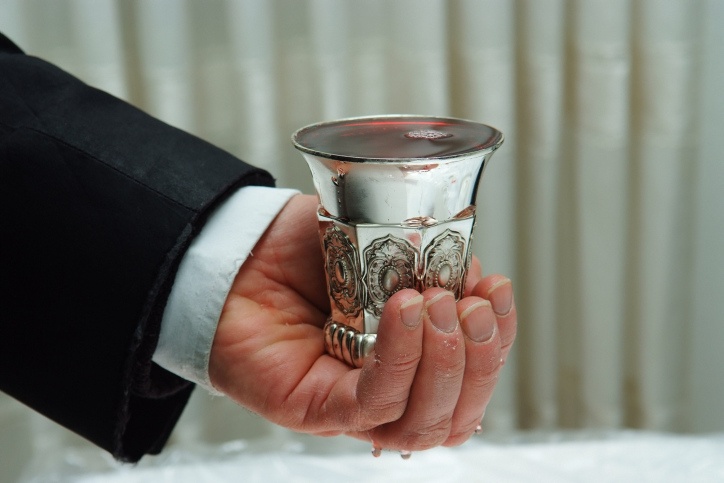
Although one (usually) holds a cup of wine when leading a zimun, this act of holding isn’t considered a preparation for the zimun since (oftentimes) one already held the cup (and drank from it during the meal). This act of holding was considered a preparation for the blessing of Borei Peri HaGafen (which was said at that time) and, as such, when one holds the cup before Birkat HaMazon, it isn’t seen as a preparation for the zimun but (might be considered) a continuation of his previous drinking. This is why a separate preparation must be made.
Why Isn’t the Zimun a Sufficient Preparation?
The question is, why aren’t the words נְבָרֵךְ שֶׁאָכַֽלְנוּ מִשֶּׁלּוֹ a sufficient preparation for the response (and Birkat HaMazon) that follows?[10] The answer to this is esoteric as the Zohar explains that these are two preparations: One is to prepare the Divine attribute of Malchut (referred to as Kos shel Bracha), and the other is to prepare the Divine attribute of Binah (referred to as “Alma Ila’ah”).
Other Explanations
The commentaries offer several other explanations for the custom of saying the introduction to the zimun.
● The Aruch HaShulchan explains[11] that one must prepare oneself before doing any important act.[12] For most mitzvot, the bracha is the preparation but since Birkat HaMazon is itself a bracha, one needs to prepare for it in another way, which is why we say “Rabotai etc.” (Regarding mitzvot over which no bracha is recited, Rabbi Yechezkel Landau of Prague wrote[13] that in preparation for such mitzvot he would say, “Behold I am doing this in order to fulfill the command of my Creator.”[14])
This has been compared[15] to the worthy practice of saying “Lichvod Shabbat – in honor of Shabbat” when purchasing food for Shabbat, which draws the holiness of Shabbat onto that food.[16]
● Some say that the purpose of this introduction is to give everyone a “heads up” that the zimun is about to begin so they can swallow the food they may be eating or the drink they are drinking.[17]
● Alternatively it’s for the one leading the Zimun to receive permission from those present to do so. (I.e., First, he receives permission from them by saying “Rabotai…” Then he goes on to say “Birshut maranan etc. – With the permission of…” reiterating that he did, indeed, receive permission to proceed.)[18]
● The Tosefta says[19] that if a person says that he will give tzedaka and then does so he receives reward both for giving tzedka and for saying that he will give it. (It seems that this is because speaking about it publicizes the matter and encourages others to follow suit.) Here too, by speaking about and causing others to pay attention to the Zimun, one deserves an extra reward.[20]
● The Yavetz says[21] that the purpose of this introduction is simply to make sure everyone is paying attention to the forthcoming zimun.
Why Do Many Ashkeanzim Say It in Yiddish?
The custom among many Ashkenazim is to say the above-mentioned line in Yiddish (רַבּוֹתַי מיר וועלין בענטשין) rather than in the holy tongue which is used for almost all of our prayers. The reason for this is that this line isn’t a prayer per se. Rather it’s a request for the people who are eating to prepare themselves to recite Birkat HaMazon. It’s therefore best said in the vernacular of those people (to catch their attention). For Ashekanzi Jewry, that vernacular was Yiddish.[22] (Nowadays, when Yiddish isn’t as popular, some have switched to Lashon Kodesh whereas others continue to use the traditional language.)
Some say[23] that it’s recited in Yiddish (or in Aramaic according to Sefardic custom, see above) to indicate that it’s not part of the zimun itself but is rather a preparation as explained above. (If people think it’s part of the zimun, they might proceed to add another introduction, and this could go on and on. Similarly, the blessings of Shema were the original preparation for the Amidah, and the Pesukei Dezimrah were added as an introduction to that.)
May We Merit to Experience the Holiness in Each Mitzvah by Preparing for them Properly!
[1] Deut. 8:10.
[2] See Mishnah Berurah 192:1 that the sages based it on a Biblical verse.
[3] See O.C. 197:2.
[4] See Magen Avraham 193:4 and Shulchan Aruch HaRav 183:10.
[5] Shulchan Aruch HaRav, 192:7 based on Magen Avraham, beginning of Siman 192 and the Zohar (quoted below).
[6] Kaf HaChaim 192:2.
[7] Parshat Balak page 186b.
[8] 192:2.
[9] Pesachim 103b.
[10] The Levush is of the opinion that נְבָרֵךְ שֶׁאָכַֽלְנוּ מִשֶּׁלּוֹ is a preparation for the Zimun. See Elya Rabbah (192:3) who questions this based on the Zohar quoted above.
[11] Ibid. The Aruch HaShulchan reads his understanding into the Zohar. The understanding of the Zohar given above is from the Matok Midvash.
[12] See Deut. 1:13 regarding the mitzvah of appointing judges.
[13] Noda BiYehuda, Mahadurah Kammah, Siman 93.
[14] Rabbi Landau recommends to say this rather than “Lesheim Yichud etc.” as taught by the Arizal. The discussion about this is for another time.
[15] Binyan Shlomo (Jerusalem 2005) by Rabbi Baruch Stern, page 216.
[16] Shulchan Aruch HaRav 250:6 based on the Magen Avraham and the Arizal.
[17] Sefer Matamim by Yitzchak Lipetz of Siedlce, Poland (printed in Warsaw, 1910), entry Birkat HaMazon, ot 14. The book contains reasons for Jewish customs, many of which are unsourced. The author writes in the introduction that he had sources and forgot them or that he forgot to include them. See here, however, that this Yitzchak Liptez was considered a maskil (member of the enlightenment). It is noteworthy that the sefer has a haskamah (approbation) from Rabbi Yissachar Ber Graubart, who was the Rabbi of Siedlce in the early 1890s.
[18] Ibid. ot 16.
[19] Pe’ah 4:17, quoted in Ahavat Chessed (by the Chafetz Chayim) vol. 2, chapter 16.
[20] Dirshu Mishnah Berurah 192, footnote 6.
[21] Sidur Yavetz, towards the end of Hanhagat HaSe’udah, quoted in Sha’arei Bracha (by Rabbi Shmuel Yosef Shtitzberg, Beit Shemesh, 2014), chapter 5 footnote 134.
[22] Sefer Matamim ibid. ot 14.
[23] Sha’arei Bracha, ibid. in the name of the Rebbe of Vorki, Rabbi Yitzchak Kalish.
Wishing you a Shabbat Shalom UMevorach!
|