November 23, 2026 | Issue #47

Facebook  Instagram  LinkedIn  X

Support of the Monday Morning Update

For 2026 please consider a donation to help support delivery of the Monday Morning Update to your email every week by 5:30 am. Our distribution of this update is over 12,000 and growing. Your consideration is greatly appreciated. Thank you!

A Season of Gratitude, Giving, and Keeping Families at the Heart of Our Work


A Thanksgiving Message from Gina M. Fromer, Ph.D.

President, Thriving Families CA Foundation (TFC)


As we approach Thanksgiving, I find myself reflecting on the importance of gratitude, the power of giving back, and the responsibility we share to care for one another.


Thanksgiving is a time to celebrate our blessings, but it is also a reminder that not every family experiences this season with the same sense of security or abundance. For many of the children and families we serve, the holidays can bring additional financial pressures, uncertainty, and difficult choices about meeting even the most basic needs.


That is why our work matters so deeply.


At Thriving Families CA Foundation, we understand that supporting families is about more than programs, policies, and funding. It is about recognizing the dignity of every family, creating opportunities for children to thrive, and ensuring that parents and caregivers have the support they need to build stronger futures.


Giving back is not simply something we do during the holidays. It is a reflection of who we are and the values that guide our work throughout the year.


Whether through advocacy, direct services, community partnerships, or a simple act of kindness, each of us has the opportunity to make a meaningful difference in someone's life.


As we gather with loved ones this Thanksgiving, I encourage each of us to pause and consider the families who may be struggling, the children who depend on our collective commitment, and the communities that are stronger because people like you continue to show up and care.


I am especially grateful for our TFC members, partners, and advocates who work tirelessly, often without recognition, to ensure that families are not forgotten. Your compassion, dedication, and willingness to give of yourselves are what make our collective efforts so powerful.


As we look ahead, let us never lose sight of the families at the center of every decision we make. Their challenges must remain our priority, their voices must continue to guide our advocacy, and their success must always be the measure of our progress.


This Thanksgiving, may we be grateful for what we have, generous with what we can give, and unwavering in our commitment to those who need us most.


Wishing you and your families a peaceful, meaningful, and blessed Thanksgiving.

'Tis the Season for Local Child Care Tax Measures!

When people come together, they can change what their communities invest in.


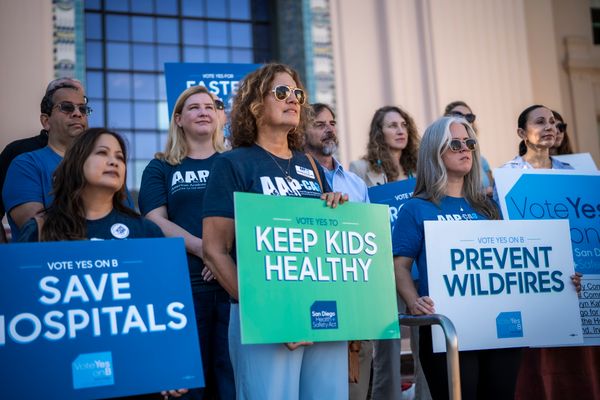
In the 2026 election, voters in Marin and San Diego counties approved two local tax measures that will significantly increase funding dedicated to child care. By making child care a priority at the ballot box, these communities showed how local action can turn what families need into a public investment. Here are words from organizers behind the effort:

San Diego County's Measure B


  • The Win: Measure B, a half-cent countywide sales tax that dedicates 22% of its revenue to child care: an estimated $88 million to $99 million every year, with no end date in the measure.


  • The Voice: "It's pretty amazing to see a community come together for something everyone knows we've needed for years," said Erin Hogeboom, Co-Chair of the Children First Collective. "This is a reality because of every parent, provider, and advocate who phoned a friend or shared their story to help San Diegans understand what was at stake."


“We started the work of securing local, dedicated funding for child care during the COVID-19 pandemic. My kids were at home, eating Halloween candy at 10 a.m., but we were organizing to help San Diego know child care is essential,” said Courtney Baltiyskyy, Co-Chair of the Children First Collective. “That momentum helped us collect stories, research the child care opportunity, create a plan, and become a proponent of Measure B for impactful funding to bring that plan to life.”

Photo Credit: Sam Hodgson 

Marin County's Measure P


The Win: Created a dedicated local funding source for child care and early childhood education, generating approximately $12.5 million annually to expand access, strengthen the early childhood workforce, and improve child care and early education facilities.


The Voice: "At Marin Child Care Council (MC3), we are hopeful that this investment will bring meaningful change to families struggling to find and afford child care, strengthen providers and recognize the essential role of early childhood education in our community.


With more than four decades of experience serving Marin County, MC3 understands these challenges firsthand. We connect families with child care and financial assistance, administer voucher programs, support providers with licensing and technical assistance, offer professional development for educators and advocate for a stronger early childhood system.


While the approximately $12.5 million in annual funding will not solve the child care crisis, it can make a meaningful difference. Dedicated funding for child care vouchers and scholarships must remain a priority, that honor parental choice and support our diverse mixed-delivery system of family child care homes, centers and preschools. And we must keep our promises to Marin voters.


As implementation moves forward, we are hopeful Marin will build on the infrastructure already in place rather than create entirely new systems and processes. We have experienced organizations, established relationships and knowledgeable professionals ready to do this work. The opportunity is to strengthen what exists, collaborate and ensure funding reaches the families and providers who need it."

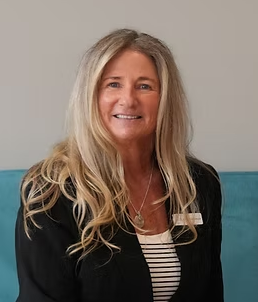
Aideen Gaidmore

CEO, Marin Child Care Council

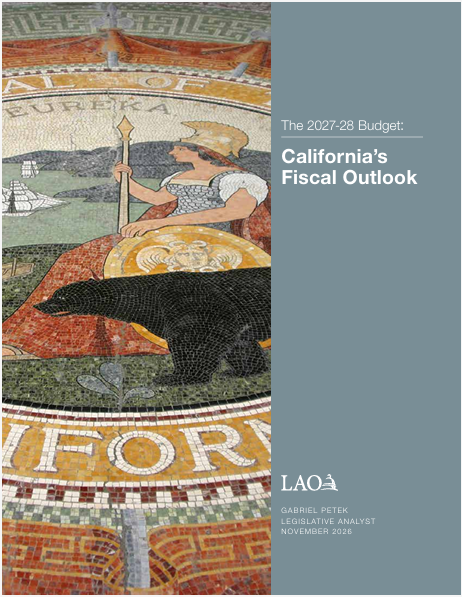
The 2027-28 Budget: California’s Fiscal Outlook


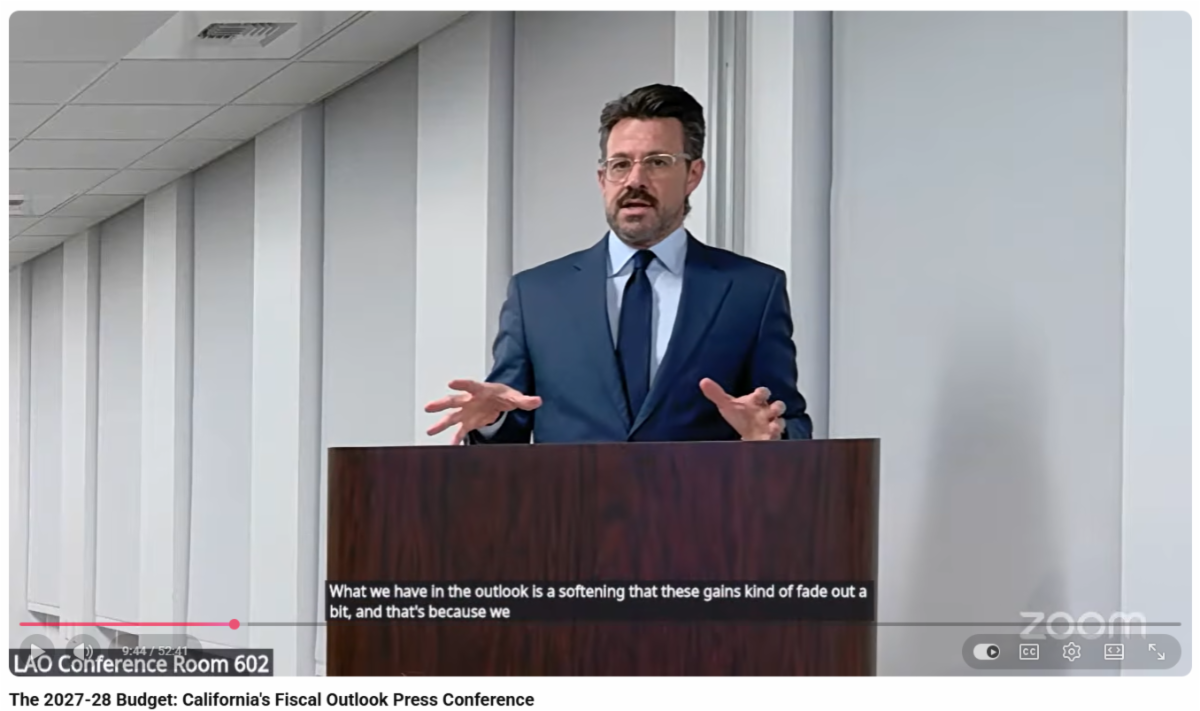
November 18, 2026: Each year, the Legislative Analyst's Office publishes the Fiscal Outlook in anticipation of the upcoming budget season. This report provides the Legislature with independent estimates of the state’s economy, revenues, and spending, along with our assessment of the General Fund condition for 2027-28 through 2030-31.


What Stands Out From the Report:

The LAO projects California's child care spending will grow by an average of 10.1% annually through 2030–31, compared with 6.6% across Health and Human Services programs overall. It attributes that growth to continued implementation of the state's slot expansion, statutory cost-of-living adjustments (COLAs), and projected changes in reimbursement rates and caseloads.


There is important context missing from the report:

  • Child care expansion and COLAs have been delayed for multiple years. Budget decisions have slowed implementation of promised investments in child care availability and the workforce, leaving families waiting for access and providers waiting for the resources they were promised.
  • The state is still behind on fulfilling its promised child care spaces. Governor Newsom promised 206,800 additional subsidized child care spaces between 2022 and 2026, but expansion was halted for several years before finally moving forward again in 2026. Approximately 150,000 spaces have been funded to date, leaving the state ~57,000 short of its original commitment.
  • The workforce continues to bear the consequences. Delayed reimbursement rate increases and limited progress on rate reform make it harder for providers to offer competitive wages, recruit staff, and retain qualified educators, contributing to workforce shortages and limiting families' access to care.


An Economic Investment California Can’t Keep Delaying:

As California heads into another difficult budget year with a new Governor and Legislature, it is important to build on the progress made in the 2026 budget, which included funding for 22,700 additional child care spaces after years of delayed expansion. That investment was an important step, and California still has commitments to fulfill for families and providers. Child care is essential economic infrastructure, and continued investment cannot be treated as another budget expense to put off.


When the state invests in child care, the return is immediate: parents can go to work, employers have a more reliable workforce, and child care providers can keep their doors open and support local economies. Child care must be recognized as an investment in both today's workforce and tomorrow's future, and California must remember that yesterday's promises are already overdue.

Watch The 2027-28 Budget: California's Fiscal Outlook Press Conference

Family Fees – Does California have to charge? 


Child care providers are required to begin collecting Family Fees once again starting on January 1st, 2027. TFC has compiled background information on Family Fee Collection, including why and how providers and contractors can prepare for this requirement.


The California Department of Social Services has also released guidance last week on Family Fee Collection policies.


For TFC Members: Here is the link to watch our the two-part training series.

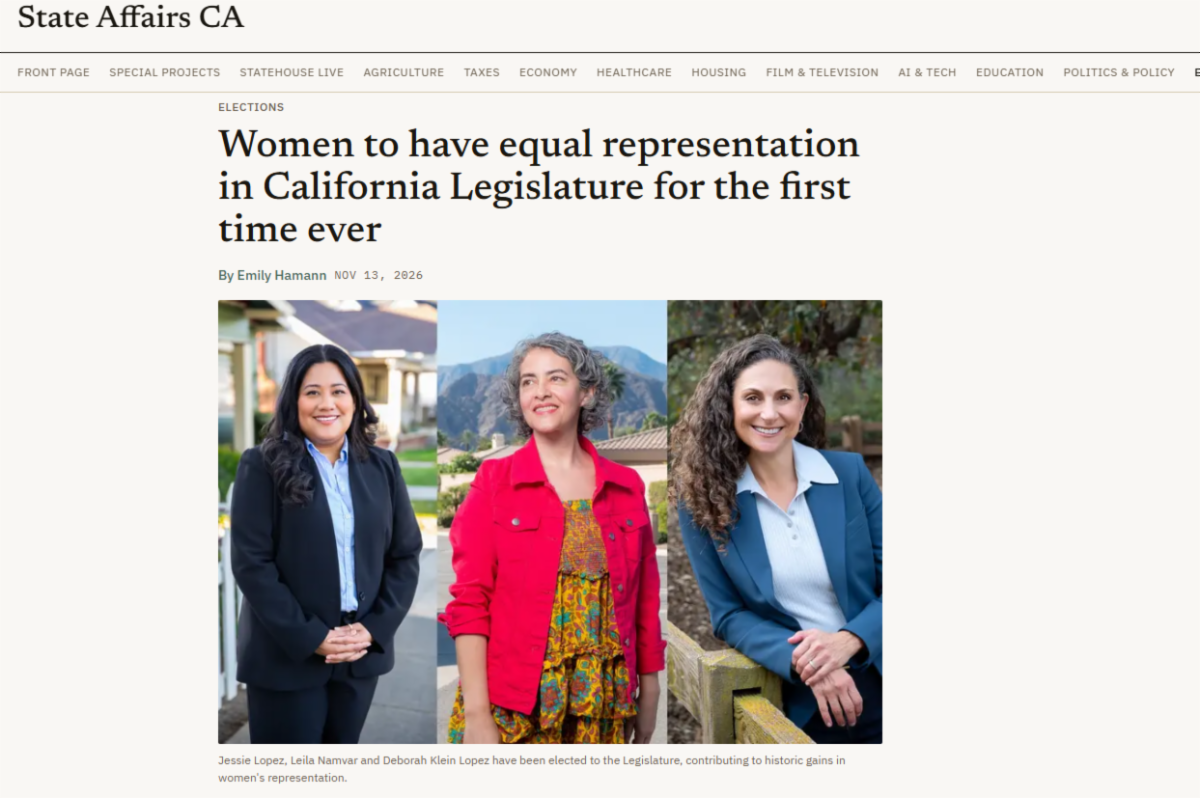
Women to have equal representation in California Legislature for the first time ever

From State Affairs CA


  • The California Legislature will reach gender parity for the first time when its new session begins in December
  • At least 14 women have been newly elected to the Legislature
  • California joins five other states in achieving gender parity after the latest elections

Office of Head Start (OHS), Administration for Children and Families (ACF), Department of Health and Human Services (HHS): Restoring Flexibility To Support Head Start Program Access


On Friday, the Administration for Children and Families (ACF) released the final rule that removes requirements from the Head Start Program Performance Standards (Performance Standards) to restore local flexibility to Head Start programs and improve access to quality services. Specifically, this final rule removes requirements related to wages and benefits that the Administration believes are not in line with the plain language of the Head Start Act and are costly and overly prescriptive for Head Start programs and staff.


ACF estimates these changes will result in over $2 billion in future cost savings for Head Start programs. The rescissions in this final rule impact the costliest parts of the final rule published by the Office of Head Start (OHS) in 2024, Supporting the Head Start Workforce and Consistent Quality Programming.


Here is the final rule: Restoring Flexibility to Support Head Start Program Access.

NHSA Executive Director Yasmina Vinci stated: “It’s a false choice between paying Head Start staff a living wage across the country and preserving vital slots for children.”


NHSA emphasized that:

  • Removing federal compensation requirements will not resolve staffing shortages.
  • Congress must provide sufficient funding to support competitive wages and preserve enrollment.
  • Head Start programs need both flexibility and a stable, qualified workforce.
  • FY 2027 appropriations must reflect the actual cost of operating Head Start programs.


Read the NHSA's Full Statement

Trump administration cancels mandatory pay hike for Head Start teachers


ABC News reports that the Trump administration said it would cancel a rule mandating pay increases for teachers in the Head Start preschool program. Read more here

NOTE: TFC Monitoring Federal Head Start Changes and Impacts on California


Thriving Families CA Foundation (TFC) shares concerns about the potential impacts of the removal of federal Head Start wage and benefit requirements, particularly at a time when programs are already navigating rising costs, workforce shortages, and funding challenges.


TFC is reviewing what these changes may mean for California's Head Start programs, families, and broader early care and education system, including potential impacts on workforce stability, program quality, and access to services.

We recognize Head Start California's leadership and expertise and will look to our partners there for guidance on the best path forward. TFC stands ready to support their advocacy efforts and work collaboratively to protect the programs, educators, children, and families who depend on Head Start.


We will continue to keep members informed as additional information and opportunities for coordinated action emerge.

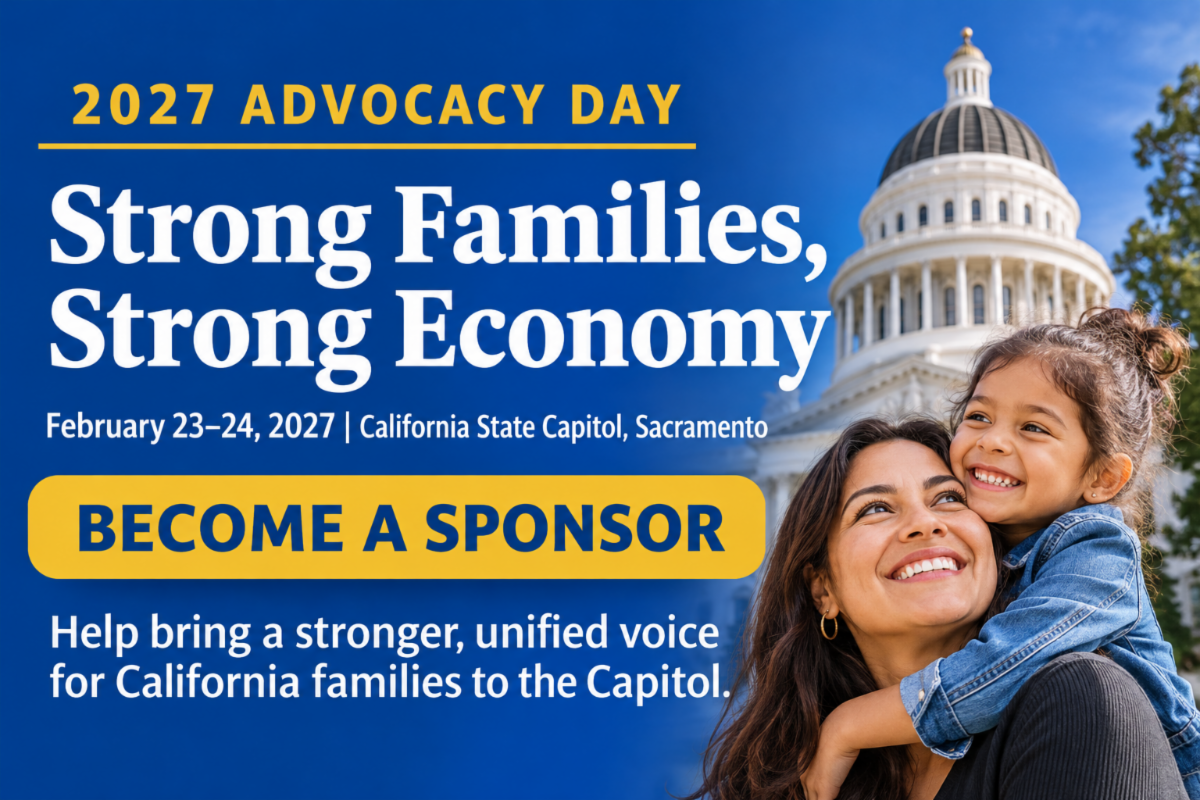
"Strong Families, Strong Economy" Advocacy Day

Help Bring Strong Families, Strong Economy Advocacy Day to Life!

Partners include the First 5 Association, the R&R Network, Thriving Families CA Foundation, the Child Abuse Prevention Center, North Coast Opportunities, Supportive Services Inc, 4Cs of Alameda County, Marin Child Care Council, and Colusa County Office of Education.


If you are interested in joining as an Advocacy Day partner, please email your organizational logo to mckenzie@thrivingfamilies-ca.org. Organizations of all sizes and across sectors are welcome.

Support Advocacy Day - Become a Sponsor!


Help elevate the voices of the organizations and communities that make California stronger!


We invite organizations, businesses, and community partners to sponsor the 2027 Strong Families, Strong Economy Advocacy Day on February 23-24 in Sacramento.


Sponsors can receive logo placement on event banners, websites, and promotional emails; recognition in legislative meeting packets distributed to legislators; sponsor spotlights in our weekly newsletter; and opportunities to share branded materials directly with attendees.


Become a sponsor and help make this day possible!

Create Advocacy Day - Volunteer for a Workgroup!


Organizations across California are coming together to amplify the services and supports working families need to thrive—and we’re looking for volunteers to help prepare.


Join one of our three planning workgroups:


  • February 23 Training Day Logistics: Help coordinate the training that prepares partners to educate lawmakers about child care and other issues affecting families.
  • February 24 Advocacy Day Logistics: Help arrange legislative meetings, registration, setup, and breakdown.
  • Communications: Help with outreach, social media, promotional materials, partner toolkits, and legislator packets.


Any level of support is appreciated. Whether you can participate in a workgroup throughout the planning process or help with one specific task, such as assembling packets, your time will make a difference. Join an upcoming Advocacy Day Planning Meeting to connect with a workgroup and find a way to contribute that fits your capacity!

Reminder: Fall 2026 Classroom Assessment Scoring System Implementation Survey


The California Department of Education (CDE), Early Education Division (EED) and the Achieving Success in Positive Interactions, Relationships, and Environments (ASPIRE) Statewide Lead are inviting all California State Preschool Program (CSPP) contractors to complete the Fall 2026 Classroom Assessment Scoring System (CLASS) Second Edition Pre–K–3rd Grade and CLASS Environment Implementation Survey by Tuesday, December 15, 2026.


CSPP contractors are encouraged to complete the survey by the new deadline of Tuesday, December 15, 2026. A portable document format (PDF) of the survey questions is attached below for your review. We encourage respondents to review the questions and gather any necessary information before completing the online survey.


Survey Link: Fall 2026 Classroom Assessment Scoring System Implementation Survey 


Survey Open: October 1, 2026 to December 15, 2026


PDF of the Survey Questions: Fall 2026 Classroom Assessment Scoring System Implementation Survey PDF


Announcements

Upcoming Public Comment Opportunities: California's 2027 Alternative Methodology Cost Model


Beginning in December 2026, the California Department of Social Services (CDSS) will invite the submission of written public comment to web posts on how early learning and care costs will be estimated under California’s 2027 alternative methodology cost model. Written feedback can be submitted within a two-week period following the release of a web post. 


Purpose: The alternative methodology is an approach to estimating what it costs to operate child care and early learning programs in California. CDSS wants to hear from program partners about whether the planned approach to determine costs reflects program operations, and what may be missing. Your input will help CDSS refine its cost model approach.


How to Participate: An email notification will be distributed in early December 2026 when the first public comment period is open, sharing links to the materials listed below. The CDSS will issue email notifications on a rolling basis for any future web posts. 

  • A posted narrative document providing an overview of the planned approach for developing cost estimates for rate elements, including staffing, salary and benefit, non-personnel costs, capacity building, and enhanced rate elements.
  • A brief survey form to collect public feedback. Written feedback can be submitted within a two-week period following the release of a web post. 

Upcoming Events

Virtual Infant Toddler Pyramid Model Training of Trainers Opportunity!


The California Department of Social Services, Child Care and Development Division, is hosting the Pyramid Model Consortium to offer a free Infant and Toddler Pyramid Model Training of Trainers (ToT) event. This event is designed for trainers who support infant-toddler center-based programs and providers.


This is a three-day virtual training to be held on the following Wednesdays: January 13, January 20, and January 27, 2027, from 9:00 a.m. to 4:00 p.m. and will be delivered in English. This training will be held as a cohort and attendance is required for all three sessions.


This ToT is limited to only 50 participants and applications must be submitted by December 4, 2026. No prior Teaching Pyramid or Pyramid Model knowledge is required and accepted participants will have access to online learning modules to take prior to the start of the ToT if additional content knowledge is needed.


Interested individuals are encouraged to apply before the deadline to take advantage of this valuable opportunity.


Visit Infant Toddler Pyramid Model Training of Trainers to apply now! Applications must be submitted by December 4, 2026.

Child Development Training Consortium Child Development Permit Stipend and Educational Support Grant Programs 2026-2027


The Child Development Training Consortium (CDTC) provides services and resources to students and professionals working with or for young children. The Child Development Permit Stipend and the Early Childhood Education (ECE) Educational Support Grant (ESG) for 2026-2027 are now available.


Child Development Permit Stipend

The CDTC helps pay the Child Development permit application fee to the California Commission on Teacher Credentialing (CCTC) for eligible applicants. Eligible applicants have two options for covering the permit application fee. Applicants either pay the fee directly to CCTC and apply for reimbursement with CDTC, or submit their application through CDTC who pays the fee to CCTC. For more information, refer to the Child Development Permit Stipend flyer.


ECE Educational Support Grant

This program provides support for specific educational expenses to students attending California Community Colleges. Students pursuing a career in early childhood or child development may be eligible to apply for the ECE Educational Support Grant. All eligibility criteria are included in the application. For more information, refer to the ECE Educational Support Grant flyer.


Students who took summer 2026 courses from July 1, 2026, as well as students who are enrolled in fall 2026 courses, may apply now.


Permit and ESG applications are available at the CDTC website.

In the Moment: A Practical Response Toolkit


The California Department of Social Services (CDSS) invites early learning and care professionals to attend the upcoming webinar:


Date: December 15, 2026

Time: 1:30 pm – 3:00 pm

Location: Virtual via Zoom

Registration: Click here to register


The discussion will focus on understanding what a child may be communicating, responding supportively during challenging moments, partnering with families, and identifying alternatives to time-outs, repeatedly sending a child home, suspension, or expulsion.


After registering, participants will receive a confirmation email from Zoom containing information about how to join the webinar.


For questions regarding this webinar, please contact the Early Childhood Wellness and Inclusion Team (ECWIT) at SECAhelp@dss.ca.gov.


NEW! CDSS: CCB 26-27: Eligibility of Existing General Child Care and Development (CCTR) Contractors who Expressed Interest in Expansion Funds in FY 2026-27 and Supplemental Questionnaire

Released November 20, 2026


NEW! CDSS: CCB 26-25: Directive Regarding the Voluntary Temporary Transfer of Funds Process

Released November 18, 2026


NEW! CDSS: (CCB) 26-26: Family Fee Collection Policy

Released November 17, 2026


CDSS CCB 26-29 Fiscal Plan/Annual Budget Requirement

Released November 13, 2026


CDSS PIN 26-14-CCLD: Guardian Training for Licensees and Providers

Released October 22, 2026


CDE Management Bulletin 26-09: California State Preschool Program Funding Opportunities: Voluntary Temporary Transfers

Released October 19, 2026


CDSS PIN 26-13-CCLD: (Supersedes in Part PIN 21-06-CCLD) Update to the Frequently Asked Questions (FAQ) for Communication With Complainants

Released October 14, 2026


CDSS Child Care Bulletin (CCB) 26-24: Fiscal Year 2026-27 California Alternative Payment Program (CAPP) Slots Allocations

Released October 14, 2026


Did you miss a child care licensing webinar?

Rewatch previous webinars with translations into multiple languages here.

Q: Does California have to charge a family fee for child care?


A: Yes, under California's current statutory framework, the state generally must assess family fees for families who are not exempt. However, federal law does not require California to charge every family receiving subsidized child care.


Click here for more details.


Source: CDSS Child Care Bulletin 26-26


Q: What is the Voluntary Temporary Transfer (VTT), and how does it impact child care funding?


A: VTT allows child care contractors to voluntarily transfer available funding to other eligible contractors that can use the funds to serve more children and families. The goal is to make sure available child care dollars are put to use rather than going unspent.


Under the Budget Act of 2026, all non-local educational agency California State Preschool Program (CSPP) funding shifted to Proposition 98, effective July 1, 2026. Because CSPP and Child Care and Development Center (CCTR) programs are now funded through different allocation types, CDSS can no longer facilitate a VTT between the two programs.


Source: CDSS Child Care Bulletin 26-25

Provider Training Requirements: What Applies Now and What Changes in 2027


California's 2026 budget legislation changed training requirements for licensed child care providers. AB 190, the Early Care and Education budget trailer bill, amended Health & Safety Code §1596.866 and temporarily rolled back some of the broader requirements enacted in June through AB 150.


Now through September 30, 2027: At least one director or teacher at each child care center, and each family child care home licensee who provides care, must complete 15 hours of Health & Safety Training (pediatric First Aid, CPR, preventive health practices, and nutrition training when applicable).


Beginning October 1, 2027:

  • The 15-hour requirement expands to all staff who provide care at centers and family child care homes, each family child care home licensee, and substitute adults in family child care homes.
  • These same individuals must also complete 12 hours of continuing education every year. This is in addition to the 15-hour Health & Safety Training.


CDSS has released PIN 26-11-CCP with implementation information and will issue more guidance in the coming weeks.


Read the full Q&A, including the annual training topics and why requirements changed during the budget process, on our Provider Information website page.

State Budget Preview: Understanding the Process and What’s Ahead in 2027


From the California Budget and Policy Center

When: December 8, 2026

Where: Streaming, online only

Cost: Free


Join us for Dollars & Democracy, our premier state budget training, followed by an in-depth conversation with budget and policy experts about what these changes mean for California’s upcoming budget and legislative session.

This training is designed for advocates who are new to the field or want to refresh their understanding of the state budget process. We’ll break down California’s budget process, highlighting key deadlines and the essential role the governor, Legislature, and advocates play in advancing community investments.


After the training, stay for a panel discussion with state budget and policy experts who will share insights on navigating the state’s budget landscape and what’s ahead for 2027.

FY27 Senate Appropriations Proposal Has Been Released

A statement from the First Five Years Fund


“Families are looking to Congress for solutions to the affordability crisis, and child care is a major part of that equation. The Senate’s proposed end-of-year funding bill recognizes this challenge by including increased investments for Head Start and the Child Care and Development Block Grant (CCDBG) program.


$50 million increases for both programs would be a meaningful step toward helping more families access the affordable, quality child care they need.


We are also encouraged to see the Senate maintain funding for PDG B-5, recognizing the important role this program plays in helping states strengthen their early childhood systems and better connect families with care. Continued federal investments will help ensure these critical resources remain available to the families who depend on them..." Read the entire statement here.

Nonprofits Navigate Federal Funding


Does your nonprofit receive federal funding? Have you been confused by the various disruptions, audits, and other hurdles imposed by the administration this year? If so, we have some partners that want to help.


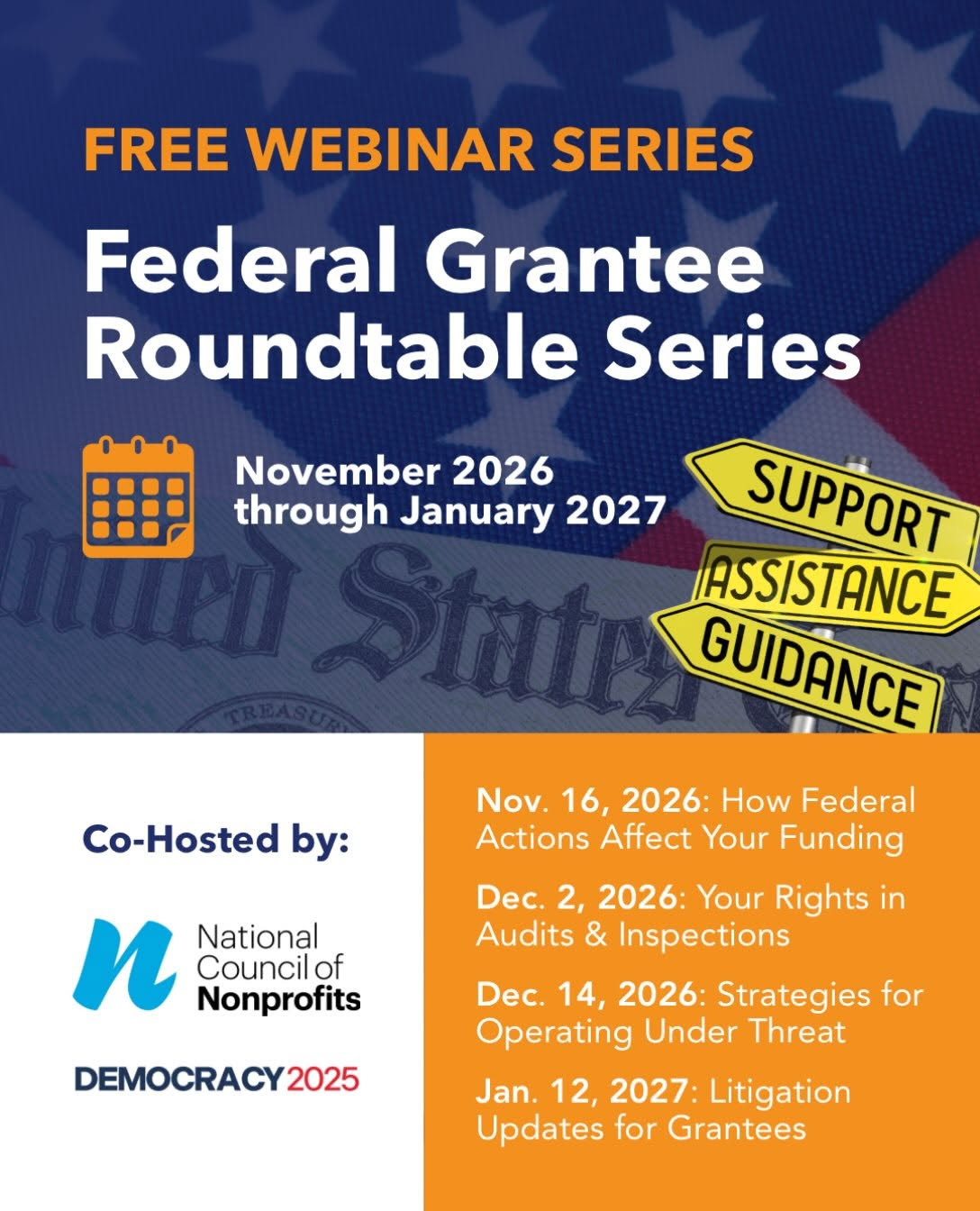
The National Council of Nonprofits and Democracy 2025 are launching a new four-part Federal Grantee Roundtable Series to help federally funded nonprofit grantees, subgrantees, and other partners navigate recent changes to federal funding, understand their rights and responsibilities, and identify strategies to protect their programs and the communities they serve. Sessions are designed for nonprofit leaders.


Join the national sessions (registration required):

Most Viewed Bills of the Week


  1. H.R.9237 [119th] Take Care of America’s Veterans Act
  2. H.R.4818 [118th] Treat and Reduce Obesity Act of 2023
  3. H.R.6509 [119th] SAFE Drugs Act of 2025
  4. S.5653 [119th] Bipartisan American Affordability and Jobs Act of 2026
  5. H.R.2102 [119th] Major Richard Star Act
  6. H.Res.935 [119th] Impeaching Peter B. Hegseth, Secretary of Defense of the United States, for high crimes and misdemeanors.
  7. H.R.2347 [119th] Survivor Justice Tax Prevention Act
  8. H.R.1 [119th] An act to provide for reconciliation pursuant to title II of H. Con. Res. 14.
  9. H.Res.1650 [119th] Providing for consideration of the bill (H.R. 1013) to amend the Federal securities laws to enhance 403(b) plans, and for other purposes.
  10. H.R.8552 [119th] Veterans’ Compensation Cost-of-Living Adjustment Act of 2026

On Our Reading List

The Work Before Work: Finding Child Care in Santa Barbara County

The County Education Office helps families navigate high costs and limited openings.

Reports:


  1. Care Work and the Free-Time Gender Gap in California
  2. The 2027-28 Budget: California’s Fiscal Outlook


Articles:

  1. New York's subsidized childcare pilot project gets underway
  2. Many Kids Aren’t Kindergarten Ready, Report Finds. That’s Not the Whole Picture
  3. Following the Midterm Elections, Could Universal Childcare Become a Reality?

Social Media Spotlight

Happening This Week, November 23rd - 27th


There are no events or activities scheduled on our Master Calendar for Thanksgiving week.We hope everyone enjoys the holiday and time spent with family and loved ones. Wishing everyone a wonderful Thanksgiving!


Visit the TFC Master Calendar to find upcoming TFC meetings, partner events, trainings, conferences, and other opportunities in one place.


Have an event to add? Email thriving@thrivingfamilies-ca.org.

The Weekly Good

An uplifting way to start the week, for those of us who need a break from the chaos that is our lives.


Each week we will celebrate everyday heroes, inspiring movements and great things happening in our field. 

Quick Links


November 2026 Monday Morning Update Sponsor
Kindersystems

Monthly Member Spotlight

Click the video above to learn about Hively's legacy in Alameda County.

Hively Celebrates 50 Years of Community Impact


Since its founding in 1976, Hively has grown into a comprehensive support network for early childhood care providers and families throughout Alameda County, ensuring every child has access to the resources they need to thrive. Hively provides child care referrals and subsidies, training and resources for child care providers, mental health support, and essential supplies like diapers, children’s clothes and pantry staples available at the organization’s family resource centers and the Hive on Wheels, a mobile resource van.

Led by CEO Mary Hekl since 2022, Hively has grown significantly over the past four years, innovating to develop services and programs that meet the community’s shifting needs. Hively's leadership team also includes sector leader Mona Shirk, Chief Program Officer with nearly 20 years of experience and Elaine Lenore, Chief Financial Officer, who has played a key role in Hively's growth. Hively’s staff of over 50% bilingual professionals serves the region’s diverse community with dignity, care, and compassion.


In the last year alone, Hively supported over 10,000 people across all of its programs and services, providing subsidies for 3,842 children, over $43 million in payments to child care providers, and 7,801.5 hours of therapy and case management. This year, Hively is celebrating  its 50th anniversary and five decades of community impact.

TFC Member Only Benefits


Not a member?

Find out how to join today!

TFC Weekly Member Connections via Zoom:


Our commitment to you is to have scheduled at least once per week a call wherein we can all connect. As questions arise, forward them to TFC so that we can address them on these calls. Look for a weekly email to register. Recording and Q&A will also be posted on the Member's Only page. 

We’re excited to introduce a new member benefit designed to support connection, learning, and shared success across our network—our Quarterly Case Management Roundtable.


This interactive series brings together professionals from across the field (via Zoom) to engage in meaningful conversations, exchange ideas, and strengthen practices that support families and communities.


Email for more information and registration.

Job Descriptions and Salary Information


TFC has collected more than 85 job descriptions from member agencies that you can view and use when you create your agency's next job posting!


Visit the Member's Only website to view today!


TFC's 2026-27 Board of Directors

PRESIDENT

Gina Fromer, Ph.D.

GLIDE


VICE PRESIDENT

Michelle Graham

Children's Resource & Referral of Santa Barbara County 


SECRETARY

LaVera Smith

Supportive Services, Inc. Fresno


TREASURER

Beth Chiaro

Child Care Resource Center


PAST PRESIDENT

Rick Richardson

Child Development Associates


PUBLIC POLICY CO-CHAIR

Phillip Warner

Children's Council of San Francisco


PUBLIC POLICY CO-CHAIR & MEMBERSHIP CHAIR

Adonai Mack

Child Action, Inc.


MEMBERS AT LARGE

Mona Shirk
Hively 


Jeanne Fridolfs

Napa County Office of Education


Joie Owen

Valley Oak Children's Services


Karen Marlatt

Valley Oak Children's Services 


Jessica Kranz

Go Kids, Inc.


Mike Michelon
Siskiyou Child Care Council


Daniel Johnson 

Davis Street Community Center


Denyne Micheletti

TFC CEO


The representation of the TFC Foundation board spreads across all agency types and sizes, and represents voices from nearly every region in California.

Click Here to see.

DSS & CDE Updates


November 17, 2026:

CCB 26-26: Family Fee Collection Policy


November 10, 2026:

CCB 26-25: Directive Regarding The Voluntary Temporary Transfer Of Funds Process


November 5, 2026:

CCB 26-29: Fiscal Plan/Annual Budget Requirement


October 2, 2026:

CDSS Child Care Bulletin (CCB) 26-23: Alternative Payment Program Administrative Support Allocation.


October 9, 2026: CDE CAPSDAC Update #11 - Announces the temporary pause in monthly certification requirements.


October 8, 2026:

CDE Management Bulletin 26–10:

iscal Year 2027-28 Continued Funding Application information, forms, and instructions for California State Preschool Program contractors


September 29, 2026:

CCB 26-24: Fiscal Year 2026-27 California Alternative Payment Program (CAPP) Slots Allocations


September 22, 2026:
CCB 26-22:
Cost Of Care Plus Rate Payments To Child Care Providers Pursuant To Assembly Bill 150


September 14, 2026:

CCB 26-21: California Work Opportunity And Responsibility To Kids (CalWORKs) Stage One Child Care Program Monitoring Initiative


September 1, 2026

Management Bulletin 26-08: Implementation of the Attorney General Model Policies for Immigration Enforcement Requirements


September 21, 2026:

County Fiscal Letter 26/27-10E: Errata to the Fiscal Year (FY) 2026-27 Allocation for the Emergency Child Care Bridge Program for Foster Children


September 1, 2026: Management Bulletin 26-08: Implementation of the Attorney General Model Policies for Immigration Enforcement Requirements

Job Openings

Is Your Organization Hiring?

Post your job announcement here for thousands to see!

There is no charge for TFC members.


Non-members will be charged a fee of $75.

Please email us your posting!


Executive Director
Del Norte Child Care Council


Chief Operating Officer
Family Resource Center- San Joaquin County


Associate Manager - Early Childhood Education

Placer COE


Child Care Services Specialist

Community Action Partnership of San Luis Obispo


Bilingual Program Assistant – Case Management

Changing Tides Family Services


Multiple Positions Open
Hively


Community Resource Navigator

Connections for Children


Family and Provider Programs Administrator

CDA San Diego


--Child Care Case Manager & Support Specialist

--Child Care Case Manager

--Teacher Aide

--Primary Care Teacher

--Maintenance/

Facility Technician

Glenn County Office of Education


Multiple Positions Open
4Cs of Sonoma County


Advocacy Manager Catalyst Family Inc.


-Finance Director

-Center Director at Roosevelt

Davis Street


Family Advocate

YMCA of San Diego County


Pathways LA- Multiple Job Openings

Nutritional Aid, Child Care Provider Training Coordinator, Child Care Case Worker,

Preschool Associate Teacher, Child Care Professional Dev. Coach and Payment Processor

Of Interest

Childcare Providers Begin Receiving Measure C Funds


California’s Persistent Poverty Crisis: 2024 Rates Remain Alarmingly High


Experts Talk Costs and Supply in California’s Child Care


Apprenticeships Aimed at Boosting Child Care Careers Have Been Flourishing


Childcare Costs and the Shifting Economic Landscape: Investment Opportunities in a Post-Pandemic World


Field Happenings and Resources


Recognizing how our agencies continue to engage and communicate with families and providers.


Del Norte Child Care Council November Newsletter


4Cs of Alameda Current Newsletter

Upcoming Valley Oak Children's Service Events


4Cs Sonoma Upcoming Events


Connections for Children Upcoming Events


Hively Upcoming Events

Become a Monday 

Morning Update Partner! 

Our Monday Morning Update supports our Early Learning & Child Care field with timely information about what is going on in California and nationally; as well as dates to be aware and upcoming events. 


Our weekly Monday morning distribution is to nearly 10,000 federal and state local agencies, resource and referrals, contractors, legislators and their staffs', centers, parents, providers, state departments and advocates. 


To help support the continuation of this resource and or advertise in the Monday Morning Update, click HERE.


To advertise in the update, click here.


The Thriving Families CA Foundation is a non-profit organization (501(c)3), Taxpayer Identification Number is 03-0521444. Your generous donation is tax deductible.

Thank You to Our Generous 2024-25 Thriving Families CA Foundation Champions!


Thank you to the following Champions who stepped up in 2024-25, with funding to enhance our ability to serve the field. These agencies have made it possible for TFC to support our field with more tailored support of individual organizations, ability to pay for legal, advocacy and social media supports, enhanced regional trainings, improving data collection, and more.

 
Facebook  Instagram  LinkedIn  X