animated hands in a circle pointing to words surrounding the theme of culture: traditions, heritage, ethnicity

ACCESS CULTURE  -  Vol. 1-2022

May is Asian and Pacific Islander Heritage Month. I must admit, considering that geographic designation encompasses several BILLION people, attempting to do any bit of justice the heritage of such a group is quite beyond my ability, and likely the ability of any writer. So what to do? When up against a seemingly impossible task, I try to start from the basic premise of writing about my own interests. And, as anyone who knows me will attest, I like movies.


So how does one write about Asian and Pacific Islander heritage with respect to film? Well, Asian American and Pacific Islander representation in mainstream media has recently been on the rise. In 2020, the Korean thriller Parasite became the first non-English language film in Oscar history to win Best Picture. That same year, The Farewell star Awkafina became the first woman of Asian descent to win a Golden Globe Award for lead actress in a motion picture. Other recent films like Crazy Rich Asians and Moana brought more attention to portraying different cultures in Hollywood. However, Asians have historically remained largely unseen in film and media, and have been cast in supporting roles or as stereotypes. Asian roles were often cast by white actors and many times those portrayals were farcical or even overtly racist. See: Breakfast at Tiffany's.


For this edition of Access Culture, I wanted to highlight two Asian American individuals who have made vital contributions to American film culture, but whose stories are almost assuredly new to the mainstream: actress Anna May Wong and artist/animator Tyrus Wong.

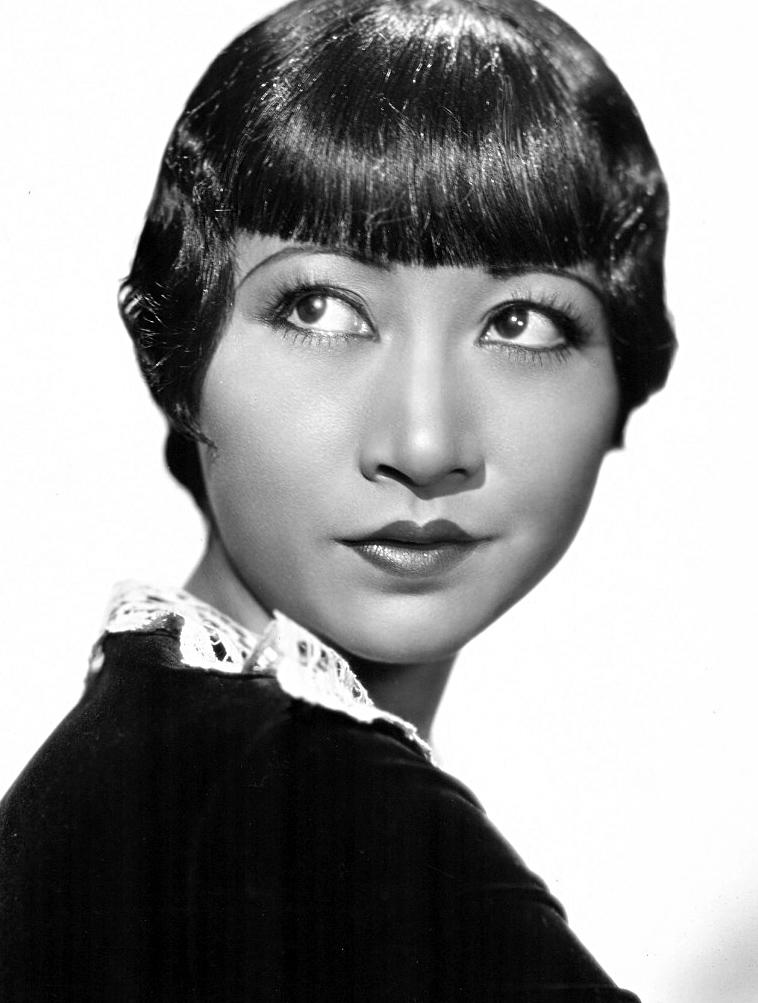
black and white portrait for 1920s film star Anna May Wong

Anna May Wong


The first Chinese-American movie star, Anna May Wong spent her life struggling against prevailing attitudes and discrimination. Frequently cast stereotypically as either a delicate victim or a menacing "dragon lady," Wong did land a huge role in The Thief of Bagdad (1924) alongside Douglas Fairbanks, but struggled to find leading roles since the law prohibited her kissing a co-star of a different race.


Understandably frustrated by the prejudices of Hollywood, Wong left for Europe. “I was so tired of the parts I had to play. Why is it that the screen Chinese is nearly always the villain of the piece, and so cruel a villain—murderous, treacherous, a snake in the grass? We are not like that," she said. 


While in Europe she befriended Marlene Dietrich and received the acclaim long denied her in America with such films as Shanghai Express in 1932. Upon returning to America in 1937, she suffered a major public blow when she was passed over for The Good Earth in favor of white actress Luise Rainer in Asian-inspired makeup, and encountered animosity from white as well as Chinese audiences. Rainer ended up winning the Oscar for Best Actress – an achievement considered by some to be one of the worst affronts in Hollywood history.


Wong did go on to start her own production company, star in her own TV show and film a major documentary about her travels in China, but unfortunately, Wong died of a heart attack on 1961, bringing an abrupt end to a tumultuous career. 


Wong has since been immortalized with a star on the Hollywood Walk of Fame and in a sculpture as one of four pioneering "Ladies of Hollywood." She never received her fair due as a cinematic and pop cultural icon, but, decades later, critics and fans alike began to reclaim her hugely deserved legacy as a gifted actress whose jaw-dropping resilience in the face of an unsympathetic and racist world and industry, was matched only by her enormous artistic talent.

PBS - American Masters:  "Unladylike2020

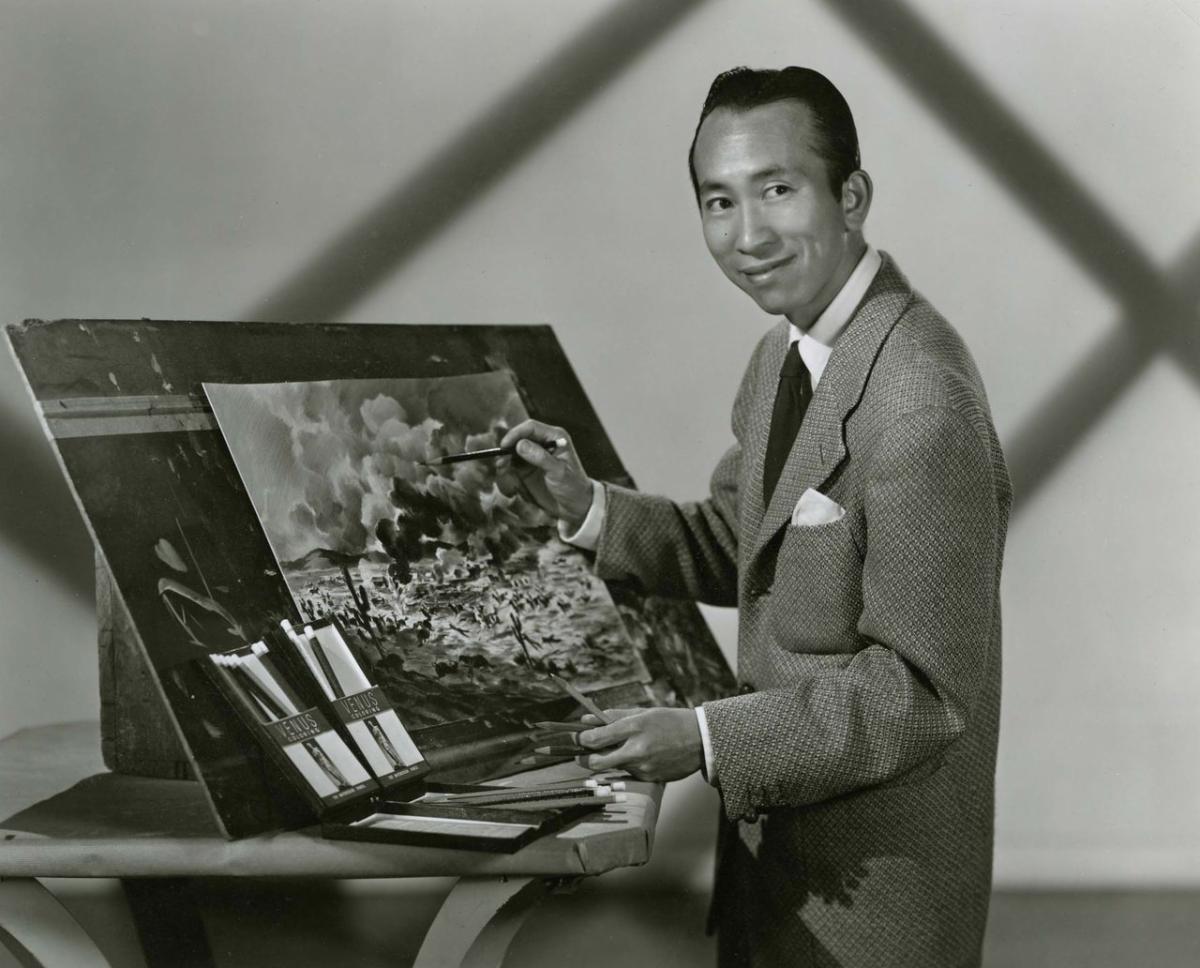
asian american tyrus wong in a suit standing over some of his work in animation

Tyrus Wong


On December 30, 1919, Wong Gen Yeo and his father boarded the ship S.S. China and sailed to California, leaving behind his mother and sister whom he never saw again. Upon arriving in the US, Wong was initially held at the Angel Island Immigration Station. There he was separated from his father while he waited to be questioned about his identity. Because most Chinese immigration was prohibited under the Chinese Exclusion Act, Wong and his father had to immigrate illegally under assumed identities as "paper sons" of Chinese American sponsors. Wong's paper son name was Look Tai Yow. He did not gain American citizenship until 1946, after the repeal of the Exclusion Act.

After a month, Wong was released from Angel Island. Wong and his father eventually relocated to Los Angeles. Wong's art was encouraged by his father who had him practice calligraphy every night, since they could not afford to give him an art education. Wong decided to drop out of junior high school to enroll full-time at the Otis Art Institute. After graduating from Otis, Wong found work in Hollywood and soon became an animator at Disney, which is where he would leave a lasting impression and legacy on animators for years to come.


Walt Disney was in production for an ambitious adaptation of Felix Salten's novel: "Bambi - A Life In the Woods." Wong saw his opportunity to showcase his unique stylings that combined traditional Chinese and modern American art. Walt loved Wong's stylings and hired him as the lead artist for Bambi. His background paintings for Bambi were inspired by Song dynasty classical Chinese paintings. Although credited as one of several background illustrators, his full contribution to the film was largely unknown for several decades.

forest painting for bambi shows the deer near the edge of the woods

Shortly after finishing Bambi, Wong was fired from Disney studios as a consequence of the Disney animators' strike. After leaving Disney, Wong worked at Warner Brothers Studios for 26 years as a production illustrator.


After retiring from film work in 1968, Wong turned his skills to making colorful kites (usually animals such as pandas, goldfish, or centipedes). He spent his Saturdays flying his creations on the beach just north of the Santa Monica Pier. He also designed popular greeting cards for Hallmark. 


Some of his most famous paintings are large murals on buildings in LA's Chinatown and much of his other work, including his kites, is on display at the Disney Family Museum. In a much-delayed effort to right the wrongs of his dismissal, Disney named Tyrus Wong an official "Disney Legend" in 2003.

Angel Island Profiles: Tyrus Wong

Disability symbols for blind, deaf, cognitive, and physical disabilities
map of michigan with service area counties selected: alcona, arenac, bay, clare, gladwin, gratiot, iosco, isabella, midland, ogemaw, roscommon, and saginaw

DISABILITY NETWORK OF MID-MICHIGAN

800-782-4160 | www.dnmm.org

Facebook  Twitter  Instagram